
"Investment in milk and meat". The start of the forage harvesting campaign was given in the Mogilev region

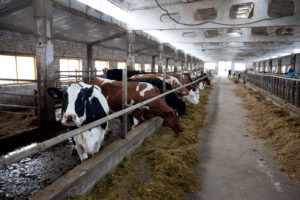
Photo is illustrative in nature. From open sources.


In the Mstislav region, a regional seminar on the preparation of grass fodder in agricultural organizations of the Mogilev region is being held. The event became a kind of start of this campaign in the region and brought together more than 120 people - heads of districts, heads of agriculture and food departments, livestock specialists, veterinarians, representatives of industry trade unions. The participants discussed the key issues related to forage harvesting, from the technological process to the quality of the received feed. BelTA correspondents attended the seminar and learned how to achieve the desired results.
With the beginning of the forage harvest period, the well-being of the region for the coming year is laid. If the forage harvesting campaign is successfully carried out, and there is everything necessary for this, the region will provide itself with feed and live in peace for a whole year: feed animals, receive products, earn money from it and pay people wages. Therefore, in the field of view of all participants of the seminar - the timing, pace and quality of harvesting, on which the value of the final product - hay, haylage and silage depends. Today, it is important for everyone to get involved in the work in order to prevent a shortage of fodder in the fall, it was repeatedly emphasized at the seminar.The event was held on the basis of JSC "Oktyabr" - a strong economy that has been working stably for more than a dozen years. Forage harvesting has not yet begun here, but this period is already on the way - from the beginning of next week, the mowers will go into the field. “The weather is not good yet, this year is dry, and the grasses are not yet ready,” explained Alexander Ignatenko, HEAD of the farm. “We plan to harvest 670 hectares of perennial grasses and 400 hectares of meadow grasses with the first mowing. "Technically, we are ready: we have 8-10 units of equipment for transporting haylage, two balers, 4 mowers, 2 Kirov K-701 for tamping. Now we are purchasing a fourth tractor, two grain harvesters. The farm is fully staffed."
Alexander Ignatenko is an agronomist with almost 30 years of experience, and therefore he understands that forage harvesting is the beginning of a long journey. "Forage harvesting must take place within a certain time frame, with a certain humidity, it is important to properly tamp and cover - this is a technological regulation that must be observed," he stressed. and MEAT, so fodder procurement is the main thing. If it is not carried out correctly, we will not have profit, as well as the future. Only in our economy, the livestock is almost 3.3 thousand heads of cattle with arable land of just over 3 thousand hectares, there are farmlands over 3.8 thousand hectares".
OAO "October" traditionally conducts from two to four cuttings per season. For example, last year there were three cuttings, but their number still depends on the weather. All herbs are 100% mowed on the farm to provide for their livestock. The feed composition is different - up to 90% are legumes and cereals. Old herbs are in the minority here, mostly biennial and, with rare exceptions, older.
Alexander Ignatenko is sure that the regional seminar will give a start to fodder harvesting in the region and aim individual leaders for better results. "Such events are necessary - it is important to get together and discuss the progress of harvesting. At the farm level, I also gather people before the start of any campaign - it is necessary to set the accents. My workers are in a combat mood, the sowing season has long been completed and forgotten, and they have long been ready for fodder harvesting", he concluded.
The seminar program began with the issues of preparing a technological complex of machines for high-quality harvesting of grass fodder and minimizing losses - how to get the maximum amount of production at low costs. The speakers noted that high-quality harvesting does not begin now, but as soon as farms begin to plow and sow. It is important that there are no losses, but they can be significant: one uncut centimeter at the exit - 3-4% weight loss, uneven field - this is a halving of equipment productivity and at least a threefold increase in fuel consumption. "The quality of the feed starts much earlier: the field should be flat, like a table , then the speed will be good, and the performance of the equipment," experts say.
“It is not in vain that they say that the spring day feeds the year - this is a very responsible time,” noted Sergey Savitsky, First Deputy Chairman of the Mogilev Oblast Executive Committee. is designed for 15-20 days.As a result, we will get not just volumes, but high-quality and nutritious fodder, which gives a great return, and at times.Today we are not talking about the mass harvesting of fodder - the heads of districts and farms monitor the situation in terms of grass stand ripeness and point out to the fields."
Today, those enterprises that purposefully sowed winter rye and colza for fodder purposes have begun to harvest fodder. Among them are Kruglyansky, Mogilev, Shklovsky and Bobruisk districts. The entire southern side of the region selectively began this work. That is why the decision to hold a seminar in Mstislavl became a matter of principle: to show that the north is mowing down, and the south is late. "I would like to stimulate, mentally prepare and give impetus to the beginning of this work," - said Sergei Savitsky.
Sergei Savitsky“In order to ensure the safe operation of our livestock industry, the region needs to procure about 2 million tons of fodder units of haylage and silage,” continued the First Deputy Chairman. "This is the minimum bar. Ideally, it should be 10 tons per 1 head, so only 5 million tons of haylage, silage and hay should be harvested. If we can do this, it will be good."
Ensuring decent nutritious feeding has always been the most pressing issue. In barns, it is not always possible to provide it, but with the exit of cows to pasture, MILK goes up. "In order to prevent starvation, good grass mixtures are needed. Driving through the fields, it is clear that there are questions. From one hectare of cultivated grass, you can get a big return. And if there are yellow fields of dandelions? The way out of this situation is to use annual crops that give a greater yield of green mass from one hectare. In this part, I call on the leaders of the districts to analyze the herbage that exists today, to calculate the yield. They are required to receive 70% of the haylage from the first mowing."
The manager is sure that it is more correct to talk about the nutritional value of the feed, and not to think in terms of feed units. The return will be if you get the nutritional value of haylage or silage up to 12 megajoules. And in this matter, it is important to remove the feed in time - you will not catch the necessary phase on time, you will get volume, not nutritional value.
According to Irina Strechin, chairman of the Dribin District Executive Committee, a participant in the seminar, today they are laying fodder, which will be provided to livestock during the winter-stall period, and this is milk and weight gain. “Even great mathematicians or IT people want to eat,” notes the head. “Feeding the country is our most important task. Therefore, we pay great attention not only to feed, but also to its quality. ", add preservatives. Nothing new needs to be invented in this technological process. As a livestock breeder with 18 years of experience, I know that feed is the most important thing to get milk and weight gain. If meat is a long-term investment, then milk is money here and now."
In the Dribinsky district, everything is ready for forage harvesting. A meeting of the district executive committee was held, key issues were worked out with each head of the economy in terms of timing, people and equipment. The plans are to prepare 3 thousand tons of hay, 50 thousand tons of haylage and 60 thousand tons of silage. Both wide-cut KPR-9, designed for even and large areas, and small maneuverable mowers, whose job is to mow inconvenience, get to potholes and roadsides, mow around poles, bushes and trees, will enter the fields. By the way, mowing has already begun in the region, the start has been given at the ChernevkaAgro farm.
Julia Evmenkova,
photo by Oleg FOYNITSKY,
BELTA.
Read together with it:
- Lukashenko appreciated it! See how Belarusian condensed milk is made.Video screenshot Topic news What's the first image that comes to mind when you think of Belarusian dairy products? Many will say a blue and white can of condensed MILK. Whether it's from Glubokoye or Rogachev, it has long been an unofficial Belarusian brand abroad. But do you know how it's produced? In the spring of 2......
- Serbia's NIS's only refinery will resume operations.The company received a license from the US Treasury to continue operations until January 23. In December, it announced the suspension of operations at its only refinery in the country due to a shortage of crude oil amid US sanctions.Serbian oil refinery NIS has received a license from the US Treasury Department's Office of Foreign Assets Control (OFAC) to continue operations until January 23, said...
- New video on our channel: Sheep Business. How to achieve a 300g daily gain in an open field? Alakol Agro LLC, KazakhstanThe ram fattening business . Sheep breeding in Kazakhstan. Weighing Edilbaev lambs and crossbreds of foreign MEAT breeds at a feedlot. How does balanced feed affect slaughter yield? Is there a wool market in Kazakhstan? PIONERPRODUKT.by is back at the Alakol Agro LLC feedlot in Kazakhstan . Today, we'll demonstrate how an Australian drafter operates in the new facility, discuss post-weaning weight...
- Russian meat exports to China are expected to grow to 300,000 tons by 2025.This growth marks significant progress in the country's agricultural sector, especially in light of past difficulties. Cooperation between RUSSIA and CHINA in agriculture is rapidly expanding: 35 protocols have been signed regulating the supply of various agricultural commodities. Growing demand for MEAT in China is expected to provide Russian producers with the opportunity to both increase produc...
- World Meat Prices: Trends and Changes in Week 52Globally, average prices for live pigs and pork halves fell by 2% and 0.5%, respectively. Beef prices increased, but the rate of growth slowed to 0.2%. The situation is different in Russia: pork and chicken prices also increased, by 4.8% and 0.7%, respectively. Russian pork exports reached a record high, increasing by 26% compared to the previous year, making the country one of the largest supplie...
- Казахстан расширяет экспортные возможности в сфере животноводстваЕвропейский Союз открыл рынок для пчеловодческой продукции. Экспорт говядины за первые десять месяцев 2025 года увеличился в 1,7 раза, достигнув 30,2 тыс. тонн, в то время как поставки баранины выросли на 1,9 раза — до 25,5 тыс. тонн. Такой рост объясняется высоким спросом на казахстанское мясо со стороны зарубежных партнеров. Работа по расширению ассортимента экспортируемой продукции продолжается...
- What problems has Russian biathlon faced due to isolation?Russian biathlon is experiencing difficult times due to international isolation. The number of sponsors has declined, biathlon has become less accessible to amateurs, and professional results are declining. For more details, see RBC Sport.On January 3 and 4, the Race of Champions will take place in Ryazan—the Russian equivalent of the biathlon Christmas Race in Gelsenkirchen. Its program includes ...
Test for Atnibiotics in Milk
 PIONEER MEIZHENG BIO-TECH (5 in1) JC0586 - Antibiotic tests 5 in 1 / Rapid tests for determining the residual amount of β-lactams, tetracyclines and cephalexin in milk, whey
 PIONEER MEIZHENG BIO-TECH (5 in 1) JC0726 / Rapid tests for determining the residual amount of Bacitracin, ansamycins, clindamycin, spiramycin, florfenicol in milk, whey
 Rapid 4 in 1 tests for determining the residual amount of neomycin, kanamycin, gentamicin, spectinomycin in milk, whey
 Express tests for determining the residual amount of β-lactams and tetracyclines in milk, whey
 ANTIBIOTICS / ELISA TESTS
 Rapid tests PIONER 5 in 1 for the determination of sulfonamides, tylosin, tilmicosin, lincomycin, erythromycin, fluoroquinolones
- PIONEER MEIZHENG BIO-TECH (5 in1) JC0871/ Rapid tests for the determination of the residual amount of β-lactams, tetracyclines, chloramphenicol, streptomycins, ceftiofur in milk, whey.
- Rapid tests for determining the residual amount of chloramphenicol in meat
- Express tests for determining the residual amount of β-lactams, tetracyclines, chloramphenicol, streptomycins in milk, whey
- PIONEER MEIZHENG BIO-TECH (5 in1) JC1165 / Rapid tests for the determination of the residual amount of halofuginone, flavomycin, novobiocin, flunixin, dexamethasone / prednisolone in milk, whey
Laboratory equipment
 Integral C-01 electronic stopwatch
 LAC S Series Vertical Laboratory Autoclaves (South Korea)
 AE aquadistillers (Livam, Russia)
 Piston oil sampler (d=20 mm, h cylinder=25 mm)
 Butyrometers for milk, cream, skim milk and buttermilk
 MICROFAST® underlays
- Mobile table BA-CL- X.X PS TR
- VISCO Viscometer
- OHAUS Pioneer (PR) precision scales 0.001g, (220g, 420g, 520g)
- Analyzer of somatic cells in milk "SOMATOS Mini"
- HI 9142 Portable Moisture Proof Oxygen Meter
- Portable waterproof conductometer HI 8733
- EV series heaters
- Indicator strips pH 0-12, 100 pcs.
- Thermohygrometer Testo 608-H1
Packing
 Paper for micro-ribbed
 Korreks for confectionery
 Paper sacks
 The paper packing fastened anticorrosive UNIK 14-70 THAT 5453-003-05773103-2005
 Plastic packaging for cakes and pastries
 Backed Foil
- Skiving and Hemming Technology
- Salad dressings
- Ice cream chopsticks
- Laminating paper KH PACK®
- Cover
- Grease and barrier paper KH PACK®
- Laminating paper KH PACK®
- Siliconized paper for hygiene products
- Parchment
Additional Products
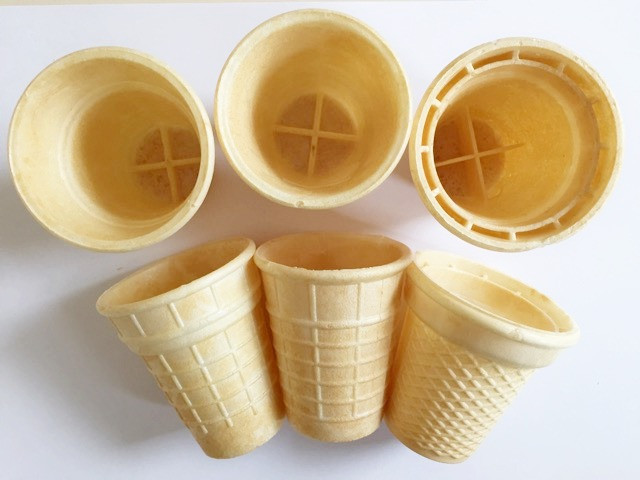 Wafer cup and cone
 Petri dish 90 mm
 Ice cream sticks Magnum (curly)
 Pepsin whey pork
 Ice cream sticks (with logo)
 J-Bottom technology
- Ice cream sticks Standard 93
- Ice cream sticks (round)
- Ice cream sticks Standard 114
- Auxiliaries for sugar products
- General purpose environment of SPC "Biocompass-S" (Uglich)
Consumables
 Cassettes for DCC somatic cell counter
 Napkin reusable for wiping the udder
 Fall with a loop for cattle
 Drencher for feeding calves with a flexible probe
 Mug for milking the first streams of milk, lengthwise
 Disinfectant with washing effect (10kg)
- Antibryk
- Milk filters - primary cleaning
- Drencher for feeding calves with a rigid probe
- Dosing syringe, hose attachment
- Apron and armlets
- Electric Cattle Driver
- Pencils for marking animals
- Non-returnable cup for udder treatment
- Forged pitchforks
Microbiology
 MicroFast® Environmental Listeria Count Plate
 MicroFast® Enterobacteriaceae Count Plate (cat. no. LR1011)
 MicroFast® Coliform & E.coli Count Plate
 MicroFast® Salmonella Count Plate (SAL), for the determination of Salmonella in food and environmental samples (Catalog #LR1006)
 Substrate for accelerated determination of QMAFAnM, (catalog number LR1321)
 Substrate for determining QMAFAnM (catalog number LR1001)
- Substrate for determining the number of staphylococci (Catalog number LR1005) MicroFast® Staphyloccocus aureus Count Plate
- MicroFast® Staphyloccocus aureus Confirmation Plate Staph.aureus Confirmation Plate (cat. no. LR1005Q)
- MicroFast® Bacillus cereus Count Plate (catalog number LR1010)
- Yeast & Mold Count Plate (cat. no. LR1003) MicroFast® Yeast & Mold Count Plate
- MicroFast® Lactic Acid Bacteria Count Plate (Part Number LR1312)
- MicroFast® Microbiological Substrates
- Coliform Count Plate (catalog number LR1002) MicroFast® Coliform Count Plate
Our News
 Krupko explained what groundwork has been laid for the development of the agro-industrial complex in the Gomel region for the next five years.08.01.2026
 Lukashenko appreciated it! See how Belarusian condensed milk is made.08.01.2026
 Лукашенко: Дай мне то, что без всяких добавок! // НАСТОЯЩАЯ сгущёнка: от фермы до банки за 12 часов!08.01.2026
- От самолетов до лекарств из плазмы крови. Пархомчик об амбициозных проектах Брестской области05.01.2026
- The highlights of 2025: what will we remember most about it?05.01.2026
- A major industry reboot: nine new transport corridors will open in the Mogilev region in 2025.31.12.2025
- A renovated dairy complex with unique designs was commissioned in the Petrikovsky district.31.12.2025
- A holiday shrouded in home warmth and tradition. How a Grodno family spends Christmas25.12.2025
- Sign a 5-year contract and get 200 base bonuses! We'll tell you who's eligible and where to get this bonus.25.12.2025
- Госстандарт: продукция с Госзнаком качества - это имидж страны, она должна быть высочайшего уровня25.12.2025
- Цифровизацию здесь внедряют во все сферы производства. С какими успехами заканчивает год СУП "Хотиславский"24.12.2025
- Cashmere and Belarusian know-how. Mongolian Ambassador on a landmark agreement for cooperation with Belarus 24.12.2025
- A fusion of wisdom and experience: a meeting of the Minsk Region Council of Elders was held in the Pukhovichi District.24.12.2025
- Which products will be awarded the State Quality Mark in 2025? The list has been approved.24.12.2025
- Tariff reduction and more. What will the free trade agreement with Indonesia bring to the EAEU countries?23.12.2025
- Брестская область преодолела рубеж по удою молока на одну корову в 8 тыс. кг 23.12.2025
Articles
 Развитие фермерства в Краснодарском крае: новые достижения и поддержка со стороны властей31.12.2025
 Russian meat exports to China are expected to grow to 300,000 tons by 2025.31.12.2025
 The results of meat livestock farming in the Moscow region have been summarized: production exceeded 320 thousand tons.31.12.2025
- Crisis in the Agricultural Sector: Unprofitability and the Need for Optimization31.12.2025
- Казахстан сохраняет доступные цены на говядину на фоне мировых трендов31.12.2025
- World Meat Prices: Trends and Changes in Week 5231.12.2025
- Казахстан расширяет экспортные возможности в сфере животноводства31.12.2025
- CP Vietnam начинает экспорт переработанной курятины в Сингапур, открывая новые горизонты для вьетнамского птицеводства31.12.2025
- The Leningrad Region is ready to completely replace the Volzhanin poultry farm's egg production.31.12.2025
- The Chaikovskaya poultry farm has denied rumors about replacing chicken feed.31.12.2025
- The Impact of the Meat Industry on the US Economy31.12.2025
- Первая поставка продукции из Ставрополья в Африку: экспорт в Либерию, Танзанию и Бенин начался в 2025 году31.12.2025
- An attempt to illegally import 3 tons of meat and dairy products from Belarus was stopped in the Bryansk region.26.12.2025
- ГК «АГРОЭКО» признана лучшей в АПК по итогам Cbonds Awards 2025 за дебютный выпуск биржевых облигаций26.12.2025
- Eight AGROECO executives were included in the prestigious "Salt of the Earth" rating.26.12.2025
- Экспорт мясной продукции группы «ПРОДО» увеличился более чем в два раза26.12.2025
Economics
 10 reasons to take a deposit04.05.2025
 Serbia's NIS's only refinery will resume operations.05.01.2026
 Финские власти раскрыли, что перевозило следовавшее из Петербурга судно05.01.2026
- Reuters has learned of India's new demand for companies over Russian oil.05.01.2026
- Samsung подал заявку на регистрацию новых товарных знаков в России31.12.2025
- Экс-комиссар ЕС Бретон заявил о хищниках вокруг союза после санкций США31.12.2025
- Germany has closed the second investigation against Usmanov.31.12.2025
- Аналитики предсказали антирекорд по импорту Индией нефти из России31.12.2025
- What problems has Russian biathlon faced due to isolation?31.12.2025
- Macron considered US sanctions against the former European Commissioner to be intimidation of the EU.25.12.2025
- ФРГ и Франция осудили санкции США против экс-еврокомиссара и активистов25.12.2025
- Болгария экстрадирует в США россиянина, обвиняемого в нарушении санкций25.12.2025
- Филиппины разрешили импортировать свинину из России24.12.2025
- WSJ раскрыл детали переговоров США с Лукашенко с обсуждением лишнего веса24.12.2025
- The French Foreign Ministry condemned US sanctions against former European Commissioner Breton.24.12.2025
- Российские банки обяжут раскрывать данные о структуре собственности24.12.2025
Antibiotics in Milk
 Pharmaceutical companies see a threat to EU security due to bacteria in Ukraine13.11.2025
 В Британии предупредили о риске для миллионов из-за супербактерий06.01.2025
 Moscow court sides with Indian company in dispute with Health Ministry26.11.2024
- Scientists estimate increase in mortality due to drug-resistant bacteria29.10.2024
- Antibiotics for livestock and pesticides found in poisoned family's home29.10.2024
- Izvestia reported on the shortage of widely used antibiotics in Russia29.10.2024
- The Ministry of Health called data on the shortage of antibiotics unreliable29.10.2024
- Scientists warn of threat of return to pre-penicillin times29.10.2024
- The Ministry of Health explained how attitudes towards antibiotics changed during the pandemic07.05.2024
- WHO explains the risks of taking antibiotics "just in case"06.05.2024
- Doctors warn of bad practices after government decision on antibiotics25.04.2024
- The Ministry of Health removed antibiotics and hormones from the standard treatment of ARVI25.04.2024
- Antibiotics in oil: myth or reality?06.03.2024
- Antibiotics in sour cream: myth or reality?05.03.2024
- Antibiotics in goat milk: effects, problems and control measures16.02.2024
- The Japanese will stop producing the popular antibiotic vilprafen in Russia23.12.2023
Antibiotics in Meat
 Antibiotics in pollock25.02.2024
 Antibiotics in herring: myth or reality?12.02.2024
 Antibiotics in perch10.02.2024
- Antibiotics in sprat: facts and myths10.02.2024
- Antibiotics in tuna: an important health and environmental issue09.02.2024
- Antibiotics in meat30.01.2024
- Antibiotics in chebureks: myth or reality?29.01.2024
- Antibiotics in cutlets: problem or myth?18.01.2024
- Antibiotics in Chicken: Where Are the Highest Concentrations?17.01.2024
- Antibiotics in carp17.01.2024
- Where Are More Antibiotics in Chicken: Reality and Cautions16.01.2024
- Antibiotics in Salmon: Safety and Product Quality16.01.2024
- Antibiotics in Turkey15.01.2024
- Antibiotics in Sal: Reality and Safety Issues15.01.2024
- Antibiotics in Fried Dumplings: Facts, Risks and How to Stay Safe15.01.2024
- Antibiotics in sausages14.01.2024
10 Interesting Facts
 Antibiotics in Coffee: Myths and Reality03.05.2025
 Forged forks: 10 interesting facts16.05.2024
 Swimming pool and weight loss: 10 interesting facts10.03.2024
- Tests for antibiotics in milk - 10 interesting facts07.03.2024
- Cleaning the kettle from scale, 10 interesting facts...06.03.2024
- Antibiotics in beer: 10 interesting facts04.03.2024
- Wild boar, how to survive...01.03.2024
- Purulent mastitis, 10 interesting facts27.02.2024
- Lemon and alcohol: 10 interesting facts25.02.2024
- Mint - 10 interesting facts25.02.2024
- Wild boar, 10 interesting facts20.02.2024
- Wild boar and domestic pig: comparison and advantages20.02.2024
- Cottage cheese, 10 interesting facts20.02.2024
- 10 Interesting Facts About Milk19.02.2024
- How to Clean a Toilet - 10 Interesting Facts (Acid vs Alkaline)18.02.2024
- Goat's milk: 10 interesting facts16.02.2024
Diseases of cattle
 Dicroceliosis in cattle09.03.2024
 Demodicosis in cattle01.03.2024
 Purulent mastitis of cattle27.02.2024
- Hypodermatosis in cattle20.02.2024
- Hemonchoz in cattle11.02.2024
- Bursitis in cattle30.01.2024
- Brucellosis in cattle29.01.2024
- Bronchopneumonia in calves27.01.2024
- Bronchitis in cattle26.01.2024
- Mortellaro disease in cattle24.01.2024
- White muscle disease in cattle23.01.2024
- Babesiosis in cattle22.01.2024
- Cattle acidosis20.01.2024
- Arthritis in cattle20.01.2024
- Anaplasmosis in cattle18.01.2024
Misc
 Antibiotics for coughs: when they are needed and when they are not11.02.2024
 Более 3 тыс. нарушений ПДД выявили в Гомельской области за длинные выходные08.01.2026
 Безопасность в местах богослужений обеспечивают сотрудники минской милиции08.01.2026
- Два пьяных водителя каршеринговых авто задержаны инспекторами ГАИ в Минске08.01.2026
- Об ответственности за вождение в нетрезвом виде напомнили в суде05.01.2026
- In Bobruisk, a drunk driver without a license borrowed a friend's car for a ride.05.01.2026
- Fewer accidents, more traffic on the roads: What the year 2025 will look like, according to the State Traffic Inspectorate.05.01.2026
- Диетолог Минздрава назвал безопасную порцию икры31.12.2025
- More than 3,800 traffic violations were detected on the roads of the Gomel region over the long weekend.31.12.2025
- The Department of Internal Affairs explained how traffic in central Grodno will be organized on New Year's Eve.31.12.2025
- A car fatally struck a drunk pedestrian in the Drogichin district.31.12.2025
- An 18-year-old boy who was caught in icy water was rescued in Vitebsk.26.12.2025
- В Могилеве мужчина украл у друга украшение за Br8,5 тыс., вырученные деньги проиграл в казино24.12.2025
- A woman was hit by a train in Gomel.24.12.2025
- В реальном и виртуальном пространстве. В МВД рассказали о рисках для школьников в период каникул 23.12.2025
- Traffic police in the Vitebsk region detained 14 unlicensed drivers over the weekend.23.12.2025
Cloud of Tags
TelegramПольшаFacebookRussiaВакцинацииКоронавирусКофеОрганизмФруктыТурцияАлкогольного опьяненияСырыИммунитетЗаконДетиСвининаДжо БайденПродукты питанияУборкаминистр сельского хозяйстваКарантинАзербайджанЛечениеОбщепитКрупного рогатого скотаПравительствоУкраинеЕССанкцииНовостиАлександр ЛукашенкоПродовольствиеПродукцияДеньгиВирусРоссиянеЕврокомиссияПраздникЭкономикаТатарстанДмитрий песковСельское хозяйствоБразилияНефтьЭкспортАвстралияИнфляцияФермерСШАЦеныАлкогольСмертьРосстатСудПрокуратураСанкт-ПетербургЗдоровьеРоспотребнадзорВостокПтицефабрикаПензенской областиСпутник vКризисДоходыМЧСГерманияПитаниеВакцинацияПесковПоддержкаМолокоКанадаФранцияОнлайнГовядинаДиректорТребованияМинскМоскваМинфинБройлерДолларЗависимостьМясокомбинатПодмосковьеПроизводство мясаУкраинаРаботаМинздравAppleДональд ТрампТАССВеликобританииКитайКРСЕАЭСGoogleМинсельхозБизнесСотрудники ГАИЕгипетReutersЛекарстваКредитУзбекистанВеликобританияМясоВладимир ПутинЗапретРоссельхознадзорИнвестицииАЧСИмпортВластиАнтибиотиковУченыеСубсидииИсследованияБеларусьBloombergВ китаеЯпонияРодителиЖивотноеПроизводство молокаУрожаяГазпромВьетнамЦентробанкОтпускCOVID-19КартофельРубльКрупный рогатый скотЯйцаВыручкаГовядинуМясо птицыКазахстанМужчины2024РоссияБолезньИталияНедвижимостьКлиматКолбасыМаслоЗеленскийЗаконопроект