
From airplanes to blood plasma-based medicines. Parkhomchik on the Brest region's ambitious projects.

Photo is illustrative in nature. From open sources.

Petr Parkhomchik, Chairman of the Brest Regional Executive Committee, Brest Region, promoting itself under the brand "#1region," strives for leadership in many areas. The production of unique medicines, the assembly of aircraft and river vessels are just a few of the ambitious projects that Brest residents are already working on. In an interview with a BELTA correspondent, Petr Parkhomchik, Chairman of the Brest Regional Executive Committee, discussed economic development, the prospects for the social sphere, why tourism needs a reboot, and how Pripyat Polesie should change.
- Petr Alexandrovich, in your opinion, what breakthrough year was 2025 for Brest Region ?
- Certainly, it was more than just another year completing a five-year plan. We confirmed our ability to work effectively and multi-faceted. Overall, I would say that 2025 was a year of comprehensive growth for Brest Region. We performed well in agriculture, industry, attracting investment, tourism, and foreign economic activity. I'd like to emphasize the growth of the agro-industrial sector, which underpins our food security.
Livestock production has increased. Gross milk production increased by 163,000 tons, with the average milk yield per cow exceeding 8,000 kg. Thanks to the modernization of dairy farms and the introduction of new technologies, we've been able to increase productivity, improve product quality, and expand supplies to domestic and foreign markets. The Brest region remains Belarus's agricultural leader. Our region accounts for a third of the country's food exports . We're focusing on the sustainable development of agriculture and processing—and we're seeing corresponding results.
We can say that 2025 will be a breakthrough year, as the Brest region has achieved a sustainable pace. There are no gaps between our plans and their implementation. Our people are hard workers who take their work seriously. Thanks to them, the region operates efficiently and achieves its goals. I'm confident this will continue. We're committed to continued development, ensuring that each coming year will be even more productive.
Incidentally, in 2025, we strengthened our regional branding efforts, giving the Brest region a clear regional identity. We're using the "#1region" designation to promote our image in the business and tourism sectors. These serve as beacons that attract people's attention, letting them know that the Brest region is a modern, dynamically developing, and open region. We're placing a special emphasis on tourism. Its contribution to the economy should increase. We'll reboot this industry and plan to develop a regional tourism development program for the Brest region through 2030.
The head of state is focusing on technological sovereignty. What unique industries have emerged in the Brest region and are planned for the future?
For example, household refrigerator production has begun in Baranovichi. This is a new direction for the Brest region. The equipment is in demand both in Belarus and abroad. This site has potential for expansion. We are exploring the possibility of establishing expanded polystyrene production. In Pinsk, together with Russian partners, we launched the production of axial piston hydraulic pumps. This project is unique not only for the region but for the entire republic. It fills a critically important position in mechanical engineering. A plant producing extruded aluminum profiles has begun operations in the Brest Free Economic Zone. This is also an import-substituting project.
We are close to completing two more projects: the production of plastic components for batteries and a line for the production of blood plasma-based medicines. I think it goes without saying that both areas are very important.
We are mastering the production of the Osvey light multipurpose aircraft. The goal is ambitious, but I have no doubt that the Brest Region is capable of achieving it. Specific plans have been outlined for expanding existing chipboard and veterinary drug production facilities. A new line of pressing equipment will be launched. Production of chrome-plated hydraulic cylinder piston rods will be launched. These advances will allow us to strengthen the region's mechanical engineering sector and increase exports.
- The economy is working to ensure social development. Please share what new developments can be expected in this area in 2026 and beyond?
- The most important thing is for economic revenues to improve people's quality of life. Therefore, all efforts are focused on ensuring the effective implementation of social projects. Over the past five years, seven new kindergartens and four schools have been built in the Brest Region. In addition, a number of educational institutions have been renovated. Thanks to this, comfort in new neighborhoods has increased, and more than 4,600 preschool and school places have been created.
Six new schools are planned to be built by 2030. Two of them will be located in Brest. Construction has already begun in the YUZMR-5 microdistrict, with completion scheduled for 2026. A school in the Vulka-3 microdistrict is a future prospect. The region also plans to build new schools in Bereza, Kobrin, and the agro-town of Olshany in the Stolin District, while a school-kindergarten will be built in the village of Telmy-1 in the Brest District.
A preschool program has also been developed: five new kindergartens with over 800 children. Brest will receive two modern kindergartens, including one on Zhukova Street with a swimming pool. Foreign investment is being sought for this project . Baranovichi, Ivanovo, and Malorita are also planned to receive new kindergartens.
The focus remains on healthcare. Thus, in 2025, the reconstruction of the Brest Regional Children's Hospital and the David-Gorodok Hospital, as well as the renovation of the Pinsk Children's Polyclinic, were completed. Modernization of the operating unit of Brest City Hospital No. 1 is underway. Construction of a new building for the Brest Regional Clinical Hospital is in full swing—it is the largest medical facility in the region in recent years. Large-scale reconstruction of the Pinsk Central Hospital is ongoing, and an infectious diseases wing for the Bereza District Hospital is under construction.
In the coming years, we plan to begin construction of a surgical wing in Baranovichi and a renovation of the Baranovichi Maternity Hospital. The Brest Regional Medical Rehabilitation Center for Children with Psychoneurological Disorders, "Tonus," will undergo renovation, including the construction of a treatment wing. Design work is planned for the renovation of polyclinics in Luninets and Stolin.
People are eagerly awaiting these projects, and we will strive to complete them as quickly as possible. The goal remains constant: modern equipment and high-quality, accessible healthcare for everyone!
The Socioeconomic Development Program for 2026-2030 includes one of the key priorities: strong regions. In the Brest Region, special attention is being paid to the development of the Pripyat Polesie districts. How should they change?
Pripyat Polesie is a strategically important region. The program for its development has already been launched and covers a variety of areas: from agriculture and industry to infrastructure and the social sphere. Polesie possesses enormous resource and human potential, and we aim to utilize it to the fullest. In particular, dairy farms will be modernized to improve productivity and quality. Reclaimed land will continue to be brought into economic use. This will create more fields for agricultural organizations and farmers engaged in crop production. I emphasize that for Polesie residents, the most important question is "give me land." They know how to wisely manage their greatest asset.
The program is not limited to agriculture. It also includes production projects. Among them is the blood plasma processing plant in Gantsevichi, which I already mentioned. With the commissioning of this facility, the region will gain new competencies and create additional jobs. An innovative pharmaceutical production facility will be launched, unparalleled in the CIS. Thanks to the Pripyat Polesie development program, the Stolin, Luninets, Pinsk, and Gantsevichi districts should significantly increase their contribution to industrial production in the Brest region.
All efforts are aimed at improving the quality of life in the region and enhancing people's well-being. We see Pripyat Polesie as a key pillar of the Brest region's economy. I would also like to highlight the region's rich tourism potential, which is far from being fully utilized.
You've repeatedly emphasized tourism. Despite the Brest Region being a leader in this sector in Belarus, you nonetheless announced a "reset."
Tourism is a strategic economic sector. Its contribution to the GRP should definitely increase. We intend to take a comprehensive approach to this issue. We are developing a diverse tourism product so that tourists of all ages and backgrounds can find a suitable vacation and enjoy the vibrant Brest Region.
We will continue to develop our brands—the Brest Hero Fortress Memorial Complex and the Belovezhskaya Pushcha National Park. New facilities will be built there. Construction of a spa hotel is expected to begin in Brest in 2026. New catering establishments and family vacation locations are planned for the region.
We are focusing on health and wellness tourism. Several projects have been launched to modernize sanatoriums. Treatment and sleeping facilities, spa areas, swimming pools, and restaurants will be built there.
We've begun working hard to revive shipbuilding in Pinsk. This also opens up opportunities for tourism development. There's a plan to build pleasure trimarans at the Pinsk Shipyard for river excursions. This will also lead to the development of coastal infrastructure, including piers and recreation areas.
What are the Brest Region's goals for 2026?
Our primary goal, not just for 2026, but always, is for the people of the Brest Region to live better, for the economy to be strong, for healthcare to be high-quality and accessible, and for our communities to be cozy and comfortable.
We will adhere to the principle: attitude determines results. You can have the most ambitious plans and write any program, but without the right attitude, the desired results will not be achieved. And that depends on each of us!
Alevtina CHERNOVOLOVA, BELTA.
- Petr Alexandrovich, in your opinion, what breakthrough year was 2025 for Brest Region ?
- Certainly, it was more than just another year completing a five-year plan. We confirmed our ability to work effectively and multi-faceted. Overall, I would say that 2025 was a year of comprehensive growth for Brest Region. We performed well in agriculture, industry, attracting investment, tourism, and foreign economic activity. I'd like to emphasize the growth of the agro-industrial sector, which underpins our food security.
Livestock production has increased. Gross milk production increased by 163,000 tons, with the average milk yield per cow exceeding 8,000 kg. Thanks to the modernization of dairy farms and the introduction of new technologies, we've been able to increase productivity, improve product quality, and expand supplies to domestic and foreign markets. The Brest region remains Belarus's agricultural leader. Our region accounts for a third of the country's food exports . We're focusing on the sustainable development of agriculture and processing—and we're seeing corresponding results.
We can say that 2025 will be a breakthrough year, as the Brest region has achieved a sustainable pace. There are no gaps between our plans and their implementation. Our people are hard workers who take their work seriously. Thanks to them, the region operates efficiently and achieves its goals. I'm confident this will continue. We're committed to continued development, ensuring that each coming year will be even more productive.
Incidentally, in 2025, we strengthened our regional branding efforts, giving the Brest region a clear regional identity. We're using the "#1region" designation to promote our image in the business and tourism sectors. These serve as beacons that attract people's attention, letting them know that the Brest region is a modern, dynamically developing, and open region. We're placing a special emphasis on tourism. Its contribution to the economy should increase. We'll reboot this industry and plan to develop a regional tourism development program for the Brest region through 2030.
The head of state is focusing on technological sovereignty. What unique industries have emerged in the Brest region and are planned for the future?
For example, household refrigerator production has begun in Baranovichi. This is a new direction for the Brest region. The equipment is in demand both in Belarus and abroad. This site has potential for expansion. We are exploring the possibility of establishing expanded polystyrene production. In Pinsk, together with Russian partners, we launched the production of axial piston hydraulic pumps. This project is unique not only for the region but for the entire republic. It fills a critically important position in mechanical engineering. A plant producing extruded aluminum profiles has begun operations in the Brest Free Economic Zone. This is also an import-substituting project.
We are close to completing two more projects: the production of plastic components for batteries and a line for the production of blood plasma-based medicines. I think it goes without saying that both areas are very important.
We are mastering the production of the Osvey light multipurpose aircraft. The goal is ambitious, but I have no doubt that the Brest Region is capable of achieving it. Specific plans have been outlined for expanding existing chipboard and veterinary drug production facilities. A new line of pressing equipment will be launched. Production of chrome-plated hydraulic cylinder piston rods will be launched. These advances will allow us to strengthen the region's mechanical engineering sector and increase exports.
- The economy is working to ensure social development. Please share what new developments can be expected in this area in 2026 and beyond?
- The most important thing is for economic revenues to improve people's quality of life. Therefore, all efforts are focused on ensuring the effective implementation of social projects. Over the past five years, seven new kindergartens and four schools have been built in the Brest Region. In addition, a number of educational institutions have been renovated. Thanks to this, comfort in new neighborhoods has increased, and more than 4,600 preschool and school places have been created.
Six new schools are planned to be built by 2030. Two of them will be located in Brest. Construction has already begun in the YUZMR-5 microdistrict, with completion scheduled for 2026. A school in the Vulka-3 microdistrict is a future prospect. The region also plans to build new schools in Bereza, Kobrin, and the agro-town of Olshany in the Stolin District, while a school-kindergarten will be built in the village of Telmy-1 in the Brest District.
A preschool program has also been developed: five new kindergartens with over 800 children. Brest will receive two modern kindergartens, including one on Zhukova Street with a swimming pool. Foreign investment is being sought for this project . Baranovichi, Ivanovo, and Malorita are also planned to receive new kindergartens.
The focus remains on healthcare. Thus, in 2025, the reconstruction of the Brest Regional Children's Hospital and the David-Gorodok Hospital, as well as the renovation of the Pinsk Children's Polyclinic, were completed. Modernization of the operating unit of Brest City Hospital No. 1 is underway. Construction of a new building for the Brest Regional Clinical Hospital is in full swing—it is the largest medical facility in the region in recent years. Large-scale reconstruction of the Pinsk Central Hospital is ongoing, and an infectious diseases wing for the Bereza District Hospital is under construction.
In the coming years, we plan to begin construction of a surgical wing in Baranovichi and a renovation of the Baranovichi Maternity Hospital. The Brest Regional Medical Rehabilitation Center for Children with Psychoneurological Disorders, "Tonus," will undergo renovation, including the construction of a treatment wing. Design work is planned for the renovation of polyclinics in Luninets and Stolin.
People are eagerly awaiting these projects, and we will strive to complete them as quickly as possible. The goal remains constant: modern equipment and high-quality, accessible healthcare for everyone!
The Socioeconomic Development Program for 2026-2030 includes one of the key priorities: strong regions. In the Brest Region, special attention is being paid to the development of the Pripyat Polesie districts. How should they change?
Pripyat Polesie is a strategically important region. The program for its development has already been launched and covers a variety of areas: from agriculture and industry to infrastructure and the social sphere. Polesie possesses enormous resource and human potential, and we aim to utilize it to the fullest. In particular, dairy farms will be modernized to improve productivity and quality. Reclaimed land will continue to be brought into economic use. This will create more fields for agricultural organizations and farmers engaged in crop production. I emphasize that for Polesie residents, the most important question is "give me land." They know how to wisely manage their greatest asset.
The program is not limited to agriculture. It also includes production projects. Among them is the blood plasma processing plant in Gantsevichi, which I already mentioned. With the commissioning of this facility, the region will gain new competencies and create additional jobs. An innovative pharmaceutical production facility will be launched, unparalleled in the CIS. Thanks to the Pripyat Polesie development program, the Stolin, Luninets, Pinsk, and Gantsevichi districts should significantly increase their contribution to industrial production in the Brest region.
All efforts are aimed at improving the quality of life in the region and enhancing people's well-being. We see Pripyat Polesie as a key pillar of the Brest region's economy. I would also like to highlight the region's rich tourism potential, which is far from being fully utilized.
You've repeatedly emphasized tourism. Despite the Brest Region being a leader in this sector in Belarus, you nonetheless announced a "reset."
Tourism is a strategic economic sector. Its contribution to the GRP should definitely increase. We intend to take a comprehensive approach to this issue. We are developing a diverse tourism product so that tourists of all ages and backgrounds can find a suitable vacation and enjoy the vibrant Brest Region.
We will continue to develop our brands—the Brest Hero Fortress Memorial Complex and the Belovezhskaya Pushcha National Park. New facilities will be built there. Construction of a spa hotel is expected to begin in Brest in 2026. New catering establishments and family vacation locations are planned for the region.
We are focusing on health and wellness tourism. Several projects have been launched to modernize sanatoriums. Treatment and sleeping facilities, spa areas, swimming pools, and restaurants will be built there.
We've begun working hard to revive shipbuilding in Pinsk. This also opens up opportunities for tourism development. There's a plan to build pleasure trimarans at the Pinsk Shipyard for river excursions. This will also lead to the development of coastal infrastructure, including piers and recreation areas.
What are the Brest Region's goals for 2026?
Our primary goal, not just for 2026, but always, is for the people of the Brest Region to live better, for the economy to be strong, for healthcare to be high-quality and accessible, and for our communities to be cozy and comfortable.
We will adhere to the principle: attitude determines results. You can have the most ambitious plans and write any program, but without the right attitude, the desired results will not be achieved. And that depends on each of us!
Alevtina CHERNOVOLOVA, BELTA.
Read together with it:
- Rosselkhoznadzor monitored the export of more than 57,000 tons of veterinary goods from St. Petersburg.These products were shipped to countries including Azerbaijan , Angola, Vietnam , and China . 1,500 doses of veterinary vaccines were also exported to Moldova, and over 12.4 million eggs were shipped to Sierra Leone and the UAE. Officials from Rosselkhoznadzor verified compliance with veterinary and sanitary requirements in 15 importing countries , and the goods were shipped with specialized veter...
- Mexican and Canadian beef is losing ground in the US market.Beef from Mexico and Canada is losing ground in American kitchens and restaurants, despite being imported without tariffs imposed on all exports by US President Donald Trump a year ago. According to Tegra Consultant, Canadian meat sales to the United States have fallen by 23.56% over the past two years, while Mexican food exports to that market have fallen by 11.5......
- EU and Mercosur: Experts warn of shortage of EU veterinarians to control imports and associated health risksThe agreement between the European Union ( EU ) and Mercosur, which is currently stalled, has caused concern in the primary sector of various EU countries, including Spain, where, in addition to livestock breeders and agricultural producers, veterinarians have joined the complaints. It should therefore be remembered that various veterinary institutions, such as the colleges of Asturias, Lugo and C...
- An expert identified possible areas of cooperation between Belarus and Southeast Asian countries.Irina Novikova, February 4, Minsk . Irina Novikova, Head of the Department of Management, Business Technologies, and Sustainable Development at the Belarusian State Technological University, Professor, and Doctor of Economics, discussed potential areas of cooperation between Belarus and Southeast Asian countries at a House of Representatives seminar entitled "Belarus and Southeast Asia in Search o...
- The first batch of fish products in 2026 was sent from the Irkutsk region to China.The products comply with all veterinary requirements and quality standards of Russian and Chinese legislation. According to Marina Kozharina, Acting Minister of Agriculture of the Irkutsk Region, fishery exports play a significant role in the region's achievement of the goals of the federal project "Export of Agricultural Products," which is part of the national project "International Cooperation ...
- In the Saratov region, over 400 hectares of perennial plantings were planted in 2025.Including more than 364 hectares of intensive orchards. By 2026, at least 300 hectares of perennial plantings are planned, including 65 hectares of fruit nurseries. The area of perennial fruit plantings in farms of all categories in the region amounts to 9.8 thousand hectares, including 6.8 thousand hectares of fruit-bearing age. "Among the perennial plantings, pome fruits occupy 6.9 thousand he...
- The first batch of canned meat from the Kurgan region was sent to Azerbaijan under the supervision of Rosselkhoznadzor.The products successfully passed the required laboratory tests at the Chelyabinsk branch of the All-Russian Research Institute of Animal Husbandry, confirming their safety and compliance with the importing country's requirements. During the inspection, officials verified the cargo details and accompanying veterinary documents, as well as the production date and sanitary condition of the products. ...
- Five suspects in supplying weapons to Russia's defense industry have been arrested in Germany.German authorities have arrested five citizens of Germany, Russia, and Ukraine in connection with sanctioned supplies to the Russian defense industry. According to investigators, they created a network of companies and managed to supply goods worth €30 million to Russia.The German Federal Prosecutor's Office has uncovered a network of companies suspected of supplying Russian defense industry goods...
Test for Atnibiotics in Milk
 Express tests for determining the residual amount of β-lactams, tetracyclines, chloramphenicol, streptomycins in milk, whey
 Rapid tests for fluoroquinolone, erythromycin, lincomycin, tillosin and tilmycosin residues in milk, whey
 Rapid tests for determining the residual amount of tetracyclines in meat
 Express-tests PIONER 5 in1 for the determination of thiamphenicol, meloxicam, colistine, trimethoprim, sulfonamides
 Rapid tests PIONER 5 in 1 for the determination of sulfonamides, tylosin, tilmicosin, lincomycin, erythromycin, fluoroquinolones
 PIONEER MEIZHENG BIO-TECH (5 in1) JC1165 / Rapid tests for the determination of the residual amount of halofuginone, flavomycin, novobiocin, flunixin, dexamethasone / prednisolone in milk, whey
- PIONEER MEIZHENG BIO-TECH (5 in 1) JC0726 / Rapid tests for determining the residual amount of Bacitracin, ansamycins, clindamycin, spiramycin, florfenicol in milk, whey
- Express tests for determining the residual amount of β-lactams and tetracyclines in milk, whey
- Rapid tests for determining the residual amount of chloramphenicol in meat
- Rapid 4 in 1 tests for determining the residual amount of neomycin, kanamycin, gentamicin, spectinomycin in milk, whey
Laboratory equipment
 Mutovki for flasks and tanks (Russia)
 testo 206-pH2 - Pocket pH meter
 Indicator strips "Milk acidity" (to determine the pH of milk and dairy products), 100 pcs.
 Lumitester SMART Luminometer
 MB90/MB120 moisture analyzer (Ohaus)
 Piston oil sampler (d=20 mm, h cylinder=25 mm)
- Indicator strips "Total water hardness", 25 pcs.
- Cookware cabinet
- Testo 105 food thermometer
- Indicator strips "NS-Chlorine", 25 pcs.
- Infrared analyzer "SibSCAN" (dairy products)
- Laboratory centrifuge for the dairy industry CLU-1 "Orbit" (Ukraine)
- Indicator strips "Peroxide-25 mg", "Peroxide - 1000 mg", 100 pcs.
- Bostwick mechanical consistometer for semi-liquid foodstuffs
- ColonyStar Semi-Automatic Microbial Colony Counter
Packing
 Korreks for desserts
 GableTop aseptic packaging
 Ice cream chopsticks
 Paper sacks
 KH PACK® tartlet paper
 Cover
Cover- KH PACK® bag making paper
- Backed Foil
- Laminating paper KH PACK®
- Carton
- Parchment
- Salad dressings
- Siliconized paper for hygiene products
- Korreks for confectionery
- Grease and barrier paper KH PACK®
Additional Products
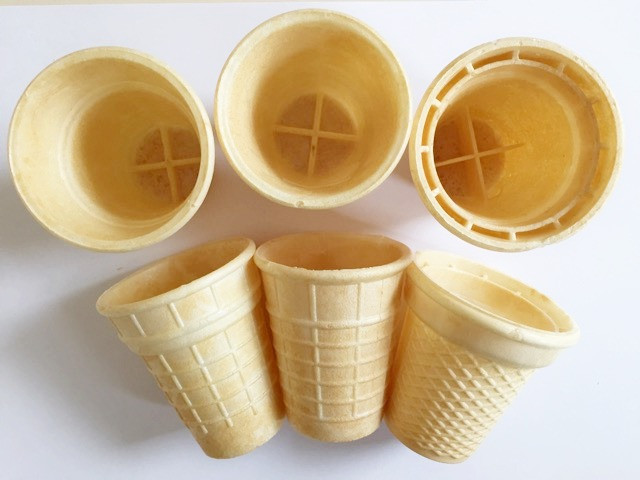 Wafer cup and cone
 General purpose environment of SPC "Biocompass-S" (Uglich)
 Auxiliaries for sugar products
 Pepsin whey pork
 J-Bottom technology
 Ice cream sticks Standard 93
- Ice cream sticks Magnum (curly)
- Petri dish 90 mm
- Ice cream sticks (with logo)
- Ice cream sticks (round)
- Ice cream sticks Standard 114
Consumables
 Hoof bath
 Mug for milking the first streams of milk, lengthwise
 Disinfectant with washing effect (10kg)
 Acid detergent (20l / 24kg)
 Sticky fly trap, 25cm*10m
 Latex gloves (long cuff with roller), (color blue, pack of 50 pieces)
- Disposable udder wipe (udder paper).
- Antibryk
- Milk filters - primary cleaning
- Knife Hoofed
- Spatula for mastitis test (Shalm's test)
- Reusable plastic syringe
- Anti-catfish milking rings
- Dosing syringe, bottle attachment
- Udder cleaner after milking (20 l)
Microbiology
 MicroFast® Microbiological Substrates
 MicroFast® Coliform & E.coli Count Plate
 MicroFast® Staphyloccocus aureus Confirmation Plate Staph.aureus Confirmation Plate (cat. no. LR1005Q)
 Substrate for determining the number of staphylococci (Catalog number LR1005) MicroFast® Staphyloccocus aureus Count Plate
 MicroFast® Enterobacteriaceae Count Plate (cat. no. LR1011)
 MicroFast® Salmonella Count Plate (SAL), for the determination of Salmonella in food and environmental samples (Catalog #LR1006)
- MicroFast® Lactic Acid Bacteria Count Plate (Part Number LR1312)
- Substrate for accelerated determination of QMAFAnM, (catalog number LR1321)
- Coliform Count Plate (catalog number LR1002) MicroFast® Coliform Count Plate
- MicroFast® Bacillus cereus Count Plate (catalog number LR1010)
- Substrate for determining QMAFAnM (catalog number LR1001)
- MicroFast® Environmental Listeria Count Plate
- Yeast & Mold Count Plate (cat. no. LR1003) MicroFast® Yeast & Mold Count Plate
Our News
 Lukashenko heard a report on the Mogilev region. The main topic was the situation in agriculture. 05.02.2026
 What major agricultural projects are being implemented in the Mogilev region?05.02.2026
 An expert identified possible areas of cooperation between Belarus and Southeast Asian countries.05.02.2026
- Surcharges on prices for agricultural products purchased from the population have been established in 2026.04.02.2026
- Lukashenko: We won't carry the Vitebsk region on our shoulders.04.02.2026
- Baby Zabava. The Grodno Zoo welcomed its first addition in 2026. 03.02.2026
- Lukashenko: We won't carry the Vitebsk region on our shoulders. 03.02.2026
- Lukashenko on the case: it is a moral monstrosity if we cannot protect our smaller brothers in this weather03.02.2026
- Grain cultivation and livestock farming. Bogdanov discussed prospects for cooperation in the agricultural sector between Belarus and Kazakhstan.01.02.2026
- Выпойка молоком 3-4 раза, больше теплой воды. Как в Брестской области наладили уход за телятами в морозы01.02.2026
- From Tractor Driver to Businessman: The Story of a Belarusian Who Built a Farm from Scratch and a Church in a Village 30.01.2026
- A warehouse in the Minsk region improperly stored powdered milk: a court ordered compensation of Br2 million.30.01.2026
- Increased processing volumes, new jobs: production capacity is being expanded in the Shklov district.30.01.2026
- The story of a Belarusian who built a sturdy farm from scratch and revived his native village.29.01.2026
- Belarusian producers plan to enter the Qatari meat market.29.01.2026
- Belarus is interested in expanding dairy product supplies to Indonesia.28.01.2026
Articles
 The court refused to seize the property of agricultural enterprises with debts to the AIC fund.05.02.2026
 Demand for semi-finished products will decline in 2025: dumpling sales will fall by 8%.05.02.2026
 Rosselkhoznadzor inspected more than 2,000 tons of livestock products shipped to Yakutia.05.02.2026
- Rosselkhoznadzor monitored the export of more than 57,000 tons of veterinary goods from St. Petersburg.05.02.2026
- К госветнадзору Бурятии поступило 860 тонн продукции при отправке в Монголию05.02.2026
- The inflation rate in Russia at the beginning of February 2026 reached 6.5%.05.02.2026
- Innovations in broiler feeding: savings and bird health05.02.2026
- New financial disputes between Aventa and Tokarevskaya Poultry Farm: a second lawsuit for 70 million rubles05.02.2026
- Mexican and Canadian beef is losing ground in the US market.05.02.2026
- Spain strengthens institutional coordination to improve animal welfare management05.02.2026
- Blaming cows was a mistake: meadows absorb more gases than cattle emit.05.02.2026
- EU and Mercosur: Experts warn of shortage of EU veterinarians to control imports and associated health risks05.02.2026
- Rosselkhoznadzor stopped the import of more than 50 kg of dangerous animal products at Ufa Airport.04.02.2026
- Rosselkhoznadzor specialists have identified quality violations in meat products.04.02.2026
- The first batch of canned meat from the Kurgan region was sent to Azerbaijan under the supervision of Rosselkhoznadzor.04.02.2026
- A poultry farm in Yugra was fined for violating veterinary regulations.04.02.2026
Economics
 10 reasons to take a deposit04.05.2025
 Lavrov and the Swiss Foreign Minister will discuss the "deep crisis" of the OSCE.05.02.2026
 Kirilenko spoke about the problems facing Russian teams after sanctions were lifted.05.02.2026
- Lavrov believes that US statements about cooperation are inconsistent with sanctions05.02.2026
- The Russian ambassador warned of a reaction to the Faroe Islands' change in stance on sanctions.05.02.2026
- Five suspects in supplying weapons to Russia's defense industry have been arrested in Germany.03.02.2026
- Bloomberg узнал о планах ЕС по санкциям против российских платины и меди03.02.2026
- The EU confirmed discussions on banning entry for participants in the military operation.31.01.2026
- Bloomberg has revealed a new possible EU sanctions plan against Russia.31.01.2026
- The EU has blacklisted Russia for money laundering.30.01.2026
- The EU has imposed new sanctions on Iran in response to the suppression of protests.30.01.2026
- The European Union has designated the IRGC a terrorist organization.30.01.2026
- The US has eased sanctions and allowed oil companies to operate in Venezuela.30.01.2026
- Titov allowed for the return of foreign companies that "miss Moscow"30.01.2026
- Following the deal with Carlyle, LUKOIL continued negotiations with other companies.29.01.2026
- Macron announced that France is preparing new sanctions against Russia.29.01.2026
Antibiotics in Milk
 Antibiotics in milk: causes and methods of detection27.01.2026
 Pharmaceutical companies see a threat to EU security due to bacteria in Ukraine13.11.2025
 Prosecutors have issued warnings to more than 5,000 companies due to rising prices.09.09.2025
- Two dairy companies from Azerbaijan refused to work with Russia.09.07.2025
- Lukashenko told how Putin treated him to goat's milk.08.07.2025
- Lukashenko demanded that Belarus be cleared of littered logs by autumn.08.07.2025
- Lukashenko stated that it is not beneficial for Belarus to “fight madly,” but to feed17.06.2025
- В Британии предупредили о риске для миллионов из-за супербактерий06.01.2025
- Moscow court sides with Indian company in dispute with Health Ministry26.11.2024
- Scientists estimate increase in mortality due to drug-resistant bacteria29.10.2024
- Antibiotics for livestock and pesticides found in poisoned family's home29.10.2024
- Izvestia reported on the shortage of widely used antibiotics in Russia29.10.2024
- The Ministry of Health called data on the shortage of antibiotics unreliable29.10.2024
- Scientists warn of threat of return to pre-penicillin times29.10.2024
- The Ministry of Health explained how attitudes towards antibiotics changed during the pandemic07.05.2024
- WHO explains the risks of taking antibiotics "just in case"06.05.2024
Antibiotics in Meat
 Antibiotics in pollock25.02.2024
 Antibiotics in herring: myth or reality?12.02.2024
 Antibiotics in perch10.02.2024
- Antibiotics in sprat: facts and myths10.02.2024
- Antibiotics in tuna: an important health and environmental issue09.02.2024
- Antibiotics in meat30.01.2024
- Antibiotics in chebureks: myth or reality?29.01.2024
- Antibiotics in cutlets: problem or myth?18.01.2024
- Antibiotics in Chicken: Where Are the Highest Concentrations?17.01.2024
- Antibiotics in carp17.01.2024
- Where Are More Antibiotics in Chicken: Reality and Cautions16.01.2024
- Antibiotics in Salmon: Safety and Product Quality16.01.2024
- Antibiotics in Turkey15.01.2024
- Antibiotics in Sal: Reality and Safety Issues15.01.2024
- Antibiotics in Fried Dumplings: Facts, Risks and How to Stay Safe15.01.2024
- Antibiotics in sausages14.01.2024
10 Interesting Facts
 Antibiotics in Coffee: Myths and Reality03.05.2025
 Forged forks: 10 interesting facts16.05.2024
 Swimming pool and weight loss: 10 interesting facts10.03.2024
- Tests for antibiotics in milk - 10 interesting facts07.03.2024
- Cleaning the kettle from scale, 10 interesting facts...06.03.2024
- Antibiotics in beer: 10 interesting facts04.03.2024
- Wild boar, how to survive...01.03.2024
- Purulent mastitis, 10 interesting facts27.02.2024
- Lemon and alcohol: 10 interesting facts25.02.2024
- Mint - 10 interesting facts25.02.2024
- Wild boar, 10 interesting facts20.02.2024
- Wild boar and domestic pig: comparison and advantages20.02.2024
- Cottage cheese, 10 interesting facts20.02.2024
- 10 Interesting Facts About Milk19.02.2024
- How to Clean a Toilet - 10 Interesting Facts (Acid vs Alkaline)18.02.2024
- Goat's milk: 10 interesting facts16.02.2024
Diseases of cattle
 Dicroceliosis in cattle09.03.2024
 Demodicosis in cattle01.03.2024
 Purulent mastitis of cattle27.02.2024
- Hypodermatosis in cattle20.02.2024
- Hemonchoz in cattle11.02.2024
- Bursitis in cattle30.01.2024
- Brucellosis in cattle29.01.2024
- Bronchopneumonia in calves27.01.2024
- Bronchitis in cattle26.01.2024
- Mortellaro disease in cattle24.01.2024
- White muscle disease in cattle23.01.2024
- Babesiosis in cattle22.01.2024
- Cattle acidosis20.01.2024
- Arthritis in cattle20.01.2024
- Anaplasmosis in cattle18.01.2024
Misc
- Antibiotics for coughs: when they are needed and when they are not11.02.2024
 "Слетают все маски человека!" // Банщик про техники парения, поющих мастерах и чудо-массажах05.02.2026
 The Master of Steam: The Story of a Businessman Who Left a Successful Printing Business to Become a Spa Master 05.02.2026
- Investigators have identified the locations of the most frequent traffic accidents in the Brest region.05.02.2026
- Ministry of Emergency Situations: 129 people have died in fires since the beginning of the year.04.02.2026
- WHO: Almost 40% of cancer cases can be prevented 04.02.2026
- The number of fires in Belarus has increased. Experts have explained the causes.04.02.2026
- "Neither tail nor scales." We went winter fishing and learned the intricacies of ice fishing.04.02.2026
- Belarus has extended the ban on labeling imported alcoholic beverages in unfriendly countries.03.02.2026
- В Гомеле благодаря неравнодушным гражданам остановили нетрезвых таксиста и бесправника 03.02.2026
- From February 11, navigation seals will be used to track rail traffic in the EAEU.03.02.2026
- The State Traffic Inspectorate reminded drivers of road safety rules during severe frosts.31.01.2026
- A woman driving under the influence of alcohol with over 2 ppm was detained in Minsk.30.01.2026
- Наведение порядка в АПК, пожарная безопасность. Какие задачи поставлены перед прокурорами Витебской области 30.01.2026
- A car crashed into a tree on Independence Avenue in Minsk, injuring two people.30.01.2026
- Топ экспортируемых товаров назвали в "Белгоспищепроме"29.01.2026
Cloud of Tags
Владимир ПутинЕСРоссельхознадзорТурцияЗапретОбщепитФермерГовядинуМужчиныСпутник vTelegramРаботаЗависимостьКанадаВостокRussiaВьетнамМЧСПольшаФруктыКофеЗдоровьеИталияАлександр ЛукашенкоПтицефабрикаАзербайджанРоспотребнадзорКрупного рогатого скотаFacebookДетиПитаниеЗаконопроектМинздравТатарстанАлкогольного опьяненияГерманияРубльИсследованияЯпонияЛекарстваСвининаКарантинМолокоКрупный рогатый скотПроизводство молокаАлкогольДиректорВирусПродовольствиеReutersЦентробанкУкраинаЛечениеРосстатИммунитетБеларусьВеликобританияКартофельМинскТребованияВластиУборкаПрокуратураЖивотноеБолезньПроизводство мясаСанкцииНедвижимостьДжо БайденМинфинСельское хозяйствоКитайКолбасыЭкспортЦеныАнтибиотиковКредитДмитрий песковКризисЗеленскийРоссияОтпускДеньгиПродукцияРодителиЕврокомиссияПоддержкаОнлайнБройлерПодмосковьеКРСМинсельхозРоссиянеМясоСубсидииПесковДоходыУченыеЯйцаСырыКазахстанЕгипетГовядинаСанкт-ПетербургМоскваКлиматТАССЭкономикаВыручкаИнвестицииВ китае2024ПравительствоКоронавирусДональд ТрампУзбекистанЕАЭСВакцинацииCOVID-19ЗаконПензенской областиGoogleИмпортАЧСВакцинацияУкраинеминистр сельского хозяйстваНовостиСудГазпромBloombergПраздникОрганизмНефтьСШАВеликобританииСмертьAppleФранцияПродукты питанияИнфляцияМясокомбинатДолларБизнесАвстралияБразилияУрожаяМаслоМясо птицыСотрудники ГАИ