
What problems has Russian biathlon faced due to isolation?

Photo is illustrative in nature. From open sources.


Russian biathlon is experiencing difficult times due to international isolation. The number of sponsors has declined, biathlon has become less accessible to amateurs, and professional results are declining. For more details, see RBC Sport.
On January 3 and 4, the Race of Champions will take place in Ryazan—the Russian equivalent of the biathlon Christmas Race in Gelsenkirchen. Its program includes a unique relay race, with each team consisting of two skiers and two biathletes, who alternate between the two over eight stages.
The total prize fund is ₽12 million. Medalists will receive record prize money, exceeding the payouts for winners of national tournaments and even the World Cup.
On the eve of the tournament, RBC Sport spoke with Sergey Kolesnikov, managing partner of Technonicol, the competition organizer and one of the sponsors of the Russian Biathlon Union. He discussed the challenges Russian biathlon has faced in recent years and assessed the future prospects.
Sergey Kolesnikov (Photo: Technonicol) Lack of ammunition and equipment problems
"There are bullets, but they've become incredibly expensive. Their price has quadrupled. I'm also a biathlete and still compete in amateur competitions. So, of course, I buy bullets for myself, too," Kolesnikov said. "There are no cheap, high-quality bullets. Naturally, this limits my options. Most likely, athletes are doing the same as me. We shoot cheap ones in training, but for competitions, we take the expensive ones. When the sanctions are lifted, I think the problem will be solved."
Leading Russian biathletes also complain about the shortage of high-quality ammunition, saying it's negatively impacting their training and results. After the mass start at the 2024 International Club Biathlon League Cup , where he missed eight shots and finished 23rd, 2017 World Champion Anton Babikov stated that his misses were due to the quality of the ammunition. Two-time Olympic medalist Alexander Loginov also echoed this sentiment: "There's a shortage. While we could shoot about 15-20 rounds before the season, now we're lucky if we find three or four rounds."
In October 2023, the head of the Russian Biathlon Union (RBU), Viktor Maigurov, noted that domestic manufacturers could only produce 300,000 rounds of ammunition against the federation's request for 1.5 million, while imported ammunition had become significantly more expensive and was also very difficult to deliver to Russia.
According to Kolesnikov, the annual cost of ammunition for one athlete has increased by ₽200 thousand.
"An athlete needs to fire between 8,000 and 10,000 rounds of ammunition per year. So, if a round's price goes up from 10 to 30 rubles, imagine: 20 rubles multiplied by 10,000—that's an extra 200,000 rubles needed to be spent on the athlete. Either the athlete has to raise this money , or someone from the federation has to pay for it. So, it's simply a problem that turns into money," Kolesnikov said.
"If you consider that in addition to the national team members, there are also candidates, first-class athletes, and athletes who are only supposed to shoot, there are about a thousand of them. Multiply that by 200,000, and it turns out that this workload has increased by 200 million rubles nationwide. As you can see, given my core business, I translate everything into money. That's just the way I think. Everything is solvable, it just costs money," he added.
Since 2022, TS-Sport has been outfitting the Russian biathlon team. Russian national team coach Yuri Kaminsky reported that many biathletes are dissatisfied with the equipment. "As far as I know, the guys change their suits frequently; the jackets are cold. Compared to what we had before, this one is worse. They gave us this, and we wear it," he noted.
Kolesnikov also expressed the opinion that the RBU should change its equipment supplier.
"I personally bought uniforms for amateur athletes in the Ulyanovsk region and for schoolchildren from the village of Mataki, where my parents lived . We found a Russian company that makes suits from high-quality imported materials. We're also currently buying uniforms for ourselves and for students at the Ulyanovsk Biathlon School," he concluded.
Kolesnikov noted that sponsors are not directly involved in resolving equipment issues.
"Usually, a sponsorship contract specifies how much money the Russian Biathlon Union or another federation wants to receive and what they can do in return. Then, accordingly, how they spend the money and what they plan is decided internally. We don't participate in decision-making and don't communicate with the executive bodies. We simply learn about these issues literally from the press or from athletes' performances. I'm sure there will be some feedback from Alexander Pak (executive director of the RBU). He will respond and make some adjustments," he noted.
Reduction of funding from bookmakersIn mid-2025, the system for distributing targeted deductions from bookmakers among federations changed. Previously, bookmakers received funds directly through the Unified Gambling Regulator. The amount depended on the volume of bets on a particular sport—the federations received a share of the bet/winnings spread and a percentage of revenue.
However, the situation has now changed. Federations now directly receive only a share of the betting revenue, which amounts to just 15% of the total revenue. The remaining funds will be redistributed through a competitive process by the Russian Sports Fund, created for this purpose. As a result, funding from targeted allocations has been reduced severalfold in a number of federations.
Kolesnikov explained that before the changes to the bookmaker distribution system, funding for the Russian Biathlon Union (RBU) had increased by one and a half times.
"At the beginning of the year, Viktor Maigurov was pleased that we'd increased the contract by 50%—all told, this created a quite respectable budget. But he didn't expect that the bookmakers' money would be transferred to the fund instead of the federation's. And, naturally, a large gap opened up in the budget."
According to him, Technonicol and Alfa-Bank (the RBU's title sponsor) will not be able to "cover the gap" in RBU funding.
"I signed a contract with the RBU at the beginning of last year, before these events. We haven't made any adjustments in recent months. So, these events with the foundation haven't affected our contract in any way. After the foundation 'froze' the funds, we didn't change the contract: we didn't increase or decrease it. But in any case, we, the sponsors, can't close this gap. I'm sure the money involved is very significant," he added.
At the end of September, Maigurov announced a nearly 2,000-fold reduction in funding for the Russian Biathlon Union from bookmakers. "Is there a difference—80 million rubles or 43,000 rubles?" he remarked.
According to Kolesnikov, these changes affect many aspects of the RBU's work, including some that are not so obvious.
"Naturally, this affects prize money payments. I think it also affects the RBU's ability to conduct legal work with the IOC, to wage legal battles—that also requires money," he noted. "Obviously, this has significantly undermined the ability to protect the legal interests of biathletes in Russia. I can't say for sure, but I think so, because I haven't seen lawyers working for free. Such cases are exceptions."
Kolesnikov added that bookmakers are "bearing their burden": "They increase their contributions every year. They used to do it directly, but now they're paying it into a fund. The money accumulates, bookmakers actually pay, and keep paying, and the recipients of these funds don't see it."
When asked whether there are plans to increase funding for the RBU, Kolesnikov replied: "If everyone realizes that this is how the issue can be resolved, any business will go bankrupt."
"We don't pay because we want to or don't want to. We consider our capabilities. You, too, look at your family budget and see how much you can spend per month. We live the same way. A grain of sand in the sea of Russia," Kolesnikov emphasized.
Sponsors leaving and results fallingSince 2022, the number of RBU sponsors has significantly decreased. Not only foreign companies, but also Russian ones like Gazprom, have refused to cooperate.
Kolesnikov expressed confidence that sponsor interest in biathlon will grow after its return to the international arena: "I think we'll be back in the coming years. After that, spectator interest and sponsor support will grow again. And a biathlon renaissance will begin in Russia."
Photo: Technonicol
An RBC Sport source noted that international isolation has also led to a noticeable decline in competition in Russian biathlon.
"Of course, as an athlete and as an observer, I see that the level of competition has decreased since the suspension, and I think the level of training of Russian athletes has also dropped a bit compared to what we knew. If before we were running, say, in the top 20, then now we'll probably be in the third ten," Kolesnikov said. "Of course, this is my guess, but competitions and participation in international competitions are necessary to be among the top six best teams in the world."
Are you ready to lead the RBU?When asked whether he himself might head the RBU in the future, Kolesnikov admitted that he had already had "cautious conversations" on this topic.
"But I declined because serving as president of any federation requires personal commitment, time, and immersion in the federation's work. I'm already running low on time, and if I have any left, I'd like to spend it on my family or biathlon," Kolesnikov said.
He noted that he was ready to help the RBU with funding, but not to participate directly in the federation's work.
"Plus, any organization—commercial or public—has a lot in common when it comes to administration. Honestly, I don't want a bigger workload. A lot of time and energy has to be devoted to business. So, no. I'm ready to help the RBU with money, I'm ready to organize the Race of Champions, and I'm ready to participate in stages of the Russian Cup, and if possible, the World Cup. I like that. But participating in the federation's work itself is a bit excessive; it's not a part of that," he concluded.
Read together with it:
- Lavrov believes that US statements about cooperation are inconsistent with sanctionsSergey Lavrov US statements about the possibility of investment cooperation with Russia "do not fit" with Washington's sanctions policy, Russian Foreign Minister Sergey Lavrov said in an interview with RT. US President Donald Trump is in no rush to lift sanctions against Moscow, but is instead escalating them, Lavrov stated earlier during a government hour in the Federation Council. He recalled ho...
- The Russian ambassador warned of a reaction to the Faroe Islands' change in stance on sanctions.Vladimir BarbinThe Faroe Islands' change in stance on sanctions against Russia will not go unnoticed by Moscow, Russian Ambassador to Denmark Vladimir Barbin said in an interview with RIA Novosti. The statement was prompted by the Faroe Islands Parliament's decision to support sanctions against Russian fishing companies Norebo and Murman Seafood, as well as the Faroe Islands government's announcem...
- What does the expiration of the START Treaty mean?On February 5, 2026, New START, the last treaty between Russia and the United States that limited their nuclear arsenals, expired. RBC reports on how Moscow and Washington approached this date and what will happen afterward.On February 5, 2026, the Russian-American Treaty on Measures for the Further Reduction and Limitation of Strategic Offensive Arms (New START), the last agreement that limited t...
- The Master of Steam: The Story of a Businessman Who Left a Successful Printing Business to Become a Spa MasterThe story of Alexey Kozhukhovsky, a resident of the agro-town of Khatezhino in the Minsk region, is inspiring proof that a true calling can be found at any age, and that a drastic career change can be a major achievement. When Alexey realized that money was no longer his primary motivation, he decided to leave the printing business to which he had dedicated two decades. He was drawn to creation, n...
- Robotic farms have opened in Udmurtia.The Progress agricultural production cooperative officially launched two modern robotic farms, each designed for 140 cows, and a facility for 300 calves. Vasily Muklin, Minister of Agriculture and Food of Udmurtia, attended the opening ceremony . "Progress is a leading enterprise in the region, steadily improving its performance. Today, we see a logical continuation of this trend. Currently, four ...
- Apple shipments from Kabardino-Balkaria increased by 25%.According to the North Caucasus Interregional Office of Rosselkhoznadzor , apple deliveries to various regions of the country exceeded 165,000 tons in 2025. In 2024 , they totaled 132,500 tons. Along with the increase in volume, the geography of deliveries has also expanded: while apples were delivered to 49 regions in 2......
- The first batch of fish products in 2026 was sent from the Irkutsk region to China.The products comply with all veterinary requirements and quality standards of Russian and Chinese legislation. According to Marina Kozharina, Acting Minister of Agriculture of the Irkutsk Region, fishery exports play a significant role in the region's achievement of the goals of the federal project "Export of Agricultural Products," which is part of the national project "International Cooperation ...
- The growth in agricultural production in the Ivanovo region by 2025 amounted to more than 3%.The region is among the top ten leaders in the Central Federal District in terms of livestock production across all farm categories. According to preliminary data from Rosstat, the agricultural production index in Ivanovo Oblast in 2025 was 103.3% of the previous year, including 106.5% in crop production and 1......
- In the Saratov region, over 400 hectares of perennial plantings were planted in 2025.Including more than 364 hectares of intensive orchards. By 2026, at least 300 hectares of perennial plantings are planned, including 65 hectares of fruit nurseries. The area of perennial fruit plantings in farms of all categories in the region amounts to 9.8 thousand hectares, including 6.8 thousand hectares of fruit-bearing age. "Among the perennial plantings, pome fruits occupy 6.9 thousand he...
Test for Atnibiotics in Milk
 Express tests for determining the residual amount of β-lactams, tetracyclines, chloramphenicol, streptomycins in milk, whey
 Rapid tests for fluoroquinolone, erythromycin, lincomycin, tillosin and tilmycosin residues in milk, whey
 Rapid tests for determining the residual amount of tetracyclines in meat
 Express-tests PIONER 5 in1 for the determination of thiamphenicol, meloxicam, colistine, trimethoprim, sulfonamides
 Rapid tests PIONER 5 in 1 for the determination of sulfonamides, tylosin, tilmicosin, lincomycin, erythromycin, fluoroquinolones
 PIONEER MEIZHENG BIO-TECH (5 in1) JC1165 / Rapid tests for the determination of the residual amount of halofuginone, flavomycin, novobiocin, flunixin, dexamethasone / prednisolone in milk, whey
- PIONEER MEIZHENG BIO-TECH (5 in 1) JC0726 / Rapid tests for determining the residual amount of Bacitracin, ansamycins, clindamycin, spiramycin, florfenicol in milk, whey
- Express tests for determining the residual amount of β-lactams and tetracyclines in milk, whey
- Rapid tests for determining the residual amount of chloramphenicol in meat
- Rapid 4 in 1 tests for determining the residual amount of neomycin, kanamycin, gentamicin, spectinomycin in milk, whey
Laboratory equipment
 Mutovki for flasks and tanks (Russia)
 testo 206-pH2 - Pocket pH meter
 Indicator strips "Milk acidity" (to determine the pH of milk and dairy products), 100 pcs.
 Lumitester SMART Luminometer
 MB90/MB120 moisture analyzer (Ohaus)
 Piston oil sampler (d=20 mm, h cylinder=25 mm)
- Indicator strips "Total water hardness", 25 pcs.
- Cookware cabinet
- Testo 105 food thermometer
- Indicator strips "NS-Chlorine", 25 pcs.
- Infrared analyzer "SibSCAN" (dairy products)
- Laboratory centrifuge for the dairy industry CLU-1 "Orbit" (Ukraine)
- Indicator strips "Peroxide-25 mg", "Peroxide - 1000 mg", 100 pcs.
- Bostwick mechanical consistometer for semi-liquid foodstuffs
- ColonyStar Semi-Automatic Microbial Colony Counter
Packing
 Korreks for desserts
 GableTop aseptic packaging
 Ice cream chopsticks
 Paper sacks
 KH PACK® tartlet paper
 Cover
Cover- KH PACK® bag making paper
- Backed Foil
- Laminating paper KH PACK®
- Carton
- Parchment
- Salad dressings
- Siliconized paper for hygiene products
- Korreks for confectionery
- Grease and barrier paper KH PACK®
Additional Products
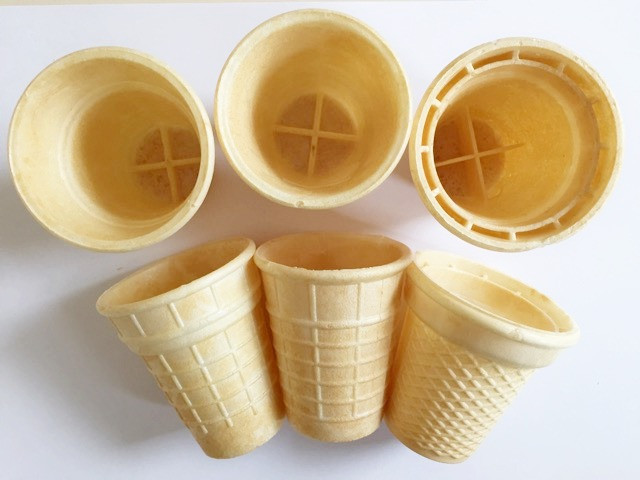 Wafer cup and cone
 General purpose environment of SPC "Biocompass-S" (Uglich)
 Auxiliaries for sugar products
 Pepsin whey pork
 J-Bottom technology
 Ice cream sticks Standard 93
- Ice cream sticks Magnum (curly)
- Petri dish 90 mm
- Ice cream sticks (with logo)
- Ice cream sticks (round)
- Ice cream sticks Standard 114
Consumables
 Hoof bath
 Mug for milking the first streams of milk, lengthwise
 Disinfectant with washing effect (10kg)
 Acid detergent (20l / 24kg)
 Sticky fly trap, 25cm*10m
 Latex gloves (long cuff with roller), (color blue, pack of 50 pieces)
- Disposable udder wipe (udder paper).
- Antibryk
- Milk filters - primary cleaning
- Knife Hoofed
- Spatula for mastitis test (Shalm's test)
- Reusable plastic syringe
- Anti-catfish milking rings
- Dosing syringe, bottle attachment
- Udder cleaner after milking (20 l)
Microbiology
 MicroFast® Microbiological Substrates
 MicroFast® Coliform & E.coli Count Plate
 MicroFast® Staphyloccocus aureus Confirmation Plate Staph.aureus Confirmation Plate (cat. no. LR1005Q)
 Substrate for determining the number of staphylococci (Catalog number LR1005) MicroFast® Staphyloccocus aureus Count Plate
 MicroFast® Enterobacteriaceae Count Plate (cat. no. LR1011)
 MicroFast® Salmonella Count Plate (SAL), for the determination of Salmonella in food and environmental samples (Catalog #LR1006)
- MicroFast® Lactic Acid Bacteria Count Plate (Part Number LR1312)
- Substrate for accelerated determination of QMAFAnM, (catalog number LR1321)
- Coliform Count Plate (catalog number LR1002) MicroFast® Coliform Count Plate
- MicroFast® Bacillus cereus Count Plate (catalog number LR1010)
- Substrate for determining QMAFAnM (catalog number LR1001)
- MicroFast® Environmental Listeria Count Plate
- Yeast & Mold Count Plate (cat. no. LR1003) MicroFast® Yeast & Mold Count Plate
Our News
 Lukashenko heard a report on the Mogilev region. The main topic was the situation in agriculture. 05.02.2026
 What major agricultural projects are being implemented in the Mogilev region?05.02.2026
 An expert identified possible areas of cooperation between Belarus and Southeast Asian countries.05.02.2026
- Surcharges on prices for agricultural products purchased from the population have been established in 2026.04.02.2026
- Lukashenko: We won't carry the Vitebsk region on our shoulders.04.02.2026
- Baby Zabava. The Grodno Zoo welcomed its first addition in 2026. 03.02.2026
- Lukashenko: We won't carry the Vitebsk region on our shoulders. 03.02.2026
- Lukashenko on the case: it is a moral monstrosity if we cannot protect our smaller brothers in this weather03.02.2026
- Grain cultivation and livestock farming. Bogdanov discussed prospects for cooperation in the agricultural sector between Belarus and Kazakhstan.01.02.2026
- Выпойка молоком 3-4 раза, больше теплой воды. Как в Брестской области наладили уход за телятами в морозы01.02.2026
- From Tractor Driver to Businessman: The Story of a Belarusian Who Built a Farm from Scratch and a Church in a Village 30.01.2026
- A warehouse in the Minsk region improperly stored powdered milk: a court ordered compensation of Br2 million.30.01.2026
- Increased processing volumes, new jobs: production capacity is being expanded in the Shklov district.30.01.2026
- The story of a Belarusian who built a sturdy farm from scratch and revived his native village.29.01.2026
- Belarusian producers plan to enter the Qatari meat market.29.01.2026
- Belarus is interested in expanding dairy product supplies to Indonesia.28.01.2026
Articles
 The court refused to seize the property of agricultural enterprises with debts to the AIC fund.05.02.2026
 Demand for semi-finished products will decline in 2025: dumpling sales will fall by 8%.05.02.2026
 Rosselkhoznadzor inspected more than 2,000 tons of livestock products shipped to Yakutia.05.02.2026
- Rosselkhoznadzor monitored the export of more than 57,000 tons of veterinary goods from St. Petersburg.05.02.2026
- К госветнадзору Бурятии поступило 860 тонн продукции при отправке в Монголию05.02.2026
- The inflation rate in Russia at the beginning of February 2026 reached 6.5%.05.02.2026
- Innovations in broiler feeding: savings and bird health05.02.2026
- New financial disputes between Aventa and Tokarevskaya Poultry Farm: a second lawsuit for 70 million rubles05.02.2026
- Mexican and Canadian beef is losing ground in the US market.05.02.2026
- Spain strengthens institutional coordination to improve animal welfare management05.02.2026
- Blaming cows was a mistake: meadows absorb more gases than cattle emit.05.02.2026
- EU and Mercosur: Experts warn of shortage of EU veterinarians to control imports and associated health risks05.02.2026
- Rosselkhoznadzor stopped the import of more than 50 kg of dangerous animal products at Ufa Airport.04.02.2026
- Rosselkhoznadzor specialists have identified quality violations in meat products.04.02.2026
- The first batch of canned meat from the Kurgan region was sent to Azerbaijan under the supervision of Rosselkhoznadzor.04.02.2026
- A poultry farm in Yugra was fined for violating veterinary regulations.04.02.2026
Economics
- 10 reasons to take a deposit04.05.2025
 Lavrov and the Swiss Foreign Minister will discuss the "deep crisis" of the OSCE.05.02.2026
 Kirilenko spoke about the problems facing Russian teams after sanctions were lifted.05.02.2026
- Lavrov believes that US statements about cooperation are inconsistent with sanctions05.02.2026
- The Russian ambassador warned of a reaction to the Faroe Islands' change in stance on sanctions.05.02.2026
- Five suspects in supplying weapons to Russia's defense industry have been arrested in Germany.03.02.2026
- Bloomberg узнал о планах ЕС по санкциям против российских платины и меди03.02.2026
- The EU confirmed discussions on banning entry for participants in the military operation.31.01.2026
- Bloomberg has revealed a new possible EU sanctions plan against Russia.31.01.2026
- The EU has blacklisted Russia for money laundering.30.01.2026
- The EU has imposed new sanctions on Iran in response to the suppression of protests.30.01.2026
- The European Union has designated the IRGC a terrorist organization.30.01.2026
- The US has eased sanctions and allowed oil companies to operate in Venezuela.30.01.2026
- Titov allowed for the return of foreign companies that "miss Moscow"30.01.2026
- Following the deal with Carlyle, LUKOIL continued negotiations with other companies.29.01.2026
- Macron announced that France is preparing new sanctions against Russia.29.01.2026
Antibiotics in Milk
 Antibiotics in milk: causes and methods of detection27.01.2026
 Pharmaceutical companies see a threat to EU security due to bacteria in Ukraine13.11.2025
 Prosecutors have issued warnings to more than 5,000 companies due to rising prices.09.09.2025
- Two dairy companies from Azerbaijan refused to work with Russia.09.07.2025
- Lukashenko told how Putin treated him to goat's milk.08.07.2025
- Lukashenko demanded that Belarus be cleared of littered logs by autumn.08.07.2025
- Lukashenko stated that it is not beneficial for Belarus to “fight madly,” but to feed17.06.2025
- В Британии предупредили о риске для миллионов из-за супербактерий06.01.2025
- Moscow court sides with Indian company in dispute with Health Ministry26.11.2024
- Scientists estimate increase in mortality due to drug-resistant bacteria29.10.2024
- Antibiotics for livestock and pesticides found in poisoned family's home29.10.2024
- Izvestia reported on the shortage of widely used antibiotics in Russia29.10.2024
- The Ministry of Health called data on the shortage of antibiotics unreliable29.10.2024
- Scientists warn of threat of return to pre-penicillin times29.10.2024
- The Ministry of Health explained how attitudes towards antibiotics changed during the pandemic07.05.2024
- WHO explains the risks of taking antibiotics "just in case"06.05.2024
Antibiotics in Meat
 Antibiotics in pollock25.02.2024
 Antibiotics in herring: myth or reality?12.02.2024
 Antibiotics in perch10.02.2024
- Antibiotics in sprat: facts and myths10.02.2024
- Antibiotics in tuna: an important health and environmental issue09.02.2024
- Antibiotics in meat30.01.2024
- Antibiotics in chebureks: myth or reality?29.01.2024
- Antibiotics in cutlets: problem or myth?18.01.2024
- Antibiotics in Chicken: Where Are the Highest Concentrations?17.01.2024
- Antibiotics in carp17.01.2024
- Where Are More Antibiotics in Chicken: Reality and Cautions16.01.2024
- Antibiotics in Salmon: Safety and Product Quality16.01.2024
- Antibiotics in Turkey15.01.2024
- Antibiotics in Sal: Reality and Safety Issues15.01.2024
- Antibiotics in Fried Dumplings: Facts, Risks and How to Stay Safe15.01.2024
- Antibiotics in sausages14.01.2024
10 Interesting Facts
 Antibiotics in Coffee: Myths and Reality03.05.2025
 Forged forks: 10 interesting facts16.05.2024
 Swimming pool and weight loss: 10 interesting facts10.03.2024
- Tests for antibiotics in milk - 10 interesting facts07.03.2024
- Cleaning the kettle from scale, 10 interesting facts...06.03.2024
- Antibiotics in beer: 10 interesting facts04.03.2024
- Wild boar, how to survive...01.03.2024
- Purulent mastitis, 10 interesting facts27.02.2024
- Lemon and alcohol: 10 interesting facts25.02.2024
- Mint - 10 interesting facts25.02.2024
- Wild boar, 10 interesting facts20.02.2024
- Wild boar and domestic pig: comparison and advantages20.02.2024
- Cottage cheese, 10 interesting facts20.02.2024
- 10 Interesting Facts About Milk19.02.2024
- How to Clean a Toilet - 10 Interesting Facts (Acid vs Alkaline)18.02.2024
- Goat's milk: 10 interesting facts16.02.2024
Diseases of cattle
 Dicroceliosis in cattle09.03.2024
 Demodicosis in cattle01.03.2024
 Purulent mastitis of cattle27.02.2024
- Hypodermatosis in cattle20.02.2024
- Hemonchoz in cattle11.02.2024
- Bursitis in cattle30.01.2024
- Brucellosis in cattle29.01.2024
- Bronchopneumonia in calves27.01.2024
- Bronchitis in cattle26.01.2024
- Mortellaro disease in cattle24.01.2024
- White muscle disease in cattle23.01.2024
- Babesiosis in cattle22.01.2024
- Cattle acidosis20.01.2024
- Arthritis in cattle20.01.2024
- Anaplasmosis in cattle18.01.2024
Misc
- Antibiotics for coughs: when they are needed and when they are not11.02.2024
 "Слетают все маски человека!" // Банщик про техники парения, поющих мастерах и чудо-массажах05.02.2026
 The Master of Steam: The Story of a Businessman Who Left a Successful Printing Business to Become a Spa Master 05.02.2026
- Investigators have identified the locations of the most frequent traffic accidents in the Brest region.05.02.2026
- Ministry of Emergency Situations: 129 people have died in fires since the beginning of the year.04.02.2026
- WHO: Almost 40% of cancer cases can be prevented 04.02.2026
- The number of fires in Belarus has increased. Experts have explained the causes.04.02.2026
- "Neither tail nor scales." We went winter fishing and learned the intricacies of ice fishing.04.02.2026
- Belarus has extended the ban on labeling imported alcoholic beverages in unfriendly countries.03.02.2026
- В Гомеле благодаря неравнодушным гражданам остановили нетрезвых таксиста и бесправника 03.02.2026
- From February 11, navigation seals will be used to track rail traffic in the EAEU.03.02.2026
- The State Traffic Inspectorate reminded drivers of road safety rules during severe frosts.31.01.2026
- A woman driving under the influence of alcohol with over 2 ppm was detained in Minsk.30.01.2026
- Наведение порядка в АПК, пожарная безопасность. Какие задачи поставлены перед прокурорами Витебской области 30.01.2026
- A car crashed into a tree on Independence Avenue in Minsk, injuring two people.30.01.2026
- Топ экспортируемых товаров назвали в "Белгоспищепроме"29.01.2026
Cloud of Tags
Владимир ПутинЕСРоссельхознадзорТурцияЗапретОбщепитФермерГовядинуМужчиныСпутник vTelegramРаботаЗависимостьКанадаВостокRussiaВьетнамМЧСПольшаФруктыКофеЗдоровьеИталияАлександр ЛукашенкоПтицефабрикаАзербайджанРоспотребнадзорКрупного рогатого скотаFacebookДетиПитаниеЗаконопроектМинздравТатарстанАлкогольного опьяненияГерманияРубльИсследованияЯпонияЛекарстваСвининаКарантинМолокоКрупный рогатый скотПроизводство молокаАлкогольДиректорВирусПродовольствиеReutersЦентробанкУкраинаЛечениеРосстатИммунитетБеларусьВеликобританияКартофельМинскТребованияВластиУборкаПрокуратураЖивотноеБолезньПроизводство мясаСанкцииНедвижимостьДжо БайденМинфинСельское хозяйствоКитайКолбасыЭкспортЦеныАнтибиотиковКредитДмитрий песковКризисЗеленскийРоссияОтпускДеньгиПродукцияРодителиЕврокомиссияПоддержкаОнлайнБройлерПодмосковьеКРСМинсельхозРоссиянеМясоСубсидииПесковДоходыУченыеЯйцаСырыКазахстанЕгипетГовядинаСанкт-ПетербургМоскваКлиматТАССЭкономикаВыручкаИнвестицииВ китае2024ПравительствоКоронавирусДональд ТрампУзбекистанЕАЭСВакцинацииCOVID-19ЗаконПензенской областиGoogleИмпортАЧСВакцинацияУкраинеминистр сельского хозяйстваНовостиСудГазпромBloombergПраздникОрганизмНефтьСШАВеликобританииСмертьAppleФранцияПродукты питанияИнфляцияМясокомбинатДолларБизнесАвстралияБразилияУрожаяМаслоМясо птицыСотрудники ГАИ