
How equestrian sport works and why they are trying to remove it from the Olympics
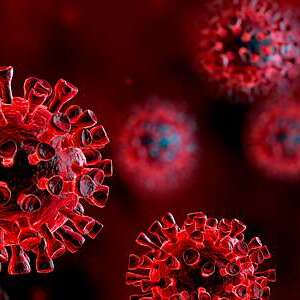
Photo is illustrative in nature. From open sources.


They are trying to exclude equestrian sport from the Olympic Games for cruelty to horses. But this is one of the oldest competitions at the Olympics. What is equestrian sport - in the material of RBC Why equestrian sport will be excluded from modern pentathlon
Animal rights activists have long called on Olympic organizers to abandon equestrian sport at the Games in order to stop cruelty to animals. And due to the events that took place at the 2020 Games in Tokyo, the number of opponents of such competitions has increased significantly.
In August 2021, the world received the heartbreaking news that Swiss jockey Robin Godel's horse had been euthanized at the Olympic Games due to injuries sustained during the competition while passing the 20th barrier on rough terrain during the competition.
A few days later, German pentathlete Annika Schleu, during a show jumping competition, tried to force her horse to obey the command with blows of the whip and spurs. Next, the German coach Kim Reisner began hitting her horse with her fist, urging the athlete to be tougher. After the incident, Kim Reisner was disqualified for the rest of the competition, and Shleu was harassed on social networks.
Animal rights activists immediately got down to business. The organization People for the Ethical Treatment of Animals (PETA) sent a letter to the leadership of the IOC, in which it demanded that equestrian sport and show jumping be excluded from the modern pentathlon program at the Olympics. “The Tokyo 2020 Olympic Games were unprecedented in many ways, but one thing we could all predict was that the suffering of horses used for equestrian events would continue. Jumping, dressage, cross-country and other equestrian sports can be extremely brutal,” PETA said.
Animal rights activists managed to achieve their goal, and in early November 2021, the International Federation of Modern Pentathlon (UIPM) decided to exclude horse riding from the Olympic Games program after 2024 , despite the resistance of the athletes. An official statement from the UIPM said that equestrian sport will be replaced by another discipline. It is worth recalling that modern pentathlon competitions started in 1912 and included five disciplines - fencing, swimming, equestrianism, shooting and running .
However, equestrian sport is still represented at the Olympic Games as a separate sport, and animal rights activists have so far been unable to do anything. At the 2020 Games, six sets of medals were awarded in equestrian sports, and at the moment the IOC has no plans to reduce the program.
However, it is possible that the IOC will have to reconsider equestrian programs in the coming years due to public pressure. Moreover, more and more new facts of cruel treatment of horses are emerging. For example, in May of this year, the US Equestrian Federation fined rider Kevin Lemke $4 thousand and suspended him for four months for “unsportsmanlike conduct involving the use of excessive force on a horse.” At the US Championships, Lemke used the whip four times in a row, and then two more times after the horse refused to go forward. His actions were considered aggressive.
At the Tokyo Olympics, blood gushed from the nose of a horse named Kilkenny, but Irish rider Cian O'Connor forced the horse to complete the race.
Sports are not for everyoneOlympic equestrian sport is a niche sport and is interesting to a narrow circle of people. Firstly, the rules for determining the winner are quite complex compared to popular horse racing. Secondly, this is a sport for the rich. At the Olympics you can often meet the daughters and sons of celebrities and representatives of royal families - both in the stands and among the participants.
For example, the daughter of multiple Grammy and Oscar winner Bruce Springsteen performed at the Tokyo Olympics. Two of the Swedish team's horses belonged to Charlotte Söderström, the daughter of Stefan Persson, co-owner of H&M.
Equestrian sport is an expensive sport, since it is expensive not only to maintain a team, but also to participate in competitions. For example, 325 horses were delivered to the Tokyo Olympics (the cost of shipping one horse can reach $30 thousand) to participate in equestrian competitions. Together with them, 59 grooms, 20 tons of feed and water and 100 tons of special equipment also arrived. Eight flights were carried out to Tokyo from the Belgian city of Liege, where horses were delivered from different parts of the world. The fact is that it is in this city that the most convenient airport for transporting horses was built. There is also a special hotel for equestrian lovers, Horse Inn, where both horses and their accompanying people can relax.
In addition to accommodation, the Horse Inn has facilities for pre-flight health checks and document and passport checks for travel. From the hotel, horses can be loaded directly onto pallets for flight, making the entire process less stressful for everyone involved.
The costs of delivering the horses were compensated by the organizing committee of the Games, however, despite this, not all those who qualified for the Olympics were able to go to Tokyo due to high costs.
Mounted delegation of 64 people
In total, the horses spend about 20 hours on board during the flight from Liege to Tokyo with a stopover in Dubai. But for some horses the flight lasts several times longer, as, for example, for the US team. Using the example of the American team, we tell how equestrian delegations get to the Olympic Games.
Nine American athletes competed at the Tokyo Olympics in three equestrian disciplines, and three athletes competed at the Paralympics. In addition to the athletes, there are four reserve riders in case of injury to the main participants, seven coaches, and six team leaders who deal with logistics. There are 16 grooms who look after the horses, a farrier who cares for the hooves and shoes them, as well as four veterinarians and two equine physiotherapists.
In total, the US equestrian delegation to Tokyo consisted of at least 64 people. There would be even more of them - 76, if not for COVID-19 restrictions . And that's not counting the mountains of equipment or the real stars of the show - 16 horses.
So it's not surprising that even without U.S. Olympic and Paralympic Committee contributions and the significant costs borne by the athletes themselves, the equestrian program at the Tokyo Games is worth six figures.
Preparation for the Olympics can take yearsIn an ideal situation, coordination for an event of this magnitude begins long before the Olympics. Athletes take on most of the financial responsibility for competing—riding their own horses, hiring their own grooms, and purchasing most of their own equipment. But the national federation also takes on a lot of worries.
Accommodation is arranged a couple of years in advance, and horse flights are booked a year in advance. It is planned to carry out pre-export quarantine of horses - a requirement of each country's agricultural regulations regarding the transport of livestock. General crew equipment—from horseshoes and manure forks to chairs and coffee makers—is shipped by container ship. Will Connell, sports director for US Equestrian Sports, told Forbes that the federation is already planning logistics next year for the 2024 Paris Olympics and developing a program for the 2028 Los Angeles Games.
2021 hasn't been any easier. Strict COVID-19 protocols imposed by the Japanese government and Olympic organizers have made accreditation a long and grueling process. More importantly, the impact of the pandemic on airlines has left few cargo flights for horses and prices have skyrocketed , with a round-trip business class ticket to Europe for a horse and its equipment typically costing $25,000.
So in late April, with the help of logistics company Peden Bloodstock, the federation decided to ship team horses from the United States to Europe for pre-export quarantine and then to Japan, rather than ship them directly from Chicago to Tokyo as originally planned. Thus, the American team solved the problems of six months of planning in six weeks.
However, the additional stages of travel increased costs for the federation - especially since the group in Europe included several reserve horses and staff who were not expected to travel to Tokyo. Also , about $30 thousand was spent on coronavirus tests during the quarantine of horses. However, many American horses in equestrian disciplines such as show jumping and dressage are still based in Europe, and traveling from there allowed the U.S. teams to share flights with other countries heading to Tokyo.
Sending a delegation and horses to another country is not an easy taskFlights themselves are a huge expense, even under normal circumstances. First, the horses must be transported by trailer from their farms to the airport, where they are examined by the team veterinarian. When it's time to fly, they're walked for about 20 minutes to improve circulation before the long ride, and another trailer ride takes them to the airport's horse pick-up area - about seven hours before departure time. There they are given another health check and, using a cart and scissor lift, are loaded onto the plane in jet racks (business class with two horses in a stall).
Each horse's groom and team veterinarian travel on the same flight to check and feed the horses every few hours along the way (16 or 17 hours from Liege to Tokyo, with a stop in Dubai to refuel). The veterinarian carries medicine in case of emergency. Meanwhile, the grooms try to pack everything they might need during their time away from home into three large suitcases. Luggage includes approximately 500kg of horse feed, nutritional supplements to treat ulcers, bedding for each horse, buckets for them to eat from, and all tack: bits, bridles, saddles, stirrups and more.
Landing abroad begins with another operation that can last one to three hours. Horses, like people, have passports to record their movements, and these records are checked along with microchips embedded in the horses' necks to confirm their "identity." The equipment must clear customs and the horses must be checked again by veterinarians.
In addition to the coronavirus restrictions in Tokyo, there were two other unusual problems: the overlap of the Olympic schedule meant that all three U.S. teams would have to share a stall for several days, and the events would be held in short sessions in the morning and evening rather than at the same time, to protect horses from day heat. This is an adjustment for the entire delegation, but especially for the grooms, who arrive at work around 5:30 a.m. and finish at 10 p.m.
At the end of the Games, the delegation can relax, but not for long: it will have to go through another quarantine and a long trip home. Conditions for horses are undoubtedly grueling. Perhaps canceling equestrian competitions would actually be a good idea and make life easier for animals.
Read together with it:
- The inflation rate in Russia at the beginning of February 2026 reached 6.5%.In particular, prices for fruit and vegetable products increased by 2.1%, with a significant increase for cucumbers (6.3%) and carrots (1.8%). Vodka also increased by 1%, while beef , eggs , and fish each increased by 0.4%. Meanwhile, the cost of pork and butter decreased slightly. In the service sector, there have been significant price increases for vacation trips to the UAE and Russia's Black S...
- Mexican and Canadian beef is losing ground in the US market.Beef from Mexico and Canada is losing ground in American kitchens and restaurants, despite being imported without tariffs imposed on all exports by US President Donald Trump a year ago. According to Tegra Consultant, Canadian meat sales to the United States have fallen by 23.56% over the past two years, while Mexican food exports to that market have fallen by 11.5......
- Kirilenko spoke about the problems facing Russian teams after sanctions were lifted.The head of the Russian Basketball Federation (RBF) stated that FIBA could make a final decision on the return of Russian basketball in April, but visa barriers remain the main problem. Andrei KirilenkoIn an interview with RBC Sport, Russian Basketball Federation (RBF) President Andrei Kirilenko discussed the possible return of Russian basketball to the international arena. He also cited visa an...
- Lavrov believes that US statements about cooperation are inconsistent with sanctionsSergey Lavrov US statements about the possibility of investment cooperation with Russia "do not fit" with Washington's sanctions policy, Russian Foreign Minister Sergey Lavrov said in an interview with RT. US President Donald Trump is in no rush to lift sanctions against Moscow, but is instead escalating them, Lavrov stated earlier during a government hour in the Federation Council. He recalled ho...
- What does the expiration of the START Treaty mean?On February 5, 2026, New START, the last treaty between Russia and the United States that limited their nuclear arsenals, expired. RBC reports on how Moscow and Washington approached this date and what will happen afterward.On February 5, 2026, the Russian-American Treaty on Measures for the Further Reduction and Limitation of Strategic Offensive Arms (New START), the last agreement that limited t...
- The Ministry of Health has approved nine home treatment regimens for COVID-19.The Ministry of Health has approved nine outpatient treatment regimens for COVID-19 , which will be prescribed by a physician on an individual basis. Treatment should begin within the first week of the onset of symptoms, with antiviral medications.The Russian Ministry of Health has approved nine home treatment regimens for COVID-19. This is stated in updated clinical guidelines for the treatment o...
- Robotic farms have opened in Udmurtia.The Progress agricultural production cooperative officially launched two modern robotic farms, each designed for 140 cows, and a facility for 300 calves. Vasily Muklin, Minister of Agriculture and Food of Udmurtia, attended the opening ceremony . "Progress is a leading enterprise in the region, steadily improving its performance. Today, we see a logical continuation of this trend. Currently, four ...
- Apple shipments from Kabardino-Balkaria increased by 25%.According to the North Caucasus Interregional Office of Rosselkhoznadzor , apple deliveries to various regions of the country exceeded 165,000 tons in 2025. In 2024 , they totaled 132,500 tons. Along with the increase in volume, the geography of deliveries has also expanded: while apples were delivered to 49 regions in 2......
Test for Atnibiotics in Milk
 Rapid 4 in 1 tests for determining the residual amount of neomycin, kanamycin, gentamicin, spectinomycin in milk, whey
 Express tests for determining the residual amount of β-lactams and tetracyclines in milk, whey
 Rapid tests for fluoroquinolone, erythromycin, lincomycin, tillosin and tilmycosin residues in milk, whey
 Rapid tests for determining the residual amount of chloramphenicol in meat
 ANTIBIOTICS / ELISA TESTS
 PIONEER MEIZHENG BIO-TECH (5 in1) JC0871/ Rapid tests for the determination of the residual amount of β-lactams, tetracyclines, chloramphenicol, streptomycins, ceftiofur in milk, whey.
- Express-tests PIONER 5 in1 for the determination of thiamphenicol, meloxicam, colistine, trimethoprim, sulfonamides
- Express tests for determining the residual amount of β-lactams, tetracyclines, chloramphenicol, streptomycins in milk, whey
- PIONEER MEIZHENG BIO-TECH (5 in1) JC1165 / Rapid tests for the determination of the residual amount of halofuginone, flavomycin, novobiocin, flunixin, dexamethasone / prednisolone in milk, whey
- TEST KIT for determination of inhibitory agents PIONEERPRODUKT® DASH-TEST, WC0040
Laboratory equipment
 Magnetic stirrer С-MAG HS7
 Low wall table with drawers BA-CL-X.X SPn-ya TR
 Sink table BA-CL- X.H.MO C (one bowl)
 Portable thermohygrometers IVA-6H, IVA-6A (Russia)
 BA-CL- X.X ST TR titration table
 LAC S Series Vertical Laboratory Autoclaves (South Korea)
- Milligram weights
- HI 83141 Portable pH meter/millivolt meter/thermometer (pH/mV/T) (0...14.00 pH)
- PAL series digital pocket refractometers (Atago, Japan)
- Reagent cabinet
- Microbial Colony Counter SKM-2
- Magnetic stirrer with heating function WH240-HT
- General laboratory cabinets
- Milk Analyzer "Expert Pro"
- Smooth digital micrometer MCC-25 0.001 (measuring range 0-25mm)
Packing
 Korreks for desserts
 Backed Foil
 Parchment
 Cartons for milk and dairy products
 Laminating paper KH PACK®
 Siliconized paper for hygiene products
- Ice cream chopsticks
- Cover
- KH PACK® Straight Packing Paper
- Grease and barrier paper KH PACK®
- The paper packing fastened anticorrosive UNIK 14-70 THAT 5453-003-05773103-2005
- Carton
- Paper for micro-ribbed
- Laminating paper KH PACK®
- KH PACK® bag making paper
Additional Products
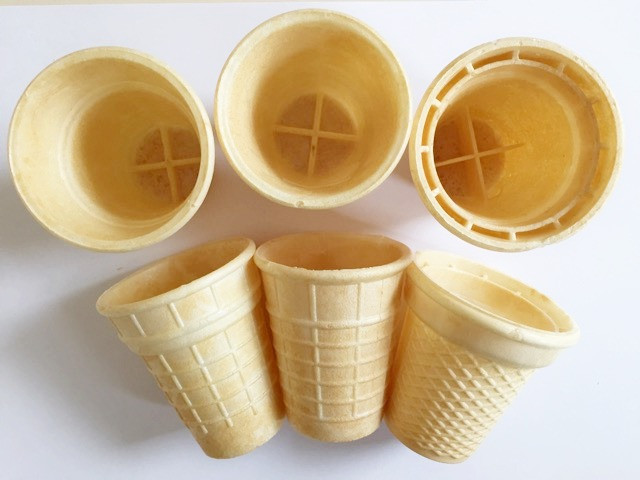 Wafer cup and cone
 Auxiliaries for sugar products
 Pepsin whey pork
 Ice cream sticks (with logo)
 Petri dish 90 mm
 General purpose environment of SPC "Biocompass-S" (Uglich)
- Ice cream sticks Magnum (curly)
- Ice cream sticks Standard 93
- Ice cream sticks (round)
- J-Bottom technology
- Ice cream sticks Standard 114
Consumables
 Stainless steel obstetric aid
 Rubber rings for castration
 Mug for milking the first streams of milk, lengthwise
 Fall with a loop for cattle
 Pump for artificial ventilation of the lungs
 Sticky fly trap, 25cm*10m
- Disposable udder wipe (udder paper).
- Mug for milking the first streams of milk.
- Veterinary Needles Reusable
- Bag filter 32
- Forged pitchforks
- Cup for disinfection of udder teats (non-returnable)
- Electric Cattle Driver
- Disinfectant with washing effect (10kg)
- Foaming cup for udder treatment
Microbiology
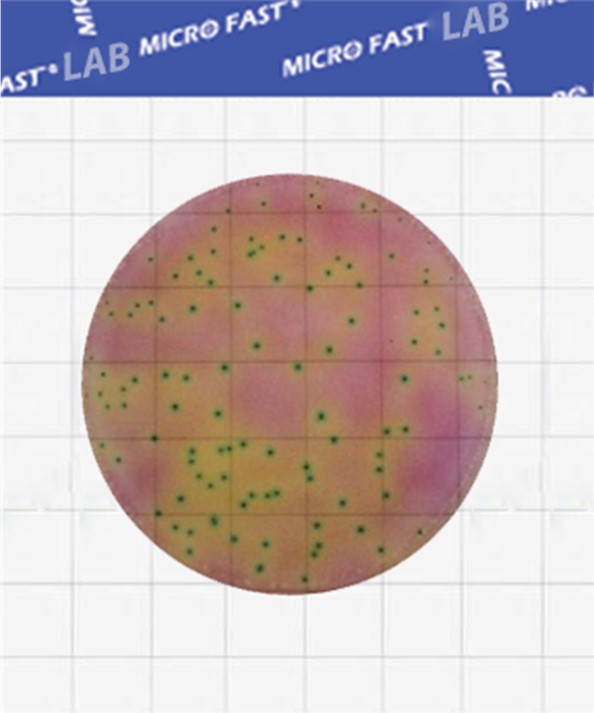 MicroFast® Lactic Acid Bacteria Count Plate (Part Number LR1312)
 MicroFast® Coliform & E.coli Count Plate
 MicroFast® Staphyloccocus aureus Confirmation Plate Staph.aureus Confirmation Plate (cat. no. LR1005Q)
 MicroFast® Bacillus cereus Count Plate (catalog number LR1010)
 MicroFast® Environmental Listeria Count Plate
 Substrate for determining the number of staphylococci (Catalog number LR1005) MicroFast® Staphyloccocus aureus Count Plate
- Yeast & Mold Count Plate (cat. no. LR1003) MicroFast® Yeast & Mold Count Plate
- MicroFast® Enterobacteriaceae Count Plate (cat. no. LR1011)
- MicroFast® Microbiological Substrates
- MicroFast® Salmonella Count Plate (SAL), for the determination of Salmonella in food and environmental samples (Catalog #LR1006)
- Substrate for determining QMAFAnM (catalog number LR1001)
- Coliform Count Plate (catalog number LR1002) MicroFast® Coliform Count Plate
- Substrate for accelerated determination of QMAFAnM, (catalog number LR1321)
Our News
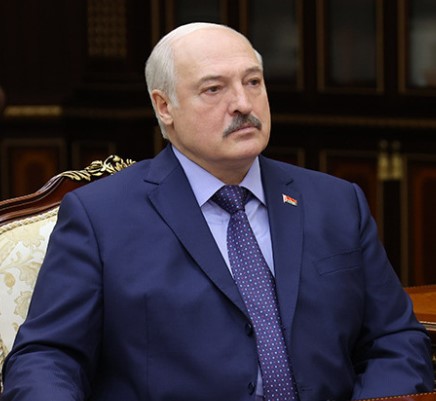 Lukashenko heard a report on the Mogilev region. The main topic was the situation in agriculture. 05.02.2026
 What major agricultural projects are being implemented in the Mogilev region?05.02.2026
 An expert identified possible areas of cooperation between Belarus and Southeast Asian countries.05.02.2026
- Surcharges on prices for agricultural products purchased from the population have been established in 2026.04.02.2026
- Lukashenko: We won't carry the Vitebsk region on our shoulders.04.02.2026
- Baby Zabava. The Grodno Zoo welcomed its first addition in 2026. 03.02.2026
- Lukashenko: We won't carry the Vitebsk region on our shoulders. 03.02.2026
- Lukashenko on the case: it is a moral monstrosity if we cannot protect our smaller brothers in this weather03.02.2026
- Grain cultivation and livestock farming. Bogdanov discussed prospects for cooperation in the agricultural sector between Belarus and Kazakhstan.01.02.2026
- Выпойка молоком 3-4 раза, больше теплой воды. Как в Брестской области наладили уход за телятами в морозы01.02.2026
- From Tractor Driver to Businessman: The Story of a Belarusian Who Built a Farm from Scratch and a Church in a Village 30.01.2026
- A warehouse in the Minsk region improperly stored powdered milk: a court ordered compensation of Br2 million.30.01.2026
- Increased processing volumes, new jobs: production capacity is being expanded in the Shklov district.30.01.2026
- The story of a Belarusian who built a sturdy farm from scratch and revived his native village.29.01.2026
- Belarusian producers plan to enter the Qatari meat market.29.01.2026
- Belarus is interested in expanding dairy product supplies to Indonesia.28.01.2026
Articles
 The court refused to seize the property of agricultural enterprises with debts to the AIC fund.05.02.2026
 Demand for semi-finished products will decline in 2025: dumpling sales will fall by 8%.05.02.2026
 Rosselkhoznadzor inspected more than 2,000 tons of livestock products shipped to Yakutia.05.02.2026
- Rosselkhoznadzor monitored the export of more than 57,000 tons of veterinary goods from St. Petersburg.05.02.2026
- К госветнадзору Бурятии поступило 860 тонн продукции при отправке в Монголию05.02.2026
- The inflation rate in Russia at the beginning of February 2026 reached 6.5%.05.02.2026
- Innovations in broiler feeding: savings and bird health05.02.2026
- New financial disputes between Aventa and Tokarevskaya Poultry Farm: a second lawsuit for 70 million rubles05.02.2026
- Mexican and Canadian beef is losing ground in the US market.05.02.2026
- Spain strengthens institutional coordination to improve animal welfare management05.02.2026
- Blaming cows was a mistake: meadows absorb more gases than cattle emit.05.02.2026
- EU and Mercosur: Experts warn of shortage of EU veterinarians to control imports and associated health risks05.02.2026
- Rosselkhoznadzor stopped the import of more than 50 kg of dangerous animal products at Ufa Airport.04.02.2026
- Rosselkhoznadzor specialists have identified quality violations in meat products.04.02.2026
- The first batch of canned meat from the Kurgan region was sent to Azerbaijan under the supervision of Rosselkhoznadzor.04.02.2026
- A poultry farm in Yugra was fined for violating veterinary regulations.04.02.2026
Economics
 10 reasons to take a deposit04.05.2025
 Lavrov and the Swiss Foreign Minister will discuss the "deep crisis" of the OSCE.05.02.2026
 Kirilenko spoke about the problems facing Russian teams after sanctions were lifted.05.02.2026
- Lavrov believes that US statements about cooperation are inconsistent with sanctions05.02.2026
- The Russian ambassador warned of a reaction to the Faroe Islands' change in stance on sanctions.05.02.2026
- Five suspects in supplying weapons to Russia's defense industry have been arrested in Germany.03.02.2026
- Bloomberg узнал о планах ЕС по санкциям против российских платины и меди03.02.2026
- The EU confirmed discussions on banning entry for participants in the military operation.31.01.2026
- Bloomberg has revealed a new possible EU sanctions plan against Russia.31.01.2026
- The EU has blacklisted Russia for money laundering.30.01.2026
- The EU has imposed new sanctions on Iran in response to the suppression of protests.30.01.2026
- The European Union has designated the IRGC a terrorist organization.30.01.2026
- The US has eased sanctions and allowed oil companies to operate in Venezuela.30.01.2026
- Titov allowed for the return of foreign companies that "miss Moscow"30.01.2026
- Following the deal with Carlyle, LUKOIL continued negotiations with other companies.29.01.2026
- Macron announced that France is preparing new sanctions against Russia.29.01.2026
Antibiotics in Milk
 Antibiotics in milk: causes and methods of detection27.01.2026
 Pharmaceutical companies see a threat to EU security due to bacteria in Ukraine13.11.2025
 Prosecutors have issued warnings to more than 5,000 companies due to rising prices.09.09.2025
- Two dairy companies from Azerbaijan refused to work with Russia.09.07.2025
- Lukashenko told how Putin treated him to goat's milk.08.07.2025
- Lukashenko demanded that Belarus be cleared of littered logs by autumn.08.07.2025
- Lukashenko stated that it is not beneficial for Belarus to “fight madly,” but to feed17.06.2025
- В Британии предупредили о риске для миллионов из-за супербактерий06.01.2025
- Moscow court sides with Indian company in dispute with Health Ministry26.11.2024
- Scientists estimate increase in mortality due to drug-resistant bacteria29.10.2024
- Antibiotics for livestock and pesticides found in poisoned family's home29.10.2024
- Izvestia reported on the shortage of widely used antibiotics in Russia29.10.2024
- The Ministry of Health called data on the shortage of antibiotics unreliable29.10.2024
- Scientists warn of threat of return to pre-penicillin times29.10.2024
- The Ministry of Health explained how attitudes towards antibiotics changed during the pandemic07.05.2024
- WHO explains the risks of taking antibiotics "just in case"06.05.2024
Antibiotics in Meat
 Antibiotics in pollock25.02.2024
 Antibiotics in herring: myth or reality?12.02.2024
 Antibiotics in perch10.02.2024
- Antibiotics in sprat: facts and myths10.02.2024
- Antibiotics in tuna: an important health and environmental issue09.02.2024
- Antibiotics in meat30.01.2024
- Antibiotics in chebureks: myth or reality?29.01.2024
- Antibiotics in cutlets: problem or myth?18.01.2024
- Antibiotics in Chicken: Where Are the Highest Concentrations?17.01.2024
- Antibiotics in carp17.01.2024
- Where Are More Antibiotics in Chicken: Reality and Cautions16.01.2024
- Antibiotics in Salmon: Safety and Product Quality16.01.2024
- Antibiotics in Turkey15.01.2024
- Antibiotics in Sal: Reality and Safety Issues15.01.2024
- Antibiotics in Fried Dumplings: Facts, Risks and How to Stay Safe15.01.2024
- Antibiotics in sausages14.01.2024
10 Interesting Facts
 Antibiotics in Coffee: Myths and Reality03.05.2025
 Forged forks: 10 interesting facts16.05.2024
 Swimming pool and weight loss: 10 interesting facts10.03.2024
- Tests for antibiotics in milk - 10 interesting facts07.03.2024
- Cleaning the kettle from scale, 10 interesting facts...06.03.2024
- Antibiotics in beer: 10 interesting facts04.03.2024
- Wild boar, how to survive...01.03.2024
- Purulent mastitis, 10 interesting facts27.02.2024
- Lemon and alcohol: 10 interesting facts25.02.2024
- Mint - 10 interesting facts25.02.2024
- Wild boar, 10 interesting facts20.02.2024
- Wild boar and domestic pig: comparison and advantages20.02.2024
- Cottage cheese, 10 interesting facts20.02.2024
- 10 Interesting Facts About Milk19.02.2024
- How to Clean a Toilet - 10 Interesting Facts (Acid vs Alkaline)18.02.2024
- Goat's milk: 10 interesting facts16.02.2024
Diseases of cattle
 Dicroceliosis in cattle09.03.2024
 Demodicosis in cattle01.03.2024
 Purulent mastitis of cattle27.02.2024
- Hypodermatosis in cattle20.02.2024
- Hemonchoz in cattle11.02.2024
- Bursitis in cattle30.01.2024
- Brucellosis in cattle29.01.2024
- Bronchopneumonia in calves27.01.2024
- Bronchitis in cattle26.01.2024
- Mortellaro disease in cattle24.01.2024
- White muscle disease in cattle23.01.2024
- Babesiosis in cattle22.01.2024
- Cattle acidosis20.01.2024
- Arthritis in cattle20.01.2024
- Anaplasmosis in cattle18.01.2024
Misc
- Antibiotics for coughs: when they are needed and when they are not11.02.2024
 "Слетают все маски человека!" // Банщик про техники парения, поющих мастерах и чудо-массажах05.02.2026
 The Master of Steam: The Story of a Businessman Who Left a Successful Printing Business to Become a Spa Master 05.02.2026
- Investigators have identified the locations of the most frequent traffic accidents in the Brest region.05.02.2026
- Ministry of Emergency Situations: 129 people have died in fires since the beginning of the year.04.02.2026
- WHO: Almost 40% of cancer cases can be prevented 04.02.2026
- The number of fires in Belarus has increased. Experts have explained the causes.04.02.2026
- "Neither tail nor scales." We went winter fishing and learned the intricacies of ice fishing.04.02.2026
- Belarus has extended the ban on labeling imported alcoholic beverages in unfriendly countries.03.02.2026
- В Гомеле благодаря неравнодушным гражданам остановили нетрезвых таксиста и бесправника 03.02.2026
- From February 11, navigation seals will be used to track rail traffic in the EAEU.03.02.2026
- The State Traffic Inspectorate reminded drivers of road safety rules during severe frosts.31.01.2026
- A woman driving under the influence of alcohol with over 2 ppm was detained in Minsk.30.01.2026
- Наведение порядка в АПК, пожарная безопасность. Какие задачи поставлены перед прокурорами Витебской области 30.01.2026
- A car crashed into a tree on Independence Avenue in Minsk, injuring two people.30.01.2026
- Топ экспортируемых товаров назвали в "Белгоспищепроме"29.01.2026
Cloud of Tags
ЛекарстваОбщепитМинздрав2024ЦеныБразилияНедвижимостьАлкогольЭкономикаМаслоОтпускДеньгиКризисКанадаУборкаВыручкаУрожаяОнлайнЛечениеДолларReutersЖивотноеКолбасыПтицефабрикаУкраинеМинфинГовядинуЯйцаДжо БайденВакцинацииНовостиМясокомбинатПроизводство молокаУзбекистанАлександр ЛукашенкоСырыТАССМясоAppleНефтьСудЕврокомиссияИсследованияАзербайджанВакцинацияИталияДетиСельское хозяйствоПродукцияВостокГазпромБолезньВеликобританииПитаниеМужчиныАвстралияПольшаМясо птицыКоронавирусСубсидииЭкспортРубльФранцияКофеБеларусьCOVID-19ЗависимостьПраздникПроизводство мясаРодителиGoogleМинсельхозЗдоровьеЗаконопроектГовядинаВластиФермерУченыеИммунитетСанкцииАнтибиотиковДоходыКарантинСпутник vТурцияКредитБройлерВ китаеСотрудники ГАИЕгипетКрупный рогатый скотТатарстанЗапретКартофельRussiaРоспотребнадзорЗаконПесковРосстатЗеленскийДмитрий песковРаботаАлкогольного опьяненияПензенской областиБизнесПодмосковьеГерманияКитайМолокоЯпонияФруктыBloombergЕСИнвестицииПродукты питанияВьетнамКлиматОрганизмминистр сельского хозяйстваИнфляцияВладимир ПутинСвининаСШАКрупного рогатого скотаРоссельхознадзорTelegramМинскЦентробанкАЧСВирусТребованияВеликобританияМЧСПродовольствиеДиректорПравительствоИмпортРоссияЕАЭСКазахстанСмертьМоскваFacebookСанкт-ПетербургУкраинаПрокуратураДональд ТрампКРСПоддержкаРоссияне