
To have its own milk, the Verkhnedvinsk creamery built a dairy complex.
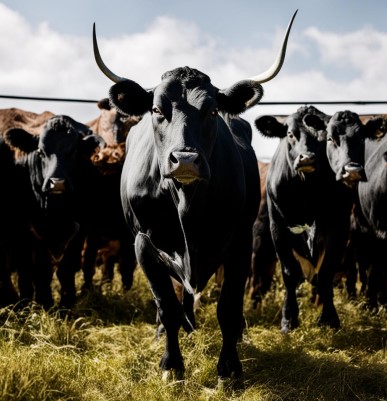
Photo is illustrative in nature. From open sources.


On November 19, the Verkhnedvinsky Butter and Cheese Plant in Vitebsk built a modern dairy production complex (DPC) for 2,200 head of cattle , which will be a boon to the Kokhanovichi farm. This will expand the company's raw material production zone, which will contribute to increased capacity utilization. A BelTA correspondent learned more about the new agro-industrial facility from the plant.
"This complex will produce milk and raise calves in a closed-loop system, meaning that a calf born on site immediately becomes a cow. It includes six large, modern buildings with a good microclimate for housing cattle and approximately 10 auxiliary buildings—milking and dairy units, a health center, a sanitary checkpoint, disinfection barriers, a feeding station, 12 silage and haylage trenches, a hay shed, and more," explained Alexander Demko, Deputy Director of Verkhnedvinsky Butter and Cheese Plant.
He reported that the dairy herd will number 1,000 head and will be housed in two milk production buildings, a dry-off facility, and a milking facility. The buildings feature dual-flow galleries for herding cows to and from milking stations. Between them is a milking and dairy unit equipped with a system for milking 40 cows simultaneously. Animals from the sections will be able to independently access their exercise yard 24/7.
"The dry-off section will house 200 cows and heifers on deep bedding. Three single-stall maternity stalls with waterers and access to the feed table have been created for calving. The newborn calf will first be placed in a stall for drying, and then in a health center (which has 90 stalls) or an individual hutch (the site has a total of 150 stalls). A fresh cow will be placed in the milking section for 30 days, where she will be maintained on a reinforced, advanced diet to develop her genetic potential and determine her subsequent transfer to the milk production sections based on her productivity," the deputy director explained.
In addition, the dairy complex is equipped with facilities for group housing of 380 calves, as well as for pre-breeding and mating heifers, and for a week. All calving herd will also be housed on deep bedding.
"To equip the MTK, the creamery will purchase and donate 350 heifers from farms in the district to the Kokhanovichi State Agricultural Enterprise," explained Alexander Demko.
He placed particular emphasis on the feed supply. "There are no similar units in the district. It's a shed with six bins for storing feed. A feed dispenser loads silage, haylage, and feed according to the feeding schedule, mixes them thoroughly, and places them on the animals' feed table ," explained Alexander Demko.
The complex has two disinfection barriers for entry and exit, a sanitary checkpoint with changing rooms, lockers for personal and work clothes, and showers. Video surveillance covers all work areas. Around 60 cameras have been installed, primarily in the milking, calf birthing, milking, and calf care areas. Equipment procurement for the complex is nearly complete.
According to Alexander Demko, 46 jobs will be created there. "The multifunctional complex is planned to be commissioned by the end of this year. It was built using a loan and the butter and cheese plant's own funds in roughly equal shares. Its current cost is approximately Br40 million. According to the prepared business plan, the milk yield per thousand cows per year will be 7.5 thousand tons of milk, of which 6.9 thousand tons will be sent for sale with a marketability of 92%, and annual revenue will amount to Br8.5 million. The average daily weight gain of heifers from birth to insemination is 850-900 g. All milk will be delivered to Verkhnedvinsky Butter and Cheese Plant OJSC," the deputy director noted. He added that the multifunctional complex will reach these indicators only two years after commissioning. In the meantime, painstaking work lies ahead on equipping the complex, fine-tuning the technology, and breeding.
"Our common goal is to develop agricultural production, create comfortable working conditions for agricultural workers, and increase wages. As a result, the standard of living of our people will improve. “And this way we can keep our youth in rural areas and preserve the village,” concluded Alexander Demko.
"This complex will produce milk and raise calves in a closed-loop system, meaning that a calf born on site immediately becomes a cow. It includes six large, modern buildings with a good microclimate for housing cattle and approximately 10 auxiliary buildings—milking and dairy units, a health center, a sanitary checkpoint, disinfection barriers, a feeding station, 12 silage and haylage trenches, a hay shed, and more," explained Alexander Demko, Deputy Director of Verkhnedvinsky Butter and Cheese Plant.
He reported that the dairy herd will number 1,000 head and will be housed in two milk production buildings, a dry-off facility, and a milking facility. The buildings feature dual-flow galleries for herding cows to and from milking stations. Between them is a milking and dairy unit equipped with a system for milking 40 cows simultaneously. Animals from the sections will be able to independently access their exercise yard 24/7.
"The dry-off section will house 200 cows and heifers on deep bedding. Three single-stall maternity stalls with waterers and access to the feed table have been created for calving. The newborn calf will first be placed in a stall for drying, and then in a health center (which has 90 stalls) or an individual hutch (the site has a total of 150 stalls). A fresh cow will be placed in the milking section for 30 days, where she will be maintained on a reinforced, advanced diet to develop her genetic potential and determine her subsequent transfer to the milk production sections based on her productivity," the deputy director explained.
In addition, the dairy complex is equipped with facilities for group housing of 380 calves, as well as for pre-breeding and mating heifers, and for a week. All calving herd will also be housed on deep bedding.
"To equip the MTK, the creamery will purchase and donate 350 heifers from farms in the district to the Kokhanovichi State Agricultural Enterprise," explained Alexander Demko.
He placed particular emphasis on the feed supply. "There are no similar units in the district. It's a shed with six bins for storing feed. A feed dispenser loads silage, haylage, and feed according to the feeding schedule, mixes them thoroughly, and places them on the animals' feed table ," explained Alexander Demko.
The complex has two disinfection barriers for entry and exit, a sanitary checkpoint with changing rooms, lockers for personal and work clothes, and showers. Video surveillance covers all work areas. Around 60 cameras have been installed, primarily in the milking, calf birthing, milking, and calf care areas. Equipment procurement for the complex is nearly complete.
According to Alexander Demko, 46 jobs will be created there. "The multifunctional complex is planned to be commissioned by the end of this year. It was built using a loan and the butter and cheese plant's own funds in roughly equal shares. Its current cost is approximately Br40 million. According to the prepared business plan, the milk yield per thousand cows per year will be 7.5 thousand tons of milk, of which 6.9 thousand tons will be sent for sale with a marketability of 92%, and annual revenue will amount to Br8.5 million. The average daily weight gain of heifers from birth to insemination is 850-900 g. All milk will be delivered to Verkhnedvinsky Butter and Cheese Plant OJSC," the deputy director noted. He added that the multifunctional complex will reach these indicators only two years after commissioning. In the meantime, painstaking work lies ahead on equipping the complex, fine-tuning the technology, and breeding.
"Our common goal is to develop agricultural production, create comfortable working conditions for agricultural workers, and increase wages. As a result, the standard of living of our people will improve. “And this way we can keep our youth in rural areas and preserve the village,” concluded Alexander Demko.
Read together with it:
- Blaming cows was a mistake: meadows absorb more gases than cattle emit.Cows have become a symbol of controversy, as debates about their environmental impact, particularly regarding methane emissions, have generated headlines, political decisions, and criticism. But while many study the animals themselves, a group of researchers decided to examine the soil. At the University of Nebraska-Lincoln, a team of researchers led by Professor Galen Erickson conducted a study t...
- Lukashenko heard a report on the Mogilev region. The main topic was the situation in agriculture.February 4, Minsk . On February 4, Belarusian President Alexander Lukashenko heard a report from Anatoly Isachenko, Chairman of the Mogilev Regional Executive Committee, BelTA reports. The report focused on the state of affairs in the region, following up on Tuesday's report in the Vitebsk Region. As the head of state noted the day before, many of the identified problematic issues are, to varying ...
- What major agricultural projects are being implemented in the Mogilev region?February 4, Mogilev. Fertilizer storage facilities are being restored, and mechanical engineering teams are expanding their operations. Chairman of the Mogilev Regional Executive Committee, Anatoly Isachenko, briefed journalists on the state of the region's agro-industrial complex, BelTA reports. Anatoly Isachenko noted that during his report to the head of state, the construction of a feed mill a...
- Robotic farms have opened in Udmurtia.The Progress agricultural production cooperative officially launched two modern robotic farms, each designed for 140 cows, and a facility for 300 calves. Vasily Muklin, Minister of Agriculture and Food of Udmurtia, attended the opening ceremony . "Progress is a leading enterprise in the region, steadily improving its performance. Today, we see a logical continuation of this trend. Currently, four ...
- In 2025, a record 3.3 thousand tons of venison were harvested in Yamal.This is the highest figure in recent years. The Yamal District remains the leader, with nearly 1,200 tons. The Tazovsky District significantly increased its output, harvesting 1,100 tons. This was made possible by the launch of a new slaughterhouse. Nearly 1,200 private reindeer herders participated in the 2......
- A farm in the Oryol region was fined for violating veterinary regulations.The inspection revealed that cattle had been removed from the farm without the necessary electronic veterinary documentation certifying the animals' health for various diseases. At the time of the inspection, the farm housed over 250 head of cattle . During the inspection, two emaciated cows were discovered, kept in conditions that did not meet veterinary standards. Violations in the handling of b...
- A 6.2% decline in the cattle population in the Altai region, while milk production increased.The decrease affected all major types of farm animals: the number of cows decreased by 7.3% to 203.7 thousand, pigs by 3.3% to 269.6 thousand, and sheep and goats by 9.2% to 120.2 thousand. Despite the overall decline in livestock numbers, the region's agricultural production figures showed positive trends. In 2......
- In the Novosibirsk region, a cow infected with rabies attacked a veterinarian.The Iskitim Central District Hospital reported this. A rabies epidemic has affected several regions, including the Krasnoyarsk Krai and Omsk Oblast. Rabid foxes typically attack people, but attacks by wolves and wild cats have also been recorded. Authorities have implemented quarantine measures. Nine people, including five children, who drank milk from the infected cow have been vaccinated. The cl...
- The European Commission has updated its measures to combat bovine dermatosis following an outbreak in Girona.Implementing Decision 2026/230, published this Friday in the Official Journal of the European Union (OJEU), explains that Spain, in response to the new outbreak of the disease, has established the appropriate protection and surveillance zones in Catalonia, as well as the measures to be applied, which are detailed in the annex to this regulation. The size and duration of the vaccination zones are a...
- Surcharges on prices for agricultural products purchased from the population have been established in 2026.February 4, Minsk . Resolution No. 8 of the Ministry of Agriculture and Food dated January 27, 2026, established markups to the purchase prices of agricultural products purchased from the population in 2026. BELTA reports this with reference to The size of the markups (in Belarusian rubles) per 1 kg of product will be: ......
Test for Atnibiotics in Milk
 Rapid 4 in 1 tests for determining the residual amount of neomycin, kanamycin, gentamicin, spectinomycin in milk, whey
 PIONEER MEIZHENG BIO-TECH (5 in1) JC1165 / Rapid tests for the determination of the residual amount of halofuginone, flavomycin, novobiocin, flunixin, dexamethasone / prednisolone in milk, whey
 Rapid tests for determining the residual amount of chloramphenicol in meat
 Express tests for determining the residual amount of β-lactams and tetracyclines in milk, whey
 PIONEER MEIZHENG BIO-TECH (5 in1) JC0871/ Rapid tests for the determination of the residual amount of β-lactams, tetracyclines, chloramphenicol, streptomycins, ceftiofur in milk, whey.
 PIONEER MEIZHENG BIO-TECH (5 in1) JC0586 - Antibiotic tests 5 in 1 / Rapid tests for determining the residual amount of β-lactams, tetracyclines and cephalexin in milk, whey
- Express tests for determining the residual amount of β-lactams, tetracyclines, chloramphenicol, streptomycins in milk, whey
- Rapid tests for fluoroquinolone, erythromycin, lincomycin, tillosin and tilmycosin residues in milk, whey
- Rapid tests for determining the residual amount of tetracyclines in meat
- TEST KIT for determination of inhibitory agents PIONEERPRODUKT® DASH-TEST, WC0040
Laboratory equipment
 Drying cabinets SHS (SKTB, Smolensk)
 Bürkle dosing spoons (0.5 to 50 ml) sterile
 Electronic Checktemp thermometers (Germany)
 Indicator strips "NS-iron", 25 pcs.
 Indicator strips "NUC-100 mg", "NUC-1000 mg", "NUC-5000 mg", 100 pcs.
 Laboratory centrifuge ZLM 1-12 (with heating) (Russia)
- Laboratory timer TL-303
- Closet
- RT5 Multi-Magnetic Stirrer with Heating, IKA
- Thermohygrometer Testo 608-H1
- Residual Acidity Test Strips, 100 pcs.
- Tagler (Russia) Milk centrifuge ZLMN 1-8 with heating
- ROTILABO® timers with countdown / countdown, white
- Scrubber "KELTRAN" (KELTRUN)
- Memmert IPP cooling incubators (Germany)
Packing
 Salad dressings
 Cover
Cover Plastic packaging for cakes and pastries
 Skiving and Hemming Technology
 Laminating paper KH PACK®
 KH PACK® tartlet paper
- Parchment
- Siliconized paper for hygiene products
- KH PACK® bag making paper
- Paper sacks
- Korreks for confectionery
- Carton
- Korreks for desserts
- Cartons for milk and dairy products
- The paper packing fastened anticorrosive UNIK 14-70 THAT 5453-003-05773103-2005
Additional Products
 General purpose environment of SPC "Biocompass-S" (Uglich)
 Ice cream sticks Magnum (curly)
 Auxiliaries for sugar products
 Ice cream sticks Standard 114
 Petri dish 90 mm
 Ice cream sticks (with logo)
- Ice cream sticks (round)
- Ice cream sticks Standard 93
- Pepsin whey pork
- J-Bottom technology
- Wafer cup and cone
Consumables
 Acid detergent (20l / 24kg)
 Drencher for feeding calves with a rigid probe
 Veterinary glove to the shoulder and through the neck
 Rubber rings for castration
 Dosing syringe, hose attachment
 Udder cleaner after milking (20 l)
- Pump for artificial ventilation of the lungs
- Milk bottle
- Non-returnable cup for udder treatment
- Forged pitchforks
- Liquid soap "Prestige" (yellow, green, red) 5 l
- Plastic syringe 150ml
- Sticky fly trap, 25cm*10m
- Pre-milking udder cleaner (20 l)
- Stainless steel obstetric aid
Microbiology
 Yeast & Mold Count Plate (cat. no. LR1003) MicroFast® Yeast & Mold Count Plate
 MicroFast® Lactic Acid Bacteria Count Plate (Part Number LR1312)
 MicroFast® Salmonella Count Plate (SAL), for the determination of Salmonella in food and environmental samples (Catalog #LR1006)
 MicroFast® Staphyloccocus aureus Confirmation Plate Staph.aureus Confirmation Plate (cat. no. LR1005Q)
 MicroFast® Coliform & E.coli Count Plate
 MicroFast® Enterobacteriaceae Count Plate (cat. no. LR1011)
- Substrate for determining the number of staphylococci (Catalog number LR1005) MicroFast® Staphyloccocus aureus Count Plate
- MicroFast® Environmental Listeria Count Plate
- Substrate for accelerated determination of QMAFAnM, (catalog number LR1321)
- Substrate for determining QMAFAnM (catalog number LR1001)
- MicroFast® Microbiological Substrates
- Coliform Count Plate (catalog number LR1002) MicroFast® Coliform Count Plate
- MicroFast® Bacillus cereus Count Plate (catalog number LR1010)
Our News
 Lukashenko heard a report on the Mogilev region. The main topic was the situation in agriculture. 05.02.2026
 What major agricultural projects are being implemented in the Mogilev region?05.02.2026
 An expert identified possible areas of cooperation between Belarus and Southeast Asian countries.05.02.2026
- Surcharges on prices for agricultural products purchased from the population have been established in 2026.04.02.2026
- Lukashenko: We won't carry the Vitebsk region on our shoulders.04.02.2026
- Baby Zabava. The Grodno Zoo welcomed its first addition in 2026. 03.02.2026
- Lukashenko: We won't carry the Vitebsk region on our shoulders. 03.02.2026
- Lukashenko on the case: it is a moral monstrosity if we cannot protect our smaller brothers in this weather03.02.2026
- Grain cultivation and livestock farming. Bogdanov discussed prospects for cooperation in the agricultural sector between Belarus and Kazakhstan.01.02.2026
- Выпойка молоком 3-4 раза, больше теплой воды. Как в Брестской области наладили уход за телятами в морозы01.02.2026
- From Tractor Driver to Businessman: The Story of a Belarusian Who Built a Farm from Scratch and a Church in a Village 30.01.2026
- A warehouse in the Minsk region improperly stored powdered milk: a court ordered compensation of Br2 million.30.01.2026
- Increased processing volumes, new jobs: production capacity is being expanded in the Shklov district.30.01.2026
- The story of a Belarusian who built a sturdy farm from scratch and revived his native village.29.01.2026
- Belarusian producers plan to enter the Qatari meat market.29.01.2026
- Belarus is interested in expanding dairy product supplies to Indonesia.28.01.2026
Articles
 The court refused to seize the property of agricultural enterprises with debts to the AIC fund.05.02.2026
 Demand for semi-finished products will decline in 2025: dumpling sales will fall by 8%.05.02.2026
 Rosselkhoznadzor inspected more than 2,000 tons of livestock products shipped to Yakutia.05.02.2026
- Rosselkhoznadzor monitored the export of more than 57,000 tons of veterinary goods from St. Petersburg.05.02.2026
- К госветнадзору Бурятии поступило 860 тонн продукции при отправке в Монголию05.02.2026
- The inflation rate in Russia at the beginning of February 2026 reached 6.5%.05.02.2026
- Innovations in broiler feeding: savings and bird health05.02.2026
- New financial disputes between Aventa and Tokarevskaya Poultry Farm: a second lawsuit for 70 million rubles05.02.2026
- Mexican and Canadian beef is losing ground in the US market.05.02.2026
- Spain strengthens institutional coordination to improve animal welfare management05.02.2026
- Blaming cows was a mistake: meadows absorb more gases than cattle emit.05.02.2026
- EU and Mercosur: Experts warn of shortage of EU veterinarians to control imports and associated health risks05.02.2026
- Rosselkhoznadzor stopped the import of more than 50 kg of dangerous animal products at Ufa Airport.04.02.2026
- Rosselkhoznadzor specialists have identified quality violations in meat products.04.02.2026
- The first batch of canned meat from the Kurgan region was sent to Azerbaijan under the supervision of Rosselkhoznadzor.04.02.2026
- A poultry farm in Yugra was fined for violating veterinary regulations.04.02.2026
Economics
 10 reasons to take a deposit04.05.2025
 Lavrov and the Swiss Foreign Minister will discuss the "deep crisis" of the OSCE.05.02.2026
 Kirilenko spoke about the problems facing Russian teams after sanctions were lifted.05.02.2026
- Lavrov believes that US statements about cooperation are inconsistent with sanctions05.02.2026
- The Russian ambassador warned of a reaction to the Faroe Islands' change in stance on sanctions.05.02.2026
- Five suspects in supplying weapons to Russia's defense industry have been arrested in Germany.03.02.2026
- Bloomberg узнал о планах ЕС по санкциям против российских платины и меди03.02.2026
- The EU confirmed discussions on banning entry for participants in the military operation.31.01.2026
- Bloomberg has revealed a new possible EU sanctions plan against Russia.31.01.2026
- The EU has blacklisted Russia for money laundering.30.01.2026
- The EU has imposed new sanctions on Iran in response to the suppression of protests.30.01.2026
- The European Union has designated the IRGC a terrorist organization.30.01.2026
- The US has eased sanctions and allowed oil companies to operate in Venezuela.30.01.2026
- Titov allowed for the return of foreign companies that "miss Moscow"30.01.2026
- Following the deal with Carlyle, LUKOIL continued negotiations with other companies.29.01.2026
- Macron announced that France is preparing new sanctions against Russia.29.01.2026
Antibiotics in Milk
 Antibiotics in milk: causes and methods of detection27.01.2026
 Pharmaceutical companies see a threat to EU security due to bacteria in Ukraine13.11.2025
 Prosecutors have issued warnings to more than 5,000 companies due to rising prices.09.09.2025
- Two dairy companies from Azerbaijan refused to work with Russia.09.07.2025
- Lukashenko told how Putin treated him to goat's milk.08.07.2025
- Lukashenko demanded that Belarus be cleared of littered logs by autumn.08.07.2025
- Лукашенко заявил, что Белоруссии выгодно не «одуревши воевать», а кормить17.06.2025
- В Британии предупредили о риске для миллионов из-за супербактерий06.01.2025
- Moscow court sides with Indian company in dispute with Health Ministry26.11.2024
- Scientists estimate increase in mortality due to drug-resistant bacteria29.10.2024
- Antibiotics for livestock and pesticides found in poisoned family's home29.10.2024
- Izvestia reported on the shortage of widely used antibiotics in Russia29.10.2024
- The Ministry of Health called data on the shortage of antibiotics unreliable29.10.2024
- Scientists warn of threat of return to pre-penicillin times29.10.2024
- The Ministry of Health explained how attitudes towards antibiotics changed during the pandemic07.05.2024
- WHO explains the risks of taking antibiotics "just in case"06.05.2024
Antibiotics in Meat
 Antibiotics in pollock25.02.2024
 Antibiotics in herring: myth or reality?12.02.2024
 Antibiotics in perch10.02.2024
- Antibiotics in sprat: facts and myths10.02.2024
- Antibiotics in tuna: an important health and environmental issue09.02.2024
- Antibiotics in meat30.01.2024
- Antibiotics in chebureks: myth or reality?29.01.2024
- Antibiotics in cutlets: problem or myth?18.01.2024
- Antibiotics in Chicken: Where Are the Highest Concentrations?17.01.2024
- Antibiotics in carp17.01.2024
- Where Are More Antibiotics in Chicken: Reality and Cautions16.01.2024
- Antibiotics in Salmon: Safety and Product Quality16.01.2024
- Antibiotics in Turkey15.01.2024
- Antibiotics in Sal: Reality and Safety Issues15.01.2024
- Antibiotics in Fried Dumplings: Facts, Risks and How to Stay Safe15.01.2024
- Antibiotics in sausages14.01.2024
10 Interesting Facts
 Antibiotics in Coffee: Myths and Reality03.05.2025
 Forged forks: 10 interesting facts16.05.2024
 Swimming pool and weight loss: 10 interesting facts10.03.2024
- Tests for antibiotics in milk - 10 interesting facts07.03.2024
- Cleaning the kettle from scale, 10 interesting facts...06.03.2024
- Antibiotics in beer: 10 interesting facts04.03.2024
- Wild boar, how to survive...01.03.2024
- Purulent mastitis, 10 interesting facts27.02.2024
- Lemon and alcohol: 10 interesting facts25.02.2024
- Mint - 10 interesting facts25.02.2024
- Wild boar, 10 interesting facts20.02.2024
- Wild boar and domestic pig: comparison and advantages20.02.2024
- Cottage cheese, 10 interesting facts20.02.2024
- 10 Interesting Facts About Milk19.02.2024
- How to Clean a Toilet - 10 Interesting Facts (Acid vs Alkaline)18.02.2024
- Goat's milk: 10 interesting facts16.02.2024
Diseases of cattle
 Dicroceliosis in cattle09.03.2024
 Demodicosis in cattle01.03.2024
 Purulent mastitis of cattle27.02.2024
- Hypodermatosis in cattle20.02.2024
- Hemonchoz in cattle11.02.2024
- Bursitis in cattle30.01.2024
- Brucellosis in cattle29.01.2024
- Bronchopneumonia in calves27.01.2024
- Bronchitis in cattle26.01.2024
- Mortellaro disease in cattle24.01.2024
- White muscle disease in cattle23.01.2024
- Babesiosis in cattle22.01.2024
- Cattle acidosis20.01.2024
- Arthritis in cattle20.01.2024
- Anaplasmosis in cattle18.01.2024
Misc
- Antibiotics for coughs: when they are needed and when they are not11.02.2024
 "Слетают все маски человека!" // Банщик про техники парения, поющих мастерах и чудо-массажах05.02.2026
 The Master of Steam: The Story of a Businessman Who Left a Successful Printing Business to Become a Spa Master 05.02.2026
- Где в Брестской области чаще всего происходят ДТП, назвали следователи05.02.2026
- Ministry of Emergency Situations: 129 people have died in fires since the beginning of the year.04.02.2026
- WHO: Almost 40% of cancer cases can be prevented 04.02.2026
- The number of fires in Belarus has increased. Experts have explained the causes.04.02.2026
- "Neither tail nor scales." We went winter fishing and learned the intricacies of ice fishing.04.02.2026
- Беларусь продлила запрет на маркировку импортируемых алкогольных напитков на территории недружественных стран03.02.2026
- В Гомеле благодаря неравнодушным гражданам остановили нетрезвых таксиста и бесправника 03.02.2026
- From February 11, navigation seals will be used to track rail traffic in the EAEU.03.02.2026
- The State Traffic Inspectorate reminded drivers of road safety rules during severe frosts.31.01.2026
- A woman driving under the influence of alcohol with over 2 ppm was detained in Minsk.30.01.2026
- Наведение порядка в АПК, пожарная безопасность. Какие задачи поставлены перед прокурорами Витебской области 30.01.2026
- A car crashed into a tree on Independence Avenue in Minsk, injuring two people.30.01.2026
- Топ экспортируемых товаров назвали в "Белгоспищепроме"29.01.2026
Cloud of Tags
BloombergРосстатПольшаВластиЭкспортПоголовье свинейАнтибиотикиСпутник vУборкаМоскваИмпортОнлайнСШАFacebookРаботаРоссиянеНижегородская областьЭнтони блинкенМинздравВакцинацииСпутника vВакцинацияСвиноводАлександр ЛукашенкоОбщепитУченыеЗдоровьеМурашкоТатьяна ГоликоваМинсельхозHealthУзбекистанСельское хозяйствоПродукцияПродукты питанияОрганизмФранцияКредитЗаконопроектЭкономикаЗапретКлиматПоддержкаКрупный рогатый скотДолларСанкцииСмертьПолуфабрикатУрожаяНовостиПраздникCoronavirusОтпускИталияМясо птицыПесковМихаил МурашкоСеверный потокАлексея НавальногоГазпромПроизводство мясаГовядинуРоссельхознадзорГерманияЖивотноеTelegramУкраинаУпаковкаПтицефабрикаУкраинеБразилияЛечениеТатарстанВеликобританияСвининаЛекарстваПоголовье крупного рогатого скотаКазахстанСергей СобянинПродовольствиеАвстралияВеликобританииДоходыАлкогольМужчиныПитаниеИммунитетПензенской областиТурцияБолезньСухое молокоЗрениеВыручкаРоссияВенесуэлаБеларусьAstraZenecaЯпонияКрупного рогатого скотаАвиасообщениеМеркурийИнфляцияМолочная продукцияПодмосковьеКарантинИсследованияСаудовская АравияБизнесReutersДиректорФитнесМясокомбинатВьетнамРоспотребнадзорКартофельТребованияДжо БайденРостовская областьПионерПродуктЗадолженностьКанадаПрокуратураДеньгиRussiaСевастопольПравительствоКризисКолбасыМинфинАнтибиотиковПроизводство молокаВладимир ПутинМолокоСубсидииCOVID-19ЦитатаФермерКоронавирусАзербайджанЕгипетВ китаеМолокеФруктыРодителиБройлерЦентробанкИнвестицииВостокСанкт-ПетербургГовядина