
The State Institution "Belvodkhoz" found out what the country's melioration complex is today
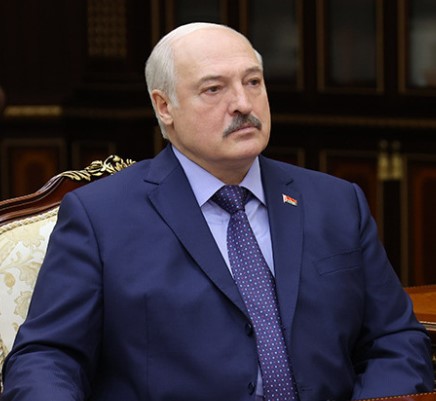
Photo is illustrative in nature. From open sources.


At a recent meeting on improving the efficiency of the agricultural sector, President of Belarus Alexander Lukashenko emphasized the importance of restoring reclaimed lands. And this is no coincidence. After all, our country not only ensures its own food security, but is also one of the world's top five exporters of dry milk, butter and cheese. It is the land reclamation workers who provide agriculture with a reliable feed base who are today able to help the industry maintain its position on the world market and keep store shelves full. What is the country's land reclamation complex today? What concerns does it live by and what contribution does it make to the country's economy? How much reclaimed land do we have? Here is what the State Enterprise "Belvodkhoz", the leading organization of the complex, had to say about this. A hectare reclaimed from swamps - Reclaimed lands in the country occupy 35% of agricultural land. And this is no more and no less than 2.810 million hectares reclaimed from swamps. Of these, 1.48 million hectares are used for arable land and 1.3 million hectares for meadows and pastures, - Ivan Lazovsky, chief engineer of the State Enterprise "Belvodkhoz", cited important statistics. - At the same time, what is characteristic is that more than 58% of meadow grasses grow precisely on such cultivated reclaimed lands, which are available in almost all regions of Belarus, and in 23% of regions they make up more than half of the agricultural lands in circulation! Of course, there are more of them than others in the Polesie region - Pinsk, Lyuban, Stolin, Ivatsevichi, Luninets, Ivanovo, Soligorsk and other regions.
Large-scale melioration, which started in Belarus after the famous May plenum of the Central Committee of the Communist Party in 1966, has greatly changed the life and economy of the country.
- To be convinced of this, it is worth visiting the melioration museum PMK-19 in Zhabinka district. Look at the photos of the life of a Belarusian village before the draining of the swamps and compare them with how farmers live now. These are two big differences. The village has become several orders of magnitude richer, more prosperous, living conditions have changed significantly, - emphasizes Ivan Lazovsky. - At the same time, it should be taken into account that the agricultural sector has increased the volume of food production by an order of magnitude. With the support of the state, we have managed to preserve the melioration system built under the Soviet Union in sovereign Belarus and make it more technically advanced and reliable. Thanks to melioration, which is a complex set of interconnected structures - canals, locks, pumping stations, hydraulic engineering and crossings, and other structures, our country was able to lay a serious foundation for forage production for many years.
- The scale of the melioration complex is truly impressive: 156 thousand km of canals, 1 million km of drainage designed to lower the level of groundwater, 3.2 thousand bridges, 2.2 thousand sluice gates, 24.8 thousand pipes-crossings over watercourses, - Ivan Lazovsky draws attention to the truly gigantic scale of the ramified economy, covering, in fact, the entire territory of the country.
In the most flood-prone areas, where periodically flooded river floodplains are located, about 540 pumping stations designed for pumping water have been built. They play an important role in creating a favorable operating mode on agricultural lands on an area of 289 thousand hectares. These lands have been reclaimed and reliably protected from floods by dams. Effective agricultural production is carried out there. At the same time, pumping stations and dams provide engineering protection from floods to a number of settlements in the Polesie region. We protected cities and villages and provided the country with fish - Such engineering protection from flooding is available in rural settlements, agro-towns, located mainly in the floodplain of the Pripyat River - Khotomel, Tereblichi, Olgomel, Stolin district, and other cities and villages. In particular, David-Gorodok, which was previously flooded, is now also protected by a complex of structures with pumping stations and large hydraulic structures, dams. But such protective projects were implemented precisely thanks to land reclamation, which has been carried out all these years with enormous support from the state! The structure of iconic land reclamation facilities also includes 16 of the country's largest reservoirs, built during the Soviet era , with a useful water volume of more than 15 million cubic meters. They are designed to accumulate, preserve and subsequently use water reserves in the national economy. Among the largest are Selets, Krasnoslobodskoye, Loktyshi, Soligorsk, Lyubanskoye, Zelvenskoye, Pogost and others. At the same time, pond farming has been built at some reservoirs, which is intended to provide the country with freshwater fish. - That is, thanks to melioration, another serious industry has appeared in Belarus - fish farming, - emphasizes Ivan Lazovsky. - In total, about 960 ponds and reservoirs have been built under melioration projects! Drainage melioration was mainly carried out in the country. Of the 2.80 million reclaimed lands, on an area of 750 thousand hectares, melioration systems can preserve and retain moisture. The remaining systems operate on discharge. Melioration systems with a guaranteed water source have been built on 180 thousand hectares. In unfavorable periods, water can be supplied to them from reservoirs, ponds, and rivers, that is, the water supply can be regulated by 10%. Two levels of responsibility
The operation of the entire truly huge complex of hydraulic structures and drainage systems, covering almost all regions of Belarus, is carried out by organizations of republican and municipal forms of ownership. Financial resources for these purposes are allocated by the state.
Today, there are 132 specialized drainage organizations in the country. Some of them are municipal. Among them are regional organizations, such as the State Enterprise "Brestmeliovodkhoz" (similar in Vitebsk, Gomel, Grodno and Minsk), as well as the OJSC "Management Company Mogilevvodstroy" - they are responsible for the construction and operation of drainage systems in the regions. At the same time, in almost every district of the region, these organizations have their own construction and operation organizations. They are not present only in 22 districts, where the operation of drainage systems is handled by 11 production sites. Where there are no such sites, the organization of one of the districts services the territories of neighbors. For example, the area of responsibility of Dyatlovskaya is its own district and also Korelichi.
The State Enterprise "Belvodkhoz" is responsible for planning, implementing the strategy and tactics of the industry on a national scale. While all regional and district municipal melioration organizations are involved in servicing melioration systems, the republican organizations, including two trusts, are focused primarily on their construction. Since the Polesie region is the most flood-prone, the structure of the State Enterprise also includes two construction organizations - RUP "Kalinkovichivodstroy" and OAO "Pinskvodstroy", which have extensive experience in the construction of engineering structures for flood protection. The State Enterprise "Belvodkhoz" has another important competitive advantage: it includes two large design and survey organizations - RUP "Belgiprovodkhoz" and OOO "Polesiegiprovodkhoz".
- Their task is to prepare melioration projects, geological, hydrological, soil surveys, prepare calculations and design structures, - the interlocutor specifies. - By the way, both design and survey organizations are doing an excellent job of designing objects in other industries as well. So, fellow farmers, seek help from melioration designers. High quality design and survey work is guaranteed by many years of experience.
The State Enterprise "Belvodkhoz" conducts annual surveys of melioration systems.
- Local organizations, of course, cope with the entire front of their work, but the State Enterprise "Belvodkhoz" plans these works in advance at the expense of the republican budget, allocates the received funds, and selects an organization to carry them out by competition. After the projects are completed, technical supervision specialists evaluate the quality and carry out their acceptance. Strict control is exercised over the correct use of state funds, one of the forms of which is constant cross-checking of the implementation of all projects for the construction and maintenance of melioration systems, - Ivan Lazovsky clarifies.
A new turn - for the better
The turning point in the history of Belarusian land reclamation was 2023.
- It happened when President Alexander Lukashenko paid special attention to the problems of the industry - we began to work with greater optimism! - emphasizes the chief engineer of the State Enterprise "Belvodkhoz". - When funding increased, the volume of land reclamation work increased. Salaries increased - the outflow of specialists stopped. We also grew in number. In 2023, 390 people came to us, of which 246 were excavator and loader operators, bulldozer operators, and car drivers. Today, 9.8 thousand people work in 132 specialized organizations of the land reclamation complex system. And yet, the system is experiencing a personnel shortage. There is a shortage of masters, foremen, engineering and technical workers. But we are trying to make up for this shortage. All heads of organizations work with universities and colleges that train specialized specialists for us, interview their graduates, and work to popularize melioration professions.
Today, the industry is on the rise.
- The fleet of available equipment allows us to solve most of the problems we face! - Ivan Lazovsky is confident and cites the following statistics: - At the beginning of 2024 , the complex had 7.2 thousand units of equipment, including 962 single-bucket excavators, 102 multi-bucket excavators, which are used for laying drainage. Such excavators are produced by only one enterprise in the territory of the former USSR - the Kokhanovsky Excavator Plant, part of Amkodor OJSC.
In addition, the fleet of the complex's enterprises includes 480 bulldozers, 1,300 tractors, 1,049 trucks, 120 canal cleaners, more than 3 thousand units of trailed and mounted equipment.
- According to calculations, we need to annually update our fleet of 700 units of equipment, - specifies the chief engineer of the State Enterprise "Belvodkhoz".
With state support
- Here the state has lent us a shoulder, - says Ivan Lazovsky. - Land reclamation organizations have entered the State Program "Agricultural Business", within the framework of which the technical re-equipment of agricultural enterprises is also carried out, because we are an integral part of the domestic agriculture of Belarus.
Thus, in 2023, land reclamation organizations managed to acquire more than 700 units of equipment through various sources of financing - mainly through leasing, as well as through budget and own funds. These include single-bucket excavators, bulldozers, loaders, tractors, trucks, etc.
- We are focused on the operation and reconstruction of existing land reclamation systems. We ensure that what is left of the Soviet Union is maintained in working condition: we implement projects to reconstruct land reclamation systems that require updating, - says the chief engineer of the State Enterprise "Belvodkhoz" and specifies:
- Today, there is no large-scale reclamation of new lands in the country. Spot new reclamation is planned only in those areas and farms where there are highly fertile lands, high production culture, and the need to create a feed base for livestock. Thus, in 2020-2023, new reclamation was carried out only on an area of 4.6 thousand hectares.
The introduction of 110 thousand hectares of reclaimed land in the country is planned for 2024.
- On an area of 61.2 thousand hectares, we plan to reconstruct reclaimed systems, and on another 48.8 thousand hectares - cultural and technical reclamation. By the way, such projects, providing for the removal of shrubs and excess vegetation on reclaimed lands, were already actively implemented last year. Now it is planned to involve our personnel and equipment in the removal of shrubs and excess vegetation on other - non-reclaimed lands, and, on the instructions of the head of state, it is planned to carry out work by agricultural organizations. The country needs to put overgrown agricultural and floodplain lands into circulation, - emphasized the chief engineer of the State Enterprise "Belvodkhoz" Ivan Lazovsky at the end of the conversation.
Happy professional holiday – Land Reclamation Worker’s Day!
On the first Sunday of June, the country traditionally celebrates Land Reclamation Worker’s Day.
I sincerely congratulate the many thousands of land reclamation workers of Belarus on the upcoming holiday!
I wish you, dear colleagues, good health, success in your work, well-being, and a good mood!
I also wish all of us peace, order, comfort, and happiness on our land, in our country, and in our families!
Sincerely, Ivan Lazovsky, Chief Engineer of the State Enterprise “Belvodkhoz”
Reclaimed lands in the country account for 35% of agricultural land.
Tamara MARKINA, photo – BELTA and from the archive of the State Enterprise “Belvodkhoz”
Large-scale melioration, which started in Belarus after the famous May plenum of the Central Committee of the Communist Party in 1966, has greatly changed the life and economy of the country.
- To be convinced of this, it is worth visiting the melioration museum PMK-19 in Zhabinka district. Look at the photos of the life of a Belarusian village before the draining of the swamps and compare them with how farmers live now. These are two big differences. The village has become several orders of magnitude richer, more prosperous, living conditions have changed significantly, - emphasizes Ivan Lazovsky. - At the same time, it should be taken into account that the agricultural sector has increased the volume of food production by an order of magnitude. With the support of the state, we have managed to preserve the melioration system built under the Soviet Union in sovereign Belarus and make it more technically advanced and reliable. Thanks to melioration, which is a complex set of interconnected structures - canals, locks, pumping stations, hydraulic engineering and crossings, and other structures, our country was able to lay a serious foundation for forage production for many years.
- The scale of the melioration complex is truly impressive: 156 thousand km of canals, 1 million km of drainage designed to lower the level of groundwater, 3.2 thousand bridges, 2.2 thousand sluice gates, 24.8 thousand pipes-crossings over watercourses, - Ivan Lazovsky draws attention to the truly gigantic scale of the ramified economy, covering, in fact, the entire territory of the country.
In the most flood-prone areas, where periodically flooded river floodplains are located, about 540 pumping stations designed for pumping water have been built. They play an important role in creating a favorable operating mode on agricultural lands on an area of 289 thousand hectares. These lands have been reclaimed and reliably protected from floods by dams. Effective agricultural production is carried out there. At the same time, pumping stations and dams provide engineering protection from floods to a number of settlements in the Polesie region. We protected cities and villages and provided the country with fish - Such engineering protection from flooding is available in rural settlements, agro-towns, located mainly in the floodplain of the Pripyat River - Khotomel, Tereblichi, Olgomel, Stolin district, and other cities and villages. In particular, David-Gorodok, which was previously flooded, is now also protected by a complex of structures with pumping stations and large hydraulic structures, dams. But such protective projects were implemented precisely thanks to land reclamation, which has been carried out all these years with enormous support from the state! The structure of iconic land reclamation facilities also includes 16 of the country's largest reservoirs, built during the Soviet era , with a useful water volume of more than 15 million cubic meters. They are designed to accumulate, preserve and subsequently use water reserves in the national economy. Among the largest are Selets, Krasnoslobodskoye, Loktyshi, Soligorsk, Lyubanskoye, Zelvenskoye, Pogost and others. At the same time, pond farming has been built at some reservoirs, which is intended to provide the country with freshwater fish. - That is, thanks to melioration, another serious industry has appeared in Belarus - fish farming, - emphasizes Ivan Lazovsky. - In total, about 960 ponds and reservoirs have been built under melioration projects! Drainage melioration was mainly carried out in the country. Of the 2.80 million reclaimed lands, on an area of 750 thousand hectares, melioration systems can preserve and retain moisture. The remaining systems operate on discharge. Melioration systems with a guaranteed water source have been built on 180 thousand hectares. In unfavorable periods, water can be supplied to them from reservoirs, ponds, and rivers, that is, the water supply can be regulated by 10%. Two levels of responsibility
The operation of the entire truly huge complex of hydraulic structures and drainage systems, covering almost all regions of Belarus, is carried out by organizations of republican and municipal forms of ownership. Financial resources for these purposes are allocated by the state.
Today, there are 132 specialized drainage organizations in the country. Some of them are municipal. Among them are regional organizations, such as the State Enterprise "Brestmeliovodkhoz" (similar in Vitebsk, Gomel, Grodno and Minsk), as well as the OJSC "Management Company Mogilevvodstroy" - they are responsible for the construction and operation of drainage systems in the regions. At the same time, in almost every district of the region, these organizations have their own construction and operation organizations. They are not present only in 22 districts, where the operation of drainage systems is handled by 11 production sites. Where there are no such sites, the organization of one of the districts services the territories of neighbors. For example, the area of responsibility of Dyatlovskaya is its own district and also Korelichi.
The State Enterprise "Belvodkhoz" is responsible for planning, implementing the strategy and tactics of the industry on a national scale. While all regional and district municipal melioration organizations are involved in servicing melioration systems, the republican organizations, including two trusts, are focused primarily on their construction. Since the Polesie region is the most flood-prone, the structure of the State Enterprise also includes two construction organizations - RUP "Kalinkovichivodstroy" and OAO "Pinskvodstroy", which have extensive experience in the construction of engineering structures for flood protection. The State Enterprise "Belvodkhoz" has another important competitive advantage: it includes two large design and survey organizations - RUP "Belgiprovodkhoz" and OOO "Polesiegiprovodkhoz".
- Their task is to prepare melioration projects, geological, hydrological, soil surveys, prepare calculations and design structures, - the interlocutor specifies. - By the way, both design and survey organizations are doing an excellent job of designing objects in other industries as well. So, fellow farmers, seek help from melioration designers. High quality design and survey work is guaranteed by many years of experience.
The State Enterprise "Belvodkhoz" conducts annual surveys of melioration systems.
- Local organizations, of course, cope with the entire front of their work, but the State Enterprise "Belvodkhoz" plans these works in advance at the expense of the republican budget, allocates the received funds, and selects an organization to carry them out by competition. After the projects are completed, technical supervision specialists evaluate the quality and carry out their acceptance. Strict control is exercised over the correct use of state funds, one of the forms of which is constant cross-checking of the implementation of all projects for the construction and maintenance of melioration systems, - Ivan Lazovsky clarifies.
A new turn - for the better
The turning point in the history of Belarusian land reclamation was 2023.
- It happened when President Alexander Lukashenko paid special attention to the problems of the industry - we began to work with greater optimism! - emphasizes the chief engineer of the State Enterprise "Belvodkhoz". - When funding increased, the volume of land reclamation work increased. Salaries increased - the outflow of specialists stopped. We also grew in number. In 2023, 390 people came to us, of which 246 were excavator and loader operators, bulldozer operators, and car drivers. Today, 9.8 thousand people work in 132 specialized organizations of the land reclamation complex system. And yet, the system is experiencing a personnel shortage. There is a shortage of masters, foremen, engineering and technical workers. But we are trying to make up for this shortage. All heads of organizations work with universities and colleges that train specialized specialists for us, interview their graduates, and work to popularize melioration professions.
Today, the industry is on the rise.
- The fleet of available equipment allows us to solve most of the problems we face! - Ivan Lazovsky is confident and cites the following statistics: - At the beginning of 2024 , the complex had 7.2 thousand units of equipment, including 962 single-bucket excavators, 102 multi-bucket excavators, which are used for laying drainage. Such excavators are produced by only one enterprise in the territory of the former USSR - the Kokhanovsky Excavator Plant, part of Amkodor OJSC.
In addition, the fleet of the complex's enterprises includes 480 bulldozers, 1,300 tractors, 1,049 trucks, 120 canal cleaners, more than 3 thousand units of trailed and mounted equipment.
- According to calculations, we need to annually update our fleet of 700 units of equipment, - specifies the chief engineer of the State Enterprise "Belvodkhoz".
With state support
- Here the state has lent us a shoulder, - says Ivan Lazovsky. - Land reclamation organizations have entered the State Program "Agricultural Business", within the framework of which the technical re-equipment of agricultural enterprises is also carried out, because we are an integral part of the domestic agriculture of Belarus.
Thus, in 2023, land reclamation organizations managed to acquire more than 700 units of equipment through various sources of financing - mainly through leasing, as well as through budget and own funds. These include single-bucket excavators, bulldozers, loaders, tractors, trucks, etc.
- We are focused on the operation and reconstruction of existing land reclamation systems. We ensure that what is left of the Soviet Union is maintained in working condition: we implement projects to reconstruct land reclamation systems that require updating, - says the chief engineer of the State Enterprise "Belvodkhoz" and specifies:
- Today, there is no large-scale reclamation of new lands in the country. Spot new reclamation is planned only in those areas and farms where there are highly fertile lands, high production culture, and the need to create a feed base for livestock. Thus, in 2020-2023, new reclamation was carried out only on an area of 4.6 thousand hectares.
The introduction of 110 thousand hectares of reclaimed land in the country is planned for 2024.
- On an area of 61.2 thousand hectares, we plan to reconstruct reclaimed systems, and on another 48.8 thousand hectares - cultural and technical reclamation. By the way, such projects, providing for the removal of shrubs and excess vegetation on reclaimed lands, were already actively implemented last year. Now it is planned to involve our personnel and equipment in the removal of shrubs and excess vegetation on other - non-reclaimed lands, and, on the instructions of the head of state, it is planned to carry out work by agricultural organizations. The country needs to put overgrown agricultural and floodplain lands into circulation, - emphasized the chief engineer of the State Enterprise "Belvodkhoz" Ivan Lazovsky at the end of the conversation.
Happy professional holiday – Land Reclamation Worker’s Day!
On the first Sunday of June, the country traditionally celebrates Land Reclamation Worker’s Day.
I sincerely congratulate the many thousands of land reclamation workers of Belarus on the upcoming holiday!
I wish you, dear colleagues, good health, success in your work, well-being, and a good mood!
I also wish all of us peace, order, comfort, and happiness on our land, in our country, and in our families!
Sincerely, Ivan Lazovsky, Chief Engineer of the State Enterprise “Belvodkhoz”
Reclaimed lands in the country account for 35% of agricultural land.
Tamara MARKINA, photo – BELTA and from the archive of the State Enterprise “Belvodkhoz”
Read together with it:
- Kirilenko spoke about the problems facing Russian teams after sanctions were lifted.The head of the Russian Basketball Federation (RBF) stated that FIBA could make a final decision on the return of Russian basketball in April, but visa barriers remain the main problem. Andrei KirilenkoIn an interview with RBC Sport, Russian Basketball Federation (RBF) President Andrei Kirilenko discussed the possible return of Russian basketball to the international arena. He also cited visa an...
- The Russian ambassador warned of a reaction to the Faroe Islands' change in stance on sanctions.Vladimir BarbinThe Faroe Islands' change in stance on sanctions against Russia will not go unnoticed by Moscow, Russian Ambassador to Denmark Vladimir Barbin said in an interview with RIA Novosti. The statement was prompted by the Faroe Islands Parliament's decision to support sanctions against Russian fishing companies Norebo and Murman Seafood, as well as the Faroe Islands government's announcem...
- Lukashenko heard a report on the Mogilev region. The main topic was the situation in agriculture.February 4, Minsk . On February 4, Belarusian President Alexander Lukashenko heard a report from Anatoly Isachenko, Chairman of the Mogilev Regional Executive Committee, BelTA reports. The report focused on the state of affairs in the region, following up on Tuesday's report in the Vitebsk Region. As the head of state noted the day before, many of the identified problematic issues are, to varying ...
- An expert identified possible areas of cooperation between Belarus and Southeast Asian countries.Irina Novikova, February 4, Minsk . Irina Novikova, Head of the Department of Management, Business Technologies, and Sustainable Development at the Belarusian State Technological University, Professor, and Doctor of Economics, discussed potential areas of cooperation between Belarus and Southeast Asian countries at a House of Representatives seminar entitled "Belarus and Southeast Asia in Search o...
- Robotic farms have opened in Udmurtia.The Progress agricultural production cooperative officially launched two modern robotic farms, each designed for 140 cows, and a facility for 300 calves. Vasily Muklin, Minister of Agriculture and Food of Udmurtia, attended the opening ceremony . "Progress is a leading enterprise in the region, steadily improving its performance. Today, we see a logical continuation of this trend. Currently, four ...
- Apple shipments from Kabardino-Balkaria increased by 25%.According to the North Caucasus Interregional Office of Rosselkhoznadzor , apple deliveries to various regions of the country exceeded 165,000 tons in 2025. In 2024 , they totaled 132,500 tons. Along with the increase in volume, the geography of deliveries has also expanded: while apples were delivered to 49 regions in 2......
- The first batch of fish products in 2026 was sent from the Irkutsk region to China.The products comply with all veterinary requirements and quality standards of Russian and Chinese legislation. According to Marina Kozharina, Acting Minister of Agriculture of the Irkutsk Region, fishery exports play a significant role in the region's achievement of the goals of the federal project "Export of Agricultural Products," which is part of the national project "International Cooperation ...
- The growth in agricultural production in the Ivanovo region by 2025 amounted to more than 3%.The region is among the top ten leaders in the Central Federal District in terms of livestock production across all farm categories. According to preliminary data from Rosstat, the agricultural production index in Ivanovo Oblast in 2025 was 103.3% of the previous year, including 106.5% in crop production and 1......
- In the Saratov region, over 400 hectares of perennial plantings were planted in 2025.Including more than 364 hectares of intensive orchards. By 2026, at least 300 hectares of perennial plantings are planned, including 65 hectares of fruit nurseries. The area of perennial fruit plantings in farms of all categories in the region amounts to 9.8 thousand hectares, including 6.8 thousand hectares of fruit-bearing age. "Among the perennial plantings, pome fruits occupy 6.9 thousand he...
Test for Atnibiotics in Milk
 Rapid 4 in 1 tests for determining the residual amount of neomycin, kanamycin, gentamicin, spectinomycin in milk, whey
 Express tests for determining the residual amount of β-lactams, tetracyclines, chloramphenicol, streptomycins in milk, whey
 Rapid tests PIONER 5 in 1 for the determination of sulfonamides, tylosin, tilmicosin, lincomycin, erythromycin, fluoroquinolones
 Express tests for determining the residual amount of β-lactams and tetracyclines in milk, whey
Laboratory equipment
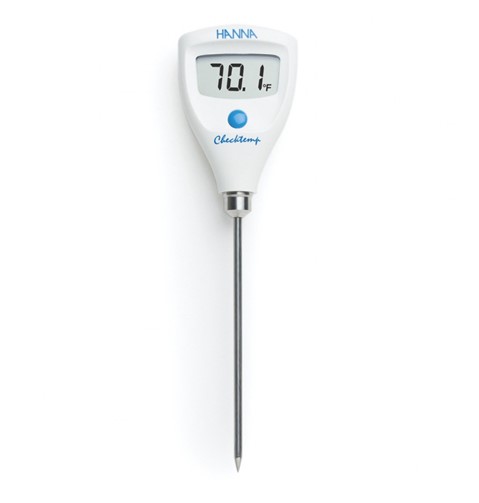 Electronic Checktemp thermometers (Germany)
 Laboratory thermostat-reducer "LTR-24"
 Hygrometers VIT-1, VIT-2 (Russia)
 Test strips "Urea in milk"
 Table for microscopy BA-CL- X.X. CM TR-a
 Stopwatch mechanical stopwatch SOPpr
- Stationary thermohygrometer IVA-6B2 (Russia)
- Stationary pH meter/millivolt meter/thermometer (pH/mV/ORP/T) Edge HI 2202-01
- HI 9142 Portable Moisture Proof Oxygen Meter
- Mutovki for flasks and tanks (Russia)
- Indicator strips pH 0-12, 100 pcs.
- Residual Acidity Test Strips, 100 pcs.
- Milk quality analyzer "Laktan 1-4M" 500 isp. MINI
- Tagler TSLM 1-8 milk centrifuge (without heating) (Russia)
Packing


Additional Products
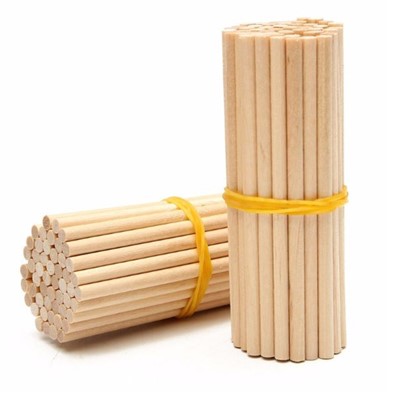 Ice cream sticks (round)
 J-Bottom technology
 General purpose environment of SPC "Biocompass-S" (Uglich)
 Ice cream sticks (with logo)
 Ice cream sticks Standard 93
 Pepsin whey pork
- Auxiliaries for sugar products
- Petri dish 90 mm
- Ice cream sticks Magnum (curly)
- Wafer cup and cone
- Ice cream sticks Standard 114
Consumables

Microbiology
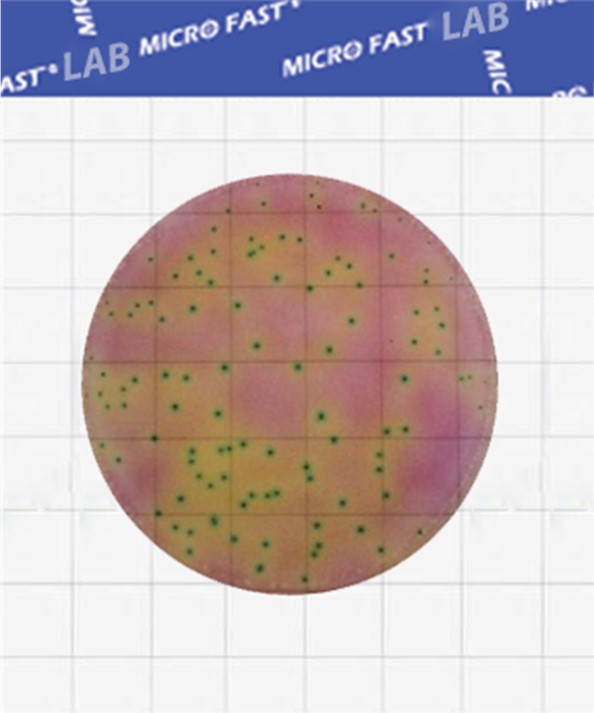 MicroFast® Lactic Acid Bacteria Count Plate (Part Number LR1312)
 MicroFast® Salmonella Count Plate (SAL), for the determination of Salmonella in food and environmental samples (Catalog #LR1006)
 Yeast & Mold Count Plate (cat. no. LR1003) MicroFast® Yeast & Mold Count Plate
 Coliform Count Plate (catalog number LR1002) MicroFast® Coliform Count Plate
 MicroFast® Environmental Listeria Count Plate
 Substrate for accelerated determination of QMAFAnM, (catalog number LR1321)
- MicroFast® Bacillus cereus Count Plate (catalog number LR1010)
- MicroFast® Enterobacteriaceae Count Plate (cat. no. LR1011)
- MicroFast® Microbiological Substrates
- Substrate for determining QMAFAnM (catalog number LR1001)
- MicroFast® Coliform & E.coli Count Plate
- Substrate for determining the number of staphylococci (Catalog number LR1005) MicroFast® Staphyloccocus aureus Count Plate
- MicroFast® Staphyloccocus aureus Confirmation Plate Staph.aureus Confirmation Plate (cat. no. LR1005Q)
Our News
 Exports of Belarusian milk and dairy products increased by 6.7% in January-November26.12.2023
 Производство продуктов питания в организациях Минсельхозпрода выросло на 5,3%26.12.2023
 Lukashenko: the EAEU has achieved a high level of food self-sufficiency, and in Belarus - almost 100%26.12.2023
- About technical regulation, food safety, toys and “gray” certification25.12.2023
- INTERVIEW: Nazarenko about technical regulation, food safety, toys and “gray” certification25.12.2023
- Prospects near Moscow, land reclamation without showing off and pricing strategy. Main results of the President's week25.12.2023
- Reusable veterinary needles24.12.2023
- Reusable Veterinary Needles: Modern Technologies for Improved Animal Care24.12.2023
- Лукашенко о регулировании в ценообразовании: это вопрос справедливости23.12.2023
- Снопков: инфляционные ожидания населения находятся на низком уровне, есть доверие к власти23.12.2023
- Снопков: по итогам 2023 года инфляция составит около 5,5%23.12.2023
- Barrier-free environment, asphalt road. Krupko held a reception of citizens in Gomel20.12.2023
- Productivity and quality. A new dairy farm was put into operation in the Voronovsky district20.12.2023
- Why didn’t the children run away from the concentration camp in Skobrovka? We talk about the life of little donors20.12.2023
- Blood-sucking pests: How mosquitoes threaten agriculture20.12.2023
- The principle of work is team, responsibility is individual. The secret of success of OJSC "Nestanovichi-Agro"15.12.2023
Articles
 Инновационный проект: производственные линии для наггетсов от «ОренКлип» могут удвоить мощность01.08.2025
 Prices for chicken and butter in Russia have begun to rise again.01.08.2025
 Egg production in the Astrakhan region doubled in the first half of 202501.08.2025
- Vietnam steps up support for farmers in fight against African swine fever01.08.2025
- Omsky Bacon has completed the recruitment of sows for the new Chunaevsky-2 production complex01.08.2025
- Successful trials of Nipah virus vaccines in pigs01.08.2025
- Bulgaria imposes temporary ban on movement of sheep and goats due to worsening epizootic situation01.08.2025
- AGROECO opened a new pig farm "Stepnoy" in the Tula region01.08.2025
- Mavin Group: A New Stage of Humane Pig Farming in Vietnam31.07.2025
- New US-EU trade deal opens up opportunities for US meat industry31.07.2025
- Tambov poultry farm "Tokarevskaya" owes more than 100 million rubles to grain supplier31.07.2025
- Kazan has developed a new probiotic to improve the quality of quail meat31.07.2025
- В Хакасии из-за пожара погибли куры, найдено несколько происшествий за сутки31.07.2025
- Prices for chicken eggs continue to decline in Khakassia31.07.2025
- Poultry farming development in Sevastopol: farmers receive state support31.07.2025
- Ineffectiveness of poultry subsidies in Kazakhstan: audit reveals problems31.07.2025
Economics
 Bloomberg learned about the US proposal to use Russian assets22.03.2024
 WP reported that the West is purchasing hundreds of millions of dollars' worth of titanium from Russia.22.03.2024
 Словения объявила сотрудника российского посольства персоной нон грата21.03.2024
- Ukraine decided to abandon the list of “war sponsors”21.03.2024
- Reuters узнал о давлении на Raiffeisen из-за связанной с Дерипаской фирмы21.03.2024
- ЕС продлил отмену пошлин на украинскую сельхозпродукцию до июня 2025-го20.03.2024
- Putin Allows Payments from Type C Accounts to “Pseudo-Non-Residents”20.03.2024
- Microsoft is thinking about postponing the closure of services for companies from Russia19.03.2024
- "VTB Armenia" announced restrictions on the acceptance of "Mir" cards in the country's banks19.03.2024
- Borrell expressed hope for an EU agreement on Russian assets18.03.2024
- Zakharova said that there will always be sanctions against independent Russia16.03.2024
- The European Commission announced a test regime for monitoring the embargo on Russian diamonds.15.03.2024
- AirBridgeCargo returns Boeing to China after two years of downtime15.03.2024
- The Ministry of Justice has declared the German "Lev Kopelev Forum" undesirable.15.03.2024
- The Federal Tax Service filed a bankruptcy lawsuit against Poland's PGNiG in a Russian court.14.03.2024
- Lavrov announced the creation of an alliance of "victims of the sanctions war"13.03.2024
Antibiotics in Milk
 Is it worth drinking antibiotics at the first sign of illness and what is the risk of it: an interview with a pharmacologist01.08.2020
 In Smolensk region the Rosselkhoznadzor Directorate returned to Belarusian consignors more than 33 tons of animal products transported with violations of veterinary requirements.04.02.2020
- Struggle for product quality and safety: experience of Belarusian colleagues19.11.2019
- Tiamphenicol07.08.2019
- Antibiotics in milk07.08.2019
- "While I'm talking to you nicely." The President threatened the government with prison for the death of a cattle25.07.2019
- Antibiotics in milk: Rumors and reality23.07.2019
- Antibiotics: harm or benefit17.07.2019
- Antibiotics in milk16.07.2019
Antibiotics in Meat
 Antibiotics in Meat: Prevention, Regulation and Consumer Health Concerns12.01.2024
 Antibiotics in Fried or Boiled Meat: Facts and Misconceptions12.01.2024
 Antibiotics in Sausage: Reality, Risks and Need for Control12.01.2024
- Antibiotics in Pelmeni: Real Threat or Myth?09.01.2024
- Antibiotics in Pork: Health Effects and Cooking Recommendations08.01.2024
- Antibiotics in Chicken: Safety, Regulation and Consumer Health Concerns08.01.2024
- Antibiotics in meat: problems and solutions06.01.2024
- Antibiotics in Beef: Between Animal Health and Consumer Safety06.01.2024
- Antibiotics in Chicken Meat: Safety, Regulation and Concern for Consumer Health06.01.2024
- Antibiotics in Rabbit Meat: Safety, Efficiency and Care for Consumers05.01.2024
- Antibiotics in Pork: Balance Between Health Concerns and Consumer Safety03.01.2024
- Antibiotics in Lamb03.01.2024
- Antibiotics in Meat: Real Risks and Transparency in Food Production29.12.2023
10 Interesting Facts
 Marbled meat: 10 interesting facts19.01.2024
 10 Fascinating Facts About Cattle Hoof Baths18.01.2024
 Antibiotics - 10 interesting facts18.01.2024
- Cutlets - 10 interesting facts18.01.2024
- 10 Interesting Facts about Carp17.01.2024
- Salmon - 10 Interesting Facts17.01.2024
- Beer belly 10 interesting facts17.01.2024
- Beer - 10 interesting facts17.01.2024
- Antibiotic tests pioneer - 10 interesting facts17.01.2024
- Rubber rings for castration - 10 interesting facts17.01.2024
Diseases of cattle
 Dicroceliosis in cattle09.03.2024
 Demodicosis in cattle01.03.2024
 Purulent mastitis of cattle27.02.2024
- Hypodermatosis in cattle20.02.2024
- Hemonchoz in cattle11.02.2024
- Bursitis in cattle30.01.2024
- Brucellosis in cattle29.01.2024
- Bronchopneumonia in calves27.01.2024
- Bronchitis in cattle26.01.2024
- Mortellaro disease in cattle24.01.2024
- White muscle disease in cattle23.01.2024
- Babesiosis in cattle22.01.2024
- Cattle acidosis20.01.2024
- Arthritis in cattle20.01.2024
- Anaplasmosis in cattle18.01.2024
Misc
 Житель Быховского района сбил пешехода, а потом заявил об угоне машины: дело направили в суд05.03.2024
 "Предупредить, а не наказать". Лучший инспектор по делам несовершеннолетних Могилевской области о профессии05.03.2024
- MART checked more than 50 online stores and identified about 40 violations04.03.2024
- "I should have become a teacher, but chose the police." A young district police officer from Grodno told about his work04.03.2024
- A resident of the Drogichinsky district hit a girl and fled the scene of the accident. The case was sent to court04.03.2024
- Прокуратура Мостовского района потребовала устранить нарушения прав и интересов детей04.03.2024
- A Minsk resident found someone else's card and paid in stores: a criminal case has been initiated01.03.2024
- Ресурсы домашнего хозяйства белоруса в IV квартале 2023 года составили Br2184,3 в месяц29.02.2024
- A man in the Kamenets district cut his wife four times with a chainsaw: the court has reached a verdict.29.02.2024
- A fatal drug poisoning occurred in the Mogilev region.29.02.2024
- Killed in a drunken quarrel: a crime five years ago was solved in Novopolotsk27.02.2024
- More than 3.5 ppm. A drunken car thief was detained in Gomel27.02.2024
- МЧС рассказало о ситуации с весенним половодьем и пожарами в Беларуси27.02.2024
- Minsk traffic police fined 59 reckless drivers over the weekend.26.02.2024
- The prosecutor of the Rechitsa district defended the rights of children from disadvantaged families26.02.2024
- In the Vitebsk region, the traffic police fined more than 250 pedestrians for traffic violations over the weekend26.02.2024
Cloud of Tags
Russiaминистр сельского хозяйстваГерманияКазахстанВ китаеВостокСанкцииМинздравФермерРоссияЦеныМужчиныИмпортРоссельхознадзорТАССРоспотребнадзорПравительствоКанадаОнлайнСанкт-ПетербургПродовольствиеИнвестицииКредитВеликобританииПесковВакцинацияКрупного рогатого скотаЖивотноеПтицефабрикаПродукцияПрокуратураПроизводство молокаРубльФруктыАнтибиотиковГазпромБразилияДмитрий песковУрожаяКрупный рогатый скотМясо птицыПродукты питанияКитайУзбекистанМинскДетиБизнесДжо БайденGoogleЕгипетАлкогольного опьяненияЗаконопроектПодмосковьеКРСОтпускЗаконРоссиянеМЧСОрганизмЛекарстваЯйцаМясокомбинатВьетнамФранцияДоходыДолларВакцинацииИсследованияТурцияАЧСРаботаСШАКартофельНедвижимостьУкраинеМясоСвининаAppleДеньгиБройлерНефтьПроизводство мяса2024COVID-19ЗапретЭкономикаКарантинСмертьВыручкаСырыFacebookTelegramМолокоУченыеОбщепитМинфинЕСУкраинаТатарстанГовядинаЕАЭСПензенской областиКофеВирусМаслоТребованияИнфляцияBloombergМинсельхозЕврокомиссияПраздникВеликобританияСубсидииПитаниеБеларусьReutersСпутник vКлиматКоронавирусЭкспортСотрудники ГАИАлкогольВладимир ПутинЯпонияСудБолезньДональд ТрампАзербайджанАлександр ЛукашенкоСельское хозяйствоКолбасыДиректорГовядинуЗдоровьеПольшаМоскваРосстатЗеленскийЦентробанкИталияРодителиКризисАвстралияНовостиЗависимостьЛечениеИммунитетВластиУборкаПоддержка