
Antibiotics in milk

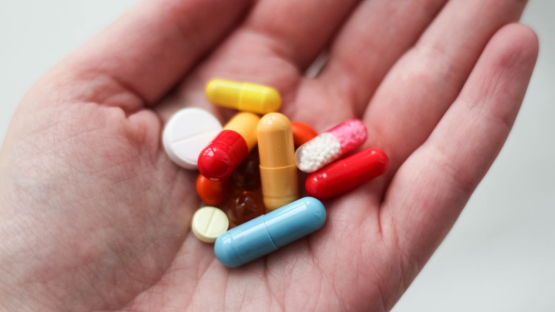
Photo is illustrative in nature. From open sources.


How do antibiotics get into the milk?
Animals as well as people get sick and have to be treated with antibiotics. Cows give milk all year round, which is unnatural for their biological nature, and it causes inflammation in their body.
One of the serious problems of modern animal husbandry is the disease of milk cows with mastitis. Due to the overcrowding of animals, tightness, there are often various infections that are quickly transmitted from one animal to another. Prevention of animal diseases is also done. So one of the sources of antibiotics in milk is the treatment and prevention of diseases.
Each antibiotic has an average duration of 2 to 3 weeks for its removal from the body (with milk, from tissues, etc.). As a rule, 3-5 days are sufficient for excretion of penicillin from an animal organism, however, in some cases this period can be extended up to 6-11 days for sick animals.
According to sanitary rules, milk from treated cows should be disposed of within 5-10 days (depending on the product used). But with a general lack of milk, when large producers buy literally everything, farmers simply dilute milk from normal cows with milk with antibiotics. Yes, the concentration is lower, but the antibiotics are still there.
In addition to treatment, antibacterials can be used to stimulate animal growth (weight gain increases by 30%). Unscrupulous farmers can add antibiotics to feed for preservation, but this is also illegal. This is the second source of antibiotics in milk.
What antibiotics can be found in milk?
More than 70 types of antibiotics are used in animal husbandry, but the most commonly used antibiotics are long known and inexpensive beta-lactams (penicillins), tetracyclines, sulfonamides, streptomycin, fluoroquinolone derivatives, and levomycetine.
Tetracycline is the cheapest and one of the most dangerous antibiotics with a wide range of antibacterial properties. According to the instructions for use, tetracycline can cause gastritis and proctitis, not to mention loss of appetite. Tetracycline and other drugs of this series can increase the sensitivity of the skin to sunlight (photosensitization). Recently, due to the prevalence of tetracycline resistant strains of microorganisms and frequent side effects, the use of tetracycline for medical purposes has become limited.
What are the risks of antibiotics in milk and foodstuffs for humans?
Of course, when talking about the presence of antibiotics in milk purchased in a store, we are talking about microscopic doses of these substances. But, according to experts, because of the specific features of these drugs, even minimal doses of antibiotics have a negative impact on the intestinal microflora, as well as increase the risk of resistance (or resistance) of pathogens to drugs. All of this ultimately reduces the body's immunity. Prolonged use of foods containing residual amounts of antibiotics can cause adverse effects on human health - allergic reactions, dysbiosis.
For example, tetracycline antibiotics have a cumulative effect. By accumulating in the body, they can have a negative impact on the ears, cause a decrease in platelet count and cause toxic reactions in the liver. Accumulating in bone tissue, tetracyclines can disrupt its formation, especially for children, because they can slow down growth. In adults, regular intake of tetracycline leads to the destruction of teeth.

Streptomycin sulfate has a nephropathic effect and causes central hearing receptor damage.
Fluoroquinolone derivatives in children under 14 years of age accumulate in the cartilage, which leads to skeletal disorders. The paradox is that we drink milk because of the benefits for teeth and bones of calcium, and get the opposite result.
On the shelves of shops you can find milk with different expiration dates - from 2 months to six months. Does this mean that milk with a long shelf life contains antibiotics?
No, in this case the reason is the way the milk is processed and the properties of the packaging.
Heat treatment of milk is pasteurization or sterilization. The purpose of heat treatment is to destroy microorganisms and thus prolong the shelf life of the product. Pasteurization is thermal treatment at temperatures below boiling point or simply heating to below 100°C. In the classical sense, pasteurization of milk is its heating up to 74-76°C with a holding time of 15-20 seconds or instantaneous heating up to 85°C without holding time. In pasteurization die microorganisms that do not form spores, including dysentery, typhus, cholera. Escherichia coli and lactic acid bacteria cannot withstand pasteurization. Disputes that survive the pasteurization during the storage of milk "germinate" - begin to proliferate actively, causing damage to milk.
Sterilization - is the heat treatment of milk at temperatures above 100 ° C. Such heating not only kills microorganisms, but also their spores, due to which milk can be stored for a long time even without a refrigerator. In addition, sterilization can also be performed in different ways: there are simply high-temperature sterilization, there is pressure, where the temperature of food processing is higher. One manufacturer can be more gentle, the other uses pressure sterilization. Hence the differences in shelf life. Why aren't they in a hurry to sterilize all the milk? Because high temperatures lead to significant unwanted changes in milk, including taste changes. Therefore, producers are trying to find a "golden" balance between the duration of storage and preservation of the original properties of milk.
In addition, the shelf life depends on the packaging. The leader here is Tetra-Pack, where products are stored for a very long time. The plastic bottle has a shorter shelf life.
However, some manufacturers provide an extension of the shelf life by adding ... lowland antibiotics. This is the only antibiotic, which is not prohibited by Russian legislation, as it is decomposed by our body. But this does not apply to milk. It is forbidden to add lowland to milk.
Are antibiotics destroyed by boiling milk?
Boiling and sterilization have almost no effect on the antibiotic content of milk. After boiling in milk there is from 90 to 95% of the initial amount of antibiotics, i.e. from 5 to 10% of their amount is destroyed. After sterilization, 92 to 100% of the initial amount of antibiotics remains in the milk. Such data allow to draw conclusions about unsuitability of parameters of boiling and sterilization for destruction of antibiotics in milk.
The greatest decrease in the number of antibiotics in the samples occurs with prolonged pasteurization. Probably, it is connected with the longest influence on antibiotics of high temperature which leads to coagulation of proteins and their settling together with antibiotic on walls of capacities.
Do antibiotics persist in dairy products - dried milk, yogurt, cheese, etc.?
Fortunately for the consumer, it is difficult to make sour milk products out of milk with antibiotics. Microorganisms used in the dairy industry are very sensitive to antibiotics. Their presence in milk leads to technological problems in the dairy enterprise. Antibiotics cause lagging or complete delay of enzymatic processes in the production of cheese, cottage cheese and sour milk drinks. Changes in the ratio of microorganisms in starter have a negative impact on quality, particularly on the appearance of the product (for example, the absence of eyes in cheese).
Most of the antibiotics in liquid milk are transformed into powdered ones. Unfortunately, they are not destroyed by drying. If you make butter out of milk with antibiotics, the antibiotics will remain in it. To a lesser extent, of course. But fat-soluble antibiotics remain there.[ADD-2]
That is, in many products made of milk, antibiotics can be present, and in what and danger.
How is the content of antibiotics in foodstuffs and, in particular, in milk controlled in our country?
In animal husbandry more than 70 kinds of antibiotics are used, as it was mentioned earlier, in our country several basic groups are controlled: levomitsetin, streptomycin, tetracycline, sulfonamides, quinolones, nitrofurans and penicillin. The maximum allowable levels of these antibacterials are regulated by SanPiN 2.3.2.1078-01. In addition, levomycetin, streptomycin and tetracycline are regulated by the Technical Regulation of the Customs Union 021/2011
According to the regulations, there is a three-level system of raw milk quality control, designed to prevent the milk of sick animals from getting on the consumer's table. Raw milk should be subject to industrial laboratory control, laboratory safety monitoring in veterinary institutions and quality control when accepted into dairy factories. Ideally, this system should ensure that there is no unsafe milk in the total milk yield, but in practice it can fail.
In addition, as part of the annual veterinary monitoring of veterinary drug residues in food, raw milk is examined for five antibiotic residues (levomycetine, streptomycin, tetracycline, nitrofuran, sulfonamides)
Read together with it:
- Antibiotics in milk: causes and methods of detectionMilk is an essential food, rich in proteins, fats, carbohydrates, vitamins, and minerals. However, its quality can be compromised by the presence of undesirable substances, such as antibiotics. The presence of antibiotic residues in milk raises serious concerns among consumers, as they can lead to allergic reactions, disrupt gut microbiomes, and contribute to the development of antibiotic resistan...
- In the Novosibirsk region, a cow infected with rabies attacked a veterinarian.The Iskitim Central District Hospital reported this. A rabies epidemic has affected several regions, including the Krasnoyarsk Krai and Omsk Oblast. Rabid foxes typically attack people, but attacks by wolves and wild cats have also been recorded. Authorities have implemented quarantine measures. Nine people, including five children, who drank milk from the infected cow have been vaccinated. The cl...
- Surcharges on prices for agricultural products purchased from the population have been established in 2026.February 4, Minsk . Resolution No. 8 of the Ministry of Agriculture and Food dated January 27, 2026, established markups to the purchase prices of agricultural products purchased from the population in 2026. BELTA reports this with reference to The size of the markups (in Belarusian rubles) per 1 kg of product will be: ......
- Sustainable Growth of Russian Agriculture in 2025: Analysis and ProspectsProduction Dynamics : According to data, total agricultural production in 2025 amounted to 10 trillion 627 billion 548 million rubles. Of this amount, 5 trillion 864 billion 618 million rubles were accounted for by crop production, and 4 trillion 762 billion 930 million rubles by livestock production. These figures underscore the importance of both crop and livestock production in the country's ag...
- Lukashenko on the case: it is a moral monstrosity if we cannot protect our smaller brothers in this weatherFebruary 3, Minsk . Belarusian President Alexander Lukashenko called the death toll in the livestock industry a moral abomination. He made this statement at a meeting on specific issues of socio-economic development in the Vitebsk Region, BelTA reports."Why am I talking about the death toll? It's morally despicable that we can't protect our smaller brothers, especially in this difficult weather. H...
- From Tractor Driver to Businessman: The Story of a Belarusian Who Built a Farm from Scratch and a Church in a VillageVasily Matskevich News Topics Vasily Matskevich is a well-known figure in the Dokshitsy district. His fellow villagers unanimously call him a "Master" with a capital "B." He has good reason to be: our hero built a strong farm from scratch, built a church in his native village, raised five children, and never refuses to help those in need. 7 Days correspondents learned how this tractor driver manag...
- Avian influenza in cattle in the NetherlandsHow it all began A cow screening on the farm was initiated after a cat living on the property was confirmed to be infected with the avian influenza virus . This raised concerns that the virus could have spread to other animals, including cows. The Dutch Food and Consumer Product Safety Authority (NVWA) decided to conduct testing, collecting milk samples from 2......
- Belarusian producers plan to enter the Qatari meat market.January 28, Minsk . Belarus and Qatar plan to expand cooperation in agriculture and food, the press service of the Ministry of Agriculture and Food told BelTA. Minister of Agriculture and Food Yury Gorlov held talks with Qatar's Chargé d'Affaires in Belarus, Hamoud Saleh Al Saadi. Agriculture is a key area of bilateral relations. From January to November, the main exports were skim milk powder ,...
- Europe's first outbreak of bird flu among cows has sparked alarm in Galicia.Официальное подтверждение первого случая птичьего гриппа у крупного рогатого скота на территории Европы вызвало тревогу в системах здравоохранения и представляет собой особенно серьезную потенциальную опасность для Галисии, учитывая зависимость сельских районов страны от молочного сектора. Министерство сельского хозяйства Нидерландов сообщило об обнаружении антител к вирусу H5N1 у молочной коровы ...
Test for Atnibiotics in Milk
 TEST KIT for determination of inhibitory agents PIONEERPRODUKT® DASH-TEST, WC0040
 Rapid tests for determining the residual amount of tetracyclines in meat
 Rapid 4 in 1 tests for determining the residual amount of neomycin, kanamycin, gentamicin, spectinomycin in milk, whey
 PIONEER MEIZHENG BIO-TECH (5 in 1) JC0726 / Rapid tests for determining the residual amount of Bacitracin, ansamycins, clindamycin, spiramycin, florfenicol in milk, whey
 ANTIBIOTICS / ELISA TESTS
 PIONEER MEIZHENG BIO-TECH (5 in1) JC0871/ Rapid tests for the determination of the residual amount of β-lactams, tetracyclines, chloramphenicol, streptomycins, ceftiofur in milk, whey.
- PIONEER MEIZHENG BIO-TECH (5 in1) JC1165 / Rapid tests for the determination of the residual amount of halofuginone, flavomycin, novobiocin, flunixin, dexamethasone / prednisolone in milk, whey
- Express-tests PIONER 5 in1 for the determination of thiamphenicol, meloxicam, colistine, trimethoprim, sulfonamides
- Rapid tests for determining the residual amount of chloramphenicol in meat
- PIONEER MEIZHENG BIO-TECH (5 in1) JC0586 - Antibiotic tests 5 in 1 / Rapid tests for determining the residual amount of β-lactams, tetracyclines and cephalexin in milk, whey
Laboratory equipment
 Mug for pouring milk (Russia)
 SuperVario-N milk centrifuge (Germany)
 Sink table BA-CL- X.H.MO C (one bowl)
 Milk quality analyzer "Laktan 1-4M" isp. Mini
 Steam autoclaves/sterilizers GC (Russia)
 Muffle furnace SNOL 8,2/1100 (8,2 l., chamber - fiber)
- Manual homogenizer D-130 with tripod
- Metal closets
- Bürkle IceSampler
- Laboratory heating plate PL-01
- HI 9142 Portable Moisture Proof Oxygen Meter
- Areometer AON - 1 (set of 19)
- ColonyStar Semi-Automatic Microbial Colony Counter
- Hygrometers VIT-1, VIT-2 (Russia)
- Laboratory pH meter/ORP meter/thermometer HI 5221-01 (pH/ORP/T) (Hanna, Germany)
Packing
 KH PACK® Straight Packing Paper
 Korreks for desserts
 Paper sacks
 Korreks for confectionery
 Cover
Cover Cartons for milk and dairy products
- Laminating paper KH PACK®
- GableTop aseptic packaging
- Paper for micro-ribbed
- Ice cream chopsticks
- The paper packing fastened anticorrosive UNIK 14-70 THAT 5453-003-05773103-2005
- Skiving and Hemming Technology
- Backed Foil
- KH PACK® bag making paper
- Parchment
Additional Products
 Auxiliaries for sugar products
 Ice cream sticks Magnum (curly)
 Ice cream sticks (round)
 J-Bottom technology
 Wafer cup and cone
 Ice cream sticks Standard 114
- Ice cream sticks (with logo)
- Petri dish 90 mm
- General purpose environment of SPC "Biocompass-S" (Uglich)
- Pepsin whey pork
- Ice cream sticks Standard 93
Consumables
 Non-returnable cup for udder treatment
 Drencher for feeding calves with a rigid probe
 Alkaline detergent (20l / 24kg)
 Disinfectant with washing effect (10kg)
 Rubber rings for castration
 Mug for milking the first streams of milk, lengthwise
- Veterinary glove to the shoulder and through the neck
- Liquid soap "Prestige" (yellow, green, red) 5 l
- Antibryk
- Gas tailing cutter
- Self-adhesive hoof bandage
- Fall with a loop for cattle
- Latex gloves (long cuff with roller), (color blue, pack of 50 pieces)
- Hoof bath
- Foaming cup for udder treatment
Microbiology
 Substrate for determining QMAFAnM (catalog number LR1001)
 Substrate for accelerated determination of QMAFAnM, (catalog number LR1321)
 MicroFast® Staphyloccocus aureus Confirmation Plate Staph.aureus Confirmation Plate (cat. no. LR1005Q)
 MicroFast® Salmonella Count Plate (SAL), for the determination of Salmonella in food and environmental samples (Catalog #LR1006)
 MicroFast® Microbiological Substrates
 MicroFast® Coliform & E.coli Count Plate
- Yeast & Mold Count Plate (cat. no. LR1003) MicroFast® Yeast & Mold Count Plate
- MicroFast® Enterobacteriaceae Count Plate (cat. no. LR1011)
- MicroFast® Environmental Listeria Count Plate
- MicroFast® Bacillus cereus Count Plate (catalog number LR1010)
- Coliform Count Plate (catalog number LR1002) MicroFast® Coliform Count Plate
- Substrate for determining the number of staphylococci (Catalog number LR1005) MicroFast® Staphyloccocus aureus Count Plate
- MicroFast® Lactic Acid Bacteria Count Plate (Part Number LR1312)
Our News
 Lukashenko heard a report on the Mogilev region. The main topic was the situation in agriculture. 05.02.2026
 What major agricultural projects are being implemented in the Mogilev region?05.02.2026
 An expert identified possible areas of cooperation between Belarus and Southeast Asian countries.05.02.2026
- Surcharges on prices for agricultural products purchased from the population have been established in 2026.04.02.2026
- Lukashenko: We won't carry the Vitebsk region on our shoulders.04.02.2026
- Baby Zabava. The Grodno Zoo welcomed its first addition in 2026. 03.02.2026
- Lukashenko: We won't carry the Vitebsk region on our shoulders. 03.02.2026
- Lukashenko on the case: it is a moral monstrosity if we cannot protect our smaller brothers in this weather03.02.2026
- Grain cultivation and livestock farming. Bogdanov discussed prospects for cooperation in the agricultural sector between Belarus and Kazakhstan.01.02.2026
- Выпойка молоком 3-4 раза, больше теплой воды. Как в Брестской области наладили уход за телятами в морозы01.02.2026
- From Tractor Driver to Businessman: The Story of a Belarusian Who Built a Farm from Scratch and a Church in a Village 30.01.2026
- A warehouse in the Minsk region improperly stored powdered milk: a court ordered compensation of Br2 million.30.01.2026
- Increased processing volumes, new jobs: production capacity is being expanded in the Shklov district.30.01.2026
- The story of a Belarusian who built a sturdy farm from scratch and revived his native village.29.01.2026
- Belarusian producers plan to enter the Qatari meat market.29.01.2026
- Belarus is interested in expanding dairy product supplies to Indonesia.28.01.2026
Articles
 The court refused to seize the property of agricultural enterprises with debts to the AIC fund.05.02.2026
 Demand for semi-finished products will decline in 2025: dumpling sales will fall by 8%.05.02.2026
 Rosselkhoznadzor inspected more than 2,000 tons of livestock products shipped to Yakutia.05.02.2026
- Rosselkhoznadzor monitored the export of more than 57,000 tons of veterinary goods from St. Petersburg.05.02.2026
- К госветнадзору Бурятии поступило 860 тонн продукции при отправке в Монголию05.02.2026
- The inflation rate in Russia at the beginning of February 2026 reached 6.5%.05.02.2026
- Innovations in broiler feeding: savings and bird health05.02.2026
- New financial disputes between Aventa and Tokarevskaya Poultry Farm: a second lawsuit for 70 million rubles05.02.2026
- Mexican and Canadian beef is losing ground in the US market.05.02.2026
- Spain strengthens institutional coordination to improve animal welfare management05.02.2026
- Blaming cows was a mistake: meadows absorb more gases than cattle emit.05.02.2026
- EU and Mercosur: Experts warn of shortage of EU veterinarians to control imports and associated health risks05.02.2026
- Rosselkhoznadzor stopped the import of more than 50 kg of dangerous animal products at Ufa Airport.04.02.2026
- Rosselkhoznadzor specialists have identified quality violations in meat products.04.02.2026
- The first batch of canned meat from the Kurgan region was sent to Azerbaijan under the supervision of Rosselkhoznadzor.04.02.2026
- A poultry farm in Yugra was fined for violating veterinary regulations.04.02.2026
Economics
 10 reasons to take a deposit04.05.2025
 Lavrov and the Swiss Foreign Minister will discuss the "deep crisis" of the OSCE.05.02.2026
 Kirilenko spoke about the problems facing Russian teams after sanctions were lifted.05.02.2026
- Lavrov believes that US statements about cooperation are inconsistent with sanctions05.02.2026
- The Russian ambassador warned of a reaction to the Faroe Islands' change in stance on sanctions.05.02.2026
- Five suspects in supplying weapons to Russia's defense industry have been arrested in Germany.03.02.2026
- Bloomberg узнал о планах ЕС по санкциям против российских платины и меди03.02.2026
- The EU confirmed discussions on banning entry for participants in the military operation.31.01.2026
- Bloomberg has revealed a new possible EU sanctions plan against Russia.31.01.2026
- The EU has blacklisted Russia for money laundering.30.01.2026
- The EU has imposed new sanctions on Iran in response to the suppression of protests.30.01.2026
- The European Union has designated the IRGC a terrorist organization.30.01.2026
- The US has eased sanctions and allowed oil companies to operate in Venezuela.30.01.2026
- Titov allowed for the return of foreign companies that "miss Moscow"30.01.2026
- Following the deal with Carlyle, LUKOIL continued negotiations with other companies.29.01.2026
- Macron announced that France is preparing new sanctions against Russia.29.01.2026
Antibiotics in Milk
 Antibiotics in milk: causes and methods of detection27.01.2026
 Pharmaceutical companies see a threat to EU security due to bacteria in Ukraine13.11.2025
 Prosecutors have issued warnings to more than 5,000 companies due to rising prices.09.09.2025
- Two dairy companies from Azerbaijan refused to work with Russia.09.07.2025
- Lukashenko told how Putin treated him to goat's milk.08.07.2025
- Lukashenko demanded that Belarus be cleared of littered logs by autumn.08.07.2025
- Lukashenko stated that it is not beneficial for Belarus to “fight madly,” but to feed17.06.2025
- В Британии предупредили о риске для миллионов из-за супербактерий06.01.2025
- Moscow court sides with Indian company in dispute with Health Ministry26.11.2024
- Scientists estimate increase in mortality due to drug-resistant bacteria29.10.2024
- Antibiotics for livestock and pesticides found in poisoned family's home29.10.2024
- Izvestia reported on the shortage of widely used antibiotics in Russia29.10.2024
- The Ministry of Health called data on the shortage of antibiotics unreliable29.10.2024
- Scientists warn of threat of return to pre-penicillin times29.10.2024
- The Ministry of Health explained how attitudes towards antibiotics changed during the pandemic07.05.2024
- WHO explains the risks of taking antibiotics "just in case"06.05.2024
Antibiotics in Meat
 Antibiotics in pollock25.02.2024
 Antibiotics in herring: myth or reality?12.02.2024
 Antibiotics in perch10.02.2024
- Antibiotics in sprat: facts and myths10.02.2024
- Antibiotics in tuna: an important health and environmental issue09.02.2024
- Antibiotics in meat30.01.2024
- Antibiotics in chebureks: myth or reality?29.01.2024
- Antibiotics in cutlets: problem or myth?18.01.2024
- Antibiotics in Chicken: Where Are the Highest Concentrations?17.01.2024
- Antibiotics in carp17.01.2024
- Where Are More Antibiotics in Chicken: Reality and Cautions16.01.2024
- Antibiotics in Salmon: Safety and Product Quality16.01.2024
- Antibiotics in Turkey15.01.2024
- Antibiotics in Sal: Reality and Safety Issues15.01.2024
- Antibiotics in Fried Dumplings: Facts, Risks and How to Stay Safe15.01.2024
- Antibiotics in sausages14.01.2024
10 Interesting Facts
 Antibiotics in Coffee: Myths and Reality03.05.2025
 Forged forks: 10 interesting facts16.05.2024
 Swimming pool and weight loss: 10 interesting facts10.03.2024
- Tests for antibiotics in milk - 10 interesting facts07.03.2024
- Cleaning the kettle from scale, 10 interesting facts...06.03.2024
- Antibiotics in beer: 10 interesting facts04.03.2024
- Wild boar, how to survive...01.03.2024
- Purulent mastitis, 10 interesting facts27.02.2024
- Lemon and alcohol: 10 interesting facts25.02.2024
- Mint - 10 interesting facts25.02.2024
- Wild boar, 10 interesting facts20.02.2024
- Wild boar and domestic pig: comparison and advantages20.02.2024
- Cottage cheese, 10 interesting facts20.02.2024
- 10 Interesting Facts About Milk19.02.2024
- How to Clean a Toilet - 10 Interesting Facts (Acid vs Alkaline)18.02.2024
- Goat's milk: 10 interesting facts16.02.2024
Diseases of cattle
 Dicroceliosis in cattle09.03.2024
 Demodicosis in cattle01.03.2024
 Purulent mastitis of cattle27.02.2024
- Hypodermatosis in cattle20.02.2024
- Hemonchoz in cattle11.02.2024
- Bursitis in cattle30.01.2024
- Brucellosis in cattle29.01.2024
- Bronchopneumonia in calves27.01.2024
- Bronchitis in cattle26.01.2024
- Mortellaro disease in cattle24.01.2024
- White muscle disease in cattle23.01.2024
- Babesiosis in cattle22.01.2024
- Cattle acidosis20.01.2024
- Arthritis in cattle20.01.2024
- Anaplasmosis in cattle18.01.2024
Misc
- Antibiotics for coughs: when they are needed and when they are not11.02.2024
 "Слетают все маски человека!" // Банщик про техники парения, поющих мастерах и чудо-массажах05.02.2026
 The Master of Steam: The Story of a Businessman Who Left a Successful Printing Business to Become a Spa Master 05.02.2026
- Investigators have identified the locations of the most frequent traffic accidents in the Brest region.05.02.2026
- Ministry of Emergency Situations: 129 people have died in fires since the beginning of the year.04.02.2026
- WHO: Almost 40% of cancer cases can be prevented 04.02.2026
- The number of fires in Belarus has increased. Experts have explained the causes.04.02.2026
- "Neither tail nor scales." We went winter fishing and learned the intricacies of ice fishing.04.02.2026
- Belarus has extended the ban on labeling imported alcoholic beverages in unfriendly countries.03.02.2026
- В Гомеле благодаря неравнодушным гражданам остановили нетрезвых таксиста и бесправника 03.02.2026
- From February 11, navigation seals will be used to track rail traffic in the EAEU.03.02.2026
- The State Traffic Inspectorate reminded drivers of road safety rules during severe frosts.31.01.2026
- A woman driving under the influence of alcohol with over 2 ppm was detained in Minsk.30.01.2026
- Наведение порядка в АПК, пожарная безопасность. Какие задачи поставлены перед прокурорами Витебской области 30.01.2026
- A car crashed into a tree on Independence Avenue in Minsk, injuring two people.30.01.2026
- Топ экспортируемых товаров назвали в "Белгоспищепроме"29.01.2026
Cloud of Tags
РаботаСубсидииДолларОрганизмИнфляцияОбщепитМясоМаслоУборкаАзербайджанСанкт-ПетербургНефтьБройлерАЧССотрудники ГАИТатарстанВ китаеРодителиМолокоВакцинацииИмпортБолезньРоспотребнадзорАлкогольного опьяненияМинздравДоходыВеликобританииФермерЕгипетРосстатAppleВостокЭкономикаTelegramКитайЛечениеКлиматПроизводство мясаКРСВьетнамАнтибиотиковНовостиЦентробанкФруктыGoogleЗависимостьТАССCOVID-19ПтицефабрикаРубльЕврокомиссияВыручкаПензенской областиСмертьПитаниеУкраинаДиректорФранцияЗаконопроектПраздникВирусЖивотноеТурцияЯпонияМинфинГазпромСвининаПоддержкаКолбасыЗапретУкраинеReutersПравительствоКрупного рогатого скотаМоскваСельское хозяйствоЗаконRussiaЭкспортБразилияСпутник vКазахстанПрокуратураМясо птицыДетиBloombergЕАЭСДеньгиТребованияСудИсследованияЗдоровьеКризисПродукцияКоронавирусЗеленскийМЧССШАОнлайнГовядинуГерманияМинскСырыВластиВеликобританияИнвестицииминистр сельского хозяйстваОтпускБеларусьДональд ТрампДжо БайденУченыеПроизводство молокаМясокомбинатГовядинаИталияFacebookМинсельхозРоссиянеЛекарстваКредитЦеныКанадаУрожаяКофеВакцинацияРоссияКрупный рогатый скотПесковАвстралияАлександр ЛукашенкоПродовольствиеКарантинИммунитетАлкогольЯйцаМужчиныРоссельхознадзорБизнесДмитрий песковПодмосковьеВладимир ПутинНедвижимость2024Продукты питанияУзбекистанКартофельЕССанкцииПольша