
Why didn’t the children run away from the concentration camp in Skobrovka? We talk about the life of little donors
Photo is illustrative in nature. From open sources.

Do you know what a "full donor" is? This is a man from whom all the blood was taken. In Skobrovka in the 40s, children became such donors . For Hitler's army they were just living raw materials.
The village of Skobrovka is located 50 kilometers from Minsk. At the end of May 1944, a group of children from 6 to 14 years old was brought there. And they called it all “an action to save children.”
- Let's remember one thing: Nazi and white-red-white flags hung in Skobrovka. This is a children's camp. This was an action that was carried out throughout the front line of Belarus with the goal of allegedly rescuing children from the regions of the front zone. In fact, the Germans carried out a selection of children, some were sent to camps for the adoption of true Aryans. There was also a screening for parents. They arrived for the first time - they were fed at the tables... But it was all, as they say, purely personnel. And then what happened... they took blood from children in Skobrovka,” said Doctor of Historical Sciences, Professor Igor Marzalyuk.
"Skobrovka Youth Settlement" was opened solemnly. Officials were invited, and the camp was even consecrated.
Father Nemshevich, rector of St. Nicholas Cathedral, 73 years old:
“I, along with other clergy, was invited by the Germans to one of the villages near Maryina Gorka, as if to the opening of an orphanage. <…> In 80 houses of the village, surrounded by barbed wire, children aged 9-13 suffered, forcibly taken from their parents ". When we prayed, the children cried... We tried to calm the unfortunate children, but they cried even more, complaining that the Germans had taken away their mothers and fathers. The children , crying, told us that the Germans would take their blood. The children asked to save their…"
There are few official documents indicating the existence of the concentration camp. Among them is the “Act on the children’s camp created by the Nazi occupiers in the village of Skobrovka.” It was signed in 1944 after the Pukhovichi region was liberated.
- We lived in the houses of peasants and collective farmers in the village of Skobrovka. There are different indications. The act talks about 5-7 houses. Subsequent interviews with witnesses, which took place at a time close to ours, indicate that there were probably more than 20, about 30 houses. No one can remember for sure,” Alexander Karlyukevich, chairman of the Union of Writers of Belarus, local historian and journalist, described attempts to calculate. - If there were 7 houses and, according to the certificate, according to the act, there were from 25 to 30 children in each, then we are talking about several hundred children. Although this figure is terrifying, because it is clear that many were killed in the hospital in Maryina Gorka. And if there were several dozen houses, then, of course, you can believe the figure that is periodically called: 1500-1800 people.
From a memo by the secretary of the Minsk underground regional committee of the CP(b)B I. Belsky, July 13, 1944:
"... the Germans forcibly took their children from 7 to 14 years old from their parents and made them donors for their soldiers. Only in the village of Skobrovka, Pukhovichi district, Hitler’s bloodthirsty beasts took up to 3,000 children from the villages of Starodorozhsky, Lyubansky and other areas, and starved them to death and sucked blood for German soldiers."
From the memoirs of Lieutenant General Mikhail Fedorovich Panov:
“In Maryina Gorka, our units liberated 80 Soviet children aged 8-12 years. Living skeletons covered in skin appeared before the eyes of the guardsmen. The children could barely stand on their feet, turned blue from heavy loss of blood. It turned out that the Nazis turned the children into donors. The fanatics took children's blood for their wounded, regardless of the lives of little captives. This terrible picture increased hatred of the enemies."
- 200 grams of bread, almost no meat . A stew made from sorrel, which they themselves collected. There was no milk, although the administration kept a small herd of cows - understandably, in order to meet their food needs. Only occasionally was meat given, as evidenced by those people who were interviewed for the record,” Alexander Karlyukevich spoke about the life of the Skobrovo prisoners. - The children ran away. What is interesting is the psychology of young children. If they ran away to a neighboring village to find food, to feed someone, then we can say in today’s time: why didn’t they run away at all, since there was such security? They ran for food, returned and again lived in these conditions. You have to understand that these are children, they thought differently. They had to come under some kind of roof, get into some kind of team, and not go into the partisan forest on their own. Where to go? It was a mystery to them.
For a long time they were silent about Skobrovka. Why? It's hard to say. Local residents dispersed, some joined the partisans, some died.
- Where did the topic of Skobrovka come from? Not just from eyewitness testimony. It already arose when the Mutual Understanding and Reconciliation Foundation began to work actively in the late 80s and 90s. When people received compensation for being in some kind of concentration camps or being held captive. We are talking about the civilian population of the Republic of Belarus . Then evidence began to appear, people began to tell stories. And before this time, many were simply afraid,” added Alexander Karlyukevich. - When I started collecting material about this concentration camp, Skobrovka, already in Maryina Gorka I found witnesses who began to remember: they walked around here, tried to board the train, filmed someone. Just kids. It is clear that they later did not remember where they boarded the train - at the Pukhovichi railway station, in Minsk or somewhere else. Therefore, there is virtually no documentary evidence, even at the level of witness testimony.
One of the first publications about Skobrovka at the beginning of the 2000s was “Prisoners of Ghouls.” After the material was published, people began to write to the newspaper and tell their stories.
- There were about a dozen, maybe a little more letters. In some cases - relatives, and in most - letters from those people who have survived to our time from among the prisoners. Consider: if in 1944 they were 5-7 years old, some were 4 years old, maybe 8 years old, then so much time had passed - we are talking about the beginning of the 2000s, almost 60 years - people were of retirement age. And they remembered and said that they were afraid to say that they had been in a concentration camp. For different reasons. Not only of an administrative nature, but simply for social reasons, people did not want to talk about it,” recalled Alexander Karlyukevich.
Local historians collected information about Skobrovka bit by bit. One of those who was not indifferent was retired Lieutenant General Evgeny Vasilyevich Mikulchik.
- He was a member of the board of the Mutual Understanding and Reconciliation Foundation. He was friends with People's Artist of the Soviet Union Mikhail Andreevich Savitsky. He probably told him this story about Skobrovka. Told me about this place. And a person who himself went through a fascist concentration camp could not help but be stirred up by this. Therefore, he probably spent his physical strength working on a painting dedicated to the concentration camp in Skobrovka,” added Alexander Karlyukevich.
| Prepared from BELTA video, video screenshots.
Read also:
Read together with it:
- Rosselkhoznadzor monitored the export of more than 57,000 tons of veterinary goods from St. Petersburg.These products were shipped to countries including Azerbaijan , Angola, Vietnam , and China . 1,500 doses of veterinary vaccines were also exported to Moldova, and over 12.4 million eggs were shipped to Sierra Leone and the UAE. Officials from Rosselkhoznadzor verified compliance with veterinary and sanitary requirements in 15 importing countries , and the goods were shipped with specialized veter...
- In 2025, a record 3.3 thousand tons of venison were harvested in Yamal.This is the highest figure in recent years. The Yamal District remains the leader, with nearly 1,200 tons. The Tazovsky District significantly increased its output, harvesting 1,100 tons. This was made possible by the launch of a new slaughterhouse. Nearly 1,200 private reindeer herders participated in the 2......
- Why grocery retailers are changing their strategy to reduce product rangeArtur Gafarov, Director of the Institute for the Development of Entrepreneurship and Economics, explains that the industry is undergoing a major transformation: "While previously retail chains could afford to play around with their product range, trying to introduce new brands and products that might not sell particularly well but still provided a sufficiently diverse shelf, now the opposite is ha...
- Sustainable Growth of Russian Agriculture in 2025: Analysis and ProspectsProduction Dynamics : According to data, total agricultural production in 2025 amounted to 10 trillion 627 billion 548 million rubles. Of this amount, 5 trillion 864 billion 618 million rubles were accounted for by crop production, and 4 trillion 762 billion 930 million rubles by livestock production. These figures underscore the importance of both crop and livestock production in the country's ag...
- In the Rostov region, meat prices have increased by 13% in a year.According to analysts, the highest prices for beef were recorded in Rostov-on-Don and Millerovo , at 671 rubles per kg. The most affordable price was recorded in Volgodonsk, at 622 rubles. Prices for chilled and frozen chicken increased by 8%. The average price in the Rostov Region in January was 225.8 rubles per kg. The highest price was recorded in Volgodonsk, at 241.8 rubles per kg, while the c...
- Indonesia revises beef import quotas, sparking business protests and fears of shortagesBusiness Protests Immediately after the announcement of the new quotas, representatives of the Indonesian Meat Producers and Processors Association (APPDI) and the Indonesian Animal Protein Entrepreneurs Association (APPHI) appealed to the Food Coordinating Ministry to reconsider the decision. APPDI Executive Director Teguh Budiyana noted that such drastic measures were taken without prior consult...
- Primorskaya Ptitsa will invest 5.5 billion rubles in hatching egg production.The project will be implemented in several stages by 2030. The first facilities for rearing replacement stock are scheduled to open in 2027, and the first hatching egg production facilities will be launched in 2028 , according to the Far East Development Corporation (KRDV). According to the company's CEO, Sergey Timoshenko, the project will provide the region with its own high-quality poultry prod...
- Lukashenko on the case: it is a moral monstrosity if we cannot protect our smaller brothers in this weatherFebruary 3, Minsk . Belarusian President Alexander Lukashenko called the death toll in the livestock industry a moral abomination. He made this statement at a meeting on specific issues of socio-economic development in the Vitebsk Region, BelTA reports."Why am I talking about the death toll? It's morally despicable that we can't protect our smaller brothers, especially in this difficult weather. H...
- Belarus has extended the ban on labeling imported alcoholic beverages in unfriendly countries.February 3, Minsk . Belarus has extended the ban on labeling alcoholic beverages imported into the country in the territories of unfriendly countries. This is stipulated by government resolution No. 54 of January 30, 2026, which was officially published on [BelTA]. The document establishes a ban on the import of services to Belarus involving labeling alcoholic beverages with national excise stamps...
- Grain cultivation and livestock farming. Bogdanov discussed prospects for cooperation in the agricultural sector between Belarus and Kazakhstan.Photo: kazakhstan.mfa.gov.by, January 31, Minsk . On January 30, Ambassador Extraordinary and Plenipotentiary of the Republic of Belarus to the Republic of Kazakhstan Aleksey Bogdanov visited the Enbek limited liability company, BelTA learned from the Belarusian diplomatic mission in Astana. A constructive conversation took place with the head of this multi-industry enterprise, Kuanysh Rakishev, w...
Test for Atnibiotics in Milk
 Rapid tests for fluoroquinolone, erythromycin, lincomycin, tillosin and tilmycosin residues in milk, whey
 Express tests for determining the residual amount of β-lactams, tetracyclines, chloramphenicol, streptomycins in milk, whey
 TEST KIT for determination of inhibitory agents PIONEERPRODUKT® DASH-TEST, WC0040
 PIONEER MEIZHENG BIO-TECH (5 in1) JC0871/ Rapid tests for the determination of the residual amount of β-lactams, tetracyclines, chloramphenicol, streptomycins, ceftiofur in milk, whey.
 Express tests for determining the residual amount of β-lactams and tetracyclines in milk, whey
 Rapid 4 in 1 tests for determining the residual amount of neomycin, kanamycin, gentamicin, spectinomycin in milk, whey
- ANTIBIOTICS / ELISA TESTS
- Rapid tests PIONER 5 in 1 for the determination of sulfonamides, tylosin, tilmicosin, lincomycin, erythromycin, fluoroquinolones
- PIONEER MEIZHENG BIO-TECH (5 in1) JC1165 / Rapid tests for the determination of the residual amount of halofuginone, flavomycin, novobiocin, flunixin, dexamethasone / prednisolone in milk, whey
- Rapid tests for determining the residual amount of tetracyclines in meat
Laboratory equipment
 Stationary pH meter/millivolt meter/thermometer (pH/mV/ORP/T) Edge HI 2202-01
 Robotic measuring complex based on milk analyzer "Expert Super Plem"
 MB90/MB120 moisture analyzer (Ohaus)
 Reagent cabinet
 Homogenizer (laboratory blender) BagMixer
 LAC S Series Vertical Laboratory Autoclaves (South Korea)
- Scrubber "KELTRAN" (KELTRUN)
- Liston electric aquadistillers with built-in collector
- Light colored glass bottle without a faucet
- ROTAVISC IKA Viscometer (Germany)
- General laboratory cabinets
- Milk samplers for flasks and tanks (Russia)
- BA-CL- X.X ST TR titration table
- LactoScope FT-B - Milk Analyzer with Limited Capabilities for Cream
- Memmert IPP cooling incubators (Germany)
Packing
 Parchment
 Siliconized paper for hygiene products
 Paper for micro-ribbed
 Salad dressings
 Ice cream chopsticks
 Grease and barrier paper KH PACK®
- Korreks for confectionery
- Cartons for milk and dairy products
- GableTop aseptic packaging
- KH PACK® Straight Packing Paper
- The paper packing fastened anticorrosive UNIK 14-70 THAT 5453-003-05773103-2005
- Cover
- KH PACK® bag making paper
- Skiving and Hemming Technology
- Korreks for desserts
Additional Products
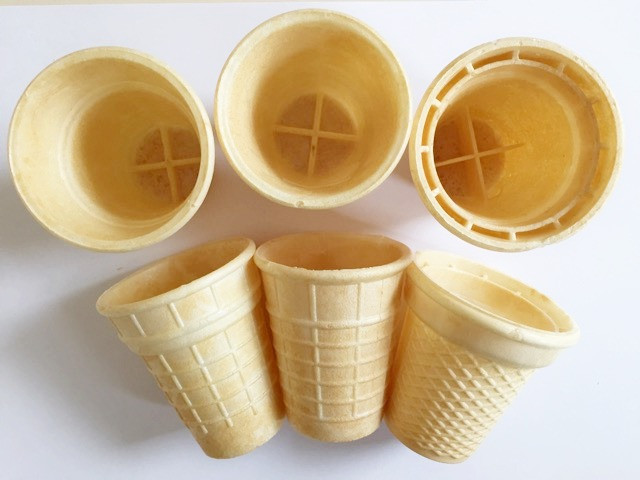 Wafer cup and cone
 J-Bottom technology
 Pepsin whey pork
 Petri dish 90 mm
 Ice cream sticks Standard 93
 Ice cream sticks (with logo)
- Ice cream sticks Standard 114
- General purpose environment of SPC "Biocompass-S" (Uglich)
- Ice cream sticks Magnum (curly)
- Auxiliaries for sugar products
- Ice cream sticks (round)
Consumables
 Fall with a loop for cattle
 Reusable plastic syringe
 Forged pitchforks
 Disposable udder wipe (udder paper).
 Napkin reusable for wiping the udder
 Pre-milking udder cleaner (20 l)
- Foam cup for udder treatment
- Drencher for feeding calves with a flexible probe
- Udder cleaner after milking (20 l)
- Latex gloves (long cuff with roller), (color blue, pack of 50 pieces)
- Acid detergent (20l / 24kg)
- Bag filter 32
- Cup for disinfection of udder teats (non-returnable)
- Self-adhesive hoof bandage
- Plastic syringe 150ml
Microbiology
 MicroFast® Enterobacteriaceae Count Plate (cat. no. LR1011)
 MicroFast® Environmental Listeria Count Plate
 MicroFast® Lactic Acid Bacteria Count Plate (Part Number LR1312)
 Substrate for determining the number of staphylococci (Catalog number LR1005) MicroFast® Staphyloccocus aureus Count Plate
 Yeast & Mold Count Plate (cat. no. LR1003) MicroFast® Yeast & Mold Count Plate
 Substrate for accelerated determination of QMAFAnM, (catalog number LR1321)
- MicroFast® Salmonella Count Plate (SAL), for the determination of Salmonella in food and environmental samples (Catalog #LR1006)
- MicroFast® Staphyloccocus aureus Confirmation Plate Staph.aureus Confirmation Plate (cat. no. LR1005Q)
- Coliform Count Plate (catalog number LR1002) MicroFast® Coliform Count Plate
- MicroFast® Bacillus cereus Count Plate (catalog number LR1010)
- Substrate for determining QMAFAnM (catalog number LR1001)
- MicroFast® Microbiological Substrates
- MicroFast® Coliform & E.coli Count Plate
Our News
 Lukashenko heard a report on the Mogilev region. The main topic was the situation in agriculture. 05.02.2026
 What major agricultural projects are being implemented in the Mogilev region?05.02.2026
 An expert identified possible areas of cooperation between Belarus and Southeast Asian countries.05.02.2026
- Surcharges on prices for agricultural products purchased from the population have been established in 2026.04.02.2026
- Lukashenko: We won't carry the Vitebsk region on our shoulders.04.02.2026
- Baby Zabava. The Grodno Zoo welcomed its first addition in 2026. 03.02.2026
- Lukashenko: We won't carry the Vitebsk region on our shoulders. 03.02.2026
- Lukashenko on the case: it is a moral monstrosity if we cannot protect our smaller brothers in this weather03.02.2026
- Grain cultivation and livestock farming. Bogdanov discussed prospects for cooperation in the agricultural sector between Belarus and Kazakhstan.01.02.2026
- Выпойка молоком 3-4 раза, больше теплой воды. Как в Брестской области наладили уход за телятами в морозы01.02.2026
- From Tractor Driver to Businessman: The Story of a Belarusian Who Built a Farm from Scratch and a Church in a Village 30.01.2026
- A warehouse in the Minsk region improperly stored powdered milk: a court ordered compensation of Br2 million.30.01.2026
- Increased processing volumes, new jobs: production capacity is being expanded in the Shklov district.30.01.2026
- The story of a Belarusian who built a sturdy farm from scratch and revived his native village.29.01.2026
- Belarusian producers plan to enter the Qatari meat market.29.01.2026
- Belarus is interested in expanding dairy product supplies to Indonesia.28.01.2026
Articles
 The court refused to seize the property of agricultural enterprises with debts to the AIC fund.05.02.2026
 Demand for semi-finished products will decline in 2025: dumpling sales will fall by 8%.05.02.2026
 Rosselkhoznadzor inspected more than 2,000 tons of livestock products shipped to Yakutia.05.02.2026
- Rosselkhoznadzor monitored the export of more than 57,000 tons of veterinary goods from St. Petersburg.05.02.2026
- К госветнадзору Бурятии поступило 860 тонн продукции при отправке в Монголию05.02.2026
- The inflation rate in Russia at the beginning of February 2026 reached 6.5%.05.02.2026
- Innovations in broiler feeding: savings and bird health05.02.2026
- New financial disputes between Aventa and Tokarevskaya Poultry Farm: a second lawsuit for 70 million rubles05.02.2026
- Mexican and Canadian beef is losing ground in the US market.05.02.2026
- Spain strengthens institutional coordination to improve animal welfare management05.02.2026
- Blaming cows was a mistake: meadows absorb more gases than cattle emit.05.02.2026
- EU and Mercosur: Experts warn of shortage of EU veterinarians to control imports and associated health risks05.02.2026
- Rosselkhoznadzor stopped the import of more than 50 kg of dangerous animal products at Ufa Airport.04.02.2026
- Rosselkhoznadzor specialists have identified quality violations in meat products.04.02.2026
- The first batch of canned meat from the Kurgan region was sent to Azerbaijan under the supervision of Rosselkhoznadzor.04.02.2026
- A poultry farm in Yugra was fined for violating veterinary regulations.04.02.2026
Economics
 10 reasons to take a deposit04.05.2025
 Lavrov and the Swiss Foreign Minister will discuss the "deep crisis" of the OSCE.05.02.2026
 Kirilenko spoke about the problems facing Russian teams after sanctions were lifted.05.02.2026
- Lavrov believes that US statements about cooperation are inconsistent with sanctions05.02.2026
- The Russian ambassador warned of a reaction to the Faroe Islands' change in stance on sanctions.05.02.2026
- Five suspects in supplying weapons to Russia's defense industry have been arrested in Germany.03.02.2026
- Bloomberg узнал о планах ЕС по санкциям против российских платины и меди03.02.2026
- The EU confirmed discussions on banning entry for participants in the military operation.31.01.2026
- Bloomberg has revealed a new possible EU sanctions plan against Russia.31.01.2026
- The EU has blacklisted Russia for money laundering.30.01.2026
- The EU has imposed new sanctions on Iran in response to the suppression of protests.30.01.2026
- The European Union has designated the IRGC a terrorist organization.30.01.2026
- The US has eased sanctions and allowed oil companies to operate in Venezuela.30.01.2026
- Titov allowed for the return of foreign companies that "miss Moscow"30.01.2026
- Following the deal with Carlyle, LUKOIL continued negotiations with other companies.29.01.2026
- Macron announced that France is preparing new sanctions against Russia.29.01.2026
Antibiotics in Milk
 Antibiotics in milk: causes and methods of detection27.01.2026
 Pharmaceutical companies see a threat to EU security due to bacteria in Ukraine13.11.2025
 Prosecutors have issued warnings to more than 5,000 companies due to rising prices.09.09.2025
- Two dairy companies from Azerbaijan refused to work with Russia.09.07.2025
- Lukashenko told how Putin treated him to goat's milk.08.07.2025
- Lukashenko demanded that Belarus be cleared of littered logs by autumn.08.07.2025
- Lukashenko stated that it is not beneficial for Belarus to “fight madly,” but to feed17.06.2025
- В Британии предупредили о риске для миллионов из-за супербактерий06.01.2025
- Moscow court sides with Indian company in dispute with Health Ministry26.11.2024
- Scientists estimate increase in mortality due to drug-resistant bacteria29.10.2024
- Antibiotics for livestock and pesticides found in poisoned family's home29.10.2024
- Izvestia reported on the shortage of widely used antibiotics in Russia29.10.2024
- The Ministry of Health called data on the shortage of antibiotics unreliable29.10.2024
- Scientists warn of threat of return to pre-penicillin times29.10.2024
- The Ministry of Health explained how attitudes towards antibiotics changed during the pandemic07.05.2024
- WHO explains the risks of taking antibiotics "just in case"06.05.2024
Antibiotics in Meat
 Antibiotics in pollock25.02.2024
 Antibiotics in herring: myth or reality?12.02.2024
 Antibiotics in perch10.02.2024
- Antibiotics in sprat: facts and myths10.02.2024
- Antibiotics in tuna: an important health and environmental issue09.02.2024
- Antibiotics in meat30.01.2024
- Antibiotics in chebureks: myth or reality?29.01.2024
- Antibiotics in cutlets: problem or myth?18.01.2024
- Antibiotics in Chicken: Where Are the Highest Concentrations?17.01.2024
- Antibiotics in carp17.01.2024
- Where Are More Antibiotics in Chicken: Reality and Cautions16.01.2024
- Antibiotics in Salmon: Safety and Product Quality16.01.2024
- Antibiotics in Turkey15.01.2024
- Antibiotics in Sal: Reality and Safety Issues15.01.2024
- Antibiotics in Fried Dumplings: Facts, Risks and How to Stay Safe15.01.2024
- Antibiotics in sausages14.01.2024
10 Interesting Facts
 Antibiotics in Coffee: Myths and Reality03.05.2025
 Forged forks: 10 interesting facts16.05.2024
 Swimming pool and weight loss: 10 interesting facts10.03.2024
- Tests for antibiotics in milk - 10 interesting facts07.03.2024
- Cleaning the kettle from scale, 10 interesting facts...06.03.2024
- Antibiotics in beer: 10 interesting facts04.03.2024
- Wild boar, how to survive...01.03.2024
- Purulent mastitis, 10 interesting facts27.02.2024
- Lemon and alcohol: 10 interesting facts25.02.2024
- Mint - 10 interesting facts25.02.2024
- Wild boar, 10 interesting facts20.02.2024
- Wild boar and domestic pig: comparison and advantages20.02.2024
- Cottage cheese, 10 interesting facts20.02.2024
- 10 Interesting Facts About Milk19.02.2024
- How to Clean a Toilet - 10 Interesting Facts (Acid vs Alkaline)18.02.2024
- Goat's milk: 10 interesting facts16.02.2024
Diseases of cattle
 Dicroceliosis in cattle09.03.2024
 Demodicosis in cattle01.03.2024
 Purulent mastitis of cattle27.02.2024
- Hypodermatosis in cattle20.02.2024
- Hemonchoz in cattle11.02.2024
- Bursitis in cattle30.01.2024
- Brucellosis in cattle29.01.2024
- Bronchopneumonia in calves27.01.2024
- Bronchitis in cattle26.01.2024
- Mortellaro disease in cattle24.01.2024
- White muscle disease in cattle23.01.2024
- Babesiosis in cattle22.01.2024
- Cattle acidosis20.01.2024
- Arthritis in cattle20.01.2024
- Anaplasmosis in cattle18.01.2024
Misc
- Antibiotics for coughs: when they are needed and when they are not11.02.2024
 "Слетают все маски человека!" // Банщик про техники парения, поющих мастерах и чудо-массажах05.02.2026
 The Master of Steam: The Story of a Businessman Who Left a Successful Printing Business to Become a Spa Master 05.02.2026
- Investigators have identified the locations of the most frequent traffic accidents in the Brest region.05.02.2026
- Ministry of Emergency Situations: 129 people have died in fires since the beginning of the year.04.02.2026
- WHO: Almost 40% of cancer cases can be prevented 04.02.2026
- The number of fires in Belarus has increased. Experts have explained the causes.04.02.2026
- "Neither tail nor scales." We went winter fishing and learned the intricacies of ice fishing.04.02.2026
- Belarus has extended the ban on labeling imported alcoholic beverages in unfriendly countries.03.02.2026
- В Гомеле благодаря неравнодушным гражданам остановили нетрезвых таксиста и бесправника 03.02.2026
- From February 11, navigation seals will be used to track rail traffic in the EAEU.03.02.2026
- The State Traffic Inspectorate reminded drivers of road safety rules during severe frosts.31.01.2026
- A woman driving under the influence of alcohol with over 2 ppm was detained in Minsk.30.01.2026
- Наведение порядка в АПК, пожарная безопасность. Какие задачи поставлены перед прокурорами Витебской области 30.01.2026
- A car crashed into a tree on Independence Avenue in Minsk, injuring two people.30.01.2026
- Топ экспортируемых товаров назвали в "Белгоспищепроме"29.01.2026
Cloud of Tags
Russiaминистр сельского хозяйстваГерманияКазахстанВ китаеВостокСанкцииМинздравФермерРоссияЦеныМужчиныИмпортРоссельхознадзорТАССРоспотребнадзорПравительствоКанадаОнлайнСанкт-ПетербургПродовольствиеИнвестицииКредитВеликобританииПесковВакцинацияКрупного рогатого скотаЖивотноеПтицефабрикаПродукцияПрокуратураПроизводство молокаРубльФруктыАнтибиотиковГазпромБразилияДмитрий песковУрожаяКрупный рогатый скотМясо птицыПродукты питанияКитайУзбекистанМинскДетиБизнесДжо БайденGoogleЕгипетАлкогольного опьяненияЗаконопроектПодмосковьеКРСОтпускЗаконРоссиянеМЧСОрганизмЛекарстваЯйцаМясокомбинатВьетнамФранцияДоходыДолларВакцинацииИсследованияТурцияАЧСРаботаСШАКартофельНедвижимостьУкраинеМясоСвининаAppleДеньгиБройлерНефтьПроизводство мяса2024COVID-19ЗапретЭкономикаКарантинСмертьВыручкаСырыFacebookTelegramМолокоУченыеОбщепитМинфинЕСУкраинаТатарстанГовядинаЕАЭСПензенской областиКофеВирусМаслоТребованияИнфляцияBloombergМинсельхозЕврокомиссияПраздникВеликобританияСубсидииПитаниеБеларусьReutersСпутник vКлиматКоронавирусЭкспортСотрудники ГАИАлкогольВладимир ПутинЯпонияСудБолезньДональд ТрампАзербайджанАлександр ЛукашенкоСельское хозяйствоКолбасыДиректорГовядинуЗдоровьеПольшаМоскваРосстатЗеленскийЦентробанкИталияРодителиКризисАвстралияНовостиЗависимостьЛечениеИммунитетВластиУборкаПоддержка