Completing the work to create a profitable agricultural sector remains a priority for the agro-industrial complex until 2030.

Photo is illustrative in nature. From open sources.


November 27, Minsk . Completing work to create a profitable agricultural sector remains a priority for the agro-industrial complex (AIC) until 2030, Deputy Prime Minister of Belarus Yuri Shuleiko announced during a joint meeting of the House of Representatives and the Council of the Republic, BELTA reports.
"The current five-year plan is almost complete. The tasks facing farmers are set out in the State Program 'Agro-Industrial Complex of the Future' for 2026-2030. The priority is completing work to create a profitable agricultural sector," Shuleiko said.
The Deputy Prime Minister named ensuring the widespread transition of the agricultural sector to a high-tech, more efficient level of development as one of the key areas for the government. According to him, the implementation of digital agriculture principles will continue, with precision farming technology being scaled up. Systemic measures are planned to reduce the industry's dependence on imported supplies. Intermediaries will be eliminated at all levels through centralized procurement.
"The main goal for the near future in livestock farming is to maximize automation of processes and transfer dairy cattle to modern systems by 2030, achieving productivity of 7,300 kg of milk per cow," continued Yuriy Shuleiko.
The strategy for developing cutting-edge pig farming defines measures to shift the industry onto an intensive development path, taking into account global experience. Regarding poultry farming, plans include creating breeding facilities to fully stock poultry farms with parent stock, as well as developing domestically produced poultry crosses. To address the shortage of raw materials to utilize the processing industry's capacity, efforts will be focused on developing a domestic raw materials zone.
The Deputy Prime Minister noted that the development of the biotechnology industry in the agro-industrial complex has begun, with production at BNBC JSC commencing in November 2022. In the new five-year plan, the key objective will be increasing the production of amino acids and compound feed and ensuring the company's efficient operation.
To stabilize the industry's financial situation, further consolidation of agricultural organizations is planned to ensure more efficient use of production potential and labor resources, as well as to enhance the effectiveness of state support.
By the end of the five-year period, the agricultural sector's return is expected to increase by 1.6 times (based on revenue per hectare of agricultural land), and food exports are expected to reach $12 billion by 2030.
Thus, Yuri Shuleiko concluded, the agro-industrial complex will ensure continued progressive development and achieve its goals.
"The current five-year plan is almost complete. The tasks facing farmers are set out in the State Program 'Agro-Industrial Complex of the Future' for 2026-2030. The priority is completing work to create a profitable agricultural sector," Shuleiko said.
The Deputy Prime Minister named ensuring the widespread transition of the agricultural sector to a high-tech, more efficient level of development as one of the key areas for the government. According to him, the implementation of digital agriculture principles will continue, with precision farming technology being scaled up. Systemic measures are planned to reduce the industry's dependence on imported supplies. Intermediaries will be eliminated at all levels through centralized procurement.
"The main goal for the near future in livestock farming is to maximize automation of processes and transfer dairy cattle to modern systems by 2030, achieving productivity of 7,300 kg of milk per cow," continued Yuriy Shuleiko.
The strategy for developing cutting-edge pig farming defines measures to shift the industry onto an intensive development path, taking into account global experience. Regarding poultry farming, plans include creating breeding facilities to fully stock poultry farms with parent stock, as well as developing domestically produced poultry crosses. To address the shortage of raw materials to utilize the processing industry's capacity, efforts will be focused on developing a domestic raw materials zone.
The Deputy Prime Minister noted that the development of the biotechnology industry in the agro-industrial complex has begun, with production at BNBC JSC commencing in November 2022. In the new five-year plan, the key objective will be increasing the production of amino acids and compound feed and ensuring the company's efficient operation.
To stabilize the industry's financial situation, further consolidation of agricultural organizations is planned to ensure more efficient use of production potential and labor resources, as well as to enhance the effectiveness of state support.
By the end of the five-year period, the agricultural sector's return is expected to increase by 1.6 times (based on revenue per hectare of agricultural land), and food exports are expected to reach $12 billion by 2030.
Thus, Yuri Shuleiko concluded, the agro-industrial complex will ensure continued progressive development and achieve its goals.
Read together with it:
- Lukashenko heard a report on the Mogilev region. The main topic was the situation in agriculture.February 4, Minsk . On February 4, Belarusian President Alexander Lukashenko heard a report from Anatoly Isachenko, Chairman of the Mogilev Regional Executive Committee, BelTA reports. The report focused on the state of affairs in the region, following up on Tuesday's report in the Vitebsk Region. As the head of state noted the day before, many of the identified problematic issues are, to varying ...
- An expert identified possible areas of cooperation between Belarus and Southeast Asian countries.Irina Novikova, February 4, Minsk . Irina Novikova, Head of the Department of Management, Business Technologies, and Sustainable Development at the Belarusian State Technological University, Professor, and Doctor of Economics, discussed potential areas of cooperation between Belarus and Southeast Asian countries at a House of Representatives seminar entitled "Belarus and Southeast Asia in Search o...
- Investigators have identified the locations of the most frequent traffic accidents in the Brest region.February 5, Minsk . Investigators have determined the locations and times of the most frequent fatal road accidents in the Brest Region, based on an analysis of criminal cases. Roman Zarmayev, official representative of the Investigative Committee for the Brest Region, provided details to BelTA. Over the past year, the region's investigative units opened 174 criminal cases for traffic violations t...
- Surcharges on prices for agricultural products purchased from the population have been established in 2026.February 4, Minsk . Resolution No. 8 of the Ministry of Agriculture and Food dated January 27, 2026, established markups to the purchase prices of agricultural products purchased from the population in 2026. BELTA reports this with reference to The size of the markups (in Belarusian rubles) per 1 kg of product will be: ......
- Ministry of Emergency Situations: 129 people have died in fires since the beginning of the year.February 4, Minsk . 129 people have died in fires in Belarus since the beginning of the year, Emergency Situations Minister Vadim Sinyavsky told reporters in response to a question from a BELTA correspondent. The head of state inquired about the state of fire safety and how the Ministry of Emergency Situations is addressing these issues. According to the minister, the Ministry receives and process...
- WHO: Almost 40% of cancer cases can be preventedPhoto: Reuters , February 4, Minsk . Nearly 40% of cancer cases worldwide are preventable, according to a new global analysis by the World Health Organization and the International Agency for Research on Cancer, published on World Cancer Day (February 4), as reported on the UN News Center website. The study's findings are based on data from 185 countries on 36 types of cancer. The impact of 3........
- The number of fires in Belarus has increased. Experts have explained the causes.February 4, Minsk . Vasily Sivchak, First Deputy Head of the Main Directorate for Supervision and Prevention of the Ministry of Emergency Situations, shared the latest information on the fire situation in the country with journalists, a BELTA correspondent reports. "Since the beginning of this year, due to cold weather in the republic, the situation with fires and fatalities has worsened. In Janua...
- Lukashenko: We won't carry the Vitebsk region on our shoulders.February 3, Minsk . The Vitebsk Region will not be carried on our shoulders. This was stated by Belarusian President Alexander Lukashenko at a meeting on certain issues of the Vitebsk Region's socioeconomic development, BELTA reports. The head of state noted that the region needs to realistically assess its successes and capabilities and work towards results: "If you think we will continue to carr...
- Lukashenko: We won't carry the Vitebsk region on our shoulders.February 3, Minsk . The Vitebsk Region will not be carried on our shoulders. This was stated by Belarusian President Alexander Lukashenko at a meeting on certain issues of the Vitebsk Region's socioeconomic development, BELTA reports. The head of state noted that the region needs to realistically assess its successes and capabilities and work towards results: "If you think we will continue to carr...
- Lukashenko on the case: it is a moral monstrosity if we cannot protect our smaller brothers in this weatherFebruary 3, Minsk . Belarusian President Alexander Lukashenko called the death toll in the livestock industry a moral abomination. He made this statement at a meeting on specific issues of socio-economic development in the Vitebsk Region, BelTA reports."Why am I talking about the death toll? It's morally despicable that we can't protect our smaller brothers, especially in this difficult weather. H...
Test for Atnibiotics in Milk
 PIONEER MEIZHENG BIO-TECH (5 in 1) JC0726 / Rapid tests for determining the residual amount of Bacitracin, ansamycins, clindamycin, spiramycin, florfenicol in milk, whey
 PIONEER MEIZHENG BIO-TECH (5 in1) JC1165 / Rapid tests for the determination of the residual amount of halofuginone, flavomycin, novobiocin, flunixin, dexamethasone / prednisolone in milk, whey
 Express tests for determining the residual amount of β-lactams and tetracyclines in milk, whey
 ANTIBIOTICS / ELISA TESTS
Laboratory equipment
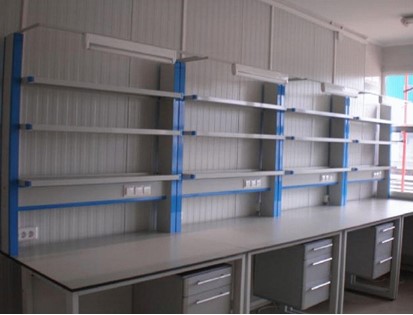 Low wall table BA-CL-X.X SPn TR
 Mastoprim (Russia)
 GP dry-air sterilizer (SKTB, Smolensk)
 HM Series Rotary Homogenizers
 Tagler (Russia) Milk centrifuge ZLMN 1-8 with heating
 Nasco Whirl-Pak Sample Bags
- Hourglass
- Residual Acidity Test Strips, 100 pcs.
- Butyrometers for milk, cream, skim milk and buttermilk
- Microbial Colony Counter SKM-2
- Indicator strips "Total water hardness", 25 pcs.
- Overhead stirrer WB2000-M
- Portable waterproof conductometer HI 8733
- Folding waterproof thermometer Testo 104
Packing


Additional Products
 General purpose environment of SPC "Biocompass-S" (Uglich)
 J-Bottom technology
 Auxiliaries for sugar products
 Wafer cup and cone
 Ice cream sticks Standard 114
 Petri dish 90 mm
- Ice cream sticks Magnum (curly)
- Pepsin whey pork
- Ice cream sticks (round)
- Ice cream sticks Standard 93
- Ice cream sticks (with logo)


Microbiology
 Substrate for determining the number of staphylococci (Catalog number LR1005) MicroFast® Staphyloccocus aureus Count Plate
 Coliform Count Plate (catalog number LR1002) MicroFast® Coliform Count Plate
 MicroFast® Environmental Listeria Count Plate
 MicroFast® Microbiological Substrates
 MicroFast® Lactic Acid Bacteria Count Plate (Part Number LR1312)
 MicroFast® Bacillus cereus Count Plate (catalog number LR1010)
- MicroFast® Staphyloccocus aureus Confirmation Plate Staph.aureus Confirmation Plate (cat. no. LR1005Q)
- Yeast & Mold Count Plate (cat. no. LR1003) MicroFast® Yeast & Mold Count Plate
- Substrate for accelerated determination of QMAFAnM, (catalog number LR1321)
- MicroFast® Coliform & E.coli Count Plate
- MicroFast® Salmonella Count Plate (SAL), for the determination of Salmonella in food and environmental samples (Catalog #LR1006)
- MicroFast® Enterobacteriaceae Count Plate (cat. no. LR1011)
- Substrate for determining QMAFAnM (catalog number LR1001)
Our News
 Exports of Belarusian milk and dairy products increased by 6.7% in January-November26.12.2023
 Производство продуктов питания в организациях Минсельхозпрода выросло на 5,3%26.12.2023
 Lukashenko: the EAEU has achieved a high level of food self-sufficiency, and in Belarus - almost 100%26.12.2023
- About technical regulation, food safety, toys and “gray” certification25.12.2023
- INTERVIEW: Nazarenko about technical regulation, food safety, toys and “gray” certification25.12.2023
- Prospects near Moscow, land reclamation without showing off and pricing strategy. Main results of the President's week25.12.2023
- Reusable veterinary needles24.12.2023
- Reusable Veterinary Needles: Modern Technologies for Improved Animal Care24.12.2023
- Лукашенко о регулировании в ценообразовании: это вопрос справедливости23.12.2023
- Снопков: инфляционные ожидания населения находятся на низком уровне, есть доверие к власти23.12.2023
- Снопков: по итогам 2023 года инфляция составит около 5,5%23.12.2023
- Barrier-free environment, asphalt road. Krupko held a reception of citizens in Gomel20.12.2023
- Productivity and quality. A new dairy farm was put into operation in the Voronovsky district20.12.2023
- Why didn’t the children run away from the concentration camp in Skobrovka? We talk about the life of little donors20.12.2023
- Blood-sucking pests: How mosquitoes threaten agriculture20.12.2023
- The principle of work is team, responsibility is individual. The secret of success of OJSC "Nestanovichi-Agro"15.12.2023
Articles
 Инновационный проект: производственные линии для наггетсов от «ОренКлип» могут удвоить мощность01.08.2025
 Prices for chicken and butter in Russia have begun to rise again.01.08.2025
 Egg production in the Astrakhan region doubled in the first half of 202501.08.2025
- Vietnam steps up support for farmers in fight against African swine fever01.08.2025
- Omsky Bacon has completed the recruitment of sows for the new Chunaevsky-2 production complex01.08.2025
- Successful trials of Nipah virus vaccines in pigs01.08.2025
- Bulgaria imposes temporary ban on movement of sheep and goats due to worsening epizootic situation01.08.2025
- AGROECO opened a new pig farm "Stepnoy" in the Tula region01.08.2025
- Mavin Group: A New Stage of Humane Pig Farming in Vietnam31.07.2025
- New US-EU trade deal opens up opportunities for US meat industry31.07.2025
- Tambov poultry farm "Tokarevskaya" owes more than 100 million rubles to grain supplier31.07.2025
- Kazan has developed a new probiotic to improve the quality of quail meat31.07.2025
- В Хакасии из-за пожара погибли куры, найдено несколько происшествий за сутки31.07.2025
- Prices for chicken eggs continue to decline in Khakassia31.07.2025
- Poultry farming development in Sevastopol: farmers receive state support31.07.2025
- Ineffectiveness of poultry subsidies in Kazakhstan: audit reveals problems31.07.2025
Economics
 Bloomberg learned about the US proposal to use Russian assets22.03.2024
 WP reported that the West is purchasing hundreds of millions of dollars' worth of titanium from Russia.22.03.2024
 Словения объявила сотрудника российского посольства персоной нон грата21.03.2024
- Ukraine decided to abandon the list of “war sponsors”21.03.2024
- Reuters узнал о давлении на Raiffeisen из-за связанной с Дерипаской фирмы21.03.2024
- ЕС продлил отмену пошлин на украинскую сельхозпродукцию до июня 2025-го20.03.2024
- Putin Allows Payments from Type C Accounts to “Pseudo-Non-Residents”20.03.2024
- Microsoft is thinking about postponing the closure of services for companies from Russia19.03.2024
- "VTB Armenia" announced restrictions on the acceptance of "Mir" cards in the country's banks19.03.2024
- Borrell expressed hope for an EU agreement on Russian assets18.03.2024
- Zakharova said that there will always be sanctions against independent Russia16.03.2024
- The European Commission announced a test regime for monitoring the embargo on Russian diamonds.15.03.2024
- AirBridgeCargo returns Boeing to China after two years of downtime15.03.2024
- The Ministry of Justice has declared the German "Lev Kopelev Forum" undesirable.15.03.2024
- The Federal Tax Service filed a bankruptcy lawsuit against Poland's PGNiG in a Russian court.14.03.2024
- Lavrov announced the creation of an alliance of "victims of the sanctions war"13.03.2024
Antibiotics in Milk
 Is it worth drinking antibiotics at the first sign of illness and what is the risk of it: an interview with a pharmacologist01.08.2020
 In Smolensk region the Rosselkhoznadzor Directorate returned to Belarusian consignors more than 33 tons of animal products transported with violations of veterinary requirements.04.02.2020
- Struggle for product quality and safety: experience of Belarusian colleagues19.11.2019
- Tiamphenicol07.08.2019
- Antibiotics in milk07.08.2019
- "While I'm talking to you nicely." The President threatened the government with prison for the death of a cattle25.07.2019
- Antibiotics in milk: Rumors and reality23.07.2019
- Antibiotics: harm or benefit17.07.2019
- Antibiotics in milk16.07.2019
Antibiotics in Meat
 Antibiotics in Meat: Prevention, Regulation and Consumer Health Concerns12.01.2024
 Antibiotics in Fried or Boiled Meat: Facts and Misconceptions12.01.2024
 Antibiotics in Sausage: Reality, Risks and Need for Control12.01.2024
- Antibiotics in Pelmeni: Real Threat or Myth?09.01.2024
- Antibiotics in Pork: Health Effects and Cooking Recommendations08.01.2024
- Antibiotics in Chicken: Safety, Regulation and Consumer Health Concerns08.01.2024
- Antibiotics in meat: problems and solutions06.01.2024
- Antibiotics in Beef: Between Animal Health and Consumer Safety06.01.2024
- Antibiotics in Chicken Meat: Safety, Regulation and Concern for Consumer Health06.01.2024
- Antibiotics in Rabbit Meat: Safety, Efficiency and Care for Consumers05.01.2024
- Antibiotics in Pork: Balance Between Health Concerns and Consumer Safety03.01.2024
- Antibiotics in Lamb03.01.2024
- Antibiotics in Meat: Real Risks and Transparency in Food Production29.12.2023
10 Interesting Facts
 Marbled meat: 10 interesting facts19.01.2024
 10 Fascinating Facts About Cattle Hoof Baths18.01.2024
 Antibiotics - 10 interesting facts18.01.2024
- Cutlets - 10 interesting facts18.01.2024
- 10 Interesting Facts about Carp17.01.2024
- Salmon - 10 Interesting Facts17.01.2024
- Beer belly 10 interesting facts17.01.2024
- Beer - 10 interesting facts17.01.2024
- Antibiotic tests pioneer - 10 interesting facts17.01.2024
- Rubber rings for castration - 10 interesting facts17.01.2024
Diseases of cattle
 Dicroceliosis in cattle09.03.2024
 Demodicosis in cattle01.03.2024
 Purulent mastitis of cattle27.02.2024
- Hypodermatosis in cattle20.02.2024
- Hemonchoz in cattle11.02.2024
- Bursitis in cattle30.01.2024
- Brucellosis in cattle29.01.2024
- Bronchopneumonia in calves27.01.2024
- Bronchitis in cattle26.01.2024
- Mortellaro disease in cattle24.01.2024
- White muscle disease in cattle23.01.2024
- Babesiosis in cattle22.01.2024
- Cattle acidosis20.01.2024
- Arthritis in cattle20.01.2024
- Anaplasmosis in cattle18.01.2024
Misc
 Житель Быховского района сбил пешехода, а потом заявил об угоне машины: дело направили в суд05.03.2024
 "Предупредить, а не наказать". Лучший инспектор по делам несовершеннолетних Могилевской области о профессии05.03.2024
- MART checked more than 50 online stores and identified about 40 violations04.03.2024
- "I should have become a teacher, but chose the police." A young district police officer from Grodno told about his work04.03.2024
- A resident of the Drogichinsky district hit a girl and fled the scene of the accident. The case was sent to court04.03.2024
- Прокуратура Мостовского района потребовала устранить нарушения прав и интересов детей04.03.2024
- A Minsk resident found someone else's card and paid in stores: a criminal case has been initiated01.03.2024
- Ресурсы домашнего хозяйства белоруса в IV квартале 2023 года составили Br2184,3 в месяц29.02.2024
- A man in the Kamenets district cut his wife four times with a chainsaw: the court has reached a verdict.29.02.2024
- A fatal drug poisoning occurred in the Mogilev region.29.02.2024
- Killed in a drunken quarrel: a crime five years ago was solved in Novopolotsk27.02.2024
- More than 3.5 ppm. A drunken car thief was detained in Gomel27.02.2024
- МЧС рассказало о ситуации с весенним половодьем и пожарами в Беларуси27.02.2024
- Minsk traffic police fined 59 reckless drivers over the weekend.26.02.2024
- The prosecutor of the Rechitsa district defended the rights of children from disadvantaged families26.02.2024
- In the Vitebsk region, the traffic police fined more than 250 pedestrians for traffic violations over the weekend26.02.2024
Cloud of Tags
ОрганизмДолларПоддержкаДмитрий песковОбщепитБеларусьЗависимостьРоссияБолезньКлиматПесковНефтьКрупный рогатый скотУкраинаТАССМаслоОнлайнСудСельское хозяйствоЗаконКрупного рогатого скотаТребованияПтицефабрикаПроизводство молокаЭкономикаАвстралияМолокоСырыРоспотребнадзорИсследованияМужчиныМоскваМЧСФермерПродовольствиеАлкогольГерманияСвининаВьетнамРоссиянеЕврокомиссияЛекарстваКофеВыручкаДональд ТрампПодмосковьеДоходыБройлерКолбасыПродукты питания2024НедвижимостьBloombergАлександр ЛукашенкоРосстатВакцинацияУкраинеВакцинацииОтпускРоссельхознадзорЖивотноеGoogleFacebookМясо птицыReutersПродукцияБразилияМясоВостокРаботаАЧСЕгипетВеликобританияИммунитетКоронавирусCOVID-19СубсидииЗеленскийТатарстанПитаниеЛечениеДетиКарантинRussiaДжо БайденПрокуратураПроизводство мясаБизнесСотрудники ГАИВирусНовостиАзербайджанПензенской областиУзбекистанИнфляцияСмертьКредитИмпортСанкт-ПетербургПраздникЭкспортТурцияКанадаСанкцииСпутник vЦентробанкФруктыКитайЯпонияTelegramВ китаеКризисМинздравВладимир ПутинВластиГазпромФранцияПравительствоДиректорЕАЭСГовядинаВеликобританииДеньгиАлкогольного опьяненияЕСАнтибиотиковминистр сельского хозяйстваЦеныУрожаяИталияКазахстанМинфинМясокомбинатРубльЗдоровьеЗапретРодителиСШАМинсельхозЗаконопроектУченыеAppleИнвестицииПольшаКартофельГовядинуЯйцаКРСУборкаМинск