
The EU Court of Justice will hear a precedent-setting case against a Russian firm regarding the application of sanctions.

Photo is illustrative in nature. From open sources.

A Swedish COURT has asked the EU Court of Justice to interpret a provision of the EU regulation prohibiting the satisfaction of Russian companies' claims under contracts unfulfilled by Europeans due to sanctions. Lawyers expect the ruling to be a precedent-setting one.
European Court (The Court of Justice of the European Union (the highest court of the EU) will consider a request from the Svea Court of Appeal (Sweden) for the interpretation of a provision of the European Sanctions Regulation that prohibits the satisfaction of any claims by Russian companies under contracts disrupted due to the sanctions regime. RBC has reviewed the text of the request. A case file for this case has been added to the Court of Justice's database at the request of the Swedish court.
The decision will set an important precedent and determine the approach to regulating arbitration disputes related to sanctions, according to lawyers interviewed by RBC.
How is the dispute over the return of the advance payment and the sanctions related?
A Swedish appeal court has asked the highest court of the EU to interpret Article 11 of Regulation (EU) No. 833/2014. This article, introduced in 2014, stipulates that no "claims" from Russian companies (including non-sanctioned ones) can be satisfied by European parties if these claims relate to contractual obligations of an EU counterparty that have not been fulfilled due to sanctions.
The interpretation was required to make a decision in the case of the Belgian company Reibel and the Russian company Foreign Economic Association Stankoimport, which is not on the EU sanctions list.
According to the Swedish court's request, in December 2015 (i.e., a year and a half after the EU regulation came into force), the companies entered into a contract for Reibel to supply equipment to Stankoimport, with the Russian company making advance payments for the delivery. The contract included an arbitration clause stipulating that all disputes, except those falling within the jurisdiction of national courts, would be subject to arbitration under Swedish law. In 2017, Belgian authorities denied Reibel an EXPORT license to RUSSIA for the contracted goods, finding that they could be considered dual-use goods (such a license is required under Regulation 833/2014). Stankoimport's advance payment was not refunded (the supplier cited Article 11, since refunding the advance payment would have effectively satisfied the Russian company's claims), after which Stankoimport terminated the contract and filed for arbitration.
In December 2021, an arbitration tribunal in Stockholm ordered Reibel to pay Stankoimport the advances it had received (approximately €2.6 million) plus interest on the retained funds, but rejected the plaintiff's claim for damages, deeming it an attempt to profit from the counterparty's inability to deliver equipment due to sanctions legislation. Reibel challenged this arbitration award in the Svea Court of Appeal, which has now sought interpretation from the EU Court of Justice, temporarily suspending its proceedings.
The Swedish court's inquiry is focused on whether enforcement of an arbitration award in favor of a sanctioned company constitutes contractual performance, which is prohibited under EU sanctions regulations, notes Olga Shchedrakova, author of the Dispute Resolution Club TELEGRAM channel.
As Alexander Nadmitov, managing partner of the law firm Nadmitov, Ivanov & Partners, explains, the purpose of the request is to determine whether it is possible to recover damages, interest for the use of someone else's funds, and advance payments for unperformed work and services, and whether such a dispute is subject to international commercial arbitration in Europe in light of current European sanctions.
RBC sent inquiries to Stankoimport and Reibel.
What does Article 11 of the EU Regulation say?
The EU Regulation on restrictive measures in connection with Russia's actions destabilizing the situation in Ukraine was adopted in the summer of 2014. The document defines sectoral sanctions against Russia.
Article 11 of this regulation prohibits the satisfaction of any claims arising from a contract or transaction whose performance was disrupted as a result of the imposed sanctions, including claims for damages. Essentially, this article prohibits the satisfaction of legal claims by Russian companies under contracts affected by sanctions, says Anna Zabrotskaya, partner at Nordic Star Law Firm.
Currently, the provisions of Article 11 of Regulation 833/2014 are interpreted differently by different EU countries, ranging from absolute acceptance and enforcement of such arbitration awards in the most pro-arbitration jurisdictions to skepticism regarding the possibility of this, notes Rostislav Katz, a leading lawyer at KIAP. "Furthermore, this interpretation is constantly evolving independently in different countries, which again does not contribute to legal certainty," he points out.
Why the verdict could become a precedent
Currently, European arbitration courts and tribunals are hearing a significant number of disputes related to the failure to deliver goods and the return of advance payments to Russian companies, says Nadmitov. "If the European Court rules that any claims by Russian companies are not upheld, Russian companies will effectively lose their right to judicial protection in European courts and arbitration tribunals," he warns.
If the EU Court confirms that sanctioned Russian entities are not deprived of the right to demand the return of advance payments, this will significantly assist in protecting the rights of Russian entities, including in arbitration proceedings abroad, notes Alexey Yadykin, HEAD of dispute resolution and partner at Stonebridge Legal. He explains that this case raises a crucial question: if a European counterparty fails to fulfill contractual obligations to a Russian party due to the imposition of sanctions (EU Regulation 833/2014), does the Russian party have the right to recover the outstanding advance payment? Currently, according to the lawyer, the legal position is that the provisions of this regulation prevent the satisfaction of Russian entities' claims in such disputes.
In its 2021 award, the Stockholm Arbitration Court held that Article 11 "is not intended to prevent the satisfaction of a claim for the return of money paid for equipment that was not delivered." The arbitration court reasoned that such a return does not entail the fulfillment of a transaction prohibited by sanctions, but is merely aimed at returning the parties to the positions they held before signing the contract. Regarding the retention interest, the arbitration court held that the calculation complied with the rules of the 1980 UN Convention on Contracts for the International Sale of Goods; the interest was pegged to the so-called reference rate of the Bank of Sweden.
The right to restitution is a fundamental right in civil law, notes Veronika Siverova, senior lawyer at the consulting firm ITSWM. If the EU Court rules that Article 11 of Regulation 833/2014 is inapplicable to claims for the return of advance payments under an unfulfilled contract related to the imposition of sanctions, she is confident that such a ruling will set a precedent. "It could become the basis for the pre-trial settlement of similar disputes between European suppliers and Russian buyers, since the European supplier will be able to reasonably expect that the return of the advance payment will not be considered a violation of the sanctions regime," the expert explains.
This request should also address the possibility of judicial annulment of arbitral awards rendered in EU arbitration proceedings due to the arbitrators' failure to apply EU sanctions, Yadykin notes. "If the EU Court of Justice establishes that European courts can annul arbitral awards on this basis on their own initiative (without a corresponding application from the party), this will only increase the existing risks for Russian parties when conducting arbitration in EU countries in disputes involving sanctions," he expects.
Anna Zabrotskaya agrees that the EU Court's ruling on this issue will be a precedent-setting decision and will determine the future position of European courts on disputes related to both sanctions and general commercial matters. Specifically, she notes that the legality of out-of-court settlements in such disputes will be examined. "If the EU Court prohibits out-of-court settlements, this will complicate the resolution of cross-border disputes and negatively impact the restructuring of commercial relations between Russian and European companies," she explains.
What position can we expect from the EU Court?
The EU Court of Justice may separate the claims and issue separate rulings on the return of the advance payment and interest on the advance payment, according to Zabrocka. "It is quite possible that the EU Court of Justice will recognize the demand for the return of advance payments as legitimate if it does not result in the completion of a prohibited transaction (in this case, the supply of dual-use goods). This conclusion is based on the proportionality of the sanctions, as well as the goal of restoring the status quo of the parties before the conclusion of the transaction," she says. The accrual of interest on the advance payment remains a contentious issue, the lawyer acknowledges. According to Zabrocka, the court may conclude that accruing interest on returned advances creates an economic advantage for the Russian side, which contradicts the objectives of the sanctions regime. "An analysis of precedents shows that such demands are often rejected by EU national courts. The EU Court of Justice's decision will be an important indicator of the ability of the European legal system to find a balance between the implementation of sanctions policy and the protection of the rights of the parties," she emphasizes.
Katz agrees that a mandatory refund of advances to non-sanctioned companies would be consistent with the logic of European legal regulation. Article 11 of Regulation 833/2014 is, in a sense, a "force majeure clause" that protects companies obligated to comply with European sanctions from claims for losses. However, the provision does not grant sanctions enforcement entities the right to unjust enrichment by failing to refund advances, he emphasizes.
Nadmitov suggests that the European Court may allow the return of advances to companies not subject to sanctions, but prohibit the recovery of damages and interest for the use of other people's funds. "However, a complete ban on the recovery of any amounts and the consideration of such disputes in international commercial arbitration cannot be ruled out. This would seem odd, given that even in Soviet times, international arbitration decisions favored Soviet companies," he reasons. Yadykin believes that the decision will most likely be detrimental to the interests of Russian companies.
What are the potential consequences for Russian business?
In the worst-case scenario, if arbitration clauses in contracts with Russian companies are declared invalid, this will not only lead to the loss of the opportunity to resolve disputes through arbitration but also limit Russian businesses' access to fair and independent dispute resolution, notes Anna Dolgova, an attorney in CLS's international projects practice. Russian companies will face increased legal and economic isolation, and the loss of access to international arbitration as a mechanism for protecting rights will undermine trust in European judicial institutions, agrees Zabrotskaya. "A ban on the enforcement of arbitral awards essentially expands the scope for review of arbitral awards by EU national courts based on violations of sanctions regulations. Such a decision by the EU Court could affect trust in arbitration in general and undermine its role as a neutral and effective dispute resolution tool," she argues.
Lawyers interviewed by RBC agree that companies will be forced to seek alternative jurisdictions to resolve disputes. According to Katz, they will likely have to adapt existing arbitration clauses to favor neutral forums such as Hong Kong, Istanbul, or Dubai.
Under new contracts, Russian parties have long since stopped choosing arbitration venues in EU countries, says Yadykin. In the case of disputes under old contracts where European arbitration institutions were chosen, Russian companies may attempt to negotiate new arbitration clauses with European counterparties, for example, in favor of Asian arbitration centers, he suggests. "If the counterparty refuses to renegotiate the terms, the issue of changing the venue of arbitration can be raised with the arbitrators. It's also likely that Russian parties will continue to actively utilize the tools provided in Articles 248.1 and 248.2 of the Arbitration Procedure Code of the Russian Federation," the lawyer concludes.
Articles 248.1 and 248.2 were added to the Arbitration Procedure Code of the Russian Federation in 2020. They are known as the "Lugovoy Law" (named after the initiator of the amendments, LDPR State Duma deputy Andrei Lugovoy). These provisions allow sanctioned individuals and companies to transfer legal proceedings to Russia if they are unable to defend their rights abroad.
If the demand for the return of the Russian company's advance payment is not "legitimized" by explicitly excluding it from the provisions of Article 11 of the EU Regulation, the situation will effectively reach a dead end, Siverova believes. In this case, the Russian side will obviously be the greater loser, as it will be unable to legally recover its funds under the unfulfilled contract. At the same time, the European counterparty will also remain uncertain about the disposition of the funds received, leading to their being reserved for an indefinite period, she concludes.
Read together with it:
- Serbia's NIS's only refinery will resume operations.The company received a license from the US Treasury to continue operations until January 23. In December, it announced the suspension of operations at its only refinery in the country due to a shortage of crude oil amid US sanctions.Serbian oil refinery NIS has received a license from the US Treasury Department's Office of Foreign Assets Control (OFAC) to continue operations until January 23, said...
- Финские власти раскрыли, что перевозило следовавшее из Петербурга судноЗадержанное в финских водах судно Fitburg перевозило конструкционную сталь «российского происхождения», заявила таможенная служба. Сейчас ведомство проверяет, распространяются ли санкционные нормы на этот конкретный случай На борту грузового судна Fitburg, задержанного финскими властями в канун Нового года, была конструкционная сталь «российского происхождения», сообщает Euractiv со ссылкой на зая...
- Reuters has learned of India's new demand for companies over Russian oil.The origin of oil supplies is usually reflected in companies' monthly reports, but now they are required to report supplies from RUSSIA on a weekly basis.REUTERS believes the new demands are linked to India's plans for a deal with the US. The Indian Oil Ministry's Petroleum Planning and Analysis Cell (PPAC) has begun requesting information from refineries on crude imports from Russia and the Unite...
- Об ответственности за вождение в нетрезвом виде напомнили в суде2 января, Гродно. В 2025 году в Гродненской области 35 человек были осуждены за вождение в состоянии алкогольного опьянения повторно (ст.317-1 УК), что на 34,6% больше в сравнении с 2024 годом. Об этом корреспонденту БЕЛТА рассказал судья Гродненского областного суда Игорь Соболев."По ст.317-1 Уголовного Кодекса (за вождение в нетрезвом виде повторно) в 2......
Test for Atnibiotics in Milk
 Express-tests PIONER 5 in1 for the determination of thiamphenicol, meloxicam, colistine, trimethoprim, sulfonamides
 Rapid tests for fluoroquinolone, erythromycin, lincomycin, tillosin and tilmycosin residues in milk, whey
 Express tests for determining the residual amount of β-lactams and tetracyclines in milk, whey
 Rapid tests PIONER 5 in 1 for the determination of sulfonamides, tylosin, tilmicosin, lincomycin, erythromycin, fluoroquinolones
 PIONEER MEIZHENG BIO-TECH (5 in1) JC0871/ Rapid tests for the determination of the residual amount of β-lactams, tetracyclines, chloramphenicol, streptomycins, ceftiofur in milk, whey.
 TEST KIT for determination of inhibitory agents PIONEERPRODUKT® DASH-TEST, WC0040
- Express tests for determining the residual amount of β-lactams, tetracyclines, chloramphenicol, streptomycins in milk, whey
- Rapid 4 in 1 tests for determining the residual amount of neomycin, kanamycin, gentamicin, spectinomycin in milk, whey
- PIONEER MEIZHENG BIO-TECH (5 in 1) JC0726 / Rapid tests for determining the residual amount of Bacitracin, ansamycins, clindamycin, spiramycin, florfenicol in milk, whey
- ANTIBIOTICS / ELISA TESTS
Laboratory equipment
 Thermostats / incubators Memmert IN/IF series (Germany)
 Solutions for washing of analyzers EkoWeek, EkoDay (Bulgaria)
 Milk Analyzer "Expert Pro"
 VAPODEST® - Distillation Systems
 Table for scales BA-CL-0.6 CB (600x400x780)
 Muffle furnace SNOL 8,2/1100 (8,2 l., chamber - fiber)
- Thermohygrometer Testo 625
- Universal homogenizer Ultra-Turrax Tube Drive P control, IKA
- Low wall table BA-CL-X.X SPn TR
- Stationary pH meter/millivoltmeter/thermometer (pH/mV/T) Edge HI 2002-02 with pH electrode HI 11310
- LactoScope FT-A is a universal liquid dairy analyzer
- Laboratory pH meter/ORP meter/thermometer HI 5221-01 (pH/ORP/T) (Hanna, Germany)
- EV series heaters
- Hourglass
- Indicator strips for the determination of neutralizing substances (soda and ammonia) in milk, 100 pcs.
Packing
 Backed Foil
 KH PACK® tartlet paper
 Carton
 KH PACK® bag making paper
 The paper packing fastened anticorrosive UNIK 14-70 THAT 5453-003-05773103-2005
 Cartons for milk and dairy products
- Paper for micro-ribbed
- Siliconized paper for hygiene products
- GableTop aseptic packaging
- Plastic packaging for cakes and pastries
- Ice cream chopsticks
- Salad dressings
- Laminating paper KH PACK®
- Korreks for desserts
- KH PACK® Straight Packing Paper
Additional Products
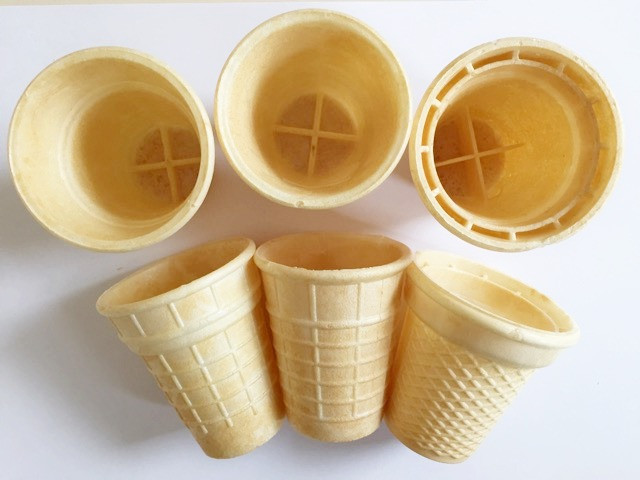 Wafer cup and cone
 J-Bottom technology
 Petri dish 90 mm
 Ice cream sticks (with logo)
 Ice cream sticks Magnum (curly)
 General purpose environment of SPC "Biocompass-S" (Uglich)
- Ice cream sticks Standard 114
- Auxiliaries for sugar products
- Ice cream sticks (round)
- Ice cream sticks Standard 93
- Pepsin whey pork
Consumables
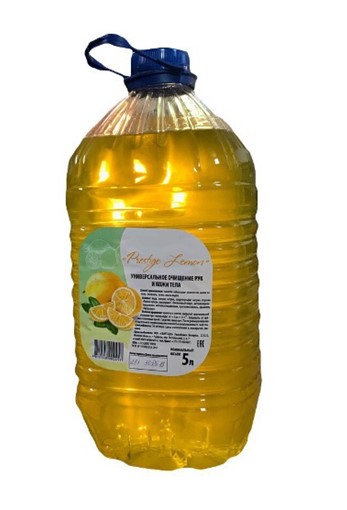 Liquid soap "Prestige" (yellow, green, red) 5 l
 Hoof bath
 Spare pacifier
 Disposable nitrile gloves (packing 100 pieces)
 Stainless steel obstetric aid
 Cup for disinfection of udder teats (non-returnable)
- Dosing syringe, hose attachment
- Mug for milking the first streams of milk.
- Anti-catfish milking rings
- Plastic bracelet
- Disposable udder wipe (udder paper).
- Alkaline detergent (20l / 24kg)
- Milk filters - primary cleaning
- Fall with a loop for cattle
- Drencher for feeding calves with a flexible probe
Microbiology
 MicroFast® Coliform & E.coli Count Plate
 Substrate for determining the number of staphylococci (Catalog number LR1005) MicroFast® Staphyloccocus aureus Count Plate
 Coliform Count Plate (catalog number LR1002) MicroFast® Coliform Count Plate
 MicroFast® Bacillus cereus Count Plate (catalog number LR1010)
 MicroFast® Lactic Acid Bacteria Count Plate (Part Number LR1312)
 MicroFast® Staphyloccocus aureus Confirmation Plate Staph.aureus Confirmation Plate (cat. no. LR1005Q)
- MicroFast® Salmonella Count Plate (SAL), for the determination of Salmonella in food and environmental samples (Catalog #LR1006)
- Substrate for accelerated determination of QMAFAnM, (catalog number LR1321)
- Yeast & Mold Count Plate (cat. no. LR1003) MicroFast® Yeast & Mold Count Plate
- MicroFast® Microbiological Substrates
- MicroFast® Enterobacteriaceae Count Plate (cat. no. LR1011)
- MicroFast® Environmental Listeria Count Plate
- Substrate for determining QMAFAnM (catalog number LR1001)
Our News
 Krupko explained what groundwork has been laid for the development of the agro-industrial complex in the Gomel region for the next five years.08.01.2026
 Lukashenko appreciated it! See how Belarusian condensed milk is made.08.01.2026
 Лукашенко: Дай мне то, что без всяких добавок! // НАСТОЯЩАЯ сгущёнка: от фермы до банки за 12 часов!08.01.2026
- От самолетов до лекарств из плазмы крови. Пархомчик об амбициозных проектах Брестской области05.01.2026
- The highlights of 2025: what will we remember most about it?05.01.2026
- A major industry reboot: nine new transport corridors will open in the Mogilev region in 2025.31.12.2025
- A renovated dairy complex with unique designs was commissioned in the Petrikovsky district.31.12.2025
- A holiday shrouded in home warmth and tradition. How a Grodno family spends Christmas25.12.2025
- Sign a 5-year contract and get 200 base bonuses! We'll tell you who's eligible and where to get this bonus.25.12.2025
- Госстандарт: продукция с Госзнаком качества - это имидж страны, она должна быть высочайшего уровня25.12.2025
- Цифровизацию здесь внедряют во все сферы производства. С какими успехами заканчивает год СУП "Хотиславский"24.12.2025
- Cashmere and Belarusian know-how. Mongolian Ambassador on a landmark agreement for cooperation with Belarus 24.12.2025
- A fusion of wisdom and experience: a meeting of the Minsk Region Council of Elders was held in the Pukhovichi District.24.12.2025
- Which products will be awarded the State Quality Mark in 2025? The list has been approved.24.12.2025
- Tariff reduction and more. What will the free trade agreement with Indonesia bring to the EAEU countries?23.12.2025
- Брестская область преодолела рубеж по удою молока на одну корову в 8 тыс. кг 23.12.2025
Articles
 Развитие фермерства в Краснодарском крае: новые достижения и поддержка со стороны властей31.12.2025
 Russian meat exports to China are expected to grow to 300,000 tons by 2025.31.12.2025
 The results of meat livestock farming in the Moscow region have been summarized: production exceeded 320 thousand tons.31.12.2025
- Crisis in the Agricultural Sector: Unprofitability and the Need for Optimization31.12.2025
- Казахстан сохраняет доступные цены на говядину на фоне мировых трендов31.12.2025
- World Meat Prices: Trends and Changes in Week 5231.12.2025
- Казахстан расширяет экспортные возможности в сфере животноводства31.12.2025
- CP Vietnam начинает экспорт переработанной курятины в Сингапур, открывая новые горизонты для вьетнамского птицеводства31.12.2025
- The Leningrad Region is ready to completely replace the Volzhanin poultry farm's egg production.31.12.2025
- The Chaikovskaya poultry farm has denied rumors about replacing chicken feed.31.12.2025
- The Impact of the Meat Industry on the US Economy31.12.2025
- Первая поставка продукции из Ставрополья в Африку: экспорт в Либерию, Танзанию и Бенин начался в 2025 году31.12.2025
- An attempt to illegally import 3 tons of meat and dairy products from Belarus was stopped in the Bryansk region.26.12.2025
- ГК «АГРОЭКО» признана лучшей в АПК по итогам Cbonds Awards 2025 за дебютный выпуск биржевых облигаций26.12.2025
- Eight AGROECO executives were included in the prestigious "Salt of the Earth" rating.26.12.2025
- Экспорт мясной продукции группы «ПРОДО» увеличился более чем в два раза26.12.2025
Economics
 10 reasons to take a deposit04.05.2025
 Serbia's NIS's only refinery will resume operations.05.01.2026
 Финские власти раскрыли, что перевозило следовавшее из Петербурга судно05.01.2026
- Reuters has learned of India's new demand for companies over Russian oil.05.01.2026
- Samsung подал заявку на регистрацию новых товарных знаков в России31.12.2025
- Экс-комиссар ЕС Бретон заявил о хищниках вокруг союза после санкций США31.12.2025
- Germany has closed the second investigation against Usmanov.31.12.2025
- Аналитики предсказали антирекорд по импорту Индией нефти из России31.12.2025
- What problems has Russian biathlon faced due to isolation?31.12.2025
- Macron considered US sanctions against the former European Commissioner to be intimidation of the EU.25.12.2025
- ФРГ и Франция осудили санкции США против экс-еврокомиссара и активистов25.12.2025
- Болгария экстрадирует в США россиянина, обвиняемого в нарушении санкций25.12.2025
- Филиппины разрешили импортировать свинину из России24.12.2025
- WSJ раскрыл детали переговоров США с Лукашенко с обсуждением лишнего веса24.12.2025
- The French Foreign Ministry condemned US sanctions against former European Commissioner Breton.24.12.2025
- Российские банки обяжут раскрывать данные о структуре собственности24.12.2025
Antibiotics in Milk
 Pharmaceutical companies see a threat to EU security due to bacteria in Ukraine13.11.2025
 В Британии предупредили о риске для миллионов из-за супербактерий06.01.2025
 Moscow court sides with Indian company in dispute with Health Ministry26.11.2024
- Scientists estimate increase in mortality due to drug-resistant bacteria29.10.2024
- Antibiotics for livestock and pesticides found in poisoned family's home29.10.2024
- Izvestia reported on the shortage of widely used antibiotics in Russia29.10.2024
- The Ministry of Health called data on the shortage of antibiotics unreliable29.10.2024
- Scientists warn of threat of return to pre-penicillin times29.10.2024
- The Ministry of Health explained how attitudes towards antibiotics changed during the pandemic07.05.2024
- WHO explains the risks of taking antibiotics "just in case"06.05.2024
- Doctors warn of bad practices after government decision on antibiotics25.04.2024
- The Ministry of Health removed antibiotics and hormones from the standard treatment of ARVI25.04.2024
- Antibiotics in oil: myth or reality?06.03.2024
- Antibiotics in sour cream: myth or reality?05.03.2024
- Antibiotics in goat milk: effects, problems and control measures16.02.2024
- The Japanese will stop producing the popular antibiotic vilprafen in Russia23.12.2023
Antibiotics in Meat
 Antibiotics in pollock25.02.2024
 Antibiotics in herring: myth or reality?12.02.2024
 Antibiotics in perch10.02.2024
- Antibiotics in sprat: facts and myths10.02.2024
- Antibiotics in tuna: an important health and environmental issue09.02.2024
- Antibiotics in meat30.01.2024
- Antibiotics in chebureks: myth or reality?29.01.2024
- Antibiotics in cutlets: problem or myth?18.01.2024
- Antibiotics in Chicken: Where Are the Highest Concentrations?17.01.2024
- Antibiotics in carp17.01.2024
- Where Are More Antibiotics in Chicken: Reality and Cautions16.01.2024
- Antibiotics in Salmon: Safety and Product Quality16.01.2024
- Antibiotics in Turkey15.01.2024
- Antibiotics in Sal: Reality and Safety Issues15.01.2024
- Antibiotics in Fried Dumplings: Facts, Risks and How to Stay Safe15.01.2024
- Antibiotics in sausages14.01.2024
10 Interesting Facts
 Antibiotics in Coffee: Myths and Reality03.05.2025
 Forged forks: 10 interesting facts16.05.2024
 Swimming pool and weight loss: 10 interesting facts10.03.2024
- Tests for antibiotics in milk - 10 interesting facts07.03.2024
- Cleaning the kettle from scale, 10 interesting facts...06.03.2024
- Antibiotics in beer: 10 interesting facts04.03.2024
- Wild boar, how to survive...01.03.2024
- Purulent mastitis, 10 interesting facts27.02.2024
- Lemon and alcohol: 10 interesting facts25.02.2024
- Mint - 10 interesting facts25.02.2024
- Wild boar, 10 interesting facts20.02.2024
- Wild boar and domestic pig: comparison and advantages20.02.2024
- Cottage cheese, 10 interesting facts20.02.2024
- 10 Interesting Facts About Milk19.02.2024
- How to Clean a Toilet - 10 Interesting Facts (Acid vs Alkaline)18.02.2024
- Goat's milk: 10 interesting facts16.02.2024
Diseases of cattle
 Dicroceliosis in cattle09.03.2024
 Demodicosis in cattle01.03.2024
 Purulent mastitis of cattle27.02.2024
- Hypodermatosis in cattle20.02.2024
- Hemonchoz in cattle11.02.2024
- Bursitis in cattle30.01.2024
- Brucellosis in cattle29.01.2024
- Bronchopneumonia in calves27.01.2024
- Bronchitis in cattle26.01.2024
- Mortellaro disease in cattle24.01.2024
- White muscle disease in cattle23.01.2024
- Babesiosis in cattle22.01.2024
- Cattle acidosis20.01.2024
- Arthritis in cattle20.01.2024
- Anaplasmosis in cattle18.01.2024
Misc
 Antibiotics for coughs: when they are needed and when they are not11.02.2024
 Более 3 тыс. нарушений ПДД выявили в Гомельской области за длинные выходные08.01.2026
 Безопасность в местах богослужений обеспечивают сотрудники минской милиции08.01.2026
- Два пьяных водителя каршеринговых авто задержаны инспекторами ГАИ в Минске08.01.2026
- Об ответственности за вождение в нетрезвом виде напомнили в суде05.01.2026
- In Bobruisk, a drunk driver without a license borrowed a friend's car for a ride.05.01.2026
- Fewer accidents, more traffic on the roads: What the year 2025 will look like, according to the State Traffic Inspectorate.05.01.2026
- Диетолог Минздрава назвал безопасную порцию икры31.12.2025
- More than 3,800 traffic violations were detected on the roads of the Gomel region over the long weekend.31.12.2025
- The Department of Internal Affairs explained how traffic in central Grodno will be organized on New Year's Eve.31.12.2025
- A car fatally struck a drunk pedestrian in the Drogichin district.31.12.2025
- An 18-year-old boy who was caught in icy water was rescued in Vitebsk.26.12.2025
- В Могилеве мужчина украл у друга украшение за Br8,5 тыс., вырученные деньги проиграл в казино24.12.2025
- A woman was hit by a train in Gomel.24.12.2025
- В реальном и виртуальном пространстве. В МВД рассказали о рисках для школьников в период каникул 23.12.2025
- Traffic police in the Vitebsk region detained 14 unlicensed drivers over the weekend.23.12.2025
Cloud of Tags
TelegramЕСМясоСырыЗапретЦеныСанкт-ПетербургВластиЛекарства2024БразилияСвининаСудЯпонияТурцияЭкспортМясокомбинатЦентробанкПензенской областиКофеПродовольствиеПродукцияСШАДеньгиЕврокомиссияБройлерФруктыМолокоЕАЭСОбщепитНедвижимостьУченыеМоскваВакцинацииПроизводство мясаАвстралияАнтибиотиковДмитрий песковЯйцаЗависимостьСотрудники ГАИАлександр Лукашенкоминистр сельского хозяйстваМинскАЧСФермерBloombergДоходыВыручкаЗдоровьеКРСИсследованияВьетнамУкраинаПродукты питанияГерманияВладимир ПутинПравительствоВ китаеАлкогольного опьяненияБизнесРубльЭкономикаЕгипетПольшаПрокуратураДональд ТрампВостокГовядинуРаботаЖивотноеТАССЗеленскийИмпортСмертьОтпускВирусПроизводство молокаКартофельУрожаяПитаниеВакцинацияСпутник vПесковFacebookКолбасыРоссияДолларКоронавирусАзербайджанМаслоКрупный рогатый скотБеларусьКанадаКитайРоспотребнадзорReutersЗаконопроектЛечениеCOVID-19ПраздникМясо птицыДиректорКарантинИталияИнвестицииGoogleУзбекистанМинфинRussiaВеликобританииСубсидииКлиматОнлайнЗаконБолезньПоддержкаМинсельхозСельское хозяйствоТатарстанУкраинеГазпромРоссиянеНовостиДжо БайденМужчиныМинздравУборкаФранцияИнфляцияКризисГовядинаВеликобританияДетиКредитРосстатИммунитетОрганизмСанкцииРодителиПтицефабрикаТребованияAppleАлкогольНефтьРоссельхознадзорМЧСКрупного рогатого скотаКазахстанПодмосковье