
When ChatGPT is Harmful: How General-Purpose AI Can Ruin Your Project

Photo is illustrative in nature. From open sources.


Companies continue to invest in GPT-like models, but their versatility is increasingly becoming the cause of failure. Expert Ivan Budnik explains why choosing the "most powerful neural network" leads to unnecessary expenses and ineffective AI projects.
This material is part of RBC's new Education section , where we discuss how to develop skills, make informed decisions, and advance your career consciously.
The RBC School of Management is the media holding's new educational project, focused on executive development. We meet every Thursday at 7:00 PM for online events, where we tackle complex management challenges together.
The schedule and topics can be found here.
In 2025 , a study by S&P Global Market Intelligence found that 42% of companies had curtailed almost all of their AI initiatives, compared to only 17% a year earlier. It's not a matter of technology quality—they're working just fine. The problem is that companies are trying to solve all kinds of problems with the same tools.
We've seen many projects where teams deployed GPT-4 where a simpler model, like regression, would have been more effective. This resulted in the system becoming slow, money was quickly spent, and users were dissatisfied. But at company meetings, they kept repeating, "But GPT is the most powerful model!"
However, in such cases, power doesn't matter—it's important to choose a tool that's truly suited to the specific task. We'll explore why GPT isn't a panacea and what to do when versatility becomes a problem.
Why isn't there one neural network for all situations?If we need to hammer a nail, we use a hammer. We can try using a microscope—it's heavy, and we can hit it with it. But it's still the wrong tool.
The same thing happens with neural networks. There are different types of models, each developed for a specific data format. Some work better with sequentially presented data, such as time series. Others are more effective at analyzing text and large data sets. There are models specifically designed for image generation.
Each model type is designed for its own application, and this is supported by mathematics. The No Free Lunch Theorem states that there is no universal algorithm that handles all problems better than others. Different problems require different approaches—and this is a proven fact.
Therefore, even if a model is trained on one type of data, it won't automatically perform well on another. For example, if you take a network trained on cat photos and simply "add" it with medical images, the results will be weak without fine-tuning for the specifics of medicine.
What to look for when choosing a neural networkTypically, we start with three questions: what data we have, what we need to obtain, and how much of that data is available. The type of data is the basis for choosing a tool.
- If you work with text, use so-called transformer models. This type of neural network is the foundation of all top text processing models (and others): GPT-4/5, Claude, BERT, LLaMA, Mistral, and many others. In 2025, BERT, GPT-4/4.1, Claude 4.5, and their various modifications will lead almost all text processing tasks.
- For images, use other solutions. Services like Midjourney, Nano Banana, and Seedream are suitable for image generation. Vision Transformers are used for cloud image analytics, and compact models like MobileNet are suitable for mobile apps.
- Gradient boosting algorithms work best with tables and numerical data, primarily XGBoost and CatBoost.
Data size also matters. If you have fewer than 10,000 examples, training large models like Transformers from scratch is ineffective. In this case, transfer learning is used—taking a pre-trained model (such as BERT, Vision Transformer, or MobileNet) and retraining it for a specific task—or choosing simpler algorithms.
Why ChatGPT and similar tools can't be used for all tasksLLM (Large Language Model) is a large language model like GPT-4, GPT-4.1, Claude 4.5, or Llama 3. It's trained on huge text datasets and can write, summarize, answer questions, and translate. But it's not always the best tool.
The biggest mistake is using large language models everywhere possible. Explosion.ai calls this "LLM maximalism": companies integrate LLM into every process. Need to filter spam? Use GPT-4. Create a summary? Again, GPT-4 or Claude 4.5. Extract dates from text? Again, LLM.
Problems arise immediately. These models are slower than conventional algorithms, and users are unwilling to wait ten seconds for a response that previously took one. Costs also rise: each unit of text processed by the model (token) costs money, and LLM spends thousands of dollars.
A real-life example: a company's reputation monitoring system (automatically tracks, analyzes, and evaluates what's being said about a brand, company, or person online) was initially built entirely on LLM. The model filtered texts, generated summaries, and extracted the necessary data. But after a month, it became clear: it was too slow for real-time operation, too expensive as the data volume increased, and impossible to compare the summaries with the original texts.
The solution turned out to be simple. The architecture was split into parts: first, a regular classifier operates, filtering out noise and breaking the text into sentences, while LLM is used only for summaries. As a result, the system became faster and significantly cheaper.
When Speed Matters More Than Power: Which AI Models to Use and WhyTransformers are today's leading tools for working with text. They can analyze very large volumes of information and even process text, images, and audio simultaneously.
But they have a drawback: the longer the text, the slower they work. With huge amounts of data, transformers become too "heavy," so faster models are needed for such tasks.
That said, older architectures—RNNs and LSTMs—remain useful. They're faster, require fewer resources, and are suitable for devices that process data locally rather than in the cloud. They perform excellent in real-time tasks—for example, they can accurately recognize human actions based on sensor data.
Diffusion models have greatly advanced AI-powered image and media creation. Tools like Stable Diffusion, DALL-E, and Midjourney create high-quality and diverse images and can also handle audio, video, and code.
However, these models are slow: they require a lot of computation to generate, so they are not suitable for applications where the result is needed instantly.
Data Drives Results: How Models Tolerate Error and NoiseLarge neural networks are very sensitive to data quality. If the data contains errors, incorrect labels, or a bias toward one class, the model will consistently make mistakes. Without preliminary data preparation—cleaning, straightening, and standardizing the data—the results of such models become unpredictable.
When we say "neural networks," many people imagine something huge and complex. But there are also simpler, more stable, and more predictable algorithms that often produce excellent results when the data is junk or incomplete. These include Random Forest and XGBoost.
- Random Forest is an algorithm that makes decisions not using a single approach, but using multiple small models, each looking at the data from its own perspective. These models then vote, and the most reliable result is selected. Its strength: it's robust to data errors, performing reliably even with noise, missing data, and skewed data.
- XGBoost is an algorithm that builds a forecast gradually, step by step, each time correcting its previous errors. It combines many simple solutions that consistently complement each other, making it one of the most accurate data analysis methods. Its strength: it works very well on real, imperfect data and delivers high accuracy.
A good example of failure is the models that were attempted to detect COVID-19 from images. Most of these studies failed in real life. The main reasons were simple:
- Mixed, inappropriate data. Information was taken from different sources, sometimes with overlap, which disrupted learning.
- Equipment bias. The models didn't recognize the disease , but rather the characteristics of the devices used to take the images.
- Shifting shooting conditions. For example, the "healthy" photos always featured sunny weather, so the model learned to distinguish the sun from signs of illness.
First, understand the problem, not the models. Once you understand what exactly needs to be solved, it becomes clear which type of model is best suited.
Don't limit yourself to a single method—test several models and compare which one produces the best results. AutoML tools can help with this—these are services that automatically select the optimal algorithm, configure its parameters, and check its performance.
AutoML (automated machine learning) is a tool that automatically selects the best model, configures it, and verifies the results.
That is, instead of manually:
- select an algorithm;
- configure parameters;
- try different approaches;
- compare the results with each other.
There are also tools like AutoGluon, FLAML, or H2O that allow you to quickly try dozens of model options and choose the one that shows the best results for your data, without manual tuning or lengthy experiments.
Don't just look at accuracy. It's important to understand:
- how stable is the model;
- can her decisions be explained;
- How much does it cost to calculate it?
Sometimes a model with less accuracy but faster response is a better choice for real-world work.
And be sure to record all experiments: what parameters you tried, what results you got. This will allow you to reproduce successful solutions in the future and help your colleagues continue their work without guesswork.
Tools to help you choose the right model- AutoGluon (AWS) is one of the most powerful AutoML tools. It can work with tables, text, and images, automatically combining multiple models into a powerful ensemble. At Kaggle machine learning competitions, it outperforms 99% of competitors in just a few hours—and without complex data preparation.
- H2O AutoML emphasizes transparency. It reveals the factors that influence the model's decisions and generates clear reports. This is especially important for industries where every decision must be explained, such as banking or medicine.
- FLAML ( Microsoft Research) optimizes performance for budget. It selects models to minimize computational resources. It works well with popular tools such as scikit-learn, XGBoost, LightGBM, and transformers.
- By 2025, Hugging Face became the leading platform for ready-to-use models. The SmolVLM model, with 256 million parameters, requires less than 1 GB of video memory, but its quality surpasses models hundreds of times larger. It can even run on an iPhone. The LeRobot library for robotics tasks has been released. Over 10,000 models are already integrated with Azure AI Foundry, simplifying development.
- PyTorch Lightning has greatly simplified model training on high-powered computing platforms. It allows you to debug your model in real time without restarting, easily scale from a single GPU to hundreds, and pause experiments and resume them later.
Read together with it:
- Demand for semi-finished products will decline in 2025: dumpling sales will fall by 8%.Analysts at Evotor noted that the decline in interest in traditional convenience foods also affected khinkali and ravioli, whose sales fell by 4% and 19%, respectively. Meanwhile, demand for manti and kolduny showed a slight increase. Retailers are revising their product ranges, replacing frozen convenience foods with ready-to-eat meals and snacks that reflect current trends. It's important to not...
- Rosselkhoznadzor monitored the export of more than 57,000 tons of veterinary goods from St. Petersburg.These products were shipped to countries including Azerbaijan , Angola, Vietnam , and China . 1,500 doses of veterinary vaccines were also exported to Moldova, and over 12.4 million eggs were shipped to Sierra Leone and the UAE. Officials from Rosselkhoznadzor verified compliance with veterinary and sanitary requirements in 15 importing countries , and the goods were shipped with specialized veter...
- Mexican and Canadian beef is losing ground in the US market.Beef from Mexico and Canada is losing ground in American kitchens and restaurants, despite being imported without tariffs imposed on all exports by US President Donald Trump a year ago. According to Tegra Consultant, Canadian meat sales to the United States have fallen by 23.56% over the past two years, while Mexican food exports to that market have fallen by 11.5......
- Blaming cows was a mistake: meadows absorb more gases than cattle emit.Cows have become a symbol of controversy, as debates about their environmental impact, particularly regarding methane emissions, have generated headlines, political decisions, and criticism. But while many study the animals themselves, a group of researchers decided to examine the soil. At the University of Nebraska-Lincoln, a team of researchers led by Professor Galen Erickson conducted a study t...
- What does the expiration of the START Treaty mean?On February 5, 2026, New START, the last treaty between Russia and the United States that limited their nuclear arsenals, expired. RBC reports on how Moscow and Washington approached this date and what will happen afterward.On February 5, 2026, the Russian-American Treaty on Measures for the Further Reduction and Limitation of Strategic Offensive Arms (New START), the last agreement that limited t...
- The Ministry of Health has approved nine home treatment regimens for COVID-19.The Ministry of Health has approved nine outpatient treatment regimens for COVID-19 , which will be prescribed by a physician on an individual basis. Treatment should begin within the first week of the onset of symptoms, with antiviral medications.The Russian Ministry of Health has approved nine home treatment regimens for COVID-19. This is stated in updated clinical guidelines for the treatment o...
- The Master of Steam: The Story of a Businessman Who Left a Successful Printing Business to Become a Spa MasterThe story of Alexey Kozhukhovsky, a resident of the agro-town of Khatezhino in the Minsk region, is inspiring proof that a true calling can be found at any age, and that a drastic career change can be a major achievement. When Alexey realized that money was no longer his primary motivation, he decided to leave the printing business to which he had dedicated two decades. He was drawn to creation, n...
Test for Atnibiotics in Milk
 ANTIBIOTICS / ELISA TESTS
 Express tests for determining the residual amount of β-lactams, tetracyclines, chloramphenicol, streptomycins in milk, whey
 TEST KIT for determination of inhibitory agents PIONEERPRODUKT® DASH-TEST, WC0040
 Express-tests PIONER 5 in1 for the determination of thiamphenicol, meloxicam, colistine, trimethoprim, sulfonamides
 Rapid tests for determining the residual amount of chloramphenicol in meat
 Rapid tests for fluoroquinolone, erythromycin, lincomycin, tillosin and tilmycosin residues in milk, whey
- PIONEER MEIZHENG BIO-TECH (5 in1) JC0871/ Rapid tests for the determination of the residual amount of β-lactams, tetracyclines, chloramphenicol, streptomycins, ceftiofur in milk, whey.
- Express tests for determining the residual amount of β-lactams and tetracyclines in milk, whey
- PIONEER MEIZHENG BIO-TECH (5 in1) JC1165 / Rapid tests for the determination of the residual amount of halofuginone, flavomycin, novobiocin, flunixin, dexamethasone / prednisolone in milk, whey
- Rapid tests for determining the residual amount of tetracyclines in meat
Laboratory equipment
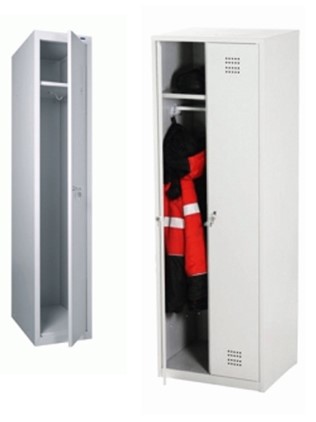 Metal closets
 Indicator strips "Total water hardness", 25 pcs.
 Milk samplers for flasks and tanks (Russia)
 Smooth micrometers MK
 Filter element for OBM device with a diameter of 35mm (100pcs/pack)
 Indicator strips for the determination of neutralizing substances (soda and ammonia) in milk, 100 pcs.
- Milk analyzer Expert Super Breeding
- Table island low BA-CL- X.X Son TR
- Stationary thermohygrometer IVA-6B2 (Russia)
- pH/temperature meter Testo 205 (Germany)
- LOIP LH- 2xx flask heater (models 50-250ml, 250-1000ml, 1000-2000ml, 600°C)
- Universal homogenizer Ultra-Turrax Tube Drive P control, IKA
- MICROFAST® underlays
- Water bath WB-12(WB-24) for butyrometers
- Hourglass
Packing
 Parchment
 Paper for micro-ribbed
 Cartons for milk and dairy products
 Plastic packaging for cakes and pastries
 Ice cream chopsticks
 Korreks for confectionery
- KH PACK® bag making paper
- Skiving and Hemming Technology
- Cover
- KH PACK® tartlet paper
- Backed Foil
- Laminating paper KH PACK®
- Carton
- Grease and barrier paper KH PACK®
- Laminating paper KH PACK®
Additional Products
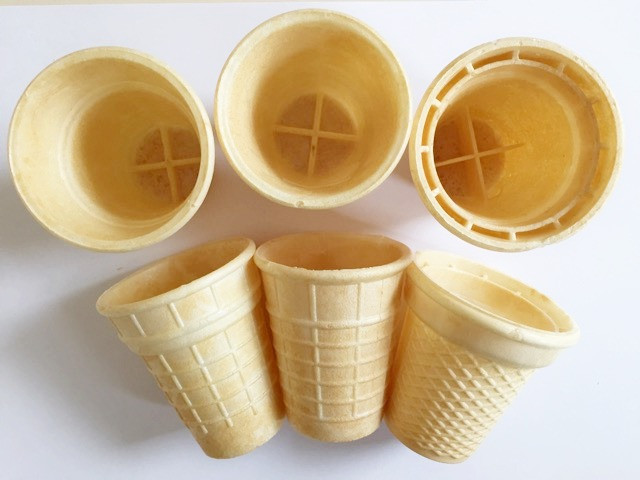 Wafer cup and cone
 Ice cream sticks (round)
 Pepsin whey pork
 Ice cream sticks Magnum (curly)
 Auxiliaries for sugar products
 General purpose environment of SPC "Biocompass-S" (Uglich)
- J-Bottom technology
- Ice cream sticks Standard 93
- Ice cream sticks Standard 114
- Petri dish 90 mm
- Ice cream sticks (with logo)
Consumables
 Hoof bath
 Mug for milking the first streams of milk.
 Disinfectant with washing effect (10kg)
 Dosing syringe, bottle attachment
 Drencher for feeding calves with a flexible probe
 Udder cleaner after milking (20 l)
- Foam cup for udder treatment
- Stainless steel obstetric aid
- Spatula for mastitis test (Shalm's test)
- Apron and armlets
- Forged pitchforks
- Pump for artificial ventilation of the lungs
- Acid detergent (20l / 24kg)
- Non-returnable cup for udder treatment
- Foaming cup for udder treatment
Microbiology
 MicroFast® Salmonella Count Plate (SAL), for the determination of Salmonella in food and environmental samples (Catalog #LR1006)
 MicroFast® Staphyloccocus aureus Confirmation Plate Staph.aureus Confirmation Plate (cat. no. LR1005Q)
 Substrate for determining the number of staphylococci (Catalog number LR1005) MicroFast® Staphyloccocus aureus Count Plate
 Coliform Count Plate (catalog number LR1002) MicroFast® Coliform Count Plate
 MicroFast® Bacillus cereus Count Plate (catalog number LR1010)
 Substrate for determining QMAFAnM (catalog number LR1001)
- Substrate for accelerated determination of QMAFAnM, (catalog number LR1321)
- Yeast & Mold Count Plate (cat. no. LR1003) MicroFast® Yeast & Mold Count Plate
- MicroFast® Microbiological Substrates
- MicroFast® Enterobacteriaceae Count Plate (cat. no. LR1011)
- MicroFast® Coliform & E.coli Count Plate
- MicroFast® Environmental Listeria Count Plate
- MicroFast® Lactic Acid Bacteria Count Plate (Part Number LR1312)
Our News
 Lukashenko heard a report on the Mogilev region. The main topic was the situation in agriculture. 05.02.2026
 What major agricultural projects are being implemented in the Mogilev region?05.02.2026
 An expert identified possible areas of cooperation between Belarus and Southeast Asian countries.05.02.2026
- Surcharges on prices for agricultural products purchased from the population have been established in 2026.04.02.2026
- Lukashenko: We won't carry the Vitebsk region on our shoulders.04.02.2026
- Baby Zabava. The Grodno Zoo welcomed its first addition in 2026. 03.02.2026
- Lukashenko: We won't carry the Vitebsk region on our shoulders. 03.02.2026
- Lukashenko on the case: it is a moral monstrosity if we cannot protect our smaller brothers in this weather03.02.2026
- Grain cultivation and livestock farming. Bogdanov discussed prospects for cooperation in the agricultural sector between Belarus and Kazakhstan.01.02.2026
- Выпойка молоком 3-4 раза, больше теплой воды. Как в Брестской области наладили уход за телятами в морозы01.02.2026
- From Tractor Driver to Businessman: The Story of a Belarusian Who Built a Farm from Scratch and a Church in a Village 30.01.2026
- A warehouse in the Minsk region improperly stored powdered milk: a court ordered compensation of Br2 million.30.01.2026
- Increased processing volumes, new jobs: production capacity is being expanded in the Shklov district.30.01.2026
- The story of a Belarusian who built a sturdy farm from scratch and revived his native village.29.01.2026
- Belarusian producers plan to enter the Qatari meat market.29.01.2026
- Belarus is interested in expanding dairy product supplies to Indonesia.28.01.2026
Articles
 The court refused to seize the property of agricultural enterprises with debts to the AIC fund.05.02.2026
 Demand for semi-finished products will decline in 2025: dumpling sales will fall by 8%.05.02.2026
 Rosselkhoznadzor inspected more than 2,000 tons of livestock products shipped to Yakutia.05.02.2026
- Rosselkhoznadzor monitored the export of more than 57,000 tons of veterinary goods from St. Petersburg.05.02.2026
- К госветнадзору Бурятии поступило 860 тонн продукции при отправке в Монголию05.02.2026
- The inflation rate in Russia at the beginning of February 2026 reached 6.5%.05.02.2026
- Innovations in broiler feeding: savings and bird health05.02.2026
- New financial disputes between Aventa and Tokarevskaya Poultry Farm: a second lawsuit for 70 million rubles05.02.2026
- Mexican and Canadian beef is losing ground in the US market.05.02.2026
- Spain strengthens institutional coordination to improve animal welfare management05.02.2026
- Blaming cows was a mistake: meadows absorb more gases than cattle emit.05.02.2026
- EU and Mercosur: Experts warn of shortage of EU veterinarians to control imports and associated health risks05.02.2026
- Rosselkhoznadzor stopped the import of more than 50 kg of dangerous animal products at Ufa Airport.04.02.2026
- Rosselkhoznadzor specialists have identified quality violations in meat products.04.02.2026
- The first batch of canned meat from the Kurgan region was sent to Azerbaijan under the supervision of Rosselkhoznadzor.04.02.2026
- A poultry farm in Yugra was fined for violating veterinary regulations.04.02.2026
Economics
 10 reasons to take a deposit04.05.2025
 Lavrov and the Swiss Foreign Minister will discuss the "deep crisis" of the OSCE.05.02.2026
 Kirilenko spoke about the problems facing Russian teams after sanctions were lifted.05.02.2026
- Lavrov believes that US statements about cooperation are inconsistent with sanctions05.02.2026
- The Russian ambassador warned of a reaction to the Faroe Islands' change in stance on sanctions.05.02.2026
- Five suspects in supplying weapons to Russia's defense industry have been arrested in Germany.03.02.2026
- Bloomberg узнал о планах ЕС по санкциям против российских платины и меди03.02.2026
- The EU confirmed discussions on banning entry for participants in the military operation.31.01.2026
- Bloomberg has revealed a new possible EU sanctions plan against Russia.31.01.2026
- The EU has blacklisted Russia for money laundering.30.01.2026
- The EU has imposed new sanctions on Iran in response to the suppression of protests.30.01.2026
- The European Union has designated the IRGC a terrorist organization.30.01.2026
- The US has eased sanctions and allowed oil companies to operate in Venezuela.30.01.2026
- Titov allowed for the return of foreign companies that "miss Moscow"30.01.2026
- Following the deal with Carlyle, LUKOIL continued negotiations with other companies.29.01.2026
- Macron announced that France is preparing new sanctions against Russia.29.01.2026
Antibiotics in Milk
 Antibiotics in milk: causes and methods of detection27.01.2026
 Pharmaceutical companies see a threat to EU security due to bacteria in Ukraine13.11.2025
 Prosecutors have issued warnings to more than 5,000 companies due to rising prices.09.09.2025
- Two dairy companies from Azerbaijan refused to work with Russia.09.07.2025
- Lukashenko told how Putin treated him to goat's milk.08.07.2025
- Lukashenko demanded that Belarus be cleared of littered logs by autumn.08.07.2025
- Лукашенко заявил, что Белоруссии выгодно не «одуревши воевать», а кормить17.06.2025
- В Британии предупредили о риске для миллионов из-за супербактерий06.01.2025
- Moscow court sides with Indian company in dispute with Health Ministry26.11.2024
- Scientists estimate increase in mortality due to drug-resistant bacteria29.10.2024
- Antibiotics for livestock and pesticides found in poisoned family's home29.10.2024
- Izvestia reported on the shortage of widely used antibiotics in Russia29.10.2024
- The Ministry of Health called data on the shortage of antibiotics unreliable29.10.2024
- Scientists warn of threat of return to pre-penicillin times29.10.2024
- The Ministry of Health explained how attitudes towards antibiotics changed during the pandemic07.05.2024
- WHO explains the risks of taking antibiotics "just in case"06.05.2024
Antibiotics in Meat
 Antibiotics in pollock25.02.2024
 Antibiotics in herring: myth or reality?12.02.2024
 Antibiotics in perch10.02.2024
- Antibiotics in sprat: facts and myths10.02.2024
- Antibiotics in tuna: an important health and environmental issue09.02.2024
- Antibiotics in meat30.01.2024
- Antibiotics in chebureks: myth or reality?29.01.2024
- Antibiotics in cutlets: problem or myth?18.01.2024
- Antibiotics in Chicken: Where Are the Highest Concentrations?17.01.2024
- Antibiotics in carp17.01.2024
- Where Are More Antibiotics in Chicken: Reality and Cautions16.01.2024
- Antibiotics in Salmon: Safety and Product Quality16.01.2024
- Antibiotics in Turkey15.01.2024
- Antibiotics in Sal: Reality and Safety Issues15.01.2024
- Antibiotics in Fried Dumplings: Facts, Risks and How to Stay Safe15.01.2024
- Antibiotics in sausages14.01.2024
10 Interesting Facts
 Antibiotics in Coffee: Myths and Reality03.05.2025
 Forged forks: 10 interesting facts16.05.2024
 Swimming pool and weight loss: 10 interesting facts10.03.2024
- Tests for antibiotics in milk - 10 interesting facts07.03.2024
- Cleaning the kettle from scale, 10 interesting facts...06.03.2024
- Antibiotics in beer: 10 interesting facts04.03.2024
- Wild boar, how to survive...01.03.2024
- Purulent mastitis, 10 interesting facts27.02.2024
- Lemon and alcohol: 10 interesting facts25.02.2024
- Mint - 10 interesting facts25.02.2024
- Wild boar, 10 interesting facts20.02.2024
- Wild boar and domestic pig: comparison and advantages20.02.2024
- Cottage cheese, 10 interesting facts20.02.2024
- 10 Interesting Facts About Milk19.02.2024
- How to Clean a Toilet - 10 Interesting Facts (Acid vs Alkaline)18.02.2024
- Goat's milk: 10 interesting facts16.02.2024
Diseases of cattle
 Dicroceliosis in cattle09.03.2024
 Demodicosis in cattle01.03.2024
 Purulent mastitis of cattle27.02.2024
- Hypodermatosis in cattle20.02.2024
- Hemonchoz in cattle11.02.2024
- Bursitis in cattle30.01.2024
- Brucellosis in cattle29.01.2024
- Bronchopneumonia in calves27.01.2024
- Bronchitis in cattle26.01.2024
- Mortellaro disease in cattle24.01.2024
- White muscle disease in cattle23.01.2024
- Babesiosis in cattle22.01.2024
- Cattle acidosis20.01.2024
- Arthritis in cattle20.01.2024
- Anaplasmosis in cattle18.01.2024
Misc
- Antibiotics for coughs: when they are needed and when they are not11.02.2024
 "Слетают все маски человека!" // Банщик про техники парения, поющих мастерах и чудо-массажах05.02.2026
 The Master of Steam: The Story of a Businessman Who Left a Successful Printing Business to Become a Spa Master 05.02.2026
- Где в Брестской области чаще всего происходят ДТП, назвали следователи05.02.2026
- Ministry of Emergency Situations: 129 people have died in fires since the beginning of the year.04.02.2026
- WHO: Almost 40% of cancer cases can be prevented 04.02.2026
- The number of fires in Belarus has increased. Experts have explained the causes.04.02.2026
- "Neither tail nor scales." We went winter fishing and learned the intricacies of ice fishing.04.02.2026
- Беларусь продлила запрет на маркировку импортируемых алкогольных напитков на территории недружественных стран03.02.2026
- В Гомеле благодаря неравнодушным гражданам остановили нетрезвых таксиста и бесправника 03.02.2026
- From February 11, navigation seals will be used to track rail traffic in the EAEU.03.02.2026
- The State Traffic Inspectorate reminded drivers of road safety rules during severe frosts.31.01.2026
- A woman driving under the influence of alcohol with over 2 ppm was detained in Minsk.30.01.2026
- Наведение порядка в АПК, пожарная безопасность. Какие задачи поставлены перед прокурорами Витебской области 30.01.2026
- A car crashed into a tree on Independence Avenue in Minsk, injuring two people.30.01.2026
- Топ экспортируемых товаров назвали в "Белгоспищепроме"29.01.2026
Cloud of Tags
БройлерЖивотноеКризисМинздравRussiaВостокТурцияВакцинацияGoogleСотрудники ГАИУборкаРодителиЗаконопроектДональд ТрампКитайСпутник vЗависимостьИталияЗаконРосстатЯйцаЭкономикаСмертьСудИнфляцияПроизводство мясаУзбекистанБразилияГовядинуИсследованияРоспотребнадзорКартофельПтицефабрикаУрожаяМужчиныПродукты питанияБеларусьВладимир ПутинАЧССырыЛечениеФранцияЭкспортКанадаНовостиВеликобританияМинфинНефтьПитаниеОрганизмИмпортВирусКлиматПравительствоВеликобританииОбщепитУкраинаВьетнамПродукцияЛекарстваАвстралияПоддержкаУченыеАнтибиотиковРоссельхознадзорКрупный рогатый скотЕСCOVID-19МоскваАзербайджанFacebookReutersЗеленскийПензенской областиНедвижимостьГазпромминистр сельского хозяйстваДиректорМолокоТатарстанБолезньBloombergФруктыПрокуратураКредитМЧСЦентробанкРаботаАлександр ЛукашенкоОнлайнКарантинРоссияПроизводство молокаПраздникСШАЕАЭСДетиКофеТАССTelegramЯпонияИммунитетЦеныДоходыДмитрий песковПродовольствиеПольшаТребованияАлкогольного опьяненияКоронавирусЗапретГерманияРубльВыручкаСельское хозяйствоМинскДеньгиМинсельхозПодмосковьеУкраинеВластиСубсидииМясокомбинатЗдоровьеКазахстанФермерБизнесИнвестиции2024Крупного рогатого скотаВакцинацииAppleЕврокомиссияСвининаСанкцииДжо БайденЕгипетРоссиянеГовядинаМясоОтпускВ китаеМясо птицыСанкт-ПетербургМаслоКРСПесковКолбасыАлкогольДоллар