"The cleaning room is just a dress rehearsal." What are the Nesvizh Islands preparing for?
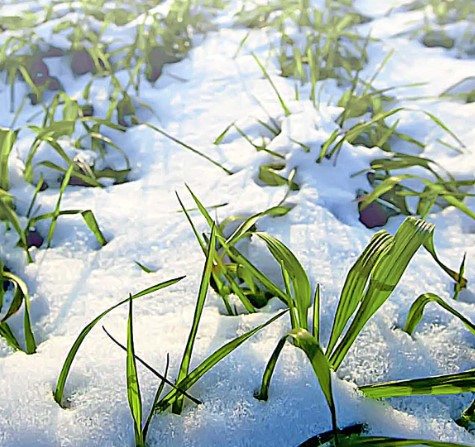
Photo is illustrative in nature. From open sources.


Topic news
In the Minsk region, according to a long-established tradition, the Nesvizh district is always in the lead in the harvesting campaign. The local farmers know and love their work well, demonstrating high production rates from year to year. A significant contribution to the regional loaf is made by the labor collective of OAO "Nesvizhskiye Ostrovki" under the leadership of Vasily Kholopitsa, who has been successfully managing the agricultural enterprise for more than six years. How they manage to keep the bar, they learned personally, having visited one of the leading farms in the central region of the country.
Work in the fall is consideredAn experienced director calls the harvesting for the team only a dress rehearsal before the start of large-scale autumn work. And she went through normally. Six crews worked on the fields day by day, four of which threshed over a thousand tons, two more - more than two thousand tons of grain. The seventh crew joined in the middle of the harvest, when the farm received a brand new GS12A1 grain harvester, however, its result is also worthy of praise - about 700 tons.
- When you need to work hard, it's in the fall, not missing a single day. We are preparing for plowing for winter crops - wheat, triticale, barley, of which there are a thousand in our Ostrov branch alone. We are literally on the threshold of sugar beet harvesting. You need special control of the sugar content of the root crop in order to start digging. Plus, harvesting corn silage, and then grain, - the manager lists the work to be done by his team in the near future. - Absolutely everything can be programmed, provided that the equipment works without breakdowns and the weather will not let us down, but will only help us.
In spring and summer, the heavenly office was not on the side of the villagers. The spring drought stood in the district for more than 45 days. As a result, burnt areas now and then loomed in the fields. True, the farm, anticipating possible vagaries of the weather, carried out a maximum of agrotechnical measures in due time. Due to this, a greater percentage of crops gave a good result - the grain yield at Nesvizhskiye Ostrovki this year amounted to 76.3 centners per hectare.
- Compared to last year, we were a little short on grain. However, this is not critical: it is more than enough for livestock, and to lay in the seed fund, and even sell it on occasion, - notes Vasily Nikolaevich. - All thanks to the people who did their best. Everyone tried: from the combine operator in the field to the cook in the canteen. Here is the result! True, there is no time to relax, there are much more serious tasks ahead, including ensuring a good start for next year.
Challenge number oneAt the time of our arrival, mowing was in full swing on the Ostrov fields. Alfalfa this year has ugly like never before: it is all in bloom and knee-deep in height. OJSC has long learned a simple, but perhaps the most important truth: the result of the livestock industry in the winter depends on how machine operators now work in the fields. No wonder they say that cow's milk is on the tongue.
- What are the types of fodder preparation? - we are interested, inhaling the aroma of freshly cut grass.
- Creating a forage base is a strategically important direction. It can be said, the annual safety for animal husbandry. So harvesting alfalfa is a priority. Yes, and look what it is, I haven’t seen such a yield for a long time. Even if we didn’t get enough grain, but in terms of succulent fodder, haylage, I think we will reach good indicators. This is the third mowing done - and so chic! - proudly says the director. - According to the plan - to reach 30 feed units per conditional head. Already now we have about 10-11 fodder units, and after all, not only haylage, but also corn silage is ahead.
By the way, the queen of fields in the farm covers an area of 650 hectares. As soon as the machine operators complete the grass mowing, they will start re-equipping the combines for harvesting corn for silage. According to the forecasts of the head of the economy, the start will be given no later than the first days of September. It is not enough just to prepare, it is important that the corn lay for a month or two, preserved, only then the silage will be considered a complete feed for livestock.
Historical eventWhat else this year will be remembered by the team of "Nesvizhskiye Ostrovki" is the accession of the neighboring farm - JSC "Gorodeya". Agree, the event in the history of both agricultural enterprises is very important.
- The act of accession has already been signed, it remains to deal with accounts and other documents. The main thing is that we got a living economy: personnel are in their places, production is established. Animal husbandry is in good standing, on the farm the milk yield per cow is about 24 liters of milk. The yield this year is 62 centners per hectare, - says Vasily Nikolaevich and immediately calculates how much farmland will increase after the merger. - More than 6,500 hectares of arable land and over 13,000 heads of livestock, of which more than 3,000 are dairy herds.
Photo 1286
Already today we can say that the team led by Vasily Kholopitsa has increased significantly - up to 500 people. According to the director, it is important to unite people into one team, set them up for a common cause, a single result and success. In both farms, people know how, and most importantly, they want to work on the land, especially when it comes to specialists.
- We will also teach and guide the youth. Moreover, we have young cadres both in animal husbandry, agronomy, and in mechanization. In particular, all vacancies of specialists are 100% closed. Unless I would take smart guys as an alternative, because there are those who work in our pensions, who are already of pre-retirement age. We need to raise personnel, - the director smiles and talks about why today many people want to work and live in their countryside: - We have a salary at the proper level, good working conditions: well-maintained farms, one of which was the very first robotized in the Nesvizh region. As necessary, we renew the machine and tractor fleet: we buy new, modern ones to replace the old combines and tractors.
What else worries young people is housing. But there are no particular problems with this in Ostrovki: the agricultural enterprise is actively building new houses on the site of old, empty buildings, thereby ennobling the countryside. And the places here are so picturesque: next to Mir, the lands of the Stolbtsovsky and Korelichsky districts, famous for their historical sights.
In 2010, Nesvizh Islands was the first in the region to launch the Makashi robotic farm. In 2022, the farm launched a new dairy complex "Prosti" for 800 heads with a milking unit. Today, the agricultural enterprise has managed to completely get away from the tethered keeping of cows.
After accession to the farm of OJSC "Gorodeya", the total area of arable land will be 6.5 thousand hectares, and the livestock will increase to more than 13 thousand heads, including over 3 thousand - dairy herd.
Marina VALAKH
Photo by Tatiana MATUSEVICH
Read together with it:
- What does the expiration of the START Treaty mean?On February 5, 2026, New START, the last treaty between Russia and the United States that limited their nuclear arsenals, expired. RBC reports on how Moscow and Washington approached this date and what will happen afterward.On February 5, 2026, the Russian-American Treaty on Measures for the Further Reduction and Limitation of Strategic Offensive Arms (New START), the last agreement that limited t...
- In the Novosibirsk region, a cow infected with rabies attacked a veterinarian.The Iskitim Central District Hospital reported this. A rabies epidemic has affected several regions, including the Krasnoyarsk Krai and Omsk Oblast. Rabid foxes typically attack people, but attacks by wolves and wild cats have also been recorded. Authorities have implemented quarantine measures. Nine people, including five children, who drank milk from the infected cow have been vaccinated. The cl...
- Surcharges on prices for agricultural products purchased from the population have been established in 2026.February 4, Minsk . Resolution No. 8 of the Ministry of Agriculture and Food dated January 27, 2026, established markups to the purchase prices of agricultural products purchased from the population in 2026. BELTA reports this with reference to The size of the markups (in Belarusian rubles) per 1 kg of product will be: ......
- Why grocery retailers are changing their strategy to reduce product rangeArtur Gafarov, Director of the Institute for the Development of Entrepreneurship and Economics, explains that the industry is undergoing a major transformation: "While previously retail chains could afford to play around with their product range, trying to introduce new brands and products that might not sell particularly well but still provided a sufficiently diverse shelf, now the opposite is ha...
- Sustainable Growth of Russian Agriculture in 2025: Analysis and ProspectsProduction Dynamics : According to data, total agricultural production in 2025 amounted to 10 trillion 627 billion 548 million rubles. Of this amount, 5 trillion 864 billion 618 million rubles were accounted for by crop production, and 4 trillion 762 billion 930 million rubles by livestock production. These figures underscore the importance of both crop and livestock production in the country's ag...
- GAP "Resource" took part in the Gulfood 2026 exhibition.Irina Klimova, Vice President and Marketing Director at GAP Resurs, said: "As one of Russia's largest food producers and exporters, GAP Resurs has been participating in Gulfood since 2016, and this year, for the first time, as a platinum sponsor. Among the new products presented at our booth, we highlight AN-NOOR halal chicken doner rolls . The recipe was developed with the taste preferences of co...
- Klinsky Meat Processing Plant automates production using a domestic MES systemThe software has significantly improved the existing accounting system and created a digital twin of the spice assembly area—a crucial stage in the production of meat products and semi-finished products. The project implemented targeted warehousing in production warehouses, automated the receipt of essential auxiliary materials, warehouse order generation, and picking assignments, as well as mecha...
- Kazakhstan wants to increase meat production by 1.5 times."We're lagging behind global standards." "Over the past few years, the development of beef livestock farming has faced a number of systemic challenges that are hindering the sustainability and growth of the industry. Problems related to the ineffectiveness of government support measures and farmers' limited access to financial resources persist," Serik Yegizbayev, head of the Committee on Agrarian...
- Indonesia revises beef import quotas, sparking business protests and fears of shortagesBusiness Protests Immediately after the announcement of the new quotas, representatives of the Indonesian Meat Producers and Processors Association (APPDI) and the Indonesian Animal Protein Entrepreneurs Association (APPHI) appealed to the Food Coordinating Ministry to reconsider the decision. APPDI Executive Director Teguh Budiyana noted that such drastic measures were taken without prior consult...
- Восстановление свиноводства в Эстонии: новые подходы и вызовыПричины и последствия вспышки АЧС Африканская чума свиней – это высоко заразное вирусное заболевание, которое приводит к массовым потерям в свиноводстве. Эстония, как и многие другие страны Европы, столкнулась с этой проблемой, что привело к значительному сокращению поголовья свиней. Наиболее пострадавшие фермеры были вынуждены уничтожать своих животных, что не только сказалось на их доходах, но и...
Test for Atnibiotics in Milk
 Rapid tests for determining the residual amount of tetracyclines in meat
 Express tests for determining the residual amount of β-lactams and tetracyclines in milk, whey
 PIONEER MEIZHENG BIO-TECH (5 in 1) JC0726 / Rapid tests for determining the residual amount of Bacitracin, ansamycins, clindamycin, spiramycin, florfenicol in milk, whey
 Rapid tests PIONER 5 in 1 for the determination of sulfonamides, tylosin, tilmicosin, lincomycin, erythromycin, fluoroquinolones
Laboratory equipment
 LOIP LAB-FH-Euro flask heater
 Brand Dispensette Series Bottle Dispensers
 VK-75-01 steam sterilizer upgraded version (Tyumen, Russia)
 VZ-246 viscometer with three interchangeable nozzles
 Tagler TSLM 1-8 milk centrifuge (without heating) (Russia)
 Indicator strips "CHAS-100 mg",100 pcs
- Milk samplers for flasks and tanks (Russia)
- HI 83141 Portable pH meter/millivolt meter/thermometer (pH/mV/T) (0...14.00 pH)
- ROTAVISC IKA Viscometer (Germany)
- Laboratory timer TL-303
- Double tapered rubber plug for boutirometers (fat meters)
- Sets of weights
- Nova Safety milk centrifuge (Germany)
- ColonyStar Semi-Automatic Microbial Colony Counter
Packing



Additional Products
 Auxiliaries for sugar products
 Wafer cup and cone
 Pepsin whey pork
 Ice cream sticks (round)
 Petri dish 90 mm
 General purpose environment of SPC "Biocompass-S" (Uglich)
- Ice cream sticks Magnum (curly)
- J-Bottom technology
- Ice cream sticks Standard 114
- Ice cream sticks (with logo)
- Ice cream sticks Standard 93


Microbiology
 Substrate for determining QMAFAnM (catalog number LR1001)
 MicroFast® Enterobacteriaceae Count Plate (cat. no. LR1011)
 MicroFast® Staphyloccocus aureus Confirmation Plate Staph.aureus Confirmation Plate (cat. no. LR1005Q)
 MicroFast® Microbiological Substrates
 Substrate for accelerated determination of QMAFAnM, (catalog number LR1321)
 MicroFast® Bacillus cereus Count Plate (catalog number LR1010)
- MicroFast® Salmonella Count Plate (SAL), for the determination of Salmonella in food and environmental samples (Catalog #LR1006)
- MicroFast® Environmental Listeria Count Plate
- MicroFast® Lactic Acid Bacteria Count Plate (Part Number LR1312)
- Substrate for determining the number of staphylococci (Catalog number LR1005) MicroFast® Staphyloccocus aureus Count Plate
- MicroFast® Coliform & E.coli Count Plate
- Yeast & Mold Count Plate (cat. no. LR1003) MicroFast® Yeast & Mold Count Plate
- Coliform Count Plate (catalog number LR1002) MicroFast® Coliform Count Plate
Our News
 Sterilized, pasteurized and fresh milk: what is the difference and which is healthier?10.12.2024
 Purple wheat is just the beginning. How Belarusian breeding will develop06.12.2024
 Селекция и семеноводство, племенное дело. Минская и Омская области углубят сотрудничество в АПК06.12.2024
- Минсельхозпрод скорректировал минимальные экспортные цены на мясо-молочную продукцию06.12.2024
- Golovchenko: Without a transition to high technology, it will be difficult to ensure growth in the agricultural sector03.12.2024
- From field to counter and table. Workers of the agro-industrial complex of Orsha district were awarded for their work03.12.2024
- OJSC Minsk Dairy Plant No. 1 Celebrates Its 95th Anniversary30.11.2024
- МТК "Сеньково" на 600 голов дойного стада открылся в Могилевском районе30.11.2024
- Переход к мультитоварности: Китай начал покупать на БУТБ белорусское сливочное масло29.11.2024
- Expert: Belarus should scale up the practice of creating eco-industrial parks29.11.2024
- Цифровые технологии и передовой опыт: сотрудничество Беларуси и ФАО выйдет на новый уровень28.11.2024
- Беларусь и Кыргызстан усилят биржевой вектор сотрудничества28.11.2024
- "Ультрасовременное сельхозпредприятие". На МТК под Солигорском поделились секретами своего успеха27.11.2024
- About 450 dairy complexes are planned to be built and reconstructed in Belarus by 202727.11.2024
- На 13% выросло производство яиц в Беларуси27.11.2024
- Milk production in agricultural organizations in Belarus increased by 5.5%27.11.2024
Articles
 Tomsk Region's Success in Pork Exports: New Horizons in the Vietnamese Market23.10.2025
 Moscow Region increased pork exports by 35% in nine months23.10.2025
 Russia's agro-industrial complex is strengthening its position in the Chinese market: meat and flour exports are increasing.23.10.2025
- A large batch of Astrakhan agricultural products has been exported to Iran.23.10.2025
- The southern Krasnoyarsk region is increasing milk and meat production.23.10.2025
- A new forum on animal protection in Russia: problems and solutions18.10.2025
- Almost 45,000 tons of meat were imported into Primorye under the supervision of Rosselkhoznadzor.17.10.2025
- While Argentina is still waiting, Bolivia has already received the green light to export beef offal to China.17.10.2025
- The global price of meat has reached a historic high, rising sharply over the past year.17.10.2025
- Paraguay takes advantage of Trump's tariffs and increases meat exports to the US.17.10.2025
- Chile resumes importing meat and livestock from Patagonia17.10.2025
- Siberian poultry farm PRODO completed a 255 million ruble modernization of its facilities.17.10.2025
- New meat product labeling: impact on the market and economy17.10.2025
- Exports of domestic meat and livestock products increased by 14% in 202517.10.2025
- New status for the All-Russian Research Institute of Animal Husbandry: The Center will be able to conduct interlaboratory testing using new criteria.17.10.2025
- Rosselkhoznadzor conducted six inspections of livestock farms using UAVs in the Rostov and Volgograd regions and Kalmykia.17.10.2025
Economics
 Poroshenko supporters block Rada rostrum after sanctions imposed13.02.2025
 National Security and Defense Council imposes sanctions against Poroshenko13.02.2025
- Poroshenko called the decision of the National Security and Defense Council to impose sanctions against him a provocation13.02.2025
- WM узнала о планах США ввести санкции против мэра Одессы12.02.2025
- Vucic said he expects big problems due to US sanctions against NIS11.02.2025
- The US, UK, and Australia have imposed sanctions against Zservers and two Russians.11.02.2025
- Western Union has suspended money transfers from the United States to Cuba.10.02.2025
- Reuters learned of US sanctions against the ICC chief prosecutor08.02.2025
- Власти сочли невыгодной форсированную декарбонизацию в условиях санкций08.02.2025
- ICC responds to Trump sanctions with promise to continue work07.02.2025
- Netanyahu thanks Trump for ICC sanctions07.02.2025
- A store in Vladivostok was inspected where a rat's "lunch" was filmed on the counter07.02.2025
- NBC рассказал, когда Трамп подпишет указ о санкциях против МУС07.02.2025
- Европейские банки повысили минимальный порог для счетов россиян07.02.2025
- Минюст США распустил группу по поиску активов российского бизнеса07.02.2025
- Trump imposed sanctions against the ICC07.02.2025
Antibiotics in Milk
 Is it worth drinking antibiotics at the first sign of illness and what is the risk of it: an interview with a pharmacologist01.08.2020
 In Smolensk region the Rosselkhoznadzor Directorate returned to Belarusian consignors more than 33 tons of animal products transported with violations of veterinary requirements.04.02.2020
- Struggle for product quality and safety: experience of Belarusian colleagues19.11.2019
- Tiamphenicol07.08.2019
- Antibiotics in milk07.08.2019
- "While I'm talking to you nicely." The President threatened the government with prison for the death of a cattle25.07.2019
- Antibiotics in milk: Rumors and reality23.07.2019
- Antibiotics: harm or benefit17.07.2019
- Antibiotics in milk16.07.2019
Antibiotics in Meat
 Antibiotics in Meat: Prevention, Regulation and Consumer Health Concerns12.01.2024
 Antibiotics in Fried or Boiled Meat: Facts and Misconceptions12.01.2024
 Antibiotics in Sausage: Reality, Risks and Need for Control12.01.2024
- Antibiotics in Pelmeni: Real Threat or Myth?09.01.2024
- Antibiotics in Pork: Health Effects and Cooking Recommendations08.01.2024
- Antibiotics in Chicken: Safety, Regulation and Consumer Health Concerns08.01.2024
- Antibiotics in meat: problems and solutions06.01.2024
- Antibiotics in Beef: Between Animal Health and Consumer Safety06.01.2024
- Antibiotics in Chicken Meat: Safety, Regulation and Concern for Consumer Health06.01.2024
- Antibiotics in Rabbit Meat: Safety, Efficiency and Care for Consumers05.01.2024
- Antibiotics in Pork: Balance Between Health Concerns and Consumer Safety03.01.2024
- Antibiotics in Lamb03.01.2024
- Antibiotics in Meat: Real Risks and Transparency in Food Production29.12.2023
10 Interesting Facts
 Marbled meat: 10 interesting facts19.01.2024
 10 Fascinating Facts About Cattle Hoof Baths18.01.2024
 Antibiotics - 10 interesting facts18.01.2024
- Cutlets - 10 interesting facts18.01.2024
- 10 Interesting Facts about Carp17.01.2024
- Salmon - 10 Interesting Facts17.01.2024
- Beer belly 10 interesting facts17.01.2024
- Beer - 10 interesting facts17.01.2024
- Antibiotic tests pioneer - 10 interesting facts17.01.2024
- Rubber rings for castration - 10 interesting facts17.01.2024
Diseases of cattle
 Dicroceliosis in cattle09.03.2024
 Demodicosis in cattle01.03.2024
 Purulent mastitis of cattle27.02.2024
- Hypodermatosis in cattle20.02.2024
- Hemonchoz in cattle11.02.2024
- Bursitis in cattle30.01.2024
- Brucellosis in cattle29.01.2024
- Bronchopneumonia in calves27.01.2024
- Bronchitis in cattle26.01.2024
- Mortellaro disease in cattle24.01.2024
- White muscle disease in cattle23.01.2024
- Babesiosis in cattle22.01.2024
- Cattle acidosis20.01.2024
- Arthritis in cattle20.01.2024
- Anaplasmosis in cattle18.01.2024
Misc
 "Достаточно много!" Нарколог про статистику по потреблению алкоголя в Беларуси08.01.2025
 Drunk man in stolen car causes accident near Brest, Investigative Committee reveals details of case08.01.2025
 Drunk car sharing driver detained in Minsk08.01.2025
- Более 850 пешеходов привлекли к ответственности за прошедшие выходные в Витебской области08.01.2025
- Drunk driver detained in Minsk for attempting to bribe06.01.2025
- The Ministry of Internal Affairs reminded what you cannot bring to mass events05.01.2025
- Traffic police detained a driver in Minsk with more than 2 ppm of alcohol05.01.2025
- Two road accidents occurred in Gomel region, one person died05.01.2025
- For an Orthodox Christian, the tradition of preparing 12 dishes is not mandatory. A priest on the rules for celebrating Christmas05.01.2025
- Emergencies Ministry: About 70 fires occurred in Belarus over the past weekend03.01.2025
- More than 1.5 thousand traffic violations were detected on the roads of the Gomel region in three days03.01.2025
- Traffic police officers in Minsk detained a drunk driver of a passenger car03.01.2025
- Ожоги глаз и травмы рук: в Беларуси за сутки шесть человек пострадали от пиротехники03.01.2025
- На дорогах Витебской области за выходные задержали около 30 бесправников03.01.2025
- Drunk driver behind the wheel of a car sharing car detained in Minsk03.01.2025
- "The fireworks are beautiful, like in China." Foreigners shared their first experience of celebrating the New Year in Belarusian style.03.01.2025
Cloud of Tags
ДиректорПольшаСудGoogleМинздравОрганизмСвининаЕСТатарстанКризисКанадаПраздникРоссельхознадзорПензенской областиCOVID-19ИсследованияМужчиныУборкаОнлайнМинсельхозТАССБройлерСырыИталияFacebookМинскЕврокомиссияАнтибиотиковВирусУзбекистанПроизводство мясаКлиматВьетнамГерманияБизнесНефтьВ китаеЛекарстваПрокуратураЗеленскийДетиОбщепитСельское хозяйствоЦеныПродовольствиеБразилияНовостиминистр сельского хозяйстваКофеФранцияДоходыRussiaВакцинацияЭкономикаКредитСанкт-ПетербургИнвестицииВеликобританииСШАЗависимостьМаслоReutersЯпонияВластиМЧСГовядинуЕгипетРоспотребнадзорВеликобританияДеньгиПроизводство молокаЗапретМясо птицыИммунитетМясокомбинатДональд ТрампРоссияАлкогольного опьяненияИнфляцияСанкцииУченыеДолларЦентробанкАзербайджанКазахстанСмертьТребованияКарантинКрупный рогатый скотАвстралияВакцинацииАЧСГовядинаПравительствоФруктыИмпортАлкогольУкраинеЖивотноеАлександр ЛукашенкоУкраинаПродукцияСпутник vЛечениеКоронавирусКитайСубсидииКартофельБеларусьВыручкаФермерБолезньAppleМоскваДжо БайденЗдоровьеМясоЗаконопроектBloombergРоссиянеВостокЯйца2024ПтицефабрикаКрупного рогатого скотаЭкспортТурцияПродукты питанияКолбасыНедвижимостьПоддержкаПитаниеКРСМолокоДмитрий песковTelegramРаботаГазпромПодмосковьеВладимир ПутинСотрудники ГАИРодителиЕАЭСРосстатОтпускУрожаяПесковМинфинРубльЗакон