
"The work of a scientist is at the heart of everything." Why BSUT focuses on science

Photo is illustrative in nature. From open sources.


Alexander Akulich, Vice-Rector for Research at BSUT, Doctor of Engineering Sciences, Professor, and Honored Inventor of the Republic of Belarus. The Belarusian State University of Food and Chemical Technologies (BSUT) is a unique university in Belarus that not only trains highly qualified and sought-after specialists in the food and processing industry but also helps ensure Belarus's food security. This is based on a strong scientific foundation established by previous generations of scientists, which is continued to be strengthened by young scientists. BELTA spoke with Alexander Akulich, Vice-Rector for Research at BSUT, Doctor of Engineering Sciences, Professor, and Honored Inventor of the Republic of Belarus, about the development of the university's scientific community.
- Alexander Vasilyevich, please tell us a little about the state of scientific affairs at the university.
- Science plays a special role in determining key areas in the field of healthy nutrition, setting goals and objectives, taking into account the development priorities of the modern food industry. The development of new resource-saving technologies and equipment for processing plants is also important. University scientists conduct research in priority areas of scientific development in Belarus. In 2025 , our university scientists completed 18 research projects under seven state research programs and several projects funded by the Belarusian Republican Foundation for Basic Research, as well as research on assignment from the Ministry of Education. Additionally, young scientists completed four grants: one for a postgraduate student, two for undergraduate students, and one for a master's student. Research was conducted on 19 research projects with companies and organizations, six of which were foreign economic projects, with clients from Russia and Kazakhstan.
What role do faculty play in this process?
The university is unique in that it is the only university in the country that trains highly qualified engineering personnel for the food and processing industries. A university faculty member should be not just a teacher but also a researcher and developer of new technologies. Their job is to incorporate their scientific expertise into the educational process and monitor innovations. This is the only way to prepare a graduate for future work in the real sector of the economy.
- How does science contribute to the development and professional development of young people?
- All the conditions are now in place.To encourage talented young people to pursue a career in science. It's important to engage and motivate young people so they can engage in research while studying at university, learn the fundamentals of creating technical solutions, successfully master the university's scientific and technical resources, and then continue their studies in master's and doctoral programs, defending their dissertations. Because they are our treasure trove and the future of the university. When young people enter science, they gain experience, thanks to the older generation, faculty, and academic advisors, and become involved in the development of new products and solutions. Grants are available to support young scientists along this path. Afterward, taking into account their individual talent for invention and teaching, they can remain at the university as faculty or work in scientific organizations across our country: in industry institutes and the National Academy of Sciences. It's important for young scientists to develop as scientists within a team of renowned scientists and learn from their experience.
Your university trains highly qualified engineering professionals. What do you think a modern engineer should be like?
- The goal of technical universities is to train highly qualified engineering personnel. An engineer must be an innovator and a creator of new ideas. Therefore, by completing coursework and theses, participating in international and national research competitions, and various conferences, students develop engineering thinking and technical skills. This will be very useful in the workplace. Modern production and technology are constantly evolving. And the engineer's task is to creatively manage this process at the enterprise, creating new types of products. Thanks to this approach, they are constantly immersed in the scientific community, improving their skills, and subsequently remaining and continuing their career in the field of science.
- To conduct serious and large-scale research work, a university must have a solid material and technical base?
- We pay great attention to the development of scientific material and technical base. The university has established and accredited a scientific industry laboratory for grain products. Without new instruments and equipment, it is difficult to conduct scientific research. Therefore, we expand our equipment every year. Last year, we acquired two research and development complexes: a universal materials testing complex and a complex for forming prototypes of complex products. The constant expansion of our experimental and instrumental facilities allows us to conduct high-quality fundamental research, which leads to the creation of applied developments and their subsequent implementation in various industries.
Your scientific community focuses on not just studying something, but developing and implementing it in production. Why is this approach so effective?
Scientific work requires a creative approach and constant reflection on the entire process chain, from theory to implementation. Scientific research is structured so that the idea itself, the recipe, and the technology can be developed within the university and in research laboratories. Our scientists are developing new food products based on domestic raw materials and resource-saving technologies. The first stage involves fundamental research into the physicochemical processes that occur during material processing. In the second stage, applied research is used to develop a product with predetermined properties. To implement a product in practice, we first need to produce a pilot batch, determine the shelf life and quality of the resulting product, and develop the necessary technical specifications and process regulations. Therefore, we actively collaborate with domestic manufacturers, where we produce pilot batches. Once all stages are completed, we transfer the technology to companies that manufacture the product based on our developments. Conducting scientific research at the university in collaboration with enterprises is a relevant and in-demand area, as it allows for the sale of finished products, the added value of which will remain in Belarus, rather than raw materials or technology abroad. Moreover, contributing to the economy is an important aspect of scientific research.
- Your university has a Council for the Defense of Candidate's and Doctoral Dissertations. What is it?
- For many years, the university has had a Council for the Defense of Doctoral and Candidate's Dissertations, approved by the Higher Attestation Commission, of which I am the chairman. Currently, our council is the only one in Belarus specializing in food science, which enables young scientists from educational and scientific organizations across the country to successfully defend their candidate's and doctoral dissertations. The functioning of the Dissertation Council at the university confirms the relevance, demand, and fundamental scientific significance of the research conducted under the supervision of the faculty. The most talented students have the opportunity to study in graduate and doctoral programs at our university and defend their dissertations at their home university.
- How important is it in the scientific community to maintain continuity between generations of scientists?
Throughout the world, science thrives where scientific schools are established and operate, including at universities. Our university has established scientific and pedagogical schools that have earned recognition not only in the republic but also beyond its borders. It is important to preserve these original schools of thought, which have been developed over years and decades, at higher education institutions. The fundamental experience of such scientific schools is passed down from the older generation to the younger generation, who in turn pass it on to the next generation. This unique accumulated experience and knowledge must be preserved and generated. If this chain is interrupted, it will be very difficult to restore it, because such schools are based not only on ideas and a comprehensive approach to solving problems, but also on practical experience in implementing their research. Such scientific and pedagogical schools also develop promising areas of scientific research, while those that have lost their relevance for one reason or another are weeded out. And to preserve and enhance all this, we need an influx of knowledgeable, creative, and ambitious young people.
How is international cooperation in university research structured?
The university has international cooperation agreements with a number of leading foreign universities. BSUT is the center and main organizer of regular international scientific and technical conferences on food engineering and technology in the republic, in which scientists and specialists from neighboring and distant countries actively participate. We conduct joint scientific research with scientists from other countries. There are joint competitions of the Belarusian Republican Foundation for Fundamental Research and the Russian Science Foundation. There is a similar competition for joint projects with scientists from Uzbekistan. Undoubtedly, participation in such projects enriches and develops university science. Moreover, the overall results of scientific work can be implemented both in Belarus and in the countries with which joint work was conducted. A fundamental approach to the study of a diverse raw material base ( Russia , Uzbekistan , Kazakhstan)), as well as close scientific and technical cooperation, provide the opportunity not only to create something new but also to exchange experiences, which is very relevant and promising for us. To develop cooperation and interaction, we hold international scientific conferences (one of which is planned for April 2026). We hold an international conference every two years with the participation of renowned and established scientists and once every two years for young scientists and graduate students. Young scientists come, exchange experiences, and get to know each other. This creates the opportunity to work together in the future and promote new and breakthrough ideas. The university conducts high-quality student research. More than 85% of student research projects annually become laureates of international and national competitions.
- Is it prestigious to be a scientist, a young scientist, in Belarus?
- The state supports scientists, paying close attention to young people who dedicate their lives to science. An example of this are the Presidential scholarships. The most important thing for a person entering science is to see their potential, develop their abilities, and have the opportunity to realize them. Opportunities for creative, scientific, and intellectual work are fostered. By deepening and expanding original scientific research, supporting the preparation and development of new types of high-tech products at various enterprises, and synthesizing accumulated experience, opportunities arise to improve one's qualifications. Therefore, young people are motivated to advance their careers while simultaneously having the opportunity to discover and realize their potential in scientific creativity. 2025 was a prosperous year for us. Yulia Chekanova, Associate Professor of the Department of Milk and Dairy Products Technology, was awarded the Presidential Scholarship for young scientists, and Liana Shustova received the Presidential Scholarship for postgraduate students.
What plans does your university have for this year and the new five-year plan?
The new five-year plan means new challenges. Currently, university scientists have prepared 29 research projects for assignments in state research programs for 2026-2030, which are currently undergoing state review. It's important that the results and achievements achieved in the previous five-year period be continued and implemented. Not only experienced scientists, but also undergraduate, graduate, and young scientists work on research projects under state research programs.
A little more on a personal note. Alexander Vasilyevich, what was 2025 like for you, and what are your plans for the future?
I always evaluate myself critically. But in 2024-2025, I received five patents for new technologies in the Republic of Belarus. I consider this an excellent result. Three more patent applications are pending review at the National Intellectual Property Center. Doctoral student Maria Zenkova, for whom I served as a scientific advisor, successfully defended her doctoral dissertation. This is a significant event for me, as it has added a highly qualified scientist to the scientific community. This is important both for the university and for the country as a whole. This young doctor of science will continue to develop an entire field of science. And this means new research and development. The Higher Attestation Commission extended the mandate of our Council for the Defense of Candidate and Doctoral Dissertations for another three years, meaning our young scientists will be able to continue to defend their dissertations at our home university. This is also a positive sign for us. Publication of the scientific and methodological journal, organized under my leadership, continues successfully. The journal is included in the Higher Attestation Commission list, which allows us to publish scientific articles that are recognized in the defense of candidate and doctoral dissertations.
- What is science to you?
- I've always had a thirst for knowledge, as I was raised by teacher parents . I began my research career as a third-year student at the Mogilev Technological Institute. By the time I defended my thesis, I had already co-authored five USSR inventor's certificates. Only someone with fundamental knowledge and a genuine desire to create something new and more effective can be an inventor. Of course, everything takes time. Sometimes a development idea requires careful thought and a search for a solution. But when you realize you like the idea, and you've created a prototype or experimental sample based on it and confirmed its effectiveness, you gain satisfaction. You gain experience and the desire to create a new technical solution. And so the creative process is continuous. I've been involved in science my entire life: college, graduate school, and doctoral studies. At 40, I defended my doctoral dissertation and am continuing my career, including training highly qualified scientific personnel. Under my leadership, a scientific and pedagogical school has been established in the field of swirling flow theory and technology and the development of highly efficient hydromechanical and heat and mass transfer processes and apparatuses for the food and chemical industries. It is important to me that our professors are succeeded by young scientists with a desire to study, develop, and implement, so that the achievements and accumulated experience of the university's scientific and pedagogical schools are not lost but rather expanded.
Anastasia GUZOVSKAYA,
BELTA.
- Alexander Vasilyevich, please tell us a little about the state of scientific affairs at the university.
- Science plays a special role in determining key areas in the field of healthy nutrition, setting goals and objectives, taking into account the development priorities of the modern food industry. The development of new resource-saving technologies and equipment for processing plants is also important. University scientists conduct research in priority areas of scientific development in Belarus. In 2025 , our university scientists completed 18 research projects under seven state research programs and several projects funded by the Belarusian Republican Foundation for Basic Research, as well as research on assignment from the Ministry of Education. Additionally, young scientists completed four grants: one for a postgraduate student, two for undergraduate students, and one for a master's student. Research was conducted on 19 research projects with companies and organizations, six of which were foreign economic projects, with clients from Russia and Kazakhstan.
What role do faculty play in this process?
The university is unique in that it is the only university in the country that trains highly qualified engineering personnel for the food and processing industries. A university faculty member should be not just a teacher but also a researcher and developer of new technologies. Their job is to incorporate their scientific expertise into the educational process and monitor innovations. This is the only way to prepare a graduate for future work in the real sector of the economy.
- How does science contribute to the development and professional development of young people?
- All the conditions are now in place.To encourage talented young people to pursue a career in science. It's important to engage and motivate young people so they can engage in research while studying at university, learn the fundamentals of creating technical solutions, successfully master the university's scientific and technical resources, and then continue their studies in master's and doctoral programs, defending their dissertations. Because they are our treasure trove and the future of the university. When young people enter science, they gain experience, thanks to the older generation, faculty, and academic advisors, and become involved in the development of new products and solutions. Grants are available to support young scientists along this path. Afterward, taking into account their individual talent for invention and teaching, they can remain at the university as faculty or work in scientific organizations across our country: in industry institutes and the National Academy of Sciences. It's important for young scientists to develop as scientists within a team of renowned scientists and learn from their experience.
Your university trains highly qualified engineering professionals. What do you think a modern engineer should be like?
- The goal of technical universities is to train highly qualified engineering personnel. An engineer must be an innovator and a creator of new ideas. Therefore, by completing coursework and theses, participating in international and national research competitions, and various conferences, students develop engineering thinking and technical skills. This will be very useful in the workplace. Modern production and technology are constantly evolving. And the engineer's task is to creatively manage this process at the enterprise, creating new types of products. Thanks to this approach, they are constantly immersed in the scientific community, improving their skills, and subsequently remaining and continuing their career in the field of science.
- To conduct serious and large-scale research work, a university must have a solid material and technical base?
- We pay great attention to the development of scientific material and technical base. The university has established and accredited a scientific industry laboratory for grain products. Without new instruments and equipment, it is difficult to conduct scientific research. Therefore, we expand our equipment every year. Last year, we acquired two research and development complexes: a universal materials testing complex and a complex for forming prototypes of complex products. The constant expansion of our experimental and instrumental facilities allows us to conduct high-quality fundamental research, which leads to the creation of applied developments and their subsequent implementation in various industries.
Your scientific community focuses on not just studying something, but developing and implementing it in production. Why is this approach so effective?
Scientific work requires a creative approach and constant reflection on the entire process chain, from theory to implementation. Scientific research is structured so that the idea itself, the recipe, and the technology can be developed within the university and in research laboratories. Our scientists are developing new food products based on domestic raw materials and resource-saving technologies. The first stage involves fundamental research into the physicochemical processes that occur during material processing. In the second stage, applied research is used to develop a product with predetermined properties. To implement a product in practice, we first need to produce a pilot batch, determine the shelf life and quality of the resulting product, and develop the necessary technical specifications and process regulations. Therefore, we actively collaborate with domestic manufacturers, where we produce pilot batches. Once all stages are completed, we transfer the technology to companies that manufacture the product based on our developments. Conducting scientific research at the university in collaboration with enterprises is a relevant and in-demand area, as it allows for the sale of finished products, the added value of which will remain in Belarus, rather than raw materials or technology abroad. Moreover, contributing to the economy is an important aspect of scientific research.
- Your university has a Council for the Defense of Candidate's and Doctoral Dissertations. What is it?
- For many years, the university has had a Council for the Defense of Doctoral and Candidate's Dissertations, approved by the Higher Attestation Commission, of which I am the chairman. Currently, our council is the only one in Belarus specializing in food science, which enables young scientists from educational and scientific organizations across the country to successfully defend their candidate's and doctoral dissertations. The functioning of the Dissertation Council at the university confirms the relevance, demand, and fundamental scientific significance of the research conducted under the supervision of the faculty. The most talented students have the opportunity to study in graduate and doctoral programs at our university and defend their dissertations at their home university.
- How important is it in the scientific community to maintain continuity between generations of scientists?
Throughout the world, science thrives where scientific schools are established and operate, including at universities. Our university has established scientific and pedagogical schools that have earned recognition not only in the republic but also beyond its borders. It is important to preserve these original schools of thought, which have been developed over years and decades, at higher education institutions. The fundamental experience of such scientific schools is passed down from the older generation to the younger generation, who in turn pass it on to the next generation. This unique accumulated experience and knowledge must be preserved and generated. If this chain is interrupted, it will be very difficult to restore it, because such schools are based not only on ideas and a comprehensive approach to solving problems, but also on practical experience in implementing their research. Such scientific and pedagogical schools also develop promising areas of scientific research, while those that have lost their relevance for one reason or another are weeded out. And to preserve and enhance all this, we need an influx of knowledgeable, creative, and ambitious young people.
How is international cooperation in university research structured?
The university has international cooperation agreements with a number of leading foreign universities. BSUT is the center and main organizer of regular international scientific and technical conferences on food engineering and technology in the republic, in which scientists and specialists from neighboring and distant countries actively participate. We conduct joint scientific research with scientists from other countries. There are joint competitions of the Belarusian Republican Foundation for Fundamental Research and the Russian Science Foundation. There is a similar competition for joint projects with scientists from Uzbekistan. Undoubtedly, participation in such projects enriches and develops university science. Moreover, the overall results of scientific work can be implemented both in Belarus and in the countries with which joint work was conducted. A fundamental approach to the study of a diverse raw material base ( Russia , Uzbekistan , Kazakhstan)), as well as close scientific and technical cooperation, provide the opportunity not only to create something new but also to exchange experiences, which is very relevant and promising for us. To develop cooperation and interaction, we hold international scientific conferences (one of which is planned for April 2026). We hold an international conference every two years with the participation of renowned and established scientists and once every two years for young scientists and graduate students. Young scientists come, exchange experiences, and get to know each other. This creates the opportunity to work together in the future and promote new and breakthrough ideas. The university conducts high-quality student research. More than 85% of student research projects annually become laureates of international and national competitions.
- Is it prestigious to be a scientist, a young scientist, in Belarus?
- The state supports scientists, paying close attention to young people who dedicate their lives to science. An example of this are the Presidential scholarships. The most important thing for a person entering science is to see their potential, develop their abilities, and have the opportunity to realize them. Opportunities for creative, scientific, and intellectual work are fostered. By deepening and expanding original scientific research, supporting the preparation and development of new types of high-tech products at various enterprises, and synthesizing accumulated experience, opportunities arise to improve one's qualifications. Therefore, young people are motivated to advance their careers while simultaneously having the opportunity to discover and realize their potential in scientific creativity. 2025 was a prosperous year for us. Yulia Chekanova, Associate Professor of the Department of Milk and Dairy Products Technology, was awarded the Presidential Scholarship for young scientists, and Liana Shustova received the Presidential Scholarship for postgraduate students.
What plans does your university have for this year and the new five-year plan?
The new five-year plan means new challenges. Currently, university scientists have prepared 29 research projects for assignments in state research programs for 2026-2030, which are currently undergoing state review. It's important that the results and achievements achieved in the previous five-year period be continued and implemented. Not only experienced scientists, but also undergraduate, graduate, and young scientists work on research projects under state research programs.
A little more on a personal note. Alexander Vasilyevich, what was 2025 like for you, and what are your plans for the future?
I always evaluate myself critically. But in 2024-2025, I received five patents for new technologies in the Republic of Belarus. I consider this an excellent result. Three more patent applications are pending review at the National Intellectual Property Center. Doctoral student Maria Zenkova, for whom I served as a scientific advisor, successfully defended her doctoral dissertation. This is a significant event for me, as it has added a highly qualified scientist to the scientific community. This is important both for the university and for the country as a whole. This young doctor of science will continue to develop an entire field of science. And this means new research and development. The Higher Attestation Commission extended the mandate of our Council for the Defense of Candidate and Doctoral Dissertations for another three years, meaning our young scientists will be able to continue to defend their dissertations at our home university. This is also a positive sign for us. Publication of the scientific and methodological journal, organized under my leadership, continues successfully. The journal is included in the Higher Attestation Commission list, which allows us to publish scientific articles that are recognized in the defense of candidate and doctoral dissertations.
- What is science to you?
- I've always had a thirst for knowledge, as I was raised by teacher parents . I began my research career as a third-year student at the Mogilev Technological Institute. By the time I defended my thesis, I had already co-authored five USSR inventor's certificates. Only someone with fundamental knowledge and a genuine desire to create something new and more effective can be an inventor. Of course, everything takes time. Sometimes a development idea requires careful thought and a search for a solution. But when you realize you like the idea, and you've created a prototype or experimental sample based on it and confirmed its effectiveness, you gain satisfaction. You gain experience and the desire to create a new technical solution. And so the creative process is continuous. I've been involved in science my entire life: college, graduate school, and doctoral studies. At 40, I defended my doctoral dissertation and am continuing my career, including training highly qualified scientific personnel. Under my leadership, a scientific and pedagogical school has been established in the field of swirling flow theory and technology and the development of highly efficient hydromechanical and heat and mass transfer processes and apparatuses for the food and chemical industries. It is important to me that our professors are succeeded by young scientists with a desire to study, develop, and implement, so that the achievements and accumulated experience of the university's scientific and pedagogical schools are not lost but rather expanded.
Anastasia GUZOVSKAYA,
BELTA.
Read together with it:
Test for Atnibiotics in Milk
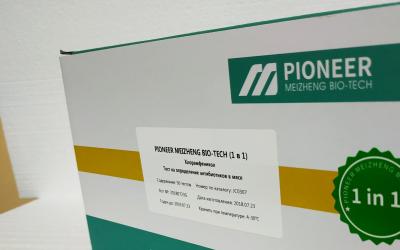 Rapid tests for determining the residual amount of chloramphenicol in meat
 PIONEER MEIZHENG BIO-TECH (5 in 1) JC0726 / Rapid tests for determining the residual amount of Bacitracin, ansamycins, clindamycin, spiramycin, florfenicol in milk, whey
 Express tests for determining the residual amount of β-lactams and tetracyclines in milk, whey
 PIONEER MEIZHENG BIO-TECH (5 in1) JC1165 / Rapid tests for the determination of the residual amount of halofuginone, flavomycin, novobiocin, flunixin, dexamethasone / prednisolone in milk, whey
 Rapid tests PIONER 5 in 1 for the determination of sulfonamides, tylosin, tilmicosin, lincomycin, erythromycin, fluoroquinolones
 PIONEER MEIZHENG BIO-TECH (5 in1) JC0586 - Antibiotic tests 5 in 1 / Rapid tests for determining the residual amount of β-lactams, tetracyclines and cephalexin in milk, whey
- Express tests for determining the residual amount of β-lactams, tetracyclines, chloramphenicol, streptomycins in milk, whey
- Rapid tests for fluoroquinolone, erythromycin, lincomycin, tillosin and tilmycosin residues in milk, whey
- Rapid tests for determining the residual amount of tetracyclines in meat
- PIONEER MEIZHENG BIO-TECH (5 in1) JC0871/ Rapid tests for the determination of the residual amount of β-lactams, tetracyclines, chloramphenicol, streptomycins, ceftiofur in milk, whey.
Laboratory equipment
 Laboratory pH meter/ORP meter/thermometer HI 5221-01 (pH/ORP/T) (Hanna, Germany)
 Thermometer TS-7AMK for refrigerators and freezers (-35...+50 °C)
 PAL series digital pocket refractometers (Atago, Japan)
 HI 83141 Portable pH meter/millivolt meter/thermometer (pH/mV/T) (0...14.00 pH)
 Analytical scales OHAUS PR 224, (220g/0.0001g)
 Laboratory thermostat-reductor LTR
- MICROFAST® underlays
- Timer with winding for 20 hours electronic Aptaca
- Indicator strips "Protein", 100 pcs.
- Indicator strips "Peroxide-25 mg", "Peroxide - 1000 mg", 100 pcs.
- Isothermal containers for 10, 17 and 26 liters
- Drying oven Chizhovoy CHS-200 (Tagler, Russia)
- VISCO Viscometer
- Bürkle IceSampler
- Hourglass
Packing
 Salad dressings
 Cover
Cover KH PACK® Straight Packing Paper
 Grease and barrier paper KH PACK®
 Korreks for desserts
 The paper packing fastened anticorrosive UNIK 14-70 THAT 5453-003-05773103-2005
- Paper for micro-ribbed
- Cartons for milk and dairy products
- Ice cream chopsticks
- Carton
- Parchment
- Laminating paper KH PACK®
- Backed Foil
- Paper sacks
- KH PACK® bag making paper
Additional Products
 Ice cream sticks (round)
 Petri dish 90 mm
 Wafer cup and cone
 Ice cream sticks (with logo)
 Ice cream sticks Standard 114
 Pepsin whey pork
- J-Bottom technology
- Auxiliaries for sugar products
- General purpose environment of SPC "Biocompass-S" (Uglich)
- Ice cream sticks Magnum (curly)
- Ice cream sticks Standard 93
Consumables
 Apron and armlets
 Reusable plastic syringe
 Milk filters - primary cleaning
 Acid detergent (20l / 24kg)
 Knife Hoofed
 Udder cleaner after milking (20 l)
- Antibryk
- Alkaline detergent (20l / 24kg)
- Foaming cup for udder treatment
- Self-adhesive hoof bandage
- Spare pacifier
- Electric Cattle Driver
- Rubber rings for castration
- Stainless steel obstetric aid
- Mug for milking the first streams of milk.
Microbiology
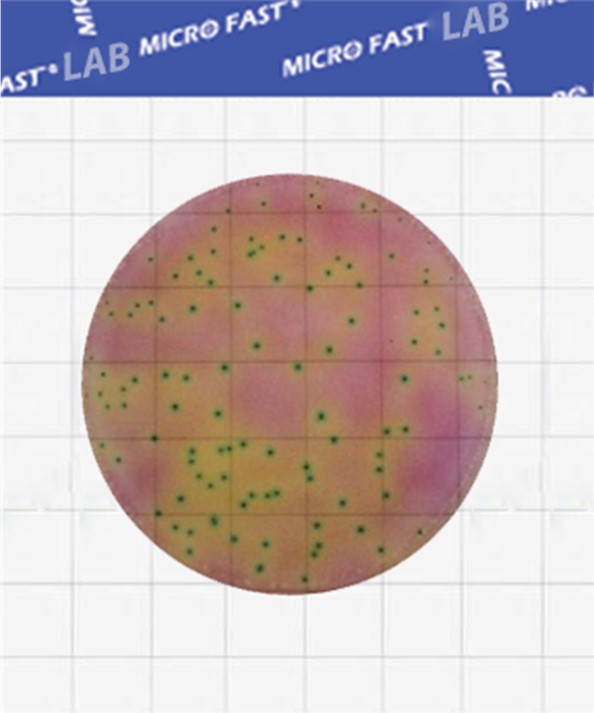 MicroFast® Lactic Acid Bacteria Count Plate (Part Number LR1312)
 MicroFast® Bacillus cereus Count Plate (catalog number LR1010)
 MicroFast® Environmental Listeria Count Plate
 Substrate for accelerated determination of QMAFAnM, (catalog number LR1321)
 MicroFast® Coliform & E.coli Count Plate
 MicroFast® Microbiological Substrates
- Substrate for determining QMAFAnM (catalog number LR1001)
- Yeast & Mold Count Plate (cat. no. LR1003) MicroFast® Yeast & Mold Count Plate
- Coliform Count Plate (catalog number LR1002) MicroFast® Coliform Count Plate
- Substrate for determining the number of staphylococci (Catalog number LR1005) MicroFast® Staphyloccocus aureus Count Plate
- MicroFast® Salmonella Count Plate (SAL), for the determination of Salmonella in food and environmental samples (Catalog #LR1006)
- MicroFast® Staphyloccocus aureus Confirmation Plate Staph.aureus Confirmation Plate (cat. no. LR1005Q)
- MicroFast® Enterobacteriaceae Count Plate (cat. no. LR1011)
Our News
 From Tractor Driver to Businessman: The Story of a Belarusian Who Built a Farm from Scratch and a Church in a Village 30.01.2026
 A warehouse in the Minsk region improperly stored powdered milk: a court ordered compensation of Br2 million.30.01.2026
 Increased processing volumes, new jobs: production capacity is being expanded in the Shklov district.30.01.2026
- История белоруса, построившего с нуля крепкое фермерское хозяйство и возродившего родную деревню29.01.2026
- Белорусские производители планируют выйти на катарский рынок мясной продукции29.01.2026
- Беларусь заинтересована в расширении поставок молочной продукции в Индонезию28.01.2026
- Рекорд по свекле, прирост по молоку: в Гродненской области подвели итоги работы АПК 28.01.2026
- Как идет зимовка на МТФ в Гродненской области и как переносят мороз озимые, рассказал специалист 28.01.2026
- Original products and two exhibition pavilions: Belarus's exhibit conquers the Gulfood exhibition in the UAE.27.01.2026
- Exchange trading on the BUCE: geography, sales leaders 27.01.2026
- Belarus intends to expand the range of goods in exchange trade with Azerbaijan.27.01.2026
- "The work of a scientist is at the heart of everything." Why BSUT focuses on science 25.01.2026
- Industrial development and new jobs: what projects are planned for the Klimovichsky District 24.01.2026
- A growth point and key development area: Krutoy on livestock farming in the Klimovichi district24.01.2026
- The first company from Yemen is accredited at BUCE22.01.2026
- "Happy to work and earn." How African boys toil on a farm in the Lida region. 22.01.2026
Articles
 В Магаданском порту проведён контроль за 195 тоннами животноводческой продукции30.01.2026
 Цены на говядину в России выросли на 1% за неделю, свинина подешевела на 0,4%30.01.2026
 Карантин по лейкозу КРС в Прилузском районе Коми отменён30.01.2026
- На Ямале выявлены два заведения общепита, работающие без прослеживаемости мясной продукции30.01.2026
- Omsk Bacon increased production of semi-finished pork products by 17% in 2025.30.01.2026
- Птицефабрика «Агрокомплекс» увеличила производство товарного яйца на 9% в 2025 году30.01.2026
- Холдинг «Агросила» представляет новую линейку продуктов на ПРОДЭКСПО-202630.01.2026
- «Мираторг-Курск» получает экологическую сертификацию на весь 2026 год30.01.2026
- Уругвай: мясные отрубы, субпродукты, генетика и ирригация — в повестке дня миссии в Китае30.01.2026
- Argentina: Record foreign exchange earnings from exports in 202530.01.2026
- Компания, создавшая гамбургеры Paty, обанкротилась: долг в 23 миллиарда долларов и 1000 недействительных чеков30.01.2026
- Парагвай готовится конкурировать на рынке экспорта живого скота в Турцию30.01.2026
- Геномная селекция в животноводстве Ставрополья: поддержка и новые перспективы29.01.2026
- Новый этап в агропромышленном развитии Тверской области: соглашение с Ферма СК29.01.2026
- Свинокомплекс "Сибагро" занимает лидирующие позиции на рынке Монголии29.01.2026
- Бывший чиновник из Нижегородской области лишился имущества за незаконное привлечение мигрантов29.01.2026
Economics
 10 reasons to take a deposit04.05.2025
 The EU confirmed discussions on banning entry for participants in the military operation.31.01.2026
 Bloomberg has revealed a new possible EU sanctions plan against Russia.31.01.2026
- ЕС включил Россию в черный список по отмыванию денег30.01.2026
- The EU has imposed new sanctions on Iran in response to the suppression of protests.30.01.2026
- Евросоюз признал КСИР террористической организацией30.01.2026
- The US has eased sanctions and allowed oil companies to operate in Venezuela.30.01.2026
- Titov allowed for the return of foreign companies that "miss Moscow"30.01.2026
- Following the deal with Carlyle, LUKOIL continued negotiations with other companies.29.01.2026
- Макрон заявил о подготовке Францией новых санкций против России29.01.2026
- In Finland, Russian students were given suspended sentences for violating sanctions.28.01.2026
- Минэк сообщил о принудительном лицензировании технологий ушедших компаний28.01.2026
- Reuters reported on Airbus' letter to employees about damages and future crises.27.01.2026
- The EU Council approved fines for companies importing Russian gas.27.01.2026
- Лондон оштрафовал Банк Шотландии за нарушение санкций против России27.01.2026
- The Belgian Prime Minister stated that "Europe is not at war with Russia."22.01.2026
Antibiotics in Milk
 Antibiotics in milk: causes and methods of detection27.01.2026
 Pharmaceutical companies see a threat to EU security due to bacteria in Ukraine13.11.2025
 Прокуроры объявили предостережения более 5 тыс. компаний из-за роста цен09.09.2025
- Две молочные компании из Азербайджана не захотели работать с Россией09.07.2025
- Лукашенко рассказал, как Путин угостил его козьим молоком08.07.2025
- Lukashenko demanded that Belarus be cleared of littered logs by autumn.08.07.2025
- Лукашенко заявил, что Белоруссии выгодно не «одуревши воевать», а кормить17.06.2025
- В Британии предупредили о риске для миллионов из-за супербактерий06.01.2025
- Moscow court sides with Indian company in dispute with Health Ministry26.11.2024
- Scientists estimate increase in mortality due to drug-resistant bacteria29.10.2024
- Antibiotics for livestock and pesticides found in poisoned family's home29.10.2024
- Izvestia reported on the shortage of widely used antibiotics in Russia29.10.2024
- The Ministry of Health called data on the shortage of antibiotics unreliable29.10.2024
- Scientists warn of threat of return to pre-penicillin times29.10.2024
- The Ministry of Health explained how attitudes towards antibiotics changed during the pandemic07.05.2024
- WHO explains the risks of taking antibiotics "just in case"06.05.2024
Antibiotics in Meat
 Antibiotics in pollock25.02.2024
 Antibiotics in herring: myth or reality?12.02.2024
 Antibiotics in perch10.02.2024
- Antibiotics in sprat: facts and myths10.02.2024
- Antibiotics in tuna: an important health and environmental issue09.02.2024
- Antibiotics in meat30.01.2024
- Antibiotics in chebureks: myth or reality?29.01.2024
- Antibiotics in cutlets: problem or myth?18.01.2024
- Antibiotics in Chicken: Where Are the Highest Concentrations?17.01.2024
- Antibiotics in carp17.01.2024
- Where Are More Antibiotics in Chicken: Reality and Cautions16.01.2024
- Antibiotics in Salmon: Safety and Product Quality16.01.2024
- Antibiotics in Turkey15.01.2024
- Antibiotics in Sal: Reality and Safety Issues15.01.2024
- Antibiotics in Fried Dumplings: Facts, Risks and How to Stay Safe15.01.2024
- Antibiotics in sausages14.01.2024
10 Interesting Facts
 Antibiotics in Coffee: Myths and Reality03.05.2025
 Forged forks: 10 interesting facts16.05.2024
 Swimming pool and weight loss: 10 interesting facts10.03.2024
- Tests for antibiotics in milk - 10 interesting facts07.03.2024
- Cleaning the kettle from scale, 10 interesting facts...06.03.2024
- Antibiotics in beer: 10 interesting facts04.03.2024
- Wild boar, how to survive...01.03.2024
- Purulent mastitis, 10 interesting facts27.02.2024
- Lemon and alcohol: 10 interesting facts25.02.2024
- Mint - 10 interesting facts25.02.2024
- Wild boar, 10 interesting facts20.02.2024
- Wild boar and domestic pig: comparison and advantages20.02.2024
- Cottage cheese, 10 interesting facts20.02.2024
- 10 Interesting Facts About Milk19.02.2024
- How to Clean a Toilet - 10 Interesting Facts (Acid vs Alkaline)18.02.2024
- Goat's milk: 10 interesting facts16.02.2024
Diseases of cattle
 Dicroceliosis in cattle09.03.2024
 Demodicosis in cattle01.03.2024
 Purulent mastitis of cattle27.02.2024
- Hypodermatosis in cattle20.02.2024
- Hemonchoz in cattle11.02.2024
- Bursitis in cattle30.01.2024
- Brucellosis in cattle29.01.2024
- Bronchopneumonia in calves27.01.2024
- Bronchitis in cattle26.01.2024
- Mortellaro disease in cattle24.01.2024
- White muscle disease in cattle23.01.2024
- Babesiosis in cattle22.01.2024
- Cattle acidosis20.01.2024
- Arthritis in cattle20.01.2024
- Anaplasmosis in cattle18.01.2024
Misc
- Antibiotics for coughs: when they are needed and when they are not11.02.2024
 The State Traffic Inspectorate reminded drivers of road safety rules during severe frosts.31.01.2026
- Более 2 промилле алкоголя. В Минске задержана нетрезвая женщина за рулем30.01.2026
- Наведение порядка в АПК, пожарная безопасность. Какие задачи поставлены перед прокурорами Витебской области 30.01.2026
- В Минске на пр.Независимости легковушка влетела в дерево, пострадали два человека30.01.2026
- Топ экспортируемых товаров назвали в "Белгоспищепроме"29.01.2026
- Житель Кировского района жестоко убил свою собаку, возбуждено уголовное дело29.01.2026
- Двух нетрезвых водителей с детьми в салоне остановили сотрудники ГАИ в Витебской области28.01.2026
- В Лидском районе задержали пьяного угонщика авто, который въехал в сугроб28.01.2026
- "Видеть болевые точки на местах и реагировать". На что нацелил витебскую милицию глава МВД28.01.2026
- Борьба с коррупцией, профилактика пожарной безопасности. Генеральный прокурор поставил задачи на коллегии в Гомеле 28.01.2026
- В Витебской области более 300 пешеходов за выходные привлекли к ответственности за нарушения ПДД27.01.2026
- Более 40 бесправников остановили на дорогах Гомельской области за три дня 27.01.2026
- A drunk driver without a license was stopped at gunpoint in the Minsk region.27.01.2026
- "Увидела противоположную сторону жизни". Женщина-участковый о самом сложном в работе24.01.2026
- In the Smorgon district, a teenager was driving a group of drunks and was involved in an accident. How was his father punished?24.01.2026
Cloud of Tags
В китаеCOVID-19Пензенской областиТАССНефтьЯпонияВеликобританииДмитрий песковКоронавирусИталияАнтибиотиковВладимир ПутинЛекарстваПроизводство мясаДеньгиTelegramЕСИсследованияМужчиныReutersЗеленскийУкраинеКрупного рогатого скотаКрупный рогатый скотКитайКарантинВакцинацияПроизводство молокаAppleПрокуратураИнфляцияУборкаДолларКанадаЛечениеУкраинаКофеМясо птицыВостокЕврокомиссияВакцинацииМЧСРоссиянеПоддержкаФранцияFacebookБеларусьУзбекистанТребованияПитаниеАвстралияСШАПольшаПесковПраздникГовядинуМясокомбинатГазпромРосстатТурцияГерманияМясоАЧСВыручкаКазахстанРоспотребнадзорСубсидииЦентробанкКолбасыАлкогольного опьяненияЭкспортВьетнамДетиВирусСырыНовостиМинфинМаслоКартофельЕгипетКРСРубльПродукты питанияЗдоровьеРоссельхознадзорДиректорЗапретТатарстанминистр сельского хозяйстваСельское хозяйствоЖивотное2024НедвижимостьBloombergДжо БайденЭкономикаЯйцаБройлерБразилияКризисЦеныВластиМинсельхозRussiaОнлайнИнвестицииЗаконопроектУченыеЗависимостьПродукцияРаботаПродовольствиеПравительствоЗаконСмертьФермерАлександр ЛукашенкоСотрудники ГАИGoogleАлкогольГовядинаПтицефабрикаРодителиМинскКлиматБизнесМоскваМинздравОбщепитСвининаДоходыИмпортОрганизмИммунитетСанкцииДональд ТрампАзербайджанФруктыВеликобританияОтпускКредитЕАЭССанкт-ПетербургУрожаяПодмосковьеМолокоБолезньСпутник vРоссияСуд