Lack of personnel is increasingly hampering business development in the agro-industrial complex

Photo is illustrative in nature. From open sources.


31% of INFOLine survey participants noted the urgency of increasing logistics costs and increasing the share of private label sales in retail chains. 28% of respondents said that the development of their business is hampered by insufficient demand from consumers, 27% complained about the monopolization of the retail market by retail chains. 15% of market participants surveyed spoke about the problem of gray schemes among competitors, 5% each spoke about the factor of importing competing products and legal restrictions.
“The lack of qualified personnel has become a top business problem for many reasons, including the migration of the middle class, which formed a qualified layer of personnel,” comments INFOLine CEO Ivan Fedyakov. “Many foreign companies that left the country took with them not only brands, but also especially valuable employees.”
The shortage of personnel is not a new problem for the agricultural sector along the entire chain “from field to counter”, but recently its relevance has increased significantly, including against the backdrop of last year’s partial mobilization. At the same time, the industry’s insufficient popularity, especially among young people, is also reflected. As a study showed (Agroinvestor has its results) from the personnel company UTEAM and the Grodan company (part of the Rockwool group of companies), only 38% of participants in their survey believe that the agricultural sector is attractive for employment, and 20% are confident that the industry is completely unattractive to young people. 42% of respondents think that young people can be attracted to the agricultural sector under certain conditions.
Among them, study participants named high salaries (20%), the availability of vacancies involving mental work (16%), and an expanded social package (13%). 12% of respondents admit that young people will be attracted to the agricultural sector if they hire employees without work experience, 11% believe that positive changes are possible with the availability of modern technologies and equipment. At the same time, 32% of respondents think that most agricultural companies use outdated equipment, 36% think that nothing has changed there for years and there are no innovations.
Among the disadvantages of working in the agricultural sector, participants in the Grodan and UTEAM study named the lack of career growth (35%), 21% of respondents consider the need to work in rural areas where infrastructure is not developed as a disadvantage. 18% of respondents believe that wages in the industry are low, 17% noted hard physical work. The least common disadvantages of working in the agricultural sector were disrespect for specialized professions (12%) and the same type of tasks (11%). Only 18% of respondents do not see any disadvantages.
In the Krasnodar Territory, in the agricultural sector there are an average of 2.7 resumes per vacancy, writes Kommersant with reference to the press service of the online recruiting platform HeadHunter. Experts say that this ratio of the number of resumes to the number of vacancies indicates a shortage of personnel in the industry. A similar situation is observed throughout Russia in the agricultural sector. In addition to agronomists, technologists, veterinarians and livestock specialists, companies in the agricultural industry need sales managers, drivers, accountants, and engineers. The demand for specialists in digital professions is growing: system administrators, developers, web analysts, data engineers, specialists in brand management, creativity and online advertising. The average proposed salary in the agricultural sector in Kuban is 53 thousand rubles. Salaries for managerial positions reach 200-250 thousand rubles. per month.
The lack of personnel is one of the biggest problems for the entire agro-industrial complex, Pavel Tsarev, general director of AgroGard, recently said in an interview. According to him, personnel shortages are observed not only among specialists with higher education - agronomists, livestock specialists, veterinarians, but also among blue-collar professions: there are not enough tractor drivers, mechanics, and drivers. “In addition, due to the development of digitalization, the introduction of precision farming and smart livestock technologies, specialists in the field of biotechnology, genetics and breeding are becoming in demand. The problem of the shortage of these personnel will become especially acute in the near future due to the changed conditions for the supply of seed and biological material,” he noted.
According to Tsarev, the outflow of personnel from rural areas is primarily due to insufficiently comfortable living conditions: a low level of development of housing and social infrastructure, an insufficiently wide range of cultural and leisure institutions, and consumer service enterprises. “We need to generally improve living conditions in rural areas so that they are attractive to young professionals,” the head of the agricultural holding is confident.
“We see an outflow of personnel from agriculture to construction and the defense industry, where the level of wages has recently increased significantly,” says UTEAM General Director Anna Krylova. — There is a separate situation with young people: in principle, there are not many of them in the labor market today <…>. To attract young specialists, agricultural enterprises are doing a lot of work to “immerse” schoolchildren in the field, proving and showing that agriculture is a developed high-tech sector.”
According to Krylova, now the agro-industrial complex is one of the most promising areas for employment. “Today, this sector is the main driver of the economy, and therefore agriculture requires many new employees, with a particularly acute shortage of skilled workers and engineers,” she emphasizes. “Against the backdrop of the events of the last year, the situation has become more complicated, since in food production many ingredients were imported only from Western countries, now they are not there, and such production facilities are being built in Russia, but the question of management and engineering personnel arises.”
Read together with it:
- Innovations in broiler feeding: savings and bird healthThe use of antibiotics in poultry farming remains a pressing issue. Long-term use of these drugs leads to the development of resistance in pathogenic bacteria and negatively impacts beneficial intestinal microflora, weakening the birds' immune system . Research shows that adding probiotics, zeolite, and inulin to broiler diets can effectively replace antibiotics . Probiotics restore normal intesti...
- Blaming cows was a mistake: meadows absorb more gases than cattle emit.Cows have become a symbol of controversy, as debates about their environmental impact, particularly regarding methane emissions, have generated headlines, political decisions, and criticism. But while many study the animals themselves, a group of researchers decided to examine the soil. At the University of Nebraska-Lincoln, a team of researchers led by Professor Galen Erickson conducted a study t...
- WHO: Almost 40% of cancer cases can be preventedPhoto: Reuters , February 4, Minsk . Nearly 40% of cancer cases worldwide are preventable, according to a new global analysis by the World Health Organization and the International Agency for Research on Cancer, published on World Cancer Day (February 4), as reported on the UN News Center website. The study's findings are based on data from 185 countries on 36 types of cancer. The impact of 3........
- Avian influenza in cattle in the NetherlandsHow it all began A cow screening on the farm was initiated after a cat living on the property was confirmed to be infected with the avian influenza virus . This raised concerns that the virus could have spread to other animals, including cows. The Dutch Food and Consumer Product Safety Authority (NVWA) decided to conduct testing, collecting milk samples from 2......
- Europe's first outbreak of bird flu among cows has sparked alarm in Galicia.Официальное подтверждение первого случая птичьего гриппа у крупного рогатого скота на территории Европы вызвало тревогу в системах здравоохранения и представляет собой особенно серьезную потенциальную опасность для Галисии, учитывая зависимость сельских районов страны от молочного сектора. Министерство сельского хозяйства Нидерландов сообщило об обнаружении антител к вирусу H5N1 у молочной коровы ...
- A cattle genotyping program is being implemented in the Yaroslavl region.In 2025 , molecular genetic testing of approximately 8,000 Yaroslavl and Holstein cattle was conducted as part of the program. "Such studies allow us to accurately confirm the animals' origins, identify genetic risks , and determine the breeding value of the herd. As a result, we are creating a more productive, disease-resistant herd, improving milk quality and the competitiveness of Yaroslavl liv...
- Pork was exported from the Pskov region to the Philippines for the first time.A Pskov meat-processing plant delivered 26.6 tons of frozen bone-in pork belly with skin. During the veterinary paperwork, inspectors verified that the product fully complied with the importing country's requirements. The batch underwent all necessary laboratory testing at the Northwestern branch of the All-Russian Research Institute of Animal Husbandry. This makes the Philippines the tenth countr...
- "The work of a scientist is at the heart of everything." Why BSUT focuses on scienceAlexander Akulich, Vice-Rector for Research at BSUT, Doctor of Engineering Sciences, Professor, and Honored Inventor of the Republic of Belarus. The Belarusian State University of Food and Chemical Technologies (BSUT) is a unique university in Belarus that not only trains highly qualified and sought-after specialists in the food and processing industry but also helps ensure Belarus's food security...
- Нарушения микробиологических стандартов выявлены в мясных полуфабрикатах Приморского производителяПроведенные 21 января текущего года исследования показали, что в пельменях и варениках с картофелем обнаружены бактерии группы кишечной палочки, а уровень бактериальной обсемененности превысил нормативные значения в 4-5 раз. Данные тесты стали частью производственно-лабораторного контроля. Результаты были занесены в автоматизированную систему «Веста» и доведены до сведения заказчика. Примечательно...
Test for Atnibiotics in Milk
 Express tests for determining the residual amount of β-lactams, tetracyclines, chloramphenicol, streptomycins in milk, whey
 ANTIBIOTICS / ELISA TESTS
 Rapid tests for determining the residual amount of tetracyclines in meat
 PIONEER MEIZHENG BIO-TECH (5 in 1) JC0726 / Rapid tests for determining the residual amount of Bacitracin, ansamycins, clindamycin, spiramycin, florfenicol in milk, whey
 TEST KIT for determination of inhibitory agents PIONEERPRODUKT® DASH-TEST, WC0040
 Rapid 4 in 1 tests for determining the residual amount of neomycin, kanamycin, gentamicin, spectinomycin in milk, whey
- Rapid tests for fluoroquinolone, erythromycin, lincomycin, tillosin and tilmycosin residues in milk, whey
- PIONEER MEIZHENG BIO-TECH (5 in1) JC1165 / Rapid tests for the determination of the residual amount of halofuginone, flavomycin, novobiocin, flunixin, dexamethasone / prednisolone in milk, whey
- PIONEER MEIZHENG BIO-TECH (5 in1) JC0871/ Rapid tests for the determination of the residual amount of β-lactams, tetracyclines, chloramphenicol, streptomycins, ceftiofur in milk, whey.
- Rapid tests PIONER 5 in 1 for the determination of sulfonamides, tylosin, tilmicosin, lincomycin, erythromycin, fluoroquinolones
Laboratory equipment
 Magnetic stirrer Tagler MM-135 (without heating)
 Indicator strips "NUC-100 mg", "NUC-1000 mg", "NUC-5000 mg", 100 pcs.
 Finger (pipettor) for pipettes
 Thermostats / incubators Memmert IN/IF series (Germany)
 Fume cupboard for muffle furnace BA-CL-X.XX MP
 Heating plate Tagler PN-4030SK
- Indicator strips "Milk acidity" (to determine the pH of milk and dairy products), 100 pcs.
- Milligram weights
- Navigator NV222 mastoprim weighing scale, (220 g, 0.01 g, external calibration)
- Staff table BA-CL- X.X SLP TR - a
- Indicator strips pH 5-9, 100 pcs.
- Filter element for OBM device with a diameter of 35mm (100pcs/pack)
- Thermometer TS-7AMK for refrigerators and freezers (-35...+50 °C)
- Milk quality analyzer "Laktan 1-4M" 500 isp. MINI
- Bostwick mechanical consistometer for semi-liquid foodstuffs
Packing
 Grease and barrier paper KH PACK®
 GableTop aseptic packaging
 Carton
 Laminating paper KH PACK®
 Korreks for confectionery
 Korreks for desserts
- Plastic packaging for cakes and pastries
- Cover
- Ice cream chopsticks
- Skiving and Hemming Technology
- Paper sacks
- Cartons for milk and dairy products
- KH PACK® bag making paper
- KH PACK® tartlet paper
- Paper for micro-ribbed
Additional Products
 Ice cream sticks Magnum (curly)
 Wafer cup and cone
 Ice cream sticks Standard 93
 Ice cream sticks (with logo)
 Pepsin whey pork
 General purpose environment of SPC "Biocompass-S" (Uglich)
- Ice cream sticks Standard 114
- Ice cream sticks (round)
- Auxiliaries for sugar products
- Petri dish 90 mm
- J-Bottom technology
Consumables
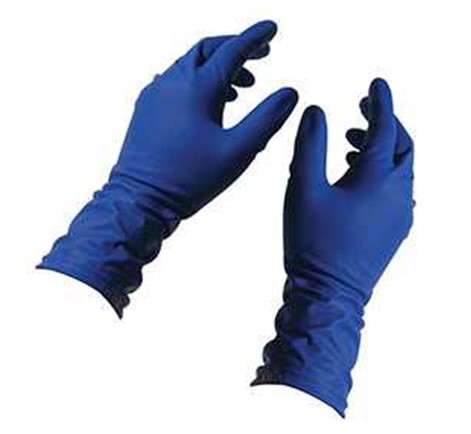 Latex gloves (long cuff with roller), (color blue, pack of 50 pieces)
 Hoof bath
 Bag filter 32
 Forged pitchforks
 Drencher for feeding calves with a rigid probe
 Gas tailing cutter
- Napkin reusable for wiping the udder
- Fall with a loop for cattle
- Plastic syringe 150ml
- Dosing syringe, hose attachment
- Udder cleaner after milking (20 l)
- Alkaline detergent (20l / 24kg)
- Stainless steel obstetric aid
- Veterinary Needles Reusable
- Electric Cattle Driver
Microbiology
 Substrate for accelerated determination of QMAFAnM, (catalog number LR1321)
 MicroFast® Environmental Listeria Count Plate
 MicroFast® Enterobacteriaceae Count Plate (cat. no. LR1011)
 Yeast & Mold Count Plate (cat. no. LR1003) MicroFast® Yeast & Mold Count Plate
 MicroFast® Microbiological Substrates
 MicroFast® Lactic Acid Bacteria Count Plate (Part Number LR1312)
- MicroFast® Coliform & E.coli Count Plate
- Substrate for determining the number of staphylococci (Catalog number LR1005) MicroFast® Staphyloccocus aureus Count Plate
- Coliform Count Plate (catalog number LR1002) MicroFast® Coliform Count Plate
- MicroFast® Salmonella Count Plate (SAL), for the determination of Salmonella in food and environmental samples (Catalog #LR1006)
- Substrate for determining QMAFAnM (catalog number LR1001)
- MicroFast® Bacillus cereus Count Plate (catalog number LR1010)
- MicroFast® Staphyloccocus aureus Confirmation Plate Staph.aureus Confirmation Plate (cat. no. LR1005Q)
Our News
 Lukashenko heard a report on the Mogilev region. The main topic was the situation in agriculture. 05.02.2026
 What major agricultural projects are being implemented in the Mogilev region?05.02.2026
 An expert identified possible areas of cooperation between Belarus and Southeast Asian countries.05.02.2026
- Surcharges on prices for agricultural products purchased from the population have been established in 2026.04.02.2026
- Lukashenko: We won't carry the Vitebsk region on our shoulders.04.02.2026
- Baby Zabava. The Grodno Zoo welcomed its first addition in 2026. 03.02.2026
- Lukashenko: We won't carry the Vitebsk region on our shoulders. 03.02.2026
- Lukashenko on the case: it is a moral monstrosity if we cannot protect our smaller brothers in this weather03.02.2026
- Grain cultivation and livestock farming. Bogdanov discussed prospects for cooperation in the agricultural sector between Belarus and Kazakhstan.01.02.2026
- Выпойка молоком 3-4 раза, больше теплой воды. Как в Брестской области наладили уход за телятами в морозы01.02.2026
- From Tractor Driver to Businessman: The Story of a Belarusian Who Built a Farm from Scratch and a Church in a Village 30.01.2026
- A warehouse in the Minsk region improperly stored powdered milk: a court ordered compensation of Br2 million.30.01.2026
- Increased processing volumes, new jobs: production capacity is being expanded in the Shklov district.30.01.2026
- The story of a Belarusian who built a sturdy farm from scratch and revived his native village.29.01.2026
- Белорусские производители планируют выйти на катарский рынок мясной продукции29.01.2026
- Belarus is interested in expanding dairy product supplies to Indonesia.28.01.2026
Articles
 The court refused to seize the property of agricultural enterprises with debts to the AIC fund.05.02.2026
 Demand for semi-finished products will decline in 2025: dumpling sales will fall by 8%.05.02.2026
 Rosselkhoznadzor inspected more than 2,000 tons of livestock products shipped to Yakutia.05.02.2026
- Rosselkhoznadzor monitored the export of more than 57,000 tons of veterinary goods from St. Petersburg.05.02.2026
- К госветнадзору Бурятии поступило 860 тонн продукции при отправке в Монголию05.02.2026
- The inflation rate in Russia at the beginning of February 2026 reached 6.5%.05.02.2026
- Innovations in broiler feeding: savings and bird health05.02.2026
- New financial disputes between Aventa and Tokarevskaya Poultry Farm: a second lawsuit for 70 million rubles05.02.2026
- Mexican and Canadian beef is losing ground in the US market.05.02.2026
- Spain strengthens institutional coordination to improve animal welfare management05.02.2026
- Blaming cows was a mistake: meadows absorb more gases than cattle emit.05.02.2026
- EU and Mercosur: Experts warn of shortage of EU veterinarians to control imports and associated health risks05.02.2026
- Rosselkhoznadzor stopped the import of more than 50 kg of dangerous animal products at Ufa Airport.04.02.2026
- Специалисты Россельхознадзора выявили нарушения в качестве мясной продукции04.02.2026
- The first batch of canned meat from the Kurgan region was sent to Azerbaijan under the supervision of Rosselkhoznadzor.04.02.2026
- A poultry farm in Yugra was fined for violating veterinary regulations.04.02.2026
Economics
 10 reasons to take a deposit04.05.2025
 Lavrov and the Swiss Foreign Minister will discuss the "deep crisis" of the OSCE.05.02.2026
 Kirilenko spoke about the problems facing Russian teams after sanctions were lifted.05.02.2026
- Lavrov believes that US statements about cooperation are inconsistent with sanctions05.02.2026
- The Russian ambassador warned of a reaction to the Faroe Islands' change in stance on sanctions.05.02.2026
- Five suspects in supplying weapons to Russia's defense industry have been arrested in Germany.03.02.2026
- Bloomberg узнал о планах ЕС по санкциям против российских платины и меди03.02.2026
- The EU confirmed discussions on banning entry for participants in the military operation.31.01.2026
- Bloomberg has revealed a new possible EU sanctions plan against Russia.31.01.2026
- The EU has blacklisted Russia for money laundering.30.01.2026
- The EU has imposed new sanctions on Iran in response to the suppression of protests.30.01.2026
- The European Union has designated the IRGC a terrorist organization.30.01.2026
- The US has eased sanctions and allowed oil companies to operate in Venezuela.30.01.2026
- Titov allowed for the return of foreign companies that "miss Moscow"30.01.2026
- Following the deal with Carlyle, LUKOIL continued negotiations with other companies.29.01.2026
- Macron announced that France is preparing new sanctions against Russia.29.01.2026
Antibiotics in Milk
 Antibiotics in milk: causes and methods of detection27.01.2026
 Pharmaceutical companies see a threat to EU security due to bacteria in Ukraine13.11.2025
 Prosecutors have issued warnings to more than 5,000 companies due to rising prices.09.09.2025
- Two dairy companies from Azerbaijan refused to work with Russia.09.07.2025
- Lukashenko told how Putin treated him to goat's milk.08.07.2025
- Lukashenko demanded that Belarus be cleared of littered logs by autumn.08.07.2025
- Лукашенко заявил, что Белоруссии выгодно не «одуревши воевать», а кормить17.06.2025
- В Британии предупредили о риске для миллионов из-за супербактерий06.01.2025
- Moscow court sides with Indian company in dispute with Health Ministry26.11.2024
- Scientists estimate increase in mortality due to drug-resistant bacteria29.10.2024
- Antibiotics for livestock and pesticides found in poisoned family's home29.10.2024
- Izvestia reported on the shortage of widely used antibiotics in Russia29.10.2024
- The Ministry of Health called data on the shortage of antibiotics unreliable29.10.2024
- Scientists warn of threat of return to pre-penicillin times29.10.2024
- The Ministry of Health explained how attitudes towards antibiotics changed during the pandemic07.05.2024
- WHO explains the risks of taking antibiotics "just in case"06.05.2024
Antibiotics in Meat
 Antibiotics in pollock25.02.2024
 Antibiotics in herring: myth or reality?12.02.2024
 Antibiotics in perch10.02.2024
- Antibiotics in sprat: facts and myths10.02.2024
- Antibiotics in tuna: an important health and environmental issue09.02.2024
- Antibiotics in meat30.01.2024
- Antibiotics in chebureks: myth or reality?29.01.2024
- Antibiotics in cutlets: problem or myth?18.01.2024
- Antibiotics in Chicken: Where Are the Highest Concentrations?17.01.2024
- Antibiotics in carp17.01.2024
- Where Are More Antibiotics in Chicken: Reality and Cautions16.01.2024
- Antibiotics in Salmon: Safety and Product Quality16.01.2024
- Antibiotics in Turkey15.01.2024
- Antibiotics in Sal: Reality and Safety Issues15.01.2024
- Antibiotics in Fried Dumplings: Facts, Risks and How to Stay Safe15.01.2024
- Antibiotics in sausages14.01.2024
10 Interesting Facts
 Antibiotics in Coffee: Myths and Reality03.05.2025
 Forged forks: 10 interesting facts16.05.2024
 Swimming pool and weight loss: 10 interesting facts10.03.2024
- Tests for antibiotics in milk - 10 interesting facts07.03.2024
- Cleaning the kettle from scale, 10 interesting facts...06.03.2024
- Antibiotics in beer: 10 interesting facts04.03.2024
- Wild boar, how to survive...01.03.2024
- Purulent mastitis, 10 interesting facts27.02.2024
- Lemon and alcohol: 10 interesting facts25.02.2024
- Mint - 10 interesting facts25.02.2024
- Wild boar, 10 interesting facts20.02.2024
- Wild boar and domestic pig: comparison and advantages20.02.2024
- Cottage cheese, 10 interesting facts20.02.2024
- 10 Interesting Facts About Milk19.02.2024
- How to Clean a Toilet - 10 Interesting Facts (Acid vs Alkaline)18.02.2024
- Goat's milk: 10 interesting facts16.02.2024
Diseases of cattle
 Dicroceliosis in cattle09.03.2024
 Demodicosis in cattle01.03.2024
 Purulent mastitis of cattle27.02.2024
- Hypodermatosis in cattle20.02.2024
- Hemonchoz in cattle11.02.2024
- Bursitis in cattle30.01.2024
- Brucellosis in cattle29.01.2024
- Bronchopneumonia in calves27.01.2024
- Bronchitis in cattle26.01.2024
- Mortellaro disease in cattle24.01.2024
- White muscle disease in cattle23.01.2024
- Babesiosis in cattle22.01.2024
- Cattle acidosis20.01.2024
- Arthritis in cattle20.01.2024
- Anaplasmosis in cattle18.01.2024
Misc
- Antibiotics for coughs: when they are needed and when they are not11.02.2024
 "Слетают все маски человека!" // Банщик про техники парения, поющих мастерах и чудо-массажах05.02.2026
 The Master of Steam: The Story of a Businessman Who Left a Successful Printing Business to Become a Spa Master 05.02.2026
- Где в Брестской области чаще всего происходят ДТП, назвали следователи05.02.2026
- Ministry of Emergency Situations: 129 people have died in fires since the beginning of the year.04.02.2026
- WHO: Almost 40% of cancer cases can be prevented 04.02.2026
- The number of fires in Belarus has increased. Experts have explained the causes.04.02.2026
- "Neither tail nor scales." We went winter fishing and learned the intricacies of ice fishing.04.02.2026
- Беларусь продлила запрет на маркировку импортируемых алкогольных напитков на территории недружественных стран03.02.2026
- В Гомеле благодаря неравнодушным гражданам остановили нетрезвых таксиста и бесправника 03.02.2026
- From February 11, navigation seals will be used to track rail traffic in the EAEU.03.02.2026
- The State Traffic Inspectorate reminded drivers of road safety rules during severe frosts.31.01.2026
- A woman driving under the influence of alcohol with over 2 ppm was detained in Minsk.30.01.2026
- Наведение порядка в АПК, пожарная безопасность. Какие задачи поставлены перед прокурорами Витебской области 30.01.2026
- A car crashed into a tree on Independence Avenue in Minsk, injuring two people.30.01.2026
- Топ экспортируемых товаров назвали в "Белгоспищепроме"29.01.2026
Cloud of Tags
Дмитрий песковВладимир ПутинГовядинуИнфляцияВакцинацииFacebookКоронавирусБразилияКолбасыСанкцииАЧСГерманияИмпортФермерВьетнамПраздникМясоКредитТАССЕгипетЛечениеБеларусьКофеМясо птицыОтпускАлкогольного опьяненияБизнесСпутник vЕССубсидииТурцияЗависимостьВ китаеМаслоОрганизмПитаниеГазпромRussiaНефтьУченыеДолларОнлайнДжо БайденМинфинПодмосковьеАзербайджанРоссельхознадзорАвстралияДетиминистр сельского хозяйстваОбщепитБолезньКарантинРоспотребнадзорЗаконЦентробанкЛекарстваМЧСДоходыСудГовядинаСанкт-ПетербургКРСПольшаСШАУборкаУкраинаСвинина2024ИнвестицииКитайЕврокомиссияВеликобританииМолокоТатарстанИсследованияЗеленскийВостокМинскФранцияЯпонияСельское хозяйствоКризисЗапретТребованияВакцинацияРаботаИммунитетВирусReutersCOVID-19AppleЗаконопроектМужчиныРоссияДеньгиЭкономикаРоссиянеПтицефабрикаПродукты питанияВеликобританияРосстатСырыTelegramАлександр ЛукашенкоАлкогольПравительствоКазахстанПензенской областиЖивотноеФруктыРубльBloombergПродукцияЗдоровьеДональд ТрампПрокуратураПесковМясокомбинатПроизводство мясаРодителиСмертьЕАЭСДиректорЯйцаКлиматМинсельхозМоскваУрожаяПроизводство молокаGoogleПоддержкаУкраинеСотрудники ГАИБройлерНовостиЦеныКанадаКрупного рогатого скотаУзбекистанПродовольствиеКартофельЭкспортВыручкаАнтибиотиковИталияМинздравНедвижимостьВластиКрупный рогатый скот