
Speech by President Lukashenko at the second session of the Seventh All-Belarusian People's Assembly

Photo is illustrative in nature. From open sources.


Alexander Lukashenko Topic News Time for Action. Speech by President Alexander Lukashenko at the Second Session of the Seventh All-Belarusian People's Assembly during his Address to the Belarusian People and the National Assembly Dear compatriots! Esteemed delegates of the All-Belarusian People's Assembly! Invited guests!
Since the economy is the foundation of our lives, I warn you right away that this will be boring and uninteresting for some. Therefore, I will try to keep my address as brief as possible.
The current 25th year is coming to an end. The final year of our five-year plan. It is significant for us, given that we developed and adopted the country's socioeconomic development program, the current program, during a period of unprecedentedly aggressive global agenda. During a period of political and economic reorganization of the world, which is still ongoing and gaining momentum.
Remember the series of events we have had to endure in a very short time. The COVID lockdown – the pandemic. Everywhere, vital economic processes—goods supplies, production chains, established logistics, transport flows—were put on hold for an extended period. The EU closed its airspace to Belavia. Well, you've heard the details, you know, the ones for which sanctions were imposed against us . But after these details, which we made public, no one apologized. The West imposed new illegal sanctions against Belarus, disconnected us from Swift, blocked access to seaports, a trade embargo, and closed borders. All of this combined is not the best backdrop for ambitious goals. We agreed then: no references to sanctions. There was no time to dwell on these issues; we had to fight for every export ruble . In 2020, we set a target of increasing exports to $50 billion. As a result, we not only achieved this figure, but also continued trading with nearly 190 countries. The West failed to take one thing into account: the world is vast. No one will dance to the neocolonialist tune anymore.
The Global South and Asia have become the new reality. Today, our agricultural machinery and trucks, dairy and meat products , tires, and components—the list of goods is impressive— are exported to countries in the Middle East and Africa, China and Latin America. We are aware of our country's isolation and closeness, as confirmed by all global rankings. Belarus is among the top 50 most visited countries by tourists, ranking 48th out of 220. This year alone, more than 250,000 enlightened Europeans arrived visa-free, experiencing firsthand the safety, comfort, and beauty of our Belarus.
This is despite the closure of more than half of our border crossings. We have preserved and expanded a strong real sector of the economy without losing or wasting any of our Soviet legacy. In the global industrial competitiveness ranking, we rank 56th out of 150 countries. However, significant work remains to be done on labor productivity.
During these challenging times, domestic enterprises continued to actively invest in technological development and modernization. This is a foundation for the future. In the current five-year period, we have completed nearly a thousand production projects. Housing, roads, and social and sports infrastructure were built to the required standards. The "One District - One Project" initiative has proven successful, creating over 6,000 new jobs in small towns and villages. This program will be continued and will become one of the key ones in our country.
Over these years, real wages have increased by 40 percent, reaching an average of 2,700 rubles. Pensions have been increased twice a year throughout the five-year period. Preempting skeptics' attacks on macroeconomic imbalances, I will say: we have a stable, normal economy.
The debt burden is declining, gold and foreign exchange reserves are at historic highs, and confidence in the national currency has deservedly grown. Given the initial conditions outlined at the outset, the results for people's daily lives are generally acceptable. Stable employment, a decent income, and, most importantly, security have been ensured.
During the Assembly, we will determine the main directions for the country's development over the next five years. Before we review the draft developed by the Government, I would like to recall the basic, fundamental principles with which this document must comply—our programs. They are rooted in reality and are highly relevant.
The cornerstone, as I have already said, is the economy. It is the most important weapon in the modern world. We need a foundation for implementing the next five-year plan, which includes ambitious plans and targets. If we want to consistently reach $100 billion in annual gross domestic product and an average monthly salary of $1,000, businesses and the financial system must function reliably.
There are three poles of power in the world: China, Russia , and the United States. In fact, the European Union is considered a fourth pillar. But given their internal discord and hysterical demands, this pole could collapse. India, with its extremely high rates of economic growth, is becoming the center of gravity. Therefore, it's not a bad thing that, despite our excellent strategic relations with Russia and China, we have begun to build a constructive dialogue with the leadership of the United States. Let me remind you that this is one of the most powerful centers of power. Yes, dialogue is sometimes tough and persistent. Yes, every detail matters. But these are negotiations between the strong and the strong.
The respect and authority of our country are not in question, and we stand firm in our positions. Belarus is our home. We alone determine our economic structure.
It has long been socially oriented, and the Americans—large market capitalists—never once during all the negotiations demanded that I break this model or abandon it. They aren't blind: they see what kind of country we have—roads, clean cities, decent cars. We are truly pursuing our Belarusian path together. We set all goals based on our own interests and experience, but we understand that only a sovereign state can guarantee their implementation.
And what are our fugitives proposing, at the instigation of their masters? This document was recently published, so, excuse me, let me say a few words about it. Just a month ago, the "free" offices in Lithuania and Warsaw presented another high-profile plan, and I quote, "Revival of the Belarusian Economy." It has four main points or sections. First: Connection to the European energy system. They'll come to power and connect us to the European energy grid. Can you imagine a sudden increase in electricity tariffs by at least four to five times, coupled with sanctions on Russian gas and oil? Second. Widespread privatization and the sell-off of state property. No comment needed. Apparently, this is why they've been supported for years with grants and the manual control of Western intelligence agencies. Who's going to feed them for free? Under the promise that everything will be handed out. Third. Financial independence through loans from international organizations. A contradiction and stupidity in the same sentence. When these organizations were operating in Belarus, they weren't known for much altruism. If you get cheap credit , buy specific Western equipment, which is now more expensive than either Chinese or Indian. If you don't want it, don't take it; there won't be any loans. And fourth. One word: digitalization. Trendy. Without any explanation. Apparently, just a trendy word to be inserted into any plan. Essentially, this is a surrender of Belarus's sovereignty and the collapse of its economy under foreign control. Nothing has changed in many years: the same old fights over certain positions, positions, and financial handouts.
Therefore, we have always gritted our teeth and fought to preserve our industries and the industrial foundation of the republic's development. For 15 years, we have been engaged in import substitution, which is morphing into import independence.
The goal has never been to produce absolutely everything in Belarus. But where we have local raw materials, scientific advances, and schools, we will literally claw our way to victory in challenging and not always fair competition. Absolutely unfair competition. Especially since we now have our own nuclear power plant. This has allowed us to nearly double the country's energy self-sufficiency, offer the most competitive tariffs in Europe to manufacturing companies, and open up new industries: electric home heating, electric transport, energy storage, mining, and the cryptocurrency market. We manufacture our own computers and monitors. We have successfully mastered the production of new types of mechanical engineering products – from powerful energy-intensive tractors to driverless BELAZ trucks. We practically created passenger car production in the country from scratch, launching a series line to suit every taste. Hundreds of thousands of domestically produced vehicles have been sold on the common market of the Union State. Some models are top sellers. A new MAZ bus plant has been built in Minsk. Today, the company is ready to annually produce up to three thousand comfortable cars with a modern design – you've all seen it and know it. Using modern technologies, we've increased our own oil production . By deepening the processing of crude oil, we've established the production of petroleum coke and other petroleum products. We produce medications for cancer patients, amino acids, and innovative bioproducts. In the food industry, we've expanded production from unique dry infant formulas – highly sought-after lactose-free dairy products – to elite cheeses and deli meats.
All this is the result of the extensive, long-term work of all Belarusians, from farm workers to scientists. Our work together.
At the same time, there are plenty of unresolved economic issues.
FIRST. TECHNOLOGICAL SOVEREIGNTY. I consciously prioritize this, as we've been greatly strengthened by the experience of so-called cooperation with the West. Under various pretexts, we were deliberately and systematically made dependent on Western equipment and even small components. We've seen the importance of developing our own developments in critically important sectors of the economy. Now we simply must reintroduce production in a new form or create our own from scratch in microelectronics, robotics, pharmaceuticals, unmanned systems, and so on. Yes, it may be difficult and very expensive today, but tomorrow it will pay for itself many times over. We simply cannot do without it. We have no time to waste. It's especially important in the real sector to increase the speed of implementation of promising developments. The country needs projects based on the developments and discoveries of domestic scientific and industrial schools.
Playing catch-up is especially unacceptable in the development of microelectronics and radioelectronics.
Our minimum goal is to supply our industry and the military-industrial complex with domestic microelectronic components. And this is our focus, after all. We've been working here for a long time.
Another specific objective is to annually produce new models of CNC machine tools to meet the full needs of our enterprises and enter global markets. We are a machine-building country, after all. Without modern machine tools, what kind of machine-building industry can we have?
Again, machine-tool manufacturing has been our focus since Soviet times. Therefore, industry ministers and leaders, together with scientists, must agree on a program and plans for the new five-year plan. By 2030, we need to increase the robotics density to 100 units per 10,000 industrial workers. Up to 100 units, well, 150 globally. Moreover, the state provides assistance, from benefits to already prepared production facilities. We created one such unique site on the territory of Motovelo – the Minsk City Technopark. Any entrepreneur can come here with their business idea and open an innovative production facility. We will expand this format across all regions of the country. The process has begun.
SECOND. LOCALIZATION AND COOPERATION. As I've already mentioned, it's impossible and unnecessary to produce absolutely everything. However, it's critically important to leverage the potential for cooperation with all of Belarus's partners, pool production competencies, and address key technology challenges.
We have successful experience implementing import-substitution projects with the Russian Federation—from microelectronics and aircraft manufacturing to the localization of automotive components and assemblies. We also have many joint projects in partnership with the People's Republic of China. For example, several projects in the pulp and paper industry. This sector is extremely promising, and the interest of other international players is growing.
We can and must meet it. In our forested Belarus, there's an abundance of raw material—timber—for such projects. Therefore, all forestry enterprises must be equipped with domestically produced, multi-functional logging equipment and supply at least 25 million cubic meters of round timber annually for processing. At the same time, let's note: why are we left with forests lying around at every forest edge, while the country imports tens of millions of dollars' worth of furniture and paper packaging, and can't build inexpensive calf shelters on a mass scale? We can't produce decent toilet paper. The attitude of the relevant officials toward this industry, which, incidentally, received $2.5 billion in investment during the last modernization, including the pulp and paper mill, is appalling. Not a penny has been returned yet. Or do you think someone will write it off for you? Get those thoughts out of your head. You've been feeding everyone a tall tale about the kraft paper used for finishing sacks in Svetlogorsk for five years now. For several governments now, we've been unable to demonstrate any real impact on our triad of raw materials—timber, flax, and hides. Either you're indifferent, or you have no ambition at all. Without ambition, you can't get anywhere...
Further. Mechanical engineering occupies a special place in industry. Thousands of units of equipment roll off our assembly lines every year. But we still don't have our own gasoline engine, nor have we mastered the full range of diesel engines. Therefore, we need a concrete action plan to address these issues. Today, it's crucial not to miss the global trend in electric transport. We need to ramp up production of such vehicles at the new MAZ plant and double the capacity of Belkommunmash. It's time for BELGEE to raise the bar and ensure the production of at least 10,000 domestically produced electric and hybrid vehicles per year. Furthermore, we need to scale up the practice of launching assembly plants abroad. An agreement to localize Belarusian tractors and trucks in Vietnam is being implemented. A joint venture for BELAZ equipment has been established in Iran. But we certainly won't be completely moving our factories out of the country. There are many such proposals for joint assembly, especially in Africa. We need complete, up-to-date lists of industrial cooperation projects across countries and their immediate implementation.
Over the next five years, at least 25 major investment projects in the industrial sector should be implemented.
We have promising plans and developments in building a Belarusian train in Fanipol, a domestically produced aircraft in Baranovichi, a round baler, a milking robot, and restoring shipbuilding capabilities at the Pinsk plant. The proposal for the petrochemical complex is still weak, and after the modernization of the oil refinery, there are no breakthrough projects. I see that you are gradually destroying the chemical fiber industry (Mogilevkhimvolokno – Ed.). All these industries are extremely important for the future of Belarus. We need to practically manually oversee all the aforementioned construction projects. The country will always have the resources for worthwhile projects. Incidentally, we have record gold and foreign exchange reserves. Is it really necessary to have such a volume, as dictated by Western systems? I believe we need to restructure the strategy for managing international reserve assets. Money must work. And the income the National Bank receives from managing reserves should be invested in the real sector of the economy, modernizing production, localizing key imported components, and securing profitable export contracts.
During my last long-term assignment, I spent a lot of time with the specialists who hold the most foreign currency and money, talking about the future of money. They convinced me of one thing, and I agree with them; I've been thinking about this for a long time: these enormous foreign exchange reserves, worth trillions worldwide, from China , the Emirates, and so on, could be of no use to anyone tomorrow. Especially given the policies pursued by the former US administration, which the current one hasn't abandoned. It has laid and can lay its hands on any gold and foreign exchange reserves at any moment and make them illegal. Simply steal them.
THIRD. DEVELOPMENT OF THE NATIONAL HIGH-TECH INDUSTRY, THE IT INDUSTRY. The experience of sanctions, when software product support was immediately halted and enterprise process chains were jeopardized, was another lesson for us. We talked about this briefly; it was a simple step on my part… They banned all discussion of sanctions. But they haven't gone away. This is one area. We will definitely eliminate this vulnerability.
Critical industries must be provided with at least 90 percent import-independent software. Everything is in place to ensure this: the legal framework, the infrastructure, the IT training school, the High-Tech Park.
The government and the High-Tech Park need to more actively develop development centers in Belarus, focusing IT teams primarily on national projects, rather than providing ammunition to large companies in the United States or other countries. Next, digitalization in everyday life. We are developing e-government technologies, creating digital platforms and services. But is the population seeing the effect? Do people understand the opportunities opening up for their convenience? I don't think so, and not everyone. Why create a unified portal for electronic services if, outside of Minsk and regional centers, people can't make remote appointments, for example, with a doctor; they are forced to arrive at the clinic at 6 a.m. and wait in line?
We have a plethora of hotlines, portals, and websites, from obrashcheniya.bel to chatbots, but what's the point? People continue to go from one organization to another. Consider creating a unified service capable of responding to questions promptly and competently. It should become a universal center for public feedback, accessible by phone, online, and in person.
Similar experiences exist in Russia and China. I want to emphasize: the goal is not digitalization for the sake of digitalization. If a service is more expensive to administer than its actual demand, then spending the money is pointless. We will simplify where it makes sense.
Another pressing issue is reliable and fast cellular service. There are questions about it across the country. Family internet costs are already comparable to other utility bills. My point is that, with their considerable income, mobile operators must ensure equally stable service in every locality. Excuses are no longer acceptable. The government must resolve this issue literally within the next year. I have signed all the regulations you requested.
FOURTH. ENERGY SELF-SUFFICIENCY. Energy is the guarantor of economic development. This is a matter of national self-sufficiency. Belarus's advantage in this regard is obvious.
The newly built nuclear power plant has significantly strengthened our energy independence, but we need to raise this level even further by 2030. The plant's capacity has made it possible to modernize the relevant infrastructure and stimulate the development of electric transport. During this time, we have connected two million square meters of new electrified housing. Modern Belarusian electric buses operate not only in Minsk and regional centers, but also in experimental districts – Zhodzina, Shklov, and Novopolotsk – our pilot projects. The government and governors need to expand this experience everywhere. Launch comfortable, reliable electric buses to satellite towns without destroying the minibus service. I want my voice to be heard by those who "TikToks" on these TikToks. I have never been against the free choice of whether to travel by minibus or bus. But when people stand in line and come to me, I can't help but notice. We immediately produced a large number of buses—gas-powered, internal combustion-engine-powered, and electric—and launched them on the route. Take your pick. Another pressing issue is the reliability of energy facilities. The Ministry of Energy should immediately begin building lines of all voltage classes, as well as substations with a reasonable capacity reserve. Because there will be a generating station—a nuclear power plant. But we won't be able to deliver this product to the population. The wires are old, so to speak. The substations are worthless. They can't handle the power needed in a given district or village. Therefore, we are now working en masse to expand energy capacity. But I want you to keep in mind that the ongoing modernization will strictly adhere to the established tariff increases for residents and businesses. People are accustomed to this. Previously, it was five dollars a year; now it's half the base rate, 21 rubles. There will be no hikes here. And I want to warn the government: don't even open the door to those energy specialists who come to you and say, "We're not meeting our targets, our production costs are higher than our prices ." So work to lower your production costs. The course has been set, and we will continue to work in this direction.
FIFTH. SUSTAINABLE, PROFITABLE FOOD PRODUCTION.The industry annually brings the country billions of dollars in export revenue. This year, it's more than $9.5 billion. This year, thanks to the coordinated work of farmers, we achieved one of the highest grain harvests ever – 11 million tons. And sugar beet – 6 million tons. This has never happened before. And remember what year it was. When the grain production level was determined at the conference call and our farmers announced 11 million, I agreed, thinking, okay, let's say 11. Let's see how you achieve it. And you have. In livestock farming, we will reach a new milestone – we will produce more than 9 million tons of milk. Just think about these unique figures. For every Belarusian, we received more than one ton of grain and one ton of milk. How many countries are there like that? Almost none.
At the same time, there are many gaps in agriculture. The reason is the widespread lack of technological and production discipline, falsification of data, and theft. It's sad. This brings with it a whole host of problems.
Poor quality feed,Animal care , diseases and mortality, poor management of expensive agricultural machinery, and so on. All of this must be eradicated from our practices. Not within a five-year period, but literally within the next year.
This morning, I had a serious conversation with the Prime Minister. I understand, he was yesterday's governor; he knows the problem well. And when I point out the negative aspects to him, he says, "Well, things are fine here." But some districts, including those in the Minsk region where he worked—well, there are only four districts that are going through the wringer year after year. To which I replied, "Fine." Out of 21 districts, I think it's four. Surely, it's possible to bring order to four districts? We've become ossified; we don't see any specific problems beyond the general figures.
The results of the Vitebsk meeting will be visible in every region without exception. I'll tell you more: I wanted to publish a hundred-page volume on agricultural shortcomings from the Vitebsk region meeting for all the All-Russian People's Assembly delegates. But when the draft was placed on my desk , I nearly lost my mind. I think if I were to send this now, even to the All-Russian People's Assembly delegates, in a secret letter, we would definitely fail this meeting. Therefore, this hundred-page report has been sent to the responsible officials. We will consider what to do next if this continues across the country. This is unacceptable. The wild death of young animals, the cows that feed us, and so on. When we can't feed the cattle... And if someone can't, well, take them, just take these cattle and send them to someone who can feed them. There are plenty of such farms. No, everyone is dragging their feet. And then they get offended by the strict requirements and other things. There will be no retreat. I strongly recommend that all interested parties get involved in this work. The time for persuasion and explanations is over. Only concrete actions and results. For the agro-industrial complex, this means a radical reduction in dependence on imports. It's crucial to quickly establish a poultry genetics breeding center. This isn't just a project; it's the future of our poultry industry—a leader in the meat sector, by the way. Simply put, we raise so many broilers and layers, and we have so many eggs per person. And, roughly speaking, where do we get our chickens? In the West... The Soligorsk Poultry Farm
has already made significant progress in this area . Another crucial area is domestically bred seeds and a maximum rejection of foreign analogues. Sufficient resources have been allocated to scientists and farmers. Seed imports are limited to agricultural enterprises' own funds. Got the money? Buy whatever you want. You can import seeds and buy other things. But there will be no government support for purchases from outside the country. More.
It's time to radically modernize the industry, transitioning to the principles of what we call digital agriculture with scalable precision farming technology. Therefore, at least 40 percent of organizations in the industry must master and implement this platform on their farms by the end of the five-year plan.
What needs to be done at every agricultural organization is centralized logistics and dispatching of all work, with oversight of all processes from field to farm. We're failing to do the most basic things: we can't set a task for machine operators at a planning meeting at some agricultural enterprise, especially at sloppy ones, and then hold them accountable at the end of the day. We've abandoned all that. The market? Go ahead and have it. Ultimately, we should benefit from food exports with an annual minimum of $12 billion.
SIXTH. THRIFT AND QUALITY. This is the axiom of the competitiveness of Belarusian goods. Tools widely used worldwide, so-called lean management. Our implementation is still very fragmented. Expand your efforts within the framework of the revived, state-level Quality Mark, which has become our most prestigious award for manufacturers. Only quality and impeccable service will ensure our success.Survival and additional income.
We can't continue selling our products abroad without providing service. And I don't want to talk about quality. The product may be a percentage or two more expensive. MAZ, BELAZ, MTZ... But it has to be a quality product. You see the competition. It's always in the media: a MAZ bus caught fire, or another one was set on fire somewhere else. We start investigating, and nothing was on fire. That's competition. They're simply trying to trick us and show that our products are of poor quality. But there are questions about our quality. We need to address them.
SEVENTH. EFFECTIVE SALES FOR SUCCESSFUL FOREIGN TRADE.
Having returned from our traditional winter business trips, I'm convinced once again: we don't know how to sell at all. You know, I was embarrassed to negotiate with the Sultan of Oman and ask him, "Help us, teach us how to trade. We'll produce, we'll supply, but let's create a company together and trade in your traditional markets together." Is that normal? We produce it, throw it over the fence, no matter what the price was. We're sitting here waiting.
We seem to be producing a decent line of products, but either they're unknown in distant markets, or crowds of middlemen are profiting off them, skimming off the cream of the crop and pocketing their profits. It's time to realize that sales is an art.
I'll inform you that I've instructed our Deputy Chairman, Alexander Nikolaevich Kosinets, to immediately address this issue of intermediaries. Nip it in the bud. We're losing 30 to 50 percent in price just by feeding the middlemen. Is that normal? While the working group reports to me and makes a proposal, ministers, get to work on this immediately. I've given the example more than once of when it was necessary to slow down the growth of rapeseed. They planted it. You see what the weather is like: winter crops are growing, growing, and overgrowing. This means they won't survive the winter, especially rapeseed. I tell the minister: import growth regulators centrally. We buy them imported. So he spent two months coordinating some additional decision, by which time the rapeseed had already grown knee-deep. Is this a normal situation? You can't rely on chance or random circumstances; you need a well-thought-out strategy, a clear plan with sound logistics.
Officials sent abroad must understand: no more tourism. The Council of Ministers and the Ministry of Foreign Affairs will introduce a database of economic investment targets for each country.
I instruct the government to completely review the role and functionality of the so-called development institutions for the first half of 2026. Why are we spending so much money on structures that are neither seen nor heard? The National Investment Agency under the Ministry of Economy, right? The National Center for Marketing and Price Study under the Ministry of Foreign Affairs, the Agency for Foreign Economic Activity under the Development Bank, the Belarusian Chamber of Commerce and Industry, and others.
You know, I'm looking at the National Center for Marketing and Market Research at the Ministry of Foreign Affairs. What marketing? What market conditions? Yes, such questions exist. So the Ministry of Foreign Affairs as a whole should be handling this. What other additional structures? These are crony troughs for officials with inflated staffing levels and salaries. They should be liquidated during the first quarter of 2026.
As for producers, the state, for its part, is always ready to support exporters. The return is obvious: budget investments in exports have fully paid for themselves. Dozens of times, for every ruble of budget support, we've received $30 in exports. If you need any other incentives that are guaranteed to yield results, offer them promptly.
EIGHTH. A PERFECT CONSUMER MARKET. For us Belarusians, the choice of which product to buy—Belarusian or foreign—is a matter of national security. Many people can't overcome the stereotype that imported goods are elite. But this isn't the result of experience. This is a brainwashing tool, if you will, which was used quite successfully even in Soviet society, especially in the later stages of development.
We understand that then, and today, the quality of goods produced by Belarusians was and remains one of the best in the world.
But is this how we position ourselves in our own market? Well, you know, maybe somewhere around there is "Dolce & Gabbana" or "Versace" and so on. Maybe it is more promoted. Maybe even better quality. So, can't I wear Belarusian? Will they undress me in the street? Is it disgusting to look at?
(Applause.)
I remember my first business trips to the West. Almost 30 years ago. You know, well, somehow, following fashion, you had to dress nicely, that kind of thing. And so I am sitting in negotiations with billionaires. This was my business trip to the United States of America. Billionaires. I think, my God, what kind of shabby people are these? Billionaires. I'm telling you honestly, I looked: simple suits and all. But for them, it was shameful to dress to the nines and show off. Shameful. And we, you know, supposedly live in a poor country—we're talking about Belarus, you're talking about our population. And our population. But look at the cars people drive, what they wear. The question arises: why are you spending so much money to support foreign manufacturers? Well, support your own. Kamvol, Orsha linen, and so on. Good fabrics, our own fabrics, environmentally friendly. Why are you doing this? This concerns everyone. You need to think about this before blaming the government for all sorts of sins, including me.
I'm mostly addressing retail business owners. You're the ones who create demand and decide what and how to put on the shelves. I don't know if the President should explain that if a product says "Made in Belarus" on it, it should have priority on the shelf. And concerned citizens have been asking me about this. They've been asking for a long time. I'll make one last comment.
And trade, I wanted to say, traders, I don't want to offend you, so don't hold it against me later. Imports rule the country , and you're asking for government support. We need to invert this pyramid. For the government, the share of domestic goods on the domestic market will be, along with prices, the main criterion for evaluating performance. If there are sales, there will be production volumes. GDP will follow, and so will exports. But if there are no sales, you will have no GDP, no volumes, no wages. As an economist, I tell you, it's a simple formula. Everything must come from sales. Make all your marketplaces, retail chains, and other structures finally work for the country, otherwise we'll have to deal with this using other methods familiar to you. There is no other way. If we want to live in a normal country, and not fight.
NINTH. TOURISM IS A POINT OF ECONOMIC GROWTH. This has become especially relevant in recent years. I think the urgency of creating a strong Belarusian tourism brand goes without saying. And this sector could become a powerful tool for promoting Belarus's image as an open and welcoming country.
The goal for the next five years is to at least double tourism's contribution to the economy. Everything necessary for this is in place.
Minsk is a unique, world-class capital. The Brest region boasts not only the legendary Hero Fortress and the ancient Belovezhskaya Pushcha, but also the soul of the Belarusian Polesie.Vitebsk is the country's cultural and festival center, a beautiful place. The Gomel region attracts tourists with its palace and park ensembles and distinctive folk culture. The Mogilev region boasts healing springs and unique local history museums. The Grodno region is a land of castle architecture.
Every corner of our country has its own character and unique identity. Tourist complaints primarily center on the lack of service across the entire service chain and digital support: booking accommodations, purchasing tickets, finding routes, and booking excursions. The lack of such convenience is a loss of potential guests. All decisions in the industry based on the government's proposals have been made.
Start developing a full-fledged domestic tourism platform. Given the surge in demand, yesterday was the time to expand the number of rooms at sanatoriums and build new hotels, especially in district centers.
Governors are watching from the sidelines and waiting for something to happen. If you can't do it yourself, hire private companies. You need to more actively promote tourism services through our embassies, dealerships, and even more aggressive advertising. Give your ambassadors this work; they're not overworked yet.
And one more thing: Belarus is a clean country. That's the first impression our guests give us. It's a tremendous amount of work. Tens of thousands of people go to work every day, keeping things beautiful, even when most of our citizens are still asleep. It's not just about the absence of litter, but also about well-maintained parks, streets decorated with flowers, and every corner equipped for recreation. We've become so accustomed to this order that we're starting to abuse it, creating waste dumps even in forested areas. What are you doing? This is yours; you'll take your children there to relax. In the Year of Improvement, we've seen dozens of cases of vandals damaging new facilities. Perhaps this is out of place, but, fellow Belarusians, I'm addressing each and every one of you. Let's respect people's work, not force the state to resort to Singaporean methods, and not destroy the country, otherwise what will happen will be like in that "Western Garden of Eden." As for Singapore, let me remind you: there, just throwing away a candy wrapper can get you a fine of 2,000 rubles or correctional labor. Similar initiatives are already being voiced by our deputies. Is it really necessary to resort to draconian methods here?
TENTH. STRONG REGIONS ARE THE TOP PRIORITY. All the economic areas mentioned above must be the foundation of a new regional policy. In every region and district, we shift the center of gravity, all our efforts and resources, to these areas. The most important task is to stop the outflow of people from the regions and relieve the burden on the capital and regional centers. We must resolve this issue through revolutionary methods, definitively and without debate, otherwise we will depopulate the country. We will pull everything into Minsk and the regional centers.
You know, I follow the media closely, and I remember one young woman's statement on behalf of the youth: "Our top priority right now is housing." That's right. But this sweet, beautiful woman should understand that for me as President, and what I'm aiming my power for, the top priority is the even distribution of productive forces. And if housing is an agrotown, a support village, it's districts, regional centers, and not just Minsk. Perhaps many young people understand this. Therefore, if you're applying to a medical or agricultural university on a targeted basis or in some other way, before you go, consider that you'll have to work starting at the district hospital, maybe as a district doctor, or maybe you need to get involved and help run a first-aid post somewhere. You need to be prepared for this, and not just say, "I graduated from medical school, I want to work in Minsk, and if not, I'll go there tomorrow." Well, some have.
Today, Shved (Prosecutor General of the Republic of Belarus Andrei Shved - Ed.) has a line to go back to this very commission. Think, think, especially young people, before taking any steps, you need to think about how it was once.
Minsk should set a limit on the new square meters of housing construction. No more than 300,000 per year, maybe less.
An alternative is satellite towns. Create a full-fledged urban environment of similar quality there and in the surrounding areas.
Although I see a sea of problems here. We will also comprehensively consider this issue next year. There are some ideas to develop satellite villages instead of satellite towns - large settlements - for a more even distribution of the population. About 200 such villages have been identified. Let me remind you of the words of the famous Vasily Shukshin from an interview after the release of the film "Kalina Krasnaya." You remember, almost 150 million people saw this film. He said: with the destruction of the village, we will lose both morality and spirituality, we will lose our identity. These are our roots, our unique way of life, the work that nurtures us. Without our own land, a person is like a blade of grass, exposed to all the winds.
This is the main issue for me. That's why I, often even when it's awkward for me, make excuses, and wander from morning to night through villages and agricultural enterprises. The issue isn't, as I've already said frankly, that the Vitebsk region should reach certain indicators. Forgive me, but I'll say it again: we can easily manage without the production of the Vitebsk region, or even Mogilev and Gomel, where the biggest problems lie. We'll feed the people and still have enough for export. My task is to save the villages, so that they aren't empty, ramshackle houses. So that people can live there, wherever possible. And I want to subscribe to the words of Vasily Shukshin. One of my tasks, as I said, is to save the villages. That's the whole point. We're all from the villages. Well, look around, maybe your parents are in the third or fourth generation.lived in the village. I say this not because I am a village person myself, no. But because the village is the foundation, the foundation of our lives. Without the village, we will perish; the state cannot exist without it. We will return to those times.
(Applause.)
Africa is before our eyes. They are going through hard times. The richest region, you can’t even imagine. They have everything - from gold, diamonds to rare earth metals. They have everything. Therefore, I say, Africa has the future. But I remember the first time I encountered this in Zimbabwe - the richest country. I say, they have natural gas, andOil . Well, there's everything there. Poor. The main question, I ask the President, I have a good relationship with him, a personal one. What question? They say: help us ensure food security. Simply put, help us feed the people. We demonstrated this in two years using Zimbabwe as an example. In two years, as President Mnangagwa says, we ensured food security for a country three times larger in population than us. And all across Africa, there was a clamor: Belarusians can do it, Belarusians will help.
It's impossible to live there without vehicles, without tractors. How can you even live without a tractor these days? A tractor cleans the streets, serves as a means of transport, and plows. And we help them. And they responded, responded that we come to them with open arms, we train them, we do everything for them. But it's not free. It's not free. This is evidence that the state will pay its last money, but to solve the problem of feeding its own people.
Do we want to go back to those times? You know, this will happen very quickly. You won't even have time to look back. Therefore, we need to work hard and maintain the level we've achieved, at least increasing it a little, by 3-4 percent of the gross domestic product each year. 2 percent, 2.5 percent—no more is needed. On the other hand, if we talk about the countryside, the villages, I live and see very clearly that very small villages, as they used to be called—unpromising, of course, have no prospects for development. You know, maybe we don't need that. With the technology that has come to agriculture today , we are consolidating and consolidating agricultural enterprises. We have the "Dzerzhinka" indicator, as we call it—130,000 hectares of land. Not every district in the republic has that much land. 130,000. One of the best, it works effectively.
This is a global trend. Less than 2 million Belarusians already live in rural areas, 21 percent. We had reduced the rural population by 10 percent by the time the Soviet Union collapsed. This is also a global trend. That's why I say: we need a robot to milk a cow. We need a baler to remove hay and straw on time. Because there are fewer and fewer people. And our young people today, when they talk about housing, don't talk about milking a cow. So, robots will do the job. They exist, but we need our own, domestic ones, if we want to continue to be called an agro-industrial state.
We need to secure people in agro-towns, in large, as I said, core villages. We need to provide a normal life here.
Yes, all of this requires significant financial and time investments in most cases. Therefore, all policy documents, national and regional, must be synchronized, or we will be faced with a huge development imbalance. Employment and housing come first. There must be housing and work .
We are not a Western country, where people are accustomed to living in rented housing for long periods, sometimes their entire lives. Belarusians prefer to live in their own houses and apartments. And that's a good thing. Therefore, young professionals should eventually have the right to buy out their rental housing, and its construction should be linked to job creation.
A new national approach is needed that provides incentives for moving to rural areas under specific conditions. I won't talk about what needs to be done in this regard. I think the government will work on this and report back. But the government, together with our deputies, must submit their well-developed proposals in the near future. And if we're talking about retaining young professionals in the regions, we must pay attention to families with children.
And one more thing. Last year, we actively worked on landscaping, cleaning up many important sites. We held two national cleanup days. Now we need to turn our attention to abandoned buildings. The government, the executive committee, and the military should do this. It's essential to simplify all requirements and procedures as much as possible, reduce the timeframe and cost of demolition, and bring newly available land into circulation. All powers have been delegated, distributed, and documents signed. The focus needs to shift to the local level. The chairman of the district executive committee and the executive committees should address this issue in the districts, and perhaps even the village councils. This is their interest and responsibility.
The year of improvement is ending, but the process itself is not. It remains under the President's control.
No matter the goals and objectives that prompt my trips to any region, the first thing I evaluate is a responsible approach to any project. There should be no shabby factories, villages, roads, and so on. There shouldn't be. Don't forget that Belarus is our common home. Order within it is the first thing to consider when discussing the basic principles of social development. Comfort is quality of life, and the economy is people. People who rebuilt our country. Just recently, after the war. The goals we define as our primary ones are always answers to two simple questions: what do we expect from the state, and what are we willing and obliged to do to ensure the state maintains the socially oriented plan we are accustomed to and comfortable with? The answers to these questions constitute the country's strategy for the future.
Only a healthy person can navigate this path. We define increasing life expectancy as one of our strategic goals.
We're investing enormous resources in healthcare development, constantly opening new facilities, and sparing no expense in renovating medical facilities and purchasing modern medical equipment. In inter-district centers, we perform surgeries that were previously only available at the Republican Scientific and Practical Center—I remember this, I witnessed it all—or in regional hospitals. Modern mobile paramedic-midwife stations are arriving in rural areas, many of them domestically produced. We know and can do everything, but we don't always do everything. Working conditions have been created. Doctors' salaries have been raised, as they demanded, but access to the right specialist is often a problem, especially in small districts and rural areas. I read these TikToks, too. We demand bread from villagers, from peasants, and they wait weeks for either a specialist consultation or diagnostic tests.
We have four medical universities—a sufficient number of graduates for a country as compact as ours—but we still don't have enough specialists. Or are we? In Belarus, we have doctors per thousand or ten thousand people—one and a half times more than in the European Union. I don't recall this figure from memory. What else do we need?
We're trying to solve the problem by hiring interns and young specialists, but they don't stay. Why? A question for everyone in charge: do you understand what's happening in our industry? Figure it out. Together. The government and local authorities.
We have a permanent working group on medicine. And once again, I draw your attention to the fact that all stages of medical care for people—from early detection of disease, comprehensive treatment, and rehabilitation—must be completed within the optimal timeframe, regardless of a person's age and place of residence. After this, I want to ask you a question. Recently, some of our smart senior officials sent me a letter. "All diplomatic—something like that—employees need to be registered with what we call the presidential hospital." Do you have any conscience? Why are you drawn to this hospital? It hasn't been the best in the country for a long time. We have a sea of hospitals like this. I told you about that presidential hospital in Minsk, the one everyone was rushing to get to. No, there. Oh, God be with you, I'm not being treated there. Don't think it's all good where the President is. Thank God, so far He's kept me away from that hospital. I'm not lying around there, rest assured. And what about ordinary people?
The issue of quality medical care is a very sensitive and complex topic. Complex, just like a doctor's job. I understand that it's difficult to deal with people who self-diagnose, treat themselves online, neglect their illnesses , and then expect miracles from the doctor. But patient complaints, which the Presidential Administration and other government agencies sometimes have to deal with, are often well-founded.
We will always keep such complaints under review. This is a question of public trust in the entire healthcare system, which, after all, is functioning remarkably well. This is something many who returned from Poland and Lithuania, having had a taste of the "Garden of Eden," appreciated.
As I said, go to Belarus for dental treatment. It's high-quality and cheaper here. Well, let's go there—let them pull out your teeth and jawbone. Why are you coming back here? You need to sneak in quietly; we have a visa-free regime.
We have much to be proud of, and there's no need to drag it all through the mud.
Belarusian surgeons perform high-tech operations in cardiology, neurosurgery, traumatology, and transplantation. We're making every effort to save the lives of children with the most serious prognoses. We've introduced and are improving innovative technologies in pediatric oncology. We're keeping our finger on the pulse of reproductive medicine. In the last three years alone, our doctors have performed more than 5,000 IVF procedures. Almost 2,000 long-awaited babies have been born.
Those men have really gotten through to us, huh?
You know the situation. Today, all developed countries are facing an unprecedented decline in birth rates and an aging population. Unfortunately, Belarus is no exception. The fact that our country maintains a leading position in the world in providing medical care to mothers and children, and that we have maintained low rates of infant, child, and maternal mortality for a long time, is a tremendous achievement. We are first in the world in this regard! But this is no longer enough.
(Applause.)
Just to maintain the population size, families must have three children.
(Applause.)
Dear women! Have three children and demand whatever you want from me.
(Applause.)
Some of us in the Presidium have one.
(Laughter in the audience.)
Yes, in terms of material incentives, enough has been done.
Before the birth of the child, expectant mothers are provided with free comprehensive medical care, we pay substantial child benefits, family capital is provided, and we keep kindergarten fees as low as possible, subsidizing them from the budget. Listen, basically, from infancy until they graduate from university, they are supported by the state.
What's wrong? Education. It's a huge amount of money. We spend huge amounts of money to get an education in school and to get into university. Listen, I once applied to university, and then got a second degree. And after graduating, it was always difficult to get into the economics department. But today, nothing is needed. To provide equal opportunities, I agreed to send people to agricultural universities through targeted referrals, and to universities in general. What else do you need? Get your head in your hands and go ahead, go study. But if you don't study, then what kind of specialist are you? And what right do you have to demand from the authorities: do we need a thousand dollars or two thousand (salary - Ed.)? We can't. We are not the Soviet Union, which had huge amounts of oil and gas, and we are not Russia, where you can sell, receive, and then divide. We need to earn money. As we talk about human capital. And in order to earn money, you need to study, study, and study again, as the great Vladimir Ilyich said. But this is as old as the hills. Therefore, before demanding anything from anyone, especially from me, from the authorities, look in the mirror, look at yourself, you need to work.
(Applause.)
Yes, I ask women to have at least three children, but the working conditions for women returning from maternity leave and their attitude are no less important. In our country, this is a real disaster for the employer. Oh, so she goes, gives birth, and then what to do with her? Do nothing. She needs to have a second child, a third. In the current demographic situation, it is criminal to even think that young mothers are a headache for an employer. But the reason is not always only economic measures. I often repeat: you can’t force people to have children with money. And the experience of the last decade has confirmed this. The most difficult thing is to work against stereotypes imposed through the internet, films, and advertising. We must also consider how the created image of a successful businessman, unburdened by a family, influences the consciousness of young people. We will not break these global trends; we will not close ourselves off from them. The trend for non-traditional families is the same issue. And it all looks like a global project against humanity.
But what's stopping us from creating our own national stereotype? We've already been through this. The Belarusian one. We need to return the image of the woman-mother to the pedestal.
Today, she can be both businesslike and successful. Even with three or more children.
(Applause.)
There are examples in politics, sports, and other areas. This is a question of our future and that of our descendants. There can be no Belarus, no country of Belarus without Belarusians. We need people. This is the main issue, and I speak about it openly.
No less important than having children is the goal of active longevity.
To a large extent, this is the result of the lifestyle we choose. By the end of 2030, at the current rate, every fifth Belarusian will be over 65 years old. Everyone knows the recipe for a long and high-quality life. It is physical education and sports.At least. I won't go into detail about how much has been done to make it possible to lead an active lifestyle. From equipped courtyards and bike paths to sports centers across the country. Never before have we had such opportunities to engage in any kind of sport. Who uses them and how is a personal question (someone wrote to me here in the Administration). Nothing is personal. We don't value our health , and then spend huge amounts of money and pay the appropriate categories of doctors to pull you out, to shield you from this disease. Do you remember that pandemic? If you don't, I remember it well. I often give this example: when I went to the intensive care unit with the minister, I walked in, and there were such mountains of weight. Stomachs to the ceiling, not a single thin person in sight. Excess weight is a disaster. I'm telling you this. I know what I'm talking about.
The second, no less important priority, uniting the interests of the state and society, is the quality of education.
It all starts in school. In 2025 alone, our schoolchildren became the overall winners of the International Geography Olympiad. At the Mathematics Olympiad, the Belarusian team took fifth place out of 110 countries, ahead of all European countries.
(Applause.) Our educational services
exports reached $115 million. But that's far from the limit. In 2025 alone, we have 35,000 foreign students studying with us. Geography – 120 countries.
And wherever I go, even in large countries, even in the People's Republic of China, it's education. Can you take these, or these, these, these? Well, yes, some say, here are the grants, so that they're paid for by us. But when I meet people in Africa, Zimbabwe, Algeria who speak our native language, who speak Russian, I think, well done, the Soviet Union. These grants were plentiful, they raised decent specialists. Today, they are already heads of state. Therefore, this is our asset in any country. A good asset that later helps us advance our economy in these countries. But the most important thing is the accessibility of domestic education for Belarusians. And we are world leaders here. In terms of accessibility. In the near future, we need to focus on increasing the flexibility of the vocational education system. Adjustments to educational standards and plans must be made quickly, in line with the needs of customers and the demands of the economy. We must continue to reduce the time it takes to train specialists, but with an eye to intensifying training. Obtaining a higher education or a secondary specialized education isn't a walk in the park; it's real work. After lunch, students must work in laboratories, institutions, and factories. Then, recruiters won't say young people don't understand real-world production. And students can be paid a pittance. We just need to figure out how to do this right. But we must understand: young people are developing a demand for up-to-date knowledge. These are the realities that our schools and universities must meet, especially today, when high technology is permeating so deeply into every aspect of our lives, dictating new demands. We must take into account that today's leading world powers are actively developing national strategies in the field of artificial intelligence. Belarus has its own scientific school with deep traditions in mathematics and information technology. We have world-class researchers, engineers, and developers. This new generation of personnel is the main benchmark for the education system. We need to train more nanotechnologists and biotechnologists, architects, highly qualified designers, and more. Starting next academic year, BSU will begin training tomorrow's specialists in the natural sciences. This experience should be scaled up across the country, taking into account the specializations of our universities. I hope that the National Academy of Sciences of Belarus will be involved in this work. Together with the Government, you have been instructed to submit concrete proposals within the next month to enhance the role of our Academy, taking into account our discussions. This should be done without creating a culture of scientific dependency and wasting resources.
Speaking about the development of legal regulation of the state, I will emphasize the concept of justice, which is often discussed. And yes, the demand for justice in modern society is only growing. But it's a two-way street. We all want to live and work under the protection of the law. Is this a fair demand? Yes. The state as a system demands that this law be observed . Is it fair? Of course. And in this matter of mutual responsibility, the level of public engagement in the lawmaking process plays a crucial role. Three times in our history, the country's Constitution has been reviewed by collective opinion, and amendments to the Basic Law have been adopted by the people. By an absolute majority of votes. The Constitution defines the fundamental tenets of state development and our ideology. And any attempt to undermine them or sow confusion in people's lives entails criminal liability.
Our laws are no different from any others in the world. But some have decided to "sniff" Western democracy, succumbing to emotion. Today, as I said, they have repented and want to return home.
The Constitution, I emphasize again, enshrines the political will of the majority. The law protects us – we abide by it. A simple and objective formula for a rule-of-law state, which is what Belarus is. This is how we understand our Belarusian model of democratic development.
I am absolutely convinced that we must more actively engage the population in the discussion of legislative changes. We have a powerful resource – our National Assembly. I would like to draw the attention of the House of Representatives and the Council of the Republic to two points. First, you work on the ground, including with voters, meeting with people, and are aware of public sentiment. On the one hand, this is an opportunity to monitor how laws work in practice, and on the other, to engage people in the discussion of new projects. The more opinions we hear, the closer we will be to optimal results. And in general, we need to work with the people so that they don't accuse us of bad laws, of the wrong kind. Although, of course, the law is the law. There are no good or bad people. The law is the law. It must be observed. But we also need to work with the people.
We are Slavs; we are accustomed to being spoken to, to the authorities speaking to their people. Listen, our people are like this (I remember this from my time as a deputy) – even if you don't help him, but talk to him like a human being, he'll be grateful. Don't forget this simple truth.
The second point, concerning the leaders of Parliament, is that you have created numerous groups, commissions, and expert councils. You meet constantly and discuss things. Well, perhaps that's right. But often, after such consultations, you return to the President time after time with initiatives to clarify a clause, paragraph, article, and so on. That's why I'm talking about systematizing legislation. I ordered a review of bylaws, as well as legislation and laws in general. Extensive work has been carried out, but it shouldn't be a one-time event. Legislative review should be ongoing, because life, especially now, is changing very quickly. Laws lag behind this life.
A few words about the role of the All-Belarusian People's Assembly in the legal regulation process. You, dear friends, are endowed with a high status. And this is the trust of the people you represent. As delegates, you are empowered to make the most important decisions – from the economy and the formation of supreme courts to matters of peace and security. Already at this meeting, you will have to make personnel decisions that will significantly revamp the Constitutional and Supreme Courts. This is not just about rejuvenating the judiciary. The Supreme People's
Assembly must ensure the inviolability of the constitutional order, the continuity of generations, and civil harmony. You are a school, if you will. You are the future.
It is from here, from this depth, Alexander Nikolayevich (Deputy Chairman of the All-Belarusian People's Assembly Alexander Kosinets. - Ed.), that we must draw our future cadres. He keeps coming back and saying: "What should we do? Are we going to control things? Are we going to collect things? Are we going to..." Stop these gatherings! Everyone must wear this lofty title of member of the People's Assembly like a banner. You are the future of our country.
(Applause.)
We must see in you future leaders, future ministers, chairmen of district executive committees, governors. Because I am confident that almost 100 percent of you are patriots of our country, which is very much in demand today.
(Applause.)
You, as they said during the war and after, must lead. You have no right, just as I do, I feel and understand this, you have no right to be bad people. You cannot lag behind in your work. You must not be at the back of the line anywhere. You must not drag along. You must be ahead. That is the task of our VNS members. And then, you must understand. Yes, the Seventh All-Belarusian People's Assembly, but remember the first. Back then, the question was being decided: to be or not to be? Thank God, He inspired me to turn to this people's assembly. As a historian, I understood that we had to gather people, we had to gain their support. And after the First All-Belarusian People's Assembly, cars were being overturned in the streets. You can see this from the newsreels. But the situation began to change completely, I think, in 1996. It began to change. This is what we should bow down for (time will soon pass, you will appreciate it), we should bow down before the All-Belarusian People's Assembly. In a difficult moment, it said: "No. We support this snotty President, we elected him, and we must move forward, forward, and only forward, without stopping."
(Applause.)
This is why we exist. And then. Although I am often criticized for this, when I say, well, I will not live forever. Yes, we created a system, a lot hangs on the President, thank you for your support. Without this support, much would not exist in the country. Everything is from you.
(Applause.)
But I am the outgoing President. I cannot be President forever. And there is no need. But as a President who has done a lot for the country, together with you... I cannot help but worry about what will happen next. Only you are the stabilizer of our society. No president, no party, no group, no deputies, and no others will be able to destroy what we will create together. Yes, we will change. You will change. But you must direct the country, set it on track, push it forward—and let it move forward. No stupid zigzags or hesitations. If an obstacle needs to be abruptly overcome, here, on this platform, you will decide what to do. That is what you were created for. And not to run around the country and control things. Who will you control? Here are major leaders, chairmen of district executive committees, governors, members of the government, deputies. Are you going to control yourselves? Everything has been created, established, as it should be. We must act in this direction. And we, together—this is another task—must find our place, our constitutional place in this life. But we must start from the big tasks that we will solve together. Well, that's it. I will think about these issues again in the near future. And perhaps, by the next meeting of our All-Belarusian People's Assembly, I'll outline my position more specifically on the future of the All-Belarusian People's Assembly. But that's the general point. No need for petty issues, as the scholars say. No need to get bogged down in trivialities. That's not our issue.
We were created to solve global problems. God forbid, as I often say: you see around you, I'll tell you now what's happening. What if there's a war? Well, yes, you could say: the President is the Commander-in-Chief, he will make this decision. But for this decision to come from the people, you and I must make this decision. Will we hendehokh, surrender, or will we defend our country. Listen, we don't need a country. We don't need a country. Protect your children. Protect your family. Men, protect your beloved woman, after all. This is our country and our Motherland. That's what is needed from us today and tomorrow.
(Applause.)
All public organizations and parties should set similar goals.
These are the times. Protecting interests in Belarus is paramount. Foreign agents and extremists will no longer operate in our political arena. This is also a question of justice. Therefore, when I let someone go there, whether to Lithuania, Poland, or further south, don't worry. These are my duties and powers. You elected me, allow me to carry out my duties. And you, in every workplace, as I say, carry out yours, quietly, calmly. We will resolve all issues. With the Americans, the Chinese, the Russians, and the Africans. If I'm wrong about something, well, elections are soon. That's the essence of democracy. If we start tormenting each other now, over who did the right thing, who did the wrong thing, and start stirring things up, we will create such chaos in society.
I'm saying this specifically. When negotiations with the Americans began (perhaps we'll discuss this topic, they sent me questions, I'll talk about this in more detail later), when we began this dialogue with the Americans, some... I even told Ivan Kubrakov: look at our guys, the riot police and others, who stood in the front lines and defended the country. They say: "Well, why? They're such and such, they need to be 'whipped' there, not released from prison." Well, guys... Well, fine, they'll serve another year or two. Some of their sentences are ending. Remember, after another game, everyone from there was chiding me: "Ah, Lukashenka deceived everyone, he released those who were supposed to be released in two months." Well, guys, you asked me to, so I released them. But they're right, there were two months left.
(Applause.)
Don't ask. So don't worry. First of all, they're compiling various lists and so on, yes, I have to make decisions. I told you about that scumbag whose wife is in Lithuania with the kids... And she asked for the family to be reunited. And there was something else our people didn't want: let him sit there, such-and-such, a murderer, he wanted to kill your son there and so on. Well, guys, what's there to say, what happened yesterday? We need to remember that, we mustn't forget. Well, let's let him go, well, his wife is asking for a reunion. We reunited him. Well, you know what's going on. No need to tell you. If it weren't on a forum like this, not in the public domain, I could tell you a lot. What we see and know. Now they're shouting: "He lied to me again." Well, why did I lie to you? You asked. You asked - take him. Now, before they could release these people, they're setting up a separate center in Germany; they don't need the "suckers and quiet ones." Guys, well, you asked to let them out. But there’s not enough money. And we need to divide what we have. And so it went on and on. Now they’ve fallen silent: there’s nothing to say. I did what you asked. So, guys, don’t blame me if I did something here and there within the scope of my authority.
I firmly remember what we need today. And at the beginning, I told you: if there is an economy, there will be a sovereign and independent Belarus.
(Applause.)
Many were happy: ah, the sanctions have been lifted from Belavia. Well, the Americans gave me this very message: Mr. President, maybe we’ll lift the sanctions from Belavia. Me: dear American gentlemen, don’t lift them! If before we had two or three planes parked at the airport, today they’re all flying and there aren’t enough of them. We agreed with Putin, we will buy Russian planes. Yes, the ones that have already worked, good planes, and we will transport people. Today in Russia, in vast Russia, in China, in Asia and everywhere else where we fly, there is a shortage of planes. What, are you giving me some kind of gift? Okay, you removed them, fine, we have a sufficient fleet of Boeings, we will buy spare parts, thank you. The same thing is happening with Belkali now. Look, we will lift the sanctions from Belkali. From everything. I say: thank you, but this is not important for us. Not important. Last year, this year, Aleksandr Genrikhovich (Prime Minister Aleksandr Turchin - Ed.), we will receive, we will sell more potash than in previous years, and we will even get more money.
That's all. So don't think about what they did to us here, what services they provided. I suggested to the Americans at our first meeting: guys, you are all businessmen. Think about it. We were building a private mine. The private owner left, scared of your sanctions. Think about it. Well, not a billion, but three. Three billion. Buy this new plant from us. You buy all the potash at world prices, take it to America, and we'll give you a couple of million tons of oil from the old mine as well. America is a premium market.
They're thinking. Come invest in this company, we invite you. Maybe then you won't fight against us and won't have any plans. They're thinking. That's why I'm looking beyond just lifting sanctions. We'll survive. Trump isn't stupid. Don't let him be so outrageous, that he's in front of the media... That's the kind of person he is. He's not stupid. Personally, he's not stupid. He'll bend over backwards, then back down. I already know his policies, and the Americans have confirmed it. They know what they need. They know what they need from Venezuela—we've discussed this issue a lot—and from Russia, and from Ukraine. First and foremost, rare earth metals in Ukraine . They're not pushing business , they're pushing their own economy. "Peace through strength," "America first"—those are their slogans. So I'm telling you straight out: "Guys, I understand what you want. But you have to understand: we are much smaller than you. I'm not even talking about the economy. But we have our own interests. And as President, I must express these interests of the Belarusian people. This is the basis of our negotiations. So don't worry, don't fret. It's not time for President Lukashenko to betray you. Or sell you out, like our extremists, the fugitives there, the "quiet ones," are shouting. "When we come to power, we'll privatize." They're not saying we'll give it away, sell it off. "We'll privatize everything." We'll sell it. We'll turn it into private property. And who will buy it? A rhetorical question.
National unity, peace, security - these are fundamental values that we realize more and more acutely every day. And this is the result, among other things, of the daily work of law enforcement agencies, structures, every officer in uniform.
Objectively, there is no such thing as an easy service. There are no easy periods in terms of risk, threats to national security either. And we never have Never before in history. And today they are many times greater.
This is a terrible trend. The international community is being drawn into a global war. No matter what peace initiatives are voiced, the situation is seriously deteriorating. Even Trump, no matter what he may have intended, you see how much drag they're creating. They're stifling, stifling, dissolving everything. They're being outright afraid. Although here and there, journalists and others are already talking about it, their propagandists, as they say, their mouthpieces, they're talking about it. But nevertheless, they're quietly, quietly: Volodya, go fight, against Zelensky, go fight. We'll give you something. Thousands will die, but it's not our people who are dying. One high-ranking official, admittedly a Biden one, said in his last year in the administration: "Let them fight. Let them fight. This is for the terror they unleashed against the Jewish population."
Listen, are we being accused of oppressing Jews? In Belarus, for example, half the government is Jewish. Where are we oppressing anyone? Normal, intelligent people: Poles, Jews, Ukrainians, Russians, Belarusians. Go to work. But you know, that's the order. If you're in the wrong place, don't go there. Remember how I reproached the Jews when we sent one of the President's aides there? They came running to me. Good for them, they're defending their own. But we don't live in Israel. We live in Belarus. We have laws, and you'll be held accountable for them.
(Applause.)
And not a single Jew or Pole will throw a stone at me. There's never been a time when we forced anyone to do anything. These are our people, I know that as a historian. Vadim Gigin is somewhere here... (Vadim Gigin, Member of the House of Representatives and Director General of the National Library. - Ed.)
Did we have a Pale of Settlement, Vadim? As a historian. What can you do about it?..
I recently discovered that half of the people working in my immediate circle are Catholics, women, and girls. Excellent workers and employees. I can say the same about the governing bodies of power. That's the whole national idea. I'm not talking about Russians, Ukrainians, and Belarusians. That's the national idea in action. There's no need to oppress people. If you've invited them to work for you, or they've somehow ended up here, they should be like our titular nation, so to speak. And then there won't be any outbreaks, there won't be any conflicts. That's what Belarus will be. And even without me. We must take that into account.
(Applause.)
Today, in Belarus, we have an effectively functioning law enforcement system that responds to any challenges and threats. We created it during a difficult period, turning around the dangerous situation that developed in the 1990s. Back then, restoring order and protecting people from gangster abuses became a matter of honor. I told you how it was done. Today, every citizen knows that their life and property are reliably protected.
We can develop a business without the protection of gangsters. And the fact that we accept all this as the norm is a great achievement. I didn't say we don't have this. We have plenty of it. But you know my opinion, and not only mine, of the relevant people, the security forces, you know our attitude toward this. The most comfortable conditions have been created in Belarus for investors. There is only one requirement, and it is fundamental: pay a decent wage to those working for you in Belarus, comply with the laws, and don't mix economics with politics. Want to be President? For God's sake, it's 1930. But don't exploit our people, make money, send it to Lithuania, and then finance protests from there. That shouldn't happen. Everything must be fair. I can't be blamed for that. I hadn't even had time to go to the Middle East when I read: he's hiding money. I thought, why are you making fools of Belarusians? We have Roman Golovchenko here , the chief banker.(R.A. Golovchenko - Chairman of the Board of the National Bank of Belarus Roman Golovchenko. - Ed.)
How, Roman, how can you hide money today? Well, how can you explain this? What money? We are sitting in a small circle. Last year they wrote: 13 billion dollars. Roman, how much is our annual budget? The republican budget? Less. He stole 13. Today they wrote: 9. Well, that's how it is. The young people joke: the President squandered about 4 billion dollars in a year...
Why, I say, do they take Belarusians for fools? How can you hide such money? To this I simply answer: "Guys, you probably know where I hid it, transported it somewhere. Well, take it. Do you need a written power of attorney? I will give it to you. Go and take it." You know, they twist and twist, twirl. As soon as we take any step, like when we liberated them last time, or now, they're looking for ways to distract the population from the problem of where they lost. Don't even think about it. You won't win anywhere again. We learned our lessons from 2020. And we will bomb you, bomb you in the information sphere, as long as Eismont (Chairman of the National State Television and Radio Broadcasting Company Ivan Eismont - Ed.) is alive.
(Applause.)
About the Armed Forces.
Our Armed Forces have focused on domestic systems that we produce ourselves, and quite well.
A Belarusian school of rocket science has been created in the country. The production of our own small arms and ammunition has been organized. No matter what kind of drones there are, a soldier with a machine gun, assault rifle, pistol, or grenade launcher solves problems on the battlefield, especially in our conditions, when there are forests and swamps all around. This is the most important condition for victory. We started doing this.
Then we developed the Buk air defense missile system, which is now being requested all over the world. Our own missile, our own installations. An excellent machine, we have enough in Belarus. We learned to produce drones, but always reassured the military. Don't rush, don't rush. This is not a steppe country where everything is in plain sight and they inflict damage on you with drones, kamikazes, and other things. We live in the forest, and there will be war, whether we like it or not, mostly guerrilla warfare. We will not walk through squares with a machine gun or some kind of rifle to destroy this drone.
We need to see where we will wage war. Based on this, we began to develop our own weapons. They are much cheaper.
But we are not forgetting about missiles. Drones, counter-battery electronic warfare, operational camouflage - these are what we need to pay primary attention to. People in uniform know this well.
They have to thoroughly study the experience of modern military conflicts, especially in special military operations. We have included a new branch of special forces in the Armed Forces - unmanned aircraft. So be it. Drones are the newReality .
But no drones can replace a trained soldier. We mustn't forget: physical training and firearms training.
Those Wagner mercenaries I led to Belarus brought us back to reality. And they said: what about physical training? Well, elementary. What kind of soldier is he if he's physically weak and can't walk, run, let alone fight? It turns out that physical training is the foundation of everything. That's how it was in my time. Firearms training.
If you have a gun, you have to know how to shoot it. And not just shoot, but hit. And then they moved on from reality, to the point where they needed to create a people's militia so that everyone could protect their family.
Well, like they said during the Great Patriotic War: "I'll kill at least one fascist." But you have to be able to do this, you have to be trained. And when they suggested that only career troops be recruited, that we should get rid of this conscription, like we had, I said: "No, absolutely not!" Every young man who has served in the army is a different person, and he will learn at least something. He will be able to protect his family. And look at what is happening today. Germany , great Germany, wants to return to conscription, like we do. Right? Right. And everyone in NATO, the Americans, are thinking about it. That's what it means to make a stupid decision, and then have a very difficult time going back. Don't think that everyone here is eager to serve today.
Recently, the Minister of Defense said there aren't enough people, some benefits had to be cancelled. And we just tried to talk about it, when the "verhal" rose up across the country. So, going too far and then going back is very difficult. It's like raising salaries – you can't cut them later, even if your economic indicators are worse. I know this from my work as a company manager. Therefore, everything must be done calmly, deliberately, step by step, moving forward step by step. The main thing is not to stop.
Our military cooperation, primarily with the Russian Federation, also ensures strategic protection. That's why Belarus and Russia are implementing a set of strategic deterrence measures.
This is the deployment of the Russian component of the Regional Group of Forces on our territory. In the event of an escalation of the conflict, armed forces have been designated: several tens of thousands of troops in western Russia, who will immediately join the military struggle as a second echelon. Belarus is the first. We must respond. The Russian Federation will then support us. This is the Regional Group of Forces and the tactical nuclear weapons that we have returned to Belarus.
Furthermore, the first positions have been equipped for the Oreshnik missile system. It has been with us since yesterday and is going on combat duty.
(Applause.)
I want to warn you, though. You know, many have started shouting, "Oh, they've targeted Belarus, oh, nuclear weapons. They'll be attacked by foreigners first. Or the Oreshnik plant." Russia demonstrated a terrible weapon at one of its largest factories. "What a shame, they brought it here." Don't fall for these conversations.
Let me give you a parallel. Remember when they started building a nuclear power plant? "What are you doing? In the Chernobyl republic? Why do we need this nuclear power plant? No, we don't need it." Lithuania wants to build its own nuclear power plant. Poland has two. Germany and France have completely reactivated their nuclear power plants and admitted that they produce clean electricity. And Trump is mocking all of Europe: "Idiots, fools. What are you doing? What green economy?" Well, it's already gone further.
Therefore, do not fall for this talk that nuclear weapons, these facilities will be attacked. But what if they fight against us? Will they pat us on the head? They will strike against us. And they will strike, as they say, at the centers of decision-making. At you and me. This is the main thing. Therefore, we are doing everything to prevent war. We have already had our fill of this war. The generation that fought has not yet died, as I said. We do not need this war. Our happiness lies in a peaceful life. We do not want to sit in swamps and dugouts any longer.
(Applause.)
And to prevent this from happening, we must be strong. The world is like this today, it has always been like this. The strong have always and everywhere been respected. Therefore, we must be strong.
We are negotiating with the Americans. I must say frankly: never, except for the first meeting, have they raised the issue of Russia. I told them frankly: Russia is sacred. This People who are dear to us. It's all talk, talk. I asked them: guys, will you replace Belarus with Russia tomorrow? No. So what are we talking about? Therefore, we have one support and hope for preserving our sovereignty and independence. These are our close, dear people - the Russians , who help us in everything.
(Applause.)
And remember: this is my policy. From the first to the last day of my presidency. No matter how much they sometimes harass me in Russia, this and that, out of jealousy. I have always proceeded from the fact that we must be together.
Putin, Lukashenko, people come and go, but countries, peoples remain forever. You know my policy and position. As long as I am President, we will not deviate from this policy. They are our closest friends.
Thanks to Xi Jinping. It started with personal relationships and now extends to the economy. They've been helping us tremendously. If it weren't for these two countries, things would be very difficult for us, and we'd always remember that we're under sanctions. They've been a great help. We must understand this. And today, enlightened Europe, this "Garden of Eden," gets natural gas for $400-$500 (more in winter), while we get $100-$120. And that's the economy. Those are our MAZs, BELAZs, Kamvol and other enterprises, tanneries, linen factories. So, what else do we need? Like these fugitive "quiet ones" of ours? "We'll connect to the European energy grid"... Are you crazy? Look, Lithuania disconnected from BRELL, from electricity. Prices skyrocketed. People can't pay. They're screaming. It's already verging on a coup d'état. And what else will happen this winter? They want to plunge us into the same. But it's not just that we get these perks. Keep in mind, we don't owe anything for it. We rarely talk about it. But we don't maintain this accounting that some in the Russian government sometimes feed us. And we give you this, and we give you that. We don't talk about everything we do for Russians. If I were to list them, I don't know who would be responsible. But President Putin and I have a clear agreement: we help each other. "Aggressors" or "co-aggressors"—it doesn't matter what they say about us. We must prioritize the interests of our own people.
I emphasize again: cherish this friendship. God forbid we should succumb to these foreign promises. That would be the beginning of the demise of our state. The sanctions aren't because there's a dictatorship, or because Lukashenko is like that. As if there are lesser dictators than Lukashenko in the east. But you know, there are plenty of them there. They're a dime a dozen. But they're friends. They're rich. They invest money in the Americans. I recently saw for myself these investments. They build everything from resorts to military facilities. And it doesn't matter that they have a dictatorship, a monarchy, and so on. That's not the point. There's a struggle going on now, fierce competition. Everyone understands that the economy comes first. And in this competition, they've begun to ruthlessly strangle their competitors. Unless with weapons. Well, how can you fight against Belarusians or Russians? That's fighting against the world's main nuclear powerhouse—Russia. No. They've started strangling us with sanctions. And what about the little things? They blew up an oil tanker. Something else, they struck a blow. You know, like a mosquito biting an elephant. Yes, it's unpleasant. Yes, it's damaging. But we'll survive.
But before you blow up a tanker carrying Russian oil, think about what will happen next. That's why the situation is difficult today. But we must endure. We've already learned a little over the five years since sanctions were imposed against us. I reminded you about that plane. Remember when they said, "They captured Roman Protasevich, arrested him, and landed the plane to arrest him." I did everything I could to explain to them, "Guys, the plane was flying to Vilnius, it was over Vilnius. Land it in Vilnius." There was a bomb threat. Why did you turn back from Vilnius, fly in from the south, and start landing that plane in Belarus? The military reports, "He's our man, he's sitting there."
Now it's known that he's our man. But they imposed sanctions against us. And they report to me. I say, "Lord, what should we do? We don't need him landing in Minsk. We need him to land in Vilnius." I tell the military: "Raise all the instructions and act accordingly."
Khrenin says: "We need to scramble a fighter jet, escort it, in case something happens?" I say: "Scramble it. Do you need two? Two, three, five, but make sure everything is according to the instructions." They escorted it, in the tail, these are objective control materials. They landed it in Minsk, did everything. And then I tell Tertel: "Arrest him as an enemy of the people."
That's the operation, that's what it was all about. They imposed sanctions. Well, now you'll apologize and lift them. Not because there's one of our guys on the plane whom we had to arrest, but because you were wrong. We did everything according to the instructions. But what was your plan? We still don't know.
It's like negotiations with the Americans: "Okay, we lost," I say to John for the last time, "Okay, we lost. But admit that you lost. And we'll continue to build our relationship. I'm not a fool, I understand that you'll constantly strangle us." But we need to resist. And we need to win this fight. Because we have to go out and shout according to the Belarusian-Jewish scenario. Well, that's how people are. We whine and whine all the time. As the Jews told me in Israel, when I went there for the first time: "You know what our problem was? That when they hit us on the right cheek, we turned the left." Peacekeepers. They're led into a lake, into a river, and when they die, they walk calmly, without resisting. Religion. Religion is that if you're beaten, you have to fight back. And it's best for there to be no fight. And we're doing everything we can to achieve this, including our Armed Forces. Just think, Brussels allocated 44 billion dollars to Poland. The United States of America added 11 billion. 15 billion went to the Baltic states. Listen, if we sold all the countries, there wouldn't be 15 billion. They allocated it. The military knows. And they're orienting me towards this. Are these defense budgets? They're buying huge quantities of weapons. And our fugitives are screaming, "He brought in nuclear weapons." And where are we going to get 50 billion dollars to arm ourselves like the Poles and the West? We don't have that kind of money. And we can't. Neither China nor even Russia is capable of providing us with that kind of support. So we need to have a gun that can go off, and they know we'll go off. So they don't interfere. That's the point.
(Applause.)
Briefly about the situation that's shaping this agenda today, it must be said this: there is no peace, but there is a fight for the peace prize.
(Applause.)
I told Trump and Melania, I wrote to both of them, and I told the Americans: "Tell Trump, I say, that he shouldn't worry that he didn't get this prize. They'll give it to him next year." That's the first thing. And secondly, if they offered me this prize, I'd go crazy. This is in that clique that's giving out the Peace Prize today. You have to be in the same company with them...
What Peace Prize? This is a disgrace today. Where, where, where, I say, is your Trump getting involved? Why would he do this? He's a completely different person. No. They gave it to this woman from Venezuela. I was interested. This woman called on the smart, collective West to strike Venezuela. A war against its own people is now recognized with a Peace Prize. What is this? I say to Trump: "Does this line have your place?" No, and it can't be. Therefore, the main thing is war, a war in the economy, trade wars. They haven't succeeded with this global economy, and they're already moving away from it. They want isolated national economies today. And now look what will happen to the European Union.
We have our own path. It's without illusions. We've lived under political and economic pressure throughout our entire sovereign history. This is the price of independence.
Just as the USSR disappeared, we're still bearing the brunt of that blow, but we're working and recovering from this situation. We're focusing on foreign markets. China, India, Russia, the countries of Asia, Africa, and Latin America. They represent the global majority. And we're part of that global majority.
(Applause.)
The economic balance is shifting completely in favor of the Global East and South, and we're part of that system. The future belongs to countries and associations like BRICS and the SCO, where we're welcomed and eagerly awaited.
The Russian Federation is our main ally.
I'm going to cut to the chase here; I won't go into detail about all this; I've said something, but we'll publish it specifically for you...
(This is, in particular, what was discussed further in the Address. - BELTA note)
We have increased the share of distant arc countries in our exports from 11 percent in 2021 to 20 percent in 2024. For us, these are interim figures. The goal is for a third of Belarusian exports to find buyers in Asia, Africa, and Latin America.
However, relations with Russia and China remain an absolute priority. There can be no compromise here.
The Russian Federation is Belarus's main ally and partner. Two-thirds of our exports go to its market. We also buy approximately the same amount. Mutual supplies of goods and services will amount to a significant figure of $60 billion in 2025. These volumes must be increased, but this time through industrial cooperation and joint ventures.
Our task is to bring such enterprises to full capacity and make maximum use of materials and components from the Union market. The corresponding legal framework has been developed.
We have agreed on criteria for classifying industrial products as Union State goods, which we are obligated to use to protect our common market.
Cooperation in transport and logistics has reached a new level. We are actively developing the transshipment of Belarusian cargo through Russian ports. This year, its volume will reach 16 million tons, fully restoring pre-sanction levels.
There should be no administrative obstacles or bureaucratic misunderstandings between our countries.
I believe that the Government and Parliament should pay special attention to systematically working with Russians to create common industrial markets, including high technology. We are not foreigners to Russia. We must move away from empty bookkeeping, focusing on who owes whom what. This is a relic of the past.
All our exports to Russia are a drop in the bucket! We do not create any significant competition for any product. And our union should not be hindered by ordinary clerks and bureaucrats.
China is Russia's second-largest trading partner and one of the leaders in direct investment in our economy. Over the past decade, our exports to China have nearly tripled. And our total trade volume is already more than twice that of the entire European Union.
Major projects are planned in new promising areas, from forest chemicals to driverless vehicles.
The most striking example of industrial cooperation between our countries is the Belarusian people's car, the BELGEE, for which we have begun to significantly deepen our own localization.
Today, the number one priority for our exporters is distant countries.
For example, exports to India have achieved a good growth rate (2.8 times to $493 million in January-October 2025). Today, it has the world's fifth-largest economy and the largest population.
There's significant potential for developing trade and industrial cooperation with Iran, Pakistan, Algeria, Oman, and the Emirates—countries whose leaders speak to us in a language we understand.
This is confirmed by a number of key agreements reached at the highest level. There is demand for our food , industrial products, and advances in information technology, security, and medicine.
Increasing economic turnover with African countries is a test for our economy and export promotion system. It's a litmus test for assessing the work of the entire government, especially the industrial bloc.
The work front is enormous. And it's not just the ministries that need to step up. The role of ambassadors—key figures in collecting primary information and identifying ways to advance our interests—must be strengthened.
But the enterprises themselves must be at the forefront: Belarusian businesses should be more actively involved in building supply chains and dealer networks in countries of the Global South and East.
And the work of our parliamentarians through integration associations, in addition to the political impact, must yield tangible economic results.
We are always open to dialogue and interaction at any level. We will find common ground with everyone. Belarusians have a wealth of experience. But this conversation must be on equal terms!
Throughout our history, we Belarusians have built our statehood alongside various peoples. First, among the Eastern Slavs, and later, with the peoples of the vast Soviet Union.
Anyone who has ever come to us from the former Soviet republics on an official visit, a business trip, to visit relatives, or for vacation knows: here we are welcomed like family. Our ties are more than friendship.
Almost a century of shared history cannot be erased from our collective memory. Many Belarusians have found a second homeland in various corners of this once united country. Many have come to us. Truly international families live here and there.
Yes, we, the heirs of the Soviet Union, are going through difficult times. The West has thrown us an intra-Slavic conflict, which has flared up into the war in Ukraine.
I will not delve into the political behind the scenes, but I will repeat what I said earlier: we are open to Ukrainians. You are not strangers!
Belarusians today are a vast family: over 150 ethnic groups and nationalities.
In the last five years alone, more than 17,000 people have received Belarusian citizenship. They span over 60 countries, from the United States and Canada to Sri Lanka and Madagascar.
Now they are our people, Belarusians by passport and by mentality.
We have enshrined in our Constitution the right to freely develop the cultures of all national communities living in the Republic of Belarus. Every two years, we hold the National Festival of National Cultures in Grodno.
A good example of societal harmony was the decision to establish centers for our main religions.
I am confident that, over time, all these sites will become a symbol of the national unity of the Belarusian people – open and peace-loving.
(Further from the President's speech. – BELTA note)
Building our union is our number one priority. We will do everything to ensure our union is strong. Putin and I will leave, and young people will come, but they must have a foundation, a foundation on which to build this union. I believe the Government and Parliament should pay special attention to this systemic work with Russians on creating common industrial markets. We are not foreigners to Russia, just as they are not foreigners or strangers to us. The Belarusian presidency of the EAEU gave us the opportunity to focus on the organization's agenda and shake it up in a positive way. Last year, the EAEU turned ten years old. Today, we see a doubling of trade turnover among member countries, an increase in GDP of almost 18 percent, and industrial production of 30 percent. So much for the sanctions.
Next year, we will celebrate the 35th anniversary of the formation of the CIS. And this is a good platform for mapping out prospects, for orienting ourselves, and for looking to the future. The People's Republic of China is the second-largest trading partner after Russia. And today, it is the absolute leader in the world. Meeting with the Americans, in an interview, if you watched, I told the Americans a long time ago: "You are exactly 25 years late, and you can't stop China today, you can't. You can only negotiate with China." The Chinese are calm, in no hurry, but they are moving towards their goal. They are an ancient civilization. We must treat it as such. No missiles, no military strikes will stop drugs or human trafficking. The same is true for the economy.
The world has changed. You can't change the world today. We must adapt to this world.
And we, dear friends, first and foremost. Yes, I am talking about breakthrough areas, but I always keep in mind here: adapt. We must survive this time. In Belarusian, "pamyarkouna" - calmly. We have more smart people than we need. We just need to shake things up. We must understand that no one will solve our problems for us.
We have reached a number of important agreements at the highest level. In many countries. There is amazing demand for our products there. The government and the Ministry of Foreign Affairs, especially our diplomatic missions abroad, must be truly involved. We must work.
But this conversation should not be like this: "You are the elder, I am the younger." This is a conversation between equals. There are no nations small or large, weak or strong. Every nation is a nation. For me, the Belarusian people are the strongest, most courageous people, because I am its President. And for me, the most important thing is to defend these interests.
(Applause.)
We've done a lot in the cultural sphere. I won't characterize it. Sometimes we've gone too far with the restoration of castles. In some places, perhaps, we need to slow down. They need to be revived. There's no getting away from it; it's our history. Maybe we don't need these "Slavic Bazaars," "Kupalye" in Alexandria, and so on, but they already exist. They've become familiar. Let's stop there and make them better. That will be the question of questions for us.
In sports, we're still tumbling. My motto is: beat the Russians. Well, no one's stopping us. Look, our biathletes run like they should, shoot like they should, and they win. Dynamo's hockey players win and lose, but it's all good. And the rest, except for the trampoline athletes? Well, Kovalchuk (Sports Minister Sergei Kovalchuk - Ed.) and I will sort that out.
So, we have everything we need. We have everything we need to live and work. To work normally. We just need to look in the mirror more often. Don't blame others, it won't make things any better. If you have a family - you got married, you have a family - well, you are responsible for the woman or girl you attracted to your side. Children were born - well, you think about them. I told you, the third is mine. And who will feed the two? They must understand that money is not dropped from a helicopter. If we have family capital, something else for mothers, fathers, families, free food in kindergarten (a beggarly salary for those looking after 15-20 children) - this is not dropped from a helicopter. We raised this together from the whole world and gave it to you. And you don't want to work.
Dear compatriots, we do not know what the world will be like tomorrow. What Belarus will be like depends only on us.
(Applause.)
So let's do what I'm asking for, it's so basic, at every single job we do. We'll do everything we can. If someone has retired but can still do something, come and say, "I can." We'll be happy to accept your help. Everyone should be thinking about our country's development today. But if, I repeat, we can't do much, let's add a little each year. This isn't the time for global, tectonic shifts. It's a time when we simply need to adapt and survive. Wait it out somewhere, but see our own interests. Forgive this banality, this folksy frankness. Let's do everything we can to ensure our children have a place to live. I remember that the President is responsible for strategic decisions. So you write on your TikToks that I should mow your land and chop your wood. Thank God, I know how to do it—I'll come and do it. But that's for two or three of these estates. But remember, that's your task. My task is to resolve strategic issues. I have plenty of those issues. And negotiations on the external track, and not just control over the security forces - try this Khrenin (Defense Minister Viktor Khrenin - Ed.) with Kubrakov (Interior Minister IvanKubrakov . - Ed.) To control - no, I mean that in a good way. I'm already glad that people have stopped criticizing and nagging you there, as they once did. That means they felt that "bad"The police , but they're ours. The "bad" military, but they're ours. And they're just like the rest of us. They're our children , after all. So if you throw a stone at our police, remember that they're a reflection of our society. And that there are all kinds of people there: there are patriots, there are heroes. We didn't publicize the arrest of that scoundrel there three days ago—well, what did we call him, the BChB guy—he was eliminated. But he wounded three of our guys. Are they all alive, Ivan? (The President addressed the question to Interior Minister Ivan Kubrakov. - Ed.). They're all alive. One was seriously wounded, two more lightly. But they protected us. That's our youth. So, you understand, if something's wrong somewhere, it's you and me. And there are 1,200 of us in our compact country. We can solve any problem. We can carry out any revolution, and not just in the minds of our people. Let's carry out these revolutions so that they benefit our society.
Time has chosen us. And this is the time for concrete action.
Perhaps I have not convinced everyone of what we absolutely must do. Perhaps I have not found the right words. But as the youth say, this is what will resonate with you, I want to say in conclusion. I know what you must absolutely agree with and take to heart. We, our generation, cannot shift unresolved problems and issues onto the shoulders of our children. We have no right to do so.
(Applause.)
We have no right to do so. I am convinced - not only I, who wrote these lines, but you too - because we care about what comes after us. What will happen to them, who come after us, to our children. And you care too.
The times and the challenges are very tough. Therefore, let's do everything we must do.
And they will come after us: if they want to benefit from our experience, they will. No - they will build a country for themselves.
Thank you.
(Stormy applause.)
Since the economy is the foundation of our lives, I warn you right away that this will be boring and uninteresting for some. Therefore, I will try to keep my address as brief as possible.
The current 25th year is coming to an end. The final year of our five-year plan. It is significant for us, given that we developed and adopted the country's socioeconomic development program, the current program, during a period of unprecedentedly aggressive global agenda. During a period of political and economic reorganization of the world, which is still ongoing and gaining momentum.
Remember the series of events we have had to endure in a very short time. The COVID lockdown – the pandemic. Everywhere, vital economic processes—goods supplies, production chains, established logistics, transport flows—were put on hold for an extended period. The EU closed its airspace to Belavia. Well, you've heard the details, you know, the ones for which sanctions were imposed against us . But after these details, which we made public, no one apologized. The West imposed new illegal sanctions against Belarus, disconnected us from Swift, blocked access to seaports, a trade embargo, and closed borders. All of this combined is not the best backdrop for ambitious goals. We agreed then: no references to sanctions. There was no time to dwell on these issues; we had to fight for every export ruble . In 2020, we set a target of increasing exports to $50 billion. As a result, we not only achieved this figure, but also continued trading with nearly 190 countries. The West failed to take one thing into account: the world is vast. No one will dance to the neocolonialist tune anymore.
The Global South and Asia have become the new reality. Today, our agricultural machinery and trucks, dairy and meat products , tires, and components—the list of goods is impressive— are exported to countries in the Middle East and Africa, China and Latin America. We are aware of our country's isolation and closeness, as confirmed by all global rankings. Belarus is among the top 50 most visited countries by tourists, ranking 48th out of 220. This year alone, more than 250,000 enlightened Europeans arrived visa-free, experiencing firsthand the safety, comfort, and beauty of our Belarus.
This is despite the closure of more than half of our border crossings. We have preserved and expanded a strong real sector of the economy without losing or wasting any of our Soviet legacy. In the global industrial competitiveness ranking, we rank 56th out of 150 countries. However, significant work remains to be done on labor productivity.
During these challenging times, domestic enterprises continued to actively invest in technological development and modernization. This is a foundation for the future. In the current five-year period, we have completed nearly a thousand production projects. Housing, roads, and social and sports infrastructure were built to the required standards. The "One District - One Project" initiative has proven successful, creating over 6,000 new jobs in small towns and villages. This program will be continued and will become one of the key ones in our country.
Over these years, real wages have increased by 40 percent, reaching an average of 2,700 rubles. Pensions have been increased twice a year throughout the five-year period. Preempting skeptics' attacks on macroeconomic imbalances, I will say: we have a stable, normal economy.
The debt burden is declining, gold and foreign exchange reserves are at historic highs, and confidence in the national currency has deservedly grown. Given the initial conditions outlined at the outset, the results for people's daily lives are generally acceptable. Stable employment, a decent income, and, most importantly, security have been ensured.
During the Assembly, we will determine the main directions for the country's development over the next five years. Before we review the draft developed by the Government, I would like to recall the basic, fundamental principles with which this document must comply—our programs. They are rooted in reality and are highly relevant.
The cornerstone, as I have already said, is the economy. It is the most important weapon in the modern world. We need a foundation for implementing the next five-year plan, which includes ambitious plans and targets. If we want to consistently reach $100 billion in annual gross domestic product and an average monthly salary of $1,000, businesses and the financial system must function reliably.
There are three poles of power in the world: China, Russia , and the United States. In fact, the European Union is considered a fourth pillar. But given their internal discord and hysterical demands, this pole could collapse. India, with its extremely high rates of economic growth, is becoming the center of gravity. Therefore, it's not a bad thing that, despite our excellent strategic relations with Russia and China, we have begun to build a constructive dialogue with the leadership of the United States. Let me remind you that this is one of the most powerful centers of power. Yes, dialogue is sometimes tough and persistent. Yes, every detail matters. But these are negotiations between the strong and the strong.
The respect and authority of our country are not in question, and we stand firm in our positions. Belarus is our home. We alone determine our economic structure.
It has long been socially oriented, and the Americans—large market capitalists—never once during all the negotiations demanded that I break this model or abandon it. They aren't blind: they see what kind of country we have—roads, clean cities, decent cars. We are truly pursuing our Belarusian path together. We set all goals based on our own interests and experience, but we understand that only a sovereign state can guarantee their implementation.
And what are our fugitives proposing, at the instigation of their masters? This document was recently published, so, excuse me, let me say a few words about it. Just a month ago, the "free" offices in Lithuania and Warsaw presented another high-profile plan, and I quote, "Revival of the Belarusian Economy." It has four main points or sections. First: Connection to the European energy system. They'll come to power and connect us to the European energy grid. Can you imagine a sudden increase in electricity tariffs by at least four to five times, coupled with sanctions on Russian gas and oil? Second. Widespread privatization and the sell-off of state property. No comment needed. Apparently, this is why they've been supported for years with grants and the manual control of Western intelligence agencies. Who's going to feed them for free? Under the promise that everything will be handed out. Third. Financial independence through loans from international organizations. A contradiction and stupidity in the same sentence. When these organizations were operating in Belarus, they weren't known for much altruism. If you get cheap credit , buy specific Western equipment, which is now more expensive than either Chinese or Indian. If you don't want it, don't take it; there won't be any loans. And fourth. One word: digitalization. Trendy. Without any explanation. Apparently, just a trendy word to be inserted into any plan. Essentially, this is a surrender of Belarus's sovereignty and the collapse of its economy under foreign control. Nothing has changed in many years: the same old fights over certain positions, positions, and financial handouts.
Therefore, we have always gritted our teeth and fought to preserve our industries and the industrial foundation of the republic's development. For 15 years, we have been engaged in import substitution, which is morphing into import independence.
The goal has never been to produce absolutely everything in Belarus. But where we have local raw materials, scientific advances, and schools, we will literally claw our way to victory in challenging and not always fair competition. Absolutely unfair competition. Especially since we now have our own nuclear power plant. This has allowed us to nearly double the country's energy self-sufficiency, offer the most competitive tariffs in Europe to manufacturing companies, and open up new industries: electric home heating, electric transport, energy storage, mining, and the cryptocurrency market. We manufacture our own computers and monitors. We have successfully mastered the production of new types of mechanical engineering products – from powerful energy-intensive tractors to driverless BELAZ trucks. We practically created passenger car production in the country from scratch, launching a series line to suit every taste. Hundreds of thousands of domestically produced vehicles have been sold on the common market of the Union State. Some models are top sellers. A new MAZ bus plant has been built in Minsk. Today, the company is ready to annually produce up to three thousand comfortable cars with a modern design – you've all seen it and know it. Using modern technologies, we've increased our own oil production . By deepening the processing of crude oil, we've established the production of petroleum coke and other petroleum products. We produce medications for cancer patients, amino acids, and innovative bioproducts. In the food industry, we've expanded production from unique dry infant formulas – highly sought-after lactose-free dairy products – to elite cheeses and deli meats.
All this is the result of the extensive, long-term work of all Belarusians, from farm workers to scientists. Our work together.
At the same time, there are plenty of unresolved economic issues.
FIRST. TECHNOLOGICAL SOVEREIGNTY. I consciously prioritize this, as we've been greatly strengthened by the experience of so-called cooperation with the West. Under various pretexts, we were deliberately and systematically made dependent on Western equipment and even small components. We've seen the importance of developing our own developments in critically important sectors of the economy. Now we simply must reintroduce production in a new form or create our own from scratch in microelectronics, robotics, pharmaceuticals, unmanned systems, and so on. Yes, it may be difficult and very expensive today, but tomorrow it will pay for itself many times over. We simply cannot do without it. We have no time to waste. It's especially important in the real sector to increase the speed of implementation of promising developments. The country needs projects based on the developments and discoveries of domestic scientific and industrial schools.
Playing catch-up is especially unacceptable in the development of microelectronics and radioelectronics.
Our minimum goal is to supply our industry and the military-industrial complex with domestic microelectronic components. And this is our focus, after all. We've been working here for a long time.
Another specific objective is to annually produce new models of CNC machine tools to meet the full needs of our enterprises and enter global markets. We are a machine-building country, after all. Without modern machine tools, what kind of machine-building industry can we have?
Again, machine-tool manufacturing has been our focus since Soviet times. Therefore, industry ministers and leaders, together with scientists, must agree on a program and plans for the new five-year plan. By 2030, we need to increase the robotics density to 100 units per 10,000 industrial workers. Up to 100 units, well, 150 globally. Moreover, the state provides assistance, from benefits to already prepared production facilities. We created one such unique site on the territory of Motovelo – the Minsk City Technopark. Any entrepreneur can come here with their business idea and open an innovative production facility. We will expand this format across all regions of the country. The process has begun.
SECOND. LOCALIZATION AND COOPERATION. As I've already mentioned, it's impossible and unnecessary to produce absolutely everything. However, it's critically important to leverage the potential for cooperation with all of Belarus's partners, pool production competencies, and address key technology challenges.
We have successful experience implementing import-substitution projects with the Russian Federation—from microelectronics and aircraft manufacturing to the localization of automotive components and assemblies. We also have many joint projects in partnership with the People's Republic of China. For example, several projects in the pulp and paper industry. This sector is extremely promising, and the interest of other international players is growing.
We can and must meet it. In our forested Belarus, there's an abundance of raw material—timber—for such projects. Therefore, all forestry enterprises must be equipped with domestically produced, multi-functional logging equipment and supply at least 25 million cubic meters of round timber annually for processing. At the same time, let's note: why are we left with forests lying around at every forest edge, while the country imports tens of millions of dollars' worth of furniture and paper packaging, and can't build inexpensive calf shelters on a mass scale? We can't produce decent toilet paper. The attitude of the relevant officials toward this industry, which, incidentally, received $2.5 billion in investment during the last modernization, including the pulp and paper mill, is appalling. Not a penny has been returned yet. Or do you think someone will write it off for you? Get those thoughts out of your head. You've been feeding everyone a tall tale about the kraft paper used for finishing sacks in Svetlogorsk for five years now. For several governments now, we've been unable to demonstrate any real impact on our triad of raw materials—timber, flax, and hides. Either you're indifferent, or you have no ambition at all. Without ambition, you can't get anywhere...
Further. Mechanical engineering occupies a special place in industry. Thousands of units of equipment roll off our assembly lines every year. But we still don't have our own gasoline engine, nor have we mastered the full range of diesel engines. Therefore, we need a concrete action plan to address these issues. Today, it's crucial not to miss the global trend in electric transport. We need to ramp up production of such vehicles at the new MAZ plant and double the capacity of Belkommunmash. It's time for BELGEE to raise the bar and ensure the production of at least 10,000 domestically produced electric and hybrid vehicles per year. Furthermore, we need to scale up the practice of launching assembly plants abroad. An agreement to localize Belarusian tractors and trucks in Vietnam is being implemented. A joint venture for BELAZ equipment has been established in Iran. But we certainly won't be completely moving our factories out of the country. There are many such proposals for joint assembly, especially in Africa. We need complete, up-to-date lists of industrial cooperation projects across countries and their immediate implementation.
Over the next five years, at least 25 major investment projects in the industrial sector should be implemented.
We have promising plans and developments in building a Belarusian train in Fanipol, a domestically produced aircraft in Baranovichi, a round baler, a milking robot, and restoring shipbuilding capabilities at the Pinsk plant. The proposal for the petrochemical complex is still weak, and after the modernization of the oil refinery, there are no breakthrough projects. I see that you are gradually destroying the chemical fiber industry (Mogilevkhimvolokno – Ed.). All these industries are extremely important for the future of Belarus. We need to practically manually oversee all the aforementioned construction projects. The country will always have the resources for worthwhile projects. Incidentally, we have record gold and foreign exchange reserves. Is it really necessary to have such a volume, as dictated by Western systems? I believe we need to restructure the strategy for managing international reserve assets. Money must work. And the income the National Bank receives from managing reserves should be invested in the real sector of the economy, modernizing production, localizing key imported components, and securing profitable export contracts.
During my last long-term assignment, I spent a lot of time with the specialists who hold the most foreign currency and money, talking about the future of money. They convinced me of one thing, and I agree with them; I've been thinking about this for a long time: these enormous foreign exchange reserves, worth trillions worldwide, from China , the Emirates, and so on, could be of no use to anyone tomorrow. Especially given the policies pursued by the former US administration, which the current one hasn't abandoned. It has laid and can lay its hands on any gold and foreign exchange reserves at any moment and make them illegal. Simply steal them.
THIRD. DEVELOPMENT OF THE NATIONAL HIGH-TECH INDUSTRY, THE IT INDUSTRY. The experience of sanctions, when software product support was immediately halted and enterprise process chains were jeopardized, was another lesson for us. We talked about this briefly; it was a simple step on my part… They banned all discussion of sanctions. But they haven't gone away. This is one area. We will definitely eliminate this vulnerability.
Critical industries must be provided with at least 90 percent import-independent software. Everything is in place to ensure this: the legal framework, the infrastructure, the IT training school, the High-Tech Park.
The government and the High-Tech Park need to more actively develop development centers in Belarus, focusing IT teams primarily on national projects, rather than providing ammunition to large companies in the United States or other countries. Next, digitalization in everyday life. We are developing e-government technologies, creating digital platforms and services. But is the population seeing the effect? Do people understand the opportunities opening up for their convenience? I don't think so, and not everyone. Why create a unified portal for electronic services if, outside of Minsk and regional centers, people can't make remote appointments, for example, with a doctor; they are forced to arrive at the clinic at 6 a.m. and wait in line?
We have a plethora of hotlines, portals, and websites, from obrashcheniya.bel to chatbots, but what's the point? People continue to go from one organization to another. Consider creating a unified service capable of responding to questions promptly and competently. It should become a universal center for public feedback, accessible by phone, online, and in person.
Similar experiences exist in Russia and China. I want to emphasize: the goal is not digitalization for the sake of digitalization. If a service is more expensive to administer than its actual demand, then spending the money is pointless. We will simplify where it makes sense.
Another pressing issue is reliable and fast cellular service. There are questions about it across the country. Family internet costs are already comparable to other utility bills. My point is that, with their considerable income, mobile operators must ensure equally stable service in every locality. Excuses are no longer acceptable. The government must resolve this issue literally within the next year. I have signed all the regulations you requested.
FOURTH. ENERGY SELF-SUFFICIENCY. Energy is the guarantor of economic development. This is a matter of national self-sufficiency. Belarus's advantage in this regard is obvious.
The newly built nuclear power plant has significantly strengthened our energy independence, but we need to raise this level even further by 2030. The plant's capacity has made it possible to modernize the relevant infrastructure and stimulate the development of electric transport. During this time, we have connected two million square meters of new electrified housing. Modern Belarusian electric buses operate not only in Minsk and regional centers, but also in experimental districts – Zhodzina, Shklov, and Novopolotsk – our pilot projects. The government and governors need to expand this experience everywhere. Launch comfortable, reliable electric buses to satellite towns without destroying the minibus service. I want my voice to be heard by those who "TikToks" on these TikToks. I have never been against the free choice of whether to travel by minibus or bus. But when people stand in line and come to me, I can't help but notice. We immediately produced a large number of buses—gas-powered, internal combustion-engine-powered, and electric—and launched them on the route. Take your pick. Another pressing issue is the reliability of energy facilities. The Ministry of Energy should immediately begin building lines of all voltage classes, as well as substations with a reasonable capacity reserve. Because there will be a generating station—a nuclear power plant. But we won't be able to deliver this product to the population. The wires are old, so to speak. The substations are worthless. They can't handle the power needed in a given district or village. Therefore, we are now working en masse to expand energy capacity. But I want you to keep in mind that the ongoing modernization will strictly adhere to the established tariff increases for residents and businesses. People are accustomed to this. Previously, it was five dollars a year; now it's half the base rate, 21 rubles. There will be no hikes here. And I want to warn the government: don't even open the door to those energy specialists who come to you and say, "We're not meeting our targets, our production costs are higher than our prices ." So work to lower your production costs. The course has been set, and we will continue to work in this direction.
FIFTH. SUSTAINABLE, PROFITABLE FOOD PRODUCTION.The industry annually brings the country billions of dollars in export revenue. This year, it's more than $9.5 billion. This year, thanks to the coordinated work of farmers, we achieved one of the highest grain harvests ever – 11 million tons. And sugar beet – 6 million tons. This has never happened before. And remember what year it was. When the grain production level was determined at the conference call and our farmers announced 11 million, I agreed, thinking, okay, let's say 11. Let's see how you achieve it. And you have. In livestock farming, we will reach a new milestone – we will produce more than 9 million tons of milk. Just think about these unique figures. For every Belarusian, we received more than one ton of grain and one ton of milk. How many countries are there like that? Almost none.
At the same time, there are many gaps in agriculture. The reason is the widespread lack of technological and production discipline, falsification of data, and theft. It's sad. This brings with it a whole host of problems.
Poor quality feed,Animal care , diseases and mortality, poor management of expensive agricultural machinery, and so on. All of this must be eradicated from our practices. Not within a five-year period, but literally within the next year.
This morning, I had a serious conversation with the Prime Minister. I understand, he was yesterday's governor; he knows the problem well. And when I point out the negative aspects to him, he says, "Well, things are fine here." But some districts, including those in the Minsk region where he worked—well, there are only four districts that are going through the wringer year after year. To which I replied, "Fine." Out of 21 districts, I think it's four. Surely, it's possible to bring order to four districts? We've become ossified; we don't see any specific problems beyond the general figures.
The results of the Vitebsk meeting will be visible in every region without exception. I'll tell you more: I wanted to publish a hundred-page volume on agricultural shortcomings from the Vitebsk region meeting for all the All-Russian People's Assembly delegates. But when the draft was placed on my desk , I nearly lost my mind. I think if I were to send this now, even to the All-Russian People's Assembly delegates, in a secret letter, we would definitely fail this meeting. Therefore, this hundred-page report has been sent to the responsible officials. We will consider what to do next if this continues across the country. This is unacceptable. The wild death of young animals, the cows that feed us, and so on. When we can't feed the cattle... And if someone can't, well, take them, just take these cattle and send them to someone who can feed them. There are plenty of such farms. No, everyone is dragging their feet. And then they get offended by the strict requirements and other things. There will be no retreat. I strongly recommend that all interested parties get involved in this work. The time for persuasion and explanations is over. Only concrete actions and results. For the agro-industrial complex, this means a radical reduction in dependence on imports. It's crucial to quickly establish a poultry genetics breeding center. This isn't just a project; it's the future of our poultry industry—a leader in the meat sector, by the way. Simply put, we raise so many broilers and layers, and we have so many eggs per person. And, roughly speaking, where do we get our chickens? In the West... The Soligorsk Poultry Farm
has already made significant progress in this area . Another crucial area is domestically bred seeds and a maximum rejection of foreign analogues. Sufficient resources have been allocated to scientists and farmers. Seed imports are limited to agricultural enterprises' own funds. Got the money? Buy whatever you want. You can import seeds and buy other things. But there will be no government support for purchases from outside the country. More.
It's time to radically modernize the industry, transitioning to the principles of what we call digital agriculture with scalable precision farming technology. Therefore, at least 40 percent of organizations in the industry must master and implement this platform on their farms by the end of the five-year plan.
What needs to be done at every agricultural organization is centralized logistics and dispatching of all work, with oversight of all processes from field to farm. We're failing to do the most basic things: we can't set a task for machine operators at a planning meeting at some agricultural enterprise, especially at sloppy ones, and then hold them accountable at the end of the day. We've abandoned all that. The market? Go ahead and have it. Ultimately, we should benefit from food exports with an annual minimum of $12 billion.
SIXTH. THRIFT AND QUALITY. This is the axiom of the competitiveness of Belarusian goods. Tools widely used worldwide, so-called lean management. Our implementation is still very fragmented. Expand your efforts within the framework of the revived, state-level Quality Mark, which has become our most prestigious award for manufacturers. Only quality and impeccable service will ensure our success.Survival and additional income.
We can't continue selling our products abroad without providing service. And I don't want to talk about quality. The product may be a percentage or two more expensive. MAZ, BELAZ, MTZ... But it has to be a quality product. You see the competition. It's always in the media: a MAZ bus caught fire, or another one was set on fire somewhere else. We start investigating, and nothing was on fire. That's competition. They're simply trying to trick us and show that our products are of poor quality. But there are questions about our quality. We need to address them.
SEVENTH. EFFECTIVE SALES FOR SUCCESSFUL FOREIGN TRADE.
Having returned from our traditional winter business trips, I'm convinced once again: we don't know how to sell at all. You know, I was embarrassed to negotiate with the Sultan of Oman and ask him, "Help us, teach us how to trade. We'll produce, we'll supply, but let's create a company together and trade in your traditional markets together." Is that normal? We produce it, throw it over the fence, no matter what the price was. We're sitting here waiting.
We seem to be producing a decent line of products, but either they're unknown in distant markets, or crowds of middlemen are profiting off them, skimming off the cream of the crop and pocketing their profits. It's time to realize that sales is an art.
I'll inform you that I've instructed our Deputy Chairman, Alexander Nikolaevich Kosinets, to immediately address this issue of intermediaries. Nip it in the bud. We're losing 30 to 50 percent in price just by feeding the middlemen. Is that normal? While the working group reports to me and makes a proposal, ministers, get to work on this immediately. I've given the example more than once of when it was necessary to slow down the growth of rapeseed. They planted it. You see what the weather is like: winter crops are growing, growing, and overgrowing. This means they won't survive the winter, especially rapeseed. I tell the minister: import growth regulators centrally. We buy them imported. So he spent two months coordinating some additional decision, by which time the rapeseed had already grown knee-deep. Is this a normal situation? You can't rely on chance or random circumstances; you need a well-thought-out strategy, a clear plan with sound logistics.
Officials sent abroad must understand: no more tourism. The Council of Ministers and the Ministry of Foreign Affairs will introduce a database of economic investment targets for each country.
I instruct the government to completely review the role and functionality of the so-called development institutions for the first half of 2026. Why are we spending so much money on structures that are neither seen nor heard? The National Investment Agency under the Ministry of Economy, right? The National Center for Marketing and Price Study under the Ministry of Foreign Affairs, the Agency for Foreign Economic Activity under the Development Bank, the Belarusian Chamber of Commerce and Industry, and others.
You know, I'm looking at the National Center for Marketing and Market Research at the Ministry of Foreign Affairs. What marketing? What market conditions? Yes, such questions exist. So the Ministry of Foreign Affairs as a whole should be handling this. What other additional structures? These are crony troughs for officials with inflated staffing levels and salaries. They should be liquidated during the first quarter of 2026.
As for producers, the state, for its part, is always ready to support exporters. The return is obvious: budget investments in exports have fully paid for themselves. Dozens of times, for every ruble of budget support, we've received $30 in exports. If you need any other incentives that are guaranteed to yield results, offer them promptly.
EIGHTH. A PERFECT CONSUMER MARKET. For us Belarusians, the choice of which product to buy—Belarusian or foreign—is a matter of national security. Many people can't overcome the stereotype that imported goods are elite. But this isn't the result of experience. This is a brainwashing tool, if you will, which was used quite successfully even in Soviet society, especially in the later stages of development.
We understand that then, and today, the quality of goods produced by Belarusians was and remains one of the best in the world.
But is this how we position ourselves in our own market? Well, you know, maybe somewhere around there is "Dolce & Gabbana" or "Versace" and so on. Maybe it is more promoted. Maybe even better quality. So, can't I wear Belarusian? Will they undress me in the street? Is it disgusting to look at?
(Applause.)
I remember my first business trips to the West. Almost 30 years ago. You know, well, somehow, following fashion, you had to dress nicely, that kind of thing. And so I am sitting in negotiations with billionaires. This was my business trip to the United States of America. Billionaires. I think, my God, what kind of shabby people are these? Billionaires. I'm telling you honestly, I looked: simple suits and all. But for them, it was shameful to dress to the nines and show off. Shameful. And we, you know, supposedly live in a poor country—we're talking about Belarus, you're talking about our population. And our population. But look at the cars people drive, what they wear. The question arises: why are you spending so much money to support foreign manufacturers? Well, support your own. Kamvol, Orsha linen, and so on. Good fabrics, our own fabrics, environmentally friendly. Why are you doing this? This concerns everyone. You need to think about this before blaming the government for all sorts of sins, including me.
I'm mostly addressing retail business owners. You're the ones who create demand and decide what and how to put on the shelves. I don't know if the President should explain that if a product says "Made in Belarus" on it, it should have priority on the shelf. And concerned citizens have been asking me about this. They've been asking for a long time. I'll make one last comment.
And trade, I wanted to say, traders, I don't want to offend you, so don't hold it against me later. Imports rule the country , and you're asking for government support. We need to invert this pyramid. For the government, the share of domestic goods on the domestic market will be, along with prices, the main criterion for evaluating performance. If there are sales, there will be production volumes. GDP will follow, and so will exports. But if there are no sales, you will have no GDP, no volumes, no wages. As an economist, I tell you, it's a simple formula. Everything must come from sales. Make all your marketplaces, retail chains, and other structures finally work for the country, otherwise we'll have to deal with this using other methods familiar to you. There is no other way. If we want to live in a normal country, and not fight.
NINTH. TOURISM IS A POINT OF ECONOMIC GROWTH. This has become especially relevant in recent years. I think the urgency of creating a strong Belarusian tourism brand goes without saying. And this sector could become a powerful tool for promoting Belarus's image as an open and welcoming country.
The goal for the next five years is to at least double tourism's contribution to the economy. Everything necessary for this is in place.
Minsk is a unique, world-class capital. The Brest region boasts not only the legendary Hero Fortress and the ancient Belovezhskaya Pushcha, but also the soul of the Belarusian Polesie.Vitebsk is the country's cultural and festival center, a beautiful place. The Gomel region attracts tourists with its palace and park ensembles and distinctive folk culture. The Mogilev region boasts healing springs and unique local history museums. The Grodno region is a land of castle architecture.
Every corner of our country has its own character and unique identity. Tourist complaints primarily center on the lack of service across the entire service chain and digital support: booking accommodations, purchasing tickets, finding routes, and booking excursions. The lack of such convenience is a loss of potential guests. All decisions in the industry based on the government's proposals have been made.
Start developing a full-fledged domestic tourism platform. Given the surge in demand, yesterday was the time to expand the number of rooms at sanatoriums and build new hotels, especially in district centers.
Governors are watching from the sidelines and waiting for something to happen. If you can't do it yourself, hire private companies. You need to more actively promote tourism services through our embassies, dealerships, and even more aggressive advertising. Give your ambassadors this work; they're not overworked yet.
And one more thing: Belarus is a clean country. That's the first impression our guests give us. It's a tremendous amount of work. Tens of thousands of people go to work every day, keeping things beautiful, even when most of our citizens are still asleep. It's not just about the absence of litter, but also about well-maintained parks, streets decorated with flowers, and every corner equipped for recreation. We've become so accustomed to this order that we're starting to abuse it, creating waste dumps even in forested areas. What are you doing? This is yours; you'll take your children there to relax. In the Year of Improvement, we've seen dozens of cases of vandals damaging new facilities. Perhaps this is out of place, but, fellow Belarusians, I'm addressing each and every one of you. Let's respect people's work, not force the state to resort to Singaporean methods, and not destroy the country, otherwise what will happen will be like in that "Western Garden of Eden." As for Singapore, let me remind you: there, just throwing away a candy wrapper can get you a fine of 2,000 rubles or correctional labor. Similar initiatives are already being voiced by our deputies. Is it really necessary to resort to draconian methods here?
TENTH. STRONG REGIONS ARE THE TOP PRIORITY. All the economic areas mentioned above must be the foundation of a new regional policy. In every region and district, we shift the center of gravity, all our efforts and resources, to these areas. The most important task is to stop the outflow of people from the regions and relieve the burden on the capital and regional centers. We must resolve this issue through revolutionary methods, definitively and without debate, otherwise we will depopulate the country. We will pull everything into Minsk and the regional centers.
You know, I follow the media closely, and I remember one young woman's statement on behalf of the youth: "Our top priority right now is housing." That's right. But this sweet, beautiful woman should understand that for me as President, and what I'm aiming my power for, the top priority is the even distribution of productive forces. And if housing is an agrotown, a support village, it's districts, regional centers, and not just Minsk. Perhaps many young people understand this. Therefore, if you're applying to a medical or agricultural university on a targeted basis or in some other way, before you go, consider that you'll have to work starting at the district hospital, maybe as a district doctor, or maybe you need to get involved and help run a first-aid post somewhere. You need to be prepared for this, and not just say, "I graduated from medical school, I want to work in Minsk, and if not, I'll go there tomorrow." Well, some have.
Today, Shved (Prosecutor General of the Republic of Belarus Andrei Shved - Ed.) has a line to go back to this very commission. Think, think, especially young people, before taking any steps, you need to think about how it was once.
Minsk should set a limit on the new square meters of housing construction. No more than 300,000 per year, maybe less.
An alternative is satellite towns. Create a full-fledged urban environment of similar quality there and in the surrounding areas.
Although I see a sea of problems here. We will also comprehensively consider this issue next year. There are some ideas to develop satellite villages instead of satellite towns - large settlements - for a more even distribution of the population. About 200 such villages have been identified. Let me remind you of the words of the famous Vasily Shukshin from an interview after the release of the film "Kalina Krasnaya." You remember, almost 150 million people saw this film. He said: with the destruction of the village, we will lose both morality and spirituality, we will lose our identity. These are our roots, our unique way of life, the work that nurtures us. Without our own land, a person is like a blade of grass, exposed to all the winds.
This is the main issue for me. That's why I, often even when it's awkward for me, make excuses, and wander from morning to night through villages and agricultural enterprises. The issue isn't, as I've already said frankly, that the Vitebsk region should reach certain indicators. Forgive me, but I'll say it again: we can easily manage without the production of the Vitebsk region, or even Mogilev and Gomel, where the biggest problems lie. We'll feed the people and still have enough for export. My task is to save the villages, so that they aren't empty, ramshackle houses. So that people can live there, wherever possible. And I want to subscribe to the words of Vasily Shukshin. One of my tasks, as I said, is to save the villages. That's the whole point. We're all from the villages. Well, look around, maybe your parents are in the third or fourth generation.lived in the village. I say this not because I am a village person myself, no. But because the village is the foundation, the foundation of our lives. Without the village, we will perish; the state cannot exist without it. We will return to those times.
(Applause.)
Africa is before our eyes. They are going through hard times. The richest region, you can’t even imagine. They have everything - from gold, diamonds to rare earth metals. They have everything. Therefore, I say, Africa has the future. But I remember the first time I encountered this in Zimbabwe - the richest country. I say, they have natural gas, andOil . Well, there's everything there. Poor. The main question, I ask the President, I have a good relationship with him, a personal one. What question? They say: help us ensure food security. Simply put, help us feed the people. We demonstrated this in two years using Zimbabwe as an example. In two years, as President Mnangagwa says, we ensured food security for a country three times larger in population than us. And all across Africa, there was a clamor: Belarusians can do it, Belarusians will help.
It's impossible to live there without vehicles, without tractors. How can you even live without a tractor these days? A tractor cleans the streets, serves as a means of transport, and plows. And we help them. And they responded, responded that we come to them with open arms, we train them, we do everything for them. But it's not free. It's not free. This is evidence that the state will pay its last money, but to solve the problem of feeding its own people.
Do we want to go back to those times? You know, this will happen very quickly. You won't even have time to look back. Therefore, we need to work hard and maintain the level we've achieved, at least increasing it a little, by 3-4 percent of the gross domestic product each year. 2 percent, 2.5 percent—no more is needed. On the other hand, if we talk about the countryside, the villages, I live and see very clearly that very small villages, as they used to be called—unpromising, of course, have no prospects for development. You know, maybe we don't need that. With the technology that has come to agriculture today , we are consolidating and consolidating agricultural enterprises. We have the "Dzerzhinka" indicator, as we call it—130,000 hectares of land. Not every district in the republic has that much land. 130,000. One of the best, it works effectively.
This is a global trend. Less than 2 million Belarusians already live in rural areas, 21 percent. We had reduced the rural population by 10 percent by the time the Soviet Union collapsed. This is also a global trend. That's why I say: we need a robot to milk a cow. We need a baler to remove hay and straw on time. Because there are fewer and fewer people. And our young people today, when they talk about housing, don't talk about milking a cow. So, robots will do the job. They exist, but we need our own, domestic ones, if we want to continue to be called an agro-industrial state.
We need to secure people in agro-towns, in large, as I said, core villages. We need to provide a normal life here.
Yes, all of this requires significant financial and time investments in most cases. Therefore, all policy documents, national and regional, must be synchronized, or we will be faced with a huge development imbalance. Employment and housing come first. There must be housing and work .
We are not a Western country, where people are accustomed to living in rented housing for long periods, sometimes their entire lives. Belarusians prefer to live in their own houses and apartments. And that's a good thing. Therefore, young professionals should eventually have the right to buy out their rental housing, and its construction should be linked to job creation.
A new national approach is needed that provides incentives for moving to rural areas under specific conditions. I won't talk about what needs to be done in this regard. I think the government will work on this and report back. But the government, together with our deputies, must submit their well-developed proposals in the near future. And if we're talking about retaining young professionals in the regions, we must pay attention to families with children.
And one more thing. Last year, we actively worked on landscaping, cleaning up many important sites. We held two national cleanup days. Now we need to turn our attention to abandoned buildings. The government, the executive committee, and the military should do this. It's essential to simplify all requirements and procedures as much as possible, reduce the timeframe and cost of demolition, and bring newly available land into circulation. All powers have been delegated, distributed, and documents signed. The focus needs to shift to the local level. The chairman of the district executive committee and the executive committees should address this issue in the districts, and perhaps even the village councils. This is their interest and responsibility.
The year of improvement is ending, but the process itself is not. It remains under the President's control.
No matter the goals and objectives that prompt my trips to any region, the first thing I evaluate is a responsible approach to any project. There should be no shabby factories, villages, roads, and so on. There shouldn't be. Don't forget that Belarus is our common home. Order within it is the first thing to consider when discussing the basic principles of social development. Comfort is quality of life, and the economy is people. People who rebuilt our country. Just recently, after the war. The goals we define as our primary ones are always answers to two simple questions: what do we expect from the state, and what are we willing and obliged to do to ensure the state maintains the socially oriented plan we are accustomed to and comfortable with? The answers to these questions constitute the country's strategy for the future.
Only a healthy person can navigate this path. We define increasing life expectancy as one of our strategic goals.
We're investing enormous resources in healthcare development, constantly opening new facilities, and sparing no expense in renovating medical facilities and purchasing modern medical equipment. In inter-district centers, we perform surgeries that were previously only available at the Republican Scientific and Practical Center—I remember this, I witnessed it all—or in regional hospitals. Modern mobile paramedic-midwife stations are arriving in rural areas, many of them domestically produced. We know and can do everything, but we don't always do everything. Working conditions have been created. Doctors' salaries have been raised, as they demanded, but access to the right specialist is often a problem, especially in small districts and rural areas. I read these TikToks, too. We demand bread from villagers, from peasants, and they wait weeks for either a specialist consultation or diagnostic tests.
We have four medical universities—a sufficient number of graduates for a country as compact as ours—but we still don't have enough specialists. Or are we? In Belarus, we have doctors per thousand or ten thousand people—one and a half times more than in the European Union. I don't recall this figure from memory. What else do we need?
We're trying to solve the problem by hiring interns and young specialists, but they don't stay. Why? A question for everyone in charge: do you understand what's happening in our industry? Figure it out. Together. The government and local authorities.
We have a permanent working group on medicine. And once again, I draw your attention to the fact that all stages of medical care for people—from early detection of disease, comprehensive treatment, and rehabilitation—must be completed within the optimal timeframe, regardless of a person's age and place of residence. After this, I want to ask you a question. Recently, some of our smart senior officials sent me a letter. "All diplomatic—something like that—employees need to be registered with what we call the presidential hospital." Do you have any conscience? Why are you drawn to this hospital? It hasn't been the best in the country for a long time. We have a sea of hospitals like this. I told you about that presidential hospital in Minsk, the one everyone was rushing to get to. No, there. Oh, God be with you, I'm not being treated there. Don't think it's all good where the President is. Thank God, so far He's kept me away from that hospital. I'm not lying around there, rest assured. And what about ordinary people?
The issue of quality medical care is a very sensitive and complex topic. Complex, just like a doctor's job. I understand that it's difficult to deal with people who self-diagnose, treat themselves online, neglect their illnesses , and then expect miracles from the doctor. But patient complaints, which the Presidential Administration and other government agencies sometimes have to deal with, are often well-founded.
We will always keep such complaints under review. This is a question of public trust in the entire healthcare system, which, after all, is functioning remarkably well. This is something many who returned from Poland and Lithuania, having had a taste of the "Garden of Eden," appreciated.
As I said, go to Belarus for dental treatment. It's high-quality and cheaper here. Well, let's go there—let them pull out your teeth and jawbone. Why are you coming back here? You need to sneak in quietly; we have a visa-free regime.
We have much to be proud of, and there's no need to drag it all through the mud.
Belarusian surgeons perform high-tech operations in cardiology, neurosurgery, traumatology, and transplantation. We're making every effort to save the lives of children with the most serious prognoses. We've introduced and are improving innovative technologies in pediatric oncology. We're keeping our finger on the pulse of reproductive medicine. In the last three years alone, our doctors have performed more than 5,000 IVF procedures. Almost 2,000 long-awaited babies have been born.
Those men have really gotten through to us, huh?
You know the situation. Today, all developed countries are facing an unprecedented decline in birth rates and an aging population. Unfortunately, Belarus is no exception. The fact that our country maintains a leading position in the world in providing medical care to mothers and children, and that we have maintained low rates of infant, child, and maternal mortality for a long time, is a tremendous achievement. We are first in the world in this regard! But this is no longer enough.
(Applause.)
Just to maintain the population size, families must have three children.
(Applause.)
Dear women! Have three children and demand whatever you want from me.
(Applause.)
Some of us in the Presidium have one.
(Laughter in the audience.)
Yes, in terms of material incentives, enough has been done.
Before the birth of the child, expectant mothers are provided with free comprehensive medical care, we pay substantial child benefits, family capital is provided, and we keep kindergarten fees as low as possible, subsidizing them from the budget. Listen, basically, from infancy until they graduate from university, they are supported by the state.
What's wrong? Education. It's a huge amount of money. We spend huge amounts of money to get an education in school and to get into university. Listen, I once applied to university, and then got a second degree. And after graduating, it was always difficult to get into the economics department. But today, nothing is needed. To provide equal opportunities, I agreed to send people to agricultural universities through targeted referrals, and to universities in general. What else do you need? Get your head in your hands and go ahead, go study. But if you don't study, then what kind of specialist are you? And what right do you have to demand from the authorities: do we need a thousand dollars or two thousand (salary - Ed.)? We can't. We are not the Soviet Union, which had huge amounts of oil and gas, and we are not Russia, where you can sell, receive, and then divide. We need to earn money. As we talk about human capital. And in order to earn money, you need to study, study, and study again, as the great Vladimir Ilyich said. But this is as old as the hills. Therefore, before demanding anything from anyone, especially from me, from the authorities, look in the mirror, look at yourself, you need to work.
(Applause.)
Yes, I ask women to have at least three children, but the working conditions for women returning from maternity leave and their attitude are no less important. In our country, this is a real disaster for the employer. Oh, so she goes, gives birth, and then what to do with her? Do nothing. She needs to have a second child, a third. In the current demographic situation, it is criminal to even think that young mothers are a headache for an employer. But the reason is not always only economic measures. I often repeat: you can’t force people to have children with money. And the experience of the last decade has confirmed this. The most difficult thing is to work against stereotypes imposed through the internet, films, and advertising. We must also consider how the created image of a successful businessman, unburdened by a family, influences the consciousness of young people. We will not break these global trends; we will not close ourselves off from them. The trend for non-traditional families is the same issue. And it all looks like a global project against humanity.
But what's stopping us from creating our own national stereotype? We've already been through this. The Belarusian one. We need to return the image of the woman-mother to the pedestal.
Today, she can be both businesslike and successful. Even with three or more children.
(Applause.)
There are examples in politics, sports, and other areas. This is a question of our future and that of our descendants. There can be no Belarus, no country of Belarus without Belarusians. We need people. This is the main issue, and I speak about it openly.
No less important than having children is the goal of active longevity.
To a large extent, this is the result of the lifestyle we choose. By the end of 2030, at the current rate, every fifth Belarusian will be over 65 years old. Everyone knows the recipe for a long and high-quality life. It is physical education and sports.At least. I won't go into detail about how much has been done to make it possible to lead an active lifestyle. From equipped courtyards and bike paths to sports centers across the country. Never before have we had such opportunities to engage in any kind of sport. Who uses them and how is a personal question (someone wrote to me here in the Administration). Nothing is personal. We don't value our health , and then spend huge amounts of money and pay the appropriate categories of doctors to pull you out, to shield you from this disease. Do you remember that pandemic? If you don't, I remember it well. I often give this example: when I went to the intensive care unit with the minister, I walked in, and there were such mountains of weight. Stomachs to the ceiling, not a single thin person in sight. Excess weight is a disaster. I'm telling you this. I know what I'm talking about.
The second, no less important priority, uniting the interests of the state and society, is the quality of education.
It all starts in school. In 2025 alone, our schoolchildren became the overall winners of the International Geography Olympiad. At the Mathematics Olympiad, the Belarusian team took fifth place out of 110 countries, ahead of all European countries.
(Applause.) Our educational services
exports reached $115 million. But that's far from the limit. In 2025 alone, we have 35,000 foreign students studying with us. Geography – 120 countries.
And wherever I go, even in large countries, even in the People's Republic of China, it's education. Can you take these, or these, these, these? Well, yes, some say, here are the grants, so that they're paid for by us. But when I meet people in Africa, Zimbabwe, Algeria who speak our native language, who speak Russian, I think, well done, the Soviet Union. These grants were plentiful, they raised decent specialists. Today, they are already heads of state. Therefore, this is our asset in any country. A good asset that later helps us advance our economy in these countries. But the most important thing is the accessibility of domestic education for Belarusians. And we are world leaders here. In terms of accessibility. In the near future, we need to focus on increasing the flexibility of the vocational education system. Adjustments to educational standards and plans must be made quickly, in line with the needs of customers and the demands of the economy. We must continue to reduce the time it takes to train specialists, but with an eye to intensifying training. Obtaining a higher education or a secondary specialized education isn't a walk in the park; it's real work. After lunch, students must work in laboratories, institutions, and factories. Then, recruiters won't say young people don't understand real-world production. And students can be paid a pittance. We just need to figure out how to do this right. But we must understand: young people are developing a demand for up-to-date knowledge. These are the realities that our schools and universities must meet, especially today, when high technology is permeating so deeply into every aspect of our lives, dictating new demands. We must take into account that today's leading world powers are actively developing national strategies in the field of artificial intelligence. Belarus has its own scientific school with deep traditions in mathematics and information technology. We have world-class researchers, engineers, and developers. This new generation of personnel is the main benchmark for the education system. We need to train more nanotechnologists and biotechnologists, architects, highly qualified designers, and more. Starting next academic year, BSU will begin training tomorrow's specialists in the natural sciences. This experience should be scaled up across the country, taking into account the specializations of our universities. I hope that the National Academy of Sciences of Belarus will be involved in this work. Together with the Government, you have been instructed to submit concrete proposals within the next month to enhance the role of our Academy, taking into account our discussions. This should be done without creating a culture of scientific dependency and wasting resources.
Speaking about the development of legal regulation of the state, I will emphasize the concept of justice, which is often discussed. And yes, the demand for justice in modern society is only growing. But it's a two-way street. We all want to live and work under the protection of the law. Is this a fair demand? Yes. The state as a system demands that this law be observed . Is it fair? Of course. And in this matter of mutual responsibility, the level of public engagement in the lawmaking process plays a crucial role. Three times in our history, the country's Constitution has been reviewed by collective opinion, and amendments to the Basic Law have been adopted by the people. By an absolute majority of votes. The Constitution defines the fundamental tenets of state development and our ideology. And any attempt to undermine them or sow confusion in people's lives entails criminal liability.
Our laws are no different from any others in the world. But some have decided to "sniff" Western democracy, succumbing to emotion. Today, as I said, they have repented and want to return home.
The Constitution, I emphasize again, enshrines the political will of the majority. The law protects us – we abide by it. A simple and objective formula for a rule-of-law state, which is what Belarus is. This is how we understand our Belarusian model of democratic development.
I am absolutely convinced that we must more actively engage the population in the discussion of legislative changes. We have a powerful resource – our National Assembly. I would like to draw the attention of the House of Representatives and the Council of the Republic to two points. First, you work on the ground, including with voters, meeting with people, and are aware of public sentiment. On the one hand, this is an opportunity to monitor how laws work in practice, and on the other, to engage people in the discussion of new projects. The more opinions we hear, the closer we will be to optimal results. And in general, we need to work with the people so that they don't accuse us of bad laws, of the wrong kind. Although, of course, the law is the law. There are no good or bad people. The law is the law. It must be observed. But we also need to work with the people.
We are Slavs; we are accustomed to being spoken to, to the authorities speaking to their people. Listen, our people are like this (I remember this from my time as a deputy) – even if you don't help him, but talk to him like a human being, he'll be grateful. Don't forget this simple truth.
The second point, concerning the leaders of Parliament, is that you have created numerous groups, commissions, and expert councils. You meet constantly and discuss things. Well, perhaps that's right. But often, after such consultations, you return to the President time after time with initiatives to clarify a clause, paragraph, article, and so on. That's why I'm talking about systematizing legislation. I ordered a review of bylaws, as well as legislation and laws in general. Extensive work has been carried out, but it shouldn't be a one-time event. Legislative review should be ongoing, because life, especially now, is changing very quickly. Laws lag behind this life.
A few words about the role of the All-Belarusian People's Assembly in the legal regulation process. You, dear friends, are endowed with a high status. And this is the trust of the people you represent. As delegates, you are empowered to make the most important decisions – from the economy and the formation of supreme courts to matters of peace and security. Already at this meeting, you will have to make personnel decisions that will significantly revamp the Constitutional and Supreme Courts. This is not just about rejuvenating the judiciary. The Supreme People's
Assembly must ensure the inviolability of the constitutional order, the continuity of generations, and civil harmony. You are a school, if you will. You are the future.
It is from here, from this depth, Alexander Nikolayevich (Deputy Chairman of the All-Belarusian People's Assembly Alexander Kosinets. - Ed.), that we must draw our future cadres. He keeps coming back and saying: "What should we do? Are we going to control things? Are we going to collect things? Are we going to..." Stop these gatherings! Everyone must wear this lofty title of member of the People's Assembly like a banner. You are the future of our country.
(Applause.)
We must see in you future leaders, future ministers, chairmen of district executive committees, governors. Because I am confident that almost 100 percent of you are patriots of our country, which is very much in demand today.
(Applause.)
You, as they said during the war and after, must lead. You have no right, just as I do, I feel and understand this, you have no right to be bad people. You cannot lag behind in your work. You must not be at the back of the line anywhere. You must not drag along. You must be ahead. That is the task of our VNS members. And then, you must understand. Yes, the Seventh All-Belarusian People's Assembly, but remember the first. Back then, the question was being decided: to be or not to be? Thank God, He inspired me to turn to this people's assembly. As a historian, I understood that we had to gather people, we had to gain their support. And after the First All-Belarusian People's Assembly, cars were being overturned in the streets. You can see this from the newsreels. But the situation began to change completely, I think, in 1996. It began to change. This is what we should bow down for (time will soon pass, you will appreciate it), we should bow down before the All-Belarusian People's Assembly. In a difficult moment, it said: "No. We support this snotty President, we elected him, and we must move forward, forward, and only forward, without stopping."
(Applause.)
This is why we exist. And then. Although I am often criticized for this, when I say, well, I will not live forever. Yes, we created a system, a lot hangs on the President, thank you for your support. Without this support, much would not exist in the country. Everything is from you.
(Applause.)
But I am the outgoing President. I cannot be President forever. And there is no need. But as a President who has done a lot for the country, together with you... I cannot help but worry about what will happen next. Only you are the stabilizer of our society. No president, no party, no group, no deputies, and no others will be able to destroy what we will create together. Yes, we will change. You will change. But you must direct the country, set it on track, push it forward—and let it move forward. No stupid zigzags or hesitations. If an obstacle needs to be abruptly overcome, here, on this platform, you will decide what to do. That is what you were created for. And not to run around the country and control things. Who will you control? Here are major leaders, chairmen of district executive committees, governors, members of the government, deputies. Are you going to control yourselves? Everything has been created, established, as it should be. We must act in this direction. And we, together—this is another task—must find our place, our constitutional place in this life. But we must start from the big tasks that we will solve together. Well, that's it. I will think about these issues again in the near future. And perhaps, by the next meeting of our All-Belarusian People's Assembly, I'll outline my position more specifically on the future of the All-Belarusian People's Assembly. But that's the general point. No need for petty issues, as the scholars say. No need to get bogged down in trivialities. That's not our issue.
We were created to solve global problems. God forbid, as I often say: you see around you, I'll tell you now what's happening. What if there's a war? Well, yes, you could say: the President is the Commander-in-Chief, he will make this decision. But for this decision to come from the people, you and I must make this decision. Will we hendehokh, surrender, or will we defend our country. Listen, we don't need a country. We don't need a country. Protect your children. Protect your family. Men, protect your beloved woman, after all. This is our country and our Motherland. That's what is needed from us today and tomorrow.
(Applause.)
All public organizations and parties should set similar goals.
These are the times. Protecting interests in Belarus is paramount. Foreign agents and extremists will no longer operate in our political arena. This is also a question of justice. Therefore, when I let someone go there, whether to Lithuania, Poland, or further south, don't worry. These are my duties and powers. You elected me, allow me to carry out my duties. And you, in every workplace, as I say, carry out yours, quietly, calmly. We will resolve all issues. With the Americans, the Chinese, the Russians, and the Africans. If I'm wrong about something, well, elections are soon. That's the essence of democracy. If we start tormenting each other now, over who did the right thing, who did the wrong thing, and start stirring things up, we will create such chaos in society.
I'm saying this specifically. When negotiations with the Americans began (perhaps we'll discuss this topic, they sent me questions, I'll talk about this in more detail later), when we began this dialogue with the Americans, some... I even told Ivan Kubrakov: look at our guys, the riot police and others, who stood in the front lines and defended the country. They say: "Well, why? They're such and such, they need to be 'whipped' there, not released from prison." Well, guys... Well, fine, they'll serve another year or two. Some of their sentences are ending. Remember, after another game, everyone from there was chiding me: "Ah, Lukashenka deceived everyone, he released those who were supposed to be released in two months." Well, guys, you asked me to, so I released them. But they're right, there were two months left.
(Applause.)
Don't ask. So don't worry. First of all, they're compiling various lists and so on, yes, I have to make decisions. I told you about that scumbag whose wife is in Lithuania with the kids... And she asked for the family to be reunited. And there was something else our people didn't want: let him sit there, such-and-such, a murderer, he wanted to kill your son there and so on. Well, guys, what's there to say, what happened yesterday? We need to remember that, we mustn't forget. Well, let's let him go, well, his wife is asking for a reunion. We reunited him. Well, you know what's going on. No need to tell you. If it weren't on a forum like this, not in the public domain, I could tell you a lot. What we see and know. Now they're shouting: "He lied to me again." Well, why did I lie to you? You asked. You asked - take him. Now, before they could release these people, they're setting up a separate center in Germany; they don't need the "suckers and quiet ones." Guys, well, you asked to let them out. But there’s not enough money. And we need to divide what we have. And so it went on and on. Now they’ve fallen silent: there’s nothing to say. I did what you asked. So, guys, don’t blame me if I did something here and there within the scope of my authority.
I firmly remember what we need today. And at the beginning, I told you: if there is an economy, there will be a sovereign and independent Belarus.
(Applause.)
Many were happy: ah, the sanctions have been lifted from Belavia. Well, the Americans gave me this very message: Mr. President, maybe we’ll lift the sanctions from Belavia. Me: dear American gentlemen, don’t lift them! If before we had two or three planes parked at the airport, today they’re all flying and there aren’t enough of them. We agreed with Putin, we will buy Russian planes. Yes, the ones that have already worked, good planes, and we will transport people. Today in Russia, in vast Russia, in China, in Asia and everywhere else where we fly, there is a shortage of planes. What, are you giving me some kind of gift? Okay, you removed them, fine, we have a sufficient fleet of Boeings, we will buy spare parts, thank you. The same thing is happening with Belkali now. Look, we will lift the sanctions from Belkali. From everything. I say: thank you, but this is not important for us. Not important. Last year, this year, Aleksandr Genrikhovich (Prime Minister Aleksandr Turchin - Ed.), we will receive, we will sell more potash than in previous years, and we will even get more money.
That's all. So don't think about what they did to us here, what services they provided. I suggested to the Americans at our first meeting: guys, you are all businessmen. Think about it. We were building a private mine. The private owner left, scared of your sanctions. Think about it. Well, not a billion, but three. Three billion. Buy this new plant from us. You buy all the potash at world prices, take it to America, and we'll give you a couple of million tons of oil from the old mine as well. America is a premium market.
They're thinking. Come invest in this company, we invite you. Maybe then you won't fight against us and won't have any plans. They're thinking. That's why I'm looking beyond just lifting sanctions. We'll survive. Trump isn't stupid. Don't let him be so outrageous, that he's in front of the media... That's the kind of person he is. He's not stupid. Personally, he's not stupid. He'll bend over backwards, then back down. I already know his policies, and the Americans have confirmed it. They know what they need. They know what they need from Venezuela—we've discussed this issue a lot—and from Russia, and from Ukraine. First and foremost, rare earth metals in Ukraine . They're not pushing business , they're pushing their own economy. "Peace through strength," "America first"—those are their slogans. So I'm telling you straight out: "Guys, I understand what you want. But you have to understand: we are much smaller than you. I'm not even talking about the economy. But we have our own interests. And as President, I must express these interests of the Belarusian people. This is the basis of our negotiations. So don't worry, don't fret. It's not time for President Lukashenko to betray you. Or sell you out, like our extremists, the fugitives there, the "quiet ones," are shouting. "When we come to power, we'll privatize." They're not saying we'll give it away, sell it off. "We'll privatize everything." We'll sell it. We'll turn it into private property. And who will buy it? A rhetorical question.
National unity, peace, security - these are fundamental values that we realize more and more acutely every day. And this is the result, among other things, of the daily work of law enforcement agencies, structures, every officer in uniform.
Objectively, there is no such thing as an easy service. There are no easy periods in terms of risk, threats to national security either. And we never have Never before in history. And today they are many times greater.
This is a terrible trend. The international community is being drawn into a global war. No matter what peace initiatives are voiced, the situation is seriously deteriorating. Even Trump, no matter what he may have intended, you see how much drag they're creating. They're stifling, stifling, dissolving everything. They're being outright afraid. Although here and there, journalists and others are already talking about it, their propagandists, as they say, their mouthpieces, they're talking about it. But nevertheless, they're quietly, quietly: Volodya, go fight, against Zelensky, go fight. We'll give you something. Thousands will die, but it's not our people who are dying. One high-ranking official, admittedly a Biden one, said in his last year in the administration: "Let them fight. Let them fight. This is for the terror they unleashed against the Jewish population."
Listen, are we being accused of oppressing Jews? In Belarus, for example, half the government is Jewish. Where are we oppressing anyone? Normal, intelligent people: Poles, Jews, Ukrainians, Russians, Belarusians. Go to work. But you know, that's the order. If you're in the wrong place, don't go there. Remember how I reproached the Jews when we sent one of the President's aides there? They came running to me. Good for them, they're defending their own. But we don't live in Israel. We live in Belarus. We have laws, and you'll be held accountable for them.
(Applause.)
And not a single Jew or Pole will throw a stone at me. There's never been a time when we forced anyone to do anything. These are our people, I know that as a historian. Vadim Gigin is somewhere here... (Vadim Gigin, Member of the House of Representatives and Director General of the National Library. - Ed.)
Did we have a Pale of Settlement, Vadim? As a historian. What can you do about it?..
I recently discovered that half of the people working in my immediate circle are Catholics, women, and girls. Excellent workers and employees. I can say the same about the governing bodies of power. That's the whole national idea. I'm not talking about Russians, Ukrainians, and Belarusians. That's the national idea in action. There's no need to oppress people. If you've invited them to work for you, or they've somehow ended up here, they should be like our titular nation, so to speak. And then there won't be any outbreaks, there won't be any conflicts. That's what Belarus will be. And even without me. We must take that into account.
(Applause.)
Today, in Belarus, we have an effectively functioning law enforcement system that responds to any challenges and threats. We created it during a difficult period, turning around the dangerous situation that developed in the 1990s. Back then, restoring order and protecting people from gangster abuses became a matter of honor. I told you how it was done. Today, every citizen knows that their life and property are reliably protected.
We can develop a business without the protection of gangsters. And the fact that we accept all this as the norm is a great achievement. I didn't say we don't have this. We have plenty of it. But you know my opinion, and not only mine, of the relevant people, the security forces, you know our attitude toward this. The most comfortable conditions have been created in Belarus for investors. There is only one requirement, and it is fundamental: pay a decent wage to those working for you in Belarus, comply with the laws, and don't mix economics with politics. Want to be President? For God's sake, it's 1930. But don't exploit our people, make money, send it to Lithuania, and then finance protests from there. That shouldn't happen. Everything must be fair. I can't be blamed for that. I hadn't even had time to go to the Middle East when I read: he's hiding money. I thought, why are you making fools of Belarusians? We have Roman Golovchenko here , the chief banker.(R.A. Golovchenko - Chairman of the Board of the National Bank of Belarus Roman Golovchenko. - Ed.)
How, Roman, how can you hide money today? Well, how can you explain this? What money? We are sitting in a small circle. Last year they wrote: 13 billion dollars. Roman, how much is our annual budget? The republican budget? Less. He stole 13. Today they wrote: 9. Well, that's how it is. The young people joke: the President squandered about 4 billion dollars in a year...
Why, I say, do they take Belarusians for fools? How can you hide such money? To this I simply answer: "Guys, you probably know where I hid it, transported it somewhere. Well, take it. Do you need a written power of attorney? I will give it to you. Go and take it." You know, they twist and twist, twirl. As soon as we take any step, like when we liberated them last time, or now, they're looking for ways to distract the population from the problem of where they lost. Don't even think about it. You won't win anywhere again. We learned our lessons from 2020. And we will bomb you, bomb you in the information sphere, as long as Eismont (Chairman of the National State Television and Radio Broadcasting Company Ivan Eismont - Ed.) is alive.
(Applause.)
About the Armed Forces.
Our Armed Forces have focused on domestic systems that we produce ourselves, and quite well.
A Belarusian school of rocket science has been created in the country. The production of our own small arms and ammunition has been organized. No matter what kind of drones there are, a soldier with a machine gun, assault rifle, pistol, or grenade launcher solves problems on the battlefield, especially in our conditions, when there are forests and swamps all around. This is the most important condition for victory. We started doing this.
Then we developed the Buk air defense missile system, which is now being requested all over the world. Our own missile, our own installations. An excellent machine, we have enough in Belarus. We learned to produce drones, but always reassured the military. Don't rush, don't rush. This is not a steppe country where everything is in plain sight and they inflict damage on you with drones, kamikazes, and other things. We live in the forest, and there will be war, whether we like it or not, mostly guerrilla warfare. We will not walk through squares with a machine gun or some kind of rifle to destroy this drone.
We need to see where we will wage war. Based on this, we began to develop our own weapons. They are much cheaper.
But we are not forgetting about missiles. Drones, counter-battery electronic warfare, operational camouflage - these are what we need to pay primary attention to. People in uniform know this well.
They have to thoroughly study the experience of modern military conflicts, especially in special military operations. We have included a new branch of special forces in the Armed Forces - unmanned aircraft. So be it. Drones are the newReality .
But no drones can replace a trained soldier. We mustn't forget: physical training and firearms training.
Those Wagner mercenaries I led to Belarus brought us back to reality. And they said: what about physical training? Well, elementary. What kind of soldier is he if he's physically weak and can't walk, run, let alone fight? It turns out that physical training is the foundation of everything. That's how it was in my time. Firearms training.
If you have a gun, you have to know how to shoot it. And not just shoot, but hit. And then they moved on from reality, to the point where they needed to create a people's militia so that everyone could protect their family.
Well, like they said during the Great Patriotic War: "I'll kill at least one fascist." But you have to be able to do this, you have to be trained. And when they suggested that only career troops be recruited, that we should get rid of this conscription, like we had, I said: "No, absolutely not!" Every young man who has served in the army is a different person, and he will learn at least something. He will be able to protect his family. And look at what is happening today. Germany , great Germany, wants to return to conscription, like we do. Right? Right. And everyone in NATO, the Americans, are thinking about it. That's what it means to make a stupid decision, and then have a very difficult time going back. Don't think that everyone here is eager to serve today.
Recently, the Minister of Defense said there aren't enough people, some benefits had to be cancelled. And we just tried to talk about it, when the "verhal" rose up across the country. So, going too far and then going back is very difficult. It's like raising salaries – you can't cut them later, even if your economic indicators are worse. I know this from my work as a company manager. Therefore, everything must be done calmly, deliberately, step by step, moving forward step by step. The main thing is not to stop.
Our military cooperation, primarily with the Russian Federation, also ensures strategic protection. That's why Belarus and Russia are implementing a set of strategic deterrence measures.
This is the deployment of the Russian component of the Regional Group of Forces on our territory. In the event of an escalation of the conflict, armed forces have been designated: several tens of thousands of troops in western Russia, who will immediately join the military struggle as a second echelon. Belarus is the first. We must respond. The Russian Federation will then support us. This is the Regional Group of Forces and the tactical nuclear weapons that we have returned to Belarus.
Furthermore, the first positions have been equipped for the Oreshnik missile system. It has been with us since yesterday and is going on combat duty.
(Applause.)
I want to warn you, though. You know, many have started shouting, "Oh, they've targeted Belarus, oh, nuclear weapons. They'll be attacked by foreigners first. Or the Oreshnik plant." Russia demonstrated a terrible weapon at one of its largest factories. "What a shame, they brought it here." Don't fall for these conversations.
Let me give you a parallel. Remember when they started building a nuclear power plant? "What are you doing? In the Chernobyl republic? Why do we need this nuclear power plant? No, we don't need it." Lithuania wants to build its own nuclear power plant. Poland has two. Germany and France have completely reactivated their nuclear power plants and admitted that they produce clean electricity. And Trump is mocking all of Europe: "Idiots, fools. What are you doing? What green economy?" Well, it's already gone further.
Therefore, do not fall for this talk that nuclear weapons, these facilities will be attacked. But what if they fight against us? Will they pat us on the head? They will strike against us. And they will strike, as they say, at the centers of decision-making. At you and me. This is the main thing. Therefore, we are doing everything to prevent war. We have already had our fill of this war. The generation that fought has not yet died, as I said. We do not need this war. Our happiness lies in a peaceful life. We do not want to sit in swamps and dugouts any longer.
(Applause.)
And to prevent this from happening, we must be strong. The world is like this today, it has always been like this. The strong have always and everywhere been respected. Therefore, we must be strong.
We are negotiating with the Americans. I must say frankly: never, except for the first meeting, have they raised the issue of Russia. I told them frankly: Russia is sacred. This People who are dear to us. It's all talk, talk. I asked them: guys, will you replace Belarus with Russia tomorrow? No. So what are we talking about? Therefore, we have one support and hope for preserving our sovereignty and independence. These are our close, dear people - the Russians , who help us in everything.
(Applause.)
And remember: this is my policy. From the first to the last day of my presidency. No matter how much they sometimes harass me in Russia, this and that, out of jealousy. I have always proceeded from the fact that we must be together.
Putin, Lukashenko, people come and go, but countries, peoples remain forever. You know my policy and position. As long as I am President, we will not deviate from this policy. They are our closest friends.
Thanks to Xi Jinping. It started with personal relationships and now extends to the economy. They've been helping us tremendously. If it weren't for these two countries, things would be very difficult for us, and we'd always remember that we're under sanctions. They've been a great help. We must understand this. And today, enlightened Europe, this "Garden of Eden," gets natural gas for $400-$500 (more in winter), while we get $100-$120. And that's the economy. Those are our MAZs, BELAZs, Kamvol and other enterprises, tanneries, linen factories. So, what else do we need? Like these fugitive "quiet ones" of ours? "We'll connect to the European energy grid"... Are you crazy? Look, Lithuania disconnected from BRELL, from electricity. Prices skyrocketed. People can't pay. They're screaming. It's already verging on a coup d'état. And what else will happen this winter? They want to plunge us into the same. But it's not just that we get these perks. Keep in mind, we don't owe anything for it. We rarely talk about it. But we don't maintain this accounting that some in the Russian government sometimes feed us. And we give you this, and we give you that. We don't talk about everything we do for Russians. If I were to list them, I don't know who would be responsible. But President Putin and I have a clear agreement: we help each other. "Aggressors" or "co-aggressors"—it doesn't matter what they say about us. We must prioritize the interests of our own people.
I emphasize again: cherish this friendship. God forbid we should succumb to these foreign promises. That would be the beginning of the demise of our state. The sanctions aren't because there's a dictatorship, or because Lukashenko is like that. As if there are lesser dictators than Lukashenko in the east. But you know, there are plenty of them there. They're a dime a dozen. But they're friends. They're rich. They invest money in the Americans. I recently saw for myself these investments. They build everything from resorts to military facilities. And it doesn't matter that they have a dictatorship, a monarchy, and so on. That's not the point. There's a struggle going on now, fierce competition. Everyone understands that the economy comes first. And in this competition, they've begun to ruthlessly strangle their competitors. Unless with weapons. Well, how can you fight against Belarusians or Russians? That's fighting against the world's main nuclear powerhouse—Russia. No. They've started strangling us with sanctions. And what about the little things? They blew up an oil tanker. Something else, they struck a blow. You know, like a mosquito biting an elephant. Yes, it's unpleasant. Yes, it's damaging. But we'll survive.
But before you blow up a tanker carrying Russian oil, think about what will happen next. That's why the situation is difficult today. But we must endure. We've already learned a little over the five years since sanctions were imposed against us. I reminded you about that plane. Remember when they said, "They captured Roman Protasevich, arrested him, and landed the plane to arrest him." I did everything I could to explain to them, "Guys, the plane was flying to Vilnius, it was over Vilnius. Land it in Vilnius." There was a bomb threat. Why did you turn back from Vilnius, fly in from the south, and start landing that plane in Belarus? The military reports, "He's our man, he's sitting there."
Now it's known that he's our man. But they imposed sanctions against us. And they report to me. I say, "Lord, what should we do? We don't need him landing in Minsk. We need him to land in Vilnius." I tell the military: "Raise all the instructions and act accordingly."
Khrenin says: "We need to scramble a fighter jet, escort it, in case something happens?" I say: "Scramble it. Do you need two? Two, three, five, but make sure everything is according to the instructions." They escorted it, in the tail, these are objective control materials. They landed it in Minsk, did everything. And then I tell Tertel: "Arrest him as an enemy of the people."
That's the operation, that's what it was all about. They imposed sanctions. Well, now you'll apologize and lift them. Not because there's one of our guys on the plane whom we had to arrest, but because you were wrong. We did everything according to the instructions. But what was your plan? We still don't know.
It's like negotiations with the Americans: "Okay, we lost," I say to John for the last time, "Okay, we lost. But admit that you lost. And we'll continue to build our relationship. I'm not a fool, I understand that you'll constantly strangle us." But we need to resist. And we need to win this fight. Because we have to go out and shout according to the Belarusian-Jewish scenario. Well, that's how people are. We whine and whine all the time. As the Jews told me in Israel, when I went there for the first time: "You know what our problem was? That when they hit us on the right cheek, we turned the left." Peacekeepers. They're led into a lake, into a river, and when they die, they walk calmly, without resisting. Religion. Religion is that if you're beaten, you have to fight back. And it's best for there to be no fight. And we're doing everything we can to achieve this, including our Armed Forces. Just think, Brussels allocated 44 billion dollars to Poland. The United States of America added 11 billion. 15 billion went to the Baltic states. Listen, if we sold all the countries, there wouldn't be 15 billion. They allocated it. The military knows. And they're orienting me towards this. Are these defense budgets? They're buying huge quantities of weapons. And our fugitives are screaming, "He brought in nuclear weapons." And where are we going to get 50 billion dollars to arm ourselves like the Poles and the West? We don't have that kind of money. And we can't. Neither China nor even Russia is capable of providing us with that kind of support. So we need to have a gun that can go off, and they know we'll go off. So they don't interfere. That's the point.
(Applause.)
Briefly about the situation that's shaping this agenda today, it must be said this: there is no peace, but there is a fight for the peace prize.
(Applause.)
I told Trump and Melania, I wrote to both of them, and I told the Americans: "Tell Trump, I say, that he shouldn't worry that he didn't get this prize. They'll give it to him next year." That's the first thing. And secondly, if they offered me this prize, I'd go crazy. This is in that clique that's giving out the Peace Prize today. You have to be in the same company with them...
What Peace Prize? This is a disgrace today. Where, where, where, I say, is your Trump getting involved? Why would he do this? He's a completely different person. No. They gave it to this woman from Venezuela. I was interested. This woman called on the smart, collective West to strike Venezuela. A war against its own people is now recognized with a Peace Prize. What is this? I say to Trump: "Does this line have your place?" No, and it can't be. Therefore, the main thing is war, a war in the economy, trade wars. They haven't succeeded with this global economy, and they're already moving away from it. They want isolated national economies today. And now look what will happen to the European Union.
We have our own path. It's without illusions. We've lived under political and economic pressure throughout our entire sovereign history. This is the price of independence.
Just as the USSR disappeared, we're still bearing the brunt of that blow, but we're working and recovering from this situation. We're focusing on foreign markets. China, India, Russia, the countries of Asia, Africa, and Latin America. They represent the global majority. And we're part of that global majority.
(Applause.)
The economic balance is shifting completely in favor of the Global East and South, and we're part of that system. The future belongs to countries and associations like BRICS and the SCO, where we're welcomed and eagerly awaited.
The Russian Federation is our main ally.
I'm going to cut to the chase here; I won't go into detail about all this; I've said something, but we'll publish it specifically for you...
(This is, in particular, what was discussed further in the Address. - BELTA note)
We have increased the share of distant arc countries in our exports from 11 percent in 2021 to 20 percent in 2024. For us, these are interim figures. The goal is for a third of Belarusian exports to find buyers in Asia, Africa, and Latin America.
However, relations with Russia and China remain an absolute priority. There can be no compromise here.
The Russian Federation is Belarus's main ally and partner. Two-thirds of our exports go to its market. We also buy approximately the same amount. Mutual supplies of goods and services will amount to a significant figure of $60 billion in 2025. These volumes must be increased, but this time through industrial cooperation and joint ventures.
Our task is to bring such enterprises to full capacity and make maximum use of materials and components from the Union market. The corresponding legal framework has been developed.
We have agreed on criteria for classifying industrial products as Union State goods, which we are obligated to use to protect our common market.
Cooperation in transport and logistics has reached a new level. We are actively developing the transshipment of Belarusian cargo through Russian ports. This year, its volume will reach 16 million tons, fully restoring pre-sanction levels.
There should be no administrative obstacles or bureaucratic misunderstandings between our countries.
I believe that the Government and Parliament should pay special attention to systematically working with Russians to create common industrial markets, including high technology. We are not foreigners to Russia. We must move away from empty bookkeeping, focusing on who owes whom what. This is a relic of the past.
All our exports to Russia are a drop in the bucket! We do not create any significant competition for any product. And our union should not be hindered by ordinary clerks and bureaucrats.
China is Russia's second-largest trading partner and one of the leaders in direct investment in our economy. Over the past decade, our exports to China have nearly tripled. And our total trade volume is already more than twice that of the entire European Union.
Major projects are planned in new promising areas, from forest chemicals to driverless vehicles.
The most striking example of industrial cooperation between our countries is the Belarusian people's car, the BELGEE, for which we have begun to significantly deepen our own localization.
Today, the number one priority for our exporters is distant countries.
For example, exports to India have achieved a good growth rate (2.8 times to $493 million in January-October 2025). Today, it has the world's fifth-largest economy and the largest population.
There's significant potential for developing trade and industrial cooperation with Iran, Pakistan, Algeria, Oman, and the Emirates—countries whose leaders speak to us in a language we understand.
This is confirmed by a number of key agreements reached at the highest level. There is demand for our food , industrial products, and advances in information technology, security, and medicine.
Increasing economic turnover with African countries is a test for our economy and export promotion system. It's a litmus test for assessing the work of the entire government, especially the industrial bloc.
The work front is enormous. And it's not just the ministries that need to step up. The role of ambassadors—key figures in collecting primary information and identifying ways to advance our interests—must be strengthened.
But the enterprises themselves must be at the forefront: Belarusian businesses should be more actively involved in building supply chains and dealer networks in countries of the Global South and East.
And the work of our parliamentarians through integration associations, in addition to the political impact, must yield tangible economic results.
We are always open to dialogue and interaction at any level. We will find common ground with everyone. Belarusians have a wealth of experience. But this conversation must be on equal terms!
Throughout our history, we Belarusians have built our statehood alongside various peoples. First, among the Eastern Slavs, and later, with the peoples of the vast Soviet Union.
Anyone who has ever come to us from the former Soviet republics on an official visit, a business trip, to visit relatives, or for vacation knows: here we are welcomed like family. Our ties are more than friendship.
Almost a century of shared history cannot be erased from our collective memory. Many Belarusians have found a second homeland in various corners of this once united country. Many have come to us. Truly international families live here and there.
Yes, we, the heirs of the Soviet Union, are going through difficult times. The West has thrown us an intra-Slavic conflict, which has flared up into the war in Ukraine.
I will not delve into the political behind the scenes, but I will repeat what I said earlier: we are open to Ukrainians. You are not strangers!
Belarusians today are a vast family: over 150 ethnic groups and nationalities.
In the last five years alone, more than 17,000 people have received Belarusian citizenship. They span over 60 countries, from the United States and Canada to Sri Lanka and Madagascar.
Now they are our people, Belarusians by passport and by mentality.
We have enshrined in our Constitution the right to freely develop the cultures of all national communities living in the Republic of Belarus. Every two years, we hold the National Festival of National Cultures in Grodno.
A good example of societal harmony was the decision to establish centers for our main religions.
I am confident that, over time, all these sites will become a symbol of the national unity of the Belarusian people – open and peace-loving.
(Further from the President's speech. – BELTA note)
Building our union is our number one priority. We will do everything to ensure our union is strong. Putin and I will leave, and young people will come, but they must have a foundation, a foundation on which to build this union. I believe the Government and Parliament should pay special attention to this systemic work with Russians on creating common industrial markets. We are not foreigners to Russia, just as they are not foreigners or strangers to us. The Belarusian presidency of the EAEU gave us the opportunity to focus on the organization's agenda and shake it up in a positive way. Last year, the EAEU turned ten years old. Today, we see a doubling of trade turnover among member countries, an increase in GDP of almost 18 percent, and industrial production of 30 percent. So much for the sanctions.
Next year, we will celebrate the 35th anniversary of the formation of the CIS. And this is a good platform for mapping out prospects, for orienting ourselves, and for looking to the future. The People's Republic of China is the second-largest trading partner after Russia. And today, it is the absolute leader in the world. Meeting with the Americans, in an interview, if you watched, I told the Americans a long time ago: "You are exactly 25 years late, and you can't stop China today, you can't. You can only negotiate with China." The Chinese are calm, in no hurry, but they are moving towards their goal. They are an ancient civilization. We must treat it as such. No missiles, no military strikes will stop drugs or human trafficking. The same is true for the economy.
The world has changed. You can't change the world today. We must adapt to this world.
And we, dear friends, first and foremost. Yes, I am talking about breakthrough areas, but I always keep in mind here: adapt. We must survive this time. In Belarusian, "pamyarkouna" - calmly. We have more smart people than we need. We just need to shake things up. We must understand that no one will solve our problems for us.
We have reached a number of important agreements at the highest level. In many countries. There is amazing demand for our products there. The government and the Ministry of Foreign Affairs, especially our diplomatic missions abroad, must be truly involved. We must work.
But this conversation should not be like this: "You are the elder, I am the younger." This is a conversation between equals. There are no nations small or large, weak or strong. Every nation is a nation. For me, the Belarusian people are the strongest, most courageous people, because I am its President. And for me, the most important thing is to defend these interests.
(Applause.)
We've done a lot in the cultural sphere. I won't characterize it. Sometimes we've gone too far with the restoration of castles. In some places, perhaps, we need to slow down. They need to be revived. There's no getting away from it; it's our history. Maybe we don't need these "Slavic Bazaars," "Kupalye" in Alexandria, and so on, but they already exist. They've become familiar. Let's stop there and make them better. That will be the question of questions for us.
In sports, we're still tumbling. My motto is: beat the Russians. Well, no one's stopping us. Look, our biathletes run like they should, shoot like they should, and they win. Dynamo's hockey players win and lose, but it's all good. And the rest, except for the trampoline athletes? Well, Kovalchuk (Sports Minister Sergei Kovalchuk - Ed.) and I will sort that out.
So, we have everything we need. We have everything we need to live and work. To work normally. We just need to look in the mirror more often. Don't blame others, it won't make things any better. If you have a family - you got married, you have a family - well, you are responsible for the woman or girl you attracted to your side. Children were born - well, you think about them. I told you, the third is mine. And who will feed the two? They must understand that money is not dropped from a helicopter. If we have family capital, something else for mothers, fathers, families, free food in kindergarten (a beggarly salary for those looking after 15-20 children) - this is not dropped from a helicopter. We raised this together from the whole world and gave it to you. And you don't want to work.
Dear compatriots, we do not know what the world will be like tomorrow. What Belarus will be like depends only on us.
(Applause.)
So let's do what I'm asking for, it's so basic, at every single job we do. We'll do everything we can. If someone has retired but can still do something, come and say, "I can." We'll be happy to accept your help. Everyone should be thinking about our country's development today. But if, I repeat, we can't do much, let's add a little each year. This isn't the time for global, tectonic shifts. It's a time when we simply need to adapt and survive. Wait it out somewhere, but see our own interests. Forgive this banality, this folksy frankness. Let's do everything we can to ensure our children have a place to live. I remember that the President is responsible for strategic decisions. So you write on your TikToks that I should mow your land and chop your wood. Thank God, I know how to do it—I'll come and do it. But that's for two or three of these estates. But remember, that's your task. My task is to resolve strategic issues. I have plenty of those issues. And negotiations on the external track, and not just control over the security forces - try this Khrenin (Defense Minister Viktor Khrenin - Ed.) with Kubrakov (Interior Minister IvanKubrakov . - Ed.) To control - no, I mean that in a good way. I'm already glad that people have stopped criticizing and nagging you there, as they once did. That means they felt that "bad"The police , but they're ours. The "bad" military, but they're ours. And they're just like the rest of us. They're our children , after all. So if you throw a stone at our police, remember that they're a reflection of our society. And that there are all kinds of people there: there are patriots, there are heroes. We didn't publicize the arrest of that scoundrel there three days ago—well, what did we call him, the BChB guy—he was eliminated. But he wounded three of our guys. Are they all alive, Ivan? (The President addressed the question to Interior Minister Ivan Kubrakov. - Ed.). They're all alive. One was seriously wounded, two more lightly. But they protected us. That's our youth. So, you understand, if something's wrong somewhere, it's you and me. And there are 1,200 of us in our compact country. We can solve any problem. We can carry out any revolution, and not just in the minds of our people. Let's carry out these revolutions so that they benefit our society.
Time has chosen us. And this is the time for concrete action.
Perhaps I have not convinced everyone of what we absolutely must do. Perhaps I have not found the right words. But as the youth say, this is what will resonate with you, I want to say in conclusion. I know what you must absolutely agree with and take to heart. We, our generation, cannot shift unresolved problems and issues onto the shoulders of our children. We have no right to do so.
(Applause.)
We have no right to do so. I am convinced - not only I, who wrote these lines, but you too - because we care about what comes after us. What will happen to them, who come after us, to our children. And you care too.
The times and the challenges are very tough. Therefore, let's do everything we must do.
And they will come after us: if they want to benefit from our experience, they will. No - they will build a country for themselves.
Thank you.
(Stormy applause.)
Read together with it:
- The court refused to seize the property of agricultural enterprises with debts to the AIC fund.The plaintiff demanded the seizure of the enterprises' funds and property, including 370 young cows and 2,300 tons of feed wheat, which were held as collateral. The court dismissed the claim, citing a lack of evidence of the defendants' poor financial standing and noting that the poultry farm had taken steps to settle its debts by leasing assets. Meanwhile, tax authorities filed for bankruptcy pro...
- Rosselkhoznadzor monitored the export of more than 57,000 tons of veterinary goods from St. Petersburg.These products were shipped to countries including Azerbaijan , Angola, Vietnam , and China . 1,500 doses of veterinary vaccines were also exported to Moldova, and over 12.4 million eggs were shipped to Sierra Leone and the UAE. Officials from Rosselkhoznadzor verified compliance with veterinary and sanitary requirements in 15 importing countries , and the goods were shipped with specialized veter...
- The inflation rate in Russia at the beginning of February 2026 reached 6.5%.In particular, prices for fruit and vegetable products increased by 2.1%, with a significant increase for cucumbers (6.3%) and carrots (1.8%). Vodka also increased by 1%, while beef , eggs , and fish each increased by 0.4%. Meanwhile, the cost of pork and butter decreased slightly. In the service sector, there have been significant price increases for vacation trips to the UAE and Russia's Black S...
- Innovations in broiler feeding: savings and bird healthThe use of antibiotics in poultry farming remains a pressing issue. Long-term use of these drugs leads to the development of resistance in pathogenic bacteria and negatively impacts beneficial intestinal microflora, weakening the birds' immune system . Research shows that adding probiotics, zeolite, and inulin to broiler diets can effectively replace antibiotics . Probiotics restore normal intesti...
- Mexican and Canadian beef is losing ground in the US market.Beef from Mexico and Canada is losing ground in American kitchens and restaurants, despite being imported without tariffs imposed on all exports by US President Donald Trump a year ago. According to Tegra Consultant, Canadian meat sales to the United States have fallen by 23.56% over the past two years, while Mexican food exports to that market have fallen by 11.5......
Test for Atnibiotics in Milk
 Express tests for determining the residual amount of β-lactams, tetracyclines, chloramphenicol, streptomycins in milk, whey
 PIONEER MEIZHENG BIO-TECH (5 in1) JC0871/ Rapid tests for the determination of the residual amount of β-lactams, tetracyclines, chloramphenicol, streptomycins, ceftiofur in milk, whey.
 Express-tests PIONER 5 in1 for the determination of thiamphenicol, meloxicam, colistine, trimethoprim, sulfonamides
 TEST KIT for determination of inhibitory agents PIONEERPRODUKT® DASH-TEST, WC0040
 Rapid tests for determining the residual amount of tetracyclines in meat
 Rapid tests for fluoroquinolone, erythromycin, lincomycin, tillosin and tilmycosin residues in milk, whey
- Rapid 4 in 1 tests for determining the residual amount of neomycin, kanamycin, gentamicin, spectinomycin in milk, whey
- PIONEER MEIZHENG BIO-TECH (5 in1) JC0586 - Antibiotic tests 5 in 1 / Rapid tests for determining the residual amount of β-lactams, tetracyclines and cephalexin in milk, whey
- Rapid tests for determining the residual amount of chloramphenicol in meat
- PIONEER MEIZHENG BIO-TECH (5 in1) JC1165 / Rapid tests for the determination of the residual amount of halofuginone, flavomycin, novobiocin, flunixin, dexamethasone / prednisolone in milk, whey
Laboratory equipment
 Light colored glass bottle without a faucet
 Fast IR decomposition systems - Turbotherm
 Solutions for washing of analyzers EkoWeek, EkoDay (Bulgaria)
 BA-CL- X.X ST TR titration table
 Stopwatch mechanical stopwatch SOPpr
 Low wall table BA-CL-X.X SPn TR
- Thermometer TS-7AMK for refrigerators and freezers (-35...+50 °C)
- Indicator strips "NS-Chlorine", 25 pcs.
- Infrared thermometer with laser pointer Testo 830-T1, Testo 830-T2
- AE aquadistillers (Livam, Russia)
- Indicator strips "Chloride-500 mg", 100 pcs
- Bürkle BeefSteaker
- Magnetic stirrer with heating function WH240-HT
- Bürkle IceSampler
- Tagler TSLM 1-8 milk centrifuge (without heating) (Russia)
Packing
 Salad dressings
 Siliconized paper for hygiene products
 Laminating paper KH PACK®
 GableTop aseptic packaging
 Paper for micro-ribbed
 KH PACK® bag making paper
- Plastic packaging for cakes and pastries
- Korreks for desserts
- Paper sacks
- Carton
- Parchment
- Backed Foil
- KH PACK® Straight Packing Paper
- Laminating paper KH PACK®
- Grease and barrier paper KH PACK®
Additional Products
 Petri dish 90 mm
 Ice cream sticks Standard 114
 Wafer cup and cone
 Auxiliaries for sugar products
 General purpose environment of SPC "Biocompass-S" (Uglich)
 Ice cream sticks (round)
- Ice cream sticks (with logo)
- J-Bottom technology
- Pepsin whey pork
- Ice cream sticks Magnum (curly)
- Ice cream sticks Standard 93
Consumables
 Hoof bath
 Milk filters - primary cleaning
 Spare pacifier
 Napkin reusable for wiping the udder
 Pencils for marking animals
 Milk bottle
- Udder cleaner after milking (20 l)
- Dosing syringe, hose attachment
- Non-returnable cup for udder treatment
- Plastic bracelet
- Forged pitchforks
- Rubber rings for castration
- Drencher for feeding calves with a flexible probe
- Cassettes for DCC somatic cell counter
- Drencher for feeding calves with a rigid probe
Microbiology
 MicroFast® Lactic Acid Bacteria Count Plate (Part Number LR1312)
 Coliform Count Plate (catalog number LR1002) MicroFast® Coliform Count Plate
 Substrate for determining QMAFAnM (catalog number LR1001)
 Substrate for determining the number of staphylococci (Catalog number LR1005) MicroFast® Staphyloccocus aureus Count Plate
 MicroFast® Salmonella Count Plate (SAL), for the determination of Salmonella in food and environmental samples (Catalog #LR1006)
 Substrate for accelerated determination of QMAFAnM, (catalog number LR1321)
- MicroFast® Environmental Listeria Count Plate
- Yeast & Mold Count Plate (cat. no. LR1003) MicroFast® Yeast & Mold Count Plate
- MicroFast® Enterobacteriaceae Count Plate (cat. no. LR1011)
- MicroFast® Staphyloccocus aureus Confirmation Plate Staph.aureus Confirmation Plate (cat. no. LR1005Q)
- MicroFast® Coliform & E.coli Count Plate
- MicroFast® Microbiological Substrates
- MicroFast® Bacillus cereus Count Plate (catalog number LR1010)
Our News
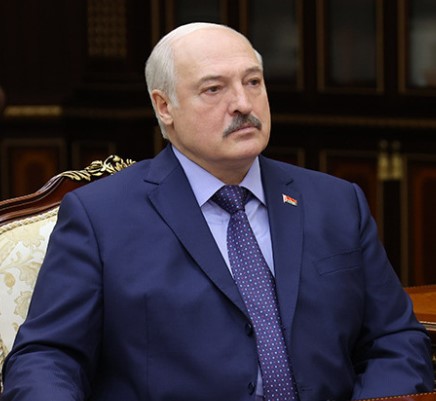 Lukashenko heard a report on the Mogilev region. The main topic was the situation in agriculture. 05.02.2026
 What major agricultural projects are being implemented in the Mogilev region?05.02.2026
 An expert identified possible areas of cooperation between Belarus and Southeast Asian countries.05.02.2026
- Surcharges on prices for agricultural products purchased from the population have been established in 2026.04.02.2026
- Lukashenko: We won't carry the Vitebsk region on our shoulders.04.02.2026
- Baby Zabava. The Grodno Zoo welcomed its first addition in 2026. 03.02.2026
- Lukashenko: We won't carry the Vitebsk region on our shoulders. 03.02.2026
- Lukashenko on the case: it is a moral monstrosity if we cannot protect our smaller brothers in this weather03.02.2026
- Grain cultivation and livestock farming. Bogdanov discussed prospects for cooperation in the agricultural sector between Belarus and Kazakhstan.01.02.2026
- Выпойка молоком 3-4 раза, больше теплой воды. Как в Брестской области наладили уход за телятами в морозы01.02.2026
- From Tractor Driver to Businessman: The Story of a Belarusian Who Built a Farm from Scratch and a Church in a Village 30.01.2026
- A warehouse in the Minsk region improperly stored powdered milk: a court ordered compensation of Br2 million.30.01.2026
- Increased processing volumes, new jobs: production capacity is being expanded in the Shklov district.30.01.2026
- The story of a Belarusian who built a sturdy farm from scratch and revived his native village.29.01.2026
- Belarusian producers plan to enter the Qatari meat market.29.01.2026
- Belarus is interested in expanding dairy product supplies to Indonesia.28.01.2026
Articles
 The court refused to seize the property of agricultural enterprises with debts to the AIC fund.05.02.2026
 Demand for semi-finished products will decline in 2025: dumpling sales will fall by 8%.05.02.2026
 Rosselkhoznadzor inspected more than 2,000 tons of livestock products shipped to Yakutia.05.02.2026
- Rosselkhoznadzor monitored the export of more than 57,000 tons of veterinary goods from St. Petersburg.05.02.2026
- К госветнадзору Бурятии поступило 860 тонн продукции при отправке в Монголию05.02.2026
- The inflation rate in Russia at the beginning of February 2026 reached 6.5%.05.02.2026
- Innovations in broiler feeding: savings and bird health05.02.2026
- New financial disputes between Aventa and Tokarevskaya Poultry Farm: a second lawsuit for 70 million rubles05.02.2026
- Mexican and Canadian beef is losing ground in the US market.05.02.2026
- Spain strengthens institutional coordination to improve animal welfare management05.02.2026
- Blaming cows was a mistake: meadows absorb more gases than cattle emit.05.02.2026
- EU and Mercosur: Experts warn of shortage of EU veterinarians to control imports and associated health risks05.02.2026
- Rosselkhoznadzor stopped the import of more than 50 kg of dangerous animal products at Ufa Airport.04.02.2026
- Rosselkhoznadzor specialists have identified quality violations in meat products.04.02.2026
- The first batch of canned meat from the Kurgan region was sent to Azerbaijan under the supervision of Rosselkhoznadzor.04.02.2026
- A poultry farm in Yugra was fined for violating veterinary regulations.04.02.2026
Economics
 10 reasons to take a deposit04.05.2025
 Lavrov and the Swiss Foreign Minister will discuss the "deep crisis" of the OSCE.05.02.2026
 Kirilenko spoke about the problems facing Russian teams after sanctions were lifted.05.02.2026
- Lavrov believes that US statements about cooperation are inconsistent with sanctions05.02.2026
- The Russian ambassador warned of a reaction to the Faroe Islands' change in stance on sanctions.05.02.2026
- Five suspects in supplying weapons to Russia's defense industry have been arrested in Germany.03.02.2026
- Bloomberg узнал о планах ЕС по санкциям против российских платины и меди03.02.2026
- The EU confirmed discussions on banning entry for participants in the military operation.31.01.2026
- Bloomberg has revealed a new possible EU sanctions plan against Russia.31.01.2026
- The EU has blacklisted Russia for money laundering.30.01.2026
- The EU has imposed new sanctions on Iran in response to the suppression of protests.30.01.2026
- The European Union has designated the IRGC a terrorist organization.30.01.2026
- The US has eased sanctions and allowed oil companies to operate in Venezuela.30.01.2026
- Titov allowed for the return of foreign companies that "miss Moscow"30.01.2026
- Following the deal with Carlyle, LUKOIL continued negotiations with other companies.29.01.2026
- Macron announced that France is preparing new sanctions against Russia.29.01.2026
Antibiotics in Milk
 Antibiotics in milk: causes and methods of detection27.01.2026
 Pharmaceutical companies see a threat to EU security due to bacteria in Ukraine13.11.2025
 Prosecutors have issued warnings to more than 5,000 companies due to rising prices.09.09.2025
- Two dairy companies from Azerbaijan refused to work with Russia.09.07.2025
- Lukashenko told how Putin treated him to goat's milk.08.07.2025
- Lukashenko demanded that Belarus be cleared of littered logs by autumn.08.07.2025
- Lukashenko stated that it is not beneficial for Belarus to “fight madly,” but to feed17.06.2025
- В Британии предупредили о риске для миллионов из-за супербактерий06.01.2025
- Moscow court sides with Indian company in dispute with Health Ministry26.11.2024
- Scientists estimate increase in mortality due to drug-resistant bacteria29.10.2024
- Antibiotics for livestock and pesticides found in poisoned family's home29.10.2024
- Izvestia reported on the shortage of widely used antibiotics in Russia29.10.2024
- The Ministry of Health called data on the shortage of antibiotics unreliable29.10.2024
- Scientists warn of threat of return to pre-penicillin times29.10.2024
- The Ministry of Health explained how attitudes towards antibiotics changed during the pandemic07.05.2024
- WHO explains the risks of taking antibiotics "just in case"06.05.2024
Antibiotics in Meat
 Antibiotics in pollock25.02.2024
 Antibiotics in herring: myth or reality?12.02.2024
 Antibiotics in perch10.02.2024
- Antibiotics in sprat: facts and myths10.02.2024
- Antibiotics in tuna: an important health and environmental issue09.02.2024
- Antibiotics in meat30.01.2024
- Antibiotics in chebureks: myth or reality?29.01.2024
- Antibiotics in cutlets: problem or myth?18.01.2024
- Antibiotics in Chicken: Where Are the Highest Concentrations?17.01.2024
- Antibiotics in carp17.01.2024
- Where Are More Antibiotics in Chicken: Reality and Cautions16.01.2024
- Antibiotics in Salmon: Safety and Product Quality16.01.2024
- Antibiotics in Turkey15.01.2024
- Antibiotics in Sal: Reality and Safety Issues15.01.2024
- Antibiotics in Fried Dumplings: Facts, Risks and How to Stay Safe15.01.2024
- Antibiotics in sausages14.01.2024
10 Interesting Facts
 Antibiotics in Coffee: Myths and Reality03.05.2025
 Forged forks: 10 interesting facts16.05.2024
 Swimming pool and weight loss: 10 interesting facts10.03.2024
- Tests for antibiotics in milk - 10 interesting facts07.03.2024
- Cleaning the kettle from scale, 10 interesting facts...06.03.2024
- Antibiotics in beer: 10 interesting facts04.03.2024
- Wild boar, how to survive...01.03.2024
- Purulent mastitis, 10 interesting facts27.02.2024
- Lemon and alcohol: 10 interesting facts25.02.2024
- Mint - 10 interesting facts25.02.2024
- Wild boar, 10 interesting facts20.02.2024
- Wild boar and domestic pig: comparison and advantages20.02.2024
- Cottage cheese, 10 interesting facts20.02.2024
- 10 Interesting Facts About Milk19.02.2024
- How to Clean a Toilet - 10 Interesting Facts (Acid vs Alkaline)18.02.2024
- Goat's milk: 10 interesting facts16.02.2024
Diseases of cattle
 Dicroceliosis in cattle09.03.2024
 Demodicosis in cattle01.03.2024
 Purulent mastitis of cattle27.02.2024
- Hypodermatosis in cattle20.02.2024
- Hemonchoz in cattle11.02.2024
- Bursitis in cattle30.01.2024
- Brucellosis in cattle29.01.2024
- Bronchopneumonia in calves27.01.2024
- Bronchitis in cattle26.01.2024
- Mortellaro disease in cattle24.01.2024
- White muscle disease in cattle23.01.2024
- Babesiosis in cattle22.01.2024
- Cattle acidosis20.01.2024
- Arthritis in cattle20.01.2024
- Anaplasmosis in cattle18.01.2024
Misc
- Antibiotics for coughs: when they are needed and when they are not11.02.2024
 "Слетают все маски человека!" // Банщик про техники парения, поющих мастерах и чудо-массажах05.02.2026
 The Master of Steam: The Story of a Businessman Who Left a Successful Printing Business to Become a Spa Master 05.02.2026
- Investigators have identified the locations of the most frequent traffic accidents in the Brest region.05.02.2026
- Ministry of Emergency Situations: 129 people have died in fires since the beginning of the year.04.02.2026
- WHO: Almost 40% of cancer cases can be prevented 04.02.2026
- The number of fires in Belarus has increased. Experts have explained the causes.04.02.2026
- "Neither tail nor scales." We went winter fishing and learned the intricacies of ice fishing.04.02.2026
- Belarus has extended the ban on labeling imported alcoholic beverages in unfriendly countries.03.02.2026
- В Гомеле благодаря неравнодушным гражданам остановили нетрезвых таксиста и бесправника 03.02.2026
- From February 11, navigation seals will be used to track rail traffic in the EAEU.03.02.2026
- The State Traffic Inspectorate reminded drivers of road safety rules during severe frosts.31.01.2026
- A woman driving under the influence of alcohol with over 2 ppm was detained in Minsk.30.01.2026
- Наведение порядка в АПК, пожарная безопасность. Какие задачи поставлены перед прокурорами Витебской области 30.01.2026
- A car crashed into a tree on Independence Avenue in Minsk, injuring two people.30.01.2026
- Топ экспортируемых товаров назвали в "Белгоспищепроме"29.01.2026
Cloud of Tags
Владимир ПутинЕСРоссельхознадзорТурцияЗапретОбщепитФермерГовядинуМужчиныСпутник vTelegramРаботаЗависимостьКанадаВостокRussiaВьетнамМЧСПольшаФруктыКофеЗдоровьеИталияАлександр ЛукашенкоПтицефабрикаАзербайджанРоспотребнадзорКрупного рогатого скотаFacebookДетиПитаниеЗаконопроектМинздравТатарстанАлкогольного опьяненияГерманияРубльИсследованияЯпонияЛекарстваСвининаКарантинМолокоКрупный рогатый скотПроизводство молокаАлкогольДиректорВирусПродовольствиеReutersЦентробанкУкраинаЛечениеРосстатИммунитетБеларусьВеликобританияКартофельМинскТребованияВластиУборкаПрокуратураЖивотноеБолезньПроизводство мясаСанкцииНедвижимостьДжо БайденМинфинСельское хозяйствоКитайКолбасыЭкспортЦеныАнтибиотиковКредитДмитрий песковКризисЗеленскийРоссияОтпускДеньгиПродукцияРодителиЕврокомиссияПоддержкаОнлайнБройлерПодмосковьеКРСМинсельхозРоссиянеМясоСубсидииПесковДоходыУченыеЯйцаСырыКазахстанЕгипетГовядинаСанкт-ПетербургМоскваКлиматТАССЭкономикаВыручкаИнвестицииВ китае2024ПравительствоКоронавирусДональд ТрампУзбекистанЕАЭСВакцинацииCOVID-19ЗаконПензенской областиGoogleИмпортАЧСВакцинацияУкраинеминистр сельского хозяйстваНовостиСудГазпромBloombergПраздникОрганизмНефтьСШАВеликобританииСмертьAppleФранцияПродукты питанияИнфляцияМясокомбинатДолларБизнесАвстралияБразилияУрожаяМаслоМясо птицыСотрудники ГАИ