An expert chemist with 36 years of experience on the dashing 90s, helping to treat people and solve crimes

Photo is illustrative in nature. From open sources.
Adds
 PIONEER MEIZHENG BIO-TECH (5 in1) JC0871/ Rapid tests for the determination of the residual amount of β-lactams, tetracyclines, chloramphenicol, streptomycins, ceftiofur in milk, whey.
 Express-tests PIONER 5 in1 for the determination of thiamphenicol, meloxicam, colistine, trimethoprim, sulfonamides
Alexander Dobroriz
Oleksandr Dobroriz is the head of the Department for Laboratory Research of Biological Evidence of the Department of the State Committee for Forensic Examinations in the Brest Region. Once he thought that for nothing in the world he would connect his life with a chemical examination, but fate had opposite plans. The Brest resident has been working in this area for almost 36 years. He has about 30 scientific publications based on real cases from expert practice. Alexander Mikhailovich subordinates more than 50 people who work in the departments of forensic chemical, forensic histological, forensic biological and forensic genetic examinations. They do researchfor the police, the Investigative Committee, health care. It is for medicine that examinations are done as a matter of priority. According to Alexander Dobroriz, the highest assessment of the work is when a person was saved. In an interview with a BelTA correspondent, the expert spoke about his unexpected path to the profession and how far forensic medical examinations have stepped forward.
- Alexander Mikhailovich, fate really took an unusual turn, bringing you from pharmaceuticals to expert chemists. How did it happen?
- In 1980, I entered the first year of the Kharkov State Pharmaceutical Institute. Naturally, he was preparing to work in a pharmacy. In the fourth year we had the subject "toxicological chemistry", where we studied poisons and prepared for work in chemical laboratories. Then I was sure that I would work anywhere, but not in a forensic chemical laboratory. After graduating from the institute, I was assigned to a pharmacy in Chernihiv. After a couple of months I realized - not mine. The work was routine.
Then they were drafted into the army. Interestingly, classmates served in hospitals, pharmacies, and I was sent to the troops of radiation and chemical protection. When I just graduated from the sergeant's school, there was an accident in Chernobyl. We were also urgently sent there to reconnoiter the radiation background, to draw up maps of where people can live and where they can’t. He stayed there only two days. Lucky, because I went not in the first, but in the second place. Those who drove immediately after the accident received a fairly high dose of radioactive exposure.
After the service, there were several ways. I could go back to the pharmacy in Chernigov or Kyiv, or go to graduate school, where I was invited, because I graduated from the institute with honors and was engaged in a scientific society. But I listened to my mother, who advised me to go to Brest, where my older sister already lived. It was 1987. In "Pharmacy" they offered the position of the head of a department in a pharmacy warehouse, and in the Brest Regional Bureau of Forensic Medical Examination - an expert chemist. The choice was completely random. Since I worked in a pharmacy and did not like it, I decided to try it here. At that time, the team was small: three experts, three laboratory assistants and I, a 24-year-old guy.
- What was the forensic examination like at that time?
- I would say, in a deplorable state. The Bureau of Forensic Medical Examination at the Health Department was funded on a residual basis. The laboratory is the same equipment, and it was tight with it. The bureau was headed by Vladimir Moguchy, he made a lot of efforts to get money for equipment.
In the early 1990s, we started to equip very quickly. The Department of Chemical Expertise in Brest was the first in Belarus to buy Agat gas chromatographs. The whole adventure, as we bought them. The Soviet Union collapsed, but the rubles were still in use and we were sold equipment for them. We came to Moscow to the plant to pick up chromatographs together with a colleague. They brought us by car to the Belorussky railway station and unloaded them. There are a lot of boxes, there are two of us, and the train is far away. Criminal elements are already looking at these boxes with interest. The porters are asking for an amount that we have not seen in our eyes at that time. They stood and did not understand what to do. Well, two engineers drove up from the factory and helped to load it. We placed this equipment on the second and third shelves and brought it to Brest.
A little later we bought a liquid chromatograph "Milichrome". At the same time, gas chromatographs of the Kristall series began to be produced in Yoshkar-Ola. It was something unprecedented in technology. We bought gas chromatographs with serial numbers #4 and #6. In fact, they were the first in the post-Soviet space. Engineers arrived from Yoshkar-Ola. They set up the instruments, showed and told how to work. It seems to have understood everything. They left, and the next day I start turning it on and I understand that I don’t know what to do. I was tormented, tormented - and I wanted to cry, honestly. Then he gathered. In the end, I figured it out, everything worked. At "Agatha", "Crystal" and "Milichrome" we did such examinations, which were not yet in Minsk.
- What are the most common chemical examinations and what substances do you have to deal with?
- In the Department of Chemical Expertise last year we did about 2.4 thousand studies. Most of them - about 1.8 thousand - is the determination of the presence and concentration of ethyl alcohol in biological objects: blood, urine. We perform examinations of alcohol-containing liquids, biochemical examinations - determination of carboxyhemoglobin in the blood, methemoglobin, determination of cholinesterase activity, biochemical parameters of blood. We do chemical examinations for the presence of toxic substances: drugs, drugs, pesticides, volatile organic compounds. These are our main areas.
- Can you remember cases from your practice when the concentration of alcohol was maximum?
- Of the concentrations that we determined, the corpses were probably 8-9 ppm of alcohol. It is believed that from a concentration of 3.5 ppm a person can die. At the same time, when the objects received from hospitals were examined until 2010, there were concentrations of 5-6 ppm and people remained alive. All this depends on the characteristics of the human body.
- Literally before your very eyes, genetic examinations began to develop in Brest. Where did you start and where are you now? Usually, people first associate this examination with the establishment of paternity. But I think that assistance to law enforcement officers still prevails here.
- Regarding parenthood: prior to genetic examinations, examinations of paternity exclusion were appointed by coincidence of groups. There, in almost 90% of cases, paternity was not excluded. This was the case until 2007. Genetic examination, on the other hand, establishes exactly who is whose dad.
When the department of genetic examinations was created, modern analytical equipment was purchased. Of course, it is worse than the one used now, but there was a fairly high and high-quality level of identification. The equipment was only improved, which made it possible to conduct a larger number of examinations, to take more parameters. For the examination of the establishment of kinship, this was not important. This was important for solving the crimes of past years. We examined objects that had a very small trace of genetic material. More sensitive methods allowed this biomaterial to be isolated, PCR performed, multiplied and identified whose it was. Quite a lot of materials were sent to us for examination. This helped identify criminals who could live with impunity for 20 years or more.
- Over these 36 years that you have been working in this area, how far has chemical expertise stepped?
- Chemical expertise is developing very dynamically. I'll give you an example. In the late 1990s, a man worked for us. Five years later, he was lured to a private pharmacy. After working there, I wanted to come back. He was a good expert, but after seeing how everything had changed in five years, he refused, because he would have to start almost from scratch. Each new device is a new program that needs to be mastered. No matter how much experience you have, you start all over again.
The head is responsible for the quality of work in the department. To control everything, you need to be the first to learn and work best on this device. Only then will you be able to do it yourself, and advise other experts, and check whether they are doing everything right. If you do not do an examination within a year, this is a disqualification for the head. Not doing it for two or three years is a disaster, you are no longer an expert.
BELTA.
PHOTO by Vadim Yakubenok
Read together with it:
Test for Atnibiotics in Milk
 Rapid tests for determining the residual amount of tetracyclines in meat
 Express tests for determining the residual amount of β-lactams and tetracyclines in milk, whey
- Express-tests PIONER 5 in1 for the determination of thiamphenicol, meloxicam, colistine, trimethoprim, sulfonamides
 Rapid tests PIONER 5 in 1 for the determination of sulfonamides, tylosin, tilmicosin, lincomycin, erythromycin, fluoroquinolones
 Rapid 4 in 1 tests for determining the residual amount of neomycin, kanamycin, gentamicin, spectinomycin in milk, whey
 Rapid tests for determining the residual amount of chloramphenicol in meat
- PIONEER MEIZHENG BIO-TECH (5 in1) JC1165 / Rapid tests for the determination of the residual amount of halofuginone, flavomycin, novobiocin, flunixin, dexamethasone / prednisolone in milk, whey
- TEST KIT for determination of inhibitory agents PIONEERPRODUKT® DASH-TEST, WC0040
- Rapid tests for fluoroquinolone, erythromycin, lincomycin, tillosin and tilmycosin residues in milk, whey
- ANTIBIOTICS / ELISA TESTS
Laboratory equipment
 Tagler (Russia) Milk centrifuge ZLMN 1-8 with heating
 Nova Safety milk centrifuge (Germany)
 Tagler BVR-18 water-reducer bath (Russia)
 Butyrometers for milk, cream, skim milk and buttermilk
 HI 9142 Portable Moisture Proof Oxygen Meter
 Timer with winding for 20 hours electronic Aptaca
- Laboratory timer TL-303
- Magnetic stirrer Tagler MM-135 (without heating)
- Mutovki for flasks and tanks (Russia)
- Analogue of the device Chizhova Elex-7
- Indicator strips pH 5-9, 100 pcs.
- Hourglass
- Sink table BA-CL- X.H.MO C (one bowl)
- ColonyStar automatic microbial colony counter
- Magnetic stirrer with heating function WH240-HT
Packing
 KH PACK® Straight Packing Paper
 Ice cream chopsticks
 Laminating paper KH PACK®
 Cover
Cover Carton
 KH PACK® bag making paper
- Laminating paper KH PACK®
- Parchment
- Grease and barrier paper KH PACK®
- Skiving and Hemming Technology
- Plastic packaging for cakes and pastries
- Cartons for milk and dairy products
- The paper packing fastened anticorrosive UNIK 14-70 THAT 5453-003-05773103-2005
- GableTop aseptic packaging
- Korreks for confectionery
Additional Products
 Petri dish 90 mm
 General purpose environment of SPC "Biocompass-S" (Uglich)
 Ice cream sticks Standard 93
 Auxiliaries for sugar products
 Ice cream sticks (with logo)
 Ice cream sticks Magnum (curly)
- Ice cream sticks (round)
- J-Bottom technology
- Pepsin whey pork
- Wafer cup and cone
- Ice cream sticks Standard 114
Consumables
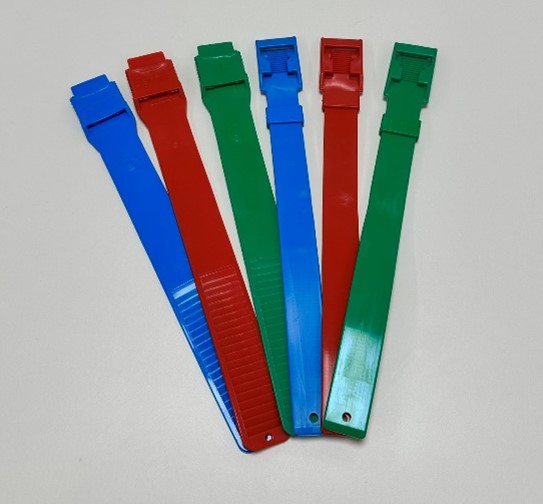 Plastic bracelet
 Napkin reusable for wiping the udder
 Gas tailing cutter
 Milk filters - primary cleaning
 Liquid soap "Prestige" (yellow, green, red) 5 l
 Electric Cattle Driver
- Udder cleaner after milking (20 l)
- Apron and armlets
- Disinfectant with washing effect (10kg)
- Sticky fly trap, 25cm*10m
- Non-returnable cup for udder treatment
- Drencher for feeding calves with a rigid probe
- Forged pitchforks
- Dosing syringe, hose attachment
- Drencher for feeding calves with a flexible probe
Microbiology
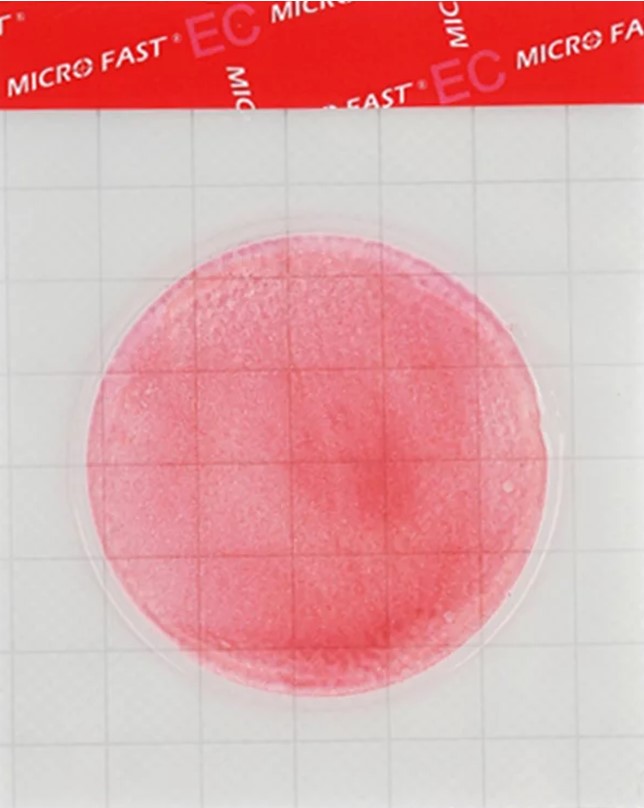 MicroFast® Coliform & E.coli Count Plate
 Substrate for determining the number of staphylococci (Catalog number LR1005) MicroFast® Staphyloccocus aureus Count Plate
 MicroFast® Enterobacteriaceae Count Plate (cat. no. LR1011)
 MicroFast® Salmonella Count Plate (SAL), for the determination of Salmonella in food and environmental samples (Catalog #LR1006)
 Yeast & Mold Count Plate (cat. no. LR1003) MicroFast® Yeast & Mold Count Plate
 Substrate for determining QMAFAnM (catalog number LR1001)
- MicroFast® Microbiological Substrates
- MicroFast® Environmental Listeria Count Plate
- MicroFast® Lactic Acid Bacteria Count Plate (Part Number LR1312)
- MicroFast® Staphyloccocus aureus Confirmation Plate Staph.aureus Confirmation Plate (cat. no. LR1005Q)
- Coliform Count Plate (catalog number LR1002) MicroFast® Coliform Count Plate
- MicroFast® Bacillus cereus Count Plate (catalog number LR1010)
- Substrate for accelerated determination of QMAFAnM, (catalog number LR1321)
Our News
- Малышка Забава. В Гродненском зоопарке случилось первое в 2026 году пополнение Сегодня
 Лукашенко: Витебскую область на плечах тащить не будем Сегодня
- Лукашенко о падеже: моральное уродство, если мы не можем защитить в эту погоду братьев наших меньшихСегодня
- Выращивание зерновых и животноводство. Богданов обсудил перспективы сотрудничества в АПК Беларуси и Казахстана01.02.2026
- Выпойка молоком 3-4 раза, больше теплой воды. Как в Брестской области наладили уход за телятами в морозы01.02.2026
- From Tractor Driver to Businessman: The Story of a Belarusian Who Built a Farm from Scratch and a Church in a Village 30.01.2026
- A warehouse in the Minsk region improperly stored powdered milk: a court ordered compensation of Br2 million.30.01.2026
- Increased processing volumes, new jobs: production capacity is being expanded in the Shklov district.30.01.2026
- История белоруса, построившего с нуля крепкое фермерское хозяйство и возродившего родную деревню29.01.2026
- Белорусские производители планируют выйти на катарский рынок мясной продукции29.01.2026
- Беларусь заинтересована в расширении поставок молочной продукции в Индонезию28.01.2026
- Рекорд по свекле, прирост по молоку: в Гродненской области подвели итоги работы АПК 28.01.2026
- Как идет зимовка на МТФ в Гродненской области и как переносят мороз озимые, рассказал специалист 28.01.2026
- Original products and two exhibition pavilions: Belarus's exhibit conquers the Gulfood exhibition in the UAE.27.01.2026
- Exchange trading on the BUCE: geography, sales leaders 27.01.2026
- Belarus intends to expand the range of goods in exchange trade with Azerbaijan.27.01.2026
Articles
 Почему продуктовые ритейлеры меняют стратегию в пользу сокращения ассортиментаСегодня
 Устойчивый рост сельского хозяйства России в 2025 году: анализ и перспективыСегодня
 Кадровые потребности аграрного сектора России: вызовы и решенияСегодня
- ГАП «Ресурс» стала участником выставки Gulfood 2026Сегодня
- «Мясокомбинат Клинский» автоматизирует производство с применением отечественной MES-системыСегодня
- Казахстан хочет нарастить производство мяса в 1,5 разаСегодня
- В Ростовской области цены на мясо выросли на 13% за годСегодня
- Индонезия пересматривает квоты на импорт говядины: протесты бизнеса и угроза дефицитаСегодня
- Восстановление свиноводства в Эстонии: новые подходы и вызовыСегодня
- В 2025 году Республика Башкортостан продемонстрировала выдающиеся результаты в производстве яицСегодня
- «Приморская птица» вложит 5,5 млрд рублей в производство инкубационного яйцаСегодня
- ФАС проанализирует наценки у крупнейших ритейлеровСегодня
- В Магаданском порту проведён контроль за 195 тоннами животноводческой продукции30.01.2026
- Цены на говядину в России выросли на 1% за неделю, свинина подешевела на 0,4%30.01.2026
- Карантин по лейкозу КРС в Прилузском районе Коми отменён30.01.2026
- На Ямале выявлены два заведения общепита, работающие без прослеживаемости мясной продукции30.01.2026
Economics
 10 reasons to take a deposit04.05.2025
 В ФРГ арестовали пятерых подозреваемых в поставках для оборонки РоссииСегодня
 Bloomberg узнал о планах ЕС по санкциям против российских платины и медиСегодня
- The EU confirmed discussions on banning entry for participants in the military operation.31.01.2026
- Bloomberg has revealed a new possible EU sanctions plan against Russia.31.01.2026
- ЕС включил Россию в черный список по отмыванию денег30.01.2026
- The EU has imposed new sanctions on Iran in response to the suppression of protests.30.01.2026
- Евросоюз признал КСИР террористической организацией30.01.2026
- The US has eased sanctions and allowed oil companies to operate in Venezuela.30.01.2026
- Titov allowed for the return of foreign companies that "miss Moscow"30.01.2026
- Following the deal with Carlyle, LUKOIL continued negotiations with other companies.29.01.2026
- Макрон заявил о подготовке Францией новых санкций против России29.01.2026
- In Finland, Russian students were given suspended sentences for violating sanctions.28.01.2026
- Минэк сообщил о принудительном лицензировании технологий ушедших компаний28.01.2026
- Reuters reported on Airbus' letter to employees about damages and future crises.27.01.2026
- The EU Council approved fines for companies importing Russian gas.27.01.2026
Antibiotics in Milk
 Antibiotics in milk: causes and methods of detection27.01.2026
- Pharmaceutical companies see a threat to EU security due to bacteria in Ukraine13.11.2025
 Прокуроры объявили предостережения более 5 тыс. компаний из-за роста цен09.09.2025
- Две молочные компании из Азербайджана не захотели работать с Россией09.07.2025
- Лукашенко рассказал, как Путин угостил его козьим молоком08.07.2025
- Lukashenko demanded that Belarus be cleared of littered logs by autumn.08.07.2025
- Лукашенко заявил, что Белоруссии выгодно не «одуревши воевать», а кормить17.06.2025
- В Британии предупредили о риске для миллионов из-за супербактерий06.01.2025
- Moscow court sides with Indian company in dispute with Health Ministry26.11.2024
- Scientists estimate increase in mortality due to drug-resistant bacteria29.10.2024
- Antibiotics for livestock and pesticides found in poisoned family's home29.10.2024
- Izvestia reported on the shortage of widely used antibiotics in Russia29.10.2024
- The Ministry of Health called data on the shortage of antibiotics unreliable29.10.2024
- Scientists warn of threat of return to pre-penicillin times29.10.2024
- The Ministry of Health explained how attitudes towards antibiotics changed during the pandemic07.05.2024
- WHO explains the risks of taking antibiotics "just in case"06.05.2024
Antibiotics in Meat
 Antibiotics in pollock25.02.2024
 Antibiotics in herring: myth or reality?12.02.2024
 Antibiotics in perch10.02.2024
- Antibiotics in sprat: facts and myths10.02.2024
- Antibiotics in tuna: an important health and environmental issue09.02.2024
- Antibiotics in meat30.01.2024
- Antibiotics in chebureks: myth or reality?29.01.2024
- Antibiotics in cutlets: problem or myth?18.01.2024
- Antibiotics in Chicken: Where Are the Highest Concentrations?17.01.2024
- Antibiotics in carp17.01.2024
- Where Are More Antibiotics in Chicken: Reality and Cautions16.01.2024
- Antibiotics in Salmon: Safety and Product Quality16.01.2024
- Antibiotics in Turkey15.01.2024
- Antibiotics in Sal: Reality and Safety Issues15.01.2024
- Antibiotics in Fried Dumplings: Facts, Risks and How to Stay Safe15.01.2024
- Antibiotics in sausages14.01.2024
10 Interesting Facts
 Antibiotics in Coffee: Myths and Reality03.05.2025
 Forged forks: 10 interesting facts16.05.2024
 Swimming pool and weight loss: 10 interesting facts10.03.2024
- Tests for antibiotics in milk - 10 interesting facts07.03.2024
- Cleaning the kettle from scale, 10 interesting facts...06.03.2024
- Antibiotics in beer: 10 interesting facts04.03.2024
- Wild boar, how to survive...01.03.2024
- Purulent mastitis, 10 interesting facts27.02.2024
- Lemon and alcohol: 10 interesting facts25.02.2024
- Mint - 10 interesting facts25.02.2024
- Wild boar, 10 interesting facts20.02.2024
- Wild boar and domestic pig: comparison and advantages20.02.2024
- Cottage cheese, 10 interesting facts20.02.2024
- 10 Interesting Facts About Milk19.02.2024
- How to Clean a Toilet - 10 Interesting Facts (Acid vs Alkaline)18.02.2024
- Goat's milk: 10 interesting facts16.02.2024
Diseases of cattle
 Dicroceliosis in cattle09.03.2024
 Demodicosis in cattle01.03.2024
 Purulent mastitis of cattle27.02.2024
- Hypodermatosis in cattle20.02.2024
- Hemonchoz in cattle11.02.2024
- Bursitis in cattle30.01.2024
- Brucellosis in cattle29.01.2024
- Bronchopneumonia in calves27.01.2024
- Bronchitis in cattle26.01.2024
- Mortellaro disease in cattle24.01.2024
- White muscle disease in cattle23.01.2024
- Babesiosis in cattle22.01.2024
- Cattle acidosis20.01.2024
- Arthritis in cattle20.01.2024
- Anaplasmosis in cattle18.01.2024
Misc
- Antibiotics for coughs: when they are needed and when they are not11.02.2024
 Беларусь продлила запрет на маркировку импортируемых алкогольных напитков на территории недружественных странСегодня
 В Гомеле благодаря неравнодушным гражданам остановили нетрезвых таксиста и бесправника Сегодня
- С 11 февраля для отслеживания железнодорожных перевозок в ЕАЭС будут использоваться навигационные пломбыСегодня
- The State Traffic Inspectorate reminded drivers of road safety rules during severe frosts.31.01.2026
- A woman driving under the influence of alcohol with over 2 ppm was detained in Minsk.30.01.2026
- Наведение порядка в АПК, пожарная безопасность. Какие задачи поставлены перед прокурорами Витебской области 30.01.2026
- A car crashed into a tree on Independence Avenue in Minsk, injuring two people.30.01.2026
- Топ экспортируемых товаров назвали в "Белгоспищепроме"29.01.2026
- Житель Кировского района жестоко убил свою собаку, возбуждено уголовное дело29.01.2026
- Двух нетрезвых водителей с детьми в салоне остановили сотрудники ГАИ в Витебской области28.01.2026
- В Лидском районе задержали пьяного угонщика авто, который въехал в сугроб28.01.2026
- "Видеть болевые точки на местах и реагировать". На что нацелил витебскую милицию глава МВД28.01.2026
- Борьба с коррупцией, профилактика пожарной безопасности. Генеральный прокурор поставил задачи на коллегии в Гомеле 28.01.2026
- В Витебской области более 300 пешеходов за выходные привлекли к ответственности за нарушения ПДД27.01.2026
- Более 40 бесправников остановили на дорогах Гомельской области за три дня 27.01.2026
Cloud of Tags
ПесковОнлайнИнвестицииМужчиныРоссельхознадзорОбщепитВластиВладимир ПутинАлександр ЛукашенкоСудАлкогольного опьяненияПраздникФранция2024Производство молокаМаслоСотрудники ГАИЕАЭСИмпортМинфинИталияНовостиAppleВеликобританияРоссияБройлерВеликобританииКарантинКоронавирусСанкт-ПетербургЯпонияВостокПтицефабрикаКрупный рогатый скотКлиматGoogleНедвижимостьФруктыЖивотноеПравительствоРосстатМоскваБизнесКазахстанРодителиСубсидииОрганизмГерманияКанадаЗдоровьеПольшаСырыЦеныВьетнамКРСЗаконопроектСанкцииГовядинуИнфляцияУзбекистанПроизводство мясаминистр сельского хозяйстваЗаконОтпускАнтибиотиковЗеленскийКрупного рогатого скотаТАССПоддержкаПензенской областиМинсельхозКофеНефтьЕгипетБолезньПродукцияТатарстанКризисМясоИсследованияПодмосковьеЕСТребованияВакцинацииДоходыУборкаУкраинеКитайБразилияЛекарстваВакцинацияЯйцаПрокуратураГовядинаГазпромУрожаяУкраинаДмитрий песковТурцияАЧСФермерИммунитетДолларКартофельTelegramМЧСCOVID-19УченыеДжо БайденFacebookПродовольствиеСШАДональд ТрампАзербайджанКредитПитаниеВ китаеЛечениеРоспотребнадзорМясокомбинатПродукты питанияБеларусьRussiaВыручкаАлкогольЗависимостьСвининаДеньгиАвстралияReutersЭкспортМинскРубльМинздравВирусСпутник vМолокоСмертьМясо птицыЭкономикаДетиBloombergРаботаЕврокомиссияДиректорКолбасыРоссиянеСельское хозяйствоЗапретЦентробанк