How to survive in the information war - 6 useful books

Photo is illustrative in nature. From open sources.


In the age of information wars, it is more and more difficult to figure out where is the truth and where is propaganda. RBC Trends has prepared a list of books that will help you cope with the situation and not destroy relationships with loved ones in endless disputes Critically evaluate the news headlines “Guide to lies.
This book contains many formulas and diagrams. Their task is to show how, with the help of graphs and the interpretation of numbers, facts can be manipulated: to scare people with crime or force them to buy a house with a little magic with the presentation of data. A separate section is devoted to how survey data and statistics are collected and why they do not always reflect the real picture. This is not always a deliberate misrepresentation, the author notes, but the very wording of the question often affects the answers that researchers receive. However, the deliberate manipulation of facts in Levitin's book is also analyzed in sufficient detail. The ultimate goal of The Guide to Lies is to help people distinguish high-quality news from deliberately false news.
Stop quarreling with loved ones because of different points of view "Anatomy of Delusions: A Big Book on Critical Thinking", Nepryakhin Nikita“Any person is sure that they are not personally affected by persuasive advertising messages or propaganda,” says Nikita Nepryakhin, a teacher of logic and critical thinking at MGIMO and author of the book Anatomy of Delusions. In it, he consistently analyzes several dozen cognitive distortions that prevent us from objectively perceiving reality. We are talking, for example, about the effect of the opposite result, when information that contradicts our deep convictions does not refute them, but, on the contrary, only strengthens the confidence that we are right. Another common distortion is called the "repetition effect": the more times we hear some information, the more we believe it. Most likely, after reading the book, you will find some of the distortions in yourself and begin to notice similar logical errors in others. The main thing,
Choose a credible source of information "Fake", Annemarie BonAnnemarie Bohn, a Dutch journalist and writer, has published a book for teenagers, in which she analyzes the most common causes of holivars today: from vaccinations and superstitions to the manipulation of statistics. What is good about books for teenagers is that in them all the arguments are given as simply and clearly as possible, and this is exactly what a stressed brain needs. A separate chapter is devoted to how news is created. The author recalls journalistic professionalism and explains what it is. Serious publications, for example, clearly indicate what is a fact and what is just an opinion, and are always looking for additional confirmation of any figures and phenomena that they write about. In the author's home country, there is a Council on Journalistic Ethics, to which one can complain about a publication if there are reasons to consider it unreliable. In this case, the article will be checked and, if the untruth is discovered, it will put an end to the career of its author. Of course, in a number of countries, journalists are under serious pressure from the authorities, but even adjusted for this, high-quality journalism can be trusted.
Accept the irreversibility of the changes “Post-truth. Knowledge as power struggle Steve FullerThe American social philosopher in the field of science and technology research, Steve Fuller, wrote a book about fakes in a somewhat unexpected way. The Oxford Dictionary, which proclaimed “post-truth” the word of 2016 after Brexit and Donald Trump’s election victory, gives an unambiguously negative assessment of this concept. However, Fuller recalls the theory of elite circulation developed by Vilfredo Pareto, which includes the division of people into “lions” and “foxes”. Leos have the power of the moment and strive to maintain the status quo. "Foxes" want to pull the blanket over themselves and for this they undermine the monopoly of "lions" on ideology, encouraging society to make independent decisions instead of agreeing with expert opinion.
The current order assumes that experts - doctors, journalists, lawyers, political scientists, and so on - control the flow of knowledge in their fields, and can limit or correct it. Such an expert community may turn out to be inert to ideas that go against the rules and hypotheses prevailing within their group, or expressed by a person who does not have a proven qualification in this field of knowledge. Fuller draws parallels with the New Age, when the usual social paradigms were changing, and shows situations in which post-truth, which the “foxes” subtly use, can be useful to society and destroy the prevailing stereotypes.
Stop dividing the world into white and black “Factuality. Ten reasons why we are wrong about the world - and why everything is not as bad as it seems, Hans RoslingThe physician, academician and founder of the Swedish branch of MSF, Hans Rosling, in his book calls for a reconsideration of our knowledge of the world. Many of them, in his opinion, are significantly outdated and may prevent us from giving a correct assessment of the crisis situation.
First of all, the author warns against "false gaps" - the tendency to divide the world into two poles, and to oppose "us" and "other countries" in which people live in poverty, give birth to dozens of children, die en masse from simple infections, or vice versa, live substantially better than us. This view was correct in the 1950s. Now, if you draw a graph of the distribution of people according to wealth, fertility, the spread of education among women, or any other indicators, then the absolute majority will be somewhere in the middle, and will not form two clearly defined camps at the poles.
In this regard, it is worth rejecting another limiting belief - the “instinct of fate”, the essence of which is that the future of a particular person or people is predetermined by the special culture that they possess. Objective data show that global trends are the same for all peoples, and over the past half century, living conditions have improved significantly on all continents and countries. People in all countries want about the same thing, regardless of their geographical location and religion. There is much more in common between us and other countries than is commonly thought.
Social economy Features of the national spirit: does the mentality really exist
Unfortunately, misconceptions are inherent not only to ordinary people, but also to experts. Rosling's surveys of the current state of the world economy and society, conducted in various professional communities, from journalists to world leaders at the World Economic Forum in Davos, demonstrate that even in this environment outdated ideas about the world are widespread, which can influence the quality of decisions made.
Deeply understand the issue of “Fakes. Communication, meanings and responsibility»If you, as a reader, want to be more academic, you can refer to the collective monograph published by researchers at the Baltic Federal University. I. Kant. In this book, experts analyze specific fake stories of recent years, for example, the story of a crucified boy or a report about a mass national round dance - osuokhai, allegedly organized in Yakutia in support of amendments to the constitution.
On the basis of the typology of the plot elements of Propp's Russian fairy tales, the analysis of the epic of different countries and classical rhetoric, the authors developed a value-normative model of narrative meaning formation. It explains why our compatriots are close to the narrative of the heroic Motherland and the sacralization of power. In addition to studies of historical memory, the authors also study the modern information and technological structure of the world, which determines our perception of news. In fact, what is now required of a person is not reasoning, but a reaction - “like, ban or buy,” notes one of the authors of the monograph, Doctor of Philosophy Grigory Tulchinsky.
Read together with it:
- Lavrov and the Swiss Foreign Minister will discuss the "deep crisis" of the OSCE.Sergey Lavrov Russian Foreign Minister Sergey Lavrov will meet with Swiss Foreign Minister Ignazio Cassis in Moscow on February 6 to discuss the crisis in the Organization for Security and Cooperation in Europe (OSCE), Smolenskaya Square reported. Switzerland assumed the OSCE Chairmanship on 1 January 2......
- Kirilenko spoke about the problems facing Russian teams after sanctions were lifted.The head of the Russian Basketball Federation (RBF) stated that FIBA could make a final decision on the return of Russian basketball in April, but visa barriers remain the main problem. Andrei KirilenkoIn an interview with RBC Sport, Russian Basketball Federation (RBF) President Andrei Kirilenko discussed the possible return of Russian basketball to the international arena. He also cited visa an...
- The Russian ambassador warned of a reaction to the Faroe Islands' change in stance on sanctions.Vladimir BarbinThe Faroe Islands' change in stance on sanctions against Russia will not go unnoticed by Moscow, Russian Ambassador to Denmark Vladimir Barbin said in an interview with RIA Novosti. The statement was prompted by the Faroe Islands Parliament's decision to support sanctions against Russian fishing companies Norebo and Murman Seafood, as well as the Faroe Islands government's announcem...
- What does the expiration of the START Treaty mean?On February 5, 2026, New START, the last treaty between Russia and the United States that limited their nuclear arsenals, expired. RBC reports on how Moscow and Washington approached this date and what will happen afterward.On February 5, 2026, the Russian-American Treaty on Measures for the Further Reduction and Limitation of Strategic Offensive Arms (New START), the last agreement that limited t...
- Lukashenko heard a report on the Mogilev region. The main topic was the situation in agriculture.February 4, Minsk . On February 4, Belarusian President Alexander Lukashenko heard a report from Anatoly Isachenko, Chairman of the Mogilev Regional Executive Committee, BelTA reports. The report focused on the state of affairs in the region, following up on Tuesday's report in the Vitebsk Region. As the head of state noted the day before, many of the identified problematic issues are, to varying ...
- What major agricultural projects are being implemented in the Mogilev region?February 4, Mogilev. Fertilizer storage facilities are being restored, and mechanical engineering teams are expanding their operations. Chairman of the Mogilev Regional Executive Committee, Anatoly Isachenko, briefed journalists on the state of the region's agro-industrial complex, BelTA reports. Anatoly Isachenko noted that during his report to the head of state, the construction of a feed mill a...
- In 2025, a record 3.3 thousand tons of venison were harvested in Yamal.This is the highest figure in recent years. The Yamal District remains the leader, with nearly 1,200 tons. The Tazovsky District significantly increased its output, harvesting 1,100 tons. This was made possible by the launch of a new slaughterhouse. Nearly 1,200 private reindeer herders participated in the 2......
- In the Novosibirsk region, a cow infected with rabies attacked a veterinarian.The Iskitim Central District Hospital reported this. A rabies epidemic has affected several regions, including the Krasnoyarsk Krai and Omsk Oblast. Rabid foxes typically attack people, but attacks by wolves and wild cats have also been recorded. Authorities have implemented quarantine measures. Nine people, including five children, who drank milk from the infected cow have been vaccinated. The cl...
- Ministry of Emergency Situations: 129 people have died in fires since the beginning of the year.February 4, Minsk . 129 people have died in fires in Belarus since the beginning of the year, Emergency Situations Minister Vadim Sinyavsky told reporters in response to a question from a BELTA correspondent. The head of state inquired about the state of fire safety and how the Ministry of Emergency Situations is addressing these issues. According to the minister, the Ministry receives and process...
Test for Atnibiotics in Milk
 Express tests for determining the residual amount of β-lactams and tetracyclines in milk, whey
 Rapid tests for determining the residual amount of chloramphenicol in meat
 PIONEER MEIZHENG BIO-TECH (5 in1) JC0586 - Antibiotic tests 5 in 1 / Rapid tests for determining the residual amount of β-lactams, tetracyclines and cephalexin in milk, whey
 Rapid tests for determining the residual amount of tetracyclines in meat
Laboratory equipment
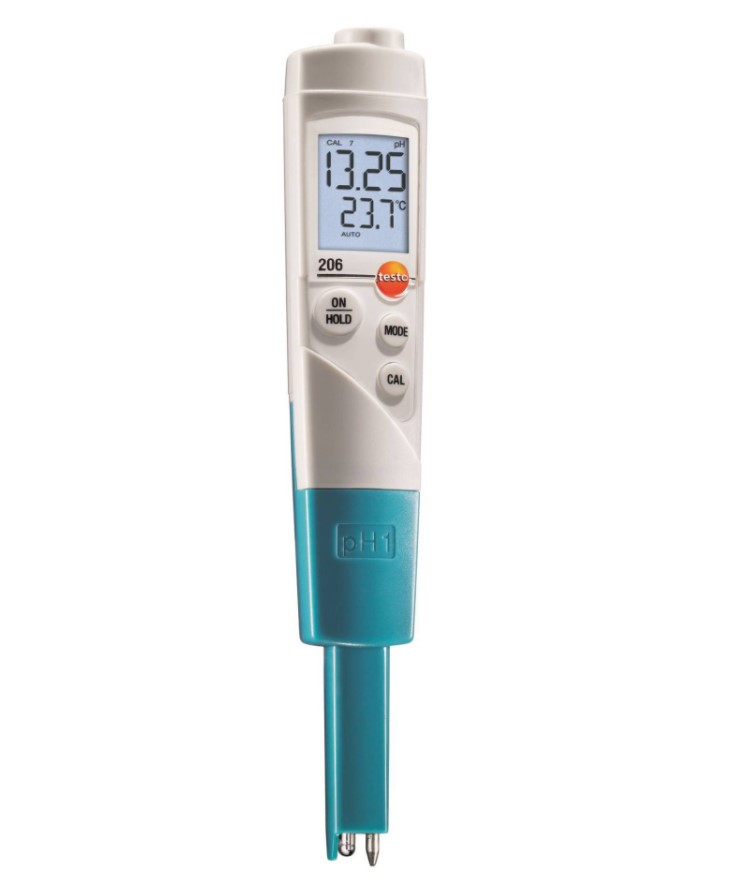 Testo 206-pH1 - Pocket pH meter (0..14 pH)
 Milk quality analyzer "Laktan 1-4M" 500 isp. MINI
 Indicator strips "NUC-100 mg", "NUC-1000 mg", "NUC-5000 mg", 100 pcs.
 Analyzer for somatic cell counting "Expert Somatos"
 Milligram weights
 Electronic thermometer Testo 905-T1
- HI 83141 Portable pH meter/millivolt meter/thermometer (pH/mV/T) (0...14.00 pH)
- Residual Alkalinity Test Strips, 100 pcs.
- Mug for pouring milk (Russia)
- Smooth micrometers MK
- Milk Analyzer "Expert Pro"
- pH/temperature meter Testo 205 (Germany)
- Electronic thermometer LT-300-H-TC
- Drying oven Chizhovoy CHS-200 (Tagler, Russia)
- Thermometer TS-7AMK for refrigerators and freezers (-35...+50 °C)
Packing


Additional Products
 Petri dish 90 mm
 Auxiliaries for sugar products
 Ice cream sticks (with logo)
 Ice cream sticks Standard 93
 Wafer cup and cone
 Ice cream sticks Standard 114
- J-Bottom technology
- Pepsin whey pork
- Ice cream sticks Magnum (curly)
- General purpose environment of SPC "Biocompass-S" (Uglich)
- Ice cream sticks (round)
Consumables


Microbiology
 MicroFast® Salmonella Count Plate (SAL), for the determination of Salmonella in food and environmental samples (Catalog #LR1006)
 Substrate for accelerated determination of QMAFAnM, (catalog number LR1321)
 Coliform Count Plate (catalog number LR1002) MicroFast® Coliform Count Plate
 Substrate for determining the number of staphylococci (Catalog number LR1005) MicroFast® Staphyloccocus aureus Count Plate
 MicroFast® Coliform & E.coli Count Plate
 MicroFast® Lactic Acid Bacteria Count Plate (Part Number LR1312)
- Yeast & Mold Count Plate (cat. no. LR1003) MicroFast® Yeast & Mold Count Plate
- MicroFast® Microbiological Substrates
- MicroFast® Environmental Listeria Count Plate
- MicroFast® Enterobacteriaceae Count Plate (cat. no. LR1011)
- MicroFast® Staphyloccocus aureus Confirmation Plate Staph.aureus Confirmation Plate (cat. no. LR1005Q)
- MicroFast® Bacillus cereus Count Plate (catalog number LR1010)
- Substrate for determining QMAFAnM (catalog number LR1001)
Our News
 They are among the top three countries in terms of milk processing volumes. What new products will Slutsk Cheese Factory OJSC surprise you with?28.11.2025
 Проект районного масштаба: выпуск трехцветной плитки осваивают в Микашевичах, а в Лунинце строят цех сушки молока 28.11.2025
 Шулейко: этот год - знаковый для животноводства в производстве молока, средний удой увеличен во всех областях27.11.2025
- Belarus is ready to increase agricultural exports and support the development of Myanmar's agricultural sector.27.11.2025
- The land of sapphires and jade. Belarus has found a new foothold in Southeast Asia, and it just needs to gain a foothold.27.11.2025
- Completing the work to create a profitable agricultural sector remains a priority for the agro-industrial complex until 2030.27.11.2025
- Do you love cheese? We're sharing the "happiness" recipe that surprised Lukashenko. 27.11.2025
- Demand has increased 60-fold. Which Belarusian products are selling like hot cakes on marketplaces?26.11.2025
- Техника, сельское хозяйство, фармацевтика. В каких направлениях Алжир заинтересован сотрудничать с Беларусью26.11.2025
- Milk prices in Lithuania have increased by a quarter in 10 months.26.11.2025
- Первые "Дажынкі", многодетные семьи. На форуме сельской молодежи рассказали, чем гордятся жители Столинского района26.11.2025
- Объединенные Арабские Эмираты вошли в тройку крупнейших покупателей сельхозпродукции на БУТБ21.11.2025
- Обучение кадров, поставка продукции. Беларусь и Эфиопия активизируют сотрудничество в АПК21.11.2025
- The director of JSC Podlesye-2003 explained how they learned to withstand bad weather and reap high harvests.21.11.2025
- Support for the Vitebsk Region's agricultural sector and industrial safety. The Council of the Republic considered legislative amendments.21.11.2025
- "Мужики, кто не усвоит, работать не будет". Лукашенко требует от местной вертикали выполнить элементарное20.11.2025
Articles
 Приморский филиал АПК НАЦРЫБА провел более 40 тысяч исследований кормов за 2025 год22.01.2026
- Обновления условий страхования сельскохозяйственных животных на весну 2026 года22.01.2026
 Agricultural exports: Average value increased by 25% compared to last year22.01.2026
- China increased pork imports from Russia by 62% in 2025.22.01.2026
- Declining Beef and Lamb Consumption in Russia: Changes in Market Dynamics and Consumer Preferences22.01.2026
- Naum Babayev became a mentor for the "Leaders of the Agro-Industrial Complex" competition.22.01.2026
- Brazil: Total egg exports reach 40,900 tons and will reach a historical record in 202522.01.2026
- Breakthroughs in veterinary medicine: 2025 results from the European Medicines Agency22.01.2026
- China's meat production will grow by 4.2% in 2025.22.01.2026
- AGRAVIA 2026: Agropredict stand attracts Russian and international representatives22.01.2026
- The administration of the village of Ak-Durug in the Republic of Tyva was punished for an unattended cattle burial ground.22.01.2026
- In Buryatia, Rosselkhoznadzor seized more than 7 tons of animal products.22.01.2026
- Dangerous antibiotic residues were found in a shipment of imported buffalo meat in Primorye.22.01.2026
- Declining Beef and Lamb Consumption in Russia: An Analysis of Causes and Trends22.01.2026
- A sharp increase in chicken imports from China is causing concern among Russian meat producers.22.01.2026
- Positive dynamics in poultry production in Russia: results of three quarters of 202522.01.2026
Economics
 London has exempted LUKOIL's international assets from sanctions until February 26.28.11.2025
 Венгерская MOL начала переговоры о покупке российской доли в NIS28.11.2025
- Lithuania calls for sanctions against Belarus "for hybrid actions"27.11.2025
- Oreshkin spoke about proposals from unfriendly countries at the G20 summit.26.11.2025
- Bessent called EU sanctions against Russia a failure26.11.2025
- Bloomberg reports record low price for Russian oil for India26.11.2025
- Bloomberg learned of a change in Indian banks' stance on paying for oil from Russia.26.11.2025
- Дедлайн для ЛУКОЙЛа: хронология санкций против нефтяной компании22.11.2025
- WP узнала о прекращении индийским Reliance поставок российской нефти22.11.2025
- Почему ЛУКОЙЛ платит дивиденды вопреки санкциям США22.11.2025
- WSJ назвала кандидата на покупку доли России в сербской NIS21.11.2025
- Bloomberg has learned that the US's new global agenda includes lifting sanctions.21.11.2025
- Hungary said the EU is working on sanctions it would not tolerate.21.11.2025
- NYT анонсировала сокращение покупок российской нефти Индией с пятницы21.11.2025
- Germany called on the EU to lift sanctions against Russia in exchange for a ceasefire.21.11.2025
- Serbian authorities have announced Russia's agreement to sell its stake in NIS.20.11.2025
Antibiotics in Milk
 Is it worth drinking antibiotics at the first sign of illness and what is the risk of it: an interview with a pharmacologist01.08.2020
 In Smolensk region the Rosselkhoznadzor Directorate returned to Belarusian consignors more than 33 tons of animal products transported with violations of veterinary requirements.04.02.2020
- Struggle for product quality and safety: experience of Belarusian colleagues19.11.2019
- Tiamphenicol07.08.2019
- Antibiotics in milk07.08.2019
- "While I'm talking to you nicely." The President threatened the government with prison for the death of a cattle25.07.2019
- Antibiotics in milk: Rumors and reality23.07.2019
- Antibiotics: harm or benefit17.07.2019
- Antibiotics in milk16.07.2019
Antibiotics in Meat
 Antibiotics in Meat: Prevention, Regulation and Consumer Health Concerns12.01.2024
 Antibiotics in Fried or Boiled Meat: Facts and Misconceptions12.01.2024
 Antibiotics in Sausage: Reality, Risks and Need for Control12.01.2024
- Antibiotics in Pelmeni: Real Threat or Myth?09.01.2024
- Antibiotics in Pork: Health Effects and Cooking Recommendations08.01.2024
- Antibiotics in Chicken: Safety, Regulation and Consumer Health Concerns08.01.2024
- Antibiotics in meat: problems and solutions06.01.2024
- Antibiotics in Beef: Between Animal Health and Consumer Safety06.01.2024
- Antibiotics in Chicken Meat: Safety, Regulation and Concern for Consumer Health06.01.2024
- Antibiotics in Rabbit Meat: Safety, Efficiency and Care for Consumers05.01.2024
- Antibiotics in Pork: Balance Between Health Concerns and Consumer Safety03.01.2024
- Antibiotics in Lamb03.01.2024
- Antibiotics in Meat: Real Risks and Transparency in Food Production29.12.2023
10 Interesting Facts
 Marbled meat: 10 interesting facts19.01.2024
 10 Fascinating Facts About Cattle Hoof Baths18.01.2024
 Antibiotics - 10 interesting facts18.01.2024
- Cutlets - 10 interesting facts18.01.2024
- 10 Interesting Facts about Carp17.01.2024
- Salmon - 10 Interesting Facts17.01.2024
- Beer belly 10 interesting facts17.01.2024
- Beer - 10 interesting facts17.01.2024
- Antibiotic tests pioneer - 10 interesting facts17.01.2024
- Rubber rings for castration - 10 interesting facts17.01.2024
Diseases of cattle
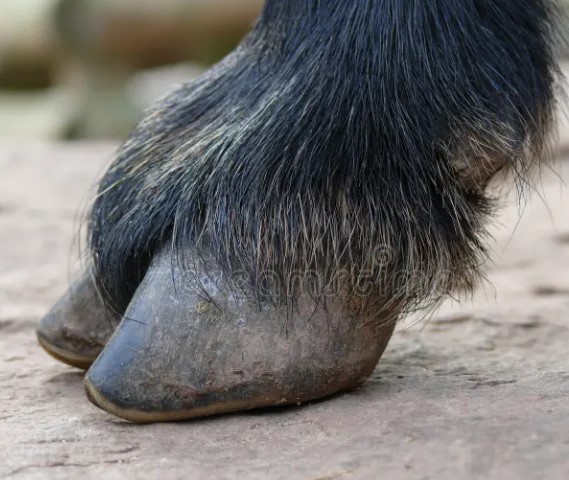 Dicroceliosis in cattle09.03.2024
 Demodicosis in cattle01.03.2024
 Purulent mastitis of cattle27.02.2024
- Hypodermatosis in cattle20.02.2024
- Hemonchoz in cattle11.02.2024
- Bursitis in cattle30.01.2024
- Brucellosis in cattle29.01.2024
- Bronchopneumonia in calves27.01.2024
- Bronchitis in cattle26.01.2024
- Mortellaro disease in cattle24.01.2024
- White muscle disease in cattle23.01.2024
- Babesiosis in cattle22.01.2024
- Cattle acidosis20.01.2024
- Arthritis in cattle20.01.2024
- Anaplasmosis in cattle18.01.2024
Misc
 "Неужели эта собачья жизнь - это мое?" История бывшего наркомана и экскурсия по рехабу на Полесье 28.11.2025
 A pedestrian was killed by a truck in the Minsk region. 28.11.2025
 What liability does a teenager face for crimes?27.11.2025
- The Eurasian Economic Commission (EEC) explained which goods will be tracked using navigation seals. 27.11.2025
- A drunk driver crashed into a taxi, killing four people. The Prosecutor General's Office has sent the case to court.26.11.2025
- Езда без прав, без ремней. Свыше 2,8 тыс. нарушений выявили на дорогах Гомельской области в выходные26.11.2025
- Lost his license for five years: A driver with 1.6 ppm alcohol level was detained in Mogilev.26.11.2025
- The number of fires in Belarus increased from January to October. 22.11.2025
- Belarusian customs officials stopped the import of approximately 136 kg of hashish from the European Union.21.11.2025
- Two teenagers in the Pukhovichi district stole cars for a friend's birthday.21.11.2025
- Children are no longer safe at home. In the Chechersky District, five children have been placed in state care. 20.11.2025
- Можно ли кормить ребенка грудью в общественном месте? Юрист поставил точку в вопросе20.11.2025
- A drunk pedestrian was hit by a car in Minsk.19.11.2025
- He was crossing the road on a red light and was very drunk. Investigative Committee reports on the accident in Mogilev in which a pedestrian was hit by a trolleybus. 19.11.2025
- Нетрезвого водителя с более 2 промилле помог задержать в Гомеле неравнодушный гражданин19.11.2025
- A pensioner in Gomel was sentenced for murder with particular cruelty.19.11.2025
Cloud of Tags
ОрганизмДолларПоддержкаДмитрий песковОбщепитБеларусьЗависимостьРоссияБолезньКлиматПесковНефтьКрупный рогатый скотУкраинаТАССМаслоОнлайнСудСельское хозяйствоЗаконКрупного рогатого скотаТребованияПтицефабрикаПроизводство молокаЭкономикаАвстралияМолокоСырыРоспотребнадзорИсследованияМужчиныМоскваМЧСФермерПродовольствиеАлкогольГерманияСвининаВьетнамРоссиянеЕврокомиссияЛекарстваКофеВыручкаДональд ТрампПодмосковьеДоходыБройлерКолбасыПродукты питания2024НедвижимостьBloombergАлександр ЛукашенкоРосстатВакцинацияУкраинеВакцинацииОтпускРоссельхознадзорЖивотноеGoogleFacebookМясо птицыReutersПродукцияБразилияМясоВостокРаботаАЧСЕгипетВеликобританияИммунитетКоронавирусCOVID-19СубсидииЗеленскийТатарстанПитаниеЛечениеДетиКарантинRussiaДжо БайденПрокуратураПроизводство мясаБизнесСотрудники ГАИВирусНовостиАзербайджанПензенской областиУзбекистанИнфляцияСмертьКредитИмпортСанкт-ПетербургПраздникЭкспортТурцияКанадаСанкцииСпутник vЦентробанкФруктыКитайЯпонияTelegramВ китаеКризисМинздравВладимир ПутинВластиГазпромФранцияПравительствоДиректорЕАЭСГовядинаВеликобританииДеньгиАлкогольного опьяненияЕСАнтибиотиковминистр сельского хозяйстваЦеныУрожаяИталияКазахстанМинфинМясокомбинатРубльЗдоровьеЗапретРодителиСШАМинсельхозЗаконопроектУченыеAppleИнвестицииПольшаКартофельГовядинуЯйцаКРСУборкаМинск