"This is the property of the people!" Lukashenko saved this enterprise from privatization and now it is no worse than Western ones
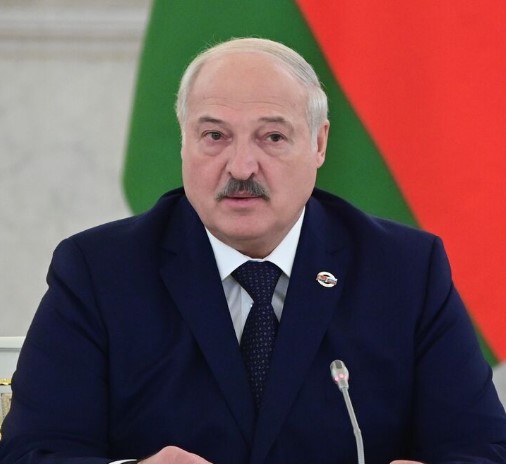
Photo is illustrative in nature. From open sources.

President of Belarus Alexander Lukashenko visited SOJSC "Kommunarka", March 2016 Photo from the archive President of Belarus Alexander Lukashenko visited SOJSC "Kommunarka", March 2016 Photo from the archive 12 Topic news
А вы знали, что открытие шоколада приписывается цивилизации ольмеков, которая также дала и современное название дереву какао. Историю развития шоколада продолжило племя майя. Благодаря язычеству шоколад стал очень ценным напитком. С ним было связано множество религиозных ритуалов и традиций. Ценность шоколада была велика, ведь он приравнивался к пище богов. Почему мы начали с этих интересных фактов? Все просто - новый выпуск YouTube-проекта БЕЛТА "По факту: решения Первого" мы посвятили одному из самых интересных предприятий нашей страны - первой белорусской кондитерской фабрике "Коммунарка". В нем мы расскажем, как минская фабрика стала предприятием не просто республиканского, а всесоюзного значения. Почему приватизация сладкого бизнеса сделала несладкой жизнь обычных работников. Как Александр Лукашенко спасал фабрику от рейдерского захвата и чем сегодня удивляет один из крупнейших кондитеров в Беларуси.
When was Kommunarka founded?The predecessor of the Kommunarka factory was a fashionable coffee shop and pastry shop, opened in the center of Minsk in 1905. Its enterprising owner Georgy Rachkovsky named his small enterprise in a Western manner - “Georges”. One can only guess what happened to the factory after the revolution. In 1917, on the basis of the former Georges confectionery, a new work collective was created, later called the First Belarusian Confectionery Factory. And in 1929, on the anniversary of the October Revolution, the enterprise received its modern name - “Kommunarka”.
Video screenshotTrue, the ceremonial change of the sign did not solve the main problems: the factory was still constrained by both space and production capacity. In the era of Soviet industrial achievements, a rather bold idea was born: to create a new modern confectionery production in Minsk. A government directive approved by Stalin scheduled the launch of the first building of the new mechanized factory on May 1, 1931. This event is now considered to be the official birthday of the enterprise.
“The enterprise has existed on this territory since 1931. When the Great Patriotic War took place, it was a very difficult time for the enterprise, because it was almost completely destroyed. Only the walls remained from it. When people returned back to the enterprise in 1944 (when liberated Minsk ), all the former workers began to restore the factory brick by brick, and literally in a matter of months they managed to do this. And already in December 1944, new products hit the store shelves. The factory began to produce confectionery products again. So great was the spirit and desire to give back your enterprise,” Tatyana Parmon, chairman of the primary trade union organization of the Kommunarka factory, plunges into history.
Video screenshotHistorically, Kommunarka had the ability to carry out a full production cycle - from roasting cocoa beans to producing natural sweets and chocolate. This emphasis on naturalness and GOST standards helped the factory survive perestroika, the difficult 90s, and the troubled 2000s. True, without state support, the modern history of the factory would have been much more prosaic. We'll talk about this a little later.
Long-livers of Kommunarka and unusual advice from the PresidentThere are several labor dynasties in the factory. Among them are Nikolai Komaev and his son Igor Komaev. Moreover, both are deputy general directors.
“I was just lucky to come to Kommunarka back in 1986. Since then, I’ve been working here for decades. I was once asked: “Aren’t you tired of coming to the same place every day for decades. My answer was: no. Because every day there is something new here: new tasks, new meetings, new communication. Every day is different,” says Nikolai Komaev, Deputy General Director for Production.
His son Igor came to the factory just a year later - in 1987. "How so?" - you ask. There is no mystery in this: the boy was just 6 years old at that time.
“I was a little boy, and my dad took me to work. I liked everything, and then in 2004 I was assigned here. At first I was a design engineer, then a mechanic in a caramel shop. There was no such abundance of equipment as there is now "- recalls Igor Komaev, Deputy General Director - Chief Engineer of the enterprise.
Before becoming a top manager, Igor went through his entire professional career as an engineer. And his father is glad that his son was noticed and offered a leadership position.
Video screenshotLine operator of the candy and chocolate shop Elena Khamenko has been working at the Kommunarka confectionery factory for four decades. She also told how she got into the company and why she loves her job.
“My grandmother really loved making confectionery, mainly bakery. And I told her that I would also be a pastry chef. I finished 10th grade and entered a technical school. A group of caramel makers had just opened there, and I was offered to work at Kommunarka,” she said confectioner.
According to her, there weren’t many young people at the factory at that time and they were wary of young specialists. “They didn’t believe that young people would be able to work. And the work was hard: in the caramel workshop there was a lot of manual labor. For example, the “Crayfish necks” candies were made entirely by hand - with hot syrup, with hot praline filling. It was difficult and mentally difficult,” - Today Elena Khamenko smiles, remembering those years.
The woman also shared a funny story. Several years ago, just before the pension reform, Elena Khamenko began to think about retirement. Just then, the President of Belarus Alexander Lukashenko was visiting Kommunarka, and the pastry chef decided to ask him what changes awaited people.
“He looked at me, smiled and said: “What kind of grandmother are you?!” I said: “I already have a grandson.” - “It doesn’t matter, you still have to go on maternity leave.” He is Danchenko (former general director of Kommunarka "Ivan Danchenko. - BELTA) then said to put me on maternity leave. I joked: “Only if you are a godfather!” Now many people remember this story. Some speak with kindness and a smile, and others speak with anger : “You promised the President that you would work,” Elena Khamenko told an unusual story.
How they tried to privatize KommunarkaAfter the collapse of the Soviet Union, the authorities immediately began selling off state-owned enterprises. Some plants and factories were corporatized under the guise of so-called voucher privatization. Kommunarka found itself in a similar situation in the late 90s. The shares, and they belonged mainly to the collective, someone began to buy up in order to get ownership of a tidbit, literally and figuratively.
“It was generally a very difficult period. It got to the point that strangers came and wanted to stop production. They could turn off the lights. And in my memory there were several such moments. The team was small, and people tried to unite. They tried to ensure that no one entered the production got in, didn’t get in,” Elena Khamenko recalls those years.
Photo from the archiveAt that time, wages were also falling, but people were in no hurry to leave the factory. Elena Leonidovna believes that if a person loves his profession and workplace, he will stay until the last. And this can be seen in practice: today a dozen more women the same age as our heroine work at Kommunarka; women came to work at the enterprise at the same time.
The factory workers then turned to Alexander Lukashenko. They asked to sort out the catastrophic situation that had developed at the enterprise after its corporatization. To save the factory, the head of state was forced for the first time to use the mechanism of the so-called “golden share”. It gives the state the right to intervene in the activities of joint-stock companies with a share of state ownership if they have an unfavorable socio-economic situation. Maybe this is not market-oriented, but in that situation the President was forced to act this way.
Elena Khamenko. Video screenshot“The one who came to us seriously and for a long time is not afraid of either “gold”, “silver” or other shares. Because he knows: in Belarus you just need to work honestly. Work honestly, and everything will be fine,” he emphasized then Alexander Lukashenko.
The head of state immediately made it clear: “wild” privatization methods will not work in Belarus. “It turns out that people a generation ago created property in order to live and work in peace. And today some new owner, an uncle from the outside, has come and begins to twist the arms of people who themselves created these enterprises with their sweat and labor. Property does not protect, does not participates in protecting the most important thing for a person - the opportunity to work in order to live,” the President noted.
Alexander Lukashenko is convinced that food industry enterprises (confectionery factories, dairies, bakeries and others) should be in the hands of the state, since they ensure food security for the entire country.
“We were already convinced that everyone who tried to take part in the purchase of Kommunarka shares only needed our market. If they had come here, then maybe you would have made some kind of caramel. But they didn’t need If only they would modernize the factory. They would make the most modern, popular chocolate product in another place, at home. Therefore, I was not mistaken when I stopped the robbery and the process of selling Kommunarka. And they did the right thing - other confectionery enterprises followed your path. These are wonderful enterprises that are now working well, and there is no need for their privatization, at least for now,” the Belarusian leader emphasized.
Why did the state return Kommunarka under its control?Over time, the “golden share” mechanism was canceled, and the largest package of Kommunarka’s “chocolate” asset ended up in the hands of a businessman from the United States . However, he was not particularly keen to develop the factory. He earned his capital in a much easier way: he created an intermediary company that sold raw materials to Kommunarka at an inflated price, and the finished chocolate and candies went to his other companies, but at a reduced cost. Experts call this mechanism “scissors,” which “cut” the enterprise on both sides, reducing its profitability and depriving it of profits.
The confectionery industry's performance was at zero. The factory was losing not only foreign markets, but even its own, Belarusian one. The pace of production fell. And at the end of 2012, Alexander Lukashenko made a tough decision - to return the factory under state control. They tried to blackmail the head of state: they say that such a step could in one way or another affect the investment climate in Belarus. But the President was determined. Of course, he is concerned about the investment climate , but not at the expense of the state and the Belarusian people.
Photo from the archiveWe need to clarify here. The Belarusian President is not at all against private property. But when privatization turns into privatization, the authorities will not put up with it. Getting ready-made production on the cheap, squeezing the maximum out of it and the workforce and getting rich is a simple matter. But only the businessman himself benefits from this approach. And if an enterprise is created from scratch and its creator cares about his business, the state will only support such private owners.
“I came across your production, probably, in the first years of my presidency, when mass privatization began. First of all, enterprises that produced food, clothing and other things that were necessary for people were seized. I realized: if we give away our main enterprises , "Kommunarka" (it started with it) and "Spartak", unknown to whom, which means our childrenThey may lose normal chocolate, normal sweets. So, out of purely human motives, I began to study these processes. Today I have absolutely no regrets about the decisions that I once made and returned these enterprises to the hands of the state. I did not proceed from any private property motives. I proceeded from the state interests. These enterprises should belong to the state,” said Alexander Lukashenko during a visit to the Spartak factory.
After Kommunarka came under state control, the factory was seriously updated. Today it is a large modern enterprise, equipped with flow-mechanized lines and automated production processes. Every year the enterprise produces over 27 thousand tons of sweet products. The assortment includes more than 350 types of confectionery products. They are supplied to more than 26 countries: Russia, China , Azerbaijan , Kazakhstan , Armenia, USA, Canada, Germany, Israel and others.
Photo from the archive“I went through a stage when there was the participation of private individuals. This stage did not justify itself. The task of a businessman is not to invest money in the main production, not to develop the business. And the state looks to the future. In this difficult situation in which we work, the state provides assistance even in the supply of raw materials in order to prevent plant downtime. And this can be done under all difficult conditions,” said Nikolai Komaev.
The chief engineer has the same position: “Our factory is equipped no worse than Western Mondelez and other factories. And even better than many factories that I saw in Poland. A lot of manual labor is used there. There are also good ones. But I still think "that ours is one of the best factories in the post-Soviet space. And not the last in Europe in terms of equipment. If you look at European standards, we have the highest equipment. All manufacturers are top."
What's happening to Kommunarka now?Over the past 10 years, about $100 million has been invested in the enterprise. General Director of Kommunarka, member of the Council of the Republic Sergei Anyukhovsky noted that the stage of development of the factory in the existing territories has already ended: it no longer has enough production capacity. Therefore, it was decided to build another factory. It will be located in the Zavodskoy district of Minsk, and cocoa beans will be processed there.
“Design work is already underway, a tender is being held for the purchase of equipment for the processing of cocoa beans and the production of chocolate masses. The second stage is the purchase of lines for the production of finished confectionery products. Of course, the main emphasis will be on import substitution and the production of export-oriented products,” said Sergey Anyukhovsky.
So far, the existing capacities allow Kommunarka to process 3 thousand tons of cocoa beans per year. The new production will be able to process more than 30 thousand tons annually. “We will provide ourselves, other confectionery factories and Belarusian enterprises with cocoa products produced in Belarus. Half will be exported,” the general director noted.
Sergey Anyukhovsky. Video screenshotHow Kommunarka began producing presidential chocolateIt is curious that thanks to the head of state, Kommunarka began producing chocolate and sugar-free candies. President dark chocolate appeared on store shelves back in 2017. Today it comes out in three types - with different contents of cocoa beans. Especially for this series, Kommunarka technologists blended the best varieties of cocoa beans: from Venezuela, Colombia, Ecuador and Côte d'Ivoire. But low-calorie sweets without sugar are an exclusive and obligatory component of gifts from the Belarusian leader.
Photo from the archive“Once I was visiting Medvedev, and he treated me to imported chocolate. Then I talked with the technologists at Kommunarka and ordered them to make chocolate, but without sugar.
I say: do as you want! They give me 20 options! We are no longer happy that they contacted me. They found the technology. Chocolate is quite sweet, but without sugar,” said Alexander Lukashenko during the “Big Conversation” several years ago.
Over time, another chocolate product appeared under the brand of the head of state. For young sweet tooths, on behalf of the President, we developed milk chocolate “For Our Children”.
Photo from the archive"One chocolate bar contains one glass of milk. The special feature is that the sweetness of the chocolate is reduced by 15%. Of course, the chocolate was appreciated by small children - tasters from orphanages, whom we invited to our place. The entry ticket was a children's drawing "Dream". Each drawing was special , but all the drawings had one thing in common - for the whole family to be together. We tried to reflect this on the packaging of our chocolate. By purchasing President chocolate, you also become a participant in the "Let's Help Children Together" campaign - part of the money is transferred to a special fund to support children in orphanages and children with special needs,” noted Deputy Head of the Marketing and Advertising Department Irina Matsygud.
How Lukashenko ordered to make sweets according to a Chinese recipeAnd recently, Alexander Lukashenko set another interesting task for confectioners - to establish mass production of Belarusian sweets from powdered milk. Why suddenly? The story is interesting.
In July, during one of his working trips around the country, the President of Belarus drew attention to a popular product in China - candies made from pressed milk powder. There is enough of this raw material in Belarus, and the head of state proposed organizing such production at home. Officials quickly responded to Alexander Lukashenko’s instructions, and soon released a small test batch.
“You were tasked with making sweets. Did you make them or not? So that people would understand that we have a lot of skimmed milk powder. And in China we spied on their technologies for the production of various kinds of confectionery products, in this case candies. Generally without sugar from milk powder. You can add some herbal supplements there. Especially for children. Honestly, when Nikolai brought them to me from China , I tried it myself. Of course, it’s not for me. But children, small children consume this delicacy with the greatest pleasure. Why don’t we can we do this and sell it? And, most importantly, provide for our people,” the President emphasized, receiving Deputy Prime Minister Leonid Zaits with his report.
Photo from the archivePowdered milk dragees can already be seen in Kommunarka branded stores. Soon schoolchildren will be treated to healthy sweets. “In the near future we will begin supplying 50-gram milk pellets to school feeding factories - these are the same candies with a high content of milk powder (almost 40% of the nominal weight of the candy),” said the general director of the factory.
As Irina Matsygud, deputy head of the marketing and advertising department of the Kommunarka factory, noted, in China a generation of children has already been raised on tableted sweets made from powdered milk. They are consumed as a snack.
The story of "Kommunarka" could be included in the script of a feature film. Romantic beginning, intense climax and motivating happy ending. And this is thanks to the decisions of the First. Filmmakers, take note!
The project was created using targeted funds for the production of national content.
Read together with it:
- Rosselkhoznadzor monitored the export of more than 57,000 tons of veterinary goods from St. Petersburg.These products were shipped to countries including Azerbaijan , Angola, Vietnam , and China . 1,500 doses of veterinary vaccines were also exported to Moldova, and over 12.4 million eggs were shipped to Sierra Leone and the UAE. Officials from Rosselkhoznadzor verified compliance with veterinary and sanitary requirements in 15 importing countries , and the goods were shipped with specialized veter...
- Mexican and Canadian beef is losing ground in the US market.Beef from Mexico and Canada is losing ground in American kitchens and restaurants, despite being imported without tariffs imposed on all exports by US President Donald Trump a year ago. According to Tegra Consultant, Canadian meat sales to the United States have fallen by 23.56% over the past two years, while Mexican food exports to that market have fallen by 11.5......
- Blaming cows was a mistake: meadows absorb more gases than cattle emit.Cows have become a symbol of controversy, as debates about their environmental impact, particularly regarding methane emissions, have generated headlines, political decisions, and criticism. But while many study the animals themselves, a group of researchers decided to examine the soil. At the University of Nebraska-Lincoln, a team of researchers led by Professor Galen Erickson conducted a study t...
- EU and Mercosur: Experts warn of shortage of EU veterinarians to control imports and associated health risksThe agreement between the European Union ( EU ) and Mercosur, which is currently stalled, has caused concern in the primary sector of various EU countries, including Spain, where, in addition to livestock breeders and agricultural producers, veterinarians have joined the complaints. It should therefore be remembered that various veterinary institutions, such as the colleges of Asturias, Lugo and C...
- Kirilenko spoke about the problems facing Russian teams after sanctions were lifted.The head of the Russian Basketball Federation (RBF) stated that FIBA could make a final decision on the return of Russian basketball in April, but visa barriers remain the main problem. Andrei KirilenkoIn an interview with RBC Sport, Russian Basketball Federation (RBF) President Andrei Kirilenko discussed the possible return of Russian basketball to the international arena. He also cited visa an...
Test for Atnibiotics in Milk
 Express tests for determining the residual amount of β-lactams, tetracyclines, chloramphenicol, streptomycins in milk, whey
 Rapid tests for determining the residual amount of tetracyclines in meat
 Express tests for determining the residual amount of β-lactams and tetracyclines in milk, whey
 Rapid 4 in 1 tests for determining the residual amount of neomycin, kanamycin, gentamicin, spectinomycin in milk, whey
Laboratory equipment
 IRF-454 B2M refractometer with illumination and additional scale (Russia)
 Scrubber "KELTRAN" (KELTRUN)
 Homogenizer (laboratory blender) BagMixer
 Butyrometers for milk, cream, skim milk and buttermilk
 VISCO Viscometer
 Cylindrical weights without head
- Fast IR decomposition systems - Turbotherm
- ROTAVISC IKA Viscometer (Germany)
- ColonyStar automatic microbial colony counter
- Closet
- Areometer AON - 1 (set of 19)
- HI 98509 Checktemp 1 Portable Electronic Thermometer with Remote Sensor
- IKA PETTE vario single-channel laboratory pipettes with variable volume (Germany)
- Analyzer of somatic cells in milk "SOMATOS Mini"
- Dry-air thermostats TS (SKTB, Smolensk)
Packing



Additional Products
 General purpose environment of SPC "Biocompass-S" (Uglich)
 Ice cream sticks (round)
 Pepsin whey pork
 Petri dish 90 mm
 Ice cream sticks Standard 114
 Ice cream sticks Standard 93
- J-Bottom technology
- Ice cream sticks Magnum (curly)
- Wafer cup and cone
- Ice cream sticks (with logo)
- Auxiliaries for sugar products

Microbiology
 MicroFast® Coliform & E.coli Count Plate
 Substrate for determining QMAFAnM (catalog number LR1001)
 Yeast & Mold Count Plate (cat. no. LR1003) MicroFast® Yeast & Mold Count Plate
 Coliform Count Plate (catalog number LR1002) MicroFast® Coliform Count Plate
 Substrate for determining the number of staphylococci (Catalog number LR1005) MicroFast® Staphyloccocus aureus Count Plate
 MicroFast® Lactic Acid Bacteria Count Plate (Part Number LR1312)
- MicroFast® Enterobacteriaceae Count Plate (cat. no. LR1011)
- Substrate for accelerated determination of QMAFAnM, (catalog number LR1321)
- MicroFast® Environmental Listeria Count Plate
- MicroFast® Staphyloccocus aureus Confirmation Plate Staph.aureus Confirmation Plate (cat. no. LR1005Q)
- MicroFast® Bacillus cereus Count Plate (catalog number LR1010)
- MicroFast® Salmonella Count Plate (SAL), for the determination of Salmonella in food and environmental samples (Catalog #LR1006)
- MicroFast® Microbiological Substrates
Our News
 В Беларуси начались продажи цитрусовых на биржевых торгах19.12.2025
 "Хотим четко понимать, что будет в нашем регионе". Чего еще белорусы ждут от ВНС18.12.2025
 Housing, transportation to work, and holiday bonuses. Just like at the Negnevichi agricultural cooperative.18.12.2025
- Строительство, транспорт, информация и связь. Минэкономики назвало лидеров по темпам роста в Беларуси18.12.2025
- Производства по выпуску поддонов намерены наладить в Дрогичинском и Лунинецком лесхозах18.12.2025
- Есть ли разница между сгущенкой и сгущенным молоком, разъяснили в ЕЭК18.12.2025
- Why do Belarusians travel to Russia for certain medications? The EEC Minister answered.18.12.2025
- A modern dairy complex for 800 heads of cattle was opened in the Volozhin district.17.12.2025
- Беларусь и Татарстан будут развивать биржевую торговлю продукцией нефтехимии и промышленными товарами16.12.2025
- Китайские компании начали продавать полимерную упаковку на БУТБ16.12.2025
- Производство сельхозпродукции в Беларуси в январе-ноябре увеличилось на 2,6%16.12.2025
- Новую молочно-товарную ферму ввели в эксплуатацию в Чечерском районе14.12.2025
- Инвестиции, дисциплина, шефское плечо. Сектор АПК намерены серьезно развивать в Гомельской области 14.12.2025
- Почему подростка 12-13 лет нельзя "загонять в детство"? Мнение священника14.12.2025
- БУТБ и Центр поддержки экспорта Владимирской области будут взаимодействовать по линии биржевой торговли13.12.2025
- Trade in food and agricultural products between Belarus and Serbia has increased by almost 30%.12.12.2025
Articles
 Успех птицефабрики «Сметанино»: Повышение производительности в рамках национального проекта28.01.2026
 Temporary restrictions on the import of Belarusian poultry products into Russia28.01.2026
 Wholesale pork prices are falling due to an influx of chicken from China.28.01.2026
- Презентация новых технологий утилизации отходов на бизнес-форуме iAGRI28.01.2026
- Новый мясоперерабатывающий завод за 2,5 миллиарда рублей появится в Курской области28.01.2026
- Аудит, проведенный Турцией, открывает новые возможности для бизнеса в сфере производства мяса и животноводства в Парагвае28.01.2026
- Europe's first outbreak of bird flu among cows has sparked alarm in Galicia.28.01.2026
- Канада одобрила использование свиней, устойчивых к PRRS, в пищевой цепочке28.01.2026
- Argentina: Distribution of Chinese quota among exporters should be regulated28.01.2026
- Bankruptcy of the Bashkir Poultry Complex: Creditors and partners may be held liable28.01.2026
- The Bashkirskaya poultry farm received the right to insurance payments after a widespread outbreak of bird flu.28.01.2026
- Miratorg is recognized as a leader among employers of young people in the agricultural sector.28.01.2026
- Аграрии России получили рекордные выплаты: более 10,8 млрд рублей за утрату урожая и поголовья в 2025 году28.01.2026
- Russia is expecting a new surcharge on freight rail tariffs starting in the spring of 2026.28.01.2026
- Brazil breaks beef export record28.01.2026
- Высокий спрос в Соединенных Штатах на высококачественные отрубы говядины приводит к росту цен на говядину в Мексике28.01.2026
Economics
 Rubio said Ukraine is receiving weapons from the US, while Russia is receiving sanctions.20.12.2025
 The EU has expanded sanctions against the shadow fleet.19.12.2025
 Britain imposed sanctions against Tatneft and RussNeft19.12.2025
- WSJ узнала о планах США «устроить карантин» для флота Венесуэлы19.12.2025
- Bloomberg подтвердил возможные «контрмеры» России против ЕБРР и APG19.12.2025
- The EU will discuss the fate of Russia's assets. In which countries are they frozen?18.12.2025
- Foreign Affairs рассказала о реальной угрозе Европе18.12.2025
- Reuters узнал, что Трамп еще не принял решение по санкциям против России18.12.2025
- Вилла Ротенберга в Финляндии попала под арест из-за налогового долга18.12.2025
- China has spoken out against the seizure of Russia's frozen assets in the EU.17.12.2025
- Эстония предложила ужесточить визовые меры для борьбы с теневым флотом17.12.2025
- How are the frozen Russian assets that the EU wants to seize distributed?16.12.2025
- Euractiv named seven EU countries that oppose the seizure of Russian assets.16.12.2025
- Helsinki stated that the EU has no alternative to confiscating Russian assets.16.12.2025
- The United States has decided to ease sanctions against Belarus.14.12.2025
- Орбан обвинил ЕС в систематическом нарушении законов ради Украины12.12.2025
Antibiotics in Milk
 Antibiotics found in McDonald's Big Mac and KFC Chefburger05.05.2021
 McDonald's accused Roskachestvo of violations in the study of burgers05.05.2021
 Rospotrebnadzor gave recommendations on taking antibiotics05.05.2021
- Scientists discover new cause of Parkinson's disease05.05.2021
- Doctors called the main mistakes in the treatment of influenza and SARS05.05.2021
- Doctor Komarovsky spoke about the negative consequences of taking antibiotics05.05.2021
- Ministry of Health expert urged not to use antibiotics to prevent COVID05.05.2021
- The Ministry of Health expressed concern about the increase in the use of antibiotics for COVID05.05.2021
- Expert of the Ministry of Health spoke about the consequences of taking antibiotics for COVID-1905.05.2021
- The pulmonologist said the inadmissibility of antibiotics for the prevention of COVID05.05.2021
- Antibiotics are medicines aimed at destroying certain disease-causing bacteria in a living organism.02.04.2021
- Myasnikov warned against the use of antibiotics for COVID-1927.02.2021
- Russia has banned the import of products from four Belarusian agricultural enterprises. Another one is under enhanced control26.11.2020
- Belarus implements a project to destroy obsolete pesticides24.11.2020
- Why antibiotics (and only if they) are incompatible with alcohol?10.11.2020
- antibiotics and milk23.10.2020
Antibiotics in Meat
 Antibiotics in Meat: Prevention, Regulation and Consumer Health Concerns12.01.2024
 Antibiotics in Fried or Boiled Meat: Facts and Misconceptions12.01.2024
 Antibiotics in Sausage: Reality, Risks and Need for Control12.01.2024
- Antibiotics in Pelmeni: Real Threat or Myth?09.01.2024
- Antibiotics in Pork: Health Effects and Cooking Recommendations08.01.2024
- Antibiotics in Chicken: Safety, Regulation and Consumer Health Concerns08.01.2024
- Antibiotics in meat: problems and solutions06.01.2024
- Antibiotics in Beef: Between Animal Health and Consumer Safety06.01.2024
- Antibiotics in Chicken Meat: Safety, Regulation and Concern for Consumer Health06.01.2024
- Antibiotics in Rabbit Meat: Safety, Efficiency and Care for Consumers05.01.2024
- Antibiotics in Pork: Balance Between Health Concerns and Consumer Safety03.01.2024
- Antibiotics in Lamb03.01.2024
- Antibiotics in Meat: Real Risks and Transparency in Food Production29.12.2023
10 Interesting Facts
 Marbled meat: 10 interesting facts19.01.2024
 10 Fascinating Facts About Cattle Hoof Baths18.01.2024
 Antibiotics - 10 interesting facts18.01.2024
- Cutlets - 10 interesting facts18.01.2024
- 10 Interesting Facts about Carp17.01.2024
- Salmon - 10 Interesting Facts17.01.2024
- Beer belly 10 interesting facts17.01.2024
- Beer - 10 interesting facts17.01.2024
- Antibiotic tests pioneer - 10 interesting facts17.01.2024
- Rubber rings for castration - 10 interesting facts17.01.2024
Diseases of cattle
 Dicroceliosis in cattle09.03.2024
 Demodicosis in cattle01.03.2024
 Purulent mastitis of cattle27.02.2024
- Hypodermatosis in cattle20.02.2024
- Hemonchoz in cattle11.02.2024
- Bursitis in cattle30.01.2024
- Brucellosis in cattle29.01.2024
- Bronchopneumonia in calves27.01.2024
- Bronchitis in cattle26.01.2024
- Mortellaro disease in cattle24.01.2024
- White muscle disease in cattle23.01.2024
- Babesiosis in cattle22.01.2024
- Cattle acidosis20.01.2024
- Arthritis in cattle20.01.2024
- Anaplasmosis in cattle18.01.2024
Misc
 В реальном и виртуальном пространстве. В МВД рассказали о рисках для школьников в период каникул 23.12.2025
 Traffic police in the Vitebsk region detained 14 unlicensed drivers over the weekend.23.12.2025
- A Minsk resident forged a sick leave certificate to conceal the circumstances of his injury.23.12.2025
- В Могилеве таксист украл оставленный в авто ноутбук21.12.2025
- A car driven by a drunk driver overturned on the Moscow Ring Road. 21.12.2025
- Усиленный контроль. Как в Минске будут обеспечивать безопасность в новогодние праздники19.12.2025
- VR farms, BulbaTech, a racing truck. What's so special about the "My Belarus" exhibition?19.12.2025
- The number of drownings in the Minsk region has been reduced by 30% this year.18.12.2025
- Житель Гомельского района предъявил ГАИ фальшивые права: возбуждено уголовное дело17.12.2025
- ГАИ столицы 19 декабря проведет Единый день безопасности дорожного движения под девизом "Останови беду!"17.12.2025
- На дорогах Витебской области за выходные произошло почти 60 ДТП 16.12.2025
- Около 60 бесправников остановили на дорогах Гомельской области за три дня 16.12.2025
- Alcohol was hidden in air heaters. A Polish carrier imported undeclared goods into the EAEU.16.12.2025
- A cyclist was killed by a truck in the Zhlobin district. 13.12.2025
- A Minsk resident slammed a store door to vent his anger: a criminal case has been opened.13.12.2025
- The Ministry of Antimonopoly Regulation and Trade has established a list of alcohol for free import in 2026.12.12.2025
Cloud of Tags
ЛекарстваОбщепитМинздрав2024ЦеныБразилияНедвижимостьАлкогольЭкономикаМаслоОтпускДеньгиКризисКанадаУборкаВыручкаУрожаяОнлайнЛечениеДолларReutersЖивотноеКолбасыПтицефабрикаУкраинеМинфинГовядинуЯйцаДжо БайденВакцинацииНовостиМясокомбинатПроизводство молокаУзбекистанАлександр ЛукашенкоСырыТАССМясоAppleНефтьСудЕврокомиссияИсследованияАзербайджанВакцинацияИталияДетиСельское хозяйствоПродукцияВостокГазпромБолезньВеликобританииПитаниеМужчиныАвстралияПольшаМясо птицыКоронавирусСубсидииЭкспортРубльФранцияКофеБеларусьCOVID-19ЗависимостьПраздникПроизводство мясаРодителиGoogleМинсельхозЗдоровьеЗаконопроектГовядинаВластиФермерУченыеИммунитетСанкцииАнтибиотиковДоходыКарантинСпутник vТурцияКредитБройлерВ китаеСотрудники ГАИЕгипетКрупный рогатый скотТатарстанЗапретКартофельRussiaРоспотребнадзорЗаконПесковРосстатЗеленскийДмитрий песковРаботаАлкогольного опьяненияПензенской областиБизнесПодмосковьеГерманияКитайМолокоЯпонияФруктыBloombergЕСИнвестицииПродукты питанияВьетнамКлиматОрганизмминистр сельского хозяйстваИнфляцияВладимир ПутинСвининаСШАКрупного рогатого скотаРоссельхознадзорTelegramМинскЦентробанкАЧСВирусТребованияВеликобританияМЧСПродовольствиеДиректорПравительствоИмпортРоссияЕАЭСКазахстанСмертьМоскваFacebookСанкт-ПетербургУкраинаПрокуратураДональд ТрампКРСПоддержкаРоссияне