
Combating smuggling and rerouting cargo. How Belarusian customs officers work

Photo is illustrative in nature. From open sources.


Customs officers in Belarus celebrate their professional holiday on September 20th . Clearing cargo and combating smuggling and illegal supply chains are part of their daily work. Despite challenging conditions, sanctions , and restrictions, customs continues to protect the country's economic interests. New technologies are being introduced, and infrastructure is being improved.
Eastward Vector
According to the State Customs Committee, the mechanisms implemented by the Belarusian side have enabled the continuation of foreign economic activity. The measures regarding re-contracting and reloading, adopted in response to sanctions, have prevented European carriers from monopolizing the market for transportation within the EAEU .
"Budget revenues from customs authorities remained virtually unchanged from last year. Due to the decline in trade relations with EU countries, Belarusian businesses have reoriented themselves toward friendly countries. The main flows of export cargo are directed primarily to routes to the east and south. Currently, the flow of goods to the east is already five times greater than to the west," the State Customs Committee noted.
Infrastructure Expansion
Measures are being taken to create conditions for citizens waiting to cross the border. Electronic registration is now available, as well as the ability to arrive at the checkpoint upon notification, without the mandatory entry into the waiting area.
Waiting areas near the checkpoints are being improved. In December, the development of a 280-space parking area for cars and buses at the Brest checkpoint will be completed, and in January 2026, a 780-space parking area for trucks at the Kozlovichi checkpoint will be completed.
In April, a large-scale reconstruction of the Berestovitsa checkpoint on the Belarusian-Polish border was completed.
Dangerous and Illegal Cargo:
The number of people wishing to smuggle goods across the border remains high. Various tricks are used, including hiding places and caches in cars, and double bottoms in suitcases and bags. Customs officers can detect these tricks using "large X-rays." All existing road checkpoints are equipped with inspection and screening systems, and certain trains also pass through them.
"A total of 14 such scanning systems are currently in use. An additional three mobile systems are planned for purchase by the end of 2025," the State Customs Committee reported.
The suppression of illegal border crossings and drug trafficking is under special control. This year alone, 234 criminal cases have been opened on such incidents. More than 1.1 tons of such substances, as well as over 7,700 units of medications containing psychotropic substances, have been seized.
During inspections, operational searches, and special operations, customs authorities also discovered more than 60 weapons and their components, as well as 4,200 rounds of ammunition. In April, the import of 580 kg of a powerful NATO-produced explosive was intercepted.
New developments:
Customs authorities have completely switched to remote cargo clearance at the electronic declaration center. Remote release of passenger cars has also been introduced.imported for personal use by Belarusian citizens.
"Considering that vehicle import logistics have shifted to the east and the main burden has fallen on customs clearance points in the Minsk and Vitebsk regions, passenger customs declarations are being distributed for clearance to other regions of the country," the State Customs Committee noted.
Since 2018, Belarus has been implementing a system for tracking transit shipments of goods using electronic seals. The use of these devices allows customs authorities to reduce the number of customs controls at checkpoints and monitor the movement of vehicles during their transit through the country. This year, a total of 220,000 seals have been applied.
Expert support
One of the unique departments is the customs laboratory. Its history began in December 1993 with the formation of the Department of Customs Research and Expertise of the Minsk Regional Customs. Since 2012, the laboratory has been part of the departmental Institute of Customs Authorities.
Initially, the range of goods examined consisted only of metals and alloys, certain types of chemical products, narcotic drugs, and psychotropic substances. The unit is now equipped with modern equipment that allows it to conduct not only customs but also forensic examinations.
It examines food products and light industry items, narcotics and psychotropic substances, potent and toxic substances, bladed weapons, conducts art and handwriting examinations, and verifies the authenticity of cash, documents, and other items.
Since 2023, gemological examination has been added to the list of services—the diagnostics and detailed study of precious stones (diamonds, sapphires, rubies, emeralds, and alexandrites), their imitations, and synthetic counterparts. The customs laboratory is one of the few in Belarus that performs such diagnostics.
"The laboratory's specificity is that the examination is conducted as part of customs control," explained Yana Nikandrova, head of the customs laboratory. "We have two main tasks. The first is monitoring restricted and prohibited items and products. The second is verifying that the product name matches the accompanying documents. We conduct several types of examinations, about 40% of which are for the detection of narcotic drugs, psychotropic substances, potent substances, and toxic substances. We examine liquids, medications, dietary supplements, powders, teas, food products, and more. The spectrum is very broad."
One recent example is the examination of pet food supplied to Belarus . The experts suspected counterfeiting. They needed to determine the protein content. It turned out that the level was normal, but due to the presence of urea, which is unsafe. The product was not allowed into the country.
Specialists also analyzed a large shipment of clothing imported from Europe as second-hand. It was discovered that all of the items (approximately 400) showed no signs of wear. The carrier was fined 30% of the item's value. Customs is
a responsible profession , not just border control ; it encompasses a multitude of different departments performing a large number of tasks. For example, Tatyana Ivanova, Head of the Department for Analysis and Control of Customs Procedures at the Minsk Regional Customs Office, has served in customs for over 15 years. Her job is to analyze and control customs transit: to ensure cargo is properly cleared, not lost in transit, and arrives at its destination on time. "Technology has advanced greatly in recent years. Digitalization is very helpful and covers a wide range of procedures. But when you interact with people, sometimes unusual, non-standard situations arise that require timely decisions. We are always ready to respond promptly," she said. Another area of customs officers' work is analyzing X-ray images obtained using inspection and screening systems. There are three types of such devices: stationary, rail-mounted, and mobile. "The main objective is to prevent prohibited goods and substances, such as drugs, weapons, and ammunition, from entering the country. National security depends, among other things, on the attentiveness of the operator-analyst," emphasized Ivan Danilovich, Head of the Customs Control Operations Department at the Minsk Regional Customs Office. "Over the course of ten years of practice, we've encountered various cases. For example, we discovered a batch of small arms ammunition hidden in the technical compartments of a tractor. A black spot was visible in the image. We conducted an inspection and discovered boxes containing bullets." One of the largest divisions of the Minsk Regional Customs Office is the Minsk National Airport customs post. "We operate under significant passenger traffic conditions. Businessmen, tourists, athletes, and diplomats fly into our airport. We need to find a personal approach to each individual and respond promptly to unusual situations. "At the same time, we always remain friendly, so that those visiting Belarus have only positive impressions of the country," shared Ekaterina Labkovich, Deputy Head of Customs Operations and Control Department No. 1 at Customs Post Minsk National Airport. "The most memorable experiences for me are meeting famous people, show business stars, and sports delegations. We sometimes uncover violations, mainly related to the carriage of cash. A few years ago, during a questioning of a passenger on a flight, doubts arose about the purpose of his visit. After the inspection, it was discovered that the man was carrying narcotics. We responded quickly."
International mail is also processed at customs. Parcels are inspected both upon entry and exit from Belarus. The majority of goods shipped are candy, souvenirs, clothing, tableware, and bed linens. Duty-free import is 200 euros, up to a maximum of 31 kg. Weapons, weapon parts, narcotics, alcohol, tobacco products, and cash are prohibited in parcels.
Inna Melnichenko, Head of Customs Operations and Control Department No. 2 at Minsk Post, explained that all mail is X-rayed. Accompanying documents and information are also checked. If an employee has any doubts, the parcels are manually inspected by postal employees.
"I want to assure you: the possibility that customs officers broke, took, planted, or discarded something during inspection is excluded. All international mail is opened jointly with a postal employee, and video surveillance is mandatory. The postal operator is responsible for its safety."
The Customs Service demonstrates high adaptability, promptly implementing changes to procedures and control standards. Despite the challenges, customs officers continue to effectively perform their duties and seek new opportunities for development.
Nadezhda Matveeva,
photo by Sergei Shelega,
BelTA.
Eastward Vector
According to the State Customs Committee, the mechanisms implemented by the Belarusian side have enabled the continuation of foreign economic activity. The measures regarding re-contracting and reloading, adopted in response to sanctions, have prevented European carriers from monopolizing the market for transportation within the EAEU .
"Budget revenues from customs authorities remained virtually unchanged from last year. Due to the decline in trade relations with EU countries, Belarusian businesses have reoriented themselves toward friendly countries. The main flows of export cargo are directed primarily to routes to the east and south. Currently, the flow of goods to the east is already five times greater than to the west," the State Customs Committee noted.
Infrastructure Expansion
Measures are being taken to create conditions for citizens waiting to cross the border. Electronic registration is now available, as well as the ability to arrive at the checkpoint upon notification, without the mandatory entry into the waiting area.
Waiting areas near the checkpoints are being improved. In December, the development of a 280-space parking area for cars and buses at the Brest checkpoint will be completed, and in January 2026, a 780-space parking area for trucks at the Kozlovichi checkpoint will be completed.
In April, a large-scale reconstruction of the Berestovitsa checkpoint on the Belarusian-Polish border was completed.
Dangerous and Illegal Cargo:
The number of people wishing to smuggle goods across the border remains high. Various tricks are used, including hiding places and caches in cars, and double bottoms in suitcases and bags. Customs officers can detect these tricks using "large X-rays." All existing road checkpoints are equipped with inspection and screening systems, and certain trains also pass through them.
"A total of 14 such scanning systems are currently in use. An additional three mobile systems are planned for purchase by the end of 2025," the State Customs Committee reported.
The suppression of illegal border crossings and drug trafficking is under special control. This year alone, 234 criminal cases have been opened on such incidents. More than 1.1 tons of such substances, as well as over 7,700 units of medications containing psychotropic substances, have been seized.
During inspections, operational searches, and special operations, customs authorities also discovered more than 60 weapons and their components, as well as 4,200 rounds of ammunition. In April, the import of 580 kg of a powerful NATO-produced explosive was intercepted.
New developments:
Customs authorities have completely switched to remote cargo clearance at the electronic declaration center. Remote release of passenger cars has also been introduced.imported for personal use by Belarusian citizens.
"Considering that vehicle import logistics have shifted to the east and the main burden has fallen on customs clearance points in the Minsk and Vitebsk regions, passenger customs declarations are being distributed for clearance to other regions of the country," the State Customs Committee noted.
Since 2018, Belarus has been implementing a system for tracking transit shipments of goods using electronic seals. The use of these devices allows customs authorities to reduce the number of customs controls at checkpoints and monitor the movement of vehicles during their transit through the country. This year, a total of 220,000 seals have been applied.
Expert support
One of the unique departments is the customs laboratory. Its history began in December 1993 with the formation of the Department of Customs Research and Expertise of the Minsk Regional Customs. Since 2012, the laboratory has been part of the departmental Institute of Customs Authorities.
Initially, the range of goods examined consisted only of metals and alloys, certain types of chemical products, narcotic drugs, and psychotropic substances. The unit is now equipped with modern equipment that allows it to conduct not only customs but also forensic examinations.
It examines food products and light industry items, narcotics and psychotropic substances, potent and toxic substances, bladed weapons, conducts art and handwriting examinations, and verifies the authenticity of cash, documents, and other items.
Since 2023, gemological examination has been added to the list of services—the diagnostics and detailed study of precious stones (diamonds, sapphires, rubies, emeralds, and alexandrites), their imitations, and synthetic counterparts. The customs laboratory is one of the few in Belarus that performs such diagnostics.
"The laboratory's specificity is that the examination is conducted as part of customs control," explained Yana Nikandrova, head of the customs laboratory. "We have two main tasks. The first is monitoring restricted and prohibited items and products. The second is verifying that the product name matches the accompanying documents. We conduct several types of examinations, about 40% of which are for the detection of narcotic drugs, psychotropic substances, potent substances, and toxic substances. We examine liquids, medications, dietary supplements, powders, teas, food products, and more. The spectrum is very broad."
One recent example is the examination of pet food supplied to Belarus . The experts suspected counterfeiting. They needed to determine the protein content. It turned out that the level was normal, but due to the presence of urea, which is unsafe. The product was not allowed into the country.
Specialists also analyzed a large shipment of clothing imported from Europe as second-hand. It was discovered that all of the items (approximately 400) showed no signs of wear. The carrier was fined 30% of the item's value. Customs is
a responsible profession , not just border control ; it encompasses a multitude of different departments performing a large number of tasks. For example, Tatyana Ivanova, Head of the Department for Analysis and Control of Customs Procedures at the Minsk Regional Customs Office, has served in customs for over 15 years. Her job is to analyze and control customs transit: to ensure cargo is properly cleared, not lost in transit, and arrives at its destination on time. "Technology has advanced greatly in recent years. Digitalization is very helpful and covers a wide range of procedures. But when you interact with people, sometimes unusual, non-standard situations arise that require timely decisions. We are always ready to respond promptly," she said. Another area of customs officers' work is analyzing X-ray images obtained using inspection and screening systems. There are three types of such devices: stationary, rail-mounted, and mobile. "The main objective is to prevent prohibited goods and substances, such as drugs, weapons, and ammunition, from entering the country. National security depends, among other things, on the attentiveness of the operator-analyst," emphasized Ivan Danilovich, Head of the Customs Control Operations Department at the Minsk Regional Customs Office. "Over the course of ten years of practice, we've encountered various cases. For example, we discovered a batch of small arms ammunition hidden in the technical compartments of a tractor. A black spot was visible in the image. We conducted an inspection and discovered boxes containing bullets." One of the largest divisions of the Minsk Regional Customs Office is the Minsk National Airport customs post. "We operate under significant passenger traffic conditions. Businessmen, tourists, athletes, and diplomats fly into our airport. We need to find a personal approach to each individual and respond promptly to unusual situations. "At the same time, we always remain friendly, so that those visiting Belarus have only positive impressions of the country," shared Ekaterina Labkovich, Deputy Head of Customs Operations and Control Department No. 1 at Customs Post Minsk National Airport. "The most memorable experiences for me are meeting famous people, show business stars, and sports delegations. We sometimes uncover violations, mainly related to the carriage of cash. A few years ago, during a questioning of a passenger on a flight, doubts arose about the purpose of his visit. After the inspection, it was discovered that the man was carrying narcotics. We responded quickly."
International mail is also processed at customs. Parcels are inspected both upon entry and exit from Belarus. The majority of goods shipped are candy, souvenirs, clothing, tableware, and bed linens. Duty-free import is 200 euros, up to a maximum of 31 kg. Weapons, weapon parts, narcotics, alcohol, tobacco products, and cash are prohibited in parcels.
Inna Melnichenko, Head of Customs Operations and Control Department No. 2 at Minsk Post, explained that all mail is X-rayed. Accompanying documents and information are also checked. If an employee has any doubts, the parcels are manually inspected by postal employees.
"I want to assure you: the possibility that customs officers broke, took, planted, or discarded something during inspection is excluded. All international mail is opened jointly with a postal employee, and video surveillance is mandatory. The postal operator is responsible for its safety."
The Customs Service demonstrates high adaptability, promptly implementing changes to procedures and control standards. Despite the challenges, customs officers continue to effectively perform their duties and seek new opportunities for development.
Nadezhda Matveeva,
photo by Sergei Shelega,
BelTA.
Read together with it:
- EU and Mercosur: Experts warn of shortage of EU veterinarians to control imports and associated health risksThe agreement between the European Union ( EU ) and Mercosur, which is currently stalled, has caused concern in the primary sector of various EU countries, including Spain, where, in addition to livestock breeders and agricultural producers, veterinarians have joined the complaints. It should therefore be remembered that various veterinary institutions, such as the colleges of Asturias, Lugo and C...
- Kirilenko spoke about the problems facing Russian teams after sanctions were lifted.The head of the Russian Basketball Federation (RBF) stated that FIBA could make a final decision on the return of Russian basketball in April, but visa barriers remain the main problem. Andrei KirilenkoIn an interview with RBC Sport, Russian Basketball Federation (RBF) President Andrei Kirilenko discussed the possible return of Russian basketball to the international arena. He also cited visa an...
- Lavrov believes that US statements about cooperation are inconsistent with sanctionsSergey Lavrov US statements about the possibility of investment cooperation with Russia "do not fit" with Washington's sanctions policy, Russian Foreign Minister Sergey Lavrov said in an interview with RT. US President Donald Trump is in no rush to lift sanctions against Moscow, but is instead escalating them, Lavrov stated earlier during a government hour in the Federation Council. He recalled ho...
- The Russian ambassador warned of a reaction to the Faroe Islands' change in stance on sanctions.Vladimir BarbinThe Faroe Islands' change in stance on sanctions against Russia will not go unnoticed by Moscow, Russian Ambassador to Denmark Vladimir Barbin said in an interview with RIA Novosti. The statement was prompted by the Faroe Islands Parliament's decision to support sanctions against Russian fishing companies Norebo and Murman Seafood, as well as the Faroe Islands government's announcem...
- What does the expiration of the START Treaty mean?On February 5, 2026, New START, the last treaty between Russia and the United States that limited their nuclear arsenals, expired. RBC reports on how Moscow and Washington approached this date and what will happen afterward.On February 5, 2026, the Russian-American Treaty on Measures for the Further Reduction and Limitation of Strategic Offensive Arms (New START), the last agreement that limited t...
- Lukashenko heard a report on the Mogilev region. The main topic was the situation in agriculture.February 4, Minsk . On February 4, Belarusian President Alexander Lukashenko heard a report from Anatoly Isachenko, Chairman of the Mogilev Regional Executive Committee, BelTA reports. The report focused on the state of affairs in the region, following up on Tuesday's report in the Vitebsk Region. As the head of state noted the day before, many of the identified problematic issues are, to varying ...
- What major agricultural projects are being implemented in the Mogilev region?February 4, Mogilev. Fertilizer storage facilities are being restored, and mechanical engineering teams are expanding their operations. Chairman of the Mogilev Regional Executive Committee, Anatoly Isachenko, briefed journalists on the state of the region's agro-industrial complex, BelTA reports. Anatoly Isachenko noted that during his report to the head of state, the construction of a feed mill a...
- The Master of Steam: The Story of a Businessman Who Left a Successful Printing Business to Become a Spa MasterThe story of Alexey Kozhukhovsky, a resident of the agro-town of Khatezhino in the Minsk region, is inspiring proof that a true calling can be found at any age, and that a drastic career change can be a major achievement. When Alexey realized that money was no longer his primary motivation, he decided to leave the printing business to which he had dedicated two decades. He was drawn to creation, n...
- In 2025, a record 3.3 thousand tons of venison were harvested in Yamal.This is the highest figure in recent years. The Yamal District remains the leader, with nearly 1,200 tons. The Tazovsky District significantly increased its output, harvesting 1,100 tons. This was made possible by the launch of a new slaughterhouse. Nearly 1,200 private reindeer herders participated in the 2......
Test for Atnibiotics in Milk
 PIONEER MEIZHENG BIO-TECH (5 in1) JC0871/ Rapid tests for the determination of the residual amount of β-lactams, tetracyclines, chloramphenicol, streptomycins, ceftiofur in milk, whey.
 Rapid tests for determining the residual amount of chloramphenicol in meat
 Rapid tests PIONER 5 in 1 for the determination of sulfonamides, tylosin, tilmicosin, lincomycin, erythromycin, fluoroquinolones
 Express tests for determining the residual amount of β-lactams and tetracyclines in milk, whey
 ANTIBIOTICS / ELISA TESTS
 PIONEER MEIZHENG BIO-TECH (5 in1) JC1165 / Rapid tests for the determination of the residual amount of halofuginone, flavomycin, novobiocin, flunixin, dexamethasone / prednisolone in milk, whey
- Express-tests PIONER 5 in1 for the determination of thiamphenicol, meloxicam, colistine, trimethoprim, sulfonamides
- PIONEER MEIZHENG BIO-TECH (5 in 1) JC0726 / Rapid tests for determining the residual amount of Bacitracin, ansamycins, clindamycin, spiramycin, florfenicol in milk, whey
- Rapid tests for fluoroquinolone, erythromycin, lincomycin, tillosin and tilmycosin residues in milk, whey
- Rapid tests for determining the residual amount of tetracyclines in meat
Laboratory equipment
 VK-75-01 steam sterilizer upgraded version (Tyumen, Russia)
 Folding waterproof thermometer Testo 104
 Indicator strips pH 5-9, 100 pcs.
 Analogue of the device Chizhova Elex-7
 KL series flask heaters
 Bactericidal irradiators - recirculators (working in the presence of people) Defender
- Table for scales BA-CL-0.6 CB (600x400x780)
- Double tapered rubber plug for boutirometers (fat meters)
- Nasco Whirl-Pak Sample Bags
- IKA Pette fix single-channel constant volume laboratory pipettes (Germany)
- MB90/MB120 moisture analyzer (Ohaus)
- IKA MICROSTAR and MINISTAR compact high-performance agitators
- Laboratory heating plate PRN-6050-2
- LAC LABTECH (South Korea) benchtop autoclaves
- MB25/MB27 moisture content analyzers (Ohaus)
Packing
 Parchment
 Backed Foil
 KH PACK® tartlet paper
 Laminating paper KH PACK®
 KH PACK® bag making paper
 Paper sacks
- Salad dressings
- Siliconized paper for hygiene products
- Plastic packaging for cakes and pastries
- Korreks for desserts
- Grease and barrier paper KH PACK®
- Cover
- GableTop aseptic packaging
- Laminating paper KH PACK®
- KH PACK® Straight Packing Paper
Additional Products
 J-Bottom technology
 Ice cream sticks (round)
 Ice cream sticks Standard 93
 Wafer cup and cone
 Ice cream sticks Magnum (curly)
 Ice cream sticks Standard 114
- Ice cream sticks (with logo)
- Petri dish 90 mm
- Pepsin whey pork
- Auxiliaries for sugar products
- General purpose environment of SPC "Biocompass-S" (Uglich)
Consumables
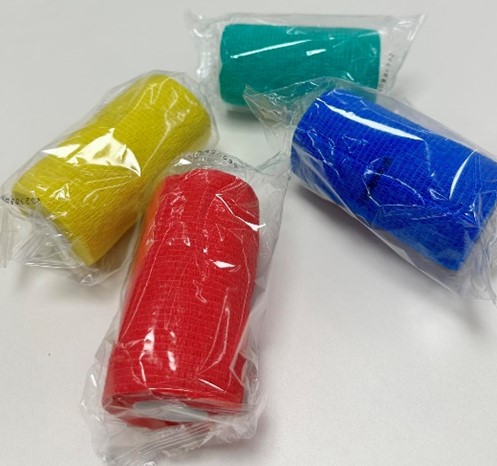 Self-adhesive hoof bandage
 Spare pacifier
 Stainless steel obstetric aid
 Disinfectant with washing effect (10kg)
 Pre-milking udder cleaner (20 l)
 Hoof bath
- Reusable plastic syringe
- Drencher for feeding calves with a rigid probe
- Acid detergent (20l / 24kg)
- Rubber rings for castration
- Cup for disinfection of udder teats (non-returnable)
- Pencils for marking animals
- Veterinary glove to the shoulder and through the neck
- Milk filter for fine purification of milk for 2, 5, 10 tons
- Drencher for feeding calves with a flexible probe
Microbiology
 MicroFast® Bacillus cereus Count Plate (catalog number LR1010)
 MicroFast® Salmonella Count Plate (SAL), for the determination of Salmonella in food and environmental samples (Catalog #LR1006)
 Yeast & Mold Count Plate (cat. no. LR1003) MicroFast® Yeast & Mold Count Plate
 MicroFast® Microbiological Substrates
 Substrate for determining QMAFAnM (catalog number LR1001)
 Substrate for accelerated determination of QMAFAnM, (catalog number LR1321)
- MicroFast® Staphyloccocus aureus Confirmation Plate Staph.aureus Confirmation Plate (cat. no. LR1005Q)
- MicroFast® Enterobacteriaceae Count Plate (cat. no. LR1011)
- MicroFast® Coliform & E.coli Count Plate
- MicroFast® Lactic Acid Bacteria Count Plate (Part Number LR1312)
- Substrate for determining the number of staphylococci (Catalog number LR1005) MicroFast® Staphyloccocus aureus Count Plate
- MicroFast® Environmental Listeria Count Plate
- Coliform Count Plate (catalog number LR1002) MicroFast® Coliform Count Plate
Our News
 Lukashenko heard a report on the Mogilev region. The main topic was the situation in agriculture. 05.02.2026
 What major agricultural projects are being implemented in the Mogilev region?05.02.2026
 An expert identified possible areas of cooperation between Belarus and Southeast Asian countries.05.02.2026
- Surcharges on prices for agricultural products purchased from the population have been established in 2026.04.02.2026
- Lukashenko: We won't carry the Vitebsk region on our shoulders.04.02.2026
- Baby Zabava. The Grodno Zoo welcomed its first addition in 2026. 03.02.2026
- Lukashenko: We won't carry the Vitebsk region on our shoulders. 03.02.2026
- Lukashenko on the case: it is a moral monstrosity if we cannot protect our smaller brothers in this weather03.02.2026
- Grain cultivation and livestock farming. Bogdanov discussed prospects for cooperation in the agricultural sector between Belarus and Kazakhstan.01.02.2026
- Выпойка молоком 3-4 раза, больше теплой воды. Как в Брестской области наладили уход за телятами в морозы01.02.2026
- From Tractor Driver to Businessman: The Story of a Belarusian Who Built a Farm from Scratch and a Church in a Village 30.01.2026
- A warehouse in the Minsk region improperly stored powdered milk: a court ordered compensation of Br2 million.30.01.2026
- Increased processing volumes, new jobs: production capacity is being expanded in the Shklov district.30.01.2026
- The story of a Belarusian who built a sturdy farm from scratch and revived his native village.29.01.2026
- Belarusian producers plan to enter the Qatari meat market.29.01.2026
- Belarus is interested in expanding dairy product supplies to Indonesia.28.01.2026
Articles
 The court refused to seize the property of agricultural enterprises with debts to the AIC fund.05.02.2026
 Demand for semi-finished products will decline in 2025: dumpling sales will fall by 8%.05.02.2026
 Rosselkhoznadzor inspected more than 2,000 tons of livestock products shipped to Yakutia.05.02.2026
- Rosselkhoznadzor monitored the export of more than 57,000 tons of veterinary goods from St. Petersburg.05.02.2026
- К госветнадзору Бурятии поступило 860 тонн продукции при отправке в Монголию05.02.2026
- The inflation rate in Russia at the beginning of February 2026 reached 6.5%.05.02.2026
- Innovations in broiler feeding: savings and bird health05.02.2026
- New financial disputes between Aventa and Tokarevskaya Poultry Farm: a second lawsuit for 70 million rubles05.02.2026
- Mexican and Canadian beef is losing ground in the US market.05.02.2026
- Spain strengthens institutional coordination to improve animal welfare management05.02.2026
- Blaming cows was a mistake: meadows absorb more gases than cattle emit.05.02.2026
- EU and Mercosur: Experts warn of shortage of EU veterinarians to control imports and associated health risks05.02.2026
- Rosselkhoznadzor stopped the import of more than 50 kg of dangerous animal products at Ufa Airport.04.02.2026
- Rosselkhoznadzor specialists have identified quality violations in meat products.04.02.2026
- The first batch of canned meat from the Kurgan region was sent to Azerbaijan under the supervision of Rosselkhoznadzor.04.02.2026
- A poultry farm in Yugra was fined for violating veterinary regulations.04.02.2026
Economics
 10 reasons to take a deposit04.05.2025
 Lavrov and the Swiss Foreign Minister will discuss the "deep crisis" of the OSCE.05.02.2026
 Kirilenko spoke about the problems facing Russian teams after sanctions were lifted.05.02.2026
- Lavrov believes that US statements about cooperation are inconsistent with sanctions05.02.2026
- The Russian ambassador warned of a reaction to the Faroe Islands' change in stance on sanctions.05.02.2026
- Five suspects in supplying weapons to Russia's defense industry have been arrested in Germany.03.02.2026
- Bloomberg узнал о планах ЕС по санкциям против российских платины и меди03.02.2026
- The EU confirmed discussions on banning entry for participants in the military operation.31.01.2026
- Bloomberg has revealed a new possible EU sanctions plan against Russia.31.01.2026
- The EU has blacklisted Russia for money laundering.30.01.2026
- The EU has imposed new sanctions on Iran in response to the suppression of protests.30.01.2026
- The European Union has designated the IRGC a terrorist organization.30.01.2026
- The US has eased sanctions and allowed oil companies to operate in Venezuela.30.01.2026
- Titov allowed for the return of foreign companies that "miss Moscow"30.01.2026
- Following the deal with Carlyle, LUKOIL continued negotiations with other companies.29.01.2026
- Macron announced that France is preparing new sanctions against Russia.29.01.2026
Antibiotics in Milk
 Antibiotics in milk: causes and methods of detection27.01.2026
 Pharmaceutical companies see a threat to EU security due to bacteria in Ukraine13.11.2025
 Prosecutors have issued warnings to more than 5,000 companies due to rising prices.09.09.2025
- Two dairy companies from Azerbaijan refused to work with Russia.09.07.2025
- Lukashenko told how Putin treated him to goat's milk.08.07.2025
- Lukashenko demanded that Belarus be cleared of littered logs by autumn.08.07.2025
- Lukashenko stated that it is not beneficial for Belarus to “fight madly,” but to feed17.06.2025
- В Британии предупредили о риске для миллионов из-за супербактерий06.01.2025
- Moscow court sides with Indian company in dispute with Health Ministry26.11.2024
- Scientists estimate increase in mortality due to drug-resistant bacteria29.10.2024
- Antibiotics for livestock and pesticides found in poisoned family's home29.10.2024
- Izvestia reported on the shortage of widely used antibiotics in Russia29.10.2024
- The Ministry of Health called data on the shortage of antibiotics unreliable29.10.2024
- Scientists warn of threat of return to pre-penicillin times29.10.2024
- The Ministry of Health explained how attitudes towards antibiotics changed during the pandemic07.05.2024
- WHO explains the risks of taking antibiotics "just in case"06.05.2024
Antibiotics in Meat
 Antibiotics in pollock25.02.2024
 Antibiotics in herring: myth or reality?12.02.2024
 Antibiotics in perch10.02.2024
- Antibiotics in sprat: facts and myths10.02.2024
- Antibiotics in tuna: an important health and environmental issue09.02.2024
- Antibiotics in meat30.01.2024
- Antibiotics in chebureks: myth or reality?29.01.2024
- Antibiotics in cutlets: problem or myth?18.01.2024
- Antibiotics in Chicken: Where Are the Highest Concentrations?17.01.2024
- Antibiotics in carp17.01.2024
- Where Are More Antibiotics in Chicken: Reality and Cautions16.01.2024
- Antibiotics in Salmon: Safety and Product Quality16.01.2024
- Antibiotics in Turkey15.01.2024
- Antibiotics in Sal: Reality and Safety Issues15.01.2024
- Antibiotics in Fried Dumplings: Facts, Risks and How to Stay Safe15.01.2024
- Antibiotics in sausages14.01.2024
10 Interesting Facts
 Antibiotics in Coffee: Myths and Reality03.05.2025
 Forged forks: 10 interesting facts16.05.2024
 Swimming pool and weight loss: 10 interesting facts10.03.2024
- Tests for antibiotics in milk - 10 interesting facts07.03.2024
- Cleaning the kettle from scale, 10 interesting facts...06.03.2024
- Antibiotics in beer: 10 interesting facts04.03.2024
- Wild boar, how to survive...01.03.2024
- Purulent mastitis, 10 interesting facts27.02.2024
- Lemon and alcohol: 10 interesting facts25.02.2024
- Mint - 10 interesting facts25.02.2024
- Wild boar, 10 interesting facts20.02.2024
- Wild boar and domestic pig: comparison and advantages20.02.2024
- Cottage cheese, 10 interesting facts20.02.2024
- 10 Interesting Facts About Milk19.02.2024
- How to Clean a Toilet - 10 Interesting Facts (Acid vs Alkaline)18.02.2024
- Goat's milk: 10 interesting facts16.02.2024
Diseases of cattle
 Dicroceliosis in cattle09.03.2024
 Demodicosis in cattle01.03.2024
 Purulent mastitis of cattle27.02.2024
- Hypodermatosis in cattle20.02.2024
- Hemonchoz in cattle11.02.2024
- Bursitis in cattle30.01.2024
- Brucellosis in cattle29.01.2024
- Bronchopneumonia in calves27.01.2024
- Bronchitis in cattle26.01.2024
- Mortellaro disease in cattle24.01.2024
- White muscle disease in cattle23.01.2024
- Babesiosis in cattle22.01.2024
- Cattle acidosis20.01.2024
- Arthritis in cattle20.01.2024
- Anaplasmosis in cattle18.01.2024
Misc
- Antibiotics for coughs: when they are needed and when they are not11.02.2024
 "Слетают все маски человека!" // Банщик про техники парения, поющих мастерах и чудо-массажах05.02.2026
 The Master of Steam: The Story of a Businessman Who Left a Successful Printing Business to Become a Spa Master 05.02.2026
- Investigators have identified the locations of the most frequent traffic accidents in the Brest region.05.02.2026
- Ministry of Emergency Situations: 129 people have died in fires since the beginning of the year.04.02.2026
- WHO: Almost 40% of cancer cases can be prevented 04.02.2026
- The number of fires in Belarus has increased. Experts have explained the causes.04.02.2026
- "Neither tail nor scales." We went winter fishing and learned the intricacies of ice fishing.04.02.2026
- Belarus has extended the ban on labeling imported alcoholic beverages in unfriendly countries.03.02.2026
- В Гомеле благодаря неравнодушным гражданам остановили нетрезвых таксиста и бесправника 03.02.2026
- From February 11, navigation seals will be used to track rail traffic in the EAEU.03.02.2026
- The State Traffic Inspectorate reminded drivers of road safety rules during severe frosts.31.01.2026
- A woman driving under the influence of alcohol with over 2 ppm was detained in Minsk.30.01.2026
- Наведение порядка в АПК, пожарная безопасность. Какие задачи поставлены перед прокурорами Витебской области 30.01.2026
- A car crashed into a tree on Independence Avenue in Minsk, injuring two people.30.01.2026
- Топ экспортируемых товаров назвали в "Белгоспищепроме"29.01.2026
Cloud of Tags
ЯйцаНовостиБразилияКазахстанСмертьТатарстанВыручкаFacebook2024МужчиныДжо БайденПодмосковьеТребованияПродукцияСудПроизводство молокаОнлайнЕСФруктыCOVID-19КлиматСырыКоронавирусСубсидииAppleПроизводство мясаЕгипетЯпонияРоссельхознадзорReutersИнвестицииОтпускИсследованияПраздникПоддержкаГовядинуВеликобританииЛекарстваМЧСАлкогольМясоКризисПольшаGoogleВеликобританияВакцинацияАзербайджанПродукты питанияДональд ТрампИталияИммунитетМинздравПродовольствиеАлександр ЛукашенкоМоскваОрганизмФермерКартофельКрупного рогатого скотаНефтьУкраинаПравительствоМаслоАнтибиотиковРодителиДеньгиНедвижимостьКарантинКанадаТАССДоходыГазпромЛечениеПесковСанкт-ПетербургРоссиянеСельское хозяйствоПтицефабрикаБизнесЭкспортВакцинацииКРСРоссияВьетнамКитайБолезньBloombergПензенской областиРаботаЗаконМясокомбинатКрупный рогатый скотРоспотребнадзорГерманияБройлерминистр сельского хозяйстваЗаконопроектИмпортЖивотноеRussiaСпутник vРубльЗдоровьеВладимир ПутинАЧСПитаниеВостокРосстатДмитрий песковМясо птицыМолокоЦеныМинфинУзбекистанВластиУборкаЗависимостьСШАДетиИнфляцияУрожаяДиректорВ китаеГовядинаКолбасыБеларусьВирусTelegramАвстралияСанкцииДолларЗеленскийЭкономикаУкраинеПрокуратураАлкогольного опьяненияЕврокомиссияМинскТурцияКредитОбщепитФранцияЦентробанкКофеУченыеМинсельхозЗапретСотрудники ГАИСвининаЕАЭС