Soyuzmoloko asks to remove animal husbandry from regulation of the law on greenhouse gases
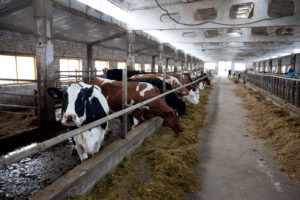
Photo is illustrative in nature. From open sources.
Adds
 Rapid tests for fluoroquinolone, erythromycin, lincomycin, tillosin and tilmycosin residues in milk, whey
 PIONEER MEIZHENG BIO-TECH (5 in1) JC1165 / Rapid tests for the determination of the residual amount of halofuginone, flavomycin, novobiocin, flunixin, dexamethasone / prednisolone in milk, whey
Soyuzmoloko considers it inappropriate to regulate agricultural organizations within the framework of the mandatory requirements of Federal Law 296 “On limiting greenhouse gas emissions”. This is stated in a letter sent by the Director General of the Union Artem Belov to the Government of the Russian Federation.
On February 16, a meeting of the subcommittee on improving the control (supervisory) and licensing functions of federal executive bodies under the Government Commission for Administrative Reform was held on the topic of mandatory accounting of greenhouse gas emissions by organizations. The requirements are proposed to be established by the draft PP “On approval of the criteria for classifying legal entities and individual entrepreneurs as regulated organizations”, they also apply to agricultural organizations. As Soyuzmoloko noted, the industry's position on the inappropriateness of regulating agricultural organizations within the framework of the mandatory requirements of 296-FZ, which is also supported by the RSPP, Opora Rossii and the business community as a whole, was not taken into account.
As arguments, the head of Soyuzmoloko cites the fact that in international practice, the regulation of directly agricultural producers in terms of the climate agenda is an exception, not a rule.
Examples of such regulation in the world are isolated (New Zealand and the USA ), while many developed and developing countries, including those with a huge livestock population, do not impose such requirements (Germany, China , Canada, Brazil, India, Great Britain, Australia, Israel, etc. .d.). Agriculture is also not included in the European Emissions Trading System (EU ETS), which eliminates the external economic risks for the industry associated with the introduction of cross-border carbon regulation (CTR) by the EU.
Also, according to industry representatives, accounting for emissions at agricultural enterprises is a costly and knowledge-intensive process. Filing reports under 296-FZ involves burdening agricultural producers not only with requirements, but also with the development of a methodology for meeting these requirements. This will require the involvement of external consultants, which, according to Soyuzmoloko, will cost about 1-5 million rubles per report, excluding its mandatory verification. This will lead to additional costs in the industry and exacerbate existing inflationary trends.
At the same time, reporting will not lead to an improvement in the quality of monitoring of greenhouse gas emissions, Soyuzmoloko is sure. After all, the value of the data obtained by aggregating the reports of regulated organizations is still doubtful: more than 40% of the low-productive livestock is owned by private farms, which makes it not entirely correct to collect data from the largest producers - the vast majority of greenhouse gas emissions will not be covered by reporting.
Another business argument is the fact that the further development of regulation involves its tightening: the introduction of emission quotas or a carbon tax, which will reduce the competitiveness of the industry in the domestic and global markets.
As measures to be taken, the head of Soyuzmoloko names the exclusion of the item “Livestock (internal fermentation)” from the project, while maintaining the possibility of reporting on greenhouse gas emissions by agribusiness organizations on a voluntary basis. It is also necessary to update the methodology for calculating greenhouse gas emissions for agriculture based on the IPCC methodology, including revising national coefficients. All this should be accompanied by regular consultations with foreign countries, including the EU, in order to identify trends towards a possible tightening of regulation abroad.
In conclusion, the head of Soyuzmoloko asked First Deputy Prime Minister Andrei Belousov and Deputy Prime Minister Victoria Abramchenko to instruct them to conduct additional consultations on the issue of classifying agricultural organizations as regulated under 296-FZ at the Government site with the participation of the Ministry of Economic Development of the Russian Federation, the Ministry of Agriculture of Russia, the RSPP and Soyuzmoloko.
Read together with it:
- Mexican and Canadian beef is losing ground in the US market.Beef from Mexico and Canada is losing ground in American kitchens and restaurants, despite being imported without tariffs imposed on all exports by US President Donald Trump a year ago. According to Tegra Consultant, Canadian meat sales to the United States have fallen by 23.56% over the past two years, while Mexican food exports to that market have fallen by 11.5......
- Spain strengthens institutional coordination to improve animal welfare managementOn Tuesday, the Council of Ministers, at the initiative of the Ministry of Agriculture, Fisheries and Food, approved the adoption of a royal decree that strengthens existing instruments to move towards "more effective" coordination between the various administrations involved in the application of rules to ensure the welfare of animals intended for agricultural purposes and aquaculture, and optimi...
- Blaming cows was a mistake: meadows absorb more gases than cattle emit.Cows have become a symbol of controversy, as debates about their environmental impact, particularly regarding methane emissions, have generated headlines, political decisions, and criticism. But while many study the animals themselves, a group of researchers decided to examine the soil. At the University of Nebraska-Lincoln, a team of researchers led by Professor Galen Erickson conducted a study t...
- Kirilenko spoke about the problems facing Russian teams after sanctions were lifted.The head of the Russian Basketball Federation (RBF) stated that FIBA could make a final decision on the return of Russian basketball in April, but visa barriers remain the main problem. Andrei KirilenkoIn an interview with RBC Sport, Russian Basketball Federation (RBF) President Andrei Kirilenko discussed the possible return of Russian basketball to the international arena. He also cited visa an...
- The Russian ambassador warned of a reaction to the Faroe Islands' change in stance on sanctions.Vladimir BarbinThe Faroe Islands' change in stance on sanctions against Russia will not go unnoticed by Moscow, Russian Ambassador to Denmark Vladimir Barbin said in an interview with RIA Novosti. The statement was prompted by the Faroe Islands Parliament's decision to support sanctions against Russian fishing companies Norebo and Murman Seafood, as well as the Faroe Islands government's announcem...
- What does the expiration of the START Treaty mean?On February 5, 2026, New START, the last treaty between Russia and the United States that limited their nuclear arsenals, expired. RBC reports on how Moscow and Washington approached this date and what will happen afterward.On February 5, 2026, the Russian-American Treaty on Measures for the Further Reduction and Limitation of Strategic Offensive Arms (New START), the last agreement that limited t...
Test for Atnibiotics in Milk
 Rapid 4 in 1 tests for determining the residual amount of neomycin, kanamycin, gentamicin, spectinomycin in milk, whey
- Rapid tests for fluoroquinolone, erythromycin, lincomycin, tillosin and tilmycosin residues in milk, whey
 Rapid tests for determining the residual amount of chloramphenicol in meat
 Rapid tests for determining the residual amount of tetracyclines in meat
Laboratory equipment
 BA-CL- X.X ST TR titration table
 VK-75-01 steam sterilizer upgraded version (Tyumen, Russia)
 Metal closets
 Laboratory centrifuge ZLM 1-12 (with heating) (Russia)
 Infrared analyzer "SibSCAN" (dairy products)
 Indicator strips "NS-Chlorine", 25 pcs.
- Mastoprim (Russia)
- Heating plate Tagler PN-4030SK
- MB90/MB120 moisture analyzer (Ohaus)
- Indicator strips "NS-iron", 25 pcs.
- IKA Pette fix single-channel constant volume laboratory pipettes (Germany)
- Drying cabinets SHS (SKTB, Smolensk)
- Magnetic stirrer with heating function WH240-HT
- Brand Dispensette Series Bottle Dispensers
- Receipt printer MPRINT G58 for analyzer "Laktan 1-4M"
Packing



Additional Products
 Ice cream sticks Magnum (curly)
 Ice cream sticks Standard 93
 Wafer cup and cone
 Ice cream sticks (round)
 Petri dish 90 mm
 Auxiliaries for sugar products
- Ice cream sticks (with logo)
- Ice cream sticks Standard 114
- General purpose environment of SPC "Biocompass-S" (Uglich)
- J-Bottom technology
- Pepsin whey pork


Microbiology
 MicroFast® Salmonella Count Plate (SAL), for the determination of Salmonella in food and environmental samples (Catalog #LR1006)
 MicroFast® Environmental Listeria Count Plate
 Substrate for determining QMAFAnM (catalog number LR1001)
 Yeast & Mold Count Plate (cat. no. LR1003) MicroFast® Yeast & Mold Count Plate
 MicroFast® Bacillus cereus Count Plate (catalog number LR1010)
 MicroFast® Staphyloccocus aureus Confirmation Plate Staph.aureus Confirmation Plate (cat. no. LR1005Q)
- MicroFast® Coliform & E.coli Count Plate
- Substrate for accelerated determination of QMAFAnM, (catalog number LR1321)
- MicroFast® Enterobacteriaceae Count Plate (cat. no. LR1011)
- MicroFast® Lactic Acid Bacteria Count Plate (Part Number LR1312)
- Substrate for determining the number of staphylococci (Catalog number LR1005) MicroFast® Staphyloccocus aureus Count Plate
- Coliform Count Plate (catalog number LR1002) MicroFast® Coliform Count Plate
- MicroFast® Microbiological Substrates
Our News
 Лучшие не только по молоку. Какие рекорды поставили в экспериментальной базе имени Котовского13.11.2025
 "Душа радуется, когда видишь результат". Что для аграриев Витебской области важнее наград13.11.2025
 By the end of the year, a new milk yield record will be set here! What's the secret to Velikiy Dvor's success?13.11.2025
- How is the goat sausage that Lukashenko praised made? We reveal the secrets of the production process.13.11.2025
- Порядок наводят, но нарушения остались. КГК проверил 46 сельхозорганизаций Витебской области 13.11.2025
- Nougat with fruit, butter with Provencal herbs: what's new from Belarusian food industry companies? 13.11.2025
- Брянская область вошла в число лидеров среди регионов России по товарообороту на БУТБ12.11.2025
- На БУТБ впервые реализовано пюре экзотических фруктов12.11.2025
- Роботизация молочных ферм и ускоренная обработка почвы: что ученые предлагают сельскому хозяйству12.11.2025
- Taking into account the latest advances in animal husbandry, the MTC was officially opened in the Ostrovets District.07.11.2025
- Veterinary and sanitary regulations for dairy producers have been adjusted in Belarus. 07.11.2025
- "Water heals and gives strength." This Belarusian builds unique boats. 07.11.2025
- Renovated bridges, roads, kindergartens, and clinics. What gifts did Belarusians receive for November 7th?07.11.2025
- Роспотребнадзор объявил о регистрации экспресс-теста на гепатит С06.11.2025
- Лукашенко в Мозыре открыл обновленный мост через Припять06.11.2025
- Биржевой товарооборот Беларуси и Китая с начала года вырос на 10%06.11.2025
Articles
 Meat Sales Decline in Russia: Lamb Loses Popularity, Chicken on the Rise20.01.2026
 Рост популярности халяль-сертификации в Новосибирске: от продуктов до косметологии20.01.2026
 In Khabarovsk, a man stole an elite horse and sold it for meat.20.01.2026
- Global poultry production continues to grow: forecast for 202620.01.2026
- Illegal import of chicken strips from Kazakhstan has been stopped in the Omsk region.20.01.2026
- Бурятия продолжает усиленный пограничный ветеринарный контроль из-за вспышки пастереллёза в Забайкалье20.01.2026
- Снижение производства мяса овец и коз в России на фоне роста производства птицы и свинины20.01.2026
- Russia has significantly increased its agricultural exports to Benin in 2025.16.01.2026
- Live animal exports from Russia increased by 74.5% in 2025.16.01.2026
- Вакцинация сельскохозяйственных животных в Амурской области: ключ к здоровью и безопасности16.01.2026
- The Far East leads in livestock and poultry production in Russia.16.01.2026
- Miratorg sums up the results of the youth program "Generation Miratorg" for the second half of 202516.01.2026
- A quarantine has been imposed in the Chelyabinsk region due to rabies cases among animals.16.01.2026
- The sale of substandard food products has been stopped in the Sverdlovsk region.16.01.2026
- Pyshminskaya Poultry Farm is restoring egg supplies after the crisis caused by the disease outbreak.16.01.2026
- The EU-Mercosur agreement: why is it a key opportunity for Argentine beef?16.01.2026
Economics
 The IEA sees a risk of a decline in oil production in Russia due to sanctions.14.11.2025
 UniCredit announced galactic efforts due to sanctions against Russia14.11.2025
 США объяснили снятие санкций с проекта АЭС в Венгрии с участием России13.11.2025
- Зеленский ввел санкции против своего бизнес-партнера13.11.2025
- Ukrainian companies have been hit by US sanctions due to their ties to Iran.13.11.2025
- Canada imposed sanctions against Igor Chaika and Arctic LNG 2.13.11.2025
- Princess Eugenie's art gallery has been accused of violating sanctions against Russia.13.11.2025
- Reuters узнал, что ЛУКОЙЛ после санкций обратился с просьбой к США13.11.2025
- Рубио завил, что США «особо не на что накладывать санкции» против России13.11.2025
- Britain to ban seaborne shipments of Russian LNG12.11.2025
- Tokyo called the entry ban on 30 Japanese citizens to Russia unacceptable.12.11.2025
- Kyiv imposed sanctions against Dmitriev and Russia's negotiator in Istanbul.12.11.2025
- Guardian рассказала, как Австралия продолжает получать российскую нефть12.11.2025
- The US has partially lifted sanctions on Syria.12.11.2025
- Bloomberg рассказал о «настоящей драке» в Европе из-за активов ЛУКОЙЛа12.11.2025
- German authorities have found a way to terminate the Yamal LNG contract.12.11.2025
Antibiotics in Milk
 Is it worth drinking antibiotics at the first sign of illness and what is the risk of it: an interview with a pharmacologist01.08.2020
 In Smolensk region the Rosselkhoznadzor Directorate returned to Belarusian consignors more than 33 tons of animal products transported with violations of veterinary requirements.04.02.2020
- Struggle for product quality and safety: experience of Belarusian colleagues19.11.2019
- Tiamphenicol07.08.2019
- Antibiotics in milk07.08.2019
- "While I'm talking to you nicely." The President threatened the government with prison for the death of a cattle25.07.2019
- Antibiotics in milk: Rumors and reality23.07.2019
- Antibiotics: harm or benefit17.07.2019
- Antibiotics in milk16.07.2019
Antibiotics in Meat
 Antibiotics in Meat: Prevention, Regulation and Consumer Health Concerns12.01.2024
 Antibiotics in Fried or Boiled Meat: Facts and Misconceptions12.01.2024
 Antibiotics in Sausage: Reality, Risks and Need for Control12.01.2024
- Antibiotics in Pelmeni: Real Threat or Myth?09.01.2024
- Antibiotics in Pork: Health Effects and Cooking Recommendations08.01.2024
- Antibiotics in Chicken: Safety, Regulation and Consumer Health Concerns08.01.2024
- Antibiotics in meat: problems and solutions06.01.2024
- Antibiotics in Beef: Between Animal Health and Consumer Safety06.01.2024
- Antibiotics in Chicken Meat: Safety, Regulation and Concern for Consumer Health06.01.2024
- Antibiotics in Rabbit Meat: Safety, Efficiency and Care for Consumers05.01.2024
- Antibiotics in Pork: Balance Between Health Concerns and Consumer Safety03.01.2024
- Antibiotics in Lamb03.01.2024
- Antibiotics in Meat: Real Risks and Transparency in Food Production29.12.2023
10 Interesting Facts
 Marbled meat: 10 interesting facts19.01.2024
 10 Fascinating Facts About Cattle Hoof Baths18.01.2024
 Antibiotics - 10 interesting facts18.01.2024
- Cutlets - 10 interesting facts18.01.2024
- 10 Interesting Facts about Carp17.01.2024
- Salmon - 10 Interesting Facts17.01.2024
- Beer belly 10 interesting facts17.01.2024
- Beer - 10 interesting facts17.01.2024
- Antibiotic tests pioneer - 10 interesting facts17.01.2024
- Rubber rings for castration - 10 interesting facts17.01.2024
Diseases of cattle
 Dicroceliosis in cattle09.03.2024
 Demodicosis in cattle01.03.2024
 Purulent mastitis of cattle27.02.2024
- Hypodermatosis in cattle20.02.2024
- Hemonchoz in cattle11.02.2024
- Bursitis in cattle30.01.2024
- Brucellosis in cattle29.01.2024
- Bronchopneumonia in calves27.01.2024
- Bronchitis in cattle26.01.2024
- Mortellaro disease in cattle24.01.2024
- White muscle disease in cattle23.01.2024
- Babesiosis in cattle22.01.2024
- Cattle acidosis20.01.2024
- Arthritis in cattle20.01.2024
- Anaplasmosis in cattle18.01.2024
Misc
 МВД выявило 90 продавцов, которые продавали вейпы несовершеннолетним 09.11.2025
 За молитвой и помощью едут даже из дальних стран. Чем уникален Свято-Успенский Жировичский мужской монастырь09.11.2025
 Belarus has changed the requirements for mobile shops in rural areas.07.11.2025
- A drunk man damaged four cars in Gorki.07.11.2025
- Понятные нормы и баланс интересов. Как планируют усовершенствовать налоговую систему в Беларуси07.11.2025
- С начала года в Брестской области зарегистрировано 26 ДТП по вине нетрезвых водителей 07.11.2025
- Bright and powerful. The National Exposition at the CIIE in Shanghai as a mirror of modern Belarus06.11.2025
- The procedure for labeling alcoholic beverages has been adjusted in Belarus.06.11.2025
- INTERVIEW: Bright and Powerful. The National Exposition at the CIIE in Shanghai as a Mirror of Modern Belarus06.11.2025
- A Minsk resident was driving at 130 km/h and caused a fatal accident. The court sentenced him.06.11.2025
- In Minsk, two brothers, while intoxicated, killed a man and buried the body. The suspects have been detained. 06.11.2025
- A guilty verdict has been handed down against the defendant in the fatal accident on May 7 on Lenin Street.06.11.2025
- Житель Мозыря "купил" старинную монету онлайн и потерял деньги - милиция нашла мошенника05.11.2025
- АПИ, исправные электрооборудование и печи. Специалисты рассказали, как избежать пожаров в доме05.11.2025
- Доходы республиканского бюджета в 2026 году прогнозируются на уровне Br54,4 млрд05.11.2025
- В Щучине пьяный отчим избивал 14-летнюю девочку, подростка изъяли из семьи04.11.2025
Cloud of Tags
Russiaминистр сельского хозяйстваГерманияКазахстанВ китаеВостокСанкцииМинздравФермерРоссияЦеныМужчиныИмпортРоссельхознадзорТАССРоспотребнадзорПравительствоКанадаОнлайнСанкт-ПетербургПродовольствиеИнвестицииКредитВеликобританииПесковВакцинацияКрупного рогатого скотаЖивотноеПтицефабрикаПродукцияПрокуратураПроизводство молокаРубльФруктыАнтибиотиковГазпромБразилияДмитрий песковУрожаяКрупный рогатый скотМясо птицыПродукты питанияКитайУзбекистанМинскДетиБизнесДжо БайденGoogleЕгипетАлкогольного опьяненияЗаконопроектПодмосковьеКРСОтпускЗаконРоссиянеМЧСОрганизмЛекарстваЯйцаМясокомбинатВьетнамФранцияДоходыДолларВакцинацииИсследованияТурцияАЧСРаботаСШАКартофельНедвижимостьУкраинеМясоСвининаAppleДеньгиБройлерНефтьПроизводство мяса2024COVID-19ЗапретЭкономикаКарантинСмертьВыручкаСырыFacebookTelegramМолокоУченыеОбщепитМинфинЕСУкраинаТатарстанГовядинаЕАЭСПензенской областиКофеВирусМаслоТребованияИнфляцияBloombergМинсельхозЕврокомиссияПраздникВеликобританияСубсидииПитаниеБеларусьReutersСпутник vКлиматКоронавирусЭкспортСотрудники ГАИАлкогольВладимир ПутинЯпонияСудБолезньДональд ТрампАзербайджанАлександр ЛукашенкоСельское хозяйствоКолбасыДиректорГовядинуЗдоровьеПольшаМоскваРосстатЗеленскийЦентробанкИталияРодителиКризисАвстралияНовостиЗависимостьЛечениеИммунитетВластиУборкаПоддержка