
Semyon Zhavoronkov, AVPHARM: All leading suppliers of imported veterinary drugs continue to work in Russia
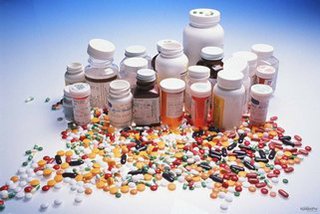
Photo is illustrative in nature. From open sources.


At the Business and Government section of the XXX Moscow International Veterinary Congress, Executive Director of the Association of Veterinary Pharmaceutical Manufacturers (AVPHARM) Semyon Zhavoronkov spoke about the main challenges facing the veterinary drug market in the current conditions, as well as the risks of new and existing legislation in this area.
“Our association stands for the preservation of currently in demand drugs for the treatment and prevention of animal diseases, as well as the availability of funds and technologies to provide the necessary veterinary care. It is necessary to ensure the quality, safety, efficiency and competitiveness of manufactured products and the application of the best practices in the organization of veterinary care, clear and predictable regulation, as well as equal working conditions in the market of domestic and international manufacturers.
As for the import substitution of veterinary drugs, which is now being talked about a lot, I would like to draw attention to a number of points. Firstly, medicines are a mandatory humanitarian exception to any sanctions; moreover, all leading suppliers of imported medicines continue to operate in Russia. All this creates an opportunity to keep proven and popular drugs on the market, if regulation does not limit their presence.
Secondly, up to 70% of new human diseases are animal diseases, with an average of two new diseases appearing every year. At the same time, due to the current restrictions, since August 2019, not a single innovative veterinary medicinal product, not a single new pharmaceutical substance has been registered in Russia. The impossibility of fulfilling the requirements that come into force, for example, the requirements for putting into civil circulation, may even lead to the loss for the market of up to 90% of veterinary medicinal products imported today, the total market share of which exceeds 50%.
Thirdly, to date, 1257 veterinary drugs registered in Russia are produced in the country, and 866 are imported. At the same time, many are now talking about the possibility of compulsory licensing of veterinary drugs, but this mechanism is used exclusively in cases of national security and it is not cheaper, and often even more expensive, than any other.
In addition, the consequences of logistical restrictions and excessive demand can be further alleviated by allowing, by analogy with medicines, to supply medicines in primary packaging for foreign markets with stickers in Russian on the market. In particular, such an approach could help address the increased demand for anesthetics. Regulatory barriers are among the industry's main challenges.
So, on September 1, 2023, Federal Law No. 317 of July 2, 2021, containing the requirement for the mandatory introduction of medicinal products for veterinary use into civil circulation, comes into force. One of its articles does not provide for the provision by manufacturers of veterinary preparations, when they are put into civil circulation, of a conclusion on the compliance of the production site with GMP rules. No more than 10% of imported medicinal products for veterinary use registered in Russia are produced today at enterprises that have a valid GMP certificate issued by the authorized Russian body.
Taking into account the expiration of already issued certificates and the pace of new inspections in the industry, it is predicted that by September 2023, no more than 7% of currently available foreign veterinary medicinal products can be imported into Russia. Also, from August 13, 2019, the registration dossier for a medicinal product for veterinary use must contain information on the state registration of genetically modified organisms (GM organisms) contained in it or used in its production. The regulation resulted in a situation in which, since August 2019, not a single innovative immunobiological preparation produced using GM organisms has been registered for veterinary use in Russia.
On March 13, 2022, Decision No. 1 of the EEC Council (2022) came into force, approving the Rules for regulating the circulation of veterinary medicinal products in the customs territory of the EAEU, which will come into force on March 13, 2024. The decision expanded the capabilities of the authorized bodies and actually legitimized the practice of the so-called. "black" lists, without regulating a number of significant aspects of its application: the document does not explain the possibility of circulation of veterinary medicinal products that entered circulation before the introduction of the restriction, it does not specify the procedure and terms for lifting the ban on circulation. The problem can be solved by launching a dialogue with the EEC on introducing a number of clarifications to the text of the EAEU Rules with a corresponding postponement of the entry into force of the Rules themselves.”
Read together with it:
- What does the expiration of the START Treaty mean?On February 5, 2026, New START, the last treaty between Russia and the United States that limited their nuclear arsenals, expired. RBC reports on how Moscow and Washington approached this date and what will happen afterward.On February 5, 2026, the Russian-American Treaty on Measures for the Further Reduction and Limitation of Strategic Offensive Arms (New START), the last agreement that limited t...
- The Master of Steam: The Story of a Businessman Who Left a Successful Printing Business to Become a Spa MasterThe story of Alexey Kozhukhovsky, a resident of the agro-town of Khatezhino in the Minsk region, is inspiring proof that a true calling can be found at any age, and that a drastic career change can be a major achievement. When Alexey realized that money was no longer his primary motivation, he decided to leave the printing business to which he had dedicated two decades. He was drawn to creation, n...
- Consumption drives pork production, but imports and exports constrain the pig sector's growthAmong the positive developments, the organization noted that livestock production and slaughter have increased again, albeit at a more moderate pace. "We saw an increase of almost 3% in the number of animals slaughtered and meat production," they noted. This figure, while far from the historical average of 7%, is considered encouraging in a year of economic restructuring. Consumption is the main d...
- Why grocery retailers are changing their strategy to reduce product rangeArtur Gafarov, Director of the Institute for the Development of Entrepreneurship and Economics, explains that the industry is undergoing a major transformation: "While previously retail chains could afford to play around with their product range, trying to introduce new brands and products that might not sell particularly well but still provided a sufficiently diverse shelf, now the opposite is ha...
- GAP "Resource" took part in the Gulfood 2026 exhibition.Irina Klimova, Vice President and Marketing Director at GAP Resurs, said: "As one of Russia's largest food producers and exporters, GAP Resurs has been participating in Gulfood since 2016, and this year, for the first time, as a platinum sponsor. Among the new products presented at our booth, we highlight AN-NOOR halal chicken doner rolls . The recipe was developed with the taste preferences of co...
- Klinsky Meat Processing Plant automates production using a domestic MES systemThe software has significantly improved the existing accounting system and created a digital twin of the spice assembly area—a crucial stage in the production of meat products and semi-finished products. The project implemented targeted warehousing in production warehouses, automated the receipt of essential auxiliary materials, warehouse order generation, and picking assignments, as well as mecha...
- Kazakhstan wants to increase meat production by 1.5 times."We're lagging behind global standards." "Over the past few years, the development of beef livestock farming has faced a number of systemic challenges that are hindering the sustainability and growth of the industry. Problems related to the ineffectiveness of government support measures and farmers' limited access to financial resources persist," Serik Yegizbayev, head of the Committee on Agrarian...
Test for Atnibiotics in Milk
 Rapid tests for determining the residual amount of chloramphenicol in meat
 Rapid 4 in 1 tests for determining the residual amount of neomycin, kanamycin, gentamicin, spectinomycin in milk, whey
 Rapid tests for determining the residual amount of tetracyclines in meat
 Express tests for determining the residual amount of β-lactams, tetracyclines, chloramphenicol, streptomycins in milk, whey
 ANTIBIOTICS / ELISA TESTS
 Rapid tests for fluoroquinolone, erythromycin, lincomycin, tillosin and tilmycosin residues in milk, whey
- TEST KIT for determination of inhibitory agents PIONEERPRODUKT® DASH-TEST, WC0040
- Rapid tests PIONER 5 in 1 for the determination of sulfonamides, tylosin, tilmicosin, lincomycin, erythromycin, fluoroquinolones
- PIONEER MEIZHENG BIO-TECH (5 in1) JC1165 / Rapid tests for the determination of the residual amount of halofuginone, flavomycin, novobiocin, flunixin, dexamethasone / prednisolone in milk, whey
- PIONEER MEIZHENG BIO-TECH (5 in 1) JC0726 / Rapid tests for determining the residual amount of Bacitracin, ansamycins, clindamycin, spiramycin, florfenicol in milk, whey
Laboratory equipment
 KL series flask heaters
 Stationary pH meter/millivoltmeter/thermometer (pH/mV/T) Edge HI 2002-02 with pH electrode HI 11310
 Drying oven Chizhovoy CHS-200 (Tagler, Russia)
 Nova Safety milk centrifuge (Germany)
 Memmert drying cabinets UN/UF series (Germany)
 Sink table BA-CL- X.H.MO C (one bowl)
- Integral C-01 electronic stopwatch
- VK-75-01 steam sterilizer upgraded version (Tyumen, Russia)
- Indicator strips "NS-Chlorine", 25 pcs.
- Milk quality analyzer "Laktan 1-4M" isp. 220
- Bürkle Qualirod tapered sampler 120 and 170 mm immersion depth
- Hydrometers for milk AM, AMT
- The device for the diagnosis of mastitis "MILTEK-1"
- Fast IR decomposition systems - Turbotherm
- Folding waterproof thermometer Testo 104
Packing
 Salad dressings
 Grease and barrier paper KH PACK®
 Laminating paper KH PACK®
 Paper sacks
 KH PACK® bag making paper
 Carton
- Paper for micro-ribbed
- Cartons for milk and dairy products
- Parchment
- Plastic packaging for cakes and pastries
- Siliconized paper for hygiene products
- Laminating paper KH PACK®
- Korreks for desserts
- Ice cream chopsticks
- KH PACK® tartlet paper
Additional Products
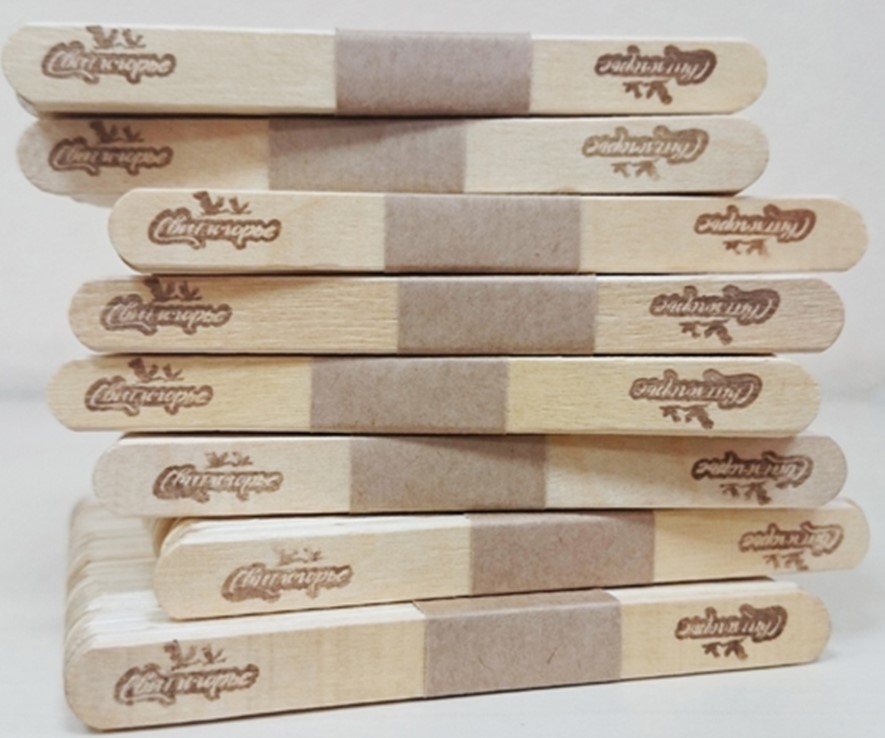 Ice cream sticks (with logo)
 Petri dish 90 mm
 Ice cream sticks Magnum (curly)
 Wafer cup and cone
 Ice cream sticks Standard 93
 Auxiliaries for sugar products
- Ice cream sticks (round)
- J-Bottom technology
- General purpose environment of SPC "Biocompass-S" (Uglich)
- Pepsin whey pork
- Ice cream sticks Standard 114
Consumables
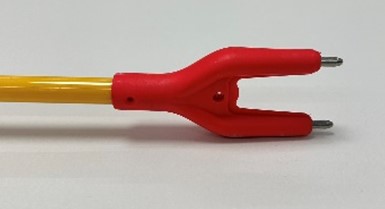 Electric Cattle Driver
 Dosing syringe, bottle attachment
 Pump for artificial ventilation of the lungs
 Hoof bath
 Disinfectant with washing effect (10kg)
 Pencils for marking animals
- Liquid soap "Prestige" (yellow, green, red) 5 l
- Anti-catfish milking rings
- Milk filter for fine purification of milk for 2, 5, 10 tons
- Foaming cup for udder treatment
- Cup for disinfection of udder teats (non-returnable)
- Pre-milking udder cleaner (20 l)
- Antibryk
- Plastic syringe 150ml
- Veterinary glove to the shoulder and through the neck
Microbiology
 MicroFast® Salmonella Count Plate (SAL), for the determination of Salmonella in food and environmental samples (Catalog #LR1006)
 MicroFast® Microbiological Substrates
 Substrate for determining the number of staphylococci (Catalog number LR1005) MicroFast® Staphyloccocus aureus Count Plate
 MicroFast® Lactic Acid Bacteria Count Plate (Part Number LR1312)
 Substrate for determining QMAFAnM (catalog number LR1001)
 Yeast & Mold Count Plate (cat. no. LR1003) MicroFast® Yeast & Mold Count Plate
- Substrate for accelerated determination of QMAFAnM, (catalog number LR1321)
- MicroFast® Coliform & E.coli Count Plate
- MicroFast® Bacillus cereus Count Plate (catalog number LR1010)
- MicroFast® Enterobacteriaceae Count Plate (cat. no. LR1011)
- MicroFast® Staphyloccocus aureus Confirmation Plate Staph.aureus Confirmation Plate (cat. no. LR1005Q)
- Coliform Count Plate (catalog number LR1002) MicroFast® Coliform Count Plate
- MicroFast® Environmental Listeria Count Plate
Our News
 Lukashenko heard a report on the Mogilev region. The main topic was the situation in agriculture. 05.02.2026
 What major agricultural projects are being implemented in the Mogilev region?05.02.2026
 An expert identified possible areas of cooperation between Belarus and Southeast Asian countries.05.02.2026
- Surcharges on prices for agricultural products purchased from the population have been established in 2026.04.02.2026
- Lukashenko: We won't carry the Vitebsk region on our shoulders.04.02.2026
- Baby Zabava. The Grodno Zoo welcomed its first addition in 2026. 03.02.2026
- Lukashenko: We won't carry the Vitebsk region on our shoulders. 03.02.2026
- Lukashenko on the case: it is a moral monstrosity if we cannot protect our smaller brothers in this weather03.02.2026
- Grain cultivation and livestock farming. Bogdanov discussed prospects for cooperation in the agricultural sector between Belarus and Kazakhstan.01.02.2026
- Выпойка молоком 3-4 раза, больше теплой воды. Как в Брестской области наладили уход за телятами в морозы01.02.2026
- From Tractor Driver to Businessman: The Story of a Belarusian Who Built a Farm from Scratch and a Church in a Village 30.01.2026
- A warehouse in the Minsk region improperly stored powdered milk: a court ordered compensation of Br2 million.30.01.2026
- Increased processing volumes, new jobs: production capacity is being expanded in the Shklov district.30.01.2026
- The story of a Belarusian who built a sturdy farm from scratch and revived his native village.29.01.2026
- Белорусские производители планируют выйти на катарский рынок мясной продукции29.01.2026
- Belarus is interested in expanding dairy product supplies to Indonesia.28.01.2026
Articles
 The court refused to seize the property of agricultural enterprises with debts to the AIC fund.05.02.2026
 Demand for semi-finished products will decline in 2025: dumpling sales will fall by 8%.05.02.2026
 Rosselkhoznadzor inspected more than 2,000 tons of livestock products shipped to Yakutia.05.02.2026
- Rosselkhoznadzor monitored the export of more than 57,000 tons of veterinary goods from St. Petersburg.05.02.2026
- К госветнадзору Бурятии поступило 860 тонн продукции при отправке в Монголию05.02.2026
- The inflation rate in Russia at the beginning of February 2026 reached 6.5%.05.02.2026
- Innovations in broiler feeding: savings and bird health05.02.2026
- New financial disputes between Aventa and Tokarevskaya Poultry Farm: a second lawsuit for 70 million rubles05.02.2026
- Mexican and Canadian beef is losing ground in the US market.05.02.2026
- Spain strengthens institutional coordination to improve animal welfare management05.02.2026
- Blaming cows was a mistake: meadows absorb more gases than cattle emit.05.02.2026
- EU and Mercosur: Experts warn of shortage of EU veterinarians to control imports and associated health risks05.02.2026
- Rosselkhoznadzor stopped the import of more than 50 kg of dangerous animal products at Ufa Airport.04.02.2026
- Специалисты Россельхознадзора выявили нарушения в качестве мясной продукции04.02.2026
- The first batch of canned meat from the Kurgan region was sent to Azerbaijan under the supervision of Rosselkhoznadzor.04.02.2026
- A poultry farm in Yugra was fined for violating veterinary regulations.04.02.2026
Economics
 10 reasons to take a deposit04.05.2025
 Lavrov and the Swiss Foreign Minister will discuss the "deep crisis" of the OSCE.05.02.2026
 Kirilenko spoke about the problems facing Russian teams after sanctions were lifted.05.02.2026
- Lavrov believes that US statements about cooperation are inconsistent with sanctions05.02.2026
- The Russian ambassador warned of a reaction to the Faroe Islands' change in stance on sanctions.05.02.2026
- Five suspects in supplying weapons to Russia's defense industry have been arrested in Germany.03.02.2026
- Bloomberg узнал о планах ЕС по санкциям против российских платины и меди03.02.2026
- The EU confirmed discussions on banning entry for participants in the military operation.31.01.2026
- Bloomberg has revealed a new possible EU sanctions plan against Russia.31.01.2026
- The EU has blacklisted Russia for money laundering.30.01.2026
- The EU has imposed new sanctions on Iran in response to the suppression of protests.30.01.2026
- The European Union has designated the IRGC a terrorist organization.30.01.2026
- The US has eased sanctions and allowed oil companies to operate in Venezuela.30.01.2026
- Titov allowed for the return of foreign companies that "miss Moscow"30.01.2026
- Following the deal with Carlyle, LUKOIL continued negotiations with other companies.29.01.2026
- Macron announced that France is preparing new sanctions against Russia.29.01.2026
Antibiotics in Milk
 Antibiotics in milk: causes and methods of detection27.01.2026
 Pharmaceutical companies see a threat to EU security due to bacteria in Ukraine13.11.2025
 Prosecutors have issued warnings to more than 5,000 companies due to rising prices.09.09.2025
- Two dairy companies from Azerbaijan refused to work with Russia.09.07.2025
- Lukashenko told how Putin treated him to goat's milk.08.07.2025
- Lukashenko demanded that Belarus be cleared of littered logs by autumn.08.07.2025
- Лукашенко заявил, что Белоруссии выгодно не «одуревши воевать», а кормить17.06.2025
- В Британии предупредили о риске для миллионов из-за супербактерий06.01.2025
- Moscow court sides with Indian company in dispute with Health Ministry26.11.2024
- Scientists estimate increase in mortality due to drug-resistant bacteria29.10.2024
- Antibiotics for livestock and pesticides found in poisoned family's home29.10.2024
- Izvestia reported on the shortage of widely used antibiotics in Russia29.10.2024
- The Ministry of Health called data on the shortage of antibiotics unreliable29.10.2024
- Scientists warn of threat of return to pre-penicillin times29.10.2024
- The Ministry of Health explained how attitudes towards antibiotics changed during the pandemic07.05.2024
- WHO explains the risks of taking antibiotics "just in case"06.05.2024
Antibiotics in Meat
 Antibiotics in pollock25.02.2024
 Antibiotics in herring: myth or reality?12.02.2024
 Antibiotics in perch10.02.2024
- Antibiotics in sprat: facts and myths10.02.2024
- Antibiotics in tuna: an important health and environmental issue09.02.2024
- Antibiotics in meat30.01.2024
- Antibiotics in chebureks: myth or reality?29.01.2024
- Antibiotics in cutlets: problem or myth?18.01.2024
- Antibiotics in Chicken: Where Are the Highest Concentrations?17.01.2024
- Antibiotics in carp17.01.2024
- Where Are More Antibiotics in Chicken: Reality and Cautions16.01.2024
- Antibiotics in Salmon: Safety and Product Quality16.01.2024
- Antibiotics in Turkey15.01.2024
- Antibiotics in Sal: Reality and Safety Issues15.01.2024
- Antibiotics in Fried Dumplings: Facts, Risks and How to Stay Safe15.01.2024
- Antibiotics in sausages14.01.2024
10 Interesting Facts
 Antibiotics in Coffee: Myths and Reality03.05.2025
 Forged forks: 10 interesting facts16.05.2024
 Swimming pool and weight loss: 10 interesting facts10.03.2024
- Tests for antibiotics in milk - 10 interesting facts07.03.2024
- Cleaning the kettle from scale, 10 interesting facts...06.03.2024
- Antibiotics in beer: 10 interesting facts04.03.2024
- Wild boar, how to survive...01.03.2024
- Purulent mastitis, 10 interesting facts27.02.2024
- Lemon and alcohol: 10 interesting facts25.02.2024
- Mint - 10 interesting facts25.02.2024
- Wild boar, 10 interesting facts20.02.2024
- Wild boar and domestic pig: comparison and advantages20.02.2024
- Cottage cheese, 10 interesting facts20.02.2024
- 10 Interesting Facts About Milk19.02.2024
- How to Clean a Toilet - 10 Interesting Facts (Acid vs Alkaline)18.02.2024
- Goat's milk: 10 interesting facts16.02.2024
Diseases of cattle
 Dicroceliosis in cattle09.03.2024
 Demodicosis in cattle01.03.2024
 Purulent mastitis of cattle27.02.2024
- Hypodermatosis in cattle20.02.2024
- Hemonchoz in cattle11.02.2024
- Bursitis in cattle30.01.2024
- Brucellosis in cattle29.01.2024
- Bronchopneumonia in calves27.01.2024
- Bronchitis in cattle26.01.2024
- Mortellaro disease in cattle24.01.2024
- White muscle disease in cattle23.01.2024
- Babesiosis in cattle22.01.2024
- Cattle acidosis20.01.2024
- Arthritis in cattle20.01.2024
- Anaplasmosis in cattle18.01.2024
Misc
- Antibiotics for coughs: when they are needed and when they are not11.02.2024
 "Слетают все маски человека!" // Банщик про техники парения, поющих мастерах и чудо-массажах05.02.2026
 The Master of Steam: The Story of a Businessman Who Left a Successful Printing Business to Become a Spa Master 05.02.2026
- Где в Брестской области чаще всего происходят ДТП, назвали следователи05.02.2026
- Ministry of Emergency Situations: 129 people have died in fires since the beginning of the year.04.02.2026
- WHO: Almost 40% of cancer cases can be prevented 04.02.2026
- The number of fires in Belarus has increased. Experts have explained the causes.04.02.2026
- "Neither tail nor scales." We went winter fishing and learned the intricacies of ice fishing.04.02.2026
- Беларусь продлила запрет на маркировку импортируемых алкогольных напитков на территории недружественных стран03.02.2026
- В Гомеле благодаря неравнодушным гражданам остановили нетрезвых таксиста и бесправника 03.02.2026
- From February 11, navigation seals will be used to track rail traffic in the EAEU.03.02.2026
- The State Traffic Inspectorate reminded drivers of road safety rules during severe frosts.31.01.2026
- A woman driving under the influence of alcohol with over 2 ppm was detained in Minsk.30.01.2026
- Наведение порядка в АПК, пожарная безопасность. Какие задачи поставлены перед прокурорами Витебской области 30.01.2026
- A car crashed into a tree on Independence Avenue in Minsk, injuring two people.30.01.2026
- Топ экспортируемых товаров назвали в "Белгоспищепроме"29.01.2026
Cloud of Tags
Санкт-ПетербургОтпускМинскМинфинМинсельхозКрупного рогатого скотаФермерРосстатЭкономикаЗеленскийЯйцаБразилияПроизводство молокаАЧСКРСМоскваИнвестицииЖивотноеВ китаеТатарстанНовостиФруктыAppleСельское хозяйствоReutersПродукты питанияРоспотребнадзорВьетнамАнтибиотиковВеликобританииГазпромFacebookРоссиянеТАССминистр сельского хозяйстваДиректорАвстралияВластиВеликобританияПитаниеКрупный рогатый скотРоссияКарантинПроизводство мясаИнфляцияЭкспортВыручкаМаслоМолокоКартофельКанадаRussiaGoogleМясокомбинатКофеНедвижимостьДетиКризисВакцинацииДеньгиДмитрий песковГовядинуАзербайджанСанкцииОбщепитПродовольствиеСырыЕАЭСПесковBloombergЗапретЕврокомиссияЗаконопроектРубльКлиматОнлайнМясоСпутник vЯпонияАлександр ЛукашенкоБройлерОрганизмУрожаяПтицефабрика2024ГовядинаКредитTelegramДональд ТрампЗаконМужчиныПензенской областиНефтьИталияЛечениеДоходыПоддержкаДжо БайденМясо птицыУборкаГерманияВакцинацияБизнесCOVID-19УзбекистанЦеныПольшаПрокуратураСудЕгипетИмпортКолбасыУченыеАлкогольЦентробанкСвининаЕСБолезньБеларусьРаботаПродукцияТурцияАлкогольного опьяненияСубсидииКазахстанУкраинаСШАСотрудники ГАИЛекарстваЗдоровьеРодителиУкраинеФранцияТребованияВладимир ПутинЗависимостьМинздравИммунитетКоронавирусВирусКитайРоссельхознадзорПравительствоСмертьПодмосковьеМЧСПраздникВостокИсследованияДоллар