
Three stages of transformation. Economist about the Russian economy in crisis

Photo is illustrative in nature. From open sources.

Economist Pavel Golubev
Under the new conditions, Russia will have to go through three stages of economic transformation, and the Kaliningrad region risks becoming an ideal geopolitical hostage in Europe. Pavel Golubev, an economist from Kaliningrad, expressed this opinion in the Royal Gates magazine.
First step
At the first stage, external conditions change. Exports will become even more raw materials, and imports will become purely technical in nature, which “will ruin some and force others to buy up church candles,” the expert believes.
“Russia is undoubtedly an integral part of the world economy, two or three percent of which may well turn it over, overturn and even partially destroy it. Russia did not have a special economic path. Now will be. Because a non-special, ordinary, standard way for everyone is no longer available to Russia,” Golubev is sure.
He notes that the Kaliningrad region has lost almost all of its geographical advantages, "getting hurt right away and on the forehead," and inflation in the region turned out to be higher than in the rest of Russia.
“The Kaliningrad region is a concentrate-aggregator of the first stage of economic transformation,” the economist believes.
Second phase
The second stage of the transformation of the economy - restructuring - will begin by the summer of 2022. Three key areas will be rebuilt: logistics, industry and consumption.
“Not a single Colombian drug lord even dreamed of what routes Russian business is now considering for the delivery of goods from abroad. Kaliningrad is logically leading this movement. Chartering ferries from Bulgaria to Novorossiysk, hiring Lithuanian truckers for the expedition of Turkish cargo through Europe, updating rail transportation and even special flights of airlines that are looking for an opportunity to fly at least not at a big loss. Dozens of contracts are concluded with enterprises from Turkey, Kazakhstan, China , Iraq, Iran, Vietnam a day,” continues Pavel Golubev.
Read on RBC Pro Pro European skies are closed to Russia.Who will benefit from this air blockade Articles Pro Increased prices and reorientation of exports.What awaits the Russian oil and gas industry“Worse than a pandemic”: what threatens Germany with the rejection ofoiland gas from Russia Articles Pro The best marketing is free:how Mailchimp found the idea of development in a crisisHow the markets of New York and London understood the vicissitudes of World War II Articles Pro How the consumer and marketing in Russia will change in 2022The state will have to subsidize loans for light industry enterprises. At the same time, there are huge market voids in the domestic industry, if they are not filled quickly, then they will be filled with imports from China, India, Kazakhstan, and so on, the economist believes.
The last stage of restructuring at the second stage of the transformation of the economy will be the quality of consumption.
“Unlike logistics and industry, consumption is not so sensitive to such shocks. Moreover, the recent massive purchase of buckwheat and sugar only shows that the consumer cannot and does not want to understand the full scale and long-term consequences of structural changes. He thinks like an avid consumer: "Something bad happened, I'll buy food and wait until it's good." It won't be good. It will be painful and even painful to rebuild, and most importantly, it will take a long time. The restructuring of consumption will form into a new model by the beginning of spring 2023, but the key period will be the purchase for the New Year in December 2022. Then the consumer will give the only correct answer to the current situation - he rationalizes his request, abandoning everything superfluous, switching to substitutes for the goods familiar to him,
Third stage
In the third stage, the economy will begin to adapt and try to grow. There has never been such an economic challenge in the history of modern Russia.
What will happen to prices
Prices will rise in proportion to the fall of the ruble, rising inflation, the rate of the Central Bank of the Russian Federation and the greed of sellers. Without state intervention, the situation with prices will take too long to adjust on its own. Already, the authorities can find options for importing fruits and vegetables to Kaliningrad, bypassing Lithuania and Belarus - for example, delivering from Turkey through Novorossiysk in transit. But with this route, the cargo goes through double customs clearance and is subject to duty twice - first in Novorossiysk under the "import 40" regime, and then in Kaliningrad under the "import 78" regime. Because of this, the cost of the product will be 15% more expensive.
What will happen to real estate
According to the economist, today the real estate market exists solely due to the 90-day rule for mortgage lenders (the period of validity of the old rate from the moment the mortgage loan is approved) and people who have accumulated cash and now want to invest it. However, on May 28, 90 days will expire from the date of issuing the last rate at 10%, and then about 80% of potential homebuyers will leave the market. The other 10% with cash will already buy their apartments at the peak and only 10% of those who dare to take out a loan for 10-20 years at 20+ percent per annum will remain.
“And here, the developers will have to pull liquidity out of the frozen meters, “so that the shark does not stop and die.” And looking for money in a low market is another task. The only way will be a significant reduction in selling prices. The commercial real estate market will be even worse. Against the background of problems with imports, rising costs and an extreme decline in purchasing power, business will begin to collapse, freeing up thousands of meters. Rental rates will go down, and areas in small, medium and large shopping centers will be given to anchor tenants for a communal apartment, just to generate traffic,” Golubev is sure.
As RBC Kaliningrad wrote, earlier Governor Anton Alikhanov said that the region's economy would take several years to adapt to work under sanctions from Western countries.
Read together with it:
- Rosselkhoznadzor monitored the export of more than 57,000 tons of veterinary goods from St. Petersburg.These products were shipped to countries including Azerbaijan , Angola, Vietnam , and China . 1,500 doses of veterinary vaccines were also exported to Moldova, and over 12.4 million eggs were shipped to Sierra Leone and the UAE. Officials from Rosselkhoznadzor verified compliance with veterinary and sanitary requirements in 15 importing countries , and the goods were shipped with specialized veter...
- The inflation rate in Russia at the beginning of February 2026 reached 6.5%.In particular, prices for fruit and vegetable products increased by 2.1%, with a significant increase for cucumbers (6.3%) and carrots (1.8%). Vodka also increased by 1%, while beef , eggs , and fish each increased by 0.4%. Meanwhile, the cost of pork and butter decreased slightly. In the service sector, there have been significant price increases for vacation trips to the UAE and Russia's Black S...
- Mexican and Canadian beef is losing ground in the US market.Beef from Mexico and Canada is losing ground in American kitchens and restaurants, despite being imported without tariffs imposed on all exports by US President Donald Trump a year ago. According to Tegra Consultant, Canadian meat sales to the United States have fallen by 23.56% over the past two years, while Mexican food exports to that market have fallen by 11.5......
- Lavrov and the Swiss Foreign Minister will discuss the "deep crisis" of the OSCE.Sergey Lavrov Russian Foreign Minister Sergey Lavrov will meet with Swiss Foreign Minister Ignazio Cassis in Moscow on February 6 to discuss the crisis in the Organization for Security and Cooperation in Europe (OSCE), Smolenskaya Square reported. Switzerland assumed the OSCE Chairmanship on 1 January 2......
- Kirilenko spoke about the problems facing Russian teams after sanctions were lifted.The head of the Russian Basketball Federation (RBF) stated that FIBA could make a final decision on the return of Russian basketball in April, but visa barriers remain the main problem. Andrei KirilenkoIn an interview with RBC Sport, Russian Basketball Federation (RBF) President Andrei Kirilenko discussed the possible return of Russian basketball to the international arena. He also cited visa an...
- Lavrov believes that US statements about cooperation are inconsistent with sanctionsSergey Lavrov US statements about the possibility of investment cooperation with Russia "do not fit" with Washington's sanctions policy, Russian Foreign Minister Sergey Lavrov said in an interview with RT. US President Donald Trump is in no rush to lift sanctions against Moscow, but is instead escalating them, Lavrov stated earlier during a government hour in the Federation Council. He recalled ho...
- The Russian ambassador warned of a reaction to the Faroe Islands' change in stance on sanctions.Vladimir BarbinThe Faroe Islands' change in stance on sanctions against Russia will not go unnoticed by Moscow, Russian Ambassador to Denmark Vladimir Barbin said in an interview with RIA Novosti. The statement was prompted by the Faroe Islands Parliament's decision to support sanctions against Russian fishing companies Norebo and Murman Seafood, as well as the Faroe Islands government's announcem...
Test for Atnibiotics in Milk
 Rapid 4 in 1 tests for determining the residual amount of neomycin, kanamycin, gentamicin, spectinomycin in milk, whey
 Express tests for determining the residual amount of β-lactams, tetracyclines, chloramphenicol, streptomycins in milk, whey
 Rapid tests PIONER 5 in 1 for the determination of sulfonamides, tylosin, tilmicosin, lincomycin, erythromycin, fluoroquinolones
 Express tests for determining the residual amount of β-lactams and tetracyclines in milk, whey
Laboratory equipment
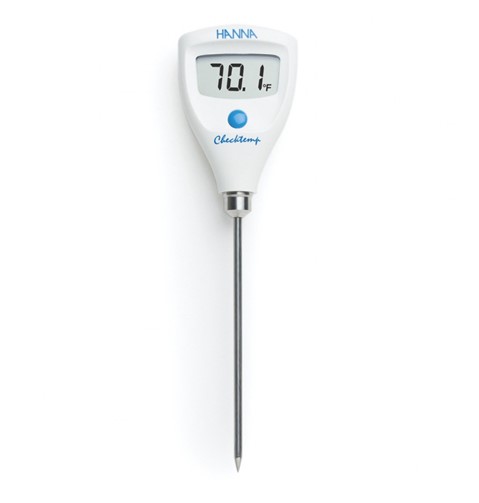 Electronic Checktemp thermometers (Germany)
 Laboratory thermostat-reducer "LTR-24"
 Hygrometers VIT-1, VIT-2 (Russia)
 Test strips "Urea in milk"
 Table for microscopy BA-CL- X.X. CM TR-a
 Stopwatch mechanical stopwatch SOPpr
- Stationary thermohygrometer IVA-6B2 (Russia)
- Stationary pH meter/millivolt meter/thermometer (pH/mV/ORP/T) Edge HI 2202-01
- HI 9142 Portable Moisture Proof Oxygen Meter
- Mutovki for flasks and tanks (Russia)
- Indicator strips pH 0-12, 100 pcs.
- Residual Acidity Test Strips, 100 pcs.
- Milk quality analyzer "Laktan 1-4M" 500 isp. MINI
- Tagler TSLM 1-8 milk centrifuge (without heating) (Russia)
Packing


Additional Products
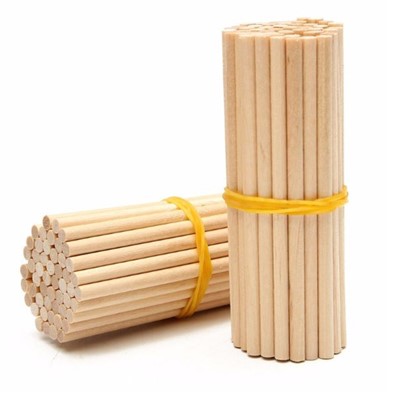 Ice cream sticks (round)
 J-Bottom technology
 General purpose environment of SPC "Biocompass-S" (Uglich)
 Ice cream sticks (with logo)
 Ice cream sticks Standard 93
 Pepsin whey pork
- Auxiliaries for sugar products
- Petri dish 90 mm
- Ice cream sticks Magnum (curly)
- Wafer cup and cone
- Ice cream sticks Standard 114
Consumables


Microbiology
 MicroFast® Lactic Acid Bacteria Count Plate (Part Number LR1312)
 MicroFast® Salmonella Count Plate (SAL), for the determination of Salmonella in food and environmental samples (Catalog #LR1006)
 Yeast & Mold Count Plate (cat. no. LR1003) MicroFast® Yeast & Mold Count Plate
 Coliform Count Plate (catalog number LR1002) MicroFast® Coliform Count Plate
 MicroFast® Environmental Listeria Count Plate
 Substrate for accelerated determination of QMAFAnM, (catalog number LR1321)
- MicroFast® Bacillus cereus Count Plate (catalog number LR1010)
- MicroFast® Enterobacteriaceae Count Plate (cat. no. LR1011)
- MicroFast® Microbiological Substrates
- Substrate for determining QMAFAnM (catalog number LR1001)
- MicroFast® Coliform & E.coli Count Plate
- Substrate for determining the number of staphylococci (Catalog number LR1005) MicroFast® Staphyloccocus aureus Count Plate
- MicroFast® Staphyloccocus aureus Confirmation Plate Staph.aureus Confirmation Plate (cat. no. LR1005Q)
Our News
 Exports of Belarusian milk and dairy products increased by 6.7% in January-November26.12.2023
 Производство продуктов питания в организациях Минсельхозпрода выросло на 5,3%26.12.2023
 Lukashenko: the EAEU has achieved a high level of food self-sufficiency, and in Belarus - almost 100%26.12.2023
- About technical regulation, food safety, toys and “gray” certification25.12.2023
- INTERVIEW: Nazarenko about technical regulation, food safety, toys and “gray” certification25.12.2023
- Prospects near Moscow, land reclamation without showing off and pricing strategy. Main results of the President's week25.12.2023
- Reusable veterinary needles24.12.2023
- Reusable Veterinary Needles: Modern Technologies for Improved Animal Care24.12.2023
- Лукашенко о регулировании в ценообразовании: это вопрос справедливости23.12.2023
- Снопков: инфляционные ожидания населения находятся на низком уровне, есть доверие к власти23.12.2023
- Снопков: по итогам 2023 года инфляция составит около 5,5%23.12.2023
- Barrier-free environment, asphalt road. Krupko held a reception of citizens in Gomel20.12.2023
- Productivity and quality. A new dairy farm was put into operation in the Voronovsky district20.12.2023
- Why didn’t the children run away from the concentration camp in Skobrovka? We talk about the life of little donors20.12.2023
- Blood-sucking pests: How mosquitoes threaten agriculture20.12.2023
- The principle of work is team, responsibility is individual. The secret of success of OJSC "Nestanovichi-Agro"15.12.2023
Articles
 Инновационный проект: производственные линии для наггетсов от «ОренКлип» могут удвоить мощность01.08.2025
 Prices for chicken and butter in Russia have begun to rise again.01.08.2025
 Egg production in the Astrakhan region doubled in the first half of 202501.08.2025
- Vietnam steps up support for farmers in fight against African swine fever01.08.2025
- Omsky Bacon has completed the recruitment of sows for the new Chunaevsky-2 production complex01.08.2025
- Successful trials of Nipah virus vaccines in pigs01.08.2025
- Bulgaria imposes temporary ban on movement of sheep and goats due to worsening epizootic situation01.08.2025
- AGROECO opened a new pig farm "Stepnoy" in the Tula region01.08.2025
- Mavin Group: A New Stage of Humane Pig Farming in Vietnam31.07.2025
- New US-EU trade deal opens up opportunities for US meat industry31.07.2025
- Tambov poultry farm "Tokarevskaya" owes more than 100 million rubles to grain supplier31.07.2025
- Kazan has developed a new probiotic to improve the quality of quail meat31.07.2025
- В Хакасии из-за пожара погибли куры, найдено несколько происшествий за сутки31.07.2025
- Prices for chicken eggs continue to decline in Khakassia31.07.2025
- Poultry farming development in Sevastopol: farmers receive state support31.07.2025
- Ineffectiveness of poultry subsidies in Kazakhstan: audit reveals problems31.07.2025
Economics
 Bloomberg learned about the US proposal to use Russian assets22.03.2024
 WP reported that the West is purchasing hundreds of millions of dollars' worth of titanium from Russia.22.03.2024
 Словения объявила сотрудника российского посольства персоной нон грата21.03.2024
- Ukraine decided to abandon the list of “war sponsors”21.03.2024
- Reuters узнал о давлении на Raiffeisen из-за связанной с Дерипаской фирмы21.03.2024
- ЕС продлил отмену пошлин на украинскую сельхозпродукцию до июня 2025-го20.03.2024
- Putin Allows Payments from Type C Accounts to “Pseudo-Non-Residents”20.03.2024
- Microsoft is thinking about postponing the closure of services for companies from Russia19.03.2024
- "VTB Armenia" announced restrictions on the acceptance of "Mir" cards in the country's banks19.03.2024
- Borrell expressed hope for an EU agreement on Russian assets18.03.2024
- Zakharova said that there will always be sanctions against independent Russia16.03.2024
- The European Commission announced a test regime for monitoring the embargo on Russian diamonds.15.03.2024
- AirBridgeCargo returns Boeing to China after two years of downtime15.03.2024
- The Ministry of Justice has declared the German "Lev Kopelev Forum" undesirable.15.03.2024
- The Federal Tax Service filed a bankruptcy lawsuit against Poland's PGNiG in a Russian court.14.03.2024
- Lavrov announced the creation of an alliance of "victims of the sanctions war"13.03.2024
Antibiotics in Milk
 Is it worth drinking antibiotics at the first sign of illness and what is the risk of it: an interview with a pharmacologist01.08.2020
 In Smolensk region the Rosselkhoznadzor Directorate returned to Belarusian consignors more than 33 tons of animal products transported with violations of veterinary requirements.04.02.2020
- Struggle for product quality and safety: experience of Belarusian colleagues19.11.2019
- Tiamphenicol07.08.2019
- Antibiotics in milk07.08.2019
- "While I'm talking to you nicely." The President threatened the government with prison for the death of a cattle25.07.2019
- Antibiotics in milk: Rumors and reality23.07.2019
- Antibiotics: harm or benefit17.07.2019
- Antibiotics in milk16.07.2019
Antibiotics in Meat
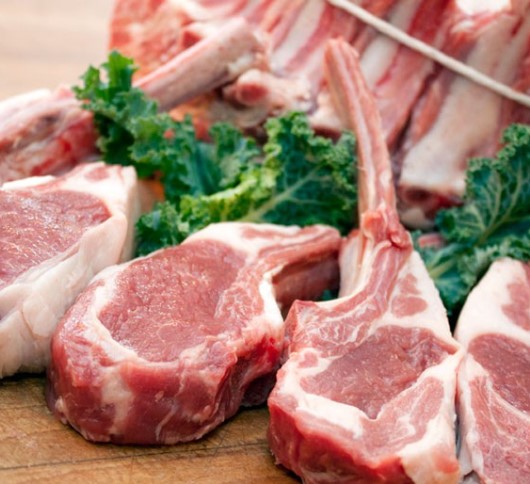 Antibiotics in Meat: Prevention, Regulation and Consumer Health Concerns12.01.2024
 Antibiotics in Fried or Boiled Meat: Facts and Misconceptions12.01.2024
 Antibiotics in Sausage: Reality, Risks and Need for Control12.01.2024
- Antibiotics in Pelmeni: Real Threat or Myth?09.01.2024
- Antibiotics in Pork: Health Effects and Cooking Recommendations08.01.2024
- Antibiotics in Chicken: Safety, Regulation and Consumer Health Concerns08.01.2024
- Antibiotics in meat: problems and solutions06.01.2024
- Antibiotics in Beef: Between Animal Health and Consumer Safety06.01.2024
- Antibiotics in Chicken Meat: Safety, Regulation and Concern for Consumer Health06.01.2024
- Antibiotics in Rabbit Meat: Safety, Efficiency and Care for Consumers05.01.2024
- Antibiotics in Pork: Balance Between Health Concerns and Consumer Safety03.01.2024
- Antibiotics in Lamb03.01.2024
- Antibiotics in Meat: Real Risks and Transparency in Food Production29.12.2023
10 Interesting Facts
 Marbled meat: 10 interesting facts19.01.2024
 10 Fascinating Facts About Cattle Hoof Baths18.01.2024
 Antibiotics - 10 interesting facts18.01.2024
- Cutlets - 10 interesting facts18.01.2024
- 10 Interesting Facts about Carp17.01.2024
- Salmon - 10 Interesting Facts17.01.2024
- Beer belly 10 interesting facts17.01.2024
- Beer - 10 interesting facts17.01.2024
- Antibiotic tests pioneer - 10 interesting facts17.01.2024
- Rubber rings for castration - 10 interesting facts17.01.2024
Diseases of cattle
 Dicroceliosis in cattle09.03.2024
 Demodicosis in cattle01.03.2024
 Purulent mastitis of cattle27.02.2024
- Hypodermatosis in cattle20.02.2024
- Hemonchoz in cattle11.02.2024
- Bursitis in cattle30.01.2024
- Brucellosis in cattle29.01.2024
- Bronchopneumonia in calves27.01.2024
- Bronchitis in cattle26.01.2024
- Mortellaro disease in cattle24.01.2024
- White muscle disease in cattle23.01.2024
- Babesiosis in cattle22.01.2024
- Cattle acidosis20.01.2024
- Arthritis in cattle20.01.2024
- Anaplasmosis in cattle18.01.2024
Misc
 Житель Быховского района сбил пешехода, а потом заявил об угоне машины: дело направили в суд05.03.2024
 "Предупредить, а не наказать". Лучший инспектор по делам несовершеннолетних Могилевской области о профессии05.03.2024
- MART checked more than 50 online stores and identified about 40 violations04.03.2024
- "I should have become a teacher, but chose the police." A young district police officer from Grodno told about his work04.03.2024
- A resident of the Drogichinsky district hit a girl and fled the scene of the accident. The case was sent to court04.03.2024
- Прокуратура Мостовского района потребовала устранить нарушения прав и интересов детей04.03.2024
- A Minsk resident found someone else's card and paid in stores: a criminal case has been initiated01.03.2024
- Ресурсы домашнего хозяйства белоруса в IV квартале 2023 года составили Br2184,3 в месяц29.02.2024
- A man in the Kamenets district cut his wife four times with a chainsaw: the court has reached a verdict.29.02.2024
- A fatal drug poisoning occurred in the Mogilev region.29.02.2024
- Killed in a drunken quarrel: a crime five years ago was solved in Novopolotsk27.02.2024
- More than 3.5 ppm. A drunken car thief was detained in Gomel27.02.2024
- МЧС рассказало о ситуации с весенним половодьем и пожарами в Беларуси27.02.2024
- Minsk traffic police fined 59 reckless drivers over the weekend.26.02.2024
- The prosecutor of the Rechitsa district defended the rights of children from disadvantaged families26.02.2024
- In the Vitebsk region, the traffic police fined more than 250 pedestrians for traffic violations over the weekend26.02.2024
Cloud of Tags
Russiaминистр сельского хозяйстваГерманияКазахстанВ китаеВостокСанкцииМинздравФермерРоссияЦеныМужчиныИмпортРоссельхознадзорТАССРоспотребнадзорПравительствоКанадаОнлайнСанкт-ПетербургПродовольствиеИнвестицииКредитВеликобританииПесковВакцинацияКрупного рогатого скотаЖивотноеПтицефабрикаПродукцияПрокуратураПроизводство молокаРубльФруктыАнтибиотиковГазпромБразилияДмитрий песковУрожаяКрупный рогатый скотМясо птицыПродукты питанияКитайУзбекистанМинскДетиБизнесДжо БайденGoogleЕгипетАлкогольного опьяненияЗаконопроектПодмосковьеКРСОтпускЗаконРоссиянеМЧСОрганизмЛекарстваЯйцаМясокомбинатВьетнамФранцияДоходыДолларВакцинацииИсследованияТурцияАЧСРаботаСШАКартофельНедвижимостьУкраинеМясоСвининаAppleДеньгиБройлерНефтьПроизводство мяса2024COVID-19ЗапретЭкономикаКарантинСмертьВыручкаСырыFacebookTelegramМолокоУченыеОбщепитМинфинЕСУкраинаТатарстанГовядинаЕАЭСПензенской областиКофеВирусМаслоТребованияИнфляцияBloombergМинсельхозЕврокомиссияПраздникВеликобританияСубсидииПитаниеБеларусьReutersСпутник vКлиматКоронавирусЭкспортСотрудники ГАИАлкогольВладимир ПутинЯпонияСудБолезньДональд ТрампАзербайджанАлександр ЛукашенкоСельское хозяйствоКолбасыДиректорГовядинуЗдоровьеПольшаМоскваРосстатЗеленскийЦентробанкИталияРодителиКризисАвстралияНовостиЗависимостьЛечениеИммунитетВластиУборкаПоддержка