
How Mikheil Saakashvili once again caused a quarrel between Kyiv and Tbilisi
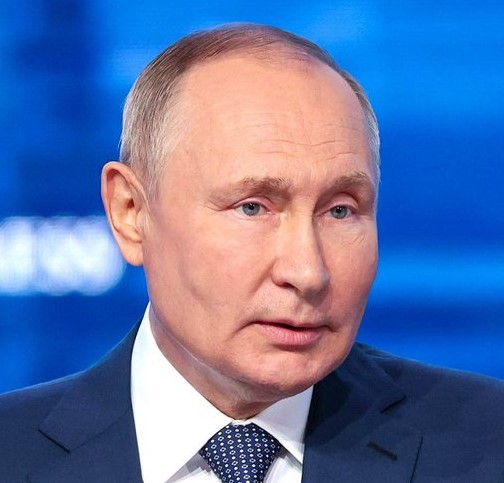
Photo is illustrative in nature. From open sources.
Adds
 PIONEER MEIZHENG BIO-TECH (5 in1) JC0871/ Rapid tests for the determination of the residual amount of β-lactams, tetracyclines, chloramphenicol, streptomycins, ceftiofur in milk, whey.
 PIONEER MEIZHENG BIO-TECH (5 in1) JC1165 / Rapid tests for the determination of the residual amount of halofuginone, flavomycin, novobiocin, flunixin, dexamethasone / prednisolone in milk, whey
Kyiv imposed sanctions against a Georgian airline and effectively expelled the Georgian ambassador. While Georgia is trying to avoid confrontation, Ukraine is exacerbating it, says expert Mikheil Saakashvili (on screen).
Why Kyiv sent the Georgian ambassador to Tbilisi
On July 4, the Ukrainian Ministry of Foreign Affairs, on the instructions of President Volodymyr Zelenskyy, summoned the Georgian Ambassador to Kyiv, Georgiy Zakarashvili, to express "a strong protest in connection with the significant deterioration in the health of Ukrainian citizen Mikheil Saakashvili, who is imprisoned in Georgia."
"The Georgian diplomat was informed that such treatment of Mikheil Saakashvili is absolutely unacceptable. Georgian authorities must stop torturing a Ukrainian citizen," the Ukrainian Foreign Ministry's website states. Ukrainian authorities "invited Zakarashvili to return to Tbilisi for consultations" to find ways to resolve the situation. The Ukrainian Foreign Ministry emphasized its readiness to discuss transporting Saakashvili to Ukraine to ensure his medical treatment and care.
The summons of the Georgian ambassador came as no surprise. The day before, on July 3, Ukrainian Foreign Minister Dmytro Kuleba stated that "there would be a tough conversation," after which Zakarashvili would "go to Georgia." This statement came after Volodymyr Zelenskyy posted about the former Georgian president on his Telegram channel .
"Right now, Russia, through the Georgian authorities, is killing Ukrainian citizen Mikheil Saakashvili. We have repeatedly called on official Tbilisi to stop this abuse and negotiate Saakashvili's return to Ukraine. Our Ukrainian coordination partners have also offered various rescue options," he wrote, attaching a photo of the emaciated former Georgian president at his court hearing in Georgia on July 3. Zelenskyy noted that the Georgian ambassador would have to leave Ukraine within 48 hours for consultations with his capital (while countries typically recall their ambassadors for consultations in difficult situations).
This isn't the first diplomatic row between the countries over Saakashvili. In 2020, Tbilisi recalled its ambassador after the former president's appointment as head of the executive committee of the National Reform Council in Ukraine .
Read pionerprodukt.by "The risks are higher than ever": why experts expect a sell-off in the US market . Too lazy to go to the gym: four ways to motivate yourself to exercise. Which countries' stocks to buy: Goldman Sachs' forecast until 2075. What devices will Apple release in the coming years and what will happen to its shares?Mikheil Saakashvili served as President of Georgia from 2004 to 2013. In 2012, the United National Movement he founded failed to secure a parliamentary majority in the elections, and in October 2013, Saakashvili fled Georgia, where the new Georgian Dream coalition authorities began pursuing criminal charges against him and his associates.
In May 2015, Saakashvili received Ukrainian citizenship by decree of President Petro Poroshenko; as a result, he was stripped of his Georgian passport. Saakashvili's work in Ukraine became a constant irritant in relations between Kyiv and Tbilisi. When Poroshenko appointed the Georgian politician as governor of the Odesa region in 2015, the decision was criticized in Georgia.
In 2017, following a conflict with Poroshenko, Saakashvili was stripped of his Ukrainian citizenship, but in 2019, following Zelensky's victory in the presidential election, it was restored, and Saakashvili became head of the executive committee of the National Reform Council.
In 2018, the Tbilisi City Court found him guilty of abuse of office as president and a number of other crimes and sentenced him in absentia to imprisonment.
In October 2021, Saakashvili secretly returned to Georgia and was detained. He went on hunger strike several times in pretrial detention. In February, a court denied his release on health grounds, and in May, the European Court of Human Rights (ECHR) rejected his request for a deferment of his sentence to allow him to undergo treatment in a foreign clinic. Saakashvili has repeatedly stated that he is "fighting for survival" and is "on the brink of death."
Tbilisi responded to Kyiv's demand with relative restraint. "Overall, this position of the [Ukrainian] government is insulting to us," Georgian Dream leader Irakli Kobakhidze said on July 4 (his words were reported by the Rustavi 2 television channel). The insult, he said, lies in the fact that Saakashvili was sent to Georgia in 2021 by "specific high-ranking officials of the Ukrainian government, and today those same authorities are demanding his return to Ukraine." The Georgian leadership wants to maintain good relations with Ukraine and remain with it "at least in a unilateral friendship," but the actions of the Kyiv authorities are not conducive to this, Kobakhidze concluded.
In the afternoon, the Georgian Foreign Ministry issued a statement expressing "deep concern" over the Ukrainian authorities' decision and calling it "an extreme escalation of diplomatic relations." Expressing hope that Kyiv would reconsider its decision, the ministry recalled that it has provided significant support to Ukraine since the beginning of the conflict. "Precisely because Ukraine is in the active phase of the war, the Georgian side, recognizing its great responsibility in terms of international relations and especially to its partners, is currently refraining from any additional reaction to the steps taken by Ukraine," the Georgian Foreign Ministry emphasized.
What are the risks for Tbilisi from worsening relations with Ukraine?
On July 1, Volodymyr Zelenskyy signed a decree imposing sanctions for assisting Russia in its military actions. "Specifically, there are sanctions against nearly 300 legal entities and nearly 200 individuals. And these are not only Russian citizens. Anyone in the world who assists the aggressor will receive a response from Ukraine and the entire world," the Ukrainian president stated. Ten-year sanctions—blocking assets, restricting trade operations, and preventing capital flight—were also imposed on Georgian Airways and its founder, Tamaz Gaiashvili. Kyiv's decision stems from the fact that, after Russian President Vladimir Putin lifted visa requirements for Georgian citizens and the ban on direct flights in May 2023 , Georgian Airways began operating flights from Tbilisi to Moscow.
Gaiashvili told reporters that he believes the decision is politically motivated. "No airline in the world has the authority to initiate or terminate air service with one country or another. All of this is regulated by the governments of both countries, and we are obligated to comply with these regulations," he said ( as quoted by Interfax). Georgian Deputy Prime Minister Levan Davitashvili called Kyiv's decision "yet another unfriendly step" and suggested that the Georgian opposition may have been involved, having provided "distorted information" to Ukraine.
Following this, the Georgian Ministry of Foreign Affairs summoned Ukraine's Chargé d'Affaires, Alexander Shulga, to explain why the Georgian airline was included on the sanctions list.
Relations between Kyiv and Tbilisi had been problematic before, but they have worsened since the outbreak of full-scale hostilities in Ukraine, says Armenian political scientist and Georgia expert Johnny Melikyan. Kyiv considers Tbilisi's position insufficiently tough, as Georgia refuses to supply Ukraine with weapons or impose sanctions on Russia. "Periodically, [head of the ruling Servant of the People party's faction in the Verkhovna Rada] David Arakhamia and others who have good relations with the Georgian opposition escalate the situation. This is an anti-government stance—specifically, against the Georgian Dream government. In this context, this is, of course, an inter-elite conflict," the expert told RBK. " The Georgian authorities are not changing their position: having problems with Russia and seeing what is happening in Europe, they don't want to weaken the country and are trying to avoid internal conflicts. This is unnerving the leadership in Kyiv."
Melikyan characterizes Georgia's approach to relations with Ukraine as follows: "Tbilisi acknowledges that there is a crisis , but since Kyiv is currently in a vulnerable position, these issues should be put aside and revisited when the war is over. While the Georgian authorities are trying to avoid confrontation, Ukraine is deepening it." Melikyan estimates that Tbilisi will continue to adhere to this approach. "Because this isn't just a matter of foreign policy or bilateral relations—it also has a domestic political context," he notes.
The conflict between the two countries is further complicated by problems in relations between Georgia and the European Union. Unlike Ukraine and Moldova, Georgia did not receive EU candidate status in 2022 , but received 12 recommendations to implement. "The European Union is on Ukraine's side, and there is likely pressure on Tbilisi to act more actively in support of Kyiv. Tbilisi's desire to secure long-awaited and purely symbolic candidate status requires it to maintain more stable contacts with Brussels. Therefore, this confrontation with Ukraine could also harm Georgia's European prospects," Melikyan concludes.
Read together with it:
- The court refused to seize the property of agricultural enterprises with debts to the AIC fund.The plaintiff demanded the seizure of the enterprises' funds and property, including 370 young cows and 2,300 tons of feed wheat, which were held as collateral. The court dismissed the claim, citing a lack of evidence of the defendants' poor financial standing and noting that the poultry farm had taken steps to settle its debts by leasing assets. Meanwhile, tax authorities filed for bankruptcy pro...
- The inflation rate in Russia at the beginning of February 2026 reached 6.5%.In particular, prices for fruit and vegetable products increased by 2.1%, with a significant increase for cucumbers (6.3%) and carrots (1.8%). Vodka also increased by 1%, while beef , eggs , and fish each increased by 0.4%. Meanwhile, the cost of pork and butter decreased slightly. In the service sector, there have been significant price increases for vacation trips to the UAE and Russia's Black S...
- New financial disputes between Aventa and Tokarevskaya Poultry Farm: a second lawsuit for 70 million rublesAccording to Aventa co-founder Evgeny Konchakov, the main reason for the lawsuit is non-payment for services rendered. He noted that a similar situation had occurred previously, when the Tokarevskaya Poultry Factory delayed payments, causing concern among its partners. Currently, the court is hearing another claim from Aventa for 62.6 million rubles. Regarding the financial state of the Tokarevska...
- Mexican and Canadian beef is losing ground in the US market.Beef from Mexico and Canada is losing ground in American kitchens and restaurants, despite being imported without tariffs imposed on all exports by US President Donald Trump a year ago. According to Tegra Consultant, Canadian meat sales to the United States have fallen by 23.56% over the past two years, while Mexican food exports to that market have fallen by 11.5......
- EU and Mercosur: Experts warn of shortage of EU veterinarians to control imports and associated health risksThe agreement between the European Union ( EU ) and Mercosur, which is currently stalled, has caused concern in the primary sector of various EU countries, including Spain, where, in addition to livestock breeders and agricultural producers, veterinarians have joined the complaints. It should therefore be remembered that various veterinary institutions, such as the colleges of Asturias, Lugo and C...
- Lavrov and the Swiss Foreign Minister will discuss the "deep crisis" of the OSCE.Sergey Lavrov Russian Foreign Minister Sergey Lavrov will meet with Swiss Foreign Minister Ignazio Cassis in Moscow on February 6 to discuss the crisis in the Organization for Security and Cooperation in Europe (OSCE), Smolenskaya Square reported. Switzerland assumed the OSCE Chairmanship on 1 January 2......
- Kirilenko spoke about the problems facing Russian teams after sanctions were lifted.The head of the Russian Basketball Federation (RBF) stated that FIBA could make a final decision on the return of Russian basketball in April, but visa barriers remain the main problem. Andrei KirilenkoIn an interview with RBC Sport, Russian Basketball Federation (RBF) President Andrei Kirilenko discussed the possible return of Russian basketball to the international arena. He also cited visa an...
Test for Atnibiotics in Milk
 Rapid tests for determining the residual amount of tetracyclines in meat
- PIONEER MEIZHENG BIO-TECH (5 in1) JC0871/ Rapid tests for the determination of the residual amount of β-lactams, tetracyclines, chloramphenicol, streptomycins, ceftiofur in milk, whey.
 Rapid tests for fluoroquinolone, erythromycin, lincomycin, tillosin and tilmycosin residues in milk, whey
 Express-tests PIONER 5 in1 for the determination of thiamphenicol, meloxicam, colistine, trimethoprim, sulfonamides
 TEST KIT for determination of inhibitory agents PIONEERPRODUKT® DASH-TEST, WC0040
 Express tests for determining the residual amount of β-lactams and tetracyclines in milk, whey
- Express tests for determining the residual amount of β-lactams, tetracyclines, chloramphenicol, streptomycins in milk, whey
- Rapid tests for determining the residual amount of chloramphenicol in meat
- PIONEER MEIZHENG BIO-TECH (5 in 1) JC0726 / Rapid tests for determining the residual amount of Bacitracin, ansamycins, clindamycin, spiramycin, florfenicol in milk, whey
- ANTIBIOTICS / ELISA TESTS
Laboratory equipment
 Indicator strips pH 0-12, 100 pcs.
 Electronic thermometer Testo 905-T1
 VZ-246 viscometer with three interchangeable nozzles
 Smooth digital micrometer MCC-25 0.001 (measuring range 0-25mm)
 Indicator strips "Total water hardness", 25 pcs.
 VAPODEST® - Distillation Systems
- "Keltran" (keltrun) - a complex for the determination of nitrogen and protein by the Kjeldahl method
- Laboratory blender Waring (USA)
- Light colored glass bottle without a faucet
- Cylindrical shape weights with head
- Cookware cabinet
- Bactericidal irradiators - recirculators (working in the presence of people) Defender
- Indicator strips "NS-Chlorine", 25 pcs.
- Stationary pH meter/millivoltmeter/thermometer (pH/mV/T) Edge HI 2002-02 with pH electrode HI 11310
- RT5 Multi-Magnetic Stirrer with Heating, IKA
Packing
 KH PACK® Straight Packing Paper
 Paper for micro-ribbed
 GableTop aseptic packaging
 Salad dressings
 Cover
Cover Ice cream chopsticks
- Parchment
- Skiving and Hemming Technology
- Korreks for confectionery
- Backed Foil
- Siliconized paper for hygiene products
- Carton
- Cartons for milk and dairy products
- KH PACK® tartlet paper
- Laminating paper KH PACK®
Additional Products
 Auxiliaries for sugar products
 Ice cream sticks Magnum (curly)
 General purpose environment of SPC "Biocompass-S" (Uglich)
 Ice cream sticks (round)
 Petri dish 90 mm
 Pepsin whey pork
- Ice cream sticks Standard 93
- Ice cream sticks Standard 114
- Ice cream sticks (with logo)
- J-Bottom technology
- Wafer cup and cone
Consumables
 Foaming cup for udder treatment
 Disposable udder wipe (udder paper).
 Milk filters - primary cleaning
 Reusable plastic syringe
 Stainless steel obstetric aid
 Mug for milking the first streams of milk.
- Pencils for marking animals
- Self-adhesive hoof bandage
- Cassettes for DCC somatic cell counter
- Veterinary glove to the shoulder and through the neck
- Plastic bracelet
- Hoof bath
- Drencher for feeding calves with a flexible probe
- Acid detergent (20l / 24kg)
- Knife Hoofed
Microbiology
 MicroFast® Bacillus cereus Count Plate (catalog number LR1010)
 MicroFast® Environmental Listeria Count Plate
 MicroFast® Enterobacteriaceae Count Plate (cat. no. LR1011)
 Substrate for accelerated determination of QMAFAnM, (catalog number LR1321)
 MicroFast® Coliform & E.coli Count Plate
 Coliform Count Plate (catalog number LR1002) MicroFast® Coliform Count Plate
- MicroFast® Microbiological Substrates
- MicroFast® Salmonella Count Plate (SAL), for the determination of Salmonella in food and environmental samples (Catalog #LR1006)
- MicroFast® Staphyloccocus aureus Confirmation Plate Staph.aureus Confirmation Plate (cat. no. LR1005Q)
- MicroFast® Lactic Acid Bacteria Count Plate (Part Number LR1312)
- Substrate for determining QMAFAnM (catalog number LR1001)
- Yeast & Mold Count Plate (cat. no. LR1003) MicroFast® Yeast & Mold Count Plate
- Substrate for determining the number of staphylococci (Catalog number LR1005) MicroFast® Staphyloccocus aureus Count Plate
Our News
 Lukashenko heard a report on the Mogilev region. The main topic was the situation in agriculture. 05.02.2026
 What major agricultural projects are being implemented in the Mogilev region?05.02.2026
 An expert identified possible areas of cooperation between Belarus and Southeast Asian countries.05.02.2026
- Surcharges on prices for agricultural products purchased from the population have been established in 2026.04.02.2026
- Lukashenko: We won't carry the Vitebsk region on our shoulders.04.02.2026
- Baby Zabava. The Grodno Zoo welcomed its first addition in 2026. 03.02.2026
- Lukashenko: We won't carry the Vitebsk region on our shoulders. 03.02.2026
- Lukashenko on the case: it is a moral monstrosity if we cannot protect our smaller brothers in this weather03.02.2026
- Grain cultivation and livestock farming. Bogdanov discussed prospects for cooperation in the agricultural sector between Belarus and Kazakhstan.01.02.2026
- Выпойка молоком 3-4 раза, больше теплой воды. Как в Брестской области наладили уход за телятами в морозы01.02.2026
- From Tractor Driver to Businessman: The Story of a Belarusian Who Built a Farm from Scratch and a Church in a Village 30.01.2026
- A warehouse in the Minsk region improperly stored powdered milk: a court ordered compensation of Br2 million.30.01.2026
- Increased processing volumes, new jobs: production capacity is being expanded in the Shklov district.30.01.2026
- The story of a Belarusian who built a sturdy farm from scratch and revived his native village.29.01.2026
- Belarusian producers plan to enter the Qatari meat market.29.01.2026
- Belarus is interested in expanding dairy product supplies to Indonesia.28.01.2026
Articles
 The court refused to seize the property of agricultural enterprises with debts to the AIC fund.05.02.2026
 Demand for semi-finished products will decline in 2025: dumpling sales will fall by 8%.05.02.2026
 Rosselkhoznadzor inspected more than 2,000 tons of livestock products shipped to Yakutia.05.02.2026
- Rosselkhoznadzor monitored the export of more than 57,000 tons of veterinary goods from St. Petersburg.05.02.2026
- К госветнадзору Бурятии поступило 860 тонн продукции при отправке в Монголию05.02.2026
- The inflation rate in Russia at the beginning of February 2026 reached 6.5%.05.02.2026
- Innovations in broiler feeding: savings and bird health05.02.2026
- New financial disputes between Aventa and Tokarevskaya Poultry Farm: a second lawsuit for 70 million rubles05.02.2026
- Mexican and Canadian beef is losing ground in the US market.05.02.2026
- Spain strengthens institutional coordination to improve animal welfare management05.02.2026
- Blaming cows was a mistake: meadows absorb more gases than cattle emit.05.02.2026
- EU and Mercosur: Experts warn of shortage of EU veterinarians to control imports and associated health risks05.02.2026
- Rosselkhoznadzor stopped the import of more than 50 kg of dangerous animal products at Ufa Airport.04.02.2026
- Rosselkhoznadzor specialists have identified quality violations in meat products.04.02.2026
- The first batch of canned meat from the Kurgan region was sent to Azerbaijan under the supervision of Rosselkhoznadzor.04.02.2026
- A poultry farm in Yugra was fined for violating veterinary regulations.04.02.2026
Economics
 10 reasons to take a deposit04.05.2025
 Lavrov and the Swiss Foreign Minister will discuss the "deep crisis" of the OSCE.05.02.2026
 Kirilenko spoke about the problems facing Russian teams after sanctions were lifted.05.02.2026
- Lavrov believes that US statements about cooperation are inconsistent with sanctions05.02.2026
- The Russian ambassador warned of a reaction to the Faroe Islands' change in stance on sanctions.05.02.2026
- Five suspects in supplying weapons to Russia's defense industry have been arrested in Germany.03.02.2026
- Bloomberg узнал о планах ЕС по санкциям против российских платины и меди03.02.2026
- The EU confirmed discussions on banning entry for participants in the military operation.31.01.2026
- Bloomberg has revealed a new possible EU sanctions plan against Russia.31.01.2026
- The EU has blacklisted Russia for money laundering.30.01.2026
- The EU has imposed new sanctions on Iran in response to the suppression of protests.30.01.2026
- The European Union has designated the IRGC a terrorist organization.30.01.2026
- The US has eased sanctions and allowed oil companies to operate in Venezuela.30.01.2026
- Titov allowed for the return of foreign companies that "miss Moscow"30.01.2026
- Following the deal with Carlyle, LUKOIL continued negotiations with other companies.29.01.2026
- Macron announced that France is preparing new sanctions against Russia.29.01.2026
Antibiotics in Milk
 Antibiotics in milk: causes and methods of detection27.01.2026
 Pharmaceutical companies see a threat to EU security due to bacteria in Ukraine13.11.2025
 Prosecutors have issued warnings to more than 5,000 companies due to rising prices.09.09.2025
- Two dairy companies from Azerbaijan refused to work with Russia.09.07.2025
- Lukashenko told how Putin treated him to goat's milk.08.07.2025
- Lukashenko demanded that Belarus be cleared of littered logs by autumn.08.07.2025
- Лукашенко заявил, что Белоруссии выгодно не «одуревши воевать», а кормить17.06.2025
- В Британии предупредили о риске для миллионов из-за супербактерий06.01.2025
- Moscow court sides with Indian company in dispute with Health Ministry26.11.2024
- Scientists estimate increase in mortality due to drug-resistant bacteria29.10.2024
- Antibiotics for livestock and pesticides found in poisoned family's home29.10.2024
- Izvestia reported on the shortage of widely used antibiotics in Russia29.10.2024
- The Ministry of Health called data on the shortage of antibiotics unreliable29.10.2024
- Scientists warn of threat of return to pre-penicillin times29.10.2024
- The Ministry of Health explained how attitudes towards antibiotics changed during the pandemic07.05.2024
- WHO explains the risks of taking antibiotics "just in case"06.05.2024
Antibiotics in Meat
 Antibiotics in pollock25.02.2024
 Antibiotics in herring: myth or reality?12.02.2024
 Antibiotics in perch10.02.2024
- Antibiotics in sprat: facts and myths10.02.2024
- Antibiotics in tuna: an important health and environmental issue09.02.2024
- Antibiotics in meat30.01.2024
- Antibiotics in chebureks: myth or reality?29.01.2024
- Antibiotics in cutlets: problem or myth?18.01.2024
- Antibiotics in Chicken: Where Are the Highest Concentrations?17.01.2024
- Antibiotics in carp17.01.2024
- Where Are More Antibiotics in Chicken: Reality and Cautions16.01.2024
- Antibiotics in Salmon: Safety and Product Quality16.01.2024
- Antibiotics in Turkey15.01.2024
- Antibiotics in Sal: Reality and Safety Issues15.01.2024
- Antibiotics in Fried Dumplings: Facts, Risks and How to Stay Safe15.01.2024
- Antibiotics in sausages14.01.2024
10 Interesting Facts
 Antibiotics in Coffee: Myths and Reality03.05.2025
 Forged forks: 10 interesting facts16.05.2024
 Swimming pool and weight loss: 10 interesting facts10.03.2024
- Tests for antibiotics in milk - 10 interesting facts07.03.2024
- Cleaning the kettle from scale, 10 interesting facts...06.03.2024
- Antibiotics in beer: 10 interesting facts04.03.2024
- Wild boar, how to survive...01.03.2024
- Purulent mastitis, 10 interesting facts27.02.2024
- Lemon and alcohol: 10 interesting facts25.02.2024
- Mint - 10 interesting facts25.02.2024
- Wild boar, 10 interesting facts20.02.2024
- Wild boar and domestic pig: comparison and advantages20.02.2024
- Cottage cheese, 10 interesting facts20.02.2024
- 10 Interesting Facts About Milk19.02.2024
- How to Clean a Toilet - 10 Interesting Facts (Acid vs Alkaline)18.02.2024
- Goat's milk: 10 interesting facts16.02.2024
Diseases of cattle
 Dicroceliosis in cattle09.03.2024
 Demodicosis in cattle01.03.2024
 Purulent mastitis of cattle27.02.2024
- Hypodermatosis in cattle20.02.2024
- Hemonchoz in cattle11.02.2024
- Bursitis in cattle30.01.2024
- Brucellosis in cattle29.01.2024
- Bronchopneumonia in calves27.01.2024
- Bronchitis in cattle26.01.2024
- Mortellaro disease in cattle24.01.2024
- White muscle disease in cattle23.01.2024
- Babesiosis in cattle22.01.2024
- Cattle acidosis20.01.2024
- Arthritis in cattle20.01.2024
- Anaplasmosis in cattle18.01.2024
Misc
- Antibiotics for coughs: when they are needed and when they are not11.02.2024
 "Слетают все маски человека!" // Банщик про техники парения, поющих мастерах и чудо-массажах05.02.2026
 The Master of Steam: The Story of a Businessman Who Left a Successful Printing Business to Become a Spa Master 05.02.2026
- Где в Брестской области чаще всего происходят ДТП, назвали следователи05.02.2026
- Ministry of Emergency Situations: 129 people have died in fires since the beginning of the year.04.02.2026
- WHO: Almost 40% of cancer cases can be prevented 04.02.2026
- The number of fires in Belarus has increased. Experts have explained the causes.04.02.2026
- "Neither tail nor scales." We went winter fishing and learned the intricacies of ice fishing.04.02.2026
- Беларусь продлила запрет на маркировку импортируемых алкогольных напитков на территории недружественных стран03.02.2026
- В Гомеле благодаря неравнодушным гражданам остановили нетрезвых таксиста и бесправника 03.02.2026
- From February 11, navigation seals will be used to track rail traffic in the EAEU.03.02.2026
- The State Traffic Inspectorate reminded drivers of road safety rules during severe frosts.31.01.2026
- A woman driving under the influence of alcohol with over 2 ppm was detained in Minsk.30.01.2026
- Наведение порядка в АПК, пожарная безопасность. Какие задачи поставлены перед прокурорами Витебской области 30.01.2026
- A car crashed into a tree on Independence Avenue in Minsk, injuring two people.30.01.2026
- Топ экспортируемых товаров назвали в "Белгоспищепроме"29.01.2026
Cloud of Tags
ВеликобританияПензенской областиФермерМясоПравительствоВакцинацияЦентробанкУченыеИммунитетReutersДмитрий песков2024ТурцияМинфинЦеныПроизводство мясаЗдоровьеВьетнамУборкаЗависимостьCOVID-19Спутник vКолбасыTelegramКрупный рогатый скотКРСДжо БайденРодителиДеньгиАлкогольАЧСAppleСвининаИсследованияНефтьМужчиныЕСАлександр ЛукашенкоСырыFacebookПитаниеBloombergБизнесДоходыЕврокомиссияЖивотноеОнлайнИталияГовядинуВакцинацииТатарстанЗаконопроектРоспотребнадзорКартофельДетиКредитДиректорЕАЭССубсидииРоссельхознадзорЗеленскийРубльСанкцииКазахстанИнфляцияТребованияБразилияРаботаИнвестицииЯйцаМинздравСШАСудМоскваПродукцияВ китаеЭкспортНовостиПоддержкаУкраинаВостокЯпонияОбщепитЗаконБолезньЗапретПольшаУрожаяминистр сельского хозяйстваНедвижимостьRussiaПраздникУкраинеБройлерФранцияРоссияЛекарстваДолларАзербайджанРоссиянеДональд ТрампМинсельхозИмпортУзбекистанМясо птицыГерманияЛечениеСмертьМолокоВластиСельское хозяйствоПроизводство молокаОтпускПтицефабрикаВладимир ПутинБеларусьЕгипетМинскКлиматОрганизмСотрудники ГАИФруктыВеликобританииВирусГазпромКоронавирусКарантинКанадаАвстралияМясокомбинатАлкогольного опьяненияАнтибиотиковПодмосковьеВыручкаКризисЭкономикаРосстатПесковПродовольствиеКрупного рогатого скотаПрокуратураКофеПродукты питанияМаслоКитайGoogleТАССГовядинаСанкт-ПетербургМЧС