
"We try to actually take care of people", or How the harvest began in the Kobrin district


Topic news
With all the seeming monotony and cyclicality of agricultural work, each new season is not like the previous one. Everyone in the village will tell you that. So the next harvest season in the Brest region has its own characteristics - both in terms of the structure of sown areas, the timing of their maturation and harvesting, and weather conditions. In the Kobrin region, as in most others, the harvest started with winter barley - a crop that is gaining popularity among Belarusian farmers. This is a good opportunity to run the combines, check the readiness of equipment, grain drying and weighing facilities before mass harvesting of grain. BelTA correspondents visited one of the farms of the region, learned about the prospects for the harvest and the working conditions of farmers.
How time has sped up! According to the folk calendar, on July 21, our ancestors celebrated zazhinki. Now, in many farms, it will be the height of the harvest. "Nature is changing, and man is strongly influencing it. They talk about warming. But, frankly, I'm skeptical about this. I remember my childhood: it was always like this - somewhere colder, somewhere warmer. Is there not enough moisture? I remember visiting my grandmother in the summer - watering machines were almost everywhere, in every farm. That is, the same problems. And today we don’t have watering machines in any farm, only those who are engaged in vegetables. We live today and now, therefore, bread came up - we remove them, we don’t look at the numbers. I will say this: as a rule, the one who did everything on time, and the weather helps, "We're talking on the field of JSC "Batchy". Cleaning here began one of the first - on July 1. Other farms soon joined in. In the region of 1470 hectares of winter barley, the area has doubled compared to last year. "The prospects for the harvest so far are not bad: the average yield for today is 64 centners / ha. This farm is 10 centners higher. "Pokrovsky" finished harvesting barley with a result of 84 centners / ha. I don't remember anything like that in my lifetime. Even "Kiselevtsy" , where the score of arable land is about 20, received 58 centners per hectare, - shares the head of the district agricultural production. - The weather we had was the same as everywhere else, it didn’t spoil. Our specialists simply reacted responsibly: they met the deadlines for cultivation technology, and did everything for care work , weeded, fed - in general, they tried to get a crop, so it pleases. "
“On the whole, I think, despite the natural disasters, the year in crop production is more or less successful. In our economy, it is one of the best. So far, the forecasts are optimistic, let’s put it this way. The spring wedge will be much better . On average, more than 40 centners of grain per round should be received. Rapeseed is very good - 30 centners per round, we hope, will definitely give, "- joins the conversation director of JSC "Batchy" Sergey Denisevich.
Simultaneously with the harvesters, balers are working on the field, straw is being hauled away - the land is being cleared for stubble crops. As soon as the winter barley is harvested, millet will be sown. With 7,000 livestock, fodder is of paramount importance here. "Just yesterday we completed the second mowing of perennial grasses. Now we are harvesting 300 hectares of alfalfa from the second mowing. All of it is laid in polymer sleeves. The quality and preservation of feed are excellent. We have been working on our own raw materials for the second year without additional purchases from outside. The milk yield per cow is now 23 We sell 65 tons of milk every day, almost 100% of it is of the "extra" variety. Monthly we get Br2.2-2.3 million from its sale," the head of the company said.
This year, the farm went on an experiment: instead of piecework wages for harvesting, combine operators were offered hourly wages. With premiums for seniority, class and quality of cleaning. When assessed as "excellent", an hour of work costs Br12.5, if "good" - Br10.4. The labor of the machine operator is paid separately in case of equipment breakdown. The first days showed that the quality of cleaning immediately improved.
“There are more pluses in the new payment system,” says combine operator Ivan Tsapuk. “We come in the morning, blow the combine, clean it - we have already earned Br20 without leaving the field. Races on the field are excluded. Yesterday, the speed was 5-6 km - no one else walked ".
“Somehow, it’s even easier to work like that than to chase tons. You just look more for quality, for a combine. There is nowhere to rush. If there is no quality, the price drops to Br4. There is an incentive,” Sergey Selekh supports the young colleague. In tandem with Gennady Dudko, he has been working for more than a season. For each of them, the account of harvesting campaigns exceeded three dozen. "It's been threshed well. I don't remember such a harvest for a long time. Yesterday we went to the field for lunch, by eight in the evening we had threshed 60 tons - that's quite a lot," the combine operator adds.
We communicate with machine operators and drivers during lunch. The farm has its own dining room; hot meals are provided to harvest participants twice a day, taking a nominal fee for this. "We have a new menu every day. Today, for example, chopped cutlets with pasta, tomorrow there will be pilaf, the day after tomorrow - mashed potatoes with goulash. We also diversify first courses, drinks. We always give out something sweet - buns, cookies, waffles "Plus light salads, mineral water. Everything is fresh, tasty, we try to do our best. It's nice when people thank you," says Yana Chizhuk, a distributor.
Mechanic Alexander Ogulik turned 24 that day. On the occasion of his birthday, he was offered double portions, he refused with a smile. We are interested in whether it is insulting to spend a birthday in a combine? "No, on the contrary, it's better. More fun. I've wanted to work in the harvest for a long time. This is the third season for me. This year they entrusted a new harvester," the young agrarian remarked not without pride.
“Young people make up almost 70% of the team. Our salaries are decent: the average for household chores is Br1,800. In the season, some earn both Br2,000 and Br3,000. for three years, we have 300 basic, then - 400. We help with housing. That is, we find various incentives to detain and attract workers to the economy," the director of the company said.
“We have done a lot on the farms. There, a person comes to work, bathes, changes clothes, and the overalls are washed. In this regard, our machine operators are a little overlooked. Therefore, today we are turning around and arrange exactly the same service at the workshops. for showers, we install equipment so that it is not the wife of the machine operator who can wash the overalls at home. That is, we create comfortable conditions, we try to really, not in words, but in deeds, take care of people," Andrei Lukiyanchik added.
Svetlana VECHORKO,
photo by Vadim YAKUBYONKA,
BELTA.
Read together with it:
- What does the expiration of the START Treaty mean?On February 5, 2026, New START, the last treaty between Russia and the United States that limited their nuclear arsenals, expired. RBC reports on how Moscow and Washington approached this date and what will happen afterward.On February 5, 2026, the Russian-American Treaty on Measures for the Further Reduction and Limitation of Strategic Offensive Arms (New START), the last agreement that limited t...
- Why grocery retailers are changing their strategy to reduce product rangeArtur Gafarov, Director of the Institute for the Development of Entrepreneurship and Economics, explains that the industry is undergoing a major transformation: "While previously retail chains could afford to play around with their product range, trying to introduce new brands and products that might not sell particularly well but still provided a sufficiently diverse shelf, now the opposite is ha...
- GAP "Resource" took part in the Gulfood 2026 exhibition.Irina Klimova, Vice President and Marketing Director at GAP Resurs, said: "As one of Russia's largest food producers and exporters, GAP Resurs has been participating in Gulfood since 2016, and this year, for the first time, as a platinum sponsor. Among the new products presented at our booth, we highlight AN-NOOR halal chicken doner rolls . The recipe was developed with the taste preferences of co...
- Klinsky Meat Processing Plant automates production using a domestic MES systemThe software has significantly improved the existing accounting system and created a digital twin of the spice assembly area—a crucial stage in the production of meat products and semi-finished products. The project implemented targeted warehousing in production warehouses, automated the receipt of essential auxiliary materials, warehouse order generation, and picking assignments, as well as mecha...
- Kazakhstan wants to increase meat production by 1.5 times."We're lagging behind global standards." "Over the past few years, the development of beef livestock farming has faced a number of systemic challenges that are hindering the sustainability and growth of the industry. Problems related to the ineffectiveness of government support measures and farmers' limited access to financial resources persist," Serik Yegizbayev, head of the Committee on Agrarian...
- Indonesia revises beef import quotas, sparking business protests and fears of shortagesBusiness Protests Immediately after the announcement of the new quotas, representatives of the Indonesian Meat Producers and Processors Association (APPDI) and the Indonesian Animal Protein Entrepreneurs Association (APPHI) appealed to the Food Coordinating Ministry to reconsider the decision. APPDI Executive Director Teguh Budiyana noted that such drastic measures were taken without prior consult...
- Восстановление свиноводства в Эстонии: новые подходы и вызовыПричины и последствия вспышки АЧС Африканская чума свиней – это высоко заразное вирусное заболевание, которое приводит к массовым потерям в свиноводстве. Эстония, как и многие другие страны Европы, столкнулась с этой проблемой, что привело к значительному сокращению поголовья свиней. Наиболее пострадавшие фермеры были вынуждены уничтожать своих животных, что не только сказалось на их доходах, но и...
- The Age of the Flyer: Why Frequent Job Changing Has Become a Winning StrategyWorking for six months or a year at one company and then moving to another is a real way to increase your salary and achieve career growth, HR specialists say.This material is part of RBC's new Education section , where we discuss how to develop skills, make informed decisions, and advance your career consciously. The RBC School of Management is the media holding's new educational project, focused...
- A poultry farm in the Saratov region plans to increase egg production.The Saratov-Ptitsa poultry farm has begun moving its commercial flock into a new facility. Within a week, the facility is expected to accommodate 63,000 Lohmann LSL Classic chickens. This breed produces large eggs with strong, white shells. "The facility was reconstructed, and new cage equipment was installed," explained Roman Yakovtsev, director of the company. "This includes automatic environmen...
- В Липецкой области проверили состояние озимых культур95% посевов находится в хорошем состоянии. Специалисты Липецкого филиала Агрохимической службы России проводят мониторинг состояния озимых в зимние месяцы и в марте, после массового схода снега. В полях отбирают образцы, а в лаборатории проводят анализ. В конце января в образцах определяют содержание сахаров в растениях. Взятие проб на сахара – это один из этапов мониторинга состояния озимых. Осен...
Test for Atnibiotics in Milk
 Rapid 4 in 1 tests for determining the residual amount of neomycin, kanamycin, gentamicin, spectinomycin in milk, whey
 Rapid tests for fluoroquinolone, erythromycin, lincomycin, tillosin and tilmycosin residues in milk, whey
 Rapid tests for determining the residual amount of chloramphenicol in meat
 PIONEER MEIZHENG BIO-TECH (5 in 1) JC0726 / Rapid tests for determining the residual amount of Bacitracin, ansamycins, clindamycin, spiramycin, florfenicol in milk, whey
 Express tests for determining the residual amount of β-lactams, tetracyclines, chloramphenicol, streptomycins in milk, whey
 PIONEER MEIZHENG BIO-TECH (5 in1) JC0871/ Rapid tests for the determination of the residual amount of β-lactams, tetracyclines, chloramphenicol, streptomycins, ceftiofur in milk, whey.
- Rapid tests PIONER 5 in 1 for the determination of sulfonamides, tylosin, tilmicosin, lincomycin, erythromycin, fluoroquinolones
- PIONEER MEIZHENG BIO-TECH (5 in1) JC0586 - Antibiotic tests 5 in 1 / Rapid tests for determining the residual amount of β-lactams, tetracyclines and cephalexin in milk, whey
- Express tests for determining the residual amount of β-lactams and tetracyclines in milk, whey
- PIONEER MEIZHENG BIO-TECH (5 in1) JC1165 / Rapid tests for the determination of the residual amount of halofuginone, flavomycin, novobiocin, flunixin, dexamethasone / prednisolone in milk, whey
Laboratory equipment
 LAC LABTECH (South Korea) benchtop autoclaves
 Milk quality analyzer "Laktan 1-4M" 500 isp. MINI
 Double tapered rubber plug for boutirometers (fat meters)
 HI 8424 portable pH/ORP meter/thermometer (pH/ORP/T)
 Drying cabinets SHS (SKTB, Smolensk)
 Receipt printer MPRINT G58 for analyzer "Laktan 1-4M"
- Indicator strips "NS-iron", 25 pcs.
- Liston electric aquadistillers with built-in collector
- Piston oil sampler (d=20 mm, h cylinder=25 mm)
- Folding waterproof thermometer Testo 104
- Dry-air thermostats with cooling TSO ( SKTB, Smolensk)
- LactoScope FT-B - Milk Analyzer with Limited Capabilities for Cream
- HI 83141 Portable pH meter/millivolt meter/thermometer (pH/mV/T) (0...14.00 pH)
- Exhaust cabinets
- Mutovki for flasks and tanks (Russia)
Packing
 Siliconized paper for hygiene products
 Laminating paper KH PACK®
 KH PACK® tartlet paper
 Cartons for milk and dairy products
 Parchment
 Korreks for confectionery
- Ice cream chopsticks
- Carton
- Paper sacks
- Salad dressings
- Laminating paper KH PACK®
- Cover
- KH PACK® bag making paper
- Korreks for desserts
- KH PACK® Straight Packing Paper
Additional Products
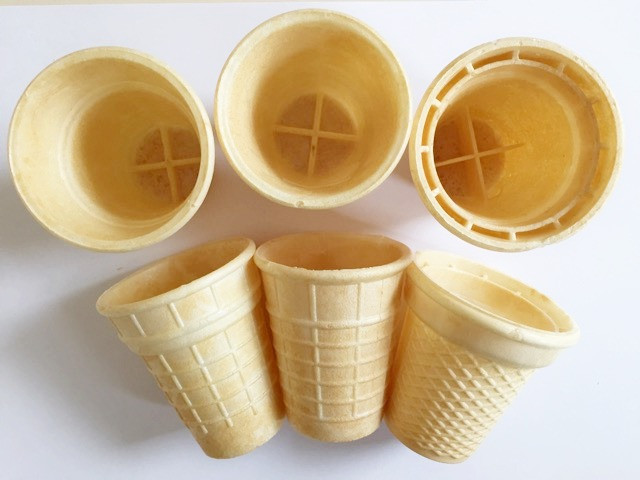 Wafer cup and cone
 Petri dish 90 mm
 Ice cream sticks Magnum (curly)
 General purpose environment of SPC "Biocompass-S" (Uglich)
 Pepsin whey pork
 Ice cream sticks (with logo)
- Auxiliaries for sugar products
- J-Bottom technology
- Ice cream sticks (round)
- Ice cream sticks Standard 114
- Ice cream sticks Standard 93
Consumables
 Drencher for feeding calves with a rigid probe
 Gas tailing cutter
 Disposable udder wipe (udder paper).
 Napkin reusable for wiping the udder
 Disinfectant with washing effect (10kg)
 Veterinary Needles Reusable
- Pre-milking udder cleaner (20 l)
- Stainless steel obstetric aid
- Sticky fly trap, 25cm*10m
- Spatula for mastitis test (Shalm's test)
- Liquid soap "Prestige" (yellow, green, red) 5 l
- Cup for disinfection of udder teats (non-returnable)
- Fall with a loop for cattle
- Cassettes for DCC somatic cell counter
- Dosing syringe, hose attachment
Microbiology
 MicroFast® Environmental Listeria Count Plate
 MicroFast® Salmonella Count Plate (SAL), for the determination of Salmonella in food and environmental samples (Catalog #LR1006)
 Substrate for accelerated determination of QMAFAnM, (catalog number LR1321)
 Substrate for determining the number of staphylococci (Catalog number LR1005) MicroFast® Staphyloccocus aureus Count Plate
 Substrate for determining QMAFAnM (catalog number LR1001)
 MicroFast® Coliform & E.coli Count Plate
- Coliform Count Plate (catalog number LR1002) MicroFast® Coliform Count Plate
- MicroFast® Staphyloccocus aureus Confirmation Plate Staph.aureus Confirmation Plate (cat. no. LR1005Q)
- MicroFast® Microbiological Substrates
- MicroFast® Bacillus cereus Count Plate (catalog number LR1010)
- MicroFast® Enterobacteriaceae Count Plate (cat. no. LR1011)
- Yeast & Mold Count Plate (cat. no. LR1003) MicroFast® Yeast & Mold Count Plate
- MicroFast® Lactic Acid Bacteria Count Plate (Part Number LR1312)
Our News
 Lukashenko heard a report on the Mogilev region. The main topic was the situation in agriculture. 05.02.2026
 What major agricultural projects are being implemented in the Mogilev region?05.02.2026
 An expert identified possible areas of cooperation between Belarus and Southeast Asian countries.05.02.2026
- Surcharges on prices for agricultural products purchased from the population have been established in 2026.04.02.2026
- Lukashenko: We won't carry the Vitebsk region on our shoulders.04.02.2026
- Baby Zabava. The Grodno Zoo welcomed its first addition in 2026. 03.02.2026
- Lukashenko: We won't carry the Vitebsk region on our shoulders. 03.02.2026
- Lukashenko on the case: it is a moral monstrosity if we cannot protect our smaller brothers in this weather03.02.2026
- Grain cultivation and livestock farming. Bogdanov discussed prospects for cooperation in the agricultural sector between Belarus and Kazakhstan.01.02.2026
- Выпойка молоком 3-4 раза, больше теплой воды. Как в Брестской области наладили уход за телятами в морозы01.02.2026
- From Tractor Driver to Businessman: The Story of a Belarusian Who Built a Farm from Scratch and a Church in a Village 30.01.2026
- A warehouse in the Minsk region improperly stored powdered milk: a court ordered compensation of Br2 million.30.01.2026
- Increased processing volumes, new jobs: production capacity is being expanded in the Shklov district.30.01.2026
- The story of a Belarusian who built a sturdy farm from scratch and revived his native village.29.01.2026
- Belarusian producers plan to enter the Qatari meat market.29.01.2026
- Belarus is interested in expanding dairy product supplies to Indonesia.28.01.2026
Articles
 The court refused to seize the property of agricultural enterprises with debts to the AIC fund.05.02.2026
 Demand for semi-finished products will decline in 2025: dumpling sales will fall by 8%.05.02.2026
 Rosselkhoznadzor inspected more than 2,000 tons of livestock products shipped to Yakutia.05.02.2026
- Rosselkhoznadzor monitored the export of more than 57,000 tons of veterinary goods from St. Petersburg.05.02.2026
- К госветнадзору Бурятии поступило 860 тонн продукции при отправке в Монголию05.02.2026
- The inflation rate in Russia at the beginning of February 2026 reached 6.5%.05.02.2026
- Innovations in broiler feeding: savings and bird health05.02.2026
- New financial disputes between Aventa and Tokarevskaya Poultry Farm: a second lawsuit for 70 million rubles05.02.2026
- Mexican and Canadian beef is losing ground in the US market.05.02.2026
- Spain strengthens institutional coordination to improve animal welfare management05.02.2026
- Blaming cows was a mistake: meadows absorb more gases than cattle emit.05.02.2026
- EU and Mercosur: Experts warn of shortage of EU veterinarians to control imports and associated health risks05.02.2026
- Rosselkhoznadzor stopped the import of more than 50 kg of dangerous animal products at Ufa Airport.04.02.2026
- Rosselkhoznadzor specialists have identified quality violations in meat products.04.02.2026
- The first batch of canned meat from the Kurgan region was sent to Azerbaijan under the supervision of Rosselkhoznadzor.04.02.2026
- A poultry farm in Yugra was fined for violating veterinary regulations.04.02.2026
Economics
 10 reasons to take a deposit04.05.2025
 Lavrov and the Swiss Foreign Minister will discuss the "deep crisis" of the OSCE.05.02.2026
 Kirilenko spoke about the problems facing Russian teams after sanctions were lifted.05.02.2026
- Lavrov believes that US statements about cooperation are inconsistent with sanctions05.02.2026
- The Russian ambassador warned of a reaction to the Faroe Islands' change in stance on sanctions.05.02.2026
- Five suspects in supplying weapons to Russia's defense industry have been arrested in Germany.03.02.2026
- Bloomberg узнал о планах ЕС по санкциям против российских платины и меди03.02.2026
- The EU confirmed discussions on banning entry for participants in the military operation.31.01.2026
- Bloomberg has revealed a new possible EU sanctions plan against Russia.31.01.2026
- The EU has blacklisted Russia for money laundering.30.01.2026
- The EU has imposed new sanctions on Iran in response to the suppression of protests.30.01.2026
- The European Union has designated the IRGC a terrorist organization.30.01.2026
- The US has eased sanctions and allowed oil companies to operate in Venezuela.30.01.2026
- Titov allowed for the return of foreign companies that "miss Moscow"30.01.2026
- Following the deal with Carlyle, LUKOIL continued negotiations with other companies.29.01.2026
- Macron announced that France is preparing new sanctions against Russia.29.01.2026
Antibiotics in Milk
 Antibiotics in milk: causes and methods of detection27.01.2026
 Pharmaceutical companies see a threat to EU security due to bacteria in Ukraine13.11.2025
 Prosecutors have issued warnings to more than 5,000 companies due to rising prices.09.09.2025
- Two dairy companies from Azerbaijan refused to work with Russia.09.07.2025
- Lukashenko told how Putin treated him to goat's milk.08.07.2025
- Lukashenko demanded that Belarus be cleared of littered logs by autumn.08.07.2025
- Lukashenko stated that it is not beneficial for Belarus to “fight madly,” but to feed17.06.2025
- В Британии предупредили о риске для миллионов из-за супербактерий06.01.2025
- Moscow court sides with Indian company in dispute with Health Ministry26.11.2024
- Scientists estimate increase in mortality due to drug-resistant bacteria29.10.2024
- Antibiotics for livestock and pesticides found in poisoned family's home29.10.2024
- Izvestia reported on the shortage of widely used antibiotics in Russia29.10.2024
- The Ministry of Health called data on the shortage of antibiotics unreliable29.10.2024
- Scientists warn of threat of return to pre-penicillin times29.10.2024
- The Ministry of Health explained how attitudes towards antibiotics changed during the pandemic07.05.2024
- WHO explains the risks of taking antibiotics "just in case"06.05.2024
Antibiotics in Meat
 Antibiotics in pollock25.02.2024
 Antibiotics in herring: myth or reality?12.02.2024
 Antibiotics in perch10.02.2024
- Antibiotics in sprat: facts and myths10.02.2024
- Antibiotics in tuna: an important health and environmental issue09.02.2024
- Antibiotics in meat30.01.2024
- Antibiotics in chebureks: myth or reality?29.01.2024
- Antibiotics in cutlets: problem or myth?18.01.2024
- Antibiotics in Chicken: Where Are the Highest Concentrations?17.01.2024
- Antibiotics in carp17.01.2024
- Where Are More Antibiotics in Chicken: Reality and Cautions16.01.2024
- Antibiotics in Salmon: Safety and Product Quality16.01.2024
- Antibiotics in Turkey15.01.2024
- Antibiotics in Sal: Reality and Safety Issues15.01.2024
- Antibiotics in Fried Dumplings: Facts, Risks and How to Stay Safe15.01.2024
- Antibiotics in sausages14.01.2024
10 Interesting Facts
 Antibiotics in Coffee: Myths and Reality03.05.2025
 Forged forks: 10 interesting facts16.05.2024
 Swimming pool and weight loss: 10 interesting facts10.03.2024
- Tests for antibiotics in milk - 10 interesting facts07.03.2024
- Cleaning the kettle from scale, 10 interesting facts...06.03.2024
- Antibiotics in beer: 10 interesting facts04.03.2024
- Wild boar, how to survive...01.03.2024
- Purulent mastitis, 10 interesting facts27.02.2024
- Lemon and alcohol: 10 interesting facts25.02.2024
- Mint - 10 interesting facts25.02.2024
- Wild boar, 10 interesting facts20.02.2024
- Wild boar and domestic pig: comparison and advantages20.02.2024
- Cottage cheese, 10 interesting facts20.02.2024
- 10 Interesting Facts About Milk19.02.2024
- How to Clean a Toilet - 10 Interesting Facts (Acid vs Alkaline)18.02.2024
- Goat's milk: 10 interesting facts16.02.2024
Diseases of cattle
 Dicroceliosis in cattle09.03.2024
 Demodicosis in cattle01.03.2024
 Purulent mastitis of cattle27.02.2024
- Hypodermatosis in cattle20.02.2024
- Hemonchoz in cattle11.02.2024
- Bursitis in cattle30.01.2024
- Brucellosis in cattle29.01.2024
- Bronchopneumonia in calves27.01.2024
- Bronchitis in cattle26.01.2024
- Mortellaro disease in cattle24.01.2024
- White muscle disease in cattle23.01.2024
- Babesiosis in cattle22.01.2024
- Cattle acidosis20.01.2024
- Arthritis in cattle20.01.2024
- Anaplasmosis in cattle18.01.2024
Misc
- Antibiotics for coughs: when they are needed and when they are not11.02.2024
 "Слетают все маски человека!" // Банщик про техники парения, поющих мастерах и чудо-массажах05.02.2026
 The Master of Steam: The Story of a Businessman Who Left a Successful Printing Business to Become a Spa Master 05.02.2026
- Investigators have identified the locations of the most frequent traffic accidents in the Brest region.05.02.2026
- Ministry of Emergency Situations: 129 people have died in fires since the beginning of the year.04.02.2026
- WHO: Almost 40% of cancer cases can be prevented 04.02.2026
- The number of fires in Belarus has increased. Experts have explained the causes.04.02.2026
- "Neither tail nor scales." We went winter fishing and learned the intricacies of ice fishing.04.02.2026
- Belarus has extended the ban on labeling imported alcoholic beverages in unfriendly countries.03.02.2026
- В Гомеле благодаря неравнодушным гражданам остановили нетрезвых таксиста и бесправника 03.02.2026
- From February 11, navigation seals will be used to track rail traffic in the EAEU.03.02.2026
- The State Traffic Inspectorate reminded drivers of road safety rules during severe frosts.31.01.2026
- A woman driving under the influence of alcohol with over 2 ppm was detained in Minsk.30.01.2026
- Наведение порядка в АПК, пожарная безопасность. Какие задачи поставлены перед прокурорами Витебской области 30.01.2026
- A car crashed into a tree on Independence Avenue in Minsk, injuring two people.30.01.2026
- Топ экспортируемых товаров назвали в "Белгоспищепроме"29.01.2026
Cloud of Tags
УкраинаУзбекистанМолокоСмертьРоспотребнадзорПоддержкаМясо птицыФранцияРоссияКарантинВеликобританияМинсельхозКартофельЗеленскийВладимир ПутинПтицефабрикаГазпромКредитСотрудники ГАИКанадаТатарстанРоссиянеРубльПродукты питанияКоронавирусBloombergСпутник vЭкспортКРСТурцияПодмосковьеАнтибиотиковПроизводство молокаСШАTelegramВ китаеВакцинацииРаботаДональд ТрампПраздникВакцинацияМинфинУкраинеРоссельхознадзорЛечениеВьетнамПензенской областиИнфляцияИммунитетКитайReutersПродукцияДолларМясокомбинатЯйцаБизнесИталияБройлерИмпортДеньги2024ПродовольствиеПесковДоходыДжо БайденАЧСЦеныCOVID-19РодителиГовядинаБолезньЗдоровьеЕгипетКрупного рогатого скотаКазахстанОрганизмПольшаКрупный рогатый скотRussiaСубсидииОтпускУрожаяСельское хозяйствоИнвестицииОбщепитАлександр ЛукашенкоДмитрий песковВостокЕСБеларусьФермерМоскваПроизводство мясаКолбасыFacebookСвининаЭкономикаМясоУченыеВластиТребованияТАССИсследованияПрокуратураЕврокомиссияЗапретЖивотноеДиректорПравительствоБразилияПитаниеКофеФруктыСанкт-ПетербургАлкогольного опьяненияВеликобританииЗависимостьЦентробанкРосстатЕАЭСЛекарстваДетиGoogleСырыУборкаГовядинуСанкцииAppleЗаконопроектМЧСКлиматМинздравОнлайнНедвижимостьЗаконминистр сельского хозяйстваНовостиВирусНефтьМинскМаслоАзербайджанАлкогольСудЯпонияВыручкаКризисГерманияАвстралияМужчины