
How are calves kept at the Loshnitsa dairy farm? The Prime Minister inspected the farm.

Photo is illustrative in nature. From open sources.


January 21, Borisov District. Prime Minister Oleksandr Turchin's schedule today includes a visit to the Loshnitsa dairy farm near Borysov. The head of government inspected the farm's calf care, BelTA reports.
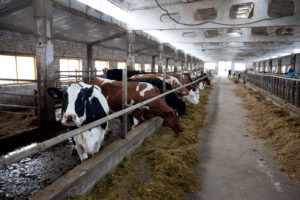
The farm is designed to accommodate 800 dairy cows. The average daily milk yield per cow is 25 liters. The farm produces 17 to 17.5 tons of milk daily, exclusively of extra-virgin grade. Turchin first visited the dairy farm's health center. After calving, postpartum treatment, and drying, the calves are sent here to individual pens or boxes. Calves are kept in individual boxes for 2 to 2.5 months, depending on their growth rate and the completion of all anti-epidemic measures, such as vaccinations and preventative treatments. They remain here for 3 to 7 months, depending on their physiological condition. The calves are then moved to individual pens to acclimate and gradually transition to whole milk. "Feeding calves three times a day is standard. Now, given the low temperatures, we're giving an additional liter of milk per calf, switching to four feedings a day," explained Stanislav Matveyev, chief veterinarian at the Bolshie Novosyolki branch.
The facility currently houses approximately 360 calves, 56 of which are in individual pens.
"We house our calves in both individual and group cages. Judging by the size of our facility, group housing is more cost-effective. Calves are an epizootic reservoir: they rub against each other, exchanging biological material, which increases their resistance and creates a microbial environment. In groups, they become stronger. We keep them in groups for 3-3.5 months, until they reach a balanced physiological state, height, and body weight, just like human children : some are born smaller, some larger, but in a group, they gain weight. After all vaccinations and treatments are completed, we breed them: the bulls go to a cattle fattening complex , and the heifers are raised," the veterinarian explained.
The calves are vaccinated several times, including against ringworm, a complex of viruses, and other immunizations. According to Alexander Turchin, the conditions for raising young cattle are more than satisfactory.
Regarding keeping the calves in such cold weather, the most important things for them are dry bedding and the absence of drafts, noted Stanislav Matveyev. "Drafts are their main enemy. They need to be kept dry, plus they need warm, portioned water. The calves tolerate everything well," he assured us. Alexander Kuretsky,
director of the Bolshie Novosyolki branch, added that the health center was built two years ago, after the main complex. The construction cost was approximately 200,000 Belarusian rubles.
"When properly maintained, the temperature regime for young animals isn't as important as the absence of drafts," he noted. "The average daily weight gain on the farm is over 750 grams per calf. This speaks to the correctness of the rearing process."
The most important know-how these days is the availability of specialists, and most importantly, qualified calf raisers and good milkmaids, the director believes. "This is the most important thing in any agricultural enterprise. Personnel are everything," he emphasized.
The prime minister also saw dairy cows being kept at the complex. He noted the excellent condition of the herd, the high level of work organization, and its compliance with modern standards. Photo by Sergey Sheleg
The farm is designed to accommodate 800 dairy cows. The average daily milk yield per cow is 25 liters. The farm produces 17 to 17.5 tons of milk daily, exclusively of extra-virgin grade. Turchin first visited the dairy farm's health center. After calving, postpartum treatment, and drying, the calves are sent here to individual pens or boxes. Calves are kept in individual boxes for 2 to 2.5 months, depending on their growth rate and the completion of all anti-epidemic measures, such as vaccinations and preventative treatments. They remain here for 3 to 7 months, depending on their physiological condition. The calves are then moved to individual pens to acclimate and gradually transition to whole milk. "Feeding calves three times a day is standard. Now, given the low temperatures, we're giving an additional liter of milk per calf, switching to four feedings a day," explained Stanislav Matveyev, chief veterinarian at the Bolshie Novosyolki branch.
The facility currently houses approximately 360 calves, 56 of which are in individual pens.
"We house our calves in both individual and group cages. Judging by the size of our facility, group housing is more cost-effective. Calves are an epizootic reservoir: they rub against each other, exchanging biological material, which increases their resistance and creates a microbial environment. In groups, they become stronger. We keep them in groups for 3-3.5 months, until they reach a balanced physiological state, height, and body weight, just like human children : some are born smaller, some larger, but in a group, they gain weight. After all vaccinations and treatments are completed, we breed them: the bulls go to a cattle fattening complex , and the heifers are raised," the veterinarian explained.
The calves are vaccinated several times, including against ringworm, a complex of viruses, and other immunizations. According to Alexander Turchin, the conditions for raising young cattle are more than satisfactory.
Regarding keeping the calves in such cold weather, the most important things for them are dry bedding and the absence of drafts, noted Stanislav Matveyev. "Drafts are their main enemy. They need to be kept dry, plus they need warm, portioned water. The calves tolerate everything well," he assured us. Alexander Kuretsky,
director of the Bolshie Novosyolki branch, added that the health center was built two years ago, after the main complex. The construction cost was approximately 200,000 Belarusian rubles.
"When properly maintained, the temperature regime for young animals isn't as important as the absence of drafts," he noted. "The average daily weight gain on the farm is over 750 grams per calf. This speaks to the correctness of the rearing process."
The most important know-how these days is the availability of specialists, and most importantly, qualified calf raisers and good milkmaids, the director believes. "This is the most important thing in any agricultural enterprise. Personnel are everything," he emphasized.
The prime minister also saw dairy cows being kept at the complex. He noted the excellent condition of the herd, the high level of work organization, and its compliance with modern standards. Photo by Sergey Sheleg
Read together with it:
- What does the expiration of the START Treaty mean?On February 5, 2026, New START, the last treaty between Russia and the United States that limited their nuclear arsenals, expired. RBC reports on how Moscow and Washington approached this date and what will happen afterward.On February 5, 2026, the Russian-American Treaty on Measures for the Further Reduction and Limitation of Strategic Offensive Arms (New START), the last agreement that limited t...
- The Ministry of Health has approved nine home treatment regimens for COVID-19.The Ministry of Health has approved nine outpatient treatment regimens for COVID-19 , which will be prescribed by a physician on an individual basis. Treatment should begin within the first week of the onset of symptoms, with antiviral medications.The Russian Ministry of Health has approved nine home treatment regimens for COVID-19. This is stated in updated clinical guidelines for the treatment o...
- A poultry farm in Yugra was fined for violating veterinary regulations.During a previous inspection in November 2025, the company was also held accountable and issued a warning. The investigation revealed that production areas were not isolated, roads were partially unpaved, and poultry was being delivered to slaughter without veterinary documentation. Furthermore, a state veterinarian was absent during the slaughter, and documentation was only issued after the proce...
- A farm in the Oryol region was fined for violating veterinary regulations.The inspection revealed that cattle had been removed from the farm without the necessary electronic veterinary documentation certifying the animals' health for various diseases. At the time of the inspection, the farm housed over 250 head of cattle . During the inspection, two emaciated cows were discovered, kept in conditions that did not meet veterinary standards. Violations in the handling of b...
- Why grocery retailers are changing their strategy to reduce product rangeArtur Gafarov, Director of the Institute for the Development of Entrepreneurship and Economics, explains that the industry is undergoing a major transformation: "While previously retail chains could afford to play around with their product range, trying to introduce new brands and products that might not sell particularly well but still provided a sufficiently diverse shelf, now the opposite is ha...
- GAP "Resource" took part in the Gulfood 2026 exhibition.Irina Klimova, Vice President and Marketing Director at GAP Resurs, said: "As one of Russia's largest food producers and exporters, GAP Resurs has been participating in Gulfood since 2016, and this year, for the first time, as a platinum sponsor. Among the new products presented at our booth, we highlight AN-NOOR halal chicken doner rolls . The recipe was developed with the taste preferences of co...
- Klinsky Meat Processing Plant automates production using a domestic MES systemThe software has significantly improved the existing accounting system and created a digital twin of the spice assembly area—a crucial stage in the production of meat products and semi-finished products. The project implemented targeted warehousing in production warehouses, automated the receipt of essential auxiliary materials, warehouse order generation, and picking assignments, as well as mecha...
- Kazakhstan wants to increase meat production by 1.5 times."We're lagging behind global standards." "Over the past few years, the development of beef livestock farming has faced a number of systemic challenges that are hindering the sustainability and growth of the industry. Problems related to the ineffectiveness of government support measures and farmers' limited access to financial resources persist," Serik Yegizbayev, head of the Committee on Agrarian...
Test for Atnibiotics in Milk
 Express tests for determining the residual amount of β-lactams and tetracyclines in milk, whey
 Express tests for determining the residual amount of β-lactams, tetracyclines, chloramphenicol, streptomycins in milk, whey
 PIONEER MEIZHENG BIO-TECH (5 in1) JC1165 / Rapid tests for the determination of the residual amount of halofuginone, flavomycin, novobiocin, flunixin, dexamethasone / prednisolone in milk, whey
 Rapid tests for determining the residual amount of chloramphenicol in meat
Laboratory equipment
 Table for microscopy BA-CL- X.X. CM TR-a
 Cylindrical shape weights with head
 LOIP LH- 2xx flask heater (models 50-250ml, 250-1000ml, 1000-2000ml, 600°C)
 LAC LABTECH (South Korea) benchtop autoclaves
 Solutions for washing of analyzers EkoWeek, EkoDay (Bulgaria)
 "Keltran" (keltrun) - a complex for the determination of nitrogen and protein by the Kjeldahl method
- Mobile table BA-CL- X.X PS TR
- Bürkle dosing spoons (0.5 to 50 ml) sterile
- Magnetic stirrer С-MAG HS7
- Bürkle BeefSteaker
- Hanging cabinet with 3 drawers BA-CL- Х.Х ТНЯ-3
- Indicator strips "Peroxide-25 mg", "Peroxide - 1000 mg", 100 pcs.
- BA-CL- X.X ST TR titration table
- Isothermal containers for 10, 17 and 26 liters
Packing



Additional Products
 General purpose environment of SPC "Biocompass-S" (Uglich)
 Wafer cup and cone
 Ice cream sticks Standard 93
 J-Bottom technology
 Pepsin whey pork
 Ice cream sticks (round)
- Auxiliaries for sugar products
- Ice cream sticks Standard 114
- Ice cream sticks (with logo)
- Ice cream sticks Magnum (curly)
- Petri dish 90 mm

Microbiology
 MicroFast® Coliform & E.coli Count Plate
 MicroFast® Salmonella Count Plate (SAL), for the determination of Salmonella in food and environmental samples (Catalog #LR1006)
 Yeast & Mold Count Plate (cat. no. LR1003) MicroFast® Yeast & Mold Count Plate
 MicroFast® Environmental Listeria Count Plate
 Substrate for determining QMAFAnM (catalog number LR1001)
 MicroFast® Bacillus cereus Count Plate (catalog number LR1010)
- MicroFast® Staphyloccocus aureus Confirmation Plate Staph.aureus Confirmation Plate (cat. no. LR1005Q)
- Substrate for determining the number of staphylococci (Catalog number LR1005) MicroFast® Staphyloccocus aureus Count Plate
- Substrate for accelerated determination of QMAFAnM, (catalog number LR1321)
- MicroFast® Enterobacteriaceae Count Plate (cat. no. LR1011)
- MicroFast® Microbiological Substrates
- MicroFast® Lactic Acid Bacteria Count Plate (Part Number LR1312)
- Coliform Count Plate (catalog number LR1002) MicroFast® Coliform Count Plate
Our News
 Tourism, agriculture, woodworking. Where the Presidential Property Management Department directs investments30.05.2025
 A line for the production of vitamin-herbal flour will be launched in July at Tikhinichi OJSC in the Rogachev district.30.05.2025
 "My son was riding a pony, and we were teaching a camel not to spit." A family of bloggers created an exotic zoo in a village30.05.2025
- Роскачество нашло недостаток только в одном из 20 стиральных порошков29.05.2025
- A recipe for the most delicate sour cream cake without baking: it’s very simple and delicious!29.05.2025
- Конкурс "Лидеры промышленности - 2025": в приоритете - инновационные достижения29.05.2025
- District-scale project: Kotonin from Lyakhovichi opens foreign markets29.05.2025
- In the Brest region, they plan to build and modernize about 55 dairy farms this year29.05.2025
- Проект районного масштаба: как в Ляховичах неликвид становится экспортным фаворитом28.05.2025
- Cook them and you won't regret it! Top 3 recipes for light vegetable soups for spring and summer28.05.2025
- Equipment, furniture, building materials. Which products won the "Industry Leaders - 2025" competition?28.05.2025
- Belarus is interested in developing interparliamentary cooperation with Egypt.27.05.2025
- Introducing the winners of the "Industry Leaders - 2025" competition in the "Enterprise of the Year" category.26.05.2025
- Lukashenko: We need to speed up at least twice as much24.05.2025
- Красивые, талантливые и настоящие. Фестиваль "Вместе" собрал под Минском семьи со всей страны24.05.2025
- MFA on increasing duties on Belarusian products in the EU: blatant trade protectionism23.05.2025
Articles
 US Cattle Market Outlook for Week 48, December 1, 202502.12.2025
 Экспорт индейки из России превысил курицу по темпам роста в 2025 году02.12.2025
 Veterinary drug manufacturers are advised to update their registration dossiers for the EAEU.28.11.2025
- Россия может установить новый рекорд потребления мяса в 2025 году28.11.2025
- Ленинградская область планирует увеличить производство свинины до 155 тыс. тонн к 2030 году28.11.2025
- Environmentalists are investigating the mass death of sheep in Primorye.28.11.2025
- Russia and Pakistan strengthen agricultural cooperation with increased trade and a foot-and-mouth disease vaccine28.11.2025
- Inflation in Russia has fallen below 7%: a new forecast for 2025.28.11.2025
- Meat and milk production in the Altai region has increased despite a decline in livestock numbers.28.11.2025
- The quality of poultry meat at Moscow region fairs was checked by specialists from the Ministry of Agriculture and Food.28.11.2025
- The Geopolitics of Meat: Argentina's Chessboard28.11.2025
- США: Невада присоединяется к государственной программе инспекции мяса и птицы28.11.2025
- South Korea's Pork Market Forecast for 202628.11.2025
- Бельгия предупреждает о влиянии китайских антидемпинговых мер на свинину в ЕС28.11.2025
- Эксперты: Прогноз Министерства сельского хозяйства США (USDA) по производству скота на 2026 год далёк от ожидаемого27.11.2025
- Гонконг приостанавливает импорт птицы из Великобритании, Японии и Германии27.11.2025
Economics
 Urals oil discount hits three-year low after EU sanctions30.07.2025
 Трамп заявил, что его «не волнует» реакция сырьевых рынков на санкции30.07.2025
 Верховный суд Британии отказался снимать санкции с бизнесмена Швидлера30.07.2025
- Trump admitted that tariffs against Russia would not work.30.07.2025
- Botswana wants to take full control of diamond company De Beers30.07.2025
- Yermak said how Trump could end the conflict in Ukraine17.07.2025
- Latvia Calls on Trump Not to Wait 50 Days and Impose Tariffs on Russia17.07.2025
- The EU imposed sanctions against the A7 payment system developed by PSB.16.07.2025
- Лавров заявил, что Россия хочет понять, что стоит за ультиматумом Трампа15.07.2025
- More than 50 coal companies in Russia are on the brink or have closed down15.07.2025
- Guterres Comments on Trump's Threats to Impose Sanctions on Russia15.07.2025
- Politico Learns of New Obstacle to EU Sanctions Against Russia15.07.2025
- Europe disappointed by Trump's big statement on Russia15.07.2025
- Депутат Европарламента заявил об обсуждении новых санкций против России15.07.2025
- Politico learns EU may remove barrier to sanctions against Russia15.07.2025
- Prigozhin explained how Canada offered him the opportunity to avoid sanctions.13.07.2025
Antibiotics in Milk
 Is it worth drinking antibiotics at the first sign of illness and what is the risk of it: an interview with a pharmacologist01.08.2020
 In Smolensk region the Rosselkhoznadzor Directorate returned to Belarusian consignors more than 33 tons of animal products transported with violations of veterinary requirements.04.02.2020
- Struggle for product quality and safety: experience of Belarusian colleagues19.11.2019
- Tiamphenicol07.08.2019
- Antibiotics in milk07.08.2019
- "While I'm talking to you nicely." The President threatened the government with prison for the death of a cattle25.07.2019
- Antibiotics in milk: Rumors and reality23.07.2019
- Antibiotics: harm or benefit17.07.2019
- Antibiotics in milk16.07.2019
Antibiotics in Meat
 Antibiotics in Meat: Prevention, Regulation and Consumer Health Concerns12.01.2024
 Antibiotics in Fried or Boiled Meat: Facts and Misconceptions12.01.2024
 Antibiotics in Sausage: Reality, Risks and Need for Control12.01.2024
- Antibiotics in Pelmeni: Real Threat or Myth?09.01.2024
- Antibiotics in Pork: Health Effects and Cooking Recommendations08.01.2024
- Antibiotics in Chicken: Safety, Regulation and Consumer Health Concerns08.01.2024
- Antibiotics in meat: problems and solutions06.01.2024
- Antibiotics in Beef: Between Animal Health and Consumer Safety06.01.2024
- Antibiotics in Chicken Meat: Safety, Regulation and Concern for Consumer Health06.01.2024
- Antibiotics in Rabbit Meat: Safety, Efficiency and Care for Consumers05.01.2024
- Antibiotics in Pork: Balance Between Health Concerns and Consumer Safety03.01.2024
- Antibiotics in Lamb03.01.2024
- Antibiotics in Meat: Real Risks and Transparency in Food Production29.12.2023
10 Interesting Facts
 Marbled meat: 10 interesting facts19.01.2024
 10 Fascinating Facts About Cattle Hoof Baths18.01.2024
 Antibiotics - 10 interesting facts18.01.2024
- Cutlets - 10 interesting facts18.01.2024
- 10 Interesting Facts about Carp17.01.2024
- Salmon - 10 Interesting Facts17.01.2024
- Beer belly 10 interesting facts17.01.2024
- Beer - 10 interesting facts17.01.2024
- Antibiotic tests pioneer - 10 interesting facts17.01.2024
- Rubber rings for castration - 10 interesting facts17.01.2024
Diseases of cattle
 Dicroceliosis in cattle09.03.2024
 Demodicosis in cattle01.03.2024
 Purulent mastitis of cattle27.02.2024
- Hypodermatosis in cattle20.02.2024
- Hemonchoz in cattle11.02.2024
- Bursitis in cattle30.01.2024
- Brucellosis in cattle29.01.2024
- Bronchopneumonia in calves27.01.2024
- Bronchitis in cattle26.01.2024
- Mortellaro disease in cattle24.01.2024
- White muscle disease in cattle23.01.2024
- Babesiosis in cattle22.01.2024
- Cattle acidosis20.01.2024
- Arthritis in cattle20.01.2024
- Anaplasmosis in cattle18.01.2024
Misc
 Что предлагают изменить в Беларуси в сфере оборота вейпов 18.06.2025
- New Products with High Potential: What's on Display at the State Committee for Science and Technology's Group Stand at Digital Expo 2025 18.06.2025
 "Young people are driven by passion and the desire to become famous." What are the dangers of train surfing?17.06.2025
- A brother took his sister's life. Investigators revealed details of the elderly woman's murder in Kirovsk.16.06.2025
- На дорогах Витебской области за выходные задержали 13 нетрезвых водителей16.06.2025
- Подпольное мини-производство алкоголя выявила милиция в Пружанском районе16.06.2025
- Drunk driver without license on moped tries to escape from traffic police near Gomel15.06.2025
- Правоохранители усилят пропускной режим в школах во время выпускных вечеров в Беларуси13.06.2025
- Штраф и лишение прав на три года: нетрезвого мотоциклиста задержали в Орше 13.06.2025
- The Ministry of Taxes and Duties explained how Belarus is preventing illegal trade in alcohol and vapes12.06.2025
- Consumer goods, bicycles, and caviar: which products are Belarus considering introducing labeling for?12.06.2025
- A drunk driver tried to evade traffic police in Gorki.11.06.2025
- Межрегиональная связь и соработничество с церковью. Духовно-нравственные ценности обсудили в Гродно11.06.2025
- How to Know if Your Child Will Become a Champion? What Belarusian Geneticists Are Capable of11.06.2025
- More than 2 ppm of alcohol. Drunk driver detained in Minsk11.06.2025
- In Minsk, a man without a license stole a foreign car, then abandoned the car and went home by taxi10.06.2025
Cloud of Tags
ПоддержкаСанкт-ПетербургReutersИммунитетFacebookДжо БайденРоссияАлкогольного опьяненияЕАЭСАзербайджанПесковПродукцияФермерСанкцииРоссельхознадзорУченыеКоронавирусВьетнамСельское хозяйствоЭкспортМЧСКанадаTelegramДетиВыручкаминистр сельского хозяйстваAppleМинздравВеликобританияРаботаБразилияЛекарстваСырыGoogleПольшаЭкономикаУкраинеBloombergТатарстанСотрудники ГАИИсследованияУкраинаЗаконВакцинацииМаслоНовостиКазахстанПроизводство мясаГовядинаВеликобританииМясо птицыМолокоЗаконопроектПтицефабрикаЗависимостьПитаниеДеньгиВакцинацияКредитРоспотребнадзорРодителиКрупного рогатого скотаМинфинРоссиянеБеларусьГерманияПродовольствиеАнтибиотиковНедвижимостьОбщепитЕгипетКризисПродукты питанияЛечение2024МужчиныОтпускМинскУборкаАЧСКитайГазпромДональд ТрампВирусПрокуратураМинсельхозКартофельТАССИмпортЗеленскийЦеныАлкогольЕврокомиссияПравительствоФруктыПроизводство молокаПензенской областиСпутник vИнфляцияОрганизмУзбекистанRussiaЦентробанкЯйцаСмертьГовядинуКрупный рогатый скотДмитрий песковБройлерСудРубльСвининаТурцияНефтьРосстатВостокКлиматОнлайнВ китаеЖивотноеЗдоровьеБолезньПодмосковьеСубсидииМоскваВладимир ПутинДолларКофеУрожаяДоходыКРСАлександр ЛукашенкоЯпонияМясоЕСКолбасыСШАМясокомбинатБизнесДиректорФранцияКарантинАвстралияПраздникТребованияЗапретCOVID-19ВластиИнвестицииИталия