
Experts named mechanisms for increasing Russian agricultural exports

Photo is illustrative in nature. From open sources.
Adds
 Rapid tests PIONER 5 in 1 for the determination of sulfonamides, tylosin, tilmicosin, lincomycin, erythromycin, fluoroquinolones
 PIONEER MEIZHENG BIO-TECH (5 in1) JC0871/ Rapid tests for the determination of the residual amount of β-lactams, tetracyclines, chloramphenicol, streptomycins, ceftiofur in milk, whey.
More than 500 people took part in the conference "Measures to increase the competitiveness of Russian exporters of agricultural products." In 2021, Russia continues to increase the volume of foreign supplies: as of August 22, exports grew by 18% compared to the same period last year to 19.2 billion US dollars , said Deputy Minister of Agriculture Sergey Levin
On August 25, Novotel Moscow City hosted an open conference “Measures to increase the competitiveness of Russian exporters of agricultural products”, organized by the Ministry of Agriculture of Russia and the Federal Center “Agroexport” with the participation of JSC “Rosselkhozbank”. The event was held in a combined format and brought together more than 500 people, of which 350 participated online.
During the conference, representatives of authorities, credit and leasing organizations spoke about the existing financial and non-financial instruments of state support for agribusiness companies, and the heads of enterprises and industry unions spoke about the practice of applying existing measures. The participants were able to discuss topical issues and voice proposals for improving the programs.
Plenary session “Agricultural export. Drivers of Development and Tools for Success” was opened by Sergey Levin, Deputy Minister of Agriculture. In his welcoming speech, he noted that in 2021 Russia continues to increase the volume of foreign supplies: as of August 22, exports grew by 18% compared to the same period last year to $19.2 billion. At the same time, the geography of sales is expanding and the share of processed products is increasing. . “In order to maintain the momentum of development, it is necessary to increase the productivity and competitiveness of domestic agro-industrial enterprises. Government support measures that help companies at various stages of their activities are aimed at this,” Levin emphasized.
Support mechanisms cover the entire production cycle - from an investment project to promotion of products in target markets, director of the Department for International Cooperation and Development of Exports of Agricultural Products of the Ministry of Agriculture Maxim Markovich confirmed.
New measures will allow expanding the range, such as support for organizations of the fishery complex and preferential leasing of high-tech equipment for the agro-industrial complex. “The most important element of the promotion system should also be the institute of agricultural attache. At present, we have already sent 14 agricultural attachés to countries in Africa, Latin America, Asia and the Middle East, and we hope to increase their number to 40 people by the end of the year,” Markovic said.
In addition, a set of non-financial measures is being implemented to promote Russian products abroad.
“The transition to the systematic development of exports is impossible without a deep study of foreign markets and existing trends. Therefore, the Agroexport Federal Center is creating a system of knowledge and competencies that allows Russian exporters to more easily enter new markets and actively increase their presence where supplies are already being made,” said Dmitry Krasnov, head of Agroexport. As part of this work, Agroexport develops concepts for promoting individual products to key foreign markets, export guides on a product-country basis, analytical, industry and regional reviews, conducts conferences and business missions, and also offers individual solutions for exporters.
Companies can receive a number of state support measures, including for transportation and exhibition and fair activities, through the One Window information system, added Alexei Mikhailik, Vice President of the Russian Export Center JSC (REC).
Almost 2,000 exporters have already used the digital service, and in total, more than 4,000 legal entities are registered on the platform. “Our task is to create an ecosystem around all the exporter's requests: obtaining government services, state support, analytical and business services that allow expanding the company's activities. We plan to launch more than 30 super services on the My Export platform by the end of 2024, covering the entire cycle of export activities,” Mikhailik promised.
Rosselkhozbank is an active participant in state programs, primarily concessional lending programs. According to Tatyana Pantelkina, Director of the Corporate Business Development and Support Department of Rosselkhozbank, the credit institution is represented throughout Russia by 66 branches, and also has more than 400 partner banks in 61 countries of the world.
“For 20 years Rosselkhozbank has gathered rich expertise in working with clients: from small farms to large agricultural holdings. Now we provide comprehensive support: remaining the financial backbone of the agro-industrial complex, we provide a wide range of non-financial services, including advising clients and “growing” exporters. Our product line is also constantly evolving and includes cash and settlement services, transactional products, currency risk hedging instruments, a wide range of trade finance products and government export support. At the end of 2020, within the program of preferential lending to agro-industrial complex clients, in accordance with Decree of the Government of the Russian Federation 512, loans were issued for 52 billion rubles, at the end of the first half of 2021 - already more than 75 billion rubles,” said Tatyana Pantelkina.
The Makfa company uses all available state support tools - these are preferential loans, compensation for part of the costs of logistics, certification, congress and exhibition events, Anton Belousov, Managing Director of MAKFA JSC, listed.
As a result, the geography of export today includes more than 30 countries, including 18 non-CIS countries. “Summing up the results of the export activity of the last three years, the growth dynamics was from 20 to 40% in monetary terms. In the sales structure, we aim to increase export turnover to 10% of total revenue by 2024. This year, for the first time, we tried the format of working with Agroexport - we developed road maps, choosing priority regions - the Kingdom of Saudi Arabia and South Korea. Now we are engaged in further development of these markets,” Belousov said.
After the plenary session, the session "Measures to increase the competitiveness of Russian exporters of agricultural products: instructions for use" was held. Within its framework, representatives of the Ministry of Agriculture of Russia, Agroexport, REC, Rosagroleasing and banking structures spoke in detail about the main existing tools to support domestic producers, schemes for obtaining and requirements for companies, and also answered questions from the audience.
Yulia Rodionova, Deputy Director of the Department for International Cooperation and Development of Exports of Agricultural Products of the Ministry of Agriculture of Russia, commented on the key aspects of the concessional lending program. “In 2021, it is planned to launch a new state support mechanism within the framework of concessional lending (Decree of the Government of Russia No. 512), which will provide for the expansion of financial instruments, namely, a letter of credit, factoring and lending to short-term receivables. I am sure that this will become an additional incentive for the development of the industry,” she said.
Artem Belov, Director General of the National Union of Milk Producers, Mikhail Maltsev, Executive Director of the Oil and Fat Union of Russia, and Vyacheslav Lashmankin, Executive Director of the Askond Confectionery Association, took an active part in the discussion. The leaders of industry unions assessed the effectiveness of existing tools to support farmers and made proposals for their improvement.
The heads of the leading companies in the industry (GAP Resource, JSC Aston and JSC Conti Rus), in turn, shared their experience of participating in existing programs.
The programs of concessional lending and compensation for the costs of transporting agricultural products aroused the greatest interest. In particular, business representatives were interested in the possibility of additional funding for the logistics program this year. According to Olga Polozyukova, Deputy Director of the Market Regulation Department of the Russian Ministry of Agriculture, in the next 2-3 weeks, the issue of increasing funding in 2021 by 1.5 billion rubles is expected to be resolved.
The largest growth in exports is shown by meat, dairy and fat-and-oil products - Sergey Levin
The conference was moderated by Vitaly Nagalin, Head of the Branch Development Department of Agroexport.
Read together with it:
- Rosselkhoznadzor inspected more than 2,000 tons of livestock products shipped to Yakutia.The bulk of the shipments consisted of meat products, exceeding 1,000 tons. Also under inspection were 690 tons of feed and additives for farm animals and poultry, 250 tons of milk and dairy products, 60 tons of semi-finished products, 35 tons of fish, 21,000 eggs, and 400 kilograms of honey. The largest suppliers were Moscow , St. Petersburg , Altai Krai, and the Moscow, Leningrad, and Amur regio...
- Rosselkhoznadzor monitored the export of more than 57,000 tons of veterinary goods from St. Petersburg.These products were shipped to countries including Azerbaijan , Angola, Vietnam , and China . 1,500 doses of veterinary vaccines were also exported to Moldova, and over 12.4 million eggs were shipped to Sierra Leone and the UAE. Officials from Rosselkhoznadzor verified compliance with veterinary and sanitary requirements in 15 importing countries , and the goods were shipped with specialized veter...
- Mexican and Canadian beef is losing ground in the US market.Beef from Mexico and Canada is losing ground in American kitchens and restaurants, despite being imported without tariffs imposed on all exports by US President Donald Trump a year ago. According to Tegra Consultant, Canadian meat sales to the United States have fallen by 23.56% over the past two years, while Mexican food exports to that market have fallen by 11.5......
- Lavrov and the Swiss Foreign Minister will discuss the "deep crisis" of the OSCE.Sergey Lavrov Russian Foreign Minister Sergey Lavrov will meet with Swiss Foreign Minister Ignazio Cassis in Moscow on February 6 to discuss the crisis in the Organization for Security and Cooperation in Europe (OSCE), Smolenskaya Square reported. Switzerland assumed the OSCE Chairmanship on 1 January 2......
- Kirilenko spoke about the problems facing Russian teams after sanctions were lifted.The head of the Russian Basketball Federation (RBF) stated that FIBA could make a final decision on the return of Russian basketball in April, but visa barriers remain the main problem. Andrei KirilenkoIn an interview with RBC Sport, Russian Basketball Federation (RBF) President Andrei Kirilenko discussed the possible return of Russian basketball to the international arena. He also cited visa an...
- Lavrov believes that US statements about cooperation are inconsistent with sanctionsSergey Lavrov US statements about the possibility of investment cooperation with Russia "do not fit" with Washington's sanctions policy, Russian Foreign Minister Sergey Lavrov said in an interview with RT. US President Donald Trump is in no rush to lift sanctions against Moscow, but is instead escalating them, Lavrov stated earlier during a government hour in the Federation Council. He recalled ho...
- The Russian ambassador warned of a reaction to the Faroe Islands' change in stance on sanctions.Vladimir BarbinThe Faroe Islands' change in stance on sanctions against Russia will not go unnoticed by Moscow, Russian Ambassador to Denmark Vladimir Barbin said in an interview with RIA Novosti. The statement was prompted by the Faroe Islands Parliament's decision to support sanctions against Russian fishing companies Norebo and Murman Seafood, as well as the Faroe Islands government's announcem...
- What does the expiration of the START Treaty mean?On February 5, 2026, New START, the last treaty between Russia and the United States that limited their nuclear arsenals, expired. RBC reports on how Moscow and Washington approached this date and what will happen afterward.On February 5, 2026, the Russian-American Treaty on Measures for the Further Reduction and Limitation of Strategic Offensive Arms (New START), the last agreement that limited t...
Test for Atnibiotics in Milk
 PIONEER MEIZHENG BIO-TECH (5 in1) JC1165 / Rapid tests for the determination of the residual amount of halofuginone, flavomycin, novobiocin, flunixin, dexamethasone / prednisolone in milk, whey
 ANTIBIOTICS / ELISA TESTS
 Express tests for determining the residual amount of β-lactams and tetracyclines in milk, whey
- PIONEER MEIZHENG BIO-TECH (5 in1) JC0871/ Rapid tests for the determination of the residual amount of β-lactams, tetracyclines, chloramphenicol, streptomycins, ceftiofur in milk, whey.
Laboratory equipment
 Table island low BA-CL- X.X Son TR
 Liston electric aquadistillers with built-in collector
 Milk quality analyzer "Laktan 1-4M" isp. 220
 Indicator strips "Peroxide-25 mg", "Peroxide - 1000 mg", 100 pcs.
 General laboratory cabinets
 Dry-air thermostats with cooling TSO ( SKTB, Smolensk)
- Areometer AON - 1 (set of 19)
- Light colored glass bottle without a faucet
- Bürkle IceSampler
- Indicator strips pH 5-9, 100 pcs.
- Indicator strips "Protein", 100 pcs.
- Electronic Checktemp thermometers (Germany)
- Milk samplers for flasks and tanks (Russia)
- Cylindrical weights without head
- Smooth digital micrometer MCC-25 0.001 (measuring range 0-25mm)
Packing


Additional Products
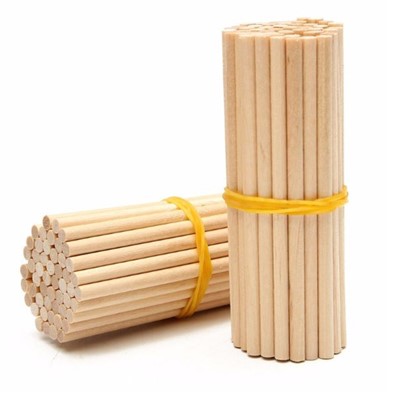 Ice cream sticks (round)
 J-Bottom technology
 Ice cream sticks (with logo)
 Ice cream sticks Standard 114
 Ice cream sticks Standard 93
 Wafer cup and cone
- Ice cream sticks Magnum (curly)
- Auxiliaries for sugar products
- Petri dish 90 mm
- General purpose environment of SPC "Biocompass-S" (Uglich)
- Pepsin whey pork

Microbiology
 Substrate for determining QMAFAnM (catalog number LR1001)
 MicroFast® Bacillus cereus Count Plate (catalog number LR1010)
 MicroFast® Enterobacteriaceae Count Plate (cat. no. LR1011)
 MicroFast® Coliform & E.coli Count Plate
 MicroFast® Lactic Acid Bacteria Count Plate (Part Number LR1312)
 MicroFast® Microbiological Substrates
- MicroFast® Salmonella Count Plate (SAL), for the determination of Salmonella in food and environmental samples (Catalog #LR1006)
- MicroFast® Environmental Listeria Count Plate
- Substrate for accelerated determination of QMAFAnM, (catalog number LR1321)
- MicroFast® Staphyloccocus aureus Confirmation Plate Staph.aureus Confirmation Plate (cat. no. LR1005Q)
- Coliform Count Plate (catalog number LR1002) MicroFast® Coliform Count Plate
- Yeast & Mold Count Plate (cat. no. LR1003) MicroFast® Yeast & Mold Count Plate
- Substrate for determining the number of staphylococci (Catalog number LR1005) MicroFast® Staphyloccocus aureus Count Plate
Our News
 The Ministry of Agriculture and Food has revealed which Belarusian products are most in demand in Africa.30.10.2025
 В Минской области намолочено 2,5 млн тонн зерна вместе с рапсом и кукурузой29.10.2025
 Personal responsibility, modernization. What measures is the Ministry of Agriculture and Food taking to reduce mortality?29.10.2025
- BUTB has begun selling gelatin for the pharmaceutical industry.29.10.2025
- Проверьте, знаете ли вы историю на уровне ЕГЭ26.10.2025
- Lukashenko spoke out against simple solutions for the Vitebsk region and actions along the path of least resistance. 25.10.2025
- Производство молока, инвестиции. Какие точки роста на пятилетку видит руководство Витебской области25.10.2025
- Первичная задача - дойти до каждого сельхозпредприятия. Депутат о развитии АПК Витебской области25.10.2025
- Joint projects and exchange of experience. In what areas are Belarus and Kazakhstan ready to develop cooperation in the agricultural sector? 24.10.2025
- Беларусь и Алтайский край намерены увеличить биржевую торговлю сельхозпродукцией24.10.2025
- Минск и Алжир готовят переговоры на высшем уровне. Почему Беларусь нацелилась на Север Африки?24.10.2025
- "Ambitious plans." Brest Regional Executive Committee on the region's contribution to food security in the Union State. 23.10.2025
- Decree: Regional executive committees are granted the right to form agricultural raw material zones23.10.2025
- New support measure for the agricultural sector. The Ministry of Agriculture and Food explained the legislative changes.23.10.2025
- Recognition of merit and dedication. State awards were presented in Minsk to representatives of various fields.23.10.2025
- The Belarusian delegation held talks in Kampala with colleagues from Uganda, Iran, and India.17.10.2025
Articles
 Russian meat exports to China are expected to grow to 300,000 tons by 2025.31.12.2025
 The results of meat livestock farming in the Moscow region have been summarized: production exceeded 320 thousand tons.31.12.2025
 Crisis in the Agricultural Sector: Unprofitability and the Need for Optimization31.12.2025
- Kazakhstan maintains affordable beef prices amid global trends31.12.2025
- World Meat Prices: Trends and Changes in Week 5231.12.2025
- Казахстан расширяет экспортные возможности в сфере животноводства31.12.2025
- CP Vietnam начинает экспорт переработанной курятины в Сингапур, открывая новые горизонты для вьетнамского птицеводства31.12.2025
- The Leningrad Region is ready to completely replace the Volzhanin poultry farm's egg production.31.12.2025
- The Chaikovskaya poultry farm has denied rumors about replacing chicken feed.31.12.2025
- The Impact of the Meat Industry on the US Economy31.12.2025
- The first shipment of products from Stavropol to Africa: exports to Liberia, Tanzania, and Benin began in 2025.31.12.2025
- An attempt to illegally import 3 tons of meat and dairy products from Belarus was stopped in the Bryansk region.26.12.2025
- AGROECO Group was recognized as the best in the agro-industrial complex according to the Cbonds Awards 2025 for its debut issue of exchange-traded bonds.26.12.2025
- Eight AGROECO executives were included in the prestigious "Salt of the Earth" rating.26.12.2025
- Экспорт мясной продукции группы «ПРОДО» увеличился более чем в два раза26.12.2025
- The Arbitration Court postponed the hearing in the case of Cherkizovo against the Kungur Meat Processing Plant until the end of January 2026.26.12.2025
Economics
 В Финляндии АЗС «дочки» ЛУКОЙЛа перешли на наличные из-за санкций02.11.2025
 Revolut Bank explained the reasons for closing the accounts of some Russians.02.11.2025
 Россия ввела санкции против нового премьера Украины и ряда министров02.11.2025
- Dmitriev warned the EU of losses following the ban on plumbing supplies to Russia.01.11.2025
- Михельсон предупредил о росте цен на газ в ЕС при отказе от СПГ из России31.10.2025
- Швейцария ввела дополнительные санкции против России и Белоруссии31.10.2025
- Dmitriev warned the EU of losses following the ban on plumbing fixtures from Russia.31.10.2025
- A tanker carrying Russian oil bound for India has been turned back after US sanctions.30.10.2025
- Минфин США снял санкции с Милорада Додика и членов его семьи30.10.2025
- Уитакер заявил об альтернативных санкциям мерах давления США на Россию29.10.2025
- LUKOIL decided to sell its foreign assets due to sanctions.29.10.2025
- Орбан решил обсудить с Трампом санкции против России29.10.2025
- Стармер оценил эффект санкций против «Роснефти» и ЛУКОЙЛа для Украины29.10.2025
- Bloomberg reported on Indian refineries' wait-and-see approach following sanctions against Russia.29.10.2025
- The US has exempted Rosneft's German business from sanctions.29.10.2025
- The NYT sees a new level of US economic warfare in Trump's sanctions.25.10.2025
Antibiotics in Milk
 Is it worth drinking antibiotics at the first sign of illness and what is the risk of it: an interview with a pharmacologist01.08.2020
 In Smolensk region the Rosselkhoznadzor Directorate returned to Belarusian consignors more than 33 tons of animal products transported with violations of veterinary requirements.04.02.2020
- Struggle for product quality and safety: experience of Belarusian colleagues19.11.2019
- Tiamphenicol07.08.2019
- Antibiotics in milk07.08.2019
- "While I'm talking to you nicely." The President threatened the government with prison for the death of a cattle25.07.2019
- Antibiotics in milk: Rumors and reality23.07.2019
- Antibiotics: harm or benefit17.07.2019
- Antibiotics in milk16.07.2019
Antibiotics in Meat
 Antibiotics in Meat: Prevention, Regulation and Consumer Health Concerns12.01.2024
 Antibiotics in Fried or Boiled Meat: Facts and Misconceptions12.01.2024
 Antibiotics in Sausage: Reality, Risks and Need for Control12.01.2024
- Antibiotics in Pelmeni: Real Threat or Myth?09.01.2024
- Antibiotics in Pork: Health Effects and Cooking Recommendations08.01.2024
- Antibiotics in Chicken: Safety, Regulation and Consumer Health Concerns08.01.2024
- Antibiotics in meat: problems and solutions06.01.2024
- Antibiotics in Beef: Between Animal Health and Consumer Safety06.01.2024
- Antibiotics in Chicken Meat: Safety, Regulation and Concern for Consumer Health06.01.2024
- Antibiotics in Rabbit Meat: Safety, Efficiency and Care for Consumers05.01.2024
- Antibiotics in Pork: Balance Between Health Concerns and Consumer Safety03.01.2024
- Antibiotics in Lamb03.01.2024
- Antibiotics in Meat: Real Risks and Transparency in Food Production29.12.2023
10 Interesting Facts
 Marbled meat: 10 interesting facts19.01.2024
 10 Fascinating Facts About Cattle Hoof Baths18.01.2024
 Antibiotics - 10 interesting facts18.01.2024
- Cutlets - 10 interesting facts18.01.2024
- 10 Interesting Facts about Carp17.01.2024
- Salmon - 10 Interesting Facts17.01.2024
- Beer belly 10 interesting facts17.01.2024
- Beer - 10 interesting facts17.01.2024
- Antibiotic tests pioneer - 10 interesting facts17.01.2024
- Rubber rings for castration - 10 interesting facts17.01.2024
Diseases of cattle
 Dicroceliosis in cattle09.03.2024
 Demodicosis in cattle01.03.2024
 Purulent mastitis of cattle27.02.2024
- Hypodermatosis in cattle20.02.2024
- Hemonchoz in cattle11.02.2024
- Bursitis in cattle30.01.2024
- Brucellosis in cattle29.01.2024
- Bronchopneumonia in calves27.01.2024
- Bronchitis in cattle26.01.2024
- Mortellaro disease in cattle24.01.2024
- White muscle disease in cattle23.01.2024
- Babesiosis in cattle22.01.2024
- Cattle acidosis20.01.2024
- Arthritis in cattle20.01.2024
- Anaplasmosis in cattle18.01.2024
Misc
 About 41 thousand cases of stroke are observed annually in Belarus. 29.10.2025
 A drunk driver drove into oncoming traffic on Moscow's Moscow Ring Road.29.10.2025
 Отсутствие ремней безопасности, проезд не по своей полосе. На что обращает внимание ГАИ при проверке маршруток 26.10.2025
- The Ministry of Labor and Social Protection issued a reminder of key safety measures during the national cleanup day. 25.10.2025
- In Minsk, an unlicensed BMW driver lost control and crashed into a pole.25.10.2025
- В Вилейском районе правоохранители застали самогонщиков с поличным: выявлено 11 тыс. литров браги25.10.2025
- He took her pension and fed her once every two or three days. In Vitebsk, a son drove his disabled mother to exhaustion.25.10.2025
- In Belarus, 340 children have been injured in accidents since the beginning of the year.24.10.2025
- МВД: реальные истории осужденных сверстников - эффективная профилактика преступлений подростков 24.10.2025
- Минчанин осужден за истязание беременной сожительницы24.10.2025
- A drunk Pinsk resident stole a car and damaged parked vehicles.23.10.2025
- The Ministry of Emergency Situations will hold the "For Safety Together" campaign in Belarus from October 25 to November 2.23.10.2025
- This swimming season, 44 fishermen have drowned in Belarus, 25 of whom were drunk. 23.10.2025
- A drunk teenager stole a car in Bobruisk. 23.10.2025
- "A House Without Fire": Rescuers Inspect Homes in the Gorki District 23.10.2025
- She'll still be in your dreams! A Belarusian woman visited Karelia, and here's what she had to say.18.10.2025
Cloud of Tags
FacebookЗдоровьеМясоГерманияGoogleПтицефабрикаРаботаКартофельНефтьКрупного рогатого скотаДолларДмитрий песковСельское хозяйствоИммунитетRussiaМужчиныГовядинуминистр сельского хозяйстваБолезньСотрудники ГАИУкраинаВладимир ПутинИталияРодителиЗапретСырыТребованияКазахстанДжо БайденПравительствоФруктыКанадаПензенской областиФранцияДоходыОтпускТАССЗависимостьКолбасыУборкаСудПольшаАвстралияСмертьНедвижимостьЕврокомиссияПроизводство молокаОнлайнМолокоДональд ТрампУкраинеЛекарстваУрожаяГовядинаBloombergАЧСВьетнамМясо птицыПесковЖивотноеЭкспортРоссияАлкогольМинсельхозПродукцияКлиматКарантинБройлерМинздравСпутник vАлександр ЛукашенкоРубльЕАЭСРоссиянеЯпонияВакцинацииЕСВластиЯйцаВирусCOVID-19Продукты питанияМясокомбинатУченыеАнтибиотиковЗеленскийВыручкаСШАРоспотребнадзорВостокКитайТурцияОрганизмМинскТатарстанПитание2024ПоддержкаКредитЗаконИсследованияИнвестицииВакцинацияБеларусьЦеныНовостиИнфляцияВ китаеПродовольствиеTelegramЭкономикаГазпромПроизводство мясаЕгипетReutersКрупный рогатый скотИмпортРосстатЦентробанкУзбекистанДеньгиКофеКРСКоронавирусМоскваОбщепитКризисДиректорБразилияПрокуратураМинфинСвининаЛечениеМЧССубсидииСанкт-ПетербургДетиПраздникАзербайджанАлкогольного опьяненияСанкцииВеликобританияAppleМаслоЗаконопроектПодмосковьеРоссельхознадзорВеликобританииБизнесФермер