FAO predicts record global food import prices

Photo is illustrative in nature. From open sources.


The volume of global food imports will reach a record high in 2021 at $1.75 trillion. This is 14% more than in 2020 and 12% higher than the June forecast. This is stated in the report of the Food and Agriculture Organization of the United Nations (FAO). Experts attribute this growth to an increase in the cost of food products on the international market and a threefold increase in transport costs. The report notes that developing regions account for 40% of all imports.
According to the organization's forecasts, the total value of food imports will increase by 20% compared to last year. At the same time, in low-income and food-deficit countries, the increase will be even more rapid, experts say. “Developing regions are facing sharp increases in prices for basic food items such as cereals, animal fats, vegetable oils and oilseeds, while in developed regions, price increases are mainly seen in high value-added product categories such as fruits and vegetables, fish products and drinks,” the report says.
For over a year, the FAO Food Price Index has been on the rise. In June and July of this year, for the first time in 12 months, a decline was recorded, but in August the growth continued. Prices are formed from the ratio of supply and demand, which began to increase after a reduction with the onset of the pandemic.
The report also says the world is set to see record corn and rice harvests in 2021, although FAO predicts that grain consumption for human consumption and animal feed will increase even more. Global sugar production is projected to start recovering in 2021-22 after three years of decline, but will still lag behind global consumption. Analysts estimated global production at 173.3 million tons, which is 2.2% more than in 2020. Global sugar trade is projected to decline slightly as a result of reduced supply in major exporting countries and rising prices.
World meat production, according to FAO, will also grow and amount to 352 million tons, which is 4.2% more than last year. This will mainly be affected by the rapid recovery of output in China, primarily pork. Milk production in the world in 2021 will also increase and reach 928 million tons, which is 1.5% higher than last year. Moreover, growth is expected in all major producing regions, primarily in Asia and North America. Also, as the economy continues to recover from market disruptions due to the COVID-19 pandemic, global dairy trade is forecast to expand. However, import growth has slowed in recent months due to increased domestic production and sluggish consumer demand, experts say.
Director of the RANEPA Center for Agricultural Policy Natalia Shagaida said that Russian food imports are approximately equal to exports. “Now the import structure has been normalized - there are no groups for which we are critically dependent on foreign supplies. The main import group is fruits and nuts. This will continue if we do not give up nuts, citrus fruits and bananas,” the expert commented. - The next most important group is dairy products. Here the main supplier is Belarus. Within the framework of the EAEU, everything is also predictable, it is hardly necessary to consider the issue of reducing trade with our partner, whose dairy industry was modernized with Russia in mind.” As the experience of last year showed, prices are rising for those products that Russiaprovides for itself, Shagaida noted. “And some of them are not even exported. So the problem of rising prices is not in imports, ”she is sure.
According to the vice-president of the Russian Grain Union (RGU) Alexander Korbut, this year Russia will increase the import of bananas, coffee, tea, apples, early vegetables and many other products. “From my point of view, this is quite natural, imports are not a factor that displaces Russian products and undermines our food security. Imports ensure market saturation,” he said.
According to him, the record value of world imports, which FAO predicts, is mainly due to a significant increase in world prices. Korbut believes that next year the upward trend will continue against the background of the post-pandemic effect. “There were huge investments by developed countries in the economy, a logistical crisis, a crisis in nitrogen fertilizers. Next year, the cost of producing most of the field crops will increase, as will the cost of petrochemicals,” he predicts.
Weekly inflation in Russia slowed to 0.09% - Rosstat
The volume of Russian imports this year depends on what will happen to the incomes of the population: if they grow, then imports will also increase. The situation with the ruble will also affect. Now it is strengthening, which becomes an incentive for importers who can buy more products in rubles, Korbut notes. “This can also lead to an increase in imports. On the whole, Russian food exports and imports will, I hope, be fairly balanced. Most likely, imports will slightly exceed exports,” he predicts. According to Korbut, by the end of 2021, food imports to Russia could reach $33-35 billion.
Read together with it:
- Rosselkhoznadzor monitored the export of more than 57,000 tons of veterinary goods from St. Petersburg.These products were shipped to countries including Azerbaijan , Angola, Vietnam , and China . 1,500 doses of veterinary vaccines were also exported to Moldova, and over 12.4 million eggs were shipped to Sierra Leone and the UAE. Officials from Rosselkhoznadzor verified compliance with veterinary and sanitary requirements in 15 importing countries , and the goods were shipped with specialized veter...
- The inflation rate in Russia at the beginning of February 2026 reached 6.5%.In particular, prices for fruit and vegetable products increased by 2.1%, with a significant increase for cucumbers (6.3%) and carrots (1.8%). Vodka also increased by 1%, while beef , eggs , and fish each increased by 0.4%. Meanwhile, the cost of pork and butter decreased slightly. In the service sector, there have been significant price increases for vacation trips to the UAE and Russia's Black S...
- Mexican and Canadian beef is losing ground in the US market.Beef from Mexico and Canada is losing ground in American kitchens and restaurants, despite being imported without tariffs imposed on all exports by US President Donald Trump a year ago. According to Tegra Consultant, Canadian meat sales to the United States have fallen by 23.56% over the past two years, while Mexican food exports to that market have fallen by 11.5......
- Lavrov and the Swiss Foreign Minister will discuss the "deep crisis" of the OSCE.Sergey Lavrov Russian Foreign Minister Sergey Lavrov will meet with Swiss Foreign Minister Ignazio Cassis in Moscow on February 6 to discuss the crisis in the Organization for Security and Cooperation in Europe (OSCE), Smolenskaya Square reported. Switzerland assumed the OSCE Chairmanship on 1 January 2......
- The Russian ambassador warned of a reaction to the Faroe Islands' change in stance on sanctions.Vladimir BarbinThe Faroe Islands' change in stance on sanctions against Russia will not go unnoticed by Moscow, Russian Ambassador to Denmark Vladimir Barbin said in an interview with RIA Novosti. The statement was prompted by the Faroe Islands Parliament's decision to support sanctions against Russian fishing companies Norebo and Murman Seafood, as well as the Faroe Islands government's announcem...
- What does the expiration of the START Treaty mean?On February 5, 2026, New START, the last treaty between Russia and the United States that limited their nuclear arsenals, expired. RBC reports on how Moscow and Washington approached this date and what will happen afterward.On February 5, 2026, the Russian-American Treaty on Measures for the Further Reduction and Limitation of Strategic Offensive Arms (New START), the last agreement that limited t...
Test for Atnibiotics in Milk
 TEST KIT for determination of inhibitory agents PIONEERPRODUKT® DASH-TEST, WC0040
 Express tests for determining the residual amount of β-lactams and tetracyclines in milk, whey
 Rapid tests for determining the residual amount of tetracyclines in meat
 Rapid 4 in 1 tests for determining the residual amount of neomycin, kanamycin, gentamicin, spectinomycin in milk, whey
Laboratory equipment
 MKV milk gauge
 Mobile table BA-CL- X.X PS TR
 LOIP LH-1xx Fixed volume flask heater (up to +400 °C)
 Sink table BA-CL- X.H.MO C (one bowl)
 pH electrodes Hanna Instruments (Germany)
 Abbe refractometers Atago
- Reagent cabinet
- Exhaust cabinets
- Memmert drying cabinets UN/UF series (Germany)
- Isothermal containers for 10, 17 and 26 liters
- Indicator strips "Total water hardness", 25 pcs.
- Thermohygrometer Testo 625
- Fume cupboard for muffle furnace BA-CL-X.XX MP
- Milk quality analyzer "Laktan 1-4M" 500 isp. MINI
Packing


Additional Products
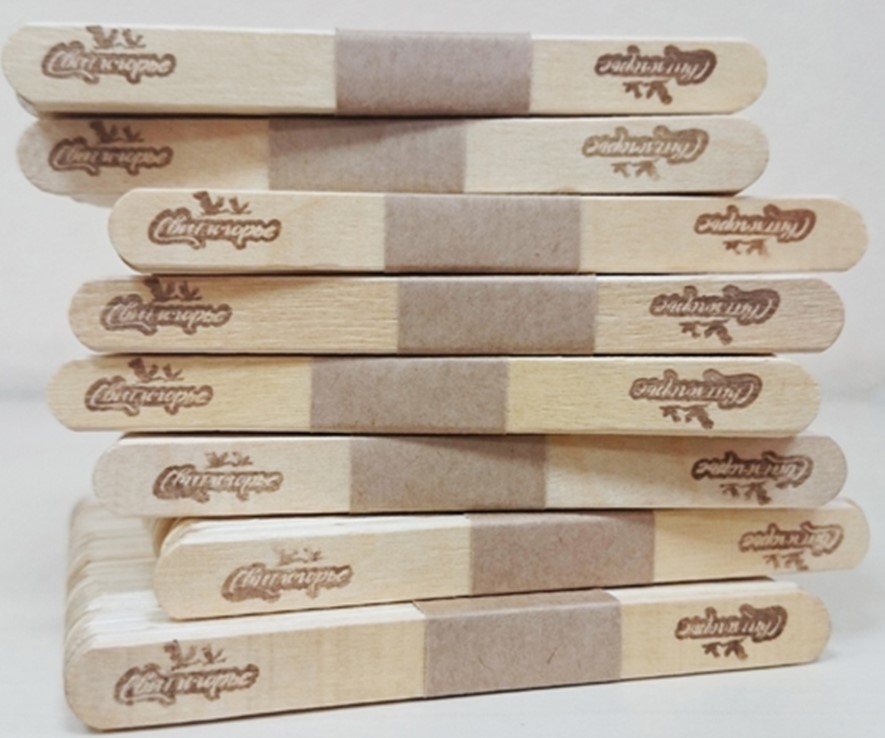 Ice cream sticks (with logo)
 Ice cream sticks Standard 93
 J-Bottom technology
 Ice cream sticks (round)
 Auxiliaries for sugar products
 Ice cream sticks Magnum (curly)
- Ice cream sticks Standard 114
- Petri dish 90 mm
- Wafer cup and cone
- Pepsin whey pork
- General purpose environment of SPC "Biocompass-S" (Uglich)


Microbiology
 MicroFast® Enterobacteriaceae Count Plate (cat. no. LR1011)
 MicroFast® Microbiological Substrates
 Yeast & Mold Count Plate (cat. no. LR1003) MicroFast® Yeast & Mold Count Plate
 MicroFast® Salmonella Count Plate (SAL), for the determination of Salmonella in food and environmental samples (Catalog #LR1006)
 MicroFast® Environmental Listeria Count Plate
 MicroFast® Staphyloccocus aureus Confirmation Plate Staph.aureus Confirmation Plate (cat. no. LR1005Q)
- Coliform Count Plate (catalog number LR1002) MicroFast® Coliform Count Plate
- Substrate for determining the number of staphylococci (Catalog number LR1005) MicroFast® Staphyloccocus aureus Count Plate
- Substrate for determining QMAFAnM (catalog number LR1001)
- Substrate for accelerated determination of QMAFAnM, (catalog number LR1321)
- MicroFast® Bacillus cereus Count Plate (catalog number LR1010)
- MicroFast® Coliform & E.coli Count Plate
- MicroFast® Lactic Acid Bacteria Count Plate (Part Number LR1312)
Our News
 Belarus increased exchange exports to China by 1.6 times in 202424.01.2025
 The Ministry of Agriculture and Food has approved zootechnical rules for milk production and livestock breeding24.01.2025
 Самосвалы, микросхемы, шоколад. Каким товарам присвоили Государственный знак качества24.01.2025
- Достижения и перспективы развития страны. Что Сергеенко обсудил на встрече с коллективом ОАО "Ветразь"24.01.2025
- "Все хотят жить мирно и видеть результаты своего труда". Линевич о том, за что голосовал на выборах24.01.2025
- В Мядельском районе после реконструкции открылась линия по производству сыра с голубой плесенью23.01.2025
- "Bread!!!" and "Bird" in the passport. Akulovich on Minsk in the 1990s at the "Belarus. Takeoff" exhibition.23.01.2025
- Increase volume and diversify structure: Belarus and Serbia are stepping up exchange trading.22.01.2025
- Belarusian food exports to Serbia increased by 63% in 11 months of last year22.01.2025
- Rosselkhoznadzor: Almost 100% of imported dairy products in Russia come from Belarus22.01.2025
- Demography, health promotion, digitalization. The Ministry of Health on the key areas of the five-year quality plan21.01.2025
- Production of cheeses with white mold has been established in Vileika20.01.2025
- Cheese Triumph, or Why Everything is Going Like Clockwork for Belarusian Cheesemakers20.01.2025
- Dairy complex opened after reconstruction in Liozno district20.01.2025
- Agro-industrial complex, industry, tourism. What will be the focus of development in Verkhnedvinsky district19.01.2025
- Is it possible to grow soybeans in Belarus and make money from it? Experts were asked17.01.2025
Articles
 Slovenia has confirmed its first case of H5N1 bird flu this year.01.11.2025
 Federal State Budgetary Institution "VGNKI" received the status of an FAO reference center for quality control of veterinary drugs.31.10.2025
 Modernization of the Karantaiskaya poultry farm in Dagestan: investments will amount to 945 million rubles.31.10.2025
- Обновление ветеринарных правил по борьбе с РРСС свиней вступает в силу в России31.10.2025
- The conflict between Avtotekhtsentr and Tokarevskaya Poultry Farm: a lawsuit for 18.7 million rubles31.10.2025
- Аномальная жара в Воронежской области привела к гибели более 90 тысяч птиц31.10.2025
- AGROSILA will invest 1.15 billion rubles in the modernization of the Perm poultry farm by 2026.31.10.2025
- Россельхознадзор провел надзорный контроль за 18 тысячами тонн животноводческой продукции в Кировской области31.10.2025
- В III квартале 2025 года возбуждено 32 уголовных дела за нарушения в сфере животноводческой продукции31.10.2025
- A million fewer: Argentina will end 2025 with a third consecutive year of decline in cattle numbers.31.10.2025
- Уругвай усиливает санитарный контроль, чтобы сохранить лидерство на мировом рынке мяса31.10.2025
- RaboResearch: Global beef market will grow despite uncertainty31.10.2025
- Cheap Argentine beef? No, better to open the border to Mexican cattle.31.10.2025
- Цены на борщевой набор снизились, яйца и мясо подорожали в Тульской области31.10.2025
- В Тюменских кафе выявили нарушения при использовании мяса без ветеринарных документов31.10.2025
- Цены на говядину в Братске возросли более чем на 25%31.10.2025
Economics
 Сенаторы США предложили создать фонд по борьбе с теневым флотом России10.04.2025
 Estonia has stated that Hungary is "getting closer" to losing its voting rights in the EU.05.04.2025
 The Russian International Affairs Council considered it inappropriate to switch to settlements in national currencies with Brazil04.04.2025
- Dmitriev explained why Russia is not asking for sanctions relief.04.04.2025
- Кремль сообщил, когда Дмитриев расскажет о визите в Вашингтон03.04.2025
- Келлог назвал возможные цели новых санкций США против России03.04.2025
- США сняли санкции с жены Бориса Ротенберга02.04.2025
- Britain imposed sanctions against the CEO of ANO "Eurasia" Nelly Parutenko02.04.2025
- EU Court Annuls Sanctions Against Pumpiansky and His Family02.04.2025
- Bloomberg learned that India is seeking alternatives to Russian oil due to Trump.01.04.2025
- Трамп заявил, что рассчитывает на согласие России на сделку по Украине01.04.2025
- Эксперт из Китая назвал условие для отправки миротворцев на Украину31.03.2025
- Foreign investors identified four key problems facing business in Russia.31.03.2025
- Глава РФПИ заявил об «очереди» желающих вернуться в Россию компаний29.03.2025
- Putin allows gas payments to be made through other channels than Gazprombank until July29.03.2025
- Bloomberg узнал о «продуманной стратегии» Кремля по смягчению санкций29.03.2025
Antibiotics in Milk
 Is it worth drinking antibiotics at the first sign of illness and what is the risk of it: an interview with a pharmacologist01.08.2020
 In Smolensk region the Rosselkhoznadzor Directorate returned to Belarusian consignors more than 33 tons of animal products transported with violations of veterinary requirements.04.02.2020
- Struggle for product quality and safety: experience of Belarusian colleagues19.11.2019
- Tiamphenicol07.08.2019
- Antibiotics in milk07.08.2019
- "While I'm talking to you nicely." The President threatened the government with prison for the death of a cattle25.07.2019
- Antibiotics in milk: Rumors and reality23.07.2019
- Antibiotics: harm or benefit17.07.2019
- Antibiotics in milk16.07.2019
Antibiotics in Meat
 Antibiotics in Meat: Prevention, Regulation and Consumer Health Concerns12.01.2024
 Antibiotics in Fried or Boiled Meat: Facts and Misconceptions12.01.2024
 Antibiotics in Sausage: Reality, Risks and Need for Control12.01.2024
- Antibiotics in Pelmeni: Real Threat or Myth?09.01.2024
- Antibiotics in Pork: Health Effects and Cooking Recommendations08.01.2024
- Antibiotics in Chicken: Safety, Regulation and Consumer Health Concerns08.01.2024
- Antibiotics in meat: problems and solutions06.01.2024
- Antibiotics in Beef: Between Animal Health and Consumer Safety06.01.2024
- Antibiotics in Chicken Meat: Safety, Regulation and Concern for Consumer Health06.01.2024
- Antibiotics in Rabbit Meat: Safety, Efficiency and Care for Consumers05.01.2024
- Antibiotics in Pork: Balance Between Health Concerns and Consumer Safety03.01.2024
- Antibiotics in Lamb03.01.2024
- Antibiotics in Meat: Real Risks and Transparency in Food Production29.12.2023
10 Interesting Facts
 Marbled meat: 10 interesting facts19.01.2024
 10 Fascinating Facts About Cattle Hoof Baths18.01.2024
 Antibiotics - 10 interesting facts18.01.2024
- Cutlets - 10 interesting facts18.01.2024
- 10 Interesting Facts about Carp17.01.2024
- Salmon - 10 Interesting Facts17.01.2024
- Beer belly 10 interesting facts17.01.2024
- Beer - 10 interesting facts17.01.2024
- Antibiotic tests pioneer - 10 interesting facts17.01.2024
- Rubber rings for castration - 10 interesting facts17.01.2024
Diseases of cattle
 Dicroceliosis in cattle09.03.2024
 Demodicosis in cattle01.03.2024
 Purulent mastitis of cattle27.02.2024
- Hypodermatosis in cattle20.02.2024
- Hemonchoz in cattle11.02.2024
- Bursitis in cattle30.01.2024
- Brucellosis in cattle29.01.2024
- Bronchopneumonia in calves27.01.2024
- Bronchitis in cattle26.01.2024
- Mortellaro disease in cattle24.01.2024
- White muscle disease in cattle23.01.2024
- Babesiosis in cattle22.01.2024
- Cattle acidosis20.01.2024
- Arthritis in cattle20.01.2024
- Anaplasmosis in cattle18.01.2024
Misc
 В Гомельской области с начала года в жилом фонде произошло 115 пожаров17.02.2025
 Drunk driver hits motorcyclist in Grodno, criminal case sent to court17.02.2025
- "Затрещал - не рискуй": что нужно знать при выходе на лед17.02.2025
- The Korelichi District Court sentenced a man for a drunk driving accident with injuries.17.02.2025
- Два человека погибли при пожарах в Могилевской области16.02.2025
- Three Days Ago. An Investigator from Gomel Shared His Memories of the Afghan Hell15.02.2025
- Достучаться до каждого. Профилактические рейды МЧС проходят в Костюковичском районе15.02.2025
- Более 820 человек, в том числе 99 детей, спасли в Беларуси при ликвидации ЧС в 2024 году14.02.2025
- Профилактика пожаров, вопросы гражданской обороны: Вольфович рассказал о задачах МЧС на 2025 год14.02.2025
- "Стало меньше ДТП, краж, мошенничеств". Назаренко отметил эффективность работы гомельской милиции в 2024 году14.02.2025
- Two tons of mash and a still in the forest. A seasoned moonshiner was found in the Shchuchinsky district14.02.2025
- About 50 tons of mash were seized from three moonshiners in the Molodechno district.13.02.2025
- Пьяный житель Дятловского района надругался над Государственным флагом, возбуждено уголовное дело13.02.2025
- Ружейный салют и бытовой конфликт: два случая обстрела жилых домов зафиксированы в Шумилинском районе13.02.2025
- To reduce plastic waste. When will the sale of beer in PET bottles be banned in Belarus?13.02.2025
- Пьяную жещину за рулем автомобиля задержали в Партизанском районе столицы12.02.2025
Cloud of Tags
FacebookЗдоровьеМясоГерманияGoogleПтицефабрикаРаботаКартофельНефтьКрупного рогатого скотаДолларДмитрий песковСельское хозяйствоИммунитетRussiaМужчиныГовядинуминистр сельского хозяйстваБолезньСотрудники ГАИУкраинаВладимир ПутинИталияРодителиЗапретСырыТребованияКазахстанДжо БайденПравительствоФруктыКанадаПензенской областиФранцияДоходыОтпускТАССЗависимостьКолбасыУборкаСудПольшаАвстралияСмертьНедвижимостьЕврокомиссияПроизводство молокаОнлайнМолокоДональд ТрампУкраинеЛекарстваУрожаяГовядинаBloombergАЧСВьетнамМясо птицыПесковЖивотноеЭкспортРоссияАлкогольМинсельхозПродукцияКлиматКарантинБройлерМинздравСпутник vАлександр ЛукашенкоРубльЕАЭСРоссиянеЯпонияВакцинацииЕСВластиЯйцаВирусCOVID-19Продукты питанияМясокомбинатУченыеАнтибиотиковЗеленскийВыручкаСШАРоспотребнадзорВостокКитайТурцияОрганизмМинскТатарстанПитание2024ПоддержкаКредитЗаконИсследованияИнвестицииВакцинацияБеларусьЦеныНовостиИнфляцияВ китаеПродовольствиеTelegramЭкономикаГазпромПроизводство мясаЕгипетReutersКрупный рогатый скотИмпортРосстатЦентробанкУзбекистанДеньгиКофеКРСКоронавирусМоскваОбщепитКризисДиректорБразилияПрокуратураМинфинСвининаЛечениеМЧССубсидииСанкт-ПетербургДетиПраздникАзербайджанАлкогольного опьяненияСанкцииВеликобританияAppleМаслоЗаконопроектПодмосковьеРоссельхознадзорВеликобританииБизнесФермер