Argentina: Rising meat prices doubled inflation in 2025 and will drive the consumer price index higher again this year

Photo is illustrative in nature. From open sources.

Meat markets will face a 2026 year characterized by shortages and a shift in the production cycle. After three years of inventory liquidation, reduced supply—estimated at 200,000 tons—and increased exports to Southeast Asia and Europe will fuel rising prices, which will once again exceed projected general inflation.
Meat prices ended 2025 with a nearly 70% increase, more than double the rate of inflation. The industry is expected to rise again in 2026, exceeding the consumer price index ( CPI), driven by reduced domestic supply, strong international demand, and the livestock conservation cycle. However, analysts rule out such a rise.
Meat prices have risen twice as fast as inflation.
"This year, the increase was 70%, which is twice the rate of inflation," noted Andrés Costamaña, director general of the Argentine Society of Agriculture, describing the recent dynamics of meat prices. He explained that this phenomenon is due to a classic market combination: "Demand increases, but supply decreases."
Costamagna emphasized that meat has become a scarce commodity both locally and globally. "After the pandemic, there was a shift in trends, and protein consumption increased," he stated, adding that for years the sector "had been under significant pressure from environmentalists," leading to a decline in the global cattle population , which currently stands at approximately 920 million head.
Supply Shrinkage: Impact of the 2026 Livestock Cycle
On the supply side, the diagnosis is the same. In response to a query from Letra P, meat market analyst Victor Tonelli warned that "supply in 2026 and 2027 will be lower than supply in 2023, 2024, and 2025."
He explained that over the past three years, slaughter volumes have exceeded the equilibrium level, resulting in the loss of more than three million head of cattle, a figure that could reach three and a half million when data for the end of 2025 is available.
Economist Fernando Marull noted the current market price. "An Argentine salary can buy 120 kilograms of cattle per month. The average over the past 30 years has been 190 kilograms. A good price for Argentine cattle. It's finally paying off," he wrote.
Tonelli explained that following the October elections and a favorable international price environment, a shift occurred. "What used to be a liquidation cycle has now become a retention cycle," he noted, referring to producers' decision to retain cattle for weight gain and calf production.
However, the effect won't be immediate. "The biological cycle of cattle is very slow," Tonelli emphasized, estimating that annual beef production could decline by approximately 200,000 tons in 2026. If exports remain at current levels, this would mean a reduction of four to five kilograms of beef available per capita on the domestic market, approximately 10% less than in 2025.
High demand and exports are putting pressure on prices.
The supply squeeze is exacerbated by continued international demand. Costamagna noted that "demand is growing globally, led by Southeast Asia," and called trade agreements with the United States and the European Union-Mercosur "good news," although he acknowledged that "they put additional pressure on prices."
The village leader emphasized that "when exports increase, Argentines are better off because they are encouraged to increase production," although he added that increasing production takes time and capital. "Increasing production doesn't happen overnight, but it requires a return on investment," he stated.
The Impact and Limitations of Public Policy
To mitigate the shortage, the market will be forced to partially resort to imports. Costamagna predicted that "imports from Brazil will continue," estimating their volume at approximately 160,000 tons. "It will be very small, but it will be enough to cover the deficit," he explained.
He also warned that when supply fails to meet demand, the market "hedges risks," especially in conditions where government policies or uncontrolled inflation create obstacles to investment.
Prices, inflation and the macroeconomic drag
In the short term, meat price dynamics are driven by persistent inflation. According to the National Institute of Statistics and Census (INDEC), wholesale inflation, which serves as a leading indicator for the CPI, was 2.4% per month in December and is projected to reach 26.2% annual growth in 2025.
In its report, consulting firm LCG noted that wholesale inflation on goods has again fallen below retail inflation, indicating a recovery in profitability. It also warned that the new exchange rate system and wage adjustments could put additional pressure on prices in 2026 in a scenario in which disinflation continues, albeit at a slower pace.
What to expect in 2026
Against this backdrop, industry forecasts converge on one key point. "Meat prices will rise faster than inflation, but won't reach 70% as they did this year," Costamagna stated, predicting that "prices will correct in 2027."
Tonelli agreed that, with limited supply and very high demand, prices "will keep pace with inflation; they may rise further, but not by much." He concluded: "Growth rates like those seen in November and December cannot be sustained. There are other alternatives that do not justify such increases."
Read together with it:
- Demand for semi-finished products will decline in 2025: dumpling sales will fall by 8%.Analysts at Evotor noted that the decline in interest in traditional convenience foods also affected khinkali and ravioli, whose sales fell by 4% and 19%, respectively. Meanwhile, demand for manti and kolduny showed a slight increase. Retailers are revising their product ranges, replacing frozen convenience foods with ready-to-eat meals and snacks that reflect current trends. It's important to not...
- Rosselkhoznadzor monitored the export of more than 57,000 tons of veterinary goods from St. Petersburg.These products were shipped to countries including Azerbaijan , Angola, Vietnam , and China . 1,500 doses of veterinary vaccines were also exported to Moldova, and over 12.4 million eggs were shipped to Sierra Leone and the UAE. Officials from Rosselkhoznadzor verified compliance with veterinary and sanitary requirements in 15 importing countries , and the goods were shipped with specialized veter...
- The inflation rate in Russia at the beginning of February 2026 reached 6.5%.In particular, prices for fruit and vegetable products increased by 2.1%, with a significant increase for cucumbers (6.3%) and carrots (1.8%). Vodka also increased by 1%, while beef , eggs , and fish each increased by 0.4%. Meanwhile, the cost of pork and butter decreased slightly. In the service sector, there have been significant price increases for vacation trips to the UAE and Russia's Black S...
- Mexican and Canadian beef is losing ground in the US market.Beef from Mexico and Canada is losing ground in American kitchens and restaurants, despite being imported without tariffs imposed on all exports by US President Donald Trump a year ago. According to Tegra Consultant, Canadian meat sales to the United States have fallen by 23.56% over the past two years, while Mexican food exports to that market have fallen by 11.5......
- Blaming cows was a mistake: meadows absorb more gases than cattle emit.Cows have become a symbol of controversy, as debates about their environmental impact, particularly regarding methane emissions, have generated headlines, political decisions, and criticism. But while many study the animals themselves, a group of researchers decided to examine the soil. At the University of Nebraska-Lincoln, a team of researchers led by Professor Galen Erickson conducted a study t...
- What does the expiration of the START Treaty mean?On February 5, 2026, New START, the last treaty between Russia and the United States that limited their nuclear arsenals, expired. RBC reports on how Moscow and Washington approached this date and what will happen afterward.On February 5, 2026, the Russian-American Treaty on Measures for the Further Reduction and Limitation of Strategic Offensive Arms (New START), the last agreement that limited t...
Test for Atnibiotics in Milk
 Rapid tests for determining the residual amount of chloramphenicol in meat
 PIONEER MEIZHENG BIO-TECH (5 in1) JC1165 / Rapid tests for the determination of the residual amount of halofuginone, flavomycin, novobiocin, flunixin, dexamethasone / prednisolone in milk, whey
 Rapid 4 in 1 tests for determining the residual amount of neomycin, kanamycin, gentamicin, spectinomycin in milk, whey
 PIONEER MEIZHENG BIO-TECH (5 in 1) JC0726 / Rapid tests for determining the residual amount of Bacitracin, ansamycins, clindamycin, spiramycin, florfenicol in milk, whey
Laboratory equipment
 PAL series digital pocket refractometers (Atago, Japan)
 VZ-246 viscometer with three interchangeable nozzles
 Cookware cabinet
 Mug for pouring milk (Russia)
 Laboratory centrifuge for the dairy industry CLU-1 "Orbit" (Ukraine)
 Electronic thermometer Testo 905-T1
- Indicator strips pH 5-9, 100 pcs.
- Moisture content analyzer MB23 (Ohaus)
- Indicator strips pH 0-12, 100 pcs.
- Stationary thermohygrometer Testo 608-H2
- ColonyStar Semi-Automatic Microbial Colony Counter
- Laboratory pH meter/ORP meter/thermometer HI 5221-01 (pH/ORP/T) (Hanna, Germany)
- Infrared thermometer with laser pointer Testo 830-T1, Testo 830-T2
- Manual homogenizer D-130 with tripod
Packing


Additional Products
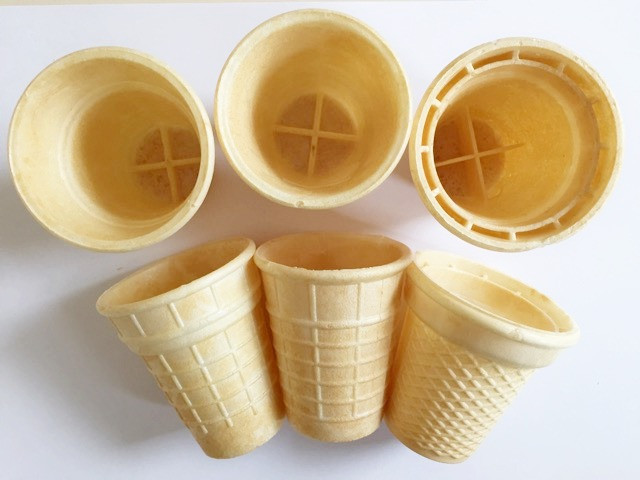 Wafer cup and cone
 Ice cream sticks Standard 93
 Auxiliaries for sugar products
 Ice cream sticks (round)
 Ice cream sticks Standard 114
 Petri dish 90 mm
- Ice cream sticks Magnum (curly)
- Ice cream sticks (with logo)
- General purpose environment of SPC "Biocompass-S" (Uglich)
- J-Bottom technology
- Pepsin whey pork


Microbiology
 MicroFast® Bacillus cereus Count Plate (catalog number LR1010)
 MicroFast® Microbiological Substrates
 MicroFast® Environmental Listeria Count Plate
 MicroFast® Enterobacteriaceae Count Plate (cat. no. LR1011)
 MicroFast® Lactic Acid Bacteria Count Plate (Part Number LR1312)
 Coliform Count Plate (catalog number LR1002) MicroFast® Coliform Count Plate
- Substrate for determining the number of staphylococci (Catalog number LR1005) MicroFast® Staphyloccocus aureus Count Plate
- MicroFast® Salmonella Count Plate (SAL), for the determination of Salmonella in food and environmental samples (Catalog #LR1006)
- Substrate for accelerated determination of QMAFAnM, (catalog number LR1321)
- Substrate for determining QMAFAnM (catalog number LR1001)
- Yeast & Mold Count Plate (cat. no. LR1003) MicroFast® Yeast & Mold Count Plate
- MicroFast® Coliform & E.coli Count Plate
- MicroFast® Staphyloccocus aureus Confirmation Plate Staph.aureus Confirmation Plate (cat. no. LR1005Q)
Our News
 Import substitution, innovation, investment. What tasks does the Brest region economy face in 202526.12.2024
 Export Development is the Key to Success for the Winners of the Consumer Market Leader 2024 Award26.12.2024
 Sanitation and total disinfection. The Ministry of Agriculture and Food on preventive measures at livestock farms.25.12.2024
- A large dairy complex has opened in the Pinsk region.24.12.2024
- Нарастить объемы и улучшить качество. Современные МТК открываются в Бобруйском и Кировском районах24.12.2024
- Беларусь увеличила биржевой экспорт в Россию почти в десять раз24.12.2024
- Introducing the winners of the "Leaders of the Digital Economy - 2024" competition23.12.2024
- A Belarusian hub in Oman, artificial intelligence, and a meeting with the UAE leader. Lukashenko's week in the Middle East summarized.22.12.2024
- Главные новости за 20 декабря21.12.2024
- Bread, milk, vegetables: what discounts and for whom have been extended in Belarus20.12.2024
- Introducing the winners of the "Digital Economy Leaders - 2024" competition20.12.2024
- Former Ambassador of Belarus told what is interesting about Oman and what projects the countries can implement together19.12.2024
- The East is a delicate matter? Why Lukashenko is a frequent guest in the Middle East and why Belarus is respected there19.12.2024
- Правительство без доверия. Как Германия скатывается от экономического кризиса к политическому?19.12.2024
- "Friendship is a gift from the Almighty." Lukashenko's article on cooperation between the two countries was published in Omani media.16.12.2024
- Exotic crops, union-scale projects, scientific breakthroughs. Summing up the results of the agricultural year16.12.2024
Articles
 The Russian laboratory "Agroplem" is recognized as one of the best in the world in the field of molecular genetic testing of pigs.29.10.2025
 The decline of supermarkets and hypermarkets in Russia continues: experts speak of a new wave of retail25.10.2025
 Paraguay: Offal exports are a growing industry and have already reached US$95.4 million.25.10.2025
- China increased pork production by 7% in the third quarter of the year.25.10.2025
- Новые горизонты сотрудничества: Россия и Аргентина обсуждают совместный доступ на рынки продукции животного происхождения25.10.2025
- Poultry farm "Tretyakovskaya" in 2 maanden geleden rubles25.10.2025
- Indilight held a culinary masterclass with Silvena Rowe, promoting turkey as a healthy food.25.10.2025
- Министерство сельского хозяйства США представило план по снижению цен на говядину25.10.2025
- С января по июль экспорт свинины из ЕС вырос на 1,6%25.10.2025
- Рост цен на мясо в Самаре: говядина достигла 750 рублей за килограмм25.10.2025
- Московская область планирует нарастить мясное производство на 25% к 2030 году25.10.2025
- Poultry production in the Omsk region increased by 75% in the first 9 months of 2025.25.10.2025
- Meat prices in Russia continue to rise: analysis of causes and forecasts25.10.2025
- Product quality violations were discovered at the Pravilnye Produkty plant.23.10.2025
- Nalchik Meat Processing Plant Puts Its Accounts Receivable Up for Auction23.10.2025
- Modernization of poultry farming in the Nizhny Novgorod region: new opportunities and production growth23.10.2025
Economics
 EU to ask India for help with sanctions against Russia26.02.2025
 Experts Assess Impact of EU Sanctions on Russian Airports and Seaports25.02.2025
 Which Russian athletes and functionaries were subject to sanctions?25.02.2025
- В ВТБ оценили экономический эффект от завершения конфликта на Украине25.02.2025
- Вяльбе заявила, что санкции Канады подтверждают ее патриотизм25.02.2025
- Познер ответил на введенные против него санкции Канады25.02.2025
- Apple Closes Russians' Access to Business Application Development Platform24.02.2025
- Ирина Роднина пожаловалась, что не может путешествовать из-за санкций22.02.2025
- Суд удовлетворил иск ПСБ к бывшей европейской «дочке» ВТБ22.02.2025
- Lavrov names condition for return of Western companies to Russia22.02.2025
- Degtyarev thanks Hungary for blocking EU sanctions against ROC21.02.2025
- Putin assessed the possible return of Western companies to Russia21.02.2025
- АвтоВАЗ заявил об отсутствии контактов с Renault21.02.2025
- The head of the Central Bank revealed the volume of unfrozen assets of private investors20.02.2025
- Набиуллина назвала преждевременным обсуждение возврата Visa и Mastercard20.02.2025
- Gorelkin named the conditions for resuming YouTube's work in Russia19.02.2025
Antibiotics in Milk
 Is it worth drinking antibiotics at the first sign of illness and what is the risk of it: an interview with a pharmacologist01.08.2020
 In Smolensk region the Rosselkhoznadzor Directorate returned to Belarusian consignors more than 33 tons of animal products transported with violations of veterinary requirements.04.02.2020
- Struggle for product quality and safety: experience of Belarusian colleagues19.11.2019
- Tiamphenicol07.08.2019
- Antibiotics in milk07.08.2019
- "While I'm talking to you nicely." The President threatened the government with prison for the death of a cattle25.07.2019
- Antibiotics in milk: Rumors and reality23.07.2019
- Antibiotics: harm or benefit17.07.2019
- Antibiotics in milk16.07.2019
Antibiotics in Meat
 Antibiotics in Meat: Prevention, Regulation and Consumer Health Concerns12.01.2024
 Antibiotics in Fried or Boiled Meat: Facts and Misconceptions12.01.2024
 Antibiotics in Sausage: Reality, Risks and Need for Control12.01.2024
- Antibiotics in Pelmeni: Real Threat or Myth?09.01.2024
- Antibiotics in Pork: Health Effects and Cooking Recommendations08.01.2024
- Antibiotics in Chicken: Safety, Regulation and Consumer Health Concerns08.01.2024
- Antibiotics in meat: problems and solutions06.01.2024
- Antibiotics in Beef: Between Animal Health and Consumer Safety06.01.2024
- Antibiotics in Chicken Meat: Safety, Regulation and Concern for Consumer Health06.01.2024
- Antibiotics in Rabbit Meat: Safety, Efficiency and Care for Consumers05.01.2024
- Antibiotics in Pork: Balance Between Health Concerns and Consumer Safety03.01.2024
- Antibiotics in Lamb03.01.2024
- Antibiotics in Meat: Real Risks and Transparency in Food Production29.12.2023
10 Interesting Facts
 Marbled meat: 10 interesting facts19.01.2024
 10 Fascinating Facts About Cattle Hoof Baths18.01.2024
 Antibiotics - 10 interesting facts18.01.2024
- Cutlets - 10 interesting facts18.01.2024
- 10 Interesting Facts about Carp17.01.2024
- Salmon - 10 Interesting Facts17.01.2024
- Beer belly 10 interesting facts17.01.2024
- Beer - 10 interesting facts17.01.2024
- Antibiotic tests pioneer - 10 interesting facts17.01.2024
- Rubber rings for castration - 10 interesting facts17.01.2024
Diseases of cattle
 Dicroceliosis in cattle09.03.2024
 Demodicosis in cattle01.03.2024
 Purulent mastitis of cattle27.02.2024
- Hypodermatosis in cattle20.02.2024
- Hemonchoz in cattle11.02.2024
- Bursitis in cattle30.01.2024
- Brucellosis in cattle29.01.2024
- Bronchopneumonia in calves27.01.2024
- Bronchitis in cattle26.01.2024
- Mortellaro disease in cattle24.01.2024
- White muscle disease in cattle23.01.2024
- Babesiosis in cattle22.01.2024
- Cattle acidosis20.01.2024
- Arthritis in cattle20.01.2024
- Anaplasmosis in cattle18.01.2024
Misc
 Foreigner held accountable for insulting Gomel police officer online24.01.2025
 At 103, she came to the polling station herself and shared the secrets of longevity22.01.2025
 Residential building on fire in Lida, Emergencies Ministry workers rescued two people22.01.2025
- Чтобы приумножить экспортные поставки. "Белгоспищепром" готовится к "Продэкспо-2025" в Москве21.01.2025
- Снижение числа погибших при пожарах отмечают спасатели Гродненской области по итогам 2024 года20.01.2025
- На дорогах Витебской области за выходные задержали более 40 бесправников20.01.2025
- СК: в Витебской области в прошлом году зарегистрировано на 8,4% меньше преступлений, чем в 2023-м17.01.2025
- Nine protocols. A drunk driver without a license tried to hide from the traffic police in Rechitsa17.01.2025
- Из-за пристрастия к алкоголю 39-летнего жителя Мяделя ограничили в дееспособности17.01.2025
- Житель Минского района жестоко избил знакомого, а затем поджег его дом16.01.2025
- Безопасность при крещенских купаниях: МЧС и ОСВОД напомнили о главных правилах15.01.2025
- Put on a hat and watch the weather forecast. How to avoid frostbite in winter, a doctor told15.01.2025
- Navigation seals will be used to track certain types of road transport in the SG from January 2715.01.2025
- Indonesia plans to ban social media for children14.01.2025
- A drunk man died under the wheels of a train in the Minsk region.14.01.2025
- Нетрезвый водитель сбил пожилую женщину на пешеходном переходе в Барановичах14.01.2025
Cloud of Tags
АнтибиотиковКредитКарантинДолларПензенской областиСШАМаслоБолезньУкраинаИнвестицииАЧСИммунитетДеньгиЗаконРосстатRussiaАлкогольСырыСвининаФранцияминистр сельского хозяйстваTelegramКРСЯпонияМоскваАвстралияГовядинуReutersВластиУкраинеНедвижимостьВеликобританииЭкономикаПрокуратураМинсельхозВостокСанкцииКазахстанВакцинацияУченыеЛекарстваОбщепитФруктыКофеСанкт-ПетербургБизнесПтицефабрикаВеликобританияТатарстанПродукцияДиректорЕгипетМинскПродукты питанияДональд ТрампФермерFacebookКлиматРоссиянеЕврокомиссияДжо БайденПраздникЗависимостьУборкаМужчиныКолбасыСпутник vТАССБеларусьДоходыОрганизмНовостиДмитрий песковМинздравЯйцаЗапретПоддержкаУрожаяАзербайджанГерманияРубльОнлайнРаботаGoogleМясоBloombergAppleБройлерЗеленскийКоронавирусСубсидииВыручкаЖивотноеЦеныДетиПроизводство мясаЗдоровьеИсследованияГовядинаОтпускПродовольствиеЕСПроизводство молокаСмертьПравительствоНефтьРоспотребнадзорЕАЭСВирусВ китаеВьетнамКитайМолокоГазпромМЧСВакцинацииКанадаПитаниеИмпортАлкогольного опьяненияCOVID-19ПесковТребованияПольшаЛечениеПодмосковьеАлександр ЛукашенкоБразилияТурцияЭкспортКрупного рогатого скотаИнфляцияСотрудники ГАИМинфинЗаконопроектМясо птицыКрупный рогатый скотСельское хозяйствоКартофельУзбекистанРодители2024МясокомбинатСудКризисРоссельхознадзорЦентробанкВладимир ПутинРоссияИталия