
Africa has sharply reduced the use of the ruble in payments for exports from Russia

Photo is illustrative in nature. From open sources.


In July 2023, African countries almost stopped paying in rubles for exports from Russia. At the same time, the use of “friendly” currencies, which include the yuan, has jumped. A view of the international port of Tangier in northern Morocco
In July 2023, African countries, when making payments to Russia for exports, mainly used the currencies of friendly countries and sharply reduced the share of the ruble, as follows from Bank of Russia statistics on the currency structure of payments for exports and imports with different parts of the world.
Thus, the share of currencies of friendly countries in payments for exports amounted to 78.8%. This is the highest level since January 2021 (earlier data not published).
The share of “unfriendly” currencies (primarily the dollar and the euro), on the contrary, decreased to 8.5 from 12.6% in June and 58.9% in May. In general, this figure has been decreasing since February 2023, but it is very volatile: in some months it was 20–30%, in others it was 50% and higher. Moreover, in January 2021, the share of dollars and euros in settlements reached 98.2%. Such jumps may be influenced by the relatively small volume of Russia’s trade with Africa - according to the Federal Customs Service as of July 2023, the share of this continent amounted to 3.7% of Russia’s total trade turnover. In 2022 it was even lower - 2.3%.
While abandoning the dollar and euro, African countries have predominantly used the ruble in recent months . Thus, its share in February 2023 was 82.4%, in March 2023 - 61.3%, in April - 44.9%, in May 35.2%, in June - 48.3%. However, in July the figure dropped to 12.7%, this is the minimum value for the year. The reduction occurred against the backdrop of a falling ruble exchange rate: just in July, the dollar went beyond 90 rubles.
The share of the ruble in payments for imports from Africa, in turn, amounted to 34% in July, the share of dollars and euros - 47.4%, and the share of other currencies - 18.7%.
Why is the payment structure changing?“It is quite obvious that the vacant place of unfriendly countries that do not want to work with us is being occupied by states that are ready to cooperate with us, including African countries,” said acting head of the Federal Customs Service of Russia (FCS) Ruslan Davydov, commenting on the growth in the share of trade turnover with Africa from 2.3 to 3.7%.
Read PionerProdukt .by How remote work and the homeless turned San Francisco into a ghost town What to do if you are lactose intolerant Not a single idea in your head. How to learn to be creative again How autocrats managed to build an “economic miracle” in SingaporeAccording to the latest data from the Federal Customs Service, in January 2023, the volume of exports from Russia amounted to $32.9 billion, imports - $22.2 billion. If in January the share of trade with Africa was comparable to the 2.3% that Davydov spoke about, then we can talk about about trade of approximately $750 million in exports and $500 million in imports. The service did not disclose later foreign trade data.
Most of the largest Russian banks have been disconnected from the SWIFT financial messaging system, which is used for currency transfers, since last year. In addition, transfers in dollars or euros become unavailable to sanctioned banks. Also, since the spring of 2022, foreign credit organizations began to cut off correspondent accounts of Russian banks, regardless of their location on sanctions lists, or increased verification of transfers from Russia.
Leading expert of TsMAKP Andrey Gnidchenko believes that the structure of currencies in trade with African countries is significantly influenced by individual large transactions. This is also evident from the Central Bank’s chart, where in certain months there were sharp spikes in the share of other currencies in exports.
The main currency that African countries can use is Chinese yuan and, to a lesser extent, Indian rupees, while the share of the ruble and the share of currencies of friendly countries can be volatile and change from month to month, Alexander Knobel, director of the Center for International Trade Research at RANEPA, told RBC : “ This is influenced by the geography of supplies and the range of goods, since RussiaIt sells different sets of goods with different conditions to different countries in Africa. In any case, in the future we will see a transition from the dollar and euro to the ruble, yuan, rupees, etc.” Volatility may also be affected by the availability and ease of use of specific currencies. Since the cost of goods in trade contracts is often still written in dollars, it is not only the exchange rate of the ruble or some other currency that is important, but how convenient it is to carry out the transaction in the chosen currency.
Traditionally, Russia’s main trading partners in Africa are Egypt and Algeria, where food and weapons were supplied, Gnidchenko lists. “Recently, the role of other countries, especially those with ports, could have increased - for example, Norilsk Nickel announced at the end of 2022 that it was considering the port of Tangier in Morocco as a new transshipment hub for non-ferrous metals. More active use of such hubs in recent months could have influenced the change in the structure of Russian exports to Africa in all aspects - geographical, commodity, and currency. However, the scale of the changes taking place is difficult to grasp due to the confidentiality of the relevant statistics,” he sums up.
How other countries calculate In total, in July 2023, the share of the ruble in payments for exports was 40.9%, the share of the dollar and euro - 27.6%, the share of other currencies - 31.5%, follows from the Central Bank data. Asia paid for exports mainly in rubles (39.6%) and the currencies of friendly countries (34.9%). When paying with American countries, the largest share is still occupied by the currencies of unfriendly countries, that is, dollars, euros, etc. - 79.3%. Europe, on the contrary, primarily uses rubles (since last spring, gas supplies to Europe are paid through mandatory currency conversion into rubles at Gazprombank). Their share was 49.5%, the share of dollars and euros was 34.6%, and the share of other currencies was 15.9%. The share of the ruble in settlements with Caribbean countries (which includes Cuba) is 66.5%, the share of the dollar and euro is 30.4%, and the share of other currencies is 3.1%.Read together with it:
- Rosselkhoznadzor monitored the export of more than 57,000 tons of veterinary goods from St. Petersburg.These products were shipped to countries including Azerbaijan , Angola, Vietnam , and China . 1,500 doses of veterinary vaccines were also exported to Moldova, and over 12.4 million eggs were shipped to Sierra Leone and the UAE. Officials from Rosselkhoznadzor verified compliance with veterinary and sanitary requirements in 15 importing countries , and the goods were shipped with specialized veter...
- Mexican and Canadian beef is losing ground in the US market.Beef from Mexico and Canada is losing ground in American kitchens and restaurants, despite being imported without tariffs imposed on all exports by US President Donald Trump a year ago. According to Tegra Consultant, Canadian meat sales to the United States have fallen by 23.56% over the past two years, while Mexican food exports to that market have fallen by 11.5......
- Lavrov and the Swiss Foreign Minister will discuss the "deep crisis" of the OSCE.Sergey Lavrov Russian Foreign Minister Sergey Lavrov will meet with Swiss Foreign Minister Ignazio Cassis in Moscow on February 6 to discuss the crisis in the Organization for Security and Cooperation in Europe (OSCE), Smolenskaya Square reported. Switzerland assumed the OSCE Chairmanship on 1 January 2......
- Lavrov believes that US statements about cooperation are inconsistent with sanctionsSergey Lavrov US statements about the possibility of investment cooperation with Russia "do not fit" with Washington's sanctions policy, Russian Foreign Minister Sergey Lavrov said in an interview with RT. US President Donald Trump is in no rush to lift sanctions against Moscow, but is instead escalating them, Lavrov stated earlier during a government hour in the Federation Council. He recalled ho...
- The Russian ambassador warned of a reaction to the Faroe Islands' change in stance on sanctions.Vladimir BarbinThe Faroe Islands' change in stance on sanctions against Russia will not go unnoticed by Moscow, Russian Ambassador to Denmark Vladimir Barbin said in an interview with RIA Novosti. The statement was prompted by the Faroe Islands Parliament's decision to support sanctions against Russian fishing companies Norebo and Murman Seafood, as well as the Faroe Islands government's announcem...
- What does the expiration of the START Treaty mean?On February 5, 2026, New START, the last treaty between Russia and the United States that limited their nuclear arsenals, expired. RBC reports on how Moscow and Washington approached this date and what will happen afterward.On February 5, 2026, the Russian-American Treaty on Measures for the Further Reduction and Limitation of Strategic Offensive Arms (New START), the last agreement that limited t...
- The first batch of fish products in 2026 was sent from the Irkutsk region to China.The products comply with all veterinary requirements and quality standards of Russian and Chinese legislation. According to Marina Kozharina, Acting Minister of Agriculture of the Irkutsk Region, fishery exports play a significant role in the region's achievement of the goals of the federal project "Export of Agricultural Products," which is part of the national project "International Cooperation ...
- The first batch of canned meat from the Kurgan region was sent to Azerbaijan under the supervision of Rosselkhoznadzor.The products successfully passed the required laboratory tests at the Chelyabinsk branch of the All-Russian Research Institute of Animal Husbandry, confirming their safety and compliance with the importing country's requirements. During the inspection, officials verified the cargo details and accompanying veterinary documents, as well as the production date and sanitary condition of the products. ...
- Bolivia to break meat export record in 2025Most exports are destined for the Asian market, particularly China , which accounts for 74% of export markets, as well as countries such as Russia , Peru, Ecuador, and Vietnam . Efforts are underway in these countries to enter the Egyptian market. In 2025 , meat exports were restricted by the previous government from February 5 to June 4, making August the month with the highest export volume, rea...
Test for Atnibiotics in Milk
 Rapid tests for fluoroquinolone, erythromycin, lincomycin, tillosin and tilmycosin residues in milk, whey
 Express tests for determining the residual amount of β-lactams, tetracyclines, chloramphenicol, streptomycins in milk, whey
 TEST KIT for determination of inhibitory agents PIONEERPRODUKT® DASH-TEST, WC0040
 PIONEER MEIZHENG BIO-TECH (5 in1) JC0871/ Rapid tests for the determination of the residual amount of β-lactams, tetracyclines, chloramphenicol, streptomycins, ceftiofur in milk, whey.
 Express tests for determining the residual amount of β-lactams and tetracyclines in milk, whey
 Rapid 4 in 1 tests for determining the residual amount of neomycin, kanamycin, gentamicin, spectinomycin in milk, whey
- ANTIBIOTICS / ELISA TESTS
- Rapid tests PIONER 5 in 1 for the determination of sulfonamides, tylosin, tilmicosin, lincomycin, erythromycin, fluoroquinolones
- PIONEER MEIZHENG BIO-TECH (5 in1) JC1165 / Rapid tests for the determination of the residual amount of halofuginone, flavomycin, novobiocin, flunixin, dexamethasone / prednisolone in milk, whey
- Rapid tests for determining the residual amount of tetracyclines in meat
Laboratory equipment
 Stationary pH meter/millivolt meter/thermometer (pH/mV/ORP/T) Edge HI 2202-01
 Robotic measuring complex based on milk analyzer "Expert Super Plem"
 MB90/MB120 moisture analyzer (Ohaus)
 Reagent cabinet
 Homogenizer (laboratory blender) BagMixer
 LAC S Series Vertical Laboratory Autoclaves (South Korea)
- Scrubber "KELTRAN" (KELTRUN)
- Liston electric aquadistillers with built-in collector
- Light colored glass bottle without a faucet
- ROTAVISC IKA Viscometer (Germany)
- General laboratory cabinets
- Milk samplers for flasks and tanks (Russia)
- BA-CL- X.X ST TR titration table
- LactoScope FT-B - Milk Analyzer with Limited Capabilities for Cream
- Memmert IPP cooling incubators (Germany)
Packing
 Parchment
 Siliconized paper for hygiene products
 Paper for micro-ribbed
 Salad dressings
 Ice cream chopsticks
 Grease and barrier paper KH PACK®
- Korreks for confectionery
- Cartons for milk and dairy products
- GableTop aseptic packaging
- KH PACK® Straight Packing Paper
- The paper packing fastened anticorrosive UNIK 14-70 THAT 5453-003-05773103-2005
- Cover
- KH PACK® bag making paper
- Skiving and Hemming Technology
- Korreks for desserts
Additional Products
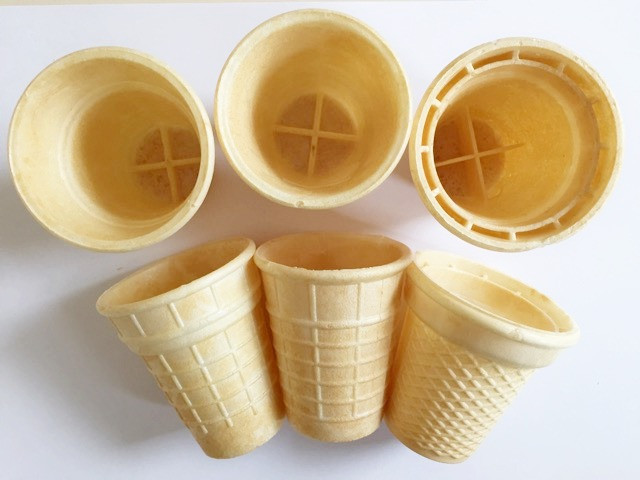 Wafer cup and cone
 J-Bottom technology
 Pepsin whey pork
 Petri dish 90 mm
 Ice cream sticks Standard 93
 Ice cream sticks (with logo)
- Ice cream sticks Standard 114
- General purpose environment of SPC "Biocompass-S" (Uglich)
- Ice cream sticks Magnum (curly)
- Auxiliaries for sugar products
- Ice cream sticks (round)
Consumables
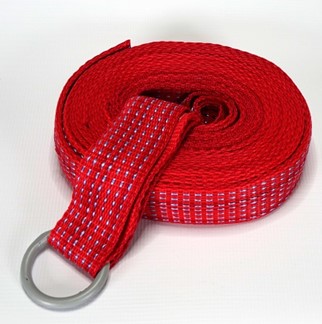 Fall with a loop for cattle
 Reusable plastic syringe
 Forged pitchforks
 Disposable udder wipe (udder paper).
 Napkin reusable for wiping the udder
 Pre-milking udder cleaner (20 l)
- Foam cup for udder treatment
- Drencher for feeding calves with a flexible probe
- Udder cleaner after milking (20 l)
- Latex gloves (long cuff with roller), (color blue, pack of 50 pieces)
- Acid detergent (20l / 24kg)
- Bag filter 32
- Cup for disinfection of udder teats (non-returnable)
- Self-adhesive hoof bandage
- Plastic syringe 150ml
Microbiology
 MicroFast® Enterobacteriaceae Count Plate (cat. no. LR1011)
 MicroFast® Environmental Listeria Count Plate
 MicroFast® Lactic Acid Bacteria Count Plate (Part Number LR1312)
 Substrate for determining the number of staphylococci (Catalog number LR1005) MicroFast® Staphyloccocus aureus Count Plate
 Yeast & Mold Count Plate (cat. no. LR1003) MicroFast® Yeast & Mold Count Plate
 Substrate for accelerated determination of QMAFAnM, (catalog number LR1321)
- MicroFast® Salmonella Count Plate (SAL), for the determination of Salmonella in food and environmental samples (Catalog #LR1006)
- MicroFast® Staphyloccocus aureus Confirmation Plate Staph.aureus Confirmation Plate (cat. no. LR1005Q)
- Coliform Count Plate (catalog number LR1002) MicroFast® Coliform Count Plate
- MicroFast® Bacillus cereus Count Plate (catalog number LR1010)
- Substrate for determining QMAFAnM (catalog number LR1001)
- MicroFast® Microbiological Substrates
- MicroFast® Coliform & E.coli Count Plate
Our News
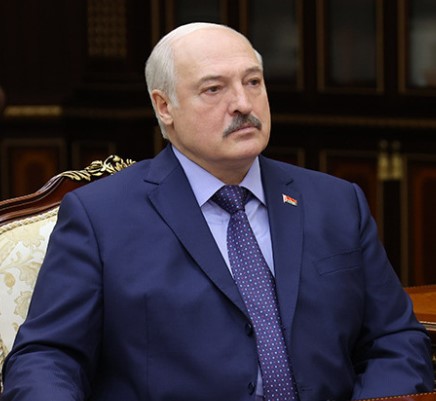 Lukashenko heard a report on the Mogilev region. The main topic was the situation in agriculture. 05.02.2026
 What major agricultural projects are being implemented in the Mogilev region?05.02.2026
 An expert identified possible areas of cooperation between Belarus and Southeast Asian countries.05.02.2026
- Surcharges on prices for agricultural products purchased from the population have been established in 2026.04.02.2026
- Lukashenko: We won't carry the Vitebsk region on our shoulders.04.02.2026
- Baby Zabava. The Grodno Zoo welcomed its first addition in 2026. 03.02.2026
- Lukashenko: We won't carry the Vitebsk region on our shoulders. 03.02.2026
- Lukashenko on the case: it is a moral monstrosity if we cannot protect our smaller brothers in this weather03.02.2026
- Grain cultivation and livestock farming. Bogdanov discussed prospects for cooperation in the agricultural sector between Belarus and Kazakhstan.01.02.2026
- Выпойка молоком 3-4 раза, больше теплой воды. Как в Брестской области наладили уход за телятами в морозы01.02.2026
- From Tractor Driver to Businessman: The Story of a Belarusian Who Built a Farm from Scratch and a Church in a Village 30.01.2026
- A warehouse in the Minsk region improperly stored powdered milk: a court ordered compensation of Br2 million.30.01.2026
- Increased processing volumes, new jobs: production capacity is being expanded in the Shklov district.30.01.2026
- The story of a Belarusian who built a sturdy farm from scratch and revived his native village.29.01.2026
- Belarusian producers plan to enter the Qatari meat market.29.01.2026
- Belarus is interested in expanding dairy product supplies to Indonesia.28.01.2026
Articles
 The court refused to seize the property of agricultural enterprises with debts to the AIC fund.05.02.2026
 Demand for semi-finished products will decline in 2025: dumpling sales will fall by 8%.05.02.2026
 Rosselkhoznadzor inspected more than 2,000 tons of livestock products shipped to Yakutia.05.02.2026
- Rosselkhoznadzor monitored the export of more than 57,000 tons of veterinary goods from St. Petersburg.05.02.2026
- К госветнадзору Бурятии поступило 860 тонн продукции при отправке в Монголию05.02.2026
- The inflation rate in Russia at the beginning of February 2026 reached 6.5%.05.02.2026
- Innovations in broiler feeding: savings and bird health05.02.2026
- New financial disputes between Aventa and Tokarevskaya Poultry Farm: a second lawsuit for 70 million rubles05.02.2026
- Mexican and Canadian beef is losing ground in the US market.05.02.2026
- Spain strengthens institutional coordination to improve animal welfare management05.02.2026
- Blaming cows was a mistake: meadows absorb more gases than cattle emit.05.02.2026
- EU and Mercosur: Experts warn of shortage of EU veterinarians to control imports and associated health risks05.02.2026
- Rosselkhoznadzor stopped the import of more than 50 kg of dangerous animal products at Ufa Airport.04.02.2026
- Rosselkhoznadzor specialists have identified quality violations in meat products.04.02.2026
- The first batch of canned meat from the Kurgan region was sent to Azerbaijan under the supervision of Rosselkhoznadzor.04.02.2026
- A poultry farm in Yugra was fined for violating veterinary regulations.04.02.2026
Economics
 10 reasons to take a deposit04.05.2025
 Lavrov and the Swiss Foreign Minister will discuss the "deep crisis" of the OSCE.05.02.2026
 Kirilenko spoke about the problems facing Russian teams after sanctions were lifted.05.02.2026
- Lavrov believes that US statements about cooperation are inconsistent with sanctions05.02.2026
- The Russian ambassador warned of a reaction to the Faroe Islands' change in stance on sanctions.05.02.2026
- Five suspects in supplying weapons to Russia's defense industry have been arrested in Germany.03.02.2026
- Bloomberg узнал о планах ЕС по санкциям против российских платины и меди03.02.2026
- The EU confirmed discussions on banning entry for participants in the military operation.31.01.2026
- Bloomberg has revealed a new possible EU sanctions plan against Russia.31.01.2026
- The EU has blacklisted Russia for money laundering.30.01.2026
- The EU has imposed new sanctions on Iran in response to the suppression of protests.30.01.2026
- The European Union has designated the IRGC a terrorist organization.30.01.2026
- The US has eased sanctions and allowed oil companies to operate in Venezuela.30.01.2026
- Titov allowed for the return of foreign companies that "miss Moscow"30.01.2026
- Following the deal with Carlyle, LUKOIL continued negotiations with other companies.29.01.2026
- Macron announced that France is preparing new sanctions against Russia.29.01.2026
Antibiotics in Milk
 Antibiotics in milk: causes and methods of detection27.01.2026
 Pharmaceutical companies see a threat to EU security due to bacteria in Ukraine13.11.2025
 Prosecutors have issued warnings to more than 5,000 companies due to rising prices.09.09.2025
- Two dairy companies from Azerbaijan refused to work with Russia.09.07.2025
- Lukashenko told how Putin treated him to goat's milk.08.07.2025
- Lukashenko demanded that Belarus be cleared of littered logs by autumn.08.07.2025
- Lukashenko stated that it is not beneficial for Belarus to “fight madly,” but to feed17.06.2025
- В Британии предупредили о риске для миллионов из-за супербактерий06.01.2025
- Moscow court sides with Indian company in dispute with Health Ministry26.11.2024
- Scientists estimate increase in mortality due to drug-resistant bacteria29.10.2024
- Antibiotics for livestock and pesticides found in poisoned family's home29.10.2024
- Izvestia reported on the shortage of widely used antibiotics in Russia29.10.2024
- The Ministry of Health called data on the shortage of antibiotics unreliable29.10.2024
- Scientists warn of threat of return to pre-penicillin times29.10.2024
- The Ministry of Health explained how attitudes towards antibiotics changed during the pandemic07.05.2024
- WHO explains the risks of taking antibiotics "just in case"06.05.2024
Antibiotics in Meat
 Antibiotics in pollock25.02.2024
 Antibiotics in herring: myth or reality?12.02.2024
 Antibiotics in perch10.02.2024
- Antibiotics in sprat: facts and myths10.02.2024
- Antibiotics in tuna: an important health and environmental issue09.02.2024
- Antibiotics in meat30.01.2024
- Antibiotics in chebureks: myth or reality?29.01.2024
- Antibiotics in cutlets: problem or myth?18.01.2024
- Antibiotics in Chicken: Where Are the Highest Concentrations?17.01.2024
- Antibiotics in carp17.01.2024
- Where Are More Antibiotics in Chicken: Reality and Cautions16.01.2024
- Antibiotics in Salmon: Safety and Product Quality16.01.2024
- Antibiotics in Turkey15.01.2024
- Antibiotics in Sal: Reality and Safety Issues15.01.2024
- Antibiotics in Fried Dumplings: Facts, Risks and How to Stay Safe15.01.2024
- Antibiotics in sausages14.01.2024
10 Interesting Facts
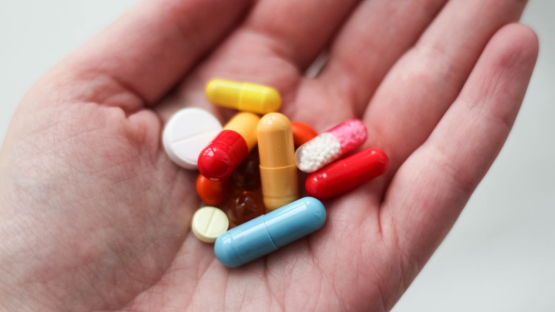 Antibiotics in Coffee: Myths and Reality03.05.2025
 Forged forks: 10 interesting facts16.05.2024
 Swimming pool and weight loss: 10 interesting facts10.03.2024
- Tests for antibiotics in milk - 10 interesting facts07.03.2024
- Cleaning the kettle from scale, 10 interesting facts...06.03.2024
- Antibiotics in beer: 10 interesting facts04.03.2024
- Wild boar, how to survive...01.03.2024
- Purulent mastitis, 10 interesting facts27.02.2024
- Lemon and alcohol: 10 interesting facts25.02.2024
- Mint - 10 interesting facts25.02.2024
- Wild boar, 10 interesting facts20.02.2024
- Wild boar and domestic pig: comparison and advantages20.02.2024
- Cottage cheese, 10 interesting facts20.02.2024
- 10 Interesting Facts About Milk19.02.2024
- How to Clean a Toilet - 10 Interesting Facts (Acid vs Alkaline)18.02.2024
- Goat's milk: 10 interesting facts16.02.2024
Diseases of cattle
 Dicroceliosis in cattle09.03.2024
 Demodicosis in cattle01.03.2024
 Purulent mastitis of cattle27.02.2024
- Hypodermatosis in cattle20.02.2024
- Hemonchoz in cattle11.02.2024
- Bursitis in cattle30.01.2024
- Brucellosis in cattle29.01.2024
- Bronchopneumonia in calves27.01.2024
- Bronchitis in cattle26.01.2024
- Mortellaro disease in cattle24.01.2024
- White muscle disease in cattle23.01.2024
- Babesiosis in cattle22.01.2024
- Cattle acidosis20.01.2024
- Arthritis in cattle20.01.2024
- Anaplasmosis in cattle18.01.2024
Misc
- Antibiotics for coughs: when they are needed and when they are not11.02.2024
 "Слетают все маски человека!" // Банщик про техники парения, поющих мастерах и чудо-массажах05.02.2026
 The Master of Steam: The Story of a Businessman Who Left a Successful Printing Business to Become a Spa Master 05.02.2026
- Investigators have identified the locations of the most frequent traffic accidents in the Brest region.05.02.2026
- Ministry of Emergency Situations: 129 people have died in fires since the beginning of the year.04.02.2026
- WHO: Almost 40% of cancer cases can be prevented 04.02.2026
- The number of fires in Belarus has increased. Experts have explained the causes.04.02.2026
- "Neither tail nor scales." We went winter fishing and learned the intricacies of ice fishing.04.02.2026
- Belarus has extended the ban on labeling imported alcoholic beverages in unfriendly countries.03.02.2026
- В Гомеле благодаря неравнодушным гражданам остановили нетрезвых таксиста и бесправника 03.02.2026
- From February 11, navigation seals will be used to track rail traffic in the EAEU.03.02.2026
- The State Traffic Inspectorate reminded drivers of road safety rules during severe frosts.31.01.2026
- A woman driving under the influence of alcohol with over 2 ppm was detained in Minsk.30.01.2026
- Наведение порядка в АПК, пожарная безопасность. Какие задачи поставлены перед прокурорами Витебской области 30.01.2026
- A car crashed into a tree on Independence Avenue in Minsk, injuring two people.30.01.2026
- Топ экспортируемых товаров назвали в "Белгоспищепроме"29.01.2026
Cloud of Tags
Russiaминистр сельского хозяйстваГерманияКазахстанВ китаеВостокСанкцииМинздравФермерРоссияЦеныМужчиныИмпортРоссельхознадзорТАССРоспотребнадзорПравительствоКанадаОнлайнСанкт-ПетербургПродовольствиеИнвестицииКредитВеликобританииПесковВакцинацияКрупного рогатого скотаЖивотноеПтицефабрикаПродукцияПрокуратураПроизводство молокаРубльФруктыАнтибиотиковГазпромБразилияДмитрий песковУрожаяКрупный рогатый скотМясо птицыПродукты питанияКитайУзбекистанМинскДетиБизнесДжо БайденGoogleЕгипетАлкогольного опьяненияЗаконопроектПодмосковьеКРСОтпускЗаконРоссиянеМЧСОрганизмЛекарстваЯйцаМясокомбинатВьетнамФранцияДоходыДолларВакцинацииИсследованияТурцияАЧСРаботаСШАКартофельНедвижимостьУкраинеМясоСвининаAppleДеньгиБройлерНефтьПроизводство мяса2024COVID-19ЗапретЭкономикаКарантинСмертьВыручкаСырыFacebookTelegramМолокоУченыеОбщепитМинфинЕСУкраинаТатарстанГовядинаЕАЭСПензенской областиКофеВирусМаслоТребованияИнфляцияBloombergМинсельхозЕврокомиссияПраздникВеликобританияСубсидииПитаниеБеларусьReutersСпутник vКлиматКоронавирусЭкспортСотрудники ГАИАлкогольВладимир ПутинЯпонияСудБолезньДональд ТрампАзербайджанАлександр ЛукашенкоСельское хозяйствоКолбасыДиректорГовядинуЗдоровьеПольшаМоскваРосстатЗеленскийЦентробанкИталияРодителиКризисАвстралияНовостиЗависимостьЛечениеИммунитетВластиУборкаПоддержка